Tag: israel

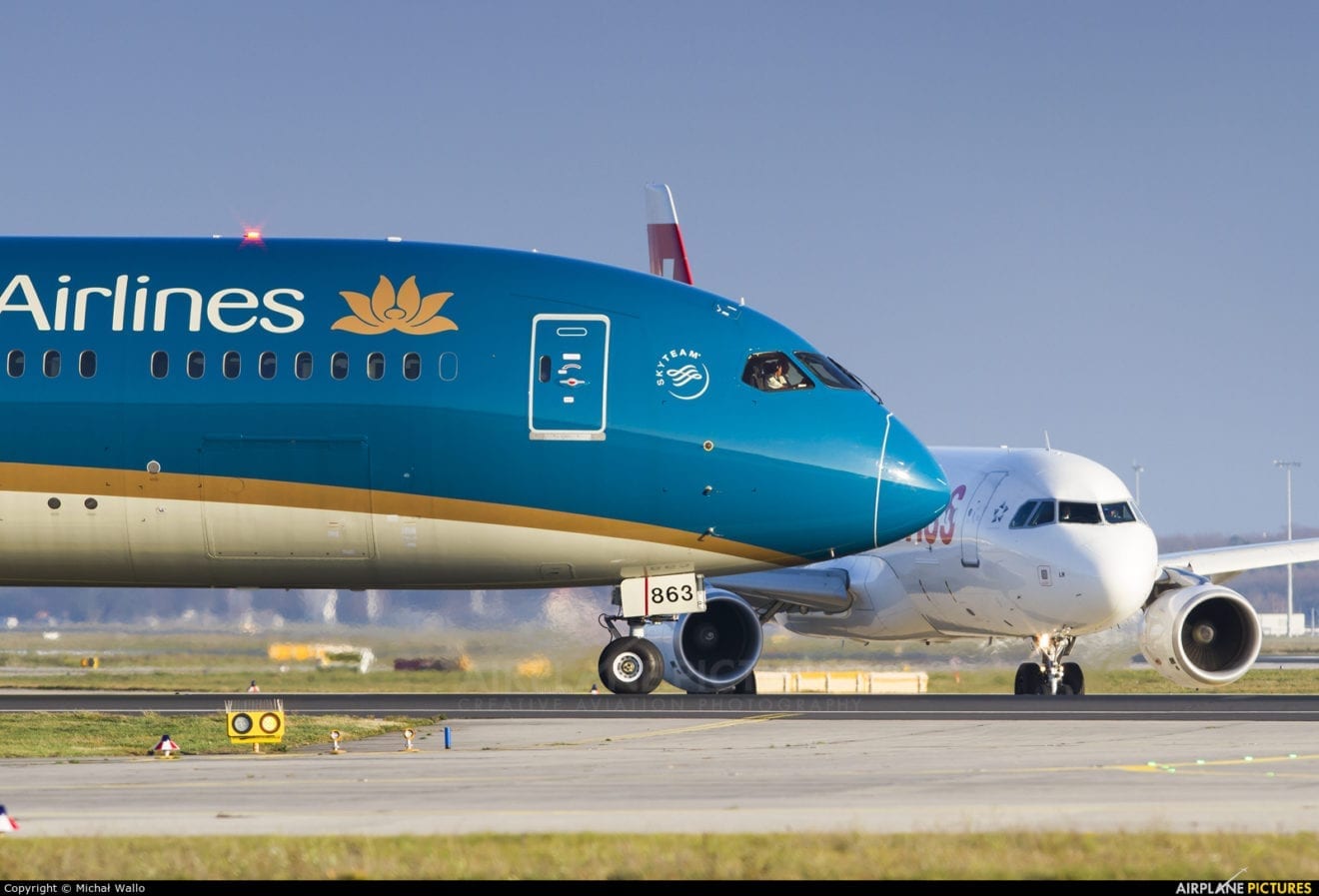
  • Vietnamese Airlines Avoid Israeli and Iranian Airspace, Ensuring Safe Skies for Travelers

    Vietnamese Airlines Avoid Israeli and Iranian Airspace, Ensuring Safe Skies for Travelers

    National flag carrier Vietnam Airlines has taken decisive action to ensure the safety of its passengers and crew amidst escalating tensions between Israel and Iran. The airline has adjusted its routes to avoid potential conflict zones, a move that reflects the growing impact of these geopolitical strife on the global aviation landscape.

    Safe Skies for Travelers

    Currently, Vietnam Airlines continues to operate its flights to Europe without interruption, a reassurance shared by a representative in a statement to the Vietnam News Agency on Friday. Other Vietnamese airlines, including Vietjet Air, Bamboo Airways, and Vietravel Airlines, have also chosen to steer clear of Israeli and Iranian airspace, underscoring a collective commitment to passenger safety.

    The ripples of political tensions have not gone unnoticed in the aviation sector, as recent Israeli airstrikes on Iranian targets have prompted numerous flight cancellations and diversions worldwide. Flight tracking service Flightradar24 highlighted a significant re-routing trend among airlines seeking to sidestep the airspace over Israel, Iran, Iraq, and Jordan, demonstrating how rapid shifts in global events can lead to immediate logistical challenges for carriers.

    In a decisive move, Iraqi state media announced the closure of its airspace and halted all airport operations early on June 13. The eastern region of Iraq, which borders Iran, is a critical aviation corridor connecting Europe, the Gulf, and Asia—making the closure particularly impactful. Within hours, Jordan also locked down its airspace as tensions escalated in the region.

    Navigating these tumultuous skies is no easy task, but the quick responses from airlines illustrate an adaptive industry keen on keeping travelers safe. It’s a reminder that sometimes, the clouds of uncertainty can only be tackled with swift and careful planning.

    Questions & Answers

    What measures has Vietnam Airlines taken in response to regional tensions?
    Vietnam Airlines has rerouted its flights to avoid conflict zones, ensuring the safety of passengers and crew members.

    Are other Vietnamese airlines affected by these issues?
    Yes, Vietjet Air, Bamboo Airways, and Vietravel Airlines have also opted not to operate flights through Israeli or Iranian airspace.

    What recent events led to these changes in air travel?
    The changes followed Israeli airstrikes on targets in Iran, which triggered widespread flight cancellations and diversions as airlines sought to protect their passengers.

  • Hyundai opens center for innovation in Israel

    Hyundai opens center for innovation in Israel

    Hyundai Motor opened an innovation center in Tel Aviv and invested in an Israeli artificial intelligence start-up through the center, the automaker said Tuesday. Hyundai Cradle Tel Aviv is the third such initiative established by the Korean carmaker’s investment arm, the others in Korea and Silicon Valley. The Israel-based center, which officially started operations at the end of last month, is dedicated to finding start-ups with expertise in artificial intelligence and computer vision.

    The Tel Aviv center said Tuesday it invested in allegro.ai, a start-up specializing in deep learning-based computer vision. The automaker said the partnership will improve the quality of Hyundai’s products and speed up its deployment of AI technology.

    “Deep learning-based computer vision is one of the core technologies that can be applied to autonomous driving, to navigate roads and make quick decisions in real time,” said Ruby Chen, head of investment at Hyundai Cradle Tel Aviv. “allegro.ai is clearly an innovation leader in that field.”

    The technologies produced by the Israeli start-up make it easy for companies developing autonomous vehicles and drones to manage and control their data sets safely, said Nir Bar-lev CEO and co-founder of allegro.ai in a statement Tuesday.

    Korea’s largest automaker is planning to establish two more centers, in Berlin and Beijing.

    Selecting China as one of its global bases is a strategic move, as the automaker is seeking ways to expand in the world’s most populous consumer market. Hyundai is considering launching its N brand cars in China.

    On Tuesday, Thomas Schemera, head of the product planning and strategy division at Hyundai Motor, said the company is mulling which of its high-performance branded cars to introduce to the Chinese market during the first China International Import Expo, being held at the National Convention and Exhibition Center in Shanghai.

    Hyundai introduced its fuel-cell vehicle NEXO at the expo with an aim to bolster its presence in the growing eco-friendly car market in China.

    The expo is being held for the first time by the Chinese government to help foreign companies introduce their products and find opportunities for business cooperation.

  • Israeli brand Sabon expands to Singapore

    Israeli brand Sabon expands to Singapore

    Israel-based bath and body brand Sabon has opened its first Southeast Asia flagship boutique, in Singapore.

    Located in Takashimaya in the Ngee Ann City shopping centre, the store carries a full range of products for the body, face and the home.

    Soaps handmade from fresh herbs, fruit peels and rose petals are included in the range.

    The boutique features an experiential ‘Wishing Fountain’ where customers are invited to freshen up, make wishes, and “dive into an experience of sound and sense, texture, and scent”.

    Staying true to the brand’s philosophy, the store’s interior is decorated with natural products and materials such as whole wood and stone.

    Founded in 1997 in Tel Aviv, Sabon now has 180 stores globally.

  • McDonald’s Malaysia denies any connection to Israel

    McDonald’s Malaysia denies any connection to Israel

    The Malaysian franchise of McDonald’s Corp said it was “disappointed” with calls on social media to boycott the fast-food restaurant chain in apparent retaliation against the US’ recognition of Jerusalem as the capital of Israel.

    Social media users in the Muslim-majority country have called on people to boycott various American companies following United States President Donald Trump’s decision to relocate the US Embassy in Israel to Jerusalem.

    One Twitter user, who goes by the name, TheUsopIbrahim, stated without citing sources that US-headquartered McDonald’s “channelled funds to Israel”.

    McDonald’s Malaysia said in a statement on Facebook on Saturday that the chain does not support or engage in any political or religious conflicts.

    Mr Azmir Jaafar, managing director and operating partner of franchisee Gerbang Alaf Restaurants, said: “The claim that McDonald’s channels funds to Israel is a false accusation, a lie, fake and slanderous.”

    He added that Gerbang’s largest shareholder is Muslim.

    The Malaysian and Singaporean franchise rights were bought by Saudi Arabia’s Lionhorn a year ago, as part of the US parent’s strategy of moving away from direct ownership in Asia.

  • Korean Minigood retail chain to expand in Israel

    Korean Minigood retail chain to expand in Israel

    South Korea’s Minigood chain is heading for Israel, where an individual has signed a five-year exclusive franchise agreement.

    Daniel Pardilov from the Pardilov & Co law firm, which represents the franchise holder, says the plan is to open at least 10 outlets in the first two years, including three this year.

    This news comes on the heels of Japanese “dollar store” chain Daiso planning to enter the Israeli retail market through the Union Group, the franchise holder for Cos and H&M in Israel.

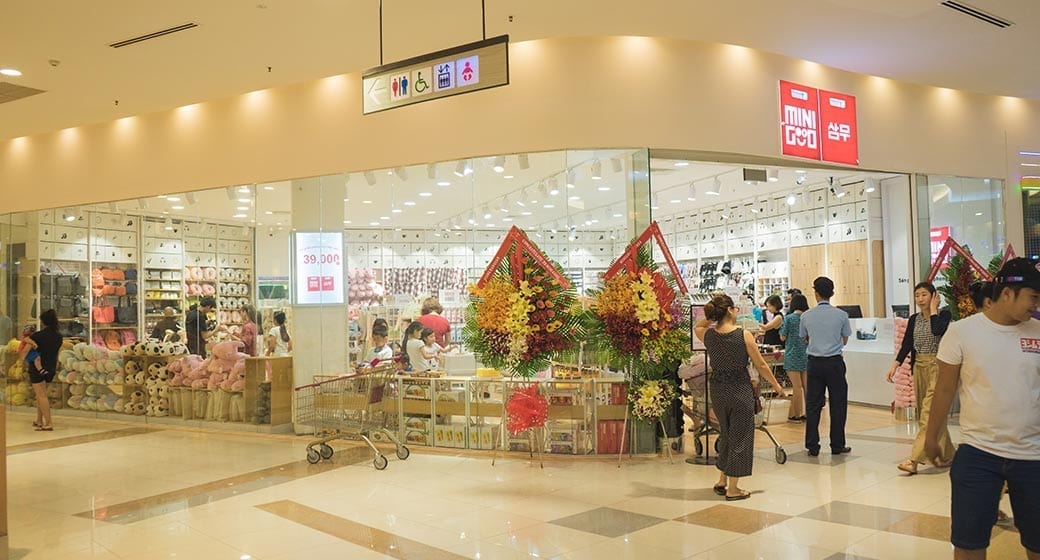
    Minigood stores have an average space of 80sqm, but the plan in Israel is for stores covering 120 to 150sqm.

    One of the conditions in the agreement with the Israeli franchise holder is for the manufacturing of special products for the Israeli market at the company’s plant in South Korea.

    Founded in Seoul by Mike Wu in 2013, Minigood makes and markets bags and clothing, household goods, personal care and cosmetic products, office equipment, digital products and toys. The company’s activity is projected to reach 2000 stores and a sales turnover of more than US$1 billion worldwide by 2020.

    Pardilov says the Israeli franchise holder is a businessperson with a real-estate background. He is also negotiating with larger retail groups in order to form a partnership for running the chain.

    Outside of South Korea, Minigood has branches in Malaysia and Singapore.

  • Daiso stores to penetrate Israeli retail market

    Daiso stores to penetrate Israeli retail market

    Japanese “dollar store” chain Daiso is about to enter the Israeli retail market, to be run by the Union Group, the franchise holder for Cos and H&M in Israel and the official importer for Toyota and Lexus.

    Founded in 1977, Daiso will be competing in Israel with chains such as Hastock and Max Stock. It is expected to offer 100,000 products at a fixed low price, including designer products and accessories for the home, toys, design aids, work tools, gardening tools, electronic products, auto products, sewing tools and animal accessories. Most are made exclusively for the Japanese chain’s private label.

    Daiso has 4900 stores in 26 markets, 3000 of them in Japan. The company’s revenue totalled $4 billion in 2015.

    Daiso’s most popular items are batteries and small products for the home.

  • ASEAN companies face US$750b risk from cyberattacks

    ASEAN companies face US$750b risk from cyberattacks

    Companies across the ASEAN bloc face a growing risk of cyberattacks, which can expose the region’s top-listed firms to a US$750 billion erosion in current market capitalisation.

    This was revealed on Tuesday in a new research commissioned by Cisco.

    Conducted by global management consulting firm A.T. Kearney, the research underlines that ASEAN’s growing strategic relevance, driven by economic expansion and ongoing digital adoption, make it a prime target for cyberattacks.

    A combination of nascent policy preparedness, absence of a unifying regional governance framework, shortage of skilled talent, underestimation of risk and lack of adequate investment are among the factors contributing to the heightened risk.

    The research report, titled “Cybersecurity in ASEAN: An Urgent Call to Action”, emphasises that cyber-security risk across the bloc will continue to escalate as the bloc gets more digitally interconnected.

    ASEAN countries underspend on cyber security. The region currently spends an average of 0.07 per cent of its collective gross domestic product (GDP) on cyber security annually. It will need to increase the spending to 0.35-0.61 per cent of GDP between 2017 and 2025 to be in line with the best benchmark (based on spending levels as percentage of GDP for Israel).

    The research estimates that this translates to $171 billion in collective spending needed across ASEAN countries during the period. Limited sharing of threat intelligence, often because of mistrust and a lack of transparency, will lead to even more porous cyber-defence mechanisms.

    Naveen Menon, ASEAN President at Cisco, said: “Digital innovation and adoption are central pillars of economic growth for ASEAN. Its success hinges in large part on the bloc’s ability to combat cyber threats. Cyber security needs to be an integral part of policy discussions at the semi-annual ASEAN Summit, with the aim of developing a unified policy framework for the region. The corporate sector also needs to start treating cyber security as a business wide issue that can only be tackled by adopting a risk-centric approach to building resilience, rather than just an IT problem.”

    Lương Thị Lệ Thuỷ, general director of Cisco Việt Nam, said: “Việt Nam has fallen to rank 101 among 195 countries in the Global Security Index 2017 compiled by the UN International Telecommunication Union, down 25 places from 2016.”

    “The National Assembly (NA) has been discussing the need to formulate a law on cyber security. It has been put under consideration at the fourth session of the 14th NA. However, all stakeholders need to work together to help build cyber-security capabilities in Việt Nam to ensure that we are able to combat these threats,” Thủy said.


  • Delphi, Mobileye to use Intel chip for self-driving car system

    Delphi, Mobileye to use Intel chip for self-driving car system

    Auto parts maker Delphi Automotive and Israeli technology firm Mobileye NV will put an Intel Corp chip at the heart of their joint effort to produce self-driving vehicles by 2019, the companies said on Tuesday.

    The move is a boost for the world’s largest semiconductor maker, which is also working with German luxury car maker BMW AG and Mobileye on self-driving technology, but has not been able to extend its broader chip dominance into the fast-emerging autonomous vehicle market.

    Companies from Alphabet Inc’s Google to Uber Technologies and Tesla Motors are vying to put autonomous vehicles on U.S. roads, which could radically reshape transportation across the country.

    Intel will provide a “system on chip” for autonomous vehicle systems that Delphi and Mobileye are developing together, Glen De Vos, Delphi’s vice president of engineering, told Reuters.

    UK-based Delphi is talking with established automakers and new or niche vehicle companies, such as manufacturers of commercial vehicles, interested in automating vehicles, De Vos said.

    The system Delphi and Mobileye are developing would likely come to market first in a commercial vehicle operating in a limited area, such as an airport shuttle or a ride-hailing service, DeVos said.

    Delphi is testing autonomous driving technology in vehicles in Singapore. By the end of this year, Delphi hopes to choose a city in the United States to launch a test fleet of self-driving cars during 2017, De Vos said. The company is also looking for test site in a European city.

    “We are looking at Pittsburgh and Boston and a couple of others,” De Vos said. Pittsburgh is where ride services company Uber is testing its own self-driving vehicles.

    Delphi and Mobileye will stage a demonstration of their self-driving vehicle system at the Consumer Electronics Show in Las Vegas in January, De Vos said. That system will use current, electromechanical laser imaging technology, or LIDAR, that is too expensive for use in consumer vehicles, he said.

    Delphi is also working with Quanergy Systems, a maker of solid-state LIDAR systems, De Vos said.

  • Samsung’s Galaxy S7 Series Popular in Israel

    Samsung’s Galaxy S7 Series Popular in Israel

    South Korean tech giant Samsung Electronics Co. said Tuesday its latest flagship smartphones, the Galaxy S7 series, posted robust sales in Israel just a week after their launch.

    The Galaxy S7 series officially hit the shelves on March 14, coming out in major markets including South Korea, the United States and Europe.

    Samsung sold over 10,000 units in the first week in Israel as its advanced waterproof function and visual display received positive feedback, according to company officials.

    “Although only 3,000 units were pre-ordered, sales after the official launch jumped over 42 percent compared to that of the previous phone Galaxy S6,” Goh Kwang-hak, the chief of Israel branch, said.

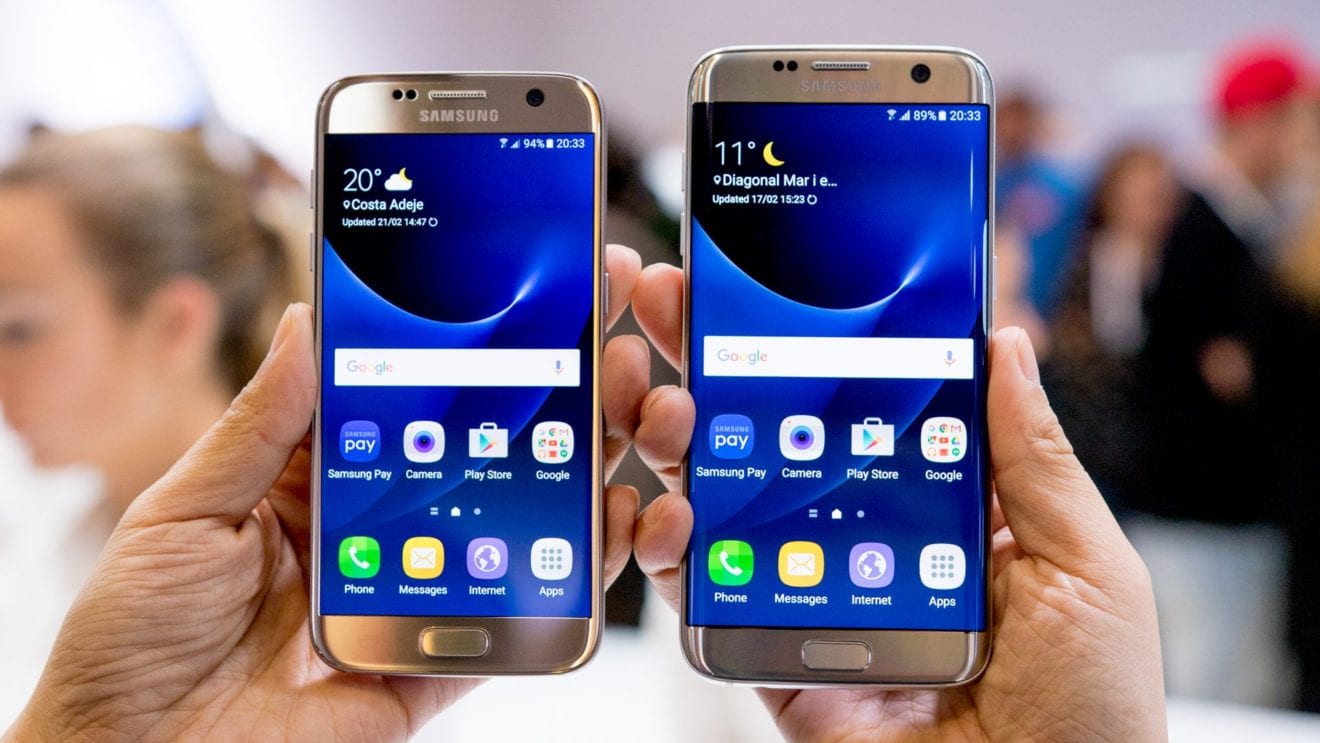
    Samsung Electronics’ latest smartphone line, the Galaxy S7, hit the shelves of major markets on March 14, 2016. (Photo courtesy of Samsung Electronics)

    Samsung’s smartphones account for 45 percent of the market in Israel, which has a population of 7.8 million and a brisk secondhand phone market. It far surpasses U.S. rival Apple’s 30 percent share.

    The retail prices of the Galaxy S7 and Galaxy S7 edge in Israel are US$907 and $1,011, respectively. The edge version comes with a display that curves at both edges.

  • Israel’s Teva Naot expands in Japan

    Israel’s Teva Naot expands in Japan

    Israeli sandal maker and retailer Teva Naot is gaining a cult following in Japan.

    The footwear brand has just opened its fifth “high class boutique” in Japan, and plans even more stores as it wins the hearts and wallets of Japanese.

    The company already has three stores in Tokyo and one in Nara in the Kansai region of Japan’s south. The new store will be in Tokyo.

    CEO, Michael Iluz,says its shoes have become extremely popular among Japan’s business and celebrity class.

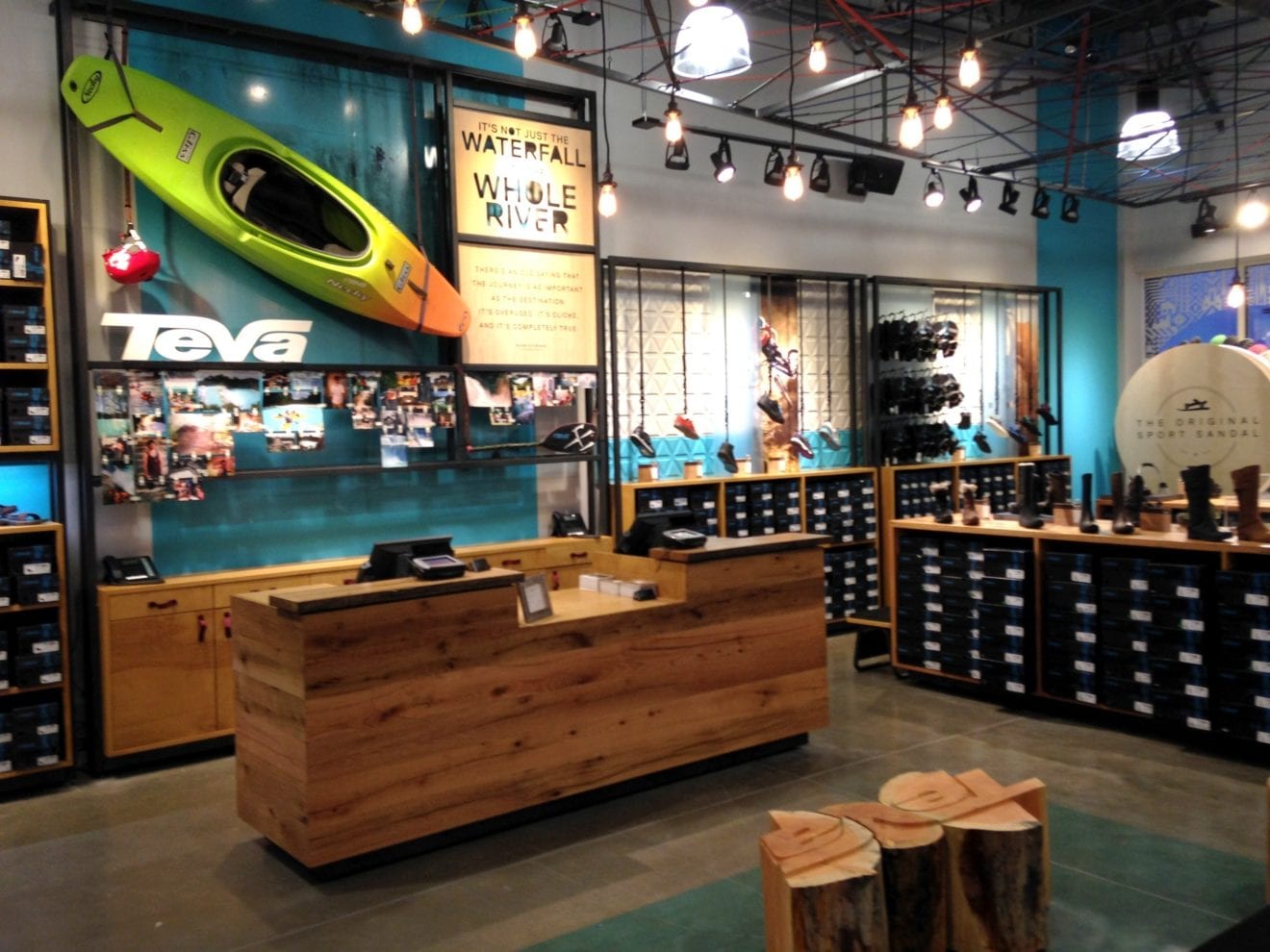
    Teva Naot shoes are handmade from high quality materials and positioned at the premium end of the market. It has designed a range of 20 sandals specifically for the Japanese market to reflect local tastes, fit and trends. The stores are designed to evoke a ‘high class, luxury’ shopping experience.

    The Israeli newspaper Maariv reports the company sold more than $3.6 million worth of shoes in Japan this financial year and expects sales to reach as high as $5 million in 2016.

    Teva Naot has also met with success in South Korea.

  • Alibaba invests in Israeli QR code firm

    Alibaba invests in Israeli QR code firm

    Alibaba said on Tuesday that it has made an unspecified investment in Israeli startup Visualead as the e-commerce giant seeks to leverage the latest QR code technology.

    Visualead will use the capital from Alibaba to develop the next stage of “offline-to-online” technology.

    The investment marks Alibaba Group’s first in an Israeli company as the Middle East country boasts prolific technology startups.