Tag: issues

  • Lululemon Issues Apology in China for Cultural Misstep at Great Wall Event

    Lululemon Issues Apology in China for Cultural Misstep at Great Wall Event

    Lululemon, the popular athleisure brand, has publicly apologized in China following controversy surrounding a performance during a company-sponsored event at the Great Wall. The incident incited negative reactions on social media due to the apparent use of a Japanese drum, viewed as culturally insensitive by some.

    Controversy and Apology

    The company expressed remorse on Weibo, the Chinese social media platform, acknowledging that they had failed to anticipate the potential cultural sensitivities associated with the drum performance. They attributed this oversight to “limitations in professional knowledge”. Lululemon went on to apologize both to their customers and brand ambassador Zhu Yilong, a well-known Chinese actor. The company also announced that they had taken down all promotional materials related to the event.

    The controversy was triggered by a grand yoga festival organized near Beijing in the previous month to commemorate Lululemon’s decade-long presence in mainland China. The event attracted over 2,000 participants and was part of the brand’s broader initiative to further engage with Chinese consumers through community-centered experiences.

    A drum performance featuring Zhu Yilong and the HiiKo Drum Group became a hot topic of debate when some social media users noted the drum used resembled a Japanese taiko drum, not a traditional Chinese one. The criticism rapidly proliferated across Chinese social media platforms.

    In their public apology, Lululemon stated that the event was designed to honor Chinese culture, but conceded that they had underestimated the cultural implications. They expressed that they have “learned profound lessons” from the experience and will improve their review processes for upcoming events.

    Challenges for International Brands

    This incident underscores the difficulties global brands can encounter when attempting to understand and respect cultural nuances in foreign markets. Earlier in the year, French fashion brand, Lemaire, also found itself apologizing after a fragrance campaign was criticized by Chinese consumers who felt the brand had used culturally insensitive imagery and messaging.

    Questions & Answers

    What was the cause of the controversy involving Lululemon in China?
    The controversy was sparked when Lululemon used a drum in a performance that was alleged to be a Japanese taiko drum instead of a traditional Chinese drum. This was viewed as culturally insensitive by some.

    What was Lululemon’s response to the backlash?
    Lululemon issued a public apology on Weibo, acknowledging their failure to anticipate potential cultural sensitivities. They also removed all promotional materials connected to the event and apologized to their customers and brand ambassador, actor Zhu Yilong.

    What lessons has Lululemon learned from this experience?
    According to their public apology, the company “learned profound lessons” and intends to strengthen its review processes for future events to better recognize and respect cultural nuances.
  • Honda Vietnam to recall cars over fuel pump issue

    Honda Vietnam to recall cars over fuel pump issue

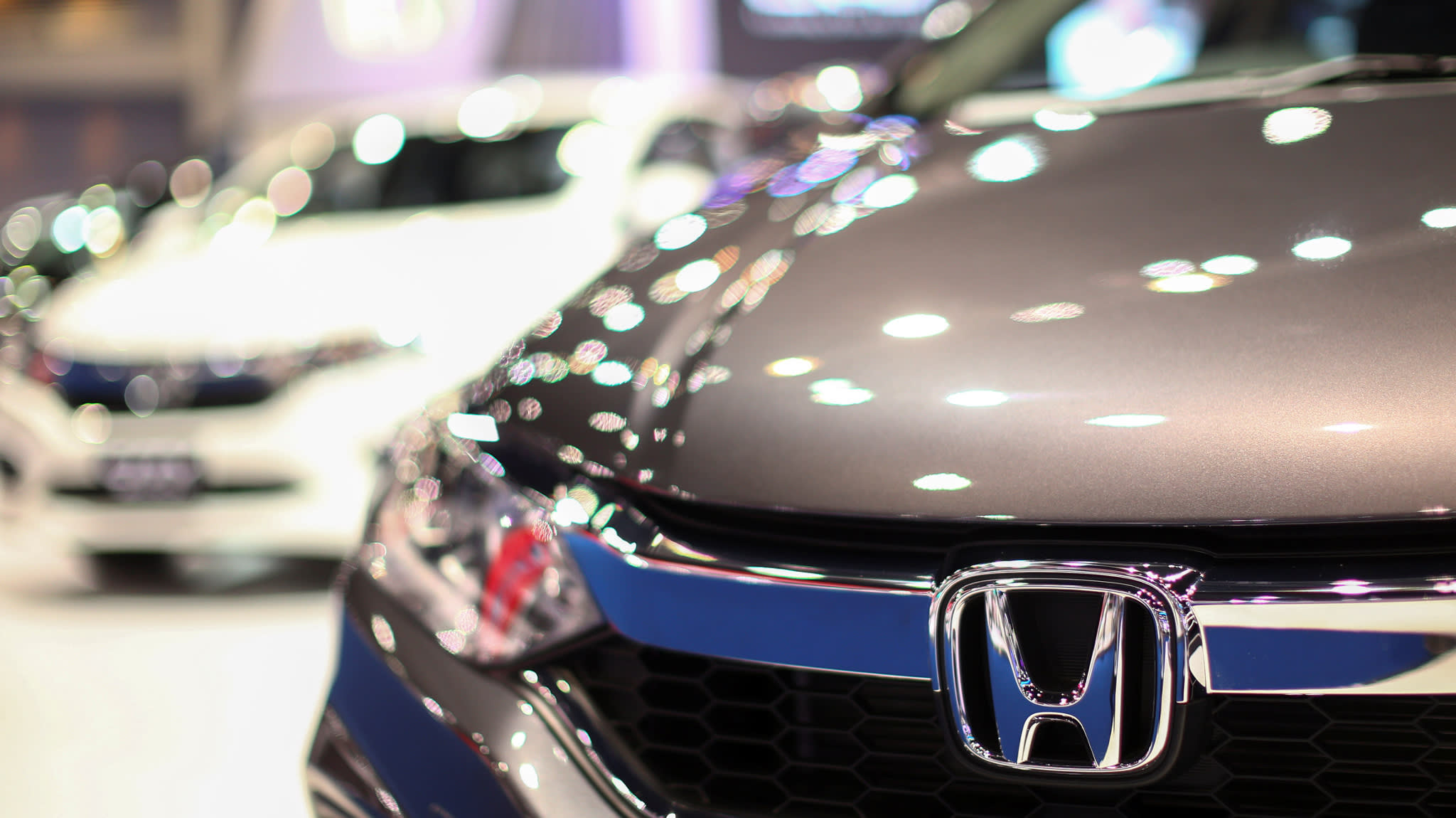
    Honda Vietnam has announced it would recall 27,640 locally assembled and imported vehicles to resolve a fuel pump malfunction.

    The affected models are City (8,626 units), Civic (3,624 units), CR-V (10,687 units), HR-V (3,630 units), Jazz (630 units) and Accord (442 units) made in 2019. Out of nearly 28,000 defective vehicles, 19,014 were locally assembled, with the rest imported from Thailand. The recall will start this Wednesday.

    Faults related to the fuel pump installed in these vehicles may involve defective impellers. Over time, the pump may crack, deform and prevent the engine from starting or stalling.

    At present, there is no record of safety threats due to the fuel pump error in the Vietnamese market. Vehicle owners are advised to visit authorized dealerships to have their engines checked.

    Replacements will be made when spare parts become available. Spare parts and related services would be completely free of charge. For vehicles imported through non-genuine import dealerships, in case customers request, Honda Vietnam would still provide relevant information.

    Honda was the fourth best-selling auto brand in Vietnam in the first quarter of this year with 6,782 units sold, up 24.7 percent year-on-year.

  • Issues with the Samsung Galaxy S20 Ultra 5G and other high-end-models are frustrating users

    Issues with the Samsung Galaxy S20 Ultra 5G and other high-end-models are frustrating users

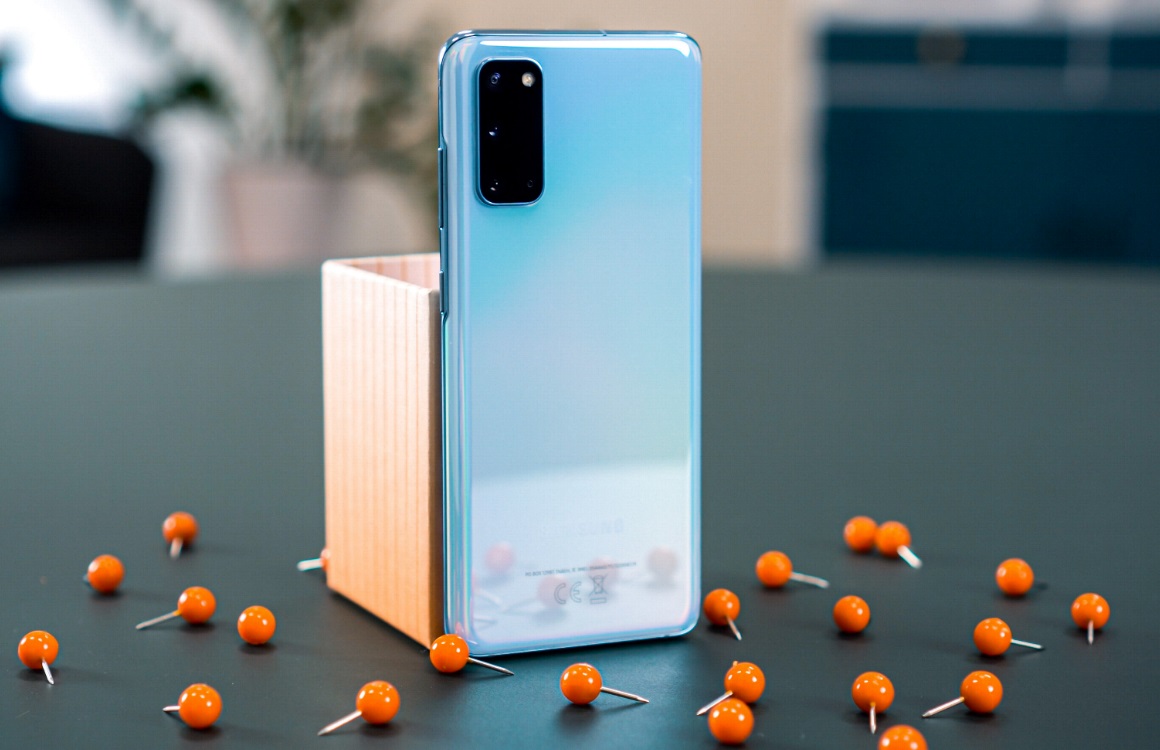
    Some of the phones in Samsung’s 2019-2020 flagship lineup are experiencing issues with the indicator that shows how much battery life remains on these models. The particular phones affected include those in the Galaxy S10 and S20 families and the Galaxy Note 10 and Note 20 lines. There are two major problems affecting these phones. One is that the battery (and thus the phone) shuts down before the indicator measuring the remaining battery life hits 1% or less. The other problem is that the phone runs through the last 1%-5% of battery life too quickly.

    Several users confirmed that these battery issues are legitimate. One subscriber with the handle of Ldn_brother wrote: “I can confirm this on the s20 ultra. As soon as I get down below 15% the battery magically disappears rapidly. I’ll be on 6% and all of a sudden my phone has turned off after I pick it up 2 mins later. I’ve kind of learned to live with it, although I know its not right. Never had this with the S4 or S7.”

    One Galaxy S20 Ultra 5G user had a suggestion. He posted “Easy solution, charge your phone whenever possible and don’t let it get that low.” This might sound like an impractical fix, but if you don’t mind spending a few bucks for a power bank (one with a 10,000mAh capacity battery or larger), you might be able to try out this bit of advice to see if there is any improvement.

    If you feel like blaming the blazing fast charging capabilities supported by some of these devices, you might be barking up the wrong tree. For example, it is true that the Galaxy S20 Ultra 5G comes with a 25W charger out of the box, and Super Fast Charging 2.0 does support 45W charging,  But one of the devices having battery issues is the Galaxy Tab S5e, and that slate charges at “only” 15W. And this brings us to another point; while we have been focusing on flagship Galaxy phones, other Samsung devices have had these problems as well.

    So far we have yet to hear from Samsung about these battery issues. Owners of Galaxy devices impacted by this problem should keep their fingers and toes crossed hoping that the manufacturer can solve this issue with a simple OTA update. Or you can take matters into your own hands by calling Samsung yourself and alerting them to the problem. In the states, pick up your phone (and assuming that there is enough battery life on the device) and call 1 (800) 726-7864. The company’s online support site can be found by tapping on this link.

  • Trade War Talks May Never Solve China’s Economic Issues

    Trade War Talks May Never Solve China’s Economic Issues

    The “trade war” between the US and China is misguided when it comes to economic fortunes, according to one analyst. As Chinese Premier Li Keqiang gave a speech at the Boao Forum for Asia on March 27, he played down the idea of an economic slowdown. As ongoing disputes with President Donald Trump are still unresolved, fears are that the crisis is starting to bite. However, in addressing the conference, Keqiang said that market expectation had “significantly improved” and major economic indicators have been “steady”.

    The Gold Standard for Economic Analysis May Not Apply

    As it often is, gold has been used as a measuring stick for the state of the global economy and, specifically, national economies. By reviewing gold price movements using XAU/USD charts, as noted by DailyFX, traders can get an insight into the underlying health of a nation. In support of this, we can look back through history and see how the price of gold correlations to major financial slumps.

    As noted by this guide to financial bubbles, gold prices dropped by 64% in 1982. This slump came at the same time the US was in the midst of a recession. With gold prices and economies so closely linked, the precious metal has become a marker of China’s recent economic movements.

    Following a slowdown in China’s GDP at the start of 2019, gold prices took a tumble. Erasing a seven-month high, the price per ounce dropped by $20 to $1,278 in late January. By the end of February, the price had surpassed $1,300, according to CNBC, and was holding firm in light of the latest round of US/China trade negotiations.

    However, while another round of talks will have investors tracking the gold markets, chief economist Daniel Lacalle believes such moves are misguided. Discussing the trade war with Tyler Yell, Lacalle said that economic swings were a product of “general growth issues”, not trade wars. In his opinion, governments and central banks see a financial crisis as a problem with demand. For him, that’s a mistake, and forcing stimulus into the market creates a “sugar rush” effect that doesn’t actually increase demand.

    Put simply, he believes that pumping an economy full of stimulants creates the facade of demand and masks the underlying problem. What’s more, he believes it causes adjustment issues further down the line. Much like a patient on medication doesn’t immediately return to a normal state, economies suffer a similar comedown. Therefore, to focus on the trade wars as the reason for slower rates of economic growth in China is wrong, in Lacalle’s opinion. While he stops short of offering a simple solution, the idea is interesting in the context of retail in Asia.

    Retail Issues May Belie a Bigger Problem

    The consensus is that tensions have harmed retail across the two continents. In November 2018, Bloomberg reported that US Asian supermarkets had seen a drop in sales because Trump’s tariffs forced them to pay more for imported goods. The end result is higher prices for groceries, which has subsequently led to a loss of trade. While this can be directly linked to the trade war, these micro issues can’t be applied on a macro scale if Lacalle’s perspective is correct.

    China’s economy and, in turn, its retail sector may be stagnating because of too much artificial growth. The idea of a trade war is juicy headline fodder for media outlets. However, analysts are by no means in agreement on why growth has slowed. While it may well be because of tensions with the US, there are those that believe the crisis runs much deeper than that.