Tag: ivory

  • Ban on ivory sales in China to take effect on Sunday

    Ban on ivory sales in China to take effect on Sunday

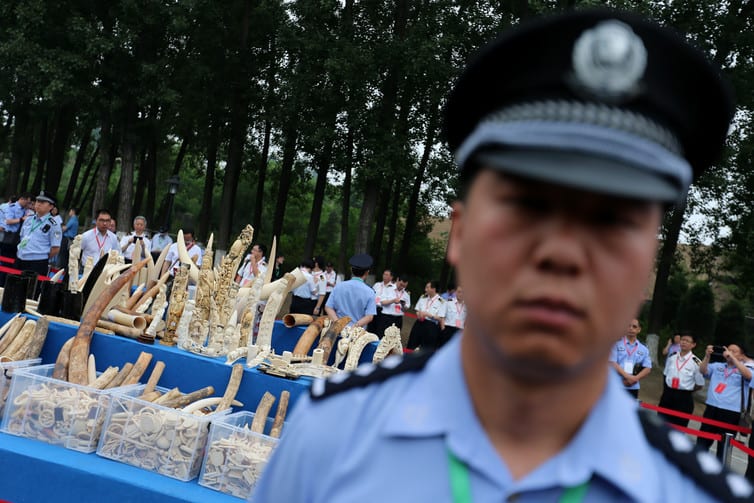
    A ban on ivory sales in China, the world’s largest importer and end user of elephant tusks, takes effect on Sunday. Wildlife activists have described the move as a vital step towards reducing the slaughter of the endangered animals.

    It is estimated 30,000 elephants are killed by poachers in Africa every year. China has made a big push to eradicate ivory sales and demand has fallen since early 2014 due to a crackdown on corruption and slower economic growth.

    Public awareness campaigns featuring celebrities have helped boost awareness of the bloody cost of ivory. “It is the greatest single step toward reducing elephant poaching,” said Peter Knights, chief executive of the conservation group WildAid.

    Legal ivory

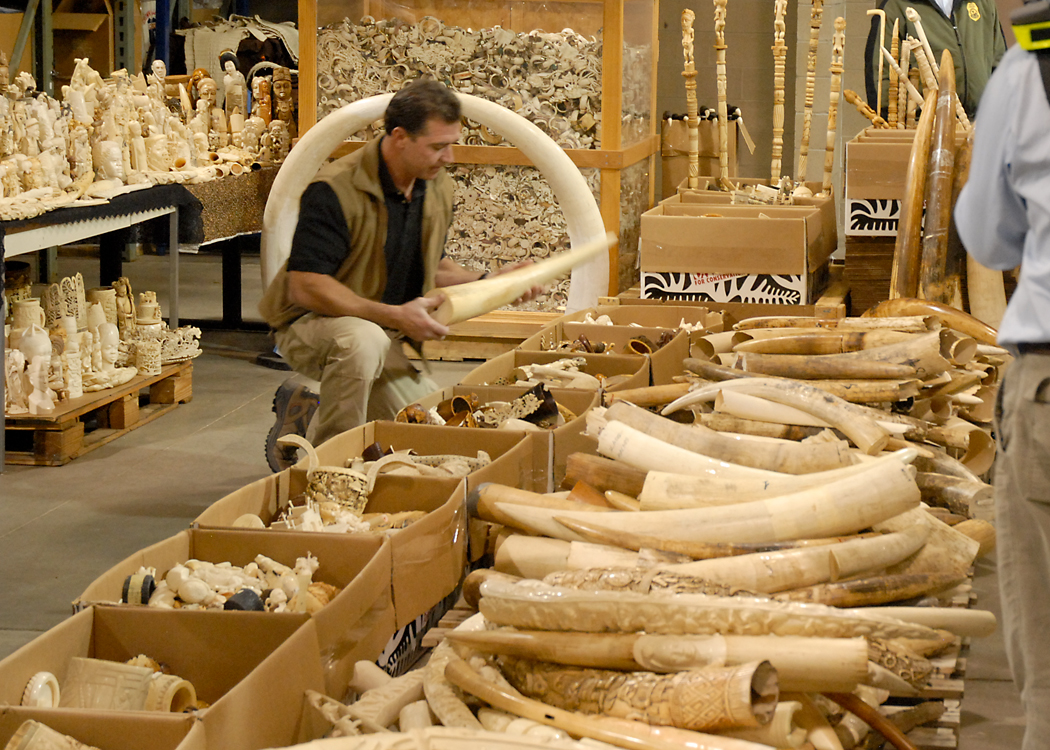
    China has allowed the sale of pre-convention ivory, which refers to products such as carvings and crafts acquired before the 1975 Convention on International Trade in Endangered Species of Wild Fauna and Flora (CITES), as long as it is accompanied by certificates.

    The trade in pre-convention ivory has legally thrived in China and Hong Kong since 1975, but environmental activists have long asserted that it has spurred demand for all ivory.

    The ban on all ivory sales has already led to an 80 per cent decline in seizures of illegal ivory entering China as well as a 65 per cent decline in raw ivory prices, according to WildAid.

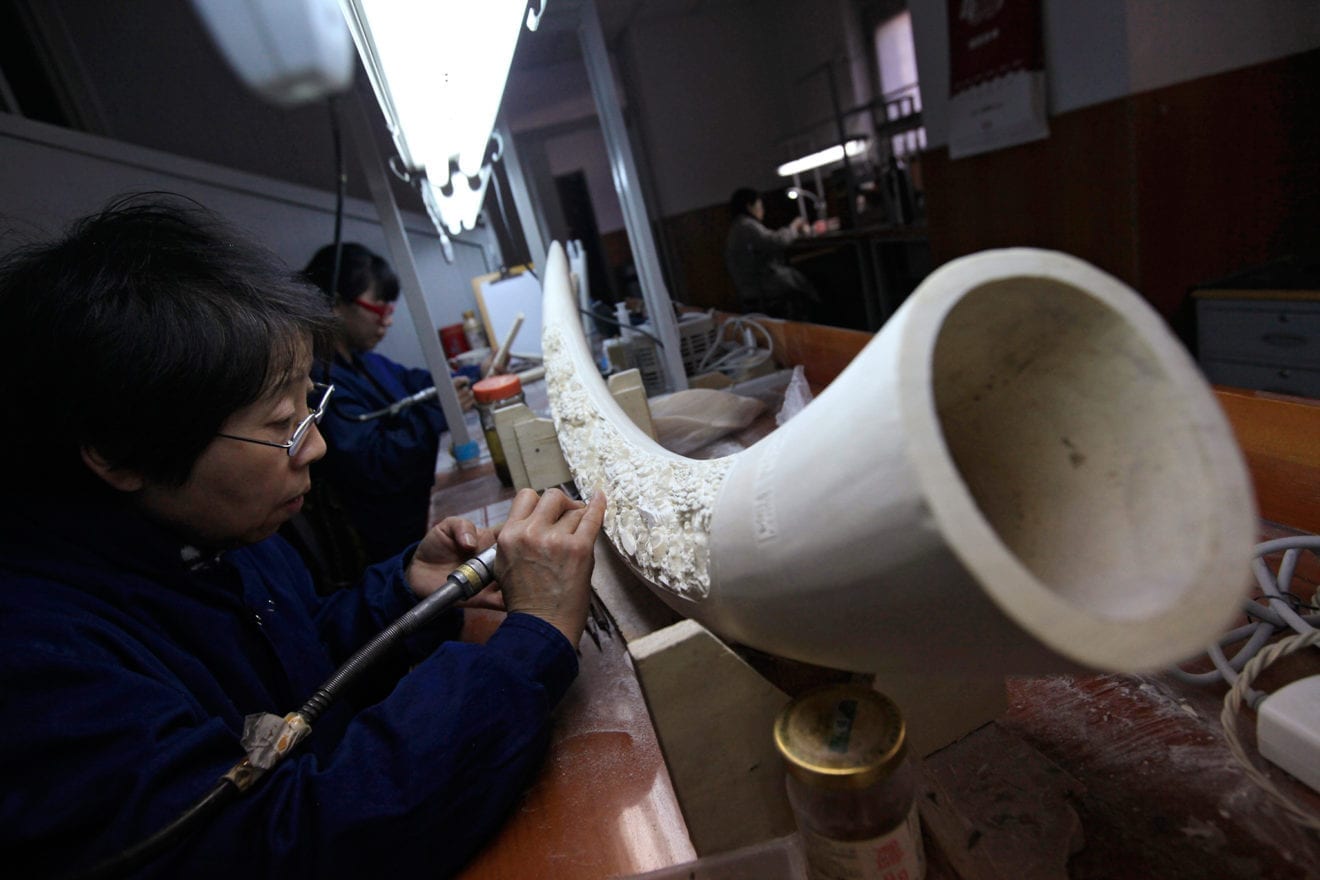
    Under the ban, China’s 172 ivory-carving factories and retail outlets will also close. Some factories and shops started closing in March.

    This year, ivory prices in China were about 65 per cent lower than 2014 levels, said WildAid, with retailers in some places trying to sell off stocks and offering heavy discounts before the ban.

    Hong Kong

    The Chinese ban has been hailed by activists but they warn that Hong Kong, an administrative region of China, remains a big obstacle to the eradication of elephant poaching.

    China’s ban on sales do not apply in the former British colony, which has the largest retail market for ivory and has traded it for more than 150 years.

    Hong Kong is a prime transit and consumption hub for ivory with more than 90 per cent of consumers from mainland China.

    Since 2003, Hong Kong has intercepted about 40 tonnes (40,000kg) of illegal ivory, only about 10 per cent of what is believed to have been smuggled in, WildAid said in a paper to the city’s legislature in May.

    Hong Kong set a timetable for a ban on ivory trading last year, with a phase-out time of five years. A final vote on the ban is expected in the city’s legislature in early 2018.

    Conservationist Zhou Fei said the Chinese ban could be a catalyst for the closure of ivory markets across Asia.

    However, Kenya-based conservation group Save the Elephants said this year that neighbouring Laos has expanded its retail market more rapidly than any other country.
  • Japan’s Rakuten retail site bans ivory sales

    Japan’s Rakuten retail site bans ivory sales

    One of Japan’s largest online retailers has banned the sale of ivory, closing a major marketplace for the controversial trade. Rakuten is accused of being the world’s largest online retailer for elephant ivory, but will now phase out its sale. The trade is legal in Japan for items imported before 1989 – but no new stock can be brought into the country. Many other countries have banned the trade outright over concerns that it contributes to elephant poaching.

    Rakuten also banned the sale of sea turtle products on its site, telling it was responding to “growing international concern”.

    “We expect it will take 1-2 months for all listings of these prohibited products to be removed,” it said.

    On the day of the announcement, a large number of ivory items were still listed for sale, including many carved personal seals known as “hanko”. Sellers of such items are expected to maintain careful records of their origin, and use only government-regulated ivory stockpiles. But activists believe the rules are often circumvented and the precious material is often smuggled across borders.

    Yahoo Japan, another site which allows the sale of ivory, has previously come under fire for the practice.

    However, a spokesman told Reuters it did not plan to halt the trade, saying: “We don’t think that the legal ivory trade in Japan has any impact on African elephant numbers.”

    “It is important to recognise there are cultural differences between different countries,” he added.

    African elephant numbers have plummeted in the last century, and there are an estimated 500,000 remaining on the continent.

    China, a traditional powerhouse in the ivory trade, announced in December that it would ban all ivory activities and trade by the end of 2017.

    Conservation groups hailed the decision as “historic” and a “game-changer” – but ivory artists have lamented the loss of a traditional craft.

  • Hong Kong offers a loophole to China’s ivory ban

    Hong Kong offers a loophole to China’s ivory ban

    China, the world’s largest importer and end user of elephant ivory tusks, is shutting a third of its ivory factories and retail stores on Friday (March 31), the first major step ahead of a formal ban on ivory sales by the end of the year.

    China will shut 67 carving factories and stores with the remaining 105 outlets to be shut before the end of the year, according to documents released by China’s Forestry Administration.

    The high-profile move has been hailed by activists, but they caution that Hong Kong, a special administrative region of China, remains a prime obstacle in eradicating the illegal elephant poaching trade.

    The former British colony, which has the largest retail market for ivory and has traded it for more than 150 years, is a prime transit and consumption hub with more than 90 per cent of consumers from mainland China.

    Hong Kong set a time table for a ban on ivory trading last year with a phase-out time of five years. Lawmakers met this week to discuss the ban but have yet to decide on details and whether to shorten the phase-out process.

    Rights groups say a five-year horizon is too long and the problem of laundering ivory will become far more rampant before a total ban is in place.

    WildAid, a wildlife non-government organisation, estimates up to 30,000 elephants are killed illegally every year. It said markets like Hong Kong had provided “laundering mechanisms for poached ivory and perpetuated the demand”.

    While the price of ivory has fallen by almost two thirds in the last three years, according to a report by Save the Elephants, the danger from poaching remains acute.

    China made a big push to eradicate ivory sales and demand has fallen since early 2014 due to a crackdown on corruption and slowing economic growth. Public awareness campaigns starring Chinese celebrities have also helped to highlight the impact of poaching.

    The wholesale price of raw ivory fell to US$730 (S$1,020) per kg in February from US$1,100 per kg in November 2015 and US$2,100 per kg in early 2014, according to Save the Elephants.

    “Hong Kong’s commitment is in stark contrast to China who are leading the way,” Oliver Smith, chief executive of David Shepherd Wildlife Foundation, said in a letter to Hong Kong lawmakers, adding that if the five-year period was unchanged, “an additional 150,000 elephants will have been killed”.

  • Hong Kong ivory trade faces uncertain future as bans loom

    Hong Kong ivory trade faces uncertain future as bans loom

    Wong Lai-ngan hunches over a battered workbench, his electric rotary tool whining as he carves two phoenixes facing each other into a smooth white tusk.

    Decades ago, Wong’s canvas would have been elephant ivory. But since a 1990 ban on international trading, Hong Kong’s dwindling tribe of ivory carvers has switched to tusks of extinct woolly mammoths.

    The decline of the city’s once-flourishing ivory business is set to speed up after the Hong Kong and mainland Chinese governments announced in December plans to restrict local ivory trading. Wildlife activists hailed the news, saying domestic markets must be phased out to reduce the demand for tusks driving an epidemic of poaching that is decimating Africa’s elephants.

    It also signals the end for Hong Kong’s ivory craftsmen and traders.

  • Why China’s ivory ban is a mammoth step towards saving the elephant

    Why China’s ivory ban is a mammoth step towards saving the elephant

    At the end of last year, China announced a complete ban on its ivory trade and processing activities by the end of 2017. The news, a late Christmas gift to many conservationists, was greeted as a “game changer” by groups including the World Wildlife Fund, which says around 20,000 African elephants are being killed every year for their ivory. As the world’s largest consumer of ivory products, Chinese demand has seen poaching increase and ivory prices rise. The country has had a seemingly insatiable appetite for so-called “white gold”.

    At a meeting of the Convention on International Trade in Endangered Species of Wild Fauna and Flora (CITES) last September, a resolution was tabled which recommended that its 183 member states “close their domestic markets for commercial trade in raw and worked ivory as a matter of urgency”. China’s support of the resolution surprised many and led to it being adopted by consensus. The country had taken a big step in re-evaluating its relationship with ivory and its effect on the world’s elephants.

    The subsequent announcement on December 30 2016 saw China commit to closing up to 15 of its 34 ivory processing firms and 50 to 60 of its 130 licensed ivory retail shops by March 31 2017. The second stage will see China phase out the country’s remaining registered legal processors and traders by the end of the year.

    China has a popular ivory carving industry with a history which stretches back to the Ming and Qing Dynasties. To assist those who carry out this work, there will be schemes to assist ivory carvers with the transition into working with other mediums. “Master carvers” will be encouraged to work in museums and in the repair and maintenance of artistic and culturally significant ivory artefacts.

    The Chinese move effectively brings to an end the future of the country’s domestic ivory market. But there are millions of pieces of (currently) legally owned ivory artefacts all over China which will have to be dealt with through a strict new management system. Ivory products will only be displayed in museums and art galleries for non-commercial purposes or exhibition and the giving and inheriting of ivory will still be allowed.

    The elephant in the sale

    More worryingly, the Chinese ban on trade specifically excludes items described as “genuine antiques”. This exemption raises concerns that elephants will continue to be poached to supply an increased trade in “ghost ivory” (illegal ivory sold as antique legal ivory) as the legitimate market closes.

    Another problem is that a large portion of China’s ivory trade will simply shift to Hong Kong, which is not subject to the Chinese ban. Hong Kong is the world’s biggest legal retail market for elephant ivory and a major transit hub for illegal imports. Hong Kong has itself pledged to phase out its domestic ivory market by 2021 and it is hoped that the Chinese announcement will encourage Hong Kong to speed up the timescale. But there is no guarantee this will happen.

    Concerns over the sale of “ghost ivory” alongside legitimate legal ivory pieces are even greater in Hong Kong. “Hong Kong ivory” has even come to be a derogatory term to describe new ivory masquerading as old.

    This point was recently highlighted by British auctioneer James Lewis, who said of his experiences in Hong Kong:

    You see old ivory on the same shelf as new ivory. I realised then there’s a major market in the Far East that looks at ivory as a commodity as well as an art form, and that the old ivory market is fuelling modern ivory demand.

    But these concerns should not distract us from the positive aspects of China’s plans. In terms of addressing the decline in wild elephant populations and Asia’s attitudes to ivory, the Chinese ban can only be a good thing. Provided Beijing is able to police and manage the changes effectively it could even be the “game changer” conservationists hope for.

    Just as importantly, the fact that China has gone so far and with such a strict time scale after years of negotiation could be the catalyst for other states such as Hong Kong, Laos, Myanmar and Vietnam to follow suit. Demand for “white gold” has taken the elephant to the brink of extinction. Chinese remorse could be the species’ salvation.

  • Price Of Illegally Poached Ivory Halves In China

    Price Of Illegally Poached Ivory Halves In China

    The price of elephant ivory in China has fallen by almost 50 percent over the past 18 months, likely due to a shrunken demand in the country for illegally poached tusks, the Wildlife Conservation Network wrote this week in a blog post.

    Raw ivory in Beijing went from costing an average of $2,100 per kilo (about $955 per pound) in 2014 to $1,100 (or about $500) by November, ivory researchers Lucy Vigne and Esmond Martin revealed in a study scheduled to be released by Save the Elephants in early 2016. The price drop reflects China’s significant decrease in demand for the commodity, believed to be a result of the government’s explicit commitments to cut down on ivory trade and prevent illegal elephant poaching.

    Elephant poaching typically involves killing the animal, hacking off its tusk and discarding its carcass, The New York Times wrote in a gruesome report.

    Historically, China has considered ivory ornaments and carvings to be status symbols, and the country is still widely believed to be the world’s largest ivory consumer. But activists have long urged China to impose strict legislation on the ivory trade.

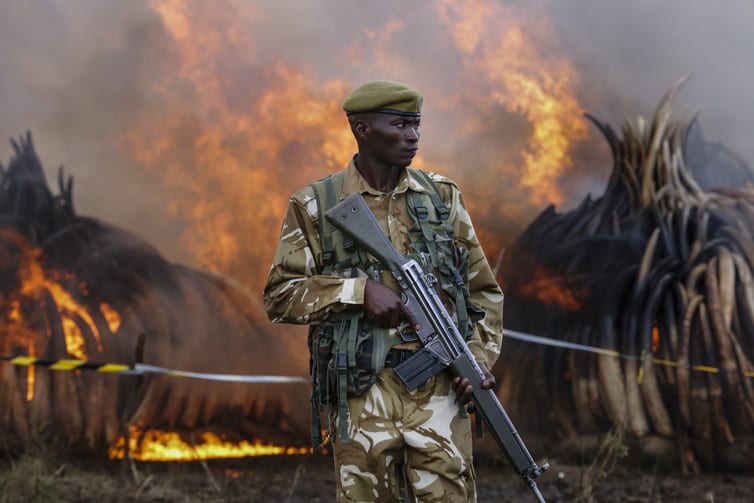
    Chinese authorities announced in May a commitment to phase out the country’s domestic ivory industry. In September, the United States and China also announced a deal to carry out “nearly complete bans” on ivory imports and exports. To show its dedication, mainland China destroyed almost 7 tons of ivory to show the country’s dedication to ban the wildlife crime, according to the World Wide Fund.

    Demand for ivory within the country also seems to have diminished. Vigne and Martin, who traveled across eight Chinese cities to conduct their research, said they “didn’t see a single person buying an ivory item during weeks spent surveying the ivory retail outlets.” The researchers also noted that many ivory retail outlets had cut back on floor space for displays of ivory items.

    Other countries have also ramped up their efforts to prevent illegal elephant poaching. Last year, the Obama administration announced that it would prohibit all commercial trade of elephant ivory. And in October, Tanzania arrested a number of high-level ivory traffickers accused of smuggling at least 4,200 pounds of elephant tusks from East Africa to East Asia.

    But despite the fallen demand for ivory in China, Save the Elephants founder Iain Douglas-Hamilton said the world still had a long way to go to stop the African elephant poaching business. Indeed, the number of elephants in Africa fell from 26 million in 1800 to about 400,000 in August. At least 65 percent of the continent’s forest elephants were poached between 2002 and 2013, WildAid reported last year.