Retail News CRM

Tag: j crew

  • J Crew enters bankruptcy, weighed down by US$2 billion of debt

    J Crew enters bankruptcy, weighed down by US$2 billion of debt

    US fashion-retailing icon J Crew has collapsed under the weight of US$2 billion of debt and with all 492 stores closed due to the Covid-19 epidemic.

    The company, founded in 1947, entered Chapter 11 bankruptcy protection this week allowing it to restructure its debt and business operations to survive in the post-Covid-19 era.

    In a letter to customers, the company reassured it was business as usual during the bankruptcy process with e-commerce sites of its namesake brand and its denim label Madewell continuing to operate.

    “We are there for our customers and fully operational throughout this restructuring process. We will continue operating under the Covid response measures currently in place and look forward to reopening our stores in accordance with CDC (US Centers for Disease Control) guidance as quickly and safely as possible.”

    Much of J Crew’s crippling debt relates to the company’s acquisition by private-equity investment companies TPG Capital and Leonard Green & Partners back in 2011. Under the Chapter 11 process, $1.65 billion of the company’s debt will be converted into equity

    “This agreement with our lenders represents a critical milestone in the ongoing process to transform our business with the goal of driving long-term, sustainable growth for J. Crew and further enhancing Madewell’s growth momentum,” said CEO Jan Singer.

    Neil Saunders, MD at GlobalData Retail, said that although J Crew had been making progress in reducing its losses, the company still ended its last fiscal year $78.8 million in the red.

    “The primary source of this financial woe is the $1.7 billion of long-term debt that sits on the company’s balance sheet like a millstone around its neck. Quite simply this is crippling the business which, at an operating level, is profitable.”

    Saunders described the move into Chapter 11 as “prudent” suggesting it should have been done years ago.

    “The coronavirus crisis has forced the situation to a head. It has also given J Crew some justification to ask lenders to make the unpalatable choice of having their debt converted into equity. In the current trading environment, the alternative would have been defaulted, putting J Crew on the path to liquidation.”

    However, Saunders warns that when J Crew emerges from Chapter 11 – and the pandemic – it has other challenges to overcome.

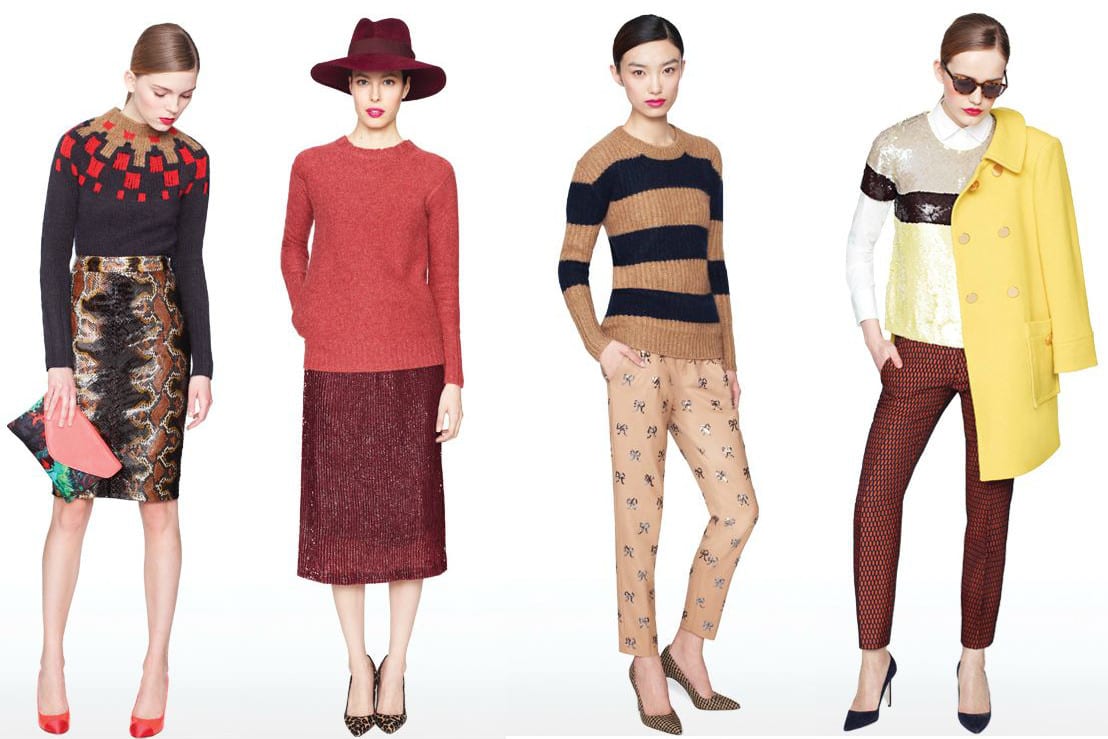
    “The J Crew brand still isn’t resonating with consumers – especially across the full-price part of the business. J Crew’s products are not terrible in either quality or design. However, ranges are samey and lack the embellishments and twists of more contemporary brands that would allow them to stand out. The consequence of this is that a growing number of shoppers see J Crew as both boring and bad value for money and refuse to pay full price for garments.”

    Madewell, he says, is performing better, with sales up strongly, driven by a growing loyal base of shoppers.

    “While the brand is smaller than J Crew it is an important driver of the company’s overall value. As such, it is not surprising that it will now remain a part of the group and not be spun off via an IPO.

    “Before Chapter 11, J Crew was on a slow march to ruin. This process gives the company a chance to survive. However, that survival is not just dependent on reduced debt; it requires a reinvention of the J Crew brand. Given the apparel market will be highly subdued, extremely promotional, and intensely competitive as the coronavirus crisis abates, the reinvigoration of the ailing label will be an order of the tallest magnitude.”

  • J Crew Hong Kong stores shutters after failed Asian foray

    J Crew Hong Kong stores shutters after failed Asian foray

    American fashion brand J Crew is to close its two Hong Kong stores later this month, six years after it chose the city as the launchpad for a failed Asian foray.

    Notices have been posted on the doors of the two J Crew Hong Kong stores – at Times Square in Causeway Bay and On Lan Street in Central – advising customers of the pending closure. At Times Square it is promoting 50 percent off remaining stock.

    A staff member of the Times Square store told the South China Morning Post the stores would close on February 23.

    Like other international retailers in Hong Kong, J Crew was battered by the social unrest which gripped Hong Kong from June to December last year and has now been impacted by a dearth of mainland Chinese visitors resulting from the growing coronavirus crisis which has all but closed the border with the mainland.

    J Crew is the headline brand of J Crew Group, which also operates the denim brand Madewell.

    Announcing its move into brick-and-mortar stores in Asia in early 2014, J Crew was expected to open in major cities across the region. However, a licensing agreement with Itochu in Japan, which at last count had about 76 stores, will soon be the only remaining physical presence in the region.

    The company designs and sells menswear, womenswear, and childrenswear including apparel, shoes, and accessories.

    The company has experienced turbulent times of late, avoiding bankruptcy protection in 2017 after reaching a debt-for-equity swap arrangement with bondholders. In November 2018 CEO James Brett stepped down and was replaced by a group of four senior executives sharing the role until in April last year when the president and COO Michael Nicholson assumed the title.

    Last month, the company announced Jane Singer, a previous CEO of Victoria’s Secret would replace Nicholson.

    Between 2016 and 2018, J Crew shuttered almost 100 stores in the US and as a further part of a restructure in November 2018, the company’s J Crew Home, Mercantile and Never even brands were shut down allowing the company to focus on its core fashion offer.

    After the Hong Kong store closures, J Crew will have about 450 retail stores trading in the US along with its Japanese license. It also sells online shipping globally.

  • J Crew to spin off Madewell denim jeans brand

    J Crew to spin off Madewell denim jeans brand

    The Madewell denim brand is set to be split off from J Crew as part of a planned IPO by parent Chinos Holdings.

    Documents lodged with the US Securities and Exchange Commission on Friday show Chinos plans to raise funds to pay off some of its US$1.7 billion in debt, although the volume of shares and their projected value have yet to be revealed.

    Under the plan, Chinos Holdings will be renamed Madewell Group.

    “We have consistently grown at Madewell, but we have retained both our focus and the start-up mentality of our earlier days, which allows us to remain nimble, challenges us to get creative and motivates us to always look toward the future,” said Madewell CEO Libby Wadle in a statement.

    The Madewell denim brand is considered to be more successful than its sister J Crew which has been struggling to maintain market share and brand appeal in recent years. In the second quarter of this year, Madewell sales rose 15 percent to $139.7 million with same-store sales up 10 percent. That followed a 28-per-cent rise in sales in the same quarter a year ago. J Crew sales, however, fell by 7 percent in the second quarter, to about $400 million, with comp-store sales down by 4 percent.

  • J.Crew Chairman Mickey Drexler Steps Down

    J.Crew Chairman Mickey Drexler Steps Down

    J.Crew chairman and former-chief executive Millard “Mickey” Drexler has stepped down from his position to focus on other interests, including the development of investment business Dexler Ventures, LLC. Chad Leat has been elected as chairman effective immediately. Drexler is set to continue to serve as a strategic advisor to the company’s board and CEO.

    Drexler said it had been a privilege to spend 15 years with the business, and he was thankful to have been a part of its evolution throughout the years.

    “I look forward to working with the Office of the CEO and the board as a strategic advisor to help support J.Crew’s long term success,” Drexler said in an announcement to investors.

    Leat is a former vice-chairman of global banking at Citigroup and holds nearly three decades of markets and banking experience, having led numerous successful and profitable businesses at Citigroup.

    “I am honored to serve has the next chairman of J.Crew,” Leat said.

    “As chairman, my priorities will be to ensure that the J.Crew brand moves quickly to capitalise on recent momentum and to support Madewell’s growth towards becoming a one billion dollar brand, while also working with the board to identify strong, permanent leadership to guide the Company in its next chapter.”

    Drexler’s departure follows the exit of chief executive James Brett and chief marketing officer Vanessa Holden in November 2018. Brett had been in the position for 16 months, while Holden had been with J.Crew for one year.Adtech Ad

    Brett’s exit left the brand leaderless at a pivotal moment, according to GlobalRetail Data managing director Neil Saunders, who noted that the suddenness of the exit suggested a disagreement over how to develop the brand moving forward, and that the brand’s management had been an issue since before

    “If the departure of Jim Brett hails the return to these unrealistic attitudes, J.Crew is going to slip back and undo all of the progress made to date. Given the precariousness of its financial position, this is a mistake it cannot afford to make,” Saunders said.

  • J.Crew’s CEO Jim Brett is leaving the firm

    J.Crew’s CEO Jim Brett is leaving the firm

    J.Crew chief executive Jim Brett is exiting the company, the retailer said, and a committee of four executives will step in to manage operations until a replacement is found. The statement said the decision had been mutual between Brett and the board of directors.

    “Returning J.Crew to its iconic status required reinventing the brand to reflect the America of today with a more expansive, more inclusive fashion concept,” said Brett. “However, despite the recent brand relaunch already showing positive results, the board and I were unable to bridge our beliefs on how to continue to evolve all aspects of the company.”

    Brett will be replaced by four executives: chief operating officer Michael Nicholson, chief experience officer Adam Brotman, chief administrative officer Lynda Markoe and Libby Wadle, president of the Madewell brand.

    Brett joined the specialty retailer in July 2017, at a time when the company was struggling with looming debt payments and declining consumer sentiment toward the brand. Over the next year and a half, he overhauled the executive team, bringing in former colleagues from West Elm — where he was CEO — and URBN — where he worked at both Anthropologie and Urban Outfitters — to revamp the brand identity and restructure the business. In 2017, the company was able to bide a bit more time to implement a turnaround, negotiating with creditors to push back the maturity of $566.5 million in debt from 2019 to 2021.

    He lowered prices, launched new brands and tried to reposition J.Crew as an inclusivity-driven, one-for-all label not so tied down by its preppy heritage, especially as it had most recently been interpreted by agenda-setting designer Jenna Lyons.

    In a sharply worded email sent to senior staffers in July 2018, he dismissed Lyons’ work, which turned polarising near the end of her tenure, while laying out his own priorities.

    “PRETTY always sells. A glen plaid jacket with a graphic tee and camouflage pants is anything BUT pretty,” he said. “The new feminist fashion movement is enjoying the POWER of femininity (see latest Dior shows) vs. the last feminist movement which was about women finding power in dressing like men. Femininity is critical — pretty is critical — femininity is powerful. These things are in starch [sic] contrast to Jenna’s masculine, sexual and overtly aggressive J. Crew.”

    While Lyons’ vision had stopped resonating with consumers, Brett’s fix was viewed by some analysts as a watering down of the product. There were too many changes at once — from the introduction of a bare-bones loyalty programme to changes in fabric suppliers to the implementation of a marketplace — all with varying impact. He also continued to discount heavily, something many of J.Crew’s competitors are trying to move away from. Talk of a decline in morale also permeated Brett’s run, with multiple corporate-level employees leaving, including one of Brett’s own hires, chief marketing officer Vanessa Holden, who recently announced her departure.

    In the second quarter of 2018, the group — which also includes Madewell — reported that same-store sales rose 1 percent from a year earlier after 15 straight quarters of decline. Star performer Madewell, which drives about a fifth of sales, saw comps jump 28 percent. Total sales at the company were $588 million, up 3 percent from the same quarter in 2017. The company still experienced a net loss of $6 million, compared to a $19 million loss during the same period last year.

    Whether the company has managed to keep up the momentum will be revealed imminently, as third-quarter earnings are expected to be released this month. The period was marked by J.Crew’s official September relaunch, including the rollout of its #meetmycrew marketing campaign. Just this past week, J. Crew launched another brand, Nevereven, which is also being sold at multi-brand retailers such as Fred Segal in Los Angeles.

    But talk of the company giving up more of its corporate office space to Facebook and Instagram — which occupies the same building — and news of a “for rent” sign in the window its popular men’s concept shop, the Liquor Store, indicates that the J.Crew is still in cost-cutting mode.

  • J Crew to develop new brand for younger shopper

    J Crew to develop new brand for younger shopper

    A new J Crew brand is under development as the US fashion house seeks to broaden its appeal to younger female shoppers.

    In an interview, J Crew CEO Jim Brett says the company sees itself as having more than two brands.

    “In fact, we’ll be announcing one new brand this year. It is aimed at women, and it’s younger than any of our existing brands.”

    While he declined to reveal any further details of the new J Crew brand, commentators say the move will help it broaden its audience away from the staple “preppy” style it is currently associated with. It is part of a broader strategy to lift lacklustre sales.

    The new J Crew brand would be its third, the second being denim-driven Madewell, targeting millennial women with what described as “more of a tomboy style”.

    Its core brand is being relaunched with broader range of sizes and improved styling.

    Brett says the strategies are already paying off, evidenced by two consecutive quarters of same-store sales growth. But he cautions new brands must target new customer demographics.

    “It’s very important to maintain distinction between the brands,” he said. “It wouldn’t do the portfolio any good to cannibalise itself.”

  • J.Crew hired the Starbucks executive

    J.Crew hired the Starbucks executive

    Adam Brotman, a longtime Starbucks executive who helped mold the Seattle coffee giant into one of the most technologically advanced retailers, is leaving the company after nine years for a top role at J.Crew.

    Brotman will join J.Crew as president and chief experience officer and report to new CEO Jim Brett, who replaced legendary chief executive Mickey Drexler this summer.

    Brotman was most recently the top executive overseeing Starbucks stores but is perhaps best known for the work he did in previous digital-focused roles. As chief digital officer, Brotman oversaw the launch of Starbucks’ popular “mobile order and pay” smartphone feature — which now accounts for 11 percent of total transactions at Starbucks-owned stores.

    He also led the teams that developed the original payment feature inside the Starbucks app. Starbucks said last year that 30 percent of in-store transactions are completed via mobile payments.

    “Adam’s experience with global field operations and cutting-edge consumer-facing digital platforms makes him an invaluable partner in shaping and driving J.Crew Group’s strategic initiatives to the next level,” J.Crew’s CEO said in a statement. “Adam will help us establish customer relationships that leverage all our channels, helping us to serve them in ways that are more meaningful and relevant to how they shop and live.”

    Brotman will join an executive team attempting to lead a turnaround of the classic American clothing giant that has seen sales slide as customers opt for less expensive clothes from fast-fashion retailers and shift loyalty to clothing brands that originated online.

    Amazon’s push into fashion probably hasn’t helped either. Last year, Drexler said J.Crew approached Amazon about a sale.

  • ZALORA announces partnership with American brand J.Crew

    ZALORA announces partnership with American brand J.Crew

    Asian online fashion destination Zalora and J.Crew have announced they are forming a partnership to expand the US brand’s reach.

    From next month, a curated range of J.Crew’s women’s ready-to-wear and shoes as well as men’s apparel and accessories will be available at Zalora.

    It is J.Crew’s first online venture with a partner into Indonesia, Malaysia, Singapore, Taiwan and the Philippines, and will strengthen its store presence in Hong Kong.

    “Through our innovative platform and expansive logistics network, J.Crew will reach shoppers well beyond capital cities reaching a far wider network of potential customers than ever before,” says Zalora Group CEO Parker Gundersen.

  • J Crew best bet to slow down the losses

    J Crew best bet to slow down the losses

    US listed fashion retailer J Crew’s woes are worsening, with the company’s namesake brand dragging the business towards a significant loss.

    As a result the company will shutter another 39 stores in the final quarter, taking the total closed for the year to 50.

    In the latest quarter, J Crew group-wide comparable sales slid 9 per cent to $566.7 million, a figure made worse by poor figures for the same quarter last year, when sales were down 8 per cent.

    The flagship brand’s sales slumped 12 per cent, following a 9 per cent decline in the same quarter last year.

    A 22 per cent increase in sales by Madewell, largely down to an expanded store network, failed to stem the damage. J Crew lost $17.6 million in the quarter, compared with $7.9 million last year.

    In the nine months year-to-date, the company has accumulated losses of $126.1 million compared with operating income of $34 million in the same period last year, but it says most of that figure is the result of non-cash impairments and restructuring costs.

    Jim Brett, who took over as CEO from founder Mickey Drexler earlier this year, put a brave face on the figures, promising to “reinvigorate the J Crew brand to reflect the America of today and to continue to drive strong momentum in the Madewell brand”.

    However, complicating any recovery plan is a massive $2 billion debt the company is in the process of restructuring.

    “The numbers for the year so far are painful,” observed Retail Dive writer Ben Unglesbee.

  • J Crew ends ‘torrid year’

    J Crew ends ‘torrid year’

    In closing what can only be described as a torrid year for the company, J Crew has posted a weak, but improved, set of fourth quarter figures.

    Total sales rose by 1 per cent, boosted by strong sales gains of 26 per cent at Madewell. While this compares favorably to the 5.5 per cent decline of last quarter, this is but a small bright spot surrounded by a sea of relatively gloomy numbers.

    Total comparable sales fell by 4 per cent off the back of a 3 per cent decline in the prior year. Here the gains made at Madewell were more than wiped out by the continued decline of the core J Crew brand where comparable sales fell by 5 per cent and total sales by 3 per cent.

    The company remains firmly in the red with a US$7.03 million loss recorded during the quarter – although, to be fair, this is a marked improvement on the $30.6 million loss recorded last year. Notably, however, losses for the full fiscal year now stand at a staggering $1.2 billion – something that leaves the company, and its balance sheet, in a very weak position.

    While there are many reasons to be negative, the results at least bring some respite in as much as they suggest that J Crew is at last starting to stem the tide of decline – especially so given that the shallower falls occurred during a quarter when overall demand was notably weak. Even so, the group still faces a herculean task in turning around its fortunes.

    Thanks to changes made by management across the year, many of J Crew’s full line stores are now looking much more disciplined in terms of merchandising and display. However, products are still priced above what many consumers are willing to pay – especially for relatively simple garments that have nice detailing but little else in terms of fashion credentials.

    The issue of price is underlined by the fact that while J Crew’s mainstream stores suffer, J Crew Factory stores are fairly popular with more shoppers willing to buy its products at a reduced price. This isn’t the position that the company would like to be in, but it is one that reflects the fact that there is much more work to do in terms of refining the brand image and the product offer so that it can attract the premium J Crew wants to charge.

    That people are unwilling to pay full price means that discounting at mainstream stores and via the mainstream website is also frequent. While this is a necessary evil to clear down inventory, J Crew is building a reputation as a retailer from which customers should never buy at full price – something that is hampering its ability to rebuild its brand and price integrity.

    In our view, what J Crew needs is a fresh take – and this is something it is hoping will be delivered by the spring collection, the first designed by its creative director Somsack Sikhmounmuong. Even if this is a hit it will be just the first of many steps that J Crew needs to take to rebuild itself into a successful lifestyle brand.

    The market is more competitive and crowded than ever and J Crew needs to do much more to stand out.