Retail News CRM

Tag: japana

  • Domino’s pays $42m to buy out Japan stake

    Domino’s pays $42m to buy out Japan stake

    Domino’s Pizza is taking full ownership of its Japanese joint venture by buying out partner Bain Capital’s minority stake for $42 million.

    Domino’s, which in May announced Bain’s intention to exit, on Monday said it would pay less than the $46.4 million it set aside for the deal in its full-year accounts.

    The purchase will be funded by a combination of cash and existing debt facilities, and is expected to be completed by Friday.

    Domino’s said the transaction will be earnings per share accretive in the current financial year, which started on July 3.

    The deal is the second in less than a week for Domino’s.

    Last week, the company continued its European expansion with the 32 million euro (A$48.1 million) acquisition of German chain Hallo Pizza.

    The cost of integrating the 170 stores into Domino’s Pizza Deutschland, which is majority owned by Domino’s Pizza, will bring the ASX-listed company’s net spend on the deal to between $A52.6 million and $A63.1 million.

    That transaction will only have a small positive contribution to Domino’s FY18 underlying earnings because it won’t complete until early in the 2018 calendar year.

    Earlier this month, the pizza chain said it had returned $5.4 million in underpaid wages and superannuation to its employees over the past four years under a national audit of its stores that is due to wrap up in December.

  • Japanese operator plans 50 Myanmar noodle restaurants

    Japanese operator plans 50 Myanmar noodle restaurants

    Japanese noodle restaurant operator Toridoll Holdings plans to open 50 outlets in Myanmar with a local joint venture partner.

    The Myanmar noodle restaurants, in partnership with YKKO, will target the nation’s growing middle class.

    The first has already opened in Yangon, selling bowls of noodles for as little as US48 cents, with serving sizes to suit budgets and appetites. Ingredients are sourced locally and from neighbouring Thailand to minimise overheads.

    Toridoll, based in Kobe, already operates about 900 eateries in Japan and another 380 across 30 offshore markets, including Vietnam, the Philippines, China, Cambodia and Indonesia. Japan’s perpetually shrinking population has prompted the company to look abroad for growth – it has ambitious plans to operate 4000 restaurants abroad in 2025.

    Meanwhile,

    YKKO is an abbreviation of its the name of its first restaurant, Kyay-Oh, which opened in Yankin.

  • Record trading year for Fast Retailing

    Record trading year for Fast Retailing

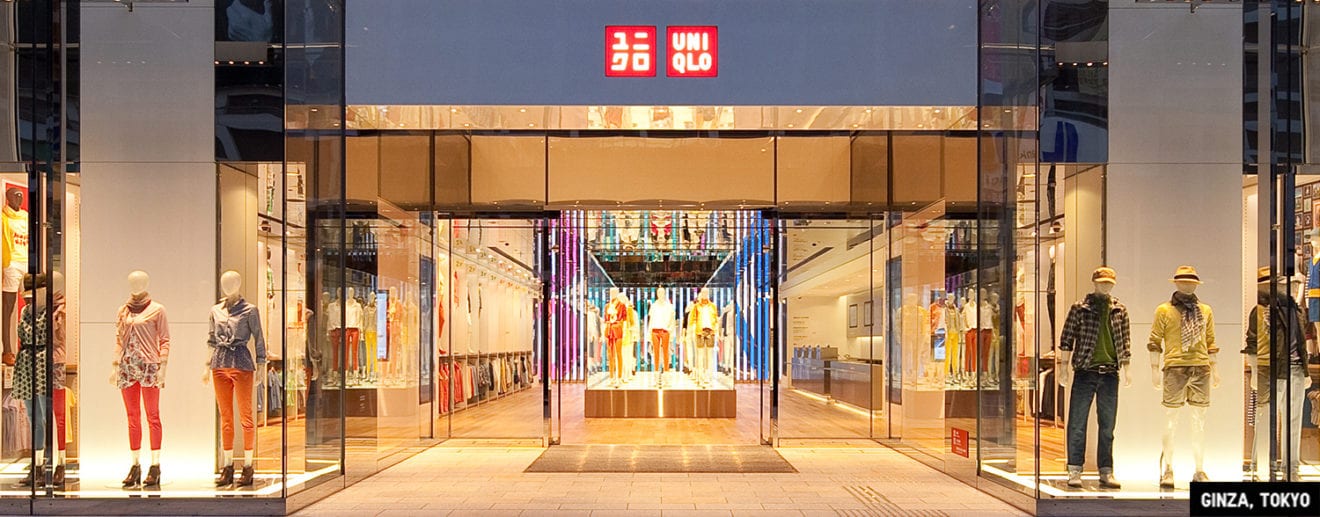
    Uniqlo parent Fast Retailing has had record revenue and profit levels for its latest trading year, to August 31.

    Consolidated revenue reached ¥1.8619 trillion (US$16.6 trillion), up 4.2 per cent year on year, the operating profit soared 38.6 per cent to  ¥176.4 billion while profit attributable to the owners ballooned 148.2 per cent to ¥119.2 billion.
    Net profit expanded by 2.5 times mainly because of profit gains by Uniqlo International.

    Uniqlo Japan: Gross profit margin improves but operating profit down…

    • Revenue up 1.4 per cent to ¥810.7 billion
    • Operating profit down 6.4 per cent to ¥95.9 billion
    • Full-year same-store sales expand by 1.1 per cent (second-half growth of 2.4 per cent, thanks to sales of newsworthy items such as wireless bras and Dry Stretch Kando Pants).
    • Gross profit margin improves by 0.3 points.

    Uniqlo International: Operating profit nearly doubles as Southeast Asia business enters growth stage…

    • Revenue up 8.1 per cent to ¥708.1 billion
    • Operating profit almost doubles (95.4 per cent) to ¥73.1 billion on improved gross profit margins and leaner cost structures regionally, as well as a halving of the operating loss at Uniqlo USA
    • Performance especially strong in Southeast Asia and Oceania, where operating profit doubled year on year.

    Uniqlo Greater China and Uniqlo South Korea also reported large year-on-year profit gains, says Fast Retailing.

  • Japanese Farmers’ Market lands at Changi

    Japanese Farmers’ Market lands at Changi

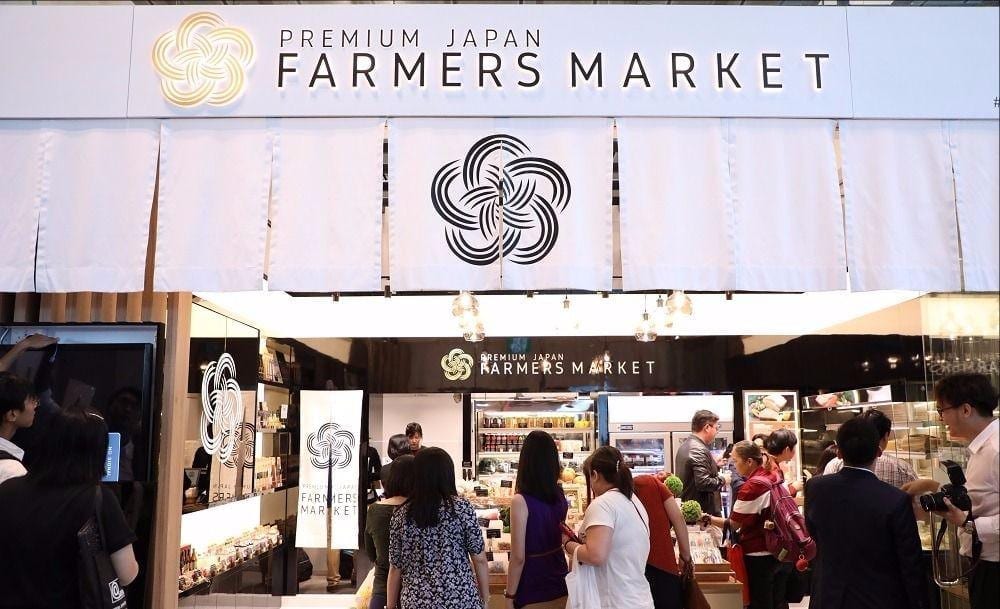
    Hailed as a Singapore first, the Premium Japanese Farmers Market offers everything from seasonal vegetables and fruits to meat products and sake imported from Japan – in Changi Airport’s Terminal 3 departure hall.

    Some items, including egoma tea, a special sushi selection and wagyu sake, are new to Singapore.

    The store also offers ready-to-eat bento boxes by Go-Zen, which can be customised from a range of 25 ingredients including scallops, snow crab, ikura salmon roe, Niigata Japanese rice and wagyu beef.

  • NTT Com launches data network services in India

    NTT Com launches data network services in India

    Japan’s NTT Communications has launched international data network services in India as part of a push to expand its presence in the market.

    The services are being provided through NTT Com’s Indian affiliate NTT Communications India Network Services (NTTCINS).

    NTT Com has also commenced construction of two new data centers in Mumbai and Bangalore through managed hosting and cloud service provider subsidiary Netmagic.

    The $160 million investment will add nearly 500,000 square feet of gross floor space, nearly doubling the company’s data center floorspace footprint in India

    NTT Com likewise acquired a VNO ILD network license in March and has been providing its Arcstar Universal One cloud-based network services as it international network services in partnership with local carriers, using these carriers’ network resources while adding value-added services such as NFV.

    “India has been a key strategic market for us with the accelerating shift of IT services from traditional enterprise data centres into the cloud-based services,” NTT Com President and CEO Tetsuya Shoji said.

    “For the past few years, our business in India has consistently grown over 35% annually. With further expansion of data center foot print and addition of international data network services to our service portfolio, we aim to meet the growing market needs for mobility, e-commerce, IoT, cloud and big data.”

  • Oracle, Fujitsu launch public cloud services in Japan

    Oracle, Fujitsu launch public cloud services in Japan

    Fujitsu and Oracle Japan have launched Oracle Cloud Platform services, including Oracle Database Cloud Service, via a Fujitsu data center, a first for Japan.

    Oracle and Fujitsu have a long history of collaboration when it comes to processors, servers, and software. This synergy now extends to the data center, where Oracle’s cloud services will be available locally to Japanese customers backed by Fujitsu.

    Fujitsu has the largest number of Oracle-certified Oracle Cloud engineers in Japan, and offers a coordinated portfolio of services to assist in the deployment and operations of Oracle Public Cloud, to help organizations build new modern cloud-based solutions and transition their enterprise systems, including mission-critical operations, to the cloud.

    Fujitsu and Oracle formed a strategic alliance in July last year, based on a strategic collaboration to deliver enterprise-grade, world-class cloud services to customers in Japan and their subsidiaries around the world.

    Together with making Oracle Public Cloud services available from Fujitsu’s robust and reliable data center in Japan, can now be used as part of Fujitsu Cloud Service K5, Fujitsu’s public cloud service.

    “The Oracle Cloud Platform running in Fujitsu’s Japan datacenter alongside Fujitsu Cloud Service K5 DB powered by Oracle Cloud is a natural continuation of the three decade history Oracle and Fujitsu have working together to help customers achieve competitive advantage,” said Edward Screven, Chief Corporate Architect, Oracle.

    “By combining Fujitsu’s system integration expertise with Oracle’s cloud services, Fujitsu and Oracle will accelerate the transition of our joint customers’ enterprise systems to cloud.”

    Oracle Cloud offers a complete range of public cloud services across SaaS, PaaS, and IaaS. Oracle Cloud Platform, which includes Oracle’s analytics, application development, data management, and integration services, has experienced steady growth, adding thousands of customers in fiscal 2017.

  • Honda to invest $124 mn to advance vehicle innovation

    Honda to invest $124 mn to advance vehicle innovation

    Japanese automobile manufacturer Honda is going to invest $124 million (approx Rs 802 crore) to establish a multifunctional aeroacoustic wind tunnel facility to advance vehicle innovation and enhance the world-class testing facilities at the Transportation Research Center (TRC), in East Liberty, Ohio.

    The groundbreaking is slated for the late summer of 2017, informed the automaker in a statement.

    “This new facility will further enhance our ability to efficiently create products of the highest quality for our customers,” said Frank Paluch, president of Honda R&D Americas.

    “It will be integral to our aerodynamic and aeroacoustic R&D activity, which spans from advanced research and computer simulation, through scale-model and full vehicle development, to production vehicle performance assurance. And all of this is being done right here in the US.”

    “This innovative and industry leading asset provides us with another distinct reason for our customers to take advantage of the world-class testing facilities we have in Ohio at TRC,” said Mark-Tami Hotta, president and CEO of the Transportation Research Center.

    The aeroacoustic wind tunnel facility will have space for four secure and confidential customer bays, providing the opportunity for use by customers other than Honda.

    The advanced acoustic design will drive the next generation of wind noise reduction by utilising a strategic system of microphones and cameras set up to measure and identify potential noise issues on both the exterior and interior of a vehicle during the development stage, added the company.

  • Miu Miu Japan opens new flagship

    Miu Miu Japan opens new flagship

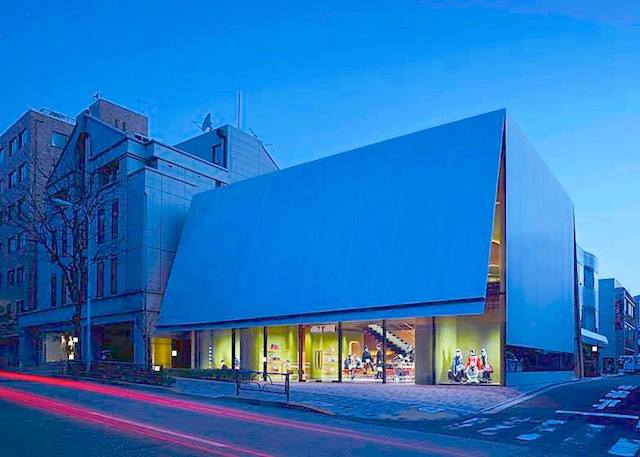
    Prada brand Miu Miu has unveiled a new project with Swiss architects Herzog & de Meuron, the centrepiece of its Japanese operations.

    The 720 sqm building on Miyuki St in the Aoyama District of Tokyo will be the cornerstone of the brand’s Japanese activities. Based in Paris, Miu Miu was established by Miuccia Prada in 1993 as a platform for design explorations beyond her legendary Prada line. Since opening its first boutique in Aoyama in 1999, Miu Miu has maintained a significant presence in Japan and now has 23 boutiques across the country including nine in Tokyo.

    Miu Miu Aoyama Tokyo 415

    Prada says the new building continues the company’s tradition of collaboration with world-class architects and re-emphasises Miu Miu Japan’s dedication to the Japanese market.

    The project for Miu Miu is sited diagonally across the street from the Prada Tokyo Epicenter – also designed by Herzog & de Meuron – in an elegant neighborhood that has, over the past two decades, become a showplace of architectural invention. In contrast to the transparency of the all-glass Prada building, however, the understated metallic surface of the Miu Miu façade is opaque, which lends a more intimate feel.

    Miu Miu in Aoyama Tokyo 415

    The architects say: “Contrary to expectations for a site that is home to so many luxury brands, Miyuki St in Aoyama Tokyo is not particularly beautiful or elegant. The architecture is heterogeneous – a hodgepodge of freestanding buildings of different heights and shapes, with neither historical tradition nor common standards.

    “Never meant to be a space of its own, the street is a purely technical and functional link between Omotesando and the Aoyama Reien cemetery farther down the road. Despite single trees here and there, the atmosphere is not inviting, like a boulevard or a plaza. Tokyo is pure, quintessential city, its territory exploited to the full with absolutely no leeway for the individuality that we take for granted in European cities.

    Miu Miu in Aoyama Tokyo.415

    “We already noticed this over 10 years ago when we were planning the glass building for Prada Aoyama,” they continued.

    “At that time, we were interested in counteracting the situation – on one hand, by placing a small plaza to the side of the building, and on the other, by making the structure completely see-through so that one can see into the interior from all sides and can also look out from inside at specifically targeted views of the city.

    “Over the past decade, the distinctive building has become a much-frequented location and it was therefore important to Prada, our client Prada Japan and also to us as architects to take this into account in planning the Miu Miu store located in the immediate vicinity on the opposite side of the street. We started out by trying several different architectural typologies. Since zoning regulations called for less height, we explored the potential of a smaller, more intimate building. We used the following thoughts to channel our ideas: more like a home than a department store, more hidden than open, more understated than extravagant, more opaque than transparent.

    Miu Miu in Aoyama, Tokyo 415

    “The typological model that best suited these considerations and specifications was a box placed directly at the level of the street, its cover slightly open to mark the entrance and allow pedestrians to look inside. Only then do they realise that the building is a shop.

    “Here, under the oversized canopy, the two-storey interior is visible at a single glance, as if the volume had been sliced open with a big knife, turning the inside out. The rounded, soft edges of the copper surfaces inside meet with the razor-sharp steel corners on the outside of the metal box, while the cave-like niches clad in brocade face the central space of the shop like loges in a theatre.

    “The shop on two tall storeys not only presents enticing goods on tables and in display cases; it is also like a spacious and comfortable home with inviting sofas and armchairs.”

    The façade has neither logo nor pomp; it is a polished, mirror-smooth surface, as if one single giant brushstroke had swept smooth the ordinarily matte surface of the steel panelled façade. This surface attracts the gaze and curiosity of passing pedestrians. But instead of affording a view inside, as in a shop window, the gaze is inverted; instead of the anticipated see-through window, viewers encounter self-reflection.


    Miu Miu in Aoyama Tokyo 415.