
Tag: japanese yen

  • Japan Recalibrates Messaging to Reassure Markets on Reflation Stance

    Japan Recalibrates Messaging to Reassure Markets on Reflation Stance

    Japan has begun recalibrating its economic messaging to reassure financial markets that Prime Minister Sanae Takaichi is not pursuing reflationary policies, Finance Minister Satsuki Katayama said in an interview with broadcaster TV Tokyo on Saturday, Oct 3.

    The policy adjustment followed discussions with US Treasury Secretary Scott Bessent over whether Tokyo was communicating its fiscal direction clearly to international investors.

    Recalibrating Tokyo’s Market Strategy

    Katayama explained that the administration concluded in late August that it needed to address market perceptions that the Takaichi government planned an aggressive return to reflationary spending and loose monetary coordination.

    Tokyo made the decision to change its public posture in late August. Officials determined that clearer explanations were necessary to prevent unhelpful market speculation and currency volatility.

    Feedback from the US Treasury

    Bessent indicated to Japanese officials that Takaichi’s economic policies match current economic conditions. However, the US Treasury chief questioned whether the Japanese government communicated its strategy with sufficient precision to global funds and domestic institutions.

    Katayama noted that Washington’s feedback helped prompt the shift. “So we concluded around late August that we need to communicate that message more clearly to financial markets,” Katayama said, addressing market perceptions that the administration’s policies are reflationary.

    Managing Investor Sentiment

    Market analysts have closely tracked Takaichi’s fiscal and structural reform targets since she took office. For consumer businesses, retail operators and institutional investors across Asia, clarity on Japanese fiscal discipline dictates borrowing costs, currency stability and import price pressures.

    Aggressive reflationary policies risk weakening the yen further, which raises import costs for Japanese retailers while squeezing household purchasing power. By pushing back against the reflationary label, the administration aims to anchor long-term bond yields and stabilize business planning assumptions.

    The Policy Stance Ahead

    Tokyo previously faced scrutiny over whether new spending initiatives would widen government debt issuance or complicate the Bank of Japan’s rate normalization plans. The messaging overhaul formalizes a more cautious stance designed to preserve policy flexibility without alarming debt markets.

    Japanese finance ministry officials are scheduled to roll out the updated policy framework across upcoming investor briefings and international economic summits this autumn.
  • Japanese Yen Drops to 156 Against Dollar Following Hawkish Federal Reserve Rate Hike

    Japanese Yen Drops to 156 Against Dollar Following Hawkish Federal Reserve Rate Hike

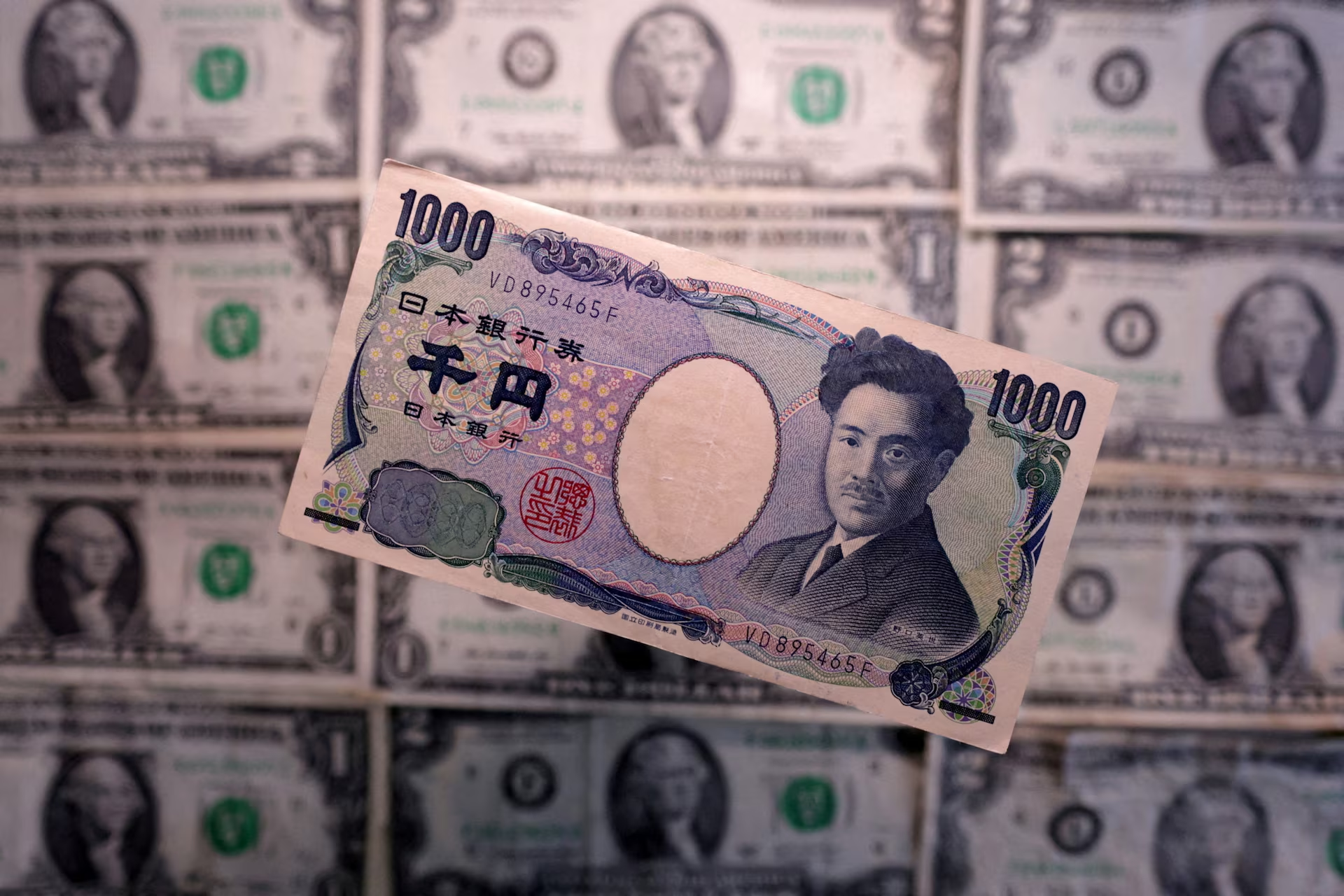
    The Japanese yen fell past 156 against the US dollar in Tokyo on Thursday morning after the Federal Reserve raised interest rates. Fed officials paired the hike with a hawkish outlook. The US Dollar Index climbed above 100 as Asian currencies retreated.

    This sell-off pushed the currency back toward multi-month lows against the greenback after earlier rallies had lifted it to 152 and 154. The reversal resets the cost floor for Asian supply chains. Most settle energy, raw materials and consumer electronics components in dollars.

    Widening Rate Gap Hits Asian FX

    Washington provided the catalyst. The Federal Reserve confirmed further tightening to curb stubborn inflation. Higher yields on US debt continue to draw capital away from Asian fixed income assets, penalising currencies tied to low or negative real interest rates.

    Consumer brands and retailers importing inventory across Asia face immediate margin hits. Importers of packaged food, apparel and tech hardware face higher wholesale landed costs. Export manufacturers gain a temporary translation boost, but it masks weak domestic consumer sentiment.

    Squeeze on Margins and Import Costs

    Retail operators cannot easily pass currency fluctuations to shoppers without dampening foot traffic. Department stores, specialty chains and supermarket networks across East Asia face a hard choice. They must absorb higher procurement invoices or risk volume drops by raising shelf tags.

    Japan’s Ministry of Finance and corporate treasurers lost the breathing room they had earlier in the week. The market had watched the yen strengthen toward 152. The Federal Reserve quickly extinguished bets on an early monetary pause.

    Bank of Japan Decision in Focus

    Earlier trading saw the yen swing between 152 and 154 to the dollar as desks weighed domestic inflation against global bond yields. Japanese land prices and tourism spending showed resilience. Still, imported input inflation continues to squeeze local business margins.

    Traders now look to the Bank of Japan’s upcoming policy meeting. Officials face rising pressure to consider domestic rate adjustments to arrest further currency depreciation.

  • Bank of Japan Expected to Raise Rates to 1.25 Percent on September 18

    Bank of Japan Expected to Raise Rates to 1.25 Percent on September 18

    The Bank of Japan will raise its key interest rate to 1.25 percent on September 18, according to 97 percent of surveyed economists. The projected hike marks an accelerated tightening cycle that would push benchmark borrowing costs to 1.75 percent by the second quarter of 2027.

    A survey of 68 economists conducted between September 1 and September 8 showed 66 respondents anticipate the immediate 25-basis-point increase, up from 57 percent in the previous polling round. More than one-third of respondents, 24 of 66, expect the central bank to deliver another hike to 1.50 percent in October or December. Beyond this year, 89 percent of analysts see the policy rate reaching at least 1.50 percent by the end of March, while 62 percent expect a 1.75 percent rate by mid-2027.

    Washington Pressure and Currency Shifts

    Over 80 percent of polled economists said joint United States and Japanese currency intervention to rescue the yen from 40-year lows, alongside statements from US Treasury Secretary Scott Bessent, substantially lowered domestic political barriers to tightening. Bessent met with BOJ Governor Kazuo Ueda during a gathering of G20 finance leaders, urging decisive monetary action to anchor inflation expectations and curb yen volatility. Following those interventions, the yen strengthened to around 153.37 per dollar, its firmest trading level since February.

    Half of the 54 economists who answered a supplementary question identified 1.75 percent as the terminal policy rate. The proportion projecting a terminal rate of 2.00 percent or higher expanded to 40 percent, up from 36 percent in August and 23 percent in July.

    Cost Pressures for Retail and Consumer Markets

    For consumer goods importers, supermarket chains, and multinational brands operating in Japan, a faster rate hike trajectory creates a double-edged commercial environment. A firmer yen provides relief against imported food and raw material costs that squeezed operating margins over the past two years. Food processors and apparel retailers that absorbed higher procurement prices can begin stabilizing shelf prices without sacrificing unit margins.

    Higher domestic borrowing rates will elevate debt servicing expenses for heavily used retail developers and franchise operators. Household budgets face higher mortgage repayments just as wage gains struggle to outpace core consumer inflation. Retailers relying on discretionary consumer spending will need to defend basket sizes as debt costs rise for domestic shoppers.

    Fiscal Spending and the Planned Food Tax Cut

    Government spending plans are complicating the central bank’s inflation calculus. Budget requests for the upcoming fiscal year climbed to 143.1 trillion yen ($931.2 billion), matching spending levels seen during the pandemic as Prime Minister Sanae Takaichi advances an expansionary fiscal platform. Nearly three-quarters of surveyed economists reported that the request volume elevates market concerns regarding Japanese fiscal discipline.

    With a consumption tax cut on food items also planned, financial markets are likely to have strong concerns about securing funding.

    The earlier policy inertia that allowed price pressures to broaden across services and food now forces faster rate adjustments. The Bank of Japan delivers its rate decision on September 18, with investors tracking the final budget compilation and government debt issuance volumes due before year-end.

  • Yen Traders Brace for Silver Week Intervention as BOJ Decision Looms

    Yen Traders Brace for Silver Week Intervention as BOJ Decision Looms

    Currency traders in Tokyo are bracing for official market intervention around the Bank of Japan’s September 18 policy meeting, eyeing the upcoming three-day holiday for sudden yen buying.

    The Japanese yen climbed 0.5 per cent to 157.99 against the US dollar on Thursday as markets began pricing in an interest rate increase larger than 25 basis points.

    Trading desks expect sharp swings during Silver Week, a long holiday weekend starting immediately after the central bank convenes. Thin liquidity during national holidays gives authorities greater traction when buying yen, echoing April when the government stepped in during an extended break for the first time since 2024.

    Holiday Liquidity and Rate Gaps

    Tokyo deployed a record $96.4 billion over the past month to prop up the currency, backed by coordination with Washington. Japanese Finance Minister Satsuki Katayama and US Treasury Secretary Scott Bessent both confirmed readiness to enter foreign exchange markets without hesitation.

    Hedge funds have nevertheless started rebuilding short bets against the yen. Elevated crude oil import bills and a persistent interest-rate gap with the United States continue to drag the currency down toward the 160 line, where SBI FX Trade president Marito Ueda warned fresh intervention becomes probable.

    Pressures Across Asian Balance Sheets

    For retailers and consumer brands across Asia, rapid currency swings disrupt cross-border supply chains and contract pricing settled in dollars. Japanese store operators face relentless cost increases on imported food and inventory, while regional exporters must recalibrate margins against an unpredictable yen.

    Attention now shifts to the US Federal Reserve’s rate decision days before the Bank of Japan meets on September 18, with traders watching whether the exchange rate tests the 160 level before holiday trading begins.