
Retail News CRM

Tag: japans

  • Japan’s Telecom Titans: Pioneering Global Connectivity with Next-Gen Technologies

    Japan’s Telecom Titans: Pioneering Global Connectivity with Next-Gen Technologies

    As the international telecommunications sector experiences significant changes, companies from Japan are harnessing the power of emerging technologies, their established brands, and strategic partnerships to establish a foothold in the Asia Pacific and various emerging global markets. The Japanese approach is a blend of innovative thinking, collaboration, and long-term strategic planning, all aimed at enhancing regional connectivity.

    Japan’s Telecom Landscape

    In Japan, over 150% of the population owns a mobile phone. However, as the population ages and decreases in size, telecom operators are finding fewer opportunities to attract new subscribers within the country. As a result, they are looking beyond the Asia Pacific for growth opportunities. In terms of global positioning, Japan’s leading telecom companies hold strong. The NTT Group is ranked fifth worldwide with a brand value of $37.1 billion USD, SoftBank sits at 11th with $13.9 billion USD, and au by KDDI is 14th with $10.9 billion USD. These rankings illustrate the robustness of Japan’s telecom sector and highlight the need for these companies to penetrate new markets to maintain their growth. While domestic innovation will persist, international projects, consultations, and partnerships will drive Japan’s global initiatives.

    Leading the Charge in 6G and Intelligent Network Development

    Japan is at the forefront of the development of next-generation wireless technology, making it a primary focus for exports. Leading companies such as NTT DOCOMO, SoftBank, and KDDI are spearheading the profitable development of 6G technology. In December 2024, NTT DOCOMO announced a new 6G initiative following approval from the 3GPP Madrid meeting. Supported by 56 global companies, the project aims to standardize 6G technology, align with UN objectives, and accelerate AI-powered connectivity.

    In July 2025, SoftBank and Nokia conducted Japan’s first 7 GHz 6G outdoor trial, testing centimeter-wave frequencies in Tokyo. The project aims to compare 6G and 5G urban coverage, thereby providing key insights before the ITU-R WRC-27 discussions. Additionally, KDDI Research and Samsung signed a MoU to further AI-driven innovations for 6G. The partnership’s goal is to enhance D-MIMO systems, boost speeds, and broaden coverage using AI. The companies share a vision of a user-centric, AI-integrated 6G network.

    Technology as a Tool for Regional Leadership

    In 2024, Japan demonstrated its leadership in advanced communications with a significant Beyond 5G/6G research project, spearheaded by top firms and selected by the National Institute of Information and Communications Technology (NICT). This project aims to create seamless user connections across cloud data centers, improve fault tolerance, and advance all-photonics networks in rural areas, thereby bolstering Japan’s global standing in next-gen ICT.

    In the same vein, SoftBank unveiled a new AI system for wireless signals in 2025 based on the Transformer model. This AI system, part of the Artificial Intelligence Radio Access Network (AI-RAN) project, boosted 5G speeds by 30% in live tests, thus enhancing Japan’s role in developing AI-powered telecom and next-generation networks.

    Japan’s New Role in the Telecom Ecosystem

    Japan’s leading telecom companies are transitioning from being local market leaders to regional connectivity influencers. By exporting technology, expertise, and ethical standards, they are shaping Asia’s digital landscape. Japan’s influence, powered by 6G innovation, rural networking, and global collaborations, extends beyond its borders, fostering the development of smart, interconnected societies.

    The success of these regional strategies hinges on balancing ambition with caution, and innovation with teamwork. Japan’s telecom industry has set its sights on larger goals, aiming to connect Asia and beyond by focusing on quality, trust, and ongoing innovation.

    Questions & Answers

    What is the current state of Japan’s telecom industry?
    Japan’s telecom industry is robust and globally recognized, with leading telecom companies like NTT Group, SoftBank, and au by KDDI holding strong positions worldwide. However, due to Japan’s aging and declining population, these companies are looking for growth opportunities beyond the Asia Pacific.

    How are Japanese telecom companies advancing 6G technology?
    Japanese telecom companies such as NTT DOCOMO, SoftBank, and KDDI are spearheading the development of 6G technology. They are undertaking numerous initiatives, from standardizing 6G technology to conducting outdoor trials to comparing 6G and 5G urban coverage. They are also focusing on using AI to improve network systems, speed up connectivity, and broaden coverage.

    What is the future outlook for Japan’s telecom industry?
    Japan’s telecom industry is set to evolve from a domestic leader to a regional influencer, shaping Asia’s digital landscape and extending its impact beyond its borders. The industry is also aiming to connect Asia and the rest of the world by focusing on quality, trust, and ongoing innovation. The balance of ambition with caution and innovation with teamwork will be key to the success of these strategies.

  • Kao Corporation Targets $2.68b In Sales With Major Cosmetics Business Revamp

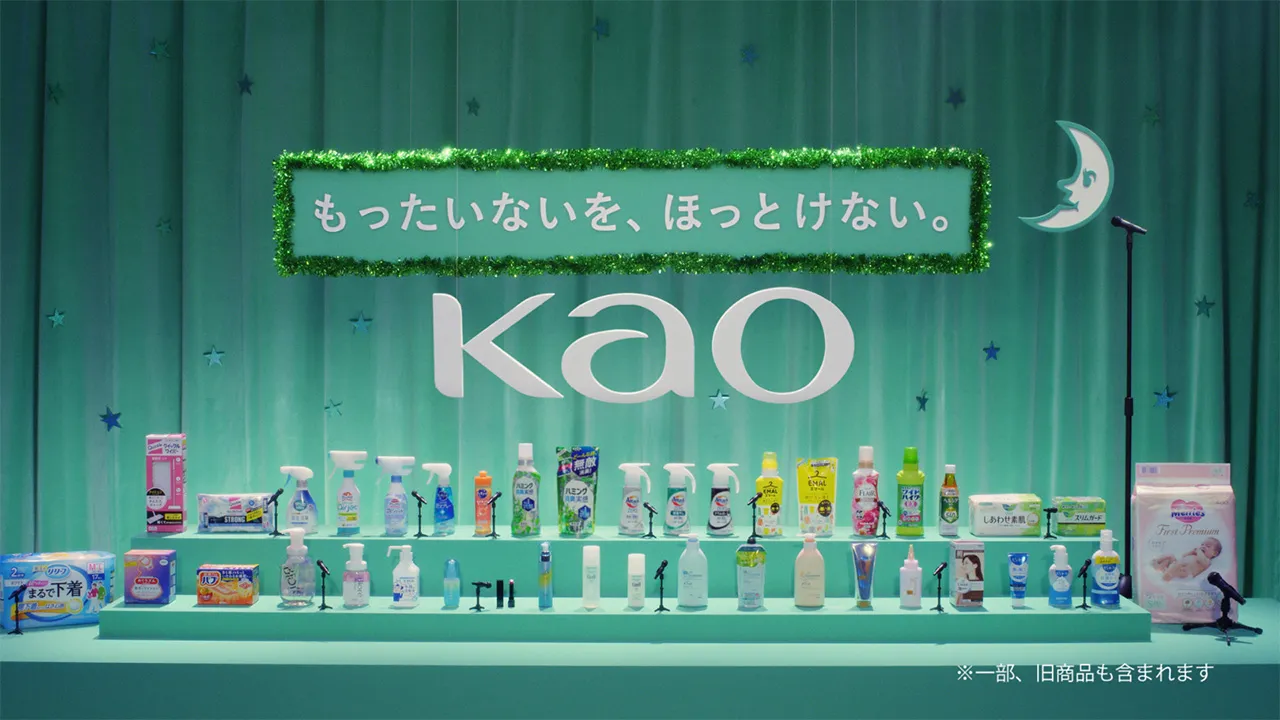
    Kao Corporation Targets $2.68b In Sales With Major Cosmetics Business Revamp

    Kao Corporation, a Tokyo-based company specializing in chemicals and cosmetics, has recently revealed plans to revamp its cosmetics business. The strategy will focus on the growth and expansion of its six core brands.

    The New Strategy

    Kao’s primary goal is to achieve a net sales target of 400 billion yen (US$2.68 billion), alongside an operating margin of 15 percent, as early as possible after 2030. To this end, the company will concentrate its growth and development efforts on six brands: Sensai, Molton Brown, Kanebo, Sofina, Curel, and Kate. The expansion strategy will be tailored to the specific markets where these brands meet consumer demands.

    As part of this reorganization, skincare brand Curel is expected to experience accelerated growth. The company plans to increase Curel’s store presence in Europe by sixfold, aiming to generate 50 percent of the brand’s total sales outside Japan by 2027.

    Focusing on the European and Asian Markets

    Sensai and Molton Brown, two brands that have proven successful among European consumers, will pivot their growth strategy to target the Asian luxury market. The company’s ambitious aims include a 150 percent increase in Sensai sales and a doubling of Molton Brown sales in Asia by 2027.

    For Kanebo and Kate, Kao plans to adapt their expansion to the distinctive characteristics of each Asian market, using Thailand as the initial target market. The company hopes to boost sales of these two brands by 150 percent in Thailand by 2027.

    In a simultaneous move, Kao intends to consolidate Sofina and its sub-brands under one umbrella. The aim is to enhance Sofina’s sales in Asia by 50 percent by 2027.

    Enhancing Profitability and Long-Term Growth

    Beyond brand-specific expansion plans, Kao’s revamp includes a broader focus on improving profitability and fostering long-term growth. This will involve the implementation of core technologies, cost reductions through improved supply chain management, and the application of digital and AI technologies.

    The restructuring process will be spearheaded by Tomoko Uchiyama, executive officer and president of global consumer care – cosmetics business, who began her role in January.

    Uchiyama emphasized the company’s adaptability in the face of change, explaining, “Our cosmetics business has the flexibility to respond to changing times and market dynamics with a diverse portfolio of brands.” She assured that, coupled with the robust foundation of the Kao Group, the company is well-positioned to pioneer advancement of globalization.

    In addition to cosmetics, Kao’s business segments also include hygiene living care (which counts Attack and Laurier among its brands), health beauty care (owner of Biore, among others), and chemical products.

    Questions & Answers

    What are the core brands Kao Corporation is focusing on?
    Kao Corporation will be focusing on the expansion of Sensai, Molton Brown, Kanebo, Sofina, Curel, and Kate.

    What are the business goals of Kao Corporation under the new strategy?
    The company aims to achieve a net sales target of 400 billion yen (US$2.68 billion) and an operating margin of 15 percent, as early as possible after 2030.

    Who will be leading the restructuring process at Kao Corporation?
    The restructuring process will be led by Tomoko Uchiyama, executive officer and president of global consumer care – cosmetics business.

  • L Catterton targets Japan’s furniture sector with stake in Seki Furniture

    L Catterton targets Japan’s furniture sector with stake in Seki Furniture

    L Catterton, an investment firm supported by luxury goods group LVMH, has entered into a strategic partnership with Seki Furniture, a prominent furniture producer and retailer in Japan.

    Established in Okawa in 1968, Seki Furniture originated as a wholesaling business and has since evolved into a leading omnichannel company. Currently, it operates 26 retail outlets, incorporating its Crash Gate brand, and maintains a formidable online presence.

    Seki controls the majority of Japan’s wholesale residential furniture market and is broadening its reach into sectors such as offices, hotels, restaurants, and hospitals.

    The company is backed by an expert in-house design team and an extensive supplier network. Its brands, notably Relaxform, garner recognition for their design, quality, and affordable pricing.

    CEO Hideki Haruta stated, “Moving ahead, we aim to collaborate with L Catterton to achieve additional medium- to long-term growth and augment our corporate value. We remain committed to providing our customers with services and products that offer enduring value.”

    This investment follows L Catterton’s previous investments in home furnishing businesses, including Restoration Hardware and Boll & Branch.

    Earlier this year, L Catterton entered into a strategic agreement with Megabass, a high-end Japanese fishing gear manufacturer, to assist in the company’s expansion.

    Questions & Answers

    What is Seki Furniture’s current market position in Japan?
    Seki Furniture holds the largest share of Japan’s wholesale residential furniture market and is expanding into sectors such as offices, hotels, restaurants, and hospitals.

    What kind of brands does Seki Furniture have?
    Seki Furniture has several brands under its umbrella, notably Relaxform, which is well-recognised for its design, quality, and pricing.

    Who has L Catterton previously invested in within the home furnishing sector?
    L Catterton has previously invested in home furnishing companies such as Restoration Hardware and Boll & Branch.

  • Japan’s Chiikawa Ramen Buta makes international debut in HK

    Japan’s Chiikawa Ramen Buta makes international debut in HK

    Chiikawa Ramen Buta, a famed Japanese ramen house, has expanded its culinary horizons, making its inaugural global foray with a new establishment in Langham Place, Hong Kong.

    The brand draws inspiration from the popular ‘Ro’ series depicted in the Chiikawa manga (comics), fusing elements of the franchise’s whimsical design with traditional Japanese ramen. The result is an enthralling dining experience that delights both the palate and the imagination.

    Life-sized effigies of the beloved characters Chiikawa, Hachiware, and Usagi greet diners, setting a playful tone to the experience. The dining room is adorned with artwork and decor centered around these characters, immersing guests in the enchanting world of Chiikawa.

    Experience Authentic Japanese Ramen

    The Hong Kong eatery boasts an impressive menu centered around their signature ramen, prepared with high-quality broth and ingredients shipped straight from Japan. Diners can choose from three different serving sizes, each named after the manga characters: Chiikawa (mini), Hachiware (small), and Usagi (large). A complimentary sticker and a character-themed fish cake garnish add a fun twist to each bowl of sumptuous ramen.

    Themed Beverages and Souvenirs

    The dining experience is further elevated with Chiikawa-inspired drink containers, which patrons can take home as mementos of their visit. The beverages themselves come with collectible transparent cards, each featuring a different character.

    Branded Merchandise

    In addition to its culinary offerings, the restaurant has also rolled out an assortment of branded merchandise. This includes ramen bowls, beer and water glasses, t-shirts, towels, wristbands, stickers, spoons, and plates, all themed around the lively world of Chiikawa.

    Questions & Answers

    What is the concept behind the new Chiikawa Ramen Buta restaurant in Hong Kong?
    The restaurant combines elements of the playful Chiikawa manga series with traditional Japanese ramen, providing a unique dining experience.

    What special features does the restaurant offer to its customers?
    The restaurant offers life-sized characters from the manga series, character-themed decor, and a menu featuring signature ramen made with authentic ingredients from Japan. In addition, guests can take home Chiikawa-themed drink containers and collectible transparent cards.

    What type of branded merchandise is available at the restaurant?
    The restaurant offers a variety of Chiikawa-themed merchandise, including ramen bowls, glasses, t-shirts, towels, wristbands, stickers, spoons, and plates.

  • Unprecedented Heatwave Hits Matcha Production: Global Demand Soars Amid Price Surge

    Unprecedented Heatwave Hits Matcha Production: Global Demand Soars Amid Price Surge

    Devotees of the highly coveted matcha green tea may need to dig a little deeper into their pockets as a result of unprecedented temperatures in Japan causing a considerable decrease in matcha production. This comes amid a worldwide surge in demand for the popular drink, resulting in significant supply strain and skyrocketing prices, according to farmers and industry insiders.

    Impact of Climate on Matcha Production

    The Kyoto region, a major contributor to Japan’s matcha production, experienced severe heatwaves last summer. The region accounted for roughly one-fourth of Japan’s total production of tencha – the tea leaves used in the production of matcha – which faced crippling damage due to the extreme heat. The poor yield from the recent April-May harvest is a direct result of Japan’s hottest year on record.

    Masahiro Yoshida, who belongs to a family of farmers that has been in the tea business for six generations, reported a significant decrease in his yield. This year, he was only able to harvest 1.5 tons of tencha, a reduction of 25% compared to his usual harvest of two tons.

    “The heatwave last year was so severe that it damaged the tea bushes, significantly reducing the number of tea leaves we could harvest,” Yoshida stated.

    Global Demand for Matcha

    Global interest in matcha has seen a sharp increase in recent years, fueled by health-conscious millennials and Gen Z consumers. Trendy cafes worldwide now offer matcha-infused products ranging from lattes and smoothies to desserts.

    The finely ground tea is highly favored for its rich antioxidant content and higher caffeine levels compared to other green teas. Its popularity received a significant boost last fall due to increased social media attention, resulting in purchase limits being imposed by some wholesalers.

    Tealife, a Singapore-based wholesaler, founder Yuki Ishii confirmed that matcha demand from his customers increased tenfold last year and continues to rise, despite dwindling supplies from Japan.

    The Future of Matcha Production

    Japan’s tencha production reached 5336 tons in 2024, reflecting an increase of almost 2.7 times over the previous decade as more farmers shifted their production towards this crop. However, the Japanese Tea Production Association anticipates a decrease in matcha output this year.

    Marc Falzon, who sources tea from Uji farmers for his New Jersey-based milling company, expressed disappointment with the current situation. He noted that while many hoped for a more abundant harvest this year to alleviate some of the shortages, it doesn’t seem likely.

    Despite a 25% increase in the export value of Japan’s green tea, including matcha, which amounted to 36.4 billion yen (US$252 million) in 2024, the shortfall continues. Tencha prices have escalated to record highs, with a May auction in Kyoto reaching 8235 yen per kilogram, a 170% increase from the previous year.

    While Japanese producers are making efforts to increase matcha production, the newly planted fields will not be ready for harvest for another five years, according to Falzon. As such, he anticipates even more significant price increases in the near future.

    Questions & Answers

    Why has there been a decrease in matcha production?
    Record temperatures and severe heatwaves in Japan, particularly in the Kyoto region, have significantly impacted matcha production, leading to weak yields.

    What factors have contributed to the surge in global demand for matcha?
    The global demand for matcha has increased due to health-conscious millennials and Gen Z buyers. Also, increased social media attention and the introduction of matcha-infused products in cafes worldwide have contributed to its popularity.

    What are the implications of the current matcha shortage?
    The shortage of matcha has led to record-high prices and imposed purchase limits by some wholesalers. Despite attempts to increase production, the issue is unlikely to be resolved in the near future, given that newly planted fields require five years to harvest.