Tag: JBS

  • JBS Foods paid hackers US$11 million to end ransomware attack

    JBS Foods paid hackers US$11 million to end ransomware attack

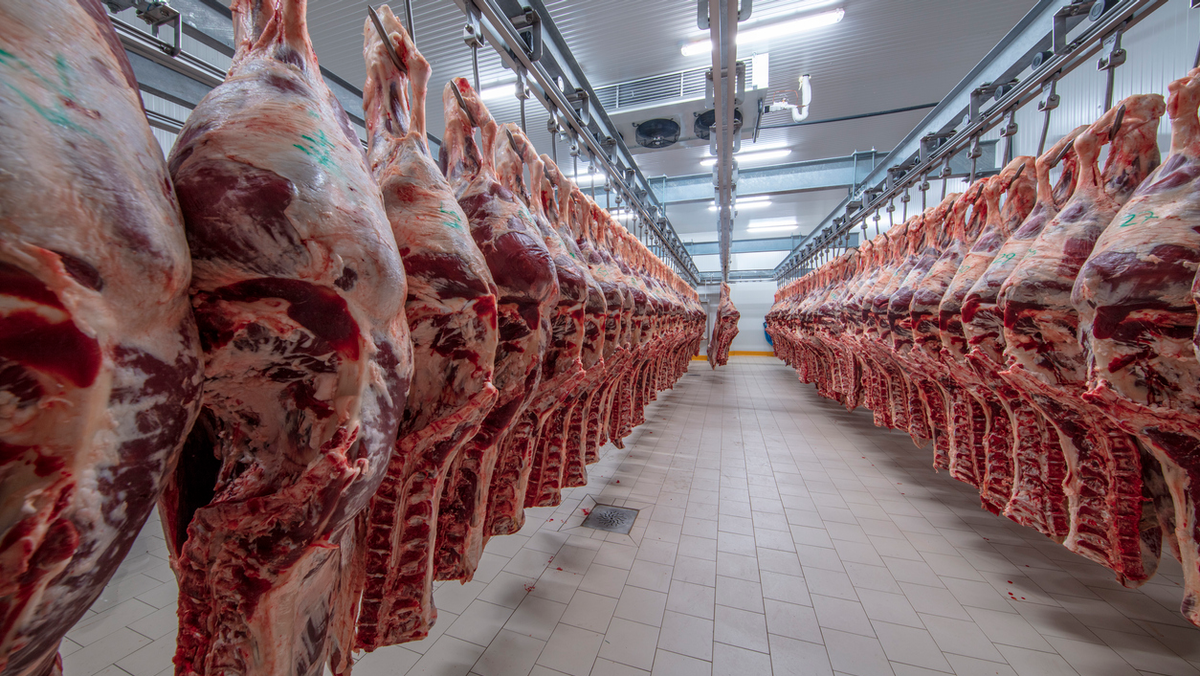
    Meatpacker JBS USA paid the equivalent of $11 million ransom in a cyberattack that disrupted its North American and Australian operations, the company’s CEO has said in a statement.

    The subsidiary of Brazilian firm JBS SA halted cattle slaughtering at all of its US plants for a day last week in response to the cyberattack, which threatened to disrupt food supply chains and further inflate already high food prices.

    The cyberattack followed one last month on Colonial Pipeline, the largest fuel pipeline in the US. It disrupted fuel delivery for several days in the nation’s Southeast.

    The JBS meat plants, producing nearly a quarter of America’s beef, recovered faster than some meat buyers and analysts expected.

    “This was a very difficult decision to make for our company and for me personally,” said Andre Nogueira, CEO of JBS USA of the ransom payment. “However, we felt this decision had to be made to prevent any potential risk for our customers.”

    The Brazilian meatpacker’s arm in the US and Pilgrims Pride Corp, a US chicken company mostly owned by JBS, lost less than one day’s worth of food production. JBS is the world’s largest meat producer.

    Third parties are carrying out forensic investigations and no final determinations have been made, JBS said. No company, customer or employee data was compromised in the attack, it said.

    A Russia-linked hacking group is behind the cyberattack against JBS, a source familiar with the matter said last week. The Russia-linked cyber gang goes by the name REvil and Sodinokibi, the source said.

    The Wall Street journal reported on Wednesday that the JBS ransom payment was made in bitcoin.

    The Justice Department on Monday recovered some $2.3 million in cryptocurrency ransom paid by Colonial Pipeline Co, cracking down on hackers who launched the attack.
  • Alibaba promises US$200 billion global sourcing plan

    Alibaba promises US$200 billion global sourcing plan

    Alibaba has committed to help import US$200 billion worth of goods from more than 120 countries over the next five years. The company says the move underscores its long-term commitment to globalisation and boosting its efforts to meet the rising demand of Chinese consumers for high-quality international products.

    However, it could also be construed as a move to shore up alternative supply chains in the wake of growing trade tensions between the US Trump administration and China.

    “Globalisation is one of Alibaba’s most critical long-term growth strategies,” said Alibaba CEO Daniel Zhang in a statement. “We are building the future infrastructure of commerce to realize a globalised digital economy where trade is possible for every country around the world.”

    He said using Alibaba’s innovative technology and robust ecosystem, the company is positioned to make global trade more inclusive and fulfil its mission “to make it easy to do business anywhere in the digital era.”

    Zhang outlined Alibaba’s plan at its Global Import Leadership Summit held at the first-ever China International Import Expo in Shanghai. Between 2019 and 2023, Alibaba forecasts it will help import international goods from businesses of all sizes in top countries such as Germany, Japan, Australia, the US, South Korea and Singapore. Several top global brands including P&G, Nestle, JBS, and Refa, have confirmed their holistic partnership with the Alibaba ecosystem.

    By collaborating with various Alibaba businesses units, these brands have been able to effectively engage with China’s massive middle class, a primary engine powering China’s consumption growth.

    Alvin Liu, GM of Tmall import and export, said China’s middle class is booming. “As incomes are rising in China, consumers want faster access to and a wider variety of high-quality products from around the world. Tmall is uniquely positioned to help international brands tap into the growing China market as consumers seek to upgrade their lifestyle.”

    According to a joint report by Deloitte China, the China Chamber of International Commerce, and AliResearch, China’s robust economic growth in recent years has increased the number of middle-to-high income Chinese consumers, who are fuelling the demand for imported, quality goods.

    The report notes that China’s cross-border e-commerce market has grown remarkably, with the proportion of imports to total e-commerce sales growing from 1.6 per cent in 2014 to 10.2 per cent last year. The report also highlights that, between 2014 and 2017, the number of shoppers on Alibaba’s dedicated platform for cross-border shopping, Tmall Global, has grown 10-fold.