Retail News CRM

Tag: jcb

  • JCB Launches New Website

    JCB Launches New Website

    JCB , the only international payments brand based in Japan, is pleased to announce that it will launch a new JCB global website on August 3 2016.

    The website has a portal function to link to a wide range of other JCB websites in many countries/territories, and is a new and easy-to-navigate website that offers comprehensive information about JCB corporate, products and services. At the same time as this release, some more new regional websites will also be released for countries and regions where JCB cards are issued, Vietnam, Hong Kong, Indonesia and Russia, in addition to the existing websites for China, Taiwan, Korea, the Philippines and Europe. We will provide attractive contents for all JCB customers.

    Also the JCB global website uses a top level domain*, “.jcb,” based on our concept of universal design that does not rely on languages or countries/territories. This domain is easy to understand and remember for customers, and can only be used by JCB, reducing the risk of counterfeiting or spoofing, and allowing customers to use the websites more safely.

  • Smartphones outpace tablets in Asian eCommerce

    Smartphones outpace tablets in Asian eCommerce

    For the first time, 34 per cent of browser-based online transactions globally are now made on a mobile device, compared to slightly more than 30 per cent last quarter.

    And smartphones are starting to outpace tablets.

    These were key findings of the fourth quarter edition of the Mobile Payments Index by Global payments technology company Adyen, which tracks mobile payment data from browser-based transactions across its client base and monitors Asian eCommerce shopping patterns.

    It also found that many consumers in Asia are increasingly using mobile devices to shop online. This is being driven particularly by such major payments methods as Alipay, JCB and UnionPay. JCB had the highest share (54 per cent) of mobile payments on the Adjen platform, up from 47 per cent the previous quarter. Alipay increased to 44 per cent (up from 35 per cent) while UnionPay reached 31 per cent (from 23 per cent).

    “The checkout stage of the shopper journey is not the end, but the beginning of an on-going relationship with the consumer,” says Adyen Asia Pacific president Warren Hayashi. “Merchants with a frictionless mobile checkout experience are driving repeat traffic, especially in Asia.”

    For the first time, the index shows that smartphones have overtaken tablets as the preferred device for online shopping – 17.5 per cent on smartphone against 16 per cent on tablet, compared to 14 per cent and 17 per cent respectively the previous quarter.

    When it comes to mobile payments globally, the trend to use smartphones rather than tablets continues for the 10th consecutive quarter. Last quarter this share was up 2 per cent to 68 per cent on smartphone versus 32 per cent on tablet.

    Smartphone use far outweighed tablet in Asia, with 29.5 per cent of online payments on a smartphone compared to 4.5 per cent on a tablet.

    In terms of average transaction value, iPad led the way for the first time at $107, edging out not just smartphones but also desktop/laptop, the traditional leader (at $106). Following were Android tablets at $86, iPhone at $83 then Android smartphones at $73.

    Adyen has been tracking the evolution of mobile payments since June 2013. The index is based on its global browser-based mobile payment transaction data. It does not track in-app mobile payments. With its headquarters in Amsterdam and San Francisco, Adyen serves more than 4500 businesses, customers including Airbnb, Booking.com, Crocs, Dropbox, Facebook, KLM, Mango, Netflix, Spotify and Yelp.

  • JCB Starts Trials of Payment by Palm for Practical Application

    JCB Starts Trials of Payment by Palm for Practical Application

    JCB Co., Ltd. (“JCB”), the only international payment brand based in Japan, will be conducting a trial of payment using palm vein authentication in corporation with Fujitsu Limited and Fujitsu Frontech Limited. The trial will be held at the JCB World Conference in October, an event attended by JCB partner companies and financial institutions from around the world.

    Payment by palm leverages the JCB global network with Fujitsu’s palm vein authentication technology, one of the most accurate biometric authentication technologies in the world. After linking a palm vein pattern and payment card information, customers can make a simple, fast and secure payment by using palm. Multiple cards can be linked to one pattern, and customer does not need to bring his or her wallet or any mobile payment device.

    Palm vein authentication is highly accurate (see “About Palm Vein Authentication”), and already being used for many applications such as bank ATMs and high security area access control systems. Incorporating this authentication method with the JCB global network will create the world’s first payment way of its kind.

    In addition to the trial at JCB World Conference in October, JCB has already conducted a trial of, involving several hundred employees at the JCB headquarters in Tokyo in July 2015.

    “We are planning pilots in different global markets in order to develop a unique biometric-based program using the most secure accurate palm vein authentication, followed by the trial at the JCB World Conference. I am confident that this new payment method using innovative technology will be in line with the needs of JCB customers and partners around the world,” Tac Watanabe, Executive Vice President, Brand Infrastructure & Technologies of JCB, said.

  • JCB and Bank BRI Sign for a New Partnership

    JCB and Bank BRI Sign for a New Partnership

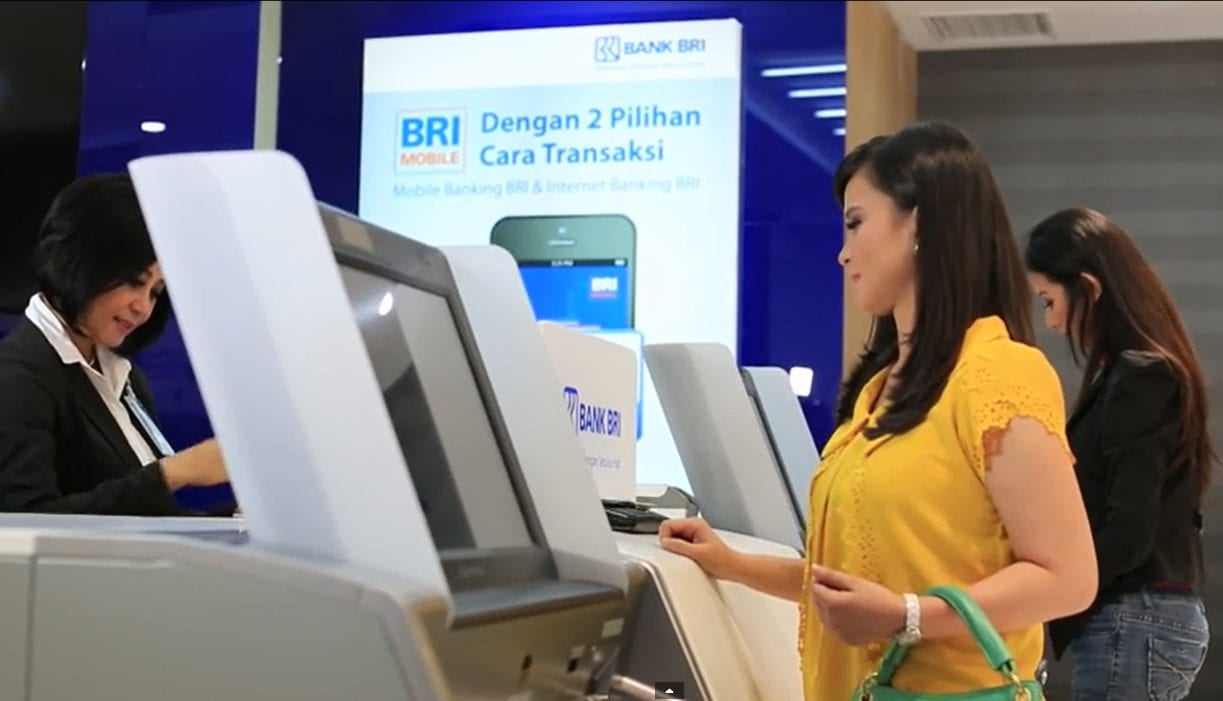
    PT JCB International Indonesia, subsidiary of JCB International Co. Ltd. the international operations arm of JCB Co. Ltd., and PT. Bank Rakyat Indonesia (Persero) Tbk (“BRI”), one of the Indonesia’s largest state owned commercial banks, with specialties in small medium enterprise or small scale & microfinance, are pleased to announce a new partnership for card payment business. This partnership starts from the acceptance of JCB cards at BRI’s acceptance locations, and payment card issuing with JCB brand is also in scope.

    BRI is expanding its consumer business and celebrated the opening of its new branch in Singapore along with the signing ceremony with JCB on 21 August 2015, taking place in front of government official and business owners. Also in attendance were Mr. Asmawi Syam as President Director and Mr A. Toni Soetirto as Managing Director of Bank BRI, as well as Mr. Kimihisa Imada as Deputy President of JCB International Co. Ltd.

    BRI owns a large card acceptance network with over 21,215 ATMs and more than 153,786 EDC terminals (merchants) spread all over Indonesia as of the end of June 2015, and plans to grow a minimum of 85,000 EDC each year. BRI also wants to grow its credit card issuing business a minimum of 25% for issuing model over the 841,000 cards from last year with their unique selling proposition.

    The first phase of the partnership, enabling JCB cards, whose number exceeded 89 million, to be accepted at all of BRI’s 175,001 ATMs and EDC terminals. For ATM acceptance this phase has been in progress since early 2015, while for EDC acceptance, it expected to be launched by the end of this year, followed by phase 2, JCB credit card issuing, which is now being discussed and targeted for 2016.

    Managing Director BRI, A. Toni Soetirto said, “We believe that this partnership would bring a wider network of card acceptance in all of ATMs and EDCs network of Bank BRI throughout Indonesia.”

    Deputy President of JCB International, Kimihisa Imada said, “We are pleased that BRI, as one of the largest commercial banks in Indonesia in term of networks and coverage, has become our partner. This partnership will considerably improve convenience of JCB card usage across Indonesia by adding more than 153,786 acceptance locations. BRI’s broad nationwide network can fulfill the need of local JCB card members who reside in Indonesia as well as those who travel from outside Indonesia, especially in the travel spots and tourist destinations. I am looking forward to extending this partnership to issuing JCB card, whose strength is the quality of service based on the expertise we have gained from experiences providing to customers in Japan for over 50 years. I am sure that the new card product with both reputable brand names will bring new value to the market.”

    About JCB

    JCB is a major global payment brand and a leading credit card issuer and acquirer in Japan. JCB launched its card business in Japan in 1961 and began expanding worldwide in 1981. Its acceptance network includes about 29 million merchants and over a million cash advance locations in 190 countries and territories. JCB cards are now issued in 19 countries and territories, with more than 89 million card members. As part of its international growth strategy, JCB has formed alliances with more than 350 leading banks and financial institutions globally to increase merchant coverage and card member base. As a comprehensive payment solution provider, JCB commits to provide responsive and high-quality service and products to all customers worldwide.

    Note: JCB statistics included in About JCB are as of the end of March 2015. For more information, visit: www.jcbcorporate.com/english

    About Bank Rakyat Indonesia

    Bank Rakyat Indonesia (Bank BRI) was established on December 16, 1895, which marks BRI’s anniversary ever since. Since August 1, 1992, under the Banking Law No. 7 year 1992 and Regulation of the Government of the Republic of Indonesia No. 21 year 1992, Bank BRI’s status has changed into a limited liabilities company. At that time, Bank BRI’s ownership was still in the hand of the Government of the Republic of Indonesia for 100%. In 2003, the Indonesian Government decided to sell 30% of the bank’s shares, marking BRI a public company under the official name of PT. Bank Rakyat Indonesia (Persero) Tbk., which is still used until now.

    Bank BRI is one of Indonesia’s state owned bank with a consistent focus on SMEs business. With more than 10,551 offices including mobile services (e-BUZZ, Teras Keliling and the newly launched Teras Kapal), supported by over 21,215 ATMs and more than 153,786 EDCs (merchant and BRILink), Bank BRI is the largest Bank with the widest network in Indonesia.

    In order to constantly provide the best services to customers and to be the frontrunner in creating financial inclusion by focusing on supporting SMEs business reach all over Indonesia, on 28th April of 2014, Bank BRI signed a contract to purchase and launch a fully owned satellite called BRIsat. Targeted to orbit on 2016, the purchase of BRIsat has made Bank BRI the first and only Bank in the world to own and operate its own satellite.

  • Banque Pour Le Commerce Exterieur Lao Public to launch BCEL-JCB Credit Card in Laos

    Banque Pour Le Commerce Exterieur Lao Public to launch BCEL-JCB Credit Card in Laos

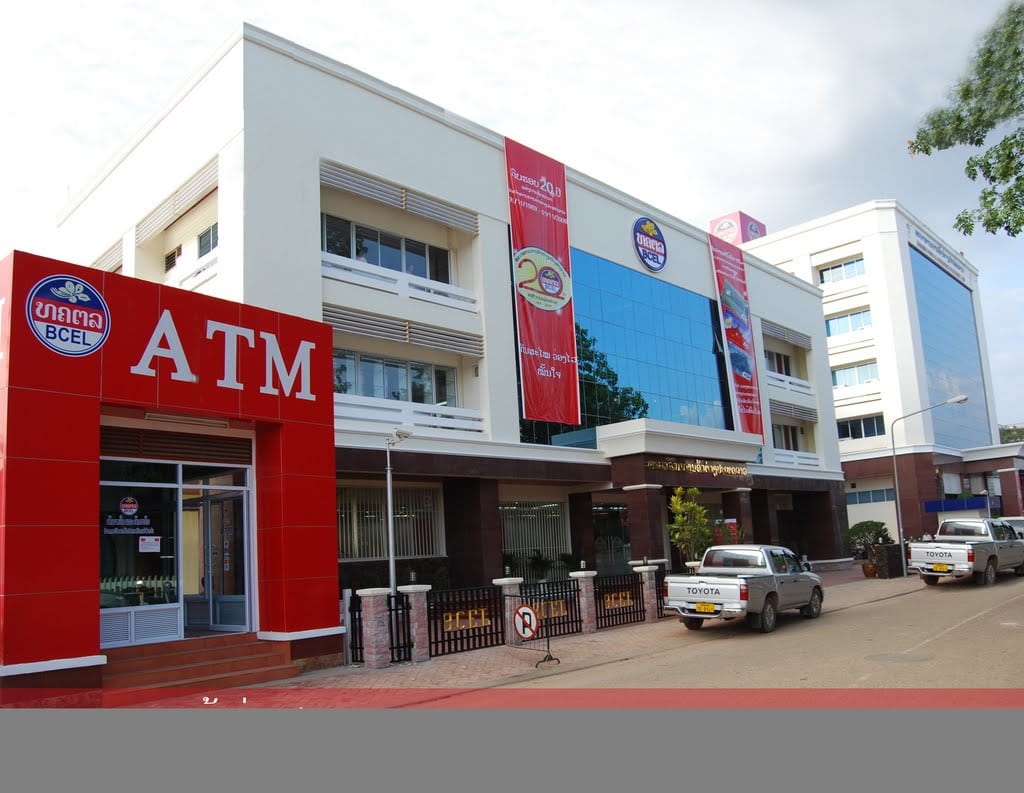
    Banque Pour Le Commerce Exterieur Lao Public (BCEL) and JCB International Co., Ltd. (JCBI), the international operations subsidiary of JCB Co., Ltd., have announced to launch BCEL-JCB Credit Card in Lao People’s Democratic Republic (Laos).

    BCEL-JCB Credit Card can be used at about 29 million POS using JCB acceptance network and there are many more privileges that BCEL-JCB Credit Cardmembers will enjoy at more than 100 merchants in Laos, and also can have advantage and special offers at around 2,300 JCB merchants worldwide as well as the exclusive JCB Plaza Lounges located in popular destinations including Singapore, Hong Kong and Paris.

    BCEL is one of the leading commercial banks in Laos established in 1975. BCEL continued to grow and strengthen gradually in various fields including the size of assets, deposits, loans and the number of clients. The bank has 19 branches, 65 service units (outlets), and 11 foreign exchangers nationwide. JCB cards are today issued in 19 countries with about 90 million cardmembers and accepted at about 29 million merchants in 190 countries and territories around the world. JCBI and BCEL have had a partnership since 2013 for merchant acquiring to expand JCB card acceptance. With this launch, BCEL is the second bank to issue JCB cards in Laos.

    Phansana KHOUNNOUVONG – Deputy Managing Director of BCEL stated, “This project of BCEL-JCB Cards has the objective to widen the choices of products that can offer our customers with efficiency and convenience in terms of smarter payment in their daily lives, which will also come with reduction in cash transaction and with higher security. The primary target customers include those who are interested or desire to hold a credit card. We believe that this product will help widen our customer base and secure our position as the leader in credit card product in Lao market in long term. BCEL are always aware of the quality and high profile of JCB which is also accepted internationally. And it is our privilege to partner with JCBI in this project which results from our agreement on June 23 2014.”

    Kimihisa Imada, Deputy President of JCBI said: “The start of issuing with BCEL, the leading bank in Laos, will be a great opportunity for JCB card business in Laos. In JCB’s global expansion strategy, our current focus is the Mekong region because of its growing economy and the potential growth of the card payment market. Laos is located in the center of the region and shares borders with all of the other Mekong countries. The card market in Laos has great potential and I believe this market will rapidly expand in the next few years. With the cooperation of BCEL we would like to accelerate the card market, showing the people in Laos the advantages and benefits of using the BCEL-JCB card.”

    Banque Pour Le Commerce Exterieur Lao Public (BCEL) was established in 1975, by that time the bank operated as a specialized branch of former State Bank (The Bank of Laos), especially the monopolized implementation of international banking services for Lao government. In 1989, BCEL transformed into the fully commercial bank and continued to grow and strengthen gradually in various fields including the size of assets, deposits, loans and the number of clients. By October 2014, the bank has 19 branches, 65 service units (outlets), and 11 foreign exchangers nationwide and the bank also having a banking relationship with more than 30 high-profile banks worldwide. At present, BCEL has successfully become a strengthened public bank and leading bank in Lao P.D.R, the bank has set its new strategies from 2012 to become an advanced bank and to develop its service system to reach international standard. BCEL has won many awards from overseas: namely, in 2011, the Bank of the Year, Lao PDR, from The Banker Magazine, in 2012 won the Lao Domestic Technology and Operation Bank of the Year, Asian Banking and Finance Magazine, in 2013 won Most Innovative Retail Bank Laos; and global Banking & Finance Review Award 2013, in 2014, Laos Domestic Cash Management Bank of the year, Laos Domestic Technology and Operation Bank of the Year, Domestic Retail Bank of the Year-Laos, and Online Banking Innovative of the Year-Laos, from The Asian Banking and Finance Magazine.

    JCB is a major global payment brand and a leading credit card issuer and acquirer in Japan. JCB launched its card business in Japan in 1961 and began expanding worldwide in 1981. Its acceptance network includes about 29 million merchants and over a million cash advance locations in 190 countries and territories. JCB cards are now issued in 19 countries and territories, with about 90 million cardmembers. As part of its international growth strategy, JCB has formed alliances with more than 350 leading banks and financial institutions globally to increase merchant coverage and cardmember base. As a comprehensive payment solution provider, JCB commits to provide responsive and high-quality service and products to all customers worldwide. For more information, visit: www.jcbcorporate.com/english