
Tag: john ternus

  • Apple Shares Fall 4% as Rising Memory Costs Threaten Gross Margins

    Apple Shares Fall 4% as Rising Memory Costs Threaten Gross Margins

    Apple shares dropped about 4 per cent in premarket trading on Tuesday, putting the tech giant on track to lose over $170 billion from its $4.94 trillion valuation. The decline followed executive warnings that escalating memory component costs will squeeze profitability.

    Chief Executive John Ternus delivered his first earnings report on Monday, describing the current memory-pricing climate as “unprecedented” and cautioning that cost pressures will extend beyond the quarter ending in December. The company expects gross margins for the period to slip to between 45 per cent and 46 per cent.

    That guidance marks a contraction from the 47.9 per cent gross margin reported for the September quarter, even after factoring in tariff refunds. The cost squeeze comes as Apple exhausts the advantage of earlier, lower-priced memory inventories, leaving fresh hardware manufacturing exposed to higher market rates.

    Component Inventories Diminish

    The hardware manufacturer had managed production costs throughout 2026 by tapping stockpiles of memory purchased under earlier, cheaper contracts. Those reserves are now depleted. Fresh component purchases reflect elevated spot and contract rates, exposing hardware production directly to wholesale price spikes.

    Rising memory bills arrive alongside operational expenses from rolling out generative features across the Siri ecosystem. Apple must now pay more for core memory silicon inside every handset while spending heavily on server infrastructure to process assistant queries. For regional consumer electronics retailers, higher component inputs point toward wholesale price increases across upcoming device cycles.

    Flagship Demand Carries Fourth Quarter

    The margin compression follows a record September quarter for iPhone revenue despite broader consumer spending headwinds. Handset sales reached $57.58 billion, clearing market forecasts of $56.54 billion.

    Apple achieved that total using a staggered device launch that offered only the top-tier 18 Pro models during the final days of its fiscal 2026. The baseline Duo models did not ship during the period. The reliance on premium tiers cushioned top-line numbers, but it narrows the cushion available when factory-gate component bills climb across every tier.

    We see the flagship iPhone as the linchpin of this ecosystem, from which Apple derives pricing power, switching costs, and a network effect

    Valuation Gaps and Supply Chain Risks

    The company enters the holiday quarter trading at nearly 35 times expected 12-month earnings. That multiple sits well above rival tech platforms, with Alphabet trading at 18.23 times and Microsoft at 23.43 times forward earnings. Such a premium leaves little leeway when gross margins contract by two to three percentage points.

    Device vendors across Asia face identical supply crunches, yet Apple commands the balance-sheet scale to secure volume allocation ahead of smaller competitors. If higher retail tags depress consumer upgrade cycles across key Asian markets, hardware revenue will take the brunt of the downturn.

    The immediate indicator remains gross margin execution for the December-ending period, where management must hold the guided 45 per cent floor while absorbing continuous memory cost revisions.

  • Apple Starts Selling US$1,999 IPhone Duo

    Apple Starts Selling US$1,999 IPhone Duo

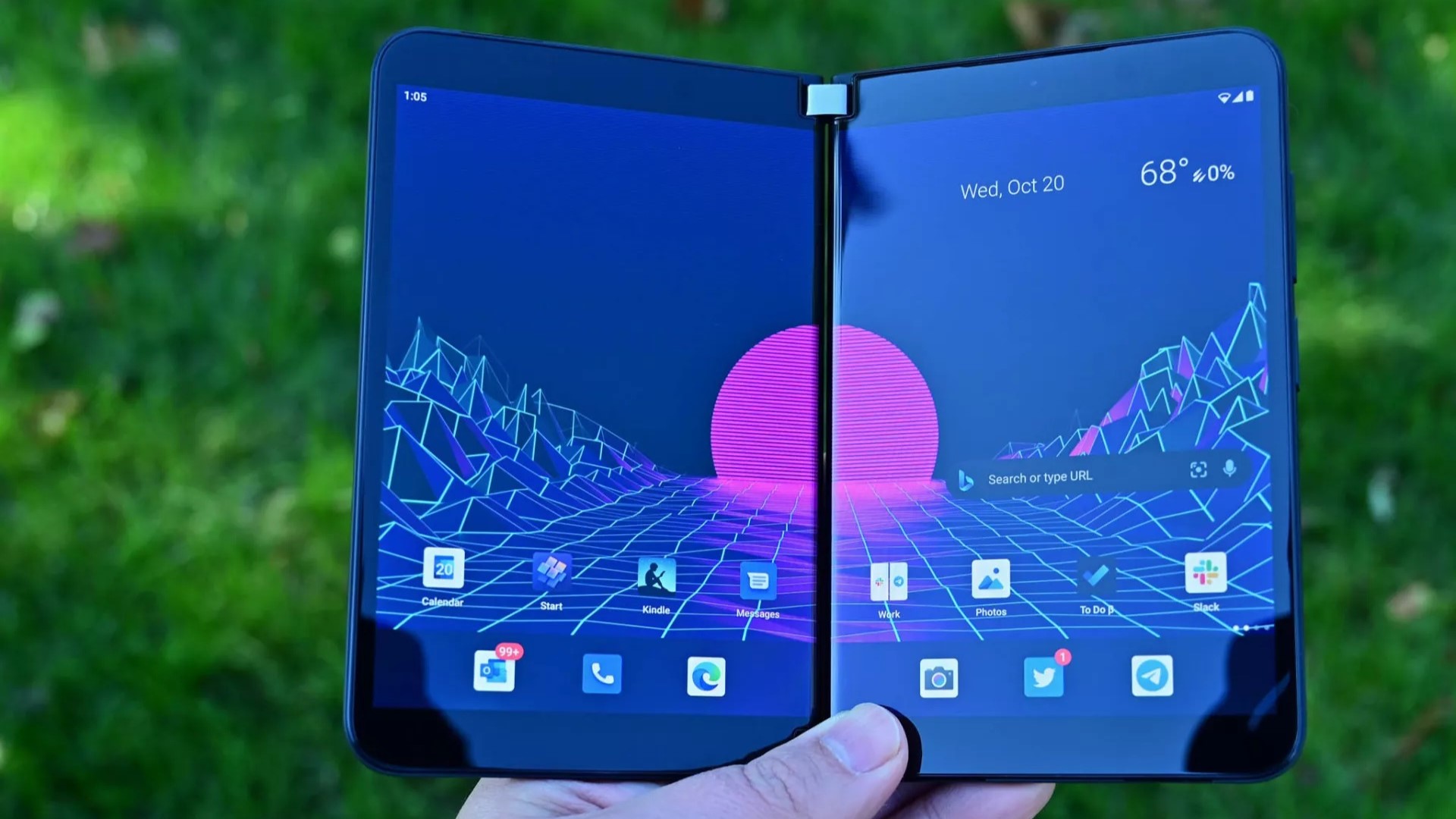
    Apple began selling its first folding phone, the US$1,999 iPhone Duo, on Friday (Oct 23), betting the device can transform the foldables market after nearly two decades of making only incremental updates to the iPhone.

    The launch marks an early trial for new Apple chief executive officer John Ternus, who unveiled the hardware barely a week after taking charge in September.

    Apple enters a niche segment where rivals such as Samsung Electronics and Huawei Technologies have sold premium foldables for years.

    Channel Allocations and Asian Retail Constraints

    Within minutes of pre-orders opening on Oct 16, Apple’s estimated delivery dates for the Duo had slipped to late January as demand outpaced supply. The company called the response from customers “nothing short of extraordinary”.

    The limited supplies could disappoint Apple fans lining up in front of stores to buy the Duo. Apple told Reuters that walk-in availability would vary by country, with limited stocks in the US, Australia, Canada, Mexico and much of Britain and Europe. In China, France, Hong Kong, India and Japan, units would be available only for customers who had ordered online. In the China-governed territory of Macau, where the iPhone Duo will be available for walk-in customers only, fans already started lining up hours in advance, social media posts and media reports showed.

    Rivalry With Incumbents in Regional Markets

    Early reviews have praised the US$1,999 Duo’s premium design as well as its sturdy and barely visible hinge, a major feat for the phones whose prominent creased screen has long been a major drawback and potential deterrent to buyers. But reviewers have also said that camera compromises including the absence of a telephoto lens and third-party apps that still need to be reworked for the new display size could disappoint some buyers.

    They have noted that iPhone Duo in its smaller, folded state is less handy for the litany of quick tasks that most users carry out each day on standard iPhones, leading several prominent reviewers to recommend against the Duo for many Apple customers.

    “Foldables have been an established category for years, but adoption has remained relatively limited compared with conventional smartphones. Apple’s entry could bring the format to a much broader audience,” said Francisco Jeronimo, vice-president at market research firm IDC.

    IDC expects Apple will take 44 per cent of the foldable value in 2026 on 31 per cent of foldable units. By 2027, it will become the market leader in the category both in value and units shipped, according to the firm.

    “Apple has made a convincing case for this form factor,” Jeronimo said after spending a week with the Duo. “Now comes the next test: turning excitement into availability, adoption and a lasting new chapter for the smartphone market,” Jeronimo added.

    Executive Leadership and Product History

    “It’s been a lot of fun trying the Duo out for a week, but it feels like I’ve gotten to use an extraordinarily polished prototype, not a finished product that I’d want to buy and carry,” longtime Apple commentator John Gruber, the author of the blog Daring Fireball, wrote in a review.

    Tech commentator Marques Brownlee, popularly known as MKBHD, said in a YouTube review that “if you’re just a regular person who doesn’t do much more than texting, social media and browsing here and there, then it is probably a no”.

    “But if the US$2,000 doesn’t mean much to you, and you like the idea, after the learning curve and getting used to not having facial identification, it is a really fun phone.”

  • Samsung Fights Apple Foldable Push as Counterpoint Projects 25 per Cent Duo Share

    Samsung Fights Apple Foldable Push as Counterpoint Projects 25 per Cent Duo Share

    Samsung launched a marketing blitz across Asia and Europe on Wednesday to protect its premium smartphone business. The campaign follows Apple’s release of its first folding handset, the $1,999 iPhone Duo.

    Apple’s entry puts it in direct competition with the $1,899 Galaxy Z Fold 8. Counterpoint Research expects Apple to capture a 25 per cent global market share this year, cutting into Samsung’s projected 38 per cent share.

    Cupertino designed the Duo with a passport-style layout similar to Samsung’s latest flagship, which runs Alphabet’s Gemini artificial intelligence. Samsung fought back by booking billboards across Seoul, Tokyo and London with slogans like “Welcome to Foldables” and “The World’s Lightest Fold”. It also posted technical notes on its consumer website detailing its hinge and weight reductions.

    The Margin Fight at Two Thousand Dollars

    A narrow $100 price gap shifts the fight to hardware refinement and software ecosystems. For telecom carriers and electronics retailers across Asia, having two players at the $2,000 price point turns foldables from a show into a high-volume margin driver.

    Heavy risks sit with Samsung’s mobile division, which faces margin erosion if affluent buyers in South Korea, Japan and Greater China defect to iOS. Samsung Display supplies the folding screens for the iPhone Duo and collects component revenue on every unit sold. Even so, the handset division loses its most profitable hardware moat.

    Rivalry in Component Supply and Social Media

    Online, Samsung went on the offensive. It ran posts on X describing the Duo as “reheating our leftovers” and “So far, so same”. Apple chief executive John Ternus fired back, calling earlier foldables “like two phones awkwardly stuck together.”

    Industry analysts note that Apple waited for screen mechanics to stabilize before entering the segment. “Apple is good at getting its timing right and entering the market when a product reaches a certain level of maturity,” said Ben Wood, chief analyst at CCS Insight.

    Seven Years of Category Building

    Samsung created the commercial category in 2019 after display failures delayed the original Galaxy Fold release by several months. Over the next eight device generations, the Suwon-based company improved screen durability and expanded global distribution while battling Chinese rivals like Huawei in domestic and regional markets.

    Stores begin stocking the iPhone Duo later this month. That starts the first direct quarterly sales clash between Apple and Samsung during the peak year-end shopping season.

  • Tim Cook Steps Down as Apple Chief Executive and Hands Reins to John Ternus

    Tim Cook Steps Down as Apple Chief Executive and Hands Reins to John Ternus

    Tim Cook will step down as Apple chief executive to become executive chairman, handing control of the 4.5 trillion dollar company to hardware chief John Ternus.

    The transition ends a 15-year tenure that increased Apple’s annual sales from 108 billion dollars to 416 billion dollars, with net profit surging fourfold to 112 billion dollars.

    Cook will guide Apple’s government relations and trade strategy between Washington and Beijing starting September 1. A regulatory filing shows Ternus receives a base salary of 3 million dollars and an annual equity target of 55 million dollars beginning in 2027. Cook will draw an annual salary of 2 million dollars effective September 26, alongside a 45 million dollar target award in restricted stock units.

    The Asian Manufacturing Pivot

    Ternus inherits a hardware empire undergoing its biggest geographic realignment since the launch of the original iPhone. Apple is shifting assembly lines outward from mainland China to insulate its retail pricing from tariffs and geopolitical disputes. The company plans to manufacture the majority of US-bound iPhones in India by the end of 2026, while routing AirPods and iPad assembly through Vietnam.

    Cook built Apple’s initial dominance on Chinese factory scale, but the post-pandemic supply map demands distributed capacity. For electronics retailers and component suppliers across Asia, the succession confirms that Apple’s diversification away from single-country manufacturing will continue under a hardware-focused chief executive.

    Hardware Strategy and Artificial Intelligence

    Beyond factory logistics, Ternus faces immediate product hurdles across consumer markets. Wearables generated 35 billion dollars in fiscal 2025 sales from devices like the Apple Watch and AirPods, yet the 3,499 dollar Vision Pro headset struggled to capture high volumes. Apple also scrapped its decade-long electric vehicle program in 2024 and continues working to catch rivals in artificial intelligence features and voice assistance.

    The new leadership team must now execute the late-2026 India iPhone production target without eroding gross margins across the 2.5 billion active device base.

  • John Ternus to Take over as Apple CEO as Tim Cook Becomes Executive Chairman

    John Ternus to Take over as Apple CEO as Tim Cook Becomes Executive Chairman

    Apple chief executive Tim Cook will step down after 15 years, handing leadership of the US$4.5 trillion tech company to hardware head John Ternus.

    Cook expanded Apple from a US$350 billion business into the world’s most valuable hardware maker before preparing to shift into the executive chairman role in September.

    Hardware leadership and AI priorities

    Ternus takes charge as Apple faces growing pressure across artificial intelligence development and device assembly. Having run Apple’s hardware engineering division, he oversaw major product portfolios across iPhone, Mac, and iPad product cycles.

    Cook built Apple’s post-2011 growth on rigorous manufacturing coordination and deep consumer distribution networks. His operational playbook turned the brand into a retail powerhouse across China, Japan, and newer retail growth corridors such as India and Southeast Asia.

    Production footprint and next steps

    For electronics supply chains in Asia, the executive change lands as hardware brands reshape procurement and expand production footprints beyond mainland China into India and Vietnam. Regional competitors are simultaneously pushing rapid consumer AI deployments to test Apple’s premium smartphone sales.

    Ternus takes the top post this September as Cook moves into the board chairmanship.