Tag: joint venture

  • Del Monte Partners with Riverking to Expand Fresh-Cut Fruit in China

    Del Monte Partners with Riverking to Expand Fresh-Cut Fruit in China

    Del Monte Corp. Has formed a joint venture with Shanghai-based Riverking to sell fresh-cut fruit across China, targeting an Asian business that generated 9 per cent of its sales.

    The partnership, signed through Hong Kong subsidiary Del Monte Fresh Produce (HK), links the New York-listed group with Riverking’s network of 11 distribution centres across mainland China.

    Riverking was founded in 2003 and handles supply chains spanning cultivation, sourcing, harvesting and cold-chain distribution. Outside mainland China, the Shanghai firm operates international offices in Thailand, Australia, New Zealand, North America and South America.

    Distribution Across Eleven Hubs

    Fresh and value-added items delivered $2.62bn of Del Monte’s $4.32bn total revenue last year, while bananas contributed $1.49bn. The group, which changed its corporate name from Fresh Del Monte Produce in June, relies on third-party distributors across China, Hong Kong, Japan and South Korea.

    Up to now, South Korea housed the company’s only dedicated fresh-cut processing facility in East Asia. Partnering with an established domestic handler in Shanghai gives the brand immediate cold-storage reach into Chinese supermarket shelves without building out an entire standalone logistics fleet from scratch.

    Portfolio Realignment After Asset Deals

    The China agreement follows several portfolio shifts by Del Monte over the past year. In January, the group purchased vegetable, tomato and refrigerated fruit lines from California-based Del Monte Foods in a US bankruptcy transaction, after buying a majority stake in Ugandan avocado oil producer Avolio.

    Competitors in China’s packaged produce sector face high spoilage risks and fragmented retail networks. For Del Monte, the next metric to watch is whether Riverking’s 11 regional hubs can lift Asian sales above their current 9 per cent share of total revenue.
  • Sumitomo Mitsui Trust Expands to Vietnam Through Asset Management Joint Venture

    Sumitomo Mitsui Trust Expands to Vietnam Through Asset Management Joint Venture

    Sumitomo Mitsui Trust Group will enter Vietnam’s asset management sector by forming a joint venture with a state-owned bank to capture shifting retail investment flows.

    The Tokyo-based financial group plans to launch the venture as early as next year. The partnership targets domestic household wealth as rising personal incomes push savers beyond cash deposits, real estate, and physical gold.

    Targeting Vietnam’s Retail Capital

    Vietnamese households hold the bulk of their personal assets in traditional savings accounts, bullion, and property. Sumitomo Mitsui Trust expects growing affluence across the country to accelerate demand for mutual funds, equities, and fixed-income products.

    The joint venture will use the state bank’s branch reach and domestic client network to distribute investment vehicles. Japanese asset managers have increasingly looked abroad to deploy capital expertise as Southeast Asian economies expand their domestic financial markets.

    Japanese Lenders Push Into Southeast Asia

    Japanese financial groups continue to seek fee-generating asset management businesses across ASEAN to offset low domestic loan margins. Vietnam remains a focal point for institutional capital because of sustained factory investment and urban wage growth.

    Regulatory approval for the joint venture and the final equity structure between the two banking institutions will dictate the official rollout date next year.

  • Comvita Honey wholly acquires China joint venture

    Comvita Honey wholly acquires China joint venture

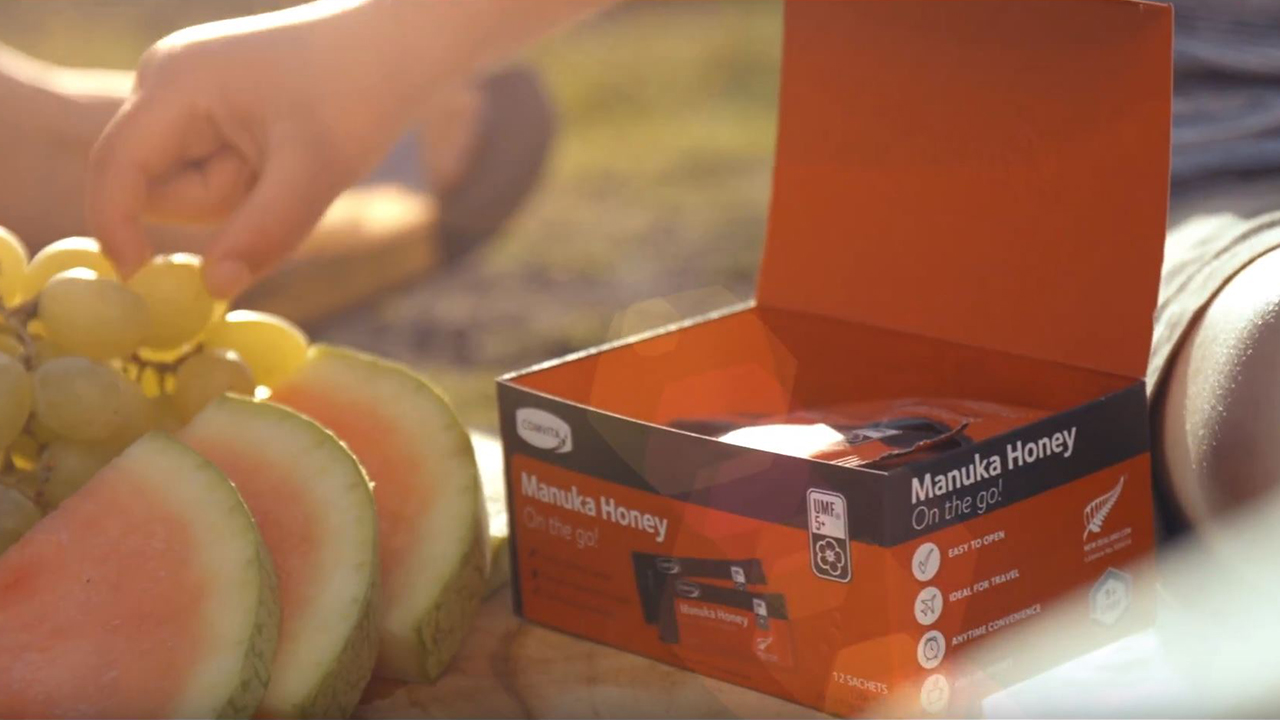
    New Zealand honey business Comvita has entered into a conditional agreement to acquire the remaining 49 per cent of its China joint venture, Comvita Food Ltd and Comvita China Limited.

    The acquisition will be funded through the issuing of 4.05 million new shares, as well as a payment of $3.19 million.

    “This completes the ‘final piece of the jigsaw’ with respect to our China Strategy, which we have been working on for a number of years,” Comvita chief executive Scott Coulter said.

    “Our goal has been to gain full control of our brand across all key channels into China. This acquisition significantly strengthens our direct to China business, the key building block in our China strategic plan.”

    According to Coulter, China remains Comvita’s strongest consumer base, with its success in the region underpinned by its efforts to get closer to the Chinese consumer.

    This was initially done through a distribution relationship for 12 years, before the business entered a 51 to 49 per cent joint venture in 2017. This acquisition is the culmination of that effort.

    “China is moving into a direct trade and a formalised cross border e-commerce model, to ensure both consumer protection and fairness in taxation between online and offline ‘players’ are in place,” Coulter continued.

    “This acquisition will provide Comvita with much more flexibility to optimise sales and channel profitability in this fast evolving environment.”

    For the remainder of the year, the brand issued three goals for the China market: to achieve price harmonisation between its channels and markets, to supply key cross border e-commerce platforms directly, and to build its e-commerce and marketing capability in the region.

    Comvita chair Neil Craig noted that while the recent period had been tough on shareholders due to the execution of the brand’s strategy in China impacting its short term earnings, the brand now expects revenue from its consolidated China business to be greater than $200 million in sales annually.

  • Blackmores, Kalbe join forces in new Indonesian venture

    Blackmores, Kalbe join forces in new Indonesian venture

    Australian Ambassador to Indonesia Paul Grigson has welcomed the new partnership between Australian company Blackmores and Indonesias Kalbe that will allow new vitamin products to enter the local market.

    Blackmores will initially supply eight products in Indonesia through the joint venture, the Australian Embassy here said on its official website on Saturday (Sept. 3).

    Ambassador Grigson said while the two companies shared many values, it was the small differences between them that had generated the creativity needed for such a partnership.

    “Blackmores experience shows the importance of Australian companies choosing the right local partner to do business in Indonesia,” Ambassador Grigson added.

    The Blackmores – Kalbe partnership was sealed during Indonesia Australia Business Week in November 2015, when 360 Australian businesses travelled to Indonesia to build collaborative partnerships with Indonesian companies and explore investment opportunities.

    Blackmores CEO Christine Holgate has thanked the Indonesian Government and Australian Embassy for their support in finalizing the partnership.

    “We will be launching with eight products and will have 25 products by the end of the year,” Holgate informed.

    She explained that Blackmores had chosen to partner with Kalbe as it was a major supplier of pharmaceutical products and has an institute to train people in natural health care products.

    She hoped that Blackmores would be able to leverage Kalbes training processes and its strong representation in shopping centers throughout Indonesia where it has health centers giving advice on natural health products.

  • Bebe Stores forms global JV with Bluestar Alliance

    Bebe Stores forms global JV with Bluestar Alliance

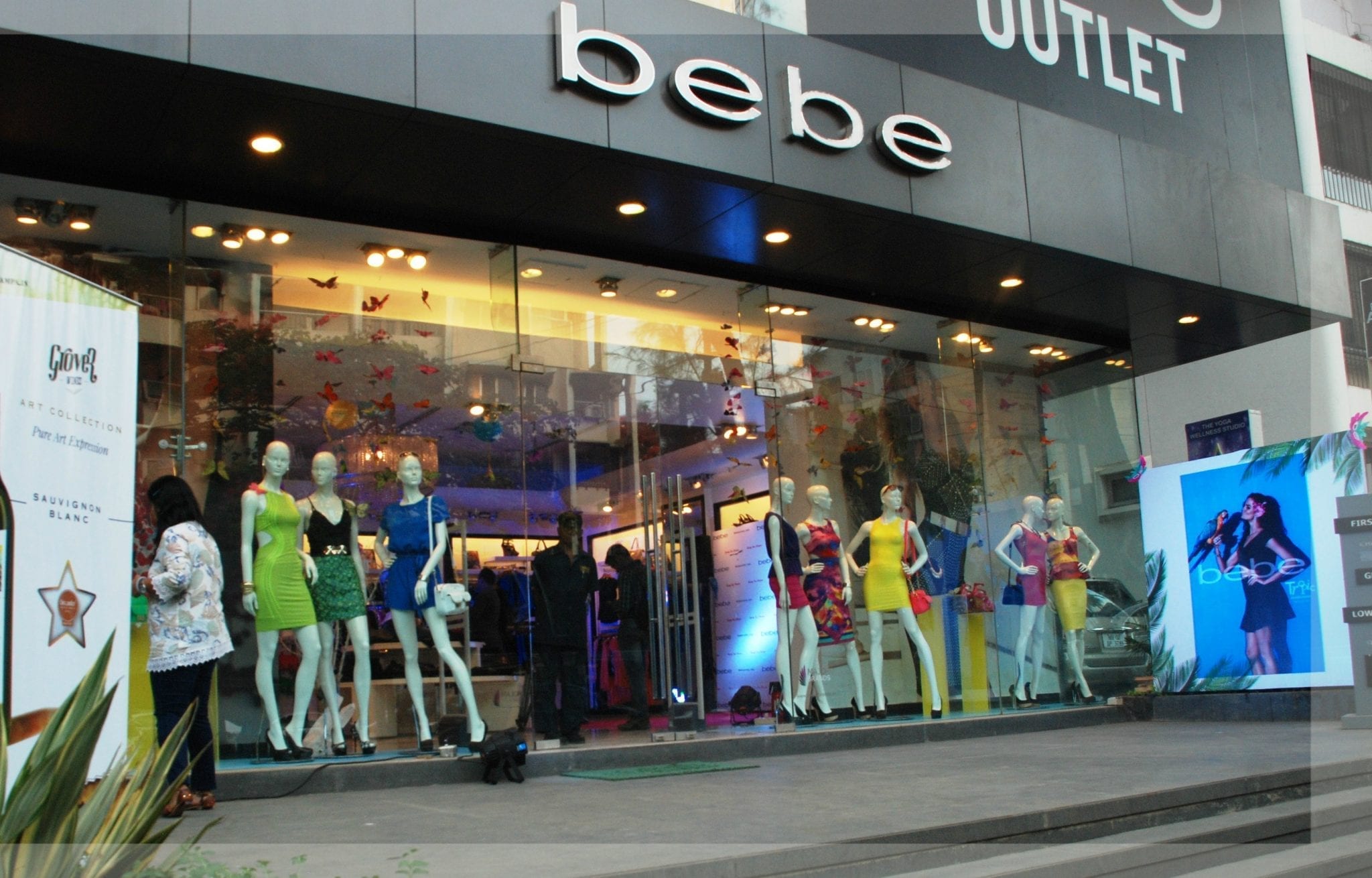
    Bebe Stores has entered into a joint venture with Bluestar Alliance to take over its global marketing and store operations, including in Asia.

    Bluestar, a privately owned brand management company founded in 2006, has paid US$35 million to Bebe Stores for its minority stake in the new company. Until now, Bluestar has managed a plethora of little known brands spanning mass market to luxury, but with cumulative international sales of $1.5 billion through some 200 licensees. Those brands include Kensie, Nanette Lepore, Catherine Malandrino, Michael Bastian, English Laundry and Limited Too.

    Bebe founder, chairman and CEO Manny Mashouf says while Bebe is “one of the great global brands in the women’s fashion world”, the value of the brand, its reach and potential is clearly not reflected in investors’ current perception of the company and its valuation.

    “The strategic decision to aggressively pursue a licensing strategy allows us to capitalise on the value of our brand in all categories and channels on a global scale. We have seen significant demand from prospective licensees and expect to generate long-term, committed royalties.”

    The new JV will manage the brand in both domestic and international markets, including in China where Bebe has achieved rapid growth since forging a five-year partnership with Shanghai-based brand agency Longgoal LLC last August to open between 60 and 150 Bebe stores, shop-in-shops and third-party retailers in Greater China, Hong Kong, Macau and Taiwan. The first store is expected to open in summer 2016.

    Joseph Gabbay, Bluestar CEO said Bebe is an iconic contemporary women’s brand with a loyal customer base and growing international presence.

    “We believe the company has significant long-term growth potential given its distinct market position, multiple channels of distribution and growing international brand awareness. We see a tremendous opportunity to leverage our brand expertise and capitalise Bebe’s differentiated market position to build a global contemporary lifestyle brand.”

    So far, Bebe has licensees in just 20 international markets. It operates 147 retail stores under its own brand and the sister label Bebe Sort, bebe.com and 39 outlet stores in the US, Canada and Peurto Rico.

    The company embarked on a restructuring plan in February after announcing a second quarter loss, laying off 45 employees and replacing then-CEO Jim Wiggett with Mashouf.

  • Malaysia’s DFI approves Heinemann sale agreement

    Malaysia’s DFI approves Heinemann sale agreement

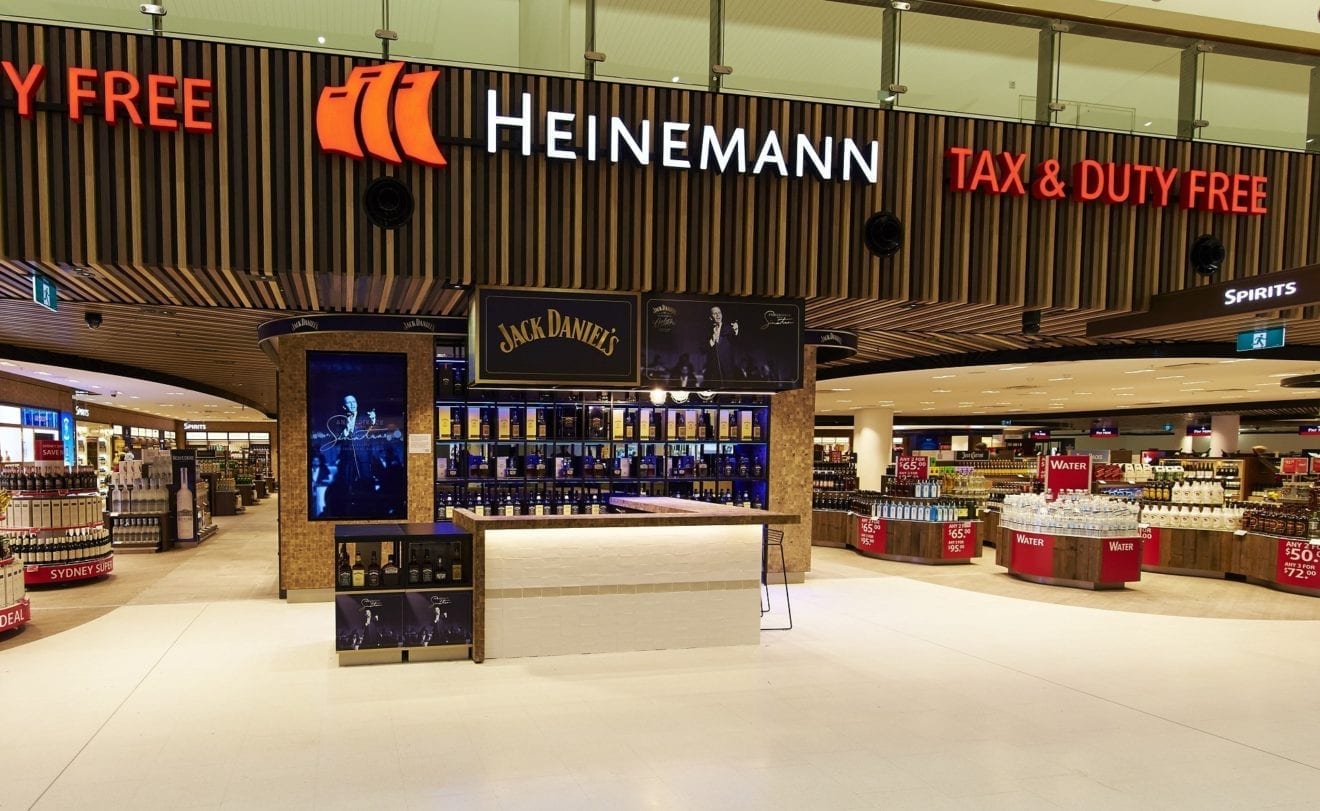
    Shareholders of Malaysia’s largest duty-free operator Duty Free International Ltd have approved a strategic partnership with Heinemann Asia Pacific for a sale of up to 25% equity interest plus one share in DFZ Capital Berhad (DFZ).

    The sale and purchase agreement with Heinemann comprises a 10% equity interest plus one share in DFZ (the proposed sale), and two call options to purchase up to a further 15% equity interest in DFZ.

    The proposed sale is targeted to be completed by June 2016. On completion of the proposed sale, Heinemann will be entitled to board representation on the board of directors of DFZ, allowing both parties to deliver the expected synergies in an efficient and timely manner, said DFI in a statement.

    “We view Heinemann as a strong business partner and strategic investor. The completion of the proposed sale will bring significant positive changes to DFZ. Going forward, we will be leveraging on their resources and expertise in the areas of purchasing, merchandising, product assortment/costing, retail store management, distribution and logistics management. We believe that this alliance will further enhance the overall travel retail experience in Malaysia, to bring us on par with the best available in the world. The Proposed Sale will also further strengthen DFI’s financial position and allow the Company to consider future business opportunities.” said DFI  executive  director Lee Sze Siang.

    Commenting on the proposed sales, Heinemann Asia Pacific CEO Max Heinemann said: “One of the key synergies for this alliance is the similar business models and corporate culture that both the organisations share. We are confident that this partnership will provide a sturdy platform for our expansion into South East Asia.”

    DFZ Capital Berhad, a group subsidiary of DFI with an operating history of more than 35 years, is the largest multi-channel duty-free and duty-paid retailing group in Malaysia. The company, through its “ZON” brand of retail shops, serves both Malaysian and international customers across all major entry and exit points in Peninsular Malaysia including operations at international and domestic airports, seaports, border towns, duty-free islands and other tourist destinations.

    The companies entered into the sale and purchase agreement in March 2016 as reported.

  • Lotte, Salim to set up e-commerce platform solution JV in Indonesia

    Lotte, Salim to set up e-commerce platform solution JV in Indonesia

    South Korea’s retail conglomerate Lotte Group said Sunday that it plans to form a joint e-commerce venture with Indonesia’s biggest conglomerate Salim Group to grab a pie of the rapidly growing e-commerce market in Indonesia.

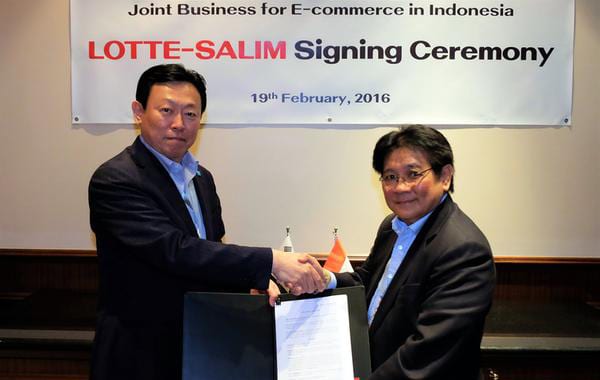
    According to Lotte Group, its Chairman Shin Dong-bin on Friday signed a memorandum of understanding (MOU) agreement with Salim Group Chairman Anthony Salim to establish an e-commerce platform solution joint venture in the first half of this year. They aim to officially launch the company early next year.

    The South Korean retail mogul expects the Indonesian online retail market to grow to 25 trillion won ($20.27 billion) in value by 2020 after the market grew to 3.2 trillion won in 2014. The two companies plan to set up a comprehensive e-commerce platform solution and logistics service that will allow Lotte’s 41 offline retail stores and one department store operating in the Southeast Asian country as well as Salim’s 11,000 offline convenient stores, Indomaret, to sell and deliver products to Indonesian consumers. They will also introduce some popular products of Lotte Mart and Lotte Department Store in Korea through the new platform.

    In Indonesia, Lotte is operating one department store, 41 retail stores (including two grocery stores), 31 Lotteria fast-food franchises, two Angel-in-us cafés and two Lotte duty-free shops (one in airport and the other in downtown). In 2010, the retail group acquired Titan Chemicals, one of the leading petrochemical company in Southeast Asia, to gain a foothold in the petrochemical industry in the region.

    Salim Group, the biggest Indonesian conglomerate, operates a diverse array of business ranging from food, infrastructure, logistics, telecommunications, media and automobile, to real estate.

  • Developer DM Wenceslao partners with Hongkong Land through Joint Venture

    Developer DM Wenceslao partners with Hongkong Land through Joint Venture

    D.M. Wenceslao and Associates, Inc. (DMWAI), a developer with one of the largest landbanks in Metro Manila, is teaming up with Hongkong Land through a joint venture (JV) between their respective subsidiaries, Portal Holdings, Inc. and Hongkong Land (Philippines) B.V.

    In a statement, DMWAI said the joint venture will develop primarily residential projects over a land area of approximately 26,000 sq.m.

    The property is within DMWAI’s latest and most innovative project, Aseana City, which occupies a waterfront site with a prominent location in the Manila Bay area.

    Hongkong Land is a listed leading property investment, management and development group which owns and manages almost 800,000 sq. m. of prime office and luxury retail property in key Asian cities, principally in Hong Kong and Singapore.

    It has significant experience in the establishment of world-class residential and business hubs such as the Hong Kong Central Business District and the Marina Bay Financial Centre in Singapore.

    The firm also has a number of residential and mixed-use projects under development in cities across Greater China and Southeast Asia.

    Hongkong Land’s established international track record and experience in developing regional waterfront projects will bring a fresh world-class perspective to the development of Aseana City, said DMWAI.

    DMWAI will also contribute its well-established local development and construction expertise, and a portion of its prime landbank in the Manila Bay Area to the joint venture.

    “We believe that partnerships like this will give us the right combination of local knowledge and global development standards and expertise” said DMWAI chief executive Buds Wenceslao.

    He added that “this is one of the company’s key visions; to transform Aseana City into the Philippines’ next generation city and provide a higher quality of real estate products to our nation.”

    DMWAI is an integrated property developer with an established track record and market-leading capabilities in land reclamation, construction and real estate development. The company has one of the largest land holdings in Metro Manila with over 58 hectares of land.

    Aseana City, the company’s prime asset, is strategically located next to the Entertainment City in the Manila Bay area, and positioned as the next major mixed use CBD within Metro Manila.