Tag: Juniper Research

  • Retailers to lose US$130 billion from card-not-present fraud: Juniper

    Retailers to lose US$130 billion from card-not-present fraud: Juniper

    Increasingly complex card-not-present fraud will cost retailers US$130 billion globally in digital sales over the next five years. A Juniper Research study predicts that retailers’ slow pace in keeping up with new fraud prevention requirements will allow cybercriminal practices to become more widespread as more and more consumers shop online. It observes that established point-of-sale vendors will need to move towards mobile POS technology in order to expand their reach into fresh markets and reduce their exposure to card-not-present fraud.

    “A layered fraud detection and prevention (FDP) solution naturally helps directly preventing fraud, but it also offers major gains in terms of recovering potentially lost revenue through false positives,” said the report’s author Steffen Sorrell. “This is something about which retailers remain undereducated, and has allowed fraudsters to capitalise on relatively low FDP spend”.

    An implication of the Juniper research is that a low understanding of FDP investment return is causing the low uptake of the technology. the report anticipates digital payment players will be spending $9.6 billion annually on FDP solutions by 2023.


  • Digital commerce spend expected to jump high by 2022

    Digital commerce spend expected to jump high by 2022

    Consumer spend on digital commerce will reach US$14.7 trillion by 2022, up by 60 per cent on last year, according to Juniper Research.

    Its new report Digital Commerce: Key Trends, Sectors & Forecasts 2018-2022, found that the largest global contributor to payments was currently QR code-based offline purchases for physical goods, which now account for one-third of all Chinese instore payments by value. However, says the research, although QR codes will have further growth in the Indian subcontinent and Africa, their value will be eclipsed worldwide by online purchases by 2022.

    With retailers increasingly offering localised payment mechanisms and friction at checkout being reduced by stored credentials, migration from offline to online is likely to accelerate, says the report.

    Furthermore, it highlights moves by traditional retailers to develop omnichannel strategies as they seek to shore up revenues by using mobile apps both for online purchases and to drive instore footfall.

    Meanwhile, Juniper’s study found that money transfer would be a key growth area, bolstered by rapid expansion and adoption of social payments. It highlighted the activities of companies such as PayPal (via its Venmo and Xoom subsidiaries) and Facebook in the space, arguing that these players were in pole position to capitalise on the increasing transition to digital of P2P payments.

    Additionally, the report claimed that players across the ecosystem were poised to benefit from implementing blockchain technology for financial settlement. This would enable increased standardisation for payment processing; substantially reduce the risk of error (including double spend) and indeed the time taken for error checking, resulting in faster, more secure and less costly processes. This in turn would allow money transfer companies to become more competitive, reduce fees to end users and boost use.

  • Retailer spending on AI to rise, says Juniper Research

    Retailer spending on AI to rise, says Juniper Research

    Juniper Research predicts global retailer spending on AI will reach US$7.3 billion a year by 2022, up from an estimated $2 billion for this year.

    Its report AI in Retail: Disruption, Analysis and Opportunities: 2018-2022 says retailers will heavily invest in AI tools that let them differentiate and improve customer services. These range from automated marketing platforms that generate tailored, timely offers to chatbots that provide instant responses to customers.

    Juniper found that spending will be strongest in customer service and sentiment analytics, where AI can be applied to understand reactions to purchased products and service received.

    It predicts retailer spending share in 2022 as:

    1. Customer service/sentiment analytics, 54 per cent
    2. AI-based automated marketing, 30 per cent
    3. Demand forecasting, 16 per cent.

    Juniper predicts retailers will use AI insights to design product ranges as well as create targeted promotional offers.

    “Retailers are looking to replicate the success of Amazon in making AI a core part of their business,” says research author Nick Maynard.

    He says retailers will increasingly turn to tactics such as AI-optimised pricing and discounting, as well as demand forecasting.

    With the advent of specific days for shopping, such as the Black Friday phenomena, understanding customer demand and planning appropriately is more important than ever, says the report.

    Juniper says retailers need to invest in this area in order to stay competitive, particularly in low-margin retail segments. Also, the cost of AI tools, now uneconomical for many players, will drop by 8 per cent over the next four years, helping realise 300 per cent growth in software spend.

  • Hearables is the next big thing in wearables

    Hearables is the next big thing in wearables

    Specialised fitness wearables integrated into clothing and ear-based “hearables” will grow from an expected 4.5 million shipped this year to nearly 30 million in 2022, according to Juniper Research.

    This is an increase of more than 550 per cent, while by contrast, conventional activity tracker shipments will grow by only 20 per cent in that time.

    Hearables or smart headphones are defined by Wikipedia as “technically advanced, electronic in-ear-devices designed for multiple purposes ranging from wireless transmission to communication objectives, medical monitoring and fitness tracking”.

    In its report Health & Fitness Wearables: Vendor Strategies, Trends & Forecasts 2018-2022, Juniper says that as growth in basic trackers has slowed, session‑specific wearables, such as those monitoring gym or training sessions, have multiplied. Devices from companies like Atlas, Gymwatch, Jabra, Sensoria and Under Armour provide more granular metrics.

    It found that as detailed metrics become widespread among all vendors, lifestyle tracking leaders such as Fitbit and Huami will decline in market share. Combined, these players will account for 28 per cent of total fitness wearable shipments by 2022, down from more than 40 per cent last year.

    Data is now the key battleground for fitness wearables, says the report. Thanks to initiatives like Suunto’s Movesense platform, data will ultimately become device-agnostic. However, because of a lack of consumer interest, Juniper expects fitness software and services revenues to stay under $200 million a year over the next four years.

    Despite the promise of wearables in healthcare, little specialised hardware is available, with fitness wearables being adapted for such purposes. Juniper expects healthcare wearables to make up less than a third of all of the sector’s devices in use by 2022, as regulation slows roll-outs and keeps prices high.

    “Healthcare use has long been the goal of many wearables manufacturers,” says research author James Moar. “However, more research needs to be done on activity tracking in order to make typical wearable data clinically meaningful to healthcare professionals.”

  • Retailer spending on AI to rise

    Retailer spending on AI to rise


    Juniper Research predicts global retailer spending on AI will reach US$7.3 billion a year by 2022, up from an estimated $2 billion for this year.

    Its report AI in Retail: Disruption, Analysis and Opportunities: 2018-2022 says retailers will heavily invest in AI tools that let them differentiate and improve customer services. These range from automated marketing platforms that generate tailored, timely offers to chatbots that provide instant responses to customers.

    Juniper found that spending will be strongest in customer service and sentiment analytics, where AI can be applied to understand reactions to purchased products and service received.

    It predicts retailer spending share in 2022 as:

    1. Customer service/sentiment analytics, 54 per cent
    2. AI-based automated marketing, 30 per cent
    3. Demand forecasting, 16 per cent.

    Juniper predicts retailers will use AI insights to design product ranges as well as create targeted promotional offers.

    “Retailers are looking to replicate the success of Amazon in making AI a core part of their business,” says research author Nick Maynard.

    He says retailers will increasingly turn to tactics such as AI-optimised pricing and discounting, as well as demand forecasting.

    With the advent of specific days for shopping, such as the Black Friday phenomena, understanding customer demand and planning appropriately is more important than ever, says the report.

    Juniper says retailers need to invest in this area in order to stay competitive, particularly in low-margin retail segments. Also, the cost of AI tools, now uneconomical for many players, will drop by 8 per cent over the next four years, helping realise 300 per cent growth in software spend.

  • Hybrid Smartwatches to Make Up Over 50% of Smartwatch Shipments by 2022

    Hybrid Smartwatches to Make Up Over 50% of Smartwatch Shipments by 2022

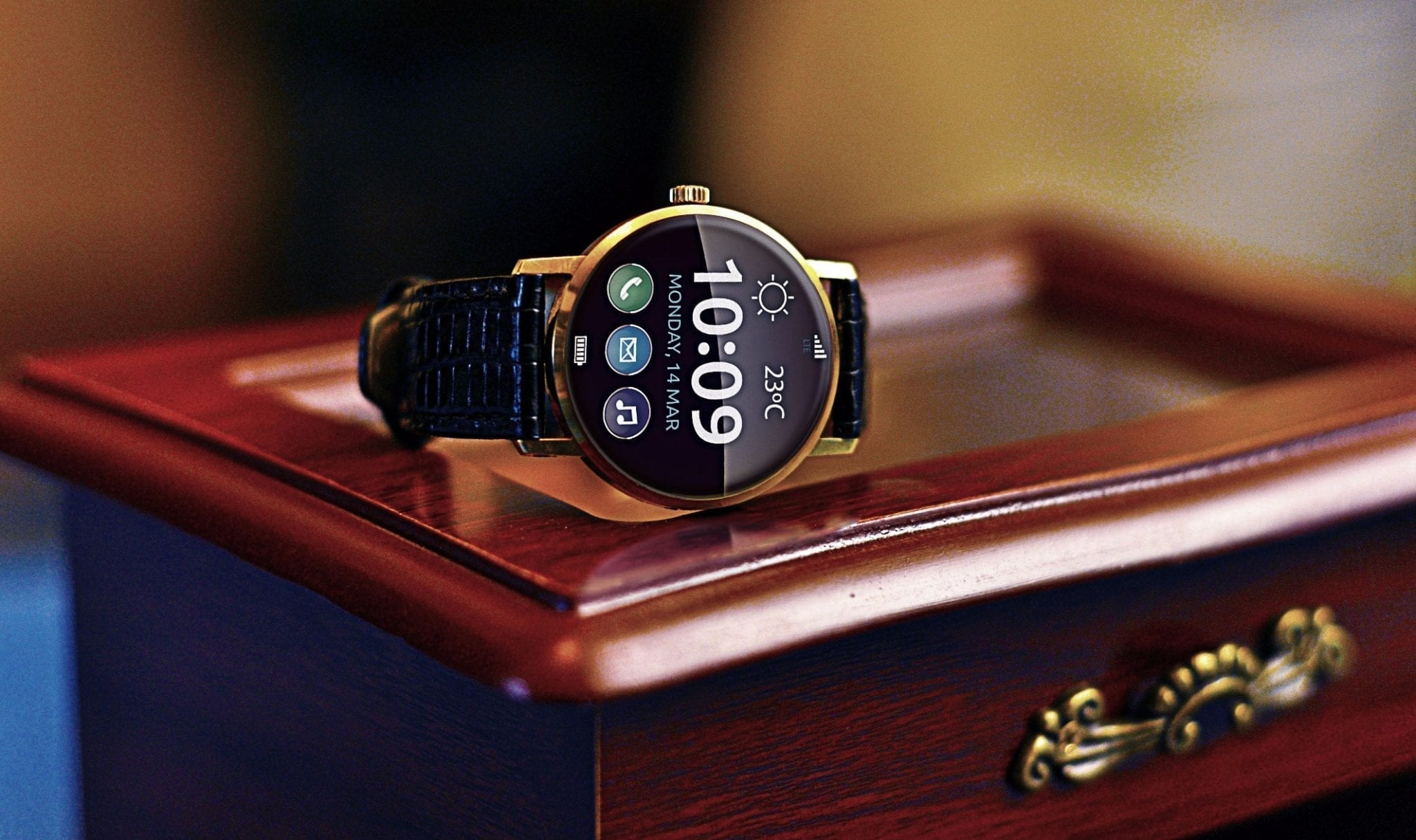
    Watches that appear to be analogue models but integrate smartwatch features will make up more than half of the smartwatch market by 2022, according to Juniper Research.

    This means that nearly 80 million hybrid smartwatches, such as Fossil Q and Nokia Steel, will be shipped by 2022, up 460 per cent from an estimated 14 million last year. However, for digital-display smartwatches like Apple Watch and Fitbit Ionic, Juniper lowers the rate of growth to 160 per cent.

    This slower growth has caused several manufacturers, including Huawei, Motorola and Sony, to leave the space, says Juniper’s new report, Smartwatches: Trends, Vendor Strategies & Forecasts 2018-2022. Those staying in play are pivoting toward specific uses, mainly fitness, which Apple, Casio, Samsung and others have emphasised in recent releases.

    “The smartwatch market is refining itself into a series of specific-use cases”, says research author James Moar. “This is having an impact on every aspect of smartwatches, from their design for increasingly specialised uses to their sale through specific retailers. While most vendors cannot necessarily hope to reach a broad coverage, the industry as a whole is here to stay.”

    Despite the renewed interest in hybrids, Juniper expects individual players to produce few smartwatches. Hybrid watch manufacturers generally ship fewer than 2 million units annually.

    An exception is Fossil, which has released many display and hybrid smartwatches. It is forecast to ship more than 6 million smartwatches annually by 2020.

    Meanwhile, the report has found that different connectivity technologies are becoming more prevalent for smartwatches, with GPS expected to be an element for nearly half of all smartwatches by 2022. In comparison, growth will be limited for near-field communication NFC technology as this is currently locked into specific ecosystems. Juniper does not foresee any change to this in the foreseeable future.

    Juniper Research provides research and analytical services for the global hi-tech communications sector, and has also just issued a complimentary white paper for vendors, Why Most Smartwatches ‘Fail’.

  • Retail IoT connections to more than treble by 2021

    Retail IoT connections to more than treble by 2021

    Retail IoT connections will rise 350 per cent by 2021 according to new data from Juniper Research.

    The UK-based company predicts retailers will connect 12.5 billion business assets to IoT platforms by then, ranging from products to digital signs and Bluetooth beacons.

    That compares with an estimated 2.7 billion connections in 2016.

    Juniper also predicts that RFID (radio-frequency identification), will re-emerge as the industry’s ‘killer app’ becoming the key factor in the IoT retail ecosystem.

    “RFID tags, used to identify and locate retail assets in real-time, are now at a low enough price point for mass deployment and integrate well with new IoT systems and analytics,” Junpier said in its research paper IoT in Retail: Strategies for Customer Experience, Engagement & Optimisation 2017-2021.

    “New services, such as dynamic pricing or enabling promotional offers via in-store digital signs are also poised for growth.”

    The company says ‘next-gen’ processes, such as personalised retail, could be achieved by integrating enterprise software and emerging technologies, with data from connected IoT assets. Juniper forecast that software spend for enterprise resource planning systems to integrate this data would reach US$11.3 billion annually in 2021, from $1.5 billion in 2017.

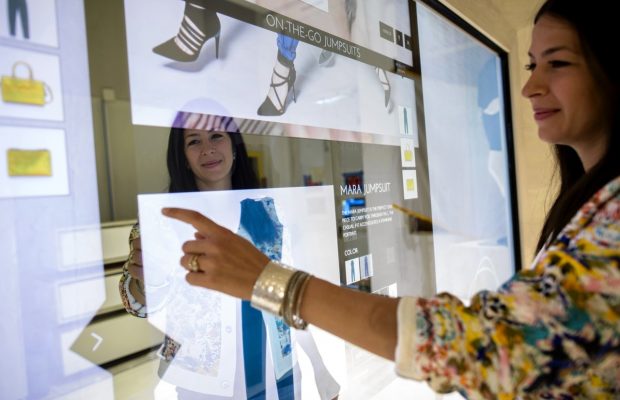
    “Innovative retailers such as Rebecca Minkoff have combined RFID with smart mirrors,” said research author Steffen Sorrell. “Integrating these systems allows real-time information to improve the store experience and bridge physical and virtual worlds – in this case, the concept drove a 200 per cent increase in sales.”

    Aiming for the Endgame

    Juniper predicts that each retailer’s approach to the IoT should differ depending on their main channel focus. It argues that physical retail spaces still have many benefits, not least in terms of being able to avoid the sterility of online shopping.

    “Therefore, Juniper predicts that online retailers’ focus would be on technologies such as machine learning to provide digital assistance, or digital performance management. In this latter instance, measurements such as user experience, IT performance and business outcome are analysed holistically to determine necessary improvements.”

  • Asian mPOS use booming

    Asian mPOS use booming

    The fast-growing population of smartphones and tablets are driving an Asian mPOS boom.

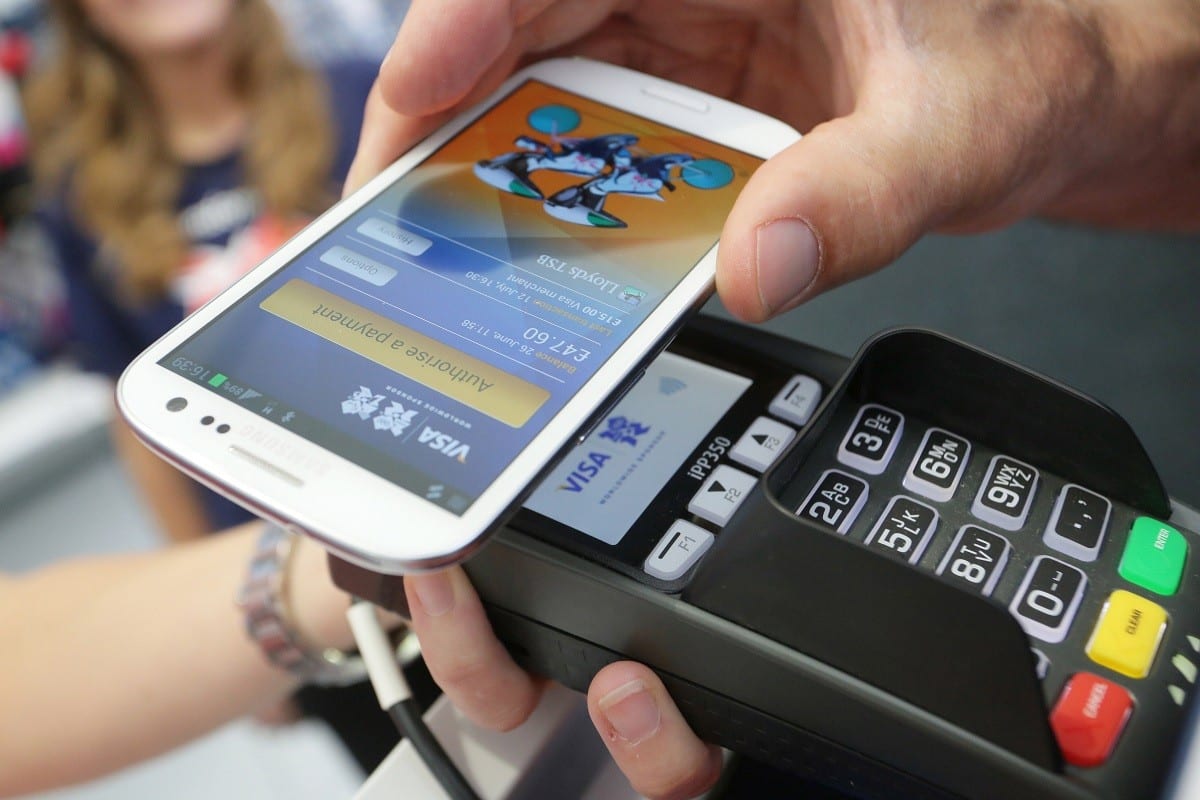
    Mobile point-of sale (POS) terminals will take on a significant role in businesses, handling 40 per cent of all retail transaction value by 2021, up from an expected 12 per cent in 2016, finds Juniper Research.

    The company says mPOS is enabling smaller merchants in emerging markets, particularly across India, Southeast Asia and Latin America, to accept card payments and grow their businesses.

    With larger retailers adopting mPOS in retail sales, Juniper forecasts the use of mPOS systems to account for more than one in three POS terminals by 2021

    “We are seeing several vendors tailor their software to the needs of specific industries, integrating mPOS capabilities as part of broader cloud-based business software,” said James Moar, research author.

    “These additional services can then make use of the sales data directly to manage inventory, monitor staff performance and other functions, which can all add more value to a business and justify a higher margin.”

  • Online fraud forecast to reach $25bn by 2020

    Online fraud forecast to reach $25bn by 2020

    Online fraud is expected to reach $25.6 billion in value by 2020, up from $107.7 billion last year, according to new research.

    This means that by the end of the decade, $4 in every $1000 of online payments will be fraudulent, says a new study from UK company Juniper Research.

    Online Payment Fraud: Key Vertical Strategies & Management 2016-2020 says the implementation of Chip and Pin services at POS (point of sale) locations in the US will most likely be a key factor driving online fraud. It argued that the greater security afforded by Chip and Pin technology will persuade fraudsters to switch their attention from the in-store environment to the CNP (card not present) space.

    Three hot areas for online fraud are identified in the report: eRetail (65 per cent of fraud by value in 2020, up from $16.6 billion); banking (27 per cent, $6.9 billion); and airline ticketing (6 per cent, $1.5 billion).

    It also claims that eRetail will be particularly susceptible to online fraud, with the value of this fraud sector growing at twice the rate of banking and seven times that of airline ticketing. The research highlights two key areas for fraud within eRetail: the buy-online, pay in-store approach, and electronic gift cards.

    It is argued that the continuing migration to online and mobile shopping, of both digital and physical goods – reaching more than $1.7 trillion last year – will provide a further incentive for fraudsters to focus attention on these channels.

    Meanwhile, the research claims that though banks can counter online banking fraud through new technologies such as 3D-Secure and device fingerprinting, these measures often only provide temporary respite as fraudsters soon find new practices.

    Similarly, while extensive efforts to deploy sophisticated fraud detection and prevention (FDP) systems have reduced fraud significantly for some major airlines, that industry has also seen fraudsters shift their focus to other perceived weak spots in the system.

    “A few larger airlines claim they have reduced eTicket sales fraud to less than 0.1 per cent,” says research author Gareth Owen. “When thwarted, however, fraudsters quickly move on to easier pickings, such as frequent flyer fraud.”

    Juniper offers a white paper, Managing the Risk of Fraud, free on its website together with further details of the research and an interactive forecast. Juniper has been analysing the digital commerce and FinTech sector for more than a decade.