Tag: K-Beauty

  • The Lipstick Effect drives South Korea cosmetics sales

    The Lipstick Effect drives South Korea cosmetics sales

    The Lipstick Effect has seen a rise in cosmetics sales despite South Korea’s economic downturn of 2018. The term The Lipstick Effect describes the phenomenon whereby colour cosmetics sales surge during a recession as consumers turn to small-ticket luxuries to lighten their mood.

    Major South Korean health and beauty retailer Olive Young saw a 35 per cent jump in colour cosmetics sales last year – the first time this product range has topped its best-selling category list – as the country struggled with sluggish job markets, conservative corporate investment and overall low consumer spending. Health functional food and hair products grew 32 per cent and 22 per cent respectively over the period.

    The outlook for cosmetics sales looks similarly bright this year as the rest of the South Korean economy is expected to wallow at 2018 levels.

  • Shilla Duty Free recruits Asia’s top social media influencers to pitch K-beauty

    Shilla Duty Free recruits Asia’s top social media influencers to pitch K-beauty

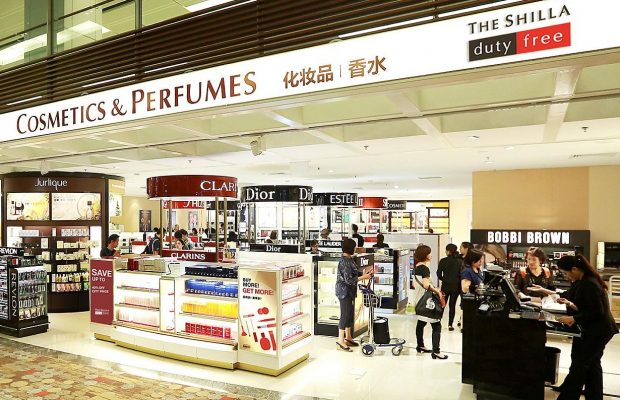
    South Korean Hotel Shilla has recruited five social media influencers across Asian countries to hype K-beauty products through Shilla Duty Free stores. The company said that it will work with top influencers from China, Japan, Vietnam, Malaysia, and Thailand on its “Beauty&You” project to guide customers on how to shop at travel retail online stores via social media platforms.

    Social media influencers with access to a large audience can endorse opinions about products and services, which eventually leads to promote sales.

    Those influencers who have partnered up with Shilla Duty Free reportedly have more than 1.7 million followers worldwide in total. They will work with the travel retailer to guide customers on how to use Shilla Duty Free online store as well as show the latest makeup trends using Korean cosmetics products via their social media channels.

    The company expects its partnership with the top influencers to bolster its brand awareness across the world on top of expanding its share in online travel retail market.

    Currently, its online duty-free shop is available in four languages – Korean, Chinese, Japanese, and English. It also has offline outlets overseas in international airports of Singapore, Hong Kong, and Macao as well as downtown Tokyo and Phuket.

  • BTS adds 4 trillion won to the Korean economy

    BTS adds 4 trillion won to the Korean economy

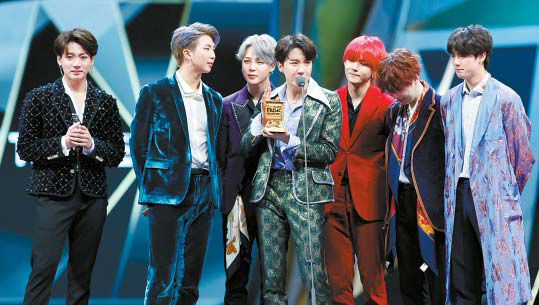
    Popular boy band BTS’s annual economic value is estimated at over 4 trillion won ($3.5 billion), making it more lucrative than a medium-sized company. The group’s annual production inducement effect, which refers to the value generated in related industries, is estimated at around 4.1 trillion won, according to a report by Hyundai Research Institute (HRI) released Monday.

    “BTS was the first Korean artist to place at No. 10 on the Billboard Hot 100 and reach No. 1 on the Billboard 200,” read the report. “The group’s rising fame and popularity can be observed in the explosively growing number of Google searches and YouTube video counts after 2017.”

    “Expecting such growth in popularity to have a positive effect on the Korean economy, we wanted to estimate the impact of BTS’s popularity on the domestic economy by assessing foreign tourists and consumer exports.”

    Research findings revealed that the HRI’s assumptions were correct. According to the report, BTS is responsible for attracting at least 796,000 foreign tourists annually to Korea since their debut in 2013. The report also credits the group for increasing sales of related exports by $1.1 billion every year, including $233.98 million worth of clothing, $426.64 million worth of cosmetics and $456.49 million worth of foodstuffs.

    BTS’s estimated annual economic value of 4.1 trillion won is 26 times larger than the average medium-sized company in Korea, which earned just 159 billion won in 2016 according to the report.

    The HRI report also discussed the factors believed to be behind the success of the group.

    “All BTS members participate in the songwriting and composing, often writing from their own perspective the concerns of young adults in their teens and twenties, and listeners are able to sympathize with them regardless of their nationality,“ read the report. “BTS’s albums and concerts are also structured in a way that has a narrative, which helps attract the attention of fans and raise their expectations for upcoming albums and concerts as well.”

    Other factors mentioned include active communication with BTS fans – known as ARMY – through social media and the fans’ strong support.

    BTS is expected to produce an accumulated total of 41.8 trillion won in economic value between 2014 and 2023 if it maintains its average popularity level of the last five years.

    “In order to maximize the economic impact of Hallyu [Korean wave], it’s necessary to develop and promote domestic tourism through dramas, movies and videos and raise demand from foreign tourists,” the report concluded.

  • Lotte Duty Free’s expanded flagship Seoul store with focus on K brand

    Lotte Duty Free’s expanded flagship Seoul store with focus on K brand

    Lotte Duty Free has opened a new 519 square meters area at its flagship store in Myeong-dong, Seoul, with a strong emphasis on promoting small and medium-sized Korean brands. A highlight of the zone, located in the store’s Star Avenue, is ‘Blooming Beauty’, a shop-in-shop that houses around 130 brands, 60 of them small, emerging brands and 30 of them independently owned. These include the Marvel collection from The Face Shop, Medicube, Miba, Cosmetea, Wakemake and others.

    The company said it was “upgrading its incubation programme” for smaller brands, and would support them by distribution through its online sales channel and at its downtown Seoul outlets.

    It said that these brands would “demonstrate their sales potential” in the new environment.

    The store, it added, “will enhance customer convenience through brand diversification and space expansion”.

    To celebrate the opening of the new Star Avenue area, Lotte Duty Free presented gifts from 20 brand partners in the Blooming Beauty zone to shoppers who spent more than US$1.

    There are also special discounts for local residents until the end of October, and discounted sales of KT&G’s new ‘heat not burn’ product Lil will be available until 22 November.

  • Here’s where K-beauty is driving Western skin care, cosmetics

    Here’s where K-beauty is driving Western skin care, cosmetics

    New research from Mintel, presented at in-cosmetics Global, is taking a look at the size of South Korea’s beauty market, the changes Korean beauty has brought to the global market and what trends to expect in the coming year.

    Mintel notes that South Korea is among the top 10 global beauty markets, with its market size sitting at $13 billion in 2017, with facial skin care composing $6.5 billion in retail sales. It’s expected that facial skin care will grow at a 5.8% compound annual growth rate for the next five years, hitting $47.2 billion in 2020. Color cosmetics make up the second-largest segment of the Korean beauty market, and Korean shoppers spend $45 per capita on color cosmetics, compared with the $37 per capita spend in the U.S.

    “The Korean beauty market remains buoyant thanks to fast-paced innovations and highly engaged consumers who don’t hesitate to adopt novel products delivering new beauty experiences,” Mintel senior beauty analyst Jane Jang said. “The success of the market has been heavily driven by the boom of facial skincare, but is also highlighted by the impressive per capita spend on color cosmetics which is more than double the global average.”

    In addition to the size of the beauty market in Korea, the trends that have driven its growth have gone global, with such retailers as CVS looking to capitalize on it with and expanded K-beauty selection that includes exclusive brands and products. Mintel projects continued influence from Korea on product innovation and launches.

    “Looking at facial skincare, 2017 will be the year of extreme segmentation. Products will become increasingly targeted and multi-functional, responding to the needs of knowledgeable and demanding consumers,” Jang said. “South Korean Beauty routines can consist of up to 10 steps, and a common obsession for specific claims – especially moisturizing, brightening, whitening and anti-ageing — means that most products combine multiple functions. The goal is to achieve the so-called ‘chok-chok’ skin, which is supposed to look bright, fair, plump, dewy and youthful.”

    Trends in skin care will include such hybrid concoctions as exfoliating moisturizers, anti-wrinkle whitening tone-up creams and nourishing oil serums, Jang said, as well as transformative textures — powder-to-serum, oil-to-foam and water-to-cream products. Jang also notes that natural is a big factor in K-beauty, with 69% of 2016 South Korean skin care launches including herbal or botanical claims.  And sheet masks are here to stay, Jang noted.

    When it comes to cosmetics, Mintel predicts that the skin care trends of hybrid textures and formats will carry over, with focuses on jellies, gels, mousses and watery oils. The main category seeing growth from hybrid formats has been the lip care category. Cushion compacts from Korea also have broken into the U.S. market, with 54% of global cushion compact launches taking place in Europe and the United States from October 2015-Setpember 2016.

    “Because of K-beauty’s growing popularity worldwide, Western brands are constantly looking to South Korea for their next inspiration, seeking to adapt popular South Korean beauty formats for Western consumers,” Jang said. “The popularity of South Korean beauty products is due to their high performance combined with fun packaging and sensorial cues, as well as affordable prices. By gaining the attention of bloggers, vloggers and the media, the K-beauty wave is spreading to retailers outside of Asia. While color cosmetics will be the active innovation area to cater to an increasing number of sophisticated beauty consumers.”

  • B2LiNK eyes global K-beauty market beyond China

    B2LiNK eyes global K-beauty market beyond China

    The Group of Two’s recent protectionists policies followed by Donald Trump’s victory in the U.S. presidential election and China’s economic retaliation against Korea over the deployment of a Terminal High Altitude Area Defense system seem to be serious risks for Korean exporters.

    B2LiNK CEO Lee So-hyung, however, confidently said no government can interfere with macro-trends in the market. The 33-year-old is one of the co-founders of the IT-based business-to-business startup which distributes Korean beauty brands to global retail channels in the most effective way possible.

    “The U.S. will not restrict small areas. It may impose anti-dumping tariffs on steel, but consumer goods ― especially Korean cosmetics ― will not be regulated as they are not in the majority of the market,” Lee said in an interview with The Korea Times on Friday.

    “Most people fear that trade with China will be threatened, but local Chinese firms actually earn more money than Korean businesses through the cosmetics trade. Chinese authorities will be unlikely to regulate the trade, as most Chinese consumers purchase Korean cosmetics via their local online platforms.”

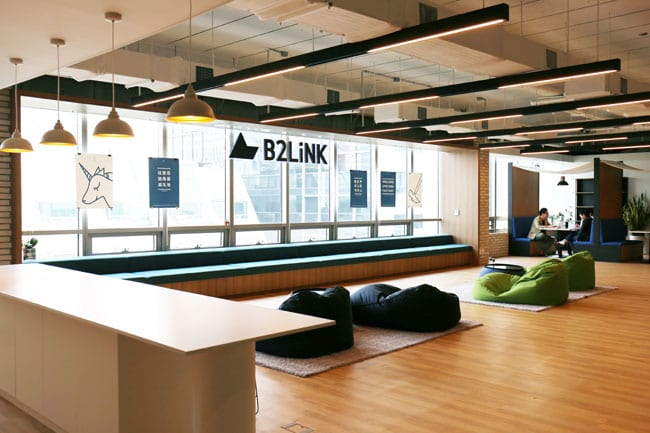
    An inside view of B2LiNK office in Gangnam

    After working in many industries in several countries as a consultant of McKinsey & Company for four years, Lee decided to operate a business that introduces Korean consumer goods to the world. He said, “The industry in which Korea has an advantage over other countries is in consumer goods.”

    His company initially targeted the Chinese market and has expanded its presence there. The Seoul-based company established local offices in Tianjin and Shanghai. It also signed supply contracts with China’s top commerce firms including Watsons China and RuHnn.

    “When I began to run my business in 2014, China’s economy was growing rapidly with its e-commerce market which was growing much faster,” Lee said. “The rate of cosmetics consumption, on the other hand, was still low at that time, so I thought there might be a chance for a success.”

    However, B2LiNK is drawing up a blueprint to globally expand the presence of K-beauty beyond China. Lee said, “Korean consumer goods have depended too much on China so far, and we want to help the firms gain competitiveness in the global market. Demand for Korean consumer goods is rising in the U.S., Europe, Africa and the Middle East.”

    B2LiNK began to supply Korean cosmetics to retail channels in Southeast Asia this May and posts more than 100 million won ($85,000) in monthly sales there. It plans to establish an office in the U.S. next year, which will be the company’s first base camp toward the developed market.

    “We are actively recruiting employees in the U.S. and Southeast Asia,” Lee said. “We will hire local people to lead our subsidiary companies there.”

    Lee said B2LiNK wants employees who can build their careers in the company, rather than those who already have experiences in similar industries. “Our basic concept is to develop less advanced industries. Expertise is an old-fashioned concept in B2LiNK,” he said.

    Among young “B2LiNKers” whose average age is 29, B2LiNK posted more than 11 billion won in sales last year. The company estimates its sales will be over 30 billion won this year.

  • Chinese celebs promote ‘K-beauty’

    Chinese celebs promote ‘K-beauty’

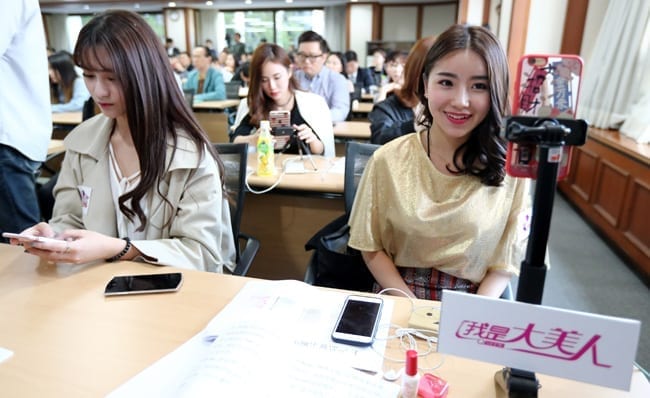
    Internet celebrities in China, known as “Wang Hong” there, have been in the limelight among Korea’s cosmetics and retail industry officials, amid a chilly relationship between the two countries. Bilateral relations have soured since Korea decided to deploy the Terminal High Altitude Area Defense (THAAD) missile system.

    The online stars, who have millions of followers on the internet, exert a strong influence over young Chinese people. According to CBN Data, a commercial data company affiliated with Alibaba, the “Wang Hong economy” is set to be worth 58 billion yuan ($8.7 billion) in 2016, more than China’s box office in 2015.

    Korea’s cosmetics industry officials have recently paid attention to them, as more have promoted K-beauty fever in China, evaluating or recommending Korean cosmetics online.

    Some cosmetics companies have even invited them to Korea to promote their products.

    AmorePacific invited some to Korea in March and September this year to promote its oriental herbal shampoo “Ryoe.” After the invitation, AmorePacific’s shampoo sales in China grew seven times year-on-year. LG Household and Health Care invited nine celebrities to Korea on Sept. 22 to promote its cosmetics brand SU:M37. The Face Shop invited five others and introduced their products to them earlier this year.

    Retail industry officials are looking for opportunities from the celebrities as well.

    Aekyung invited 10 in May to promote its cosmetics brand “Luna,” and HDC Shilla I’PARK Duty Free hosted an overnight trip for five to sightsee spots in Yongsan, central Seoul. Shinsegae broadcasted its “K-beauty fashion week” event to China through the channels of a few of the internet celebrities and Galleria Duty Free Shop employed two to promote the store in China through their social media.

    On Oct. 3, Minister of Culture, Sports and Tourism, Cho Yoon-sun said, “We would like you Wang Hongs, who lead the trend in China, to be a bridge between Korea and China,” meeting six celebrities at Jongno Hanok Village in central Seoul.

  • K-beauty spreads worldwide

    K-beauty spreads worldwide

    The ‘K-beauty’ market is expanding its sphere of influence beyond Asia, and reaching out to other global markets.

    According to Aju News, a Korean newspaper, Korean cosmetics brands are exploring new markets worldwide. As the global interest in K-pop and K-dramas is rising, women all over the world are now looking at K-cosmetics.

    Amore Pacific has been eyeing the international market since the 1990s. After establishing factories in France and China, the company continued to expand its influence worldwide, with products now being sold in the U.S., Malaysia, Indonesia, Vietnam, Canada, Thailand, the Philippines, Singapore, Myanmar, and Japan, generating global sales of 1.26 trillion won.

    Able C&C’s cosmetics brand Missha is following the lead, spreading K-beauty all over the world. Missha stores can now be found in Brazil, Germany, Mexico, Venezuela, Turkey and Spain. The Brazilian market in particular is expected to generate strong sales growth, as reports show that the local cosmetics market is the fourth largest in the world.

    LG Household & Health Care’s The Face Shop is focusing on the Middle Eastern market, opening 55 stores in five countries – Jordan, Saudi Arabia, UAE, Oman and Armenia.

    Cosmetics brands are using a number of different marketing strategies to aggressively target overseas markets.

    In areas where natural ingredients and safety are important, such as Europe and the US, businesses are attracting customers with their ‘natural’ brands. Some brands promote elements of Korean tradition to attract western consumers. Many are ‘blending in’ with the locals through collaboration with local businesses.

    To boost overseas expansion, the Korea Trade Promotion Corporation (Kotra) is taking steps to boost sales of Korean cosmetics through American and Chinese online shopping sites.

    Kotra will host a ‘K-beauty summit’ to help Korean cosmetics brands export their products. The agency’s ‘online export incubating program’ will be introduced, and is expected to help businesses sell their products through Amazon.

    Kotra is also seeking to secure new trading opportunities in China in collaboration with the online shopping site TaoBao, operated by Chinese eCommerce behemoth Alibaba. The two parties plan to host a K-beauty expo in China during the first half of the year.

    Innisfree store in Shanghi

    The cooperation with TaoBao is only the start, as Kotra is also planning to work with other online shopping portals such as JD.com.

    Officials at Kotra emphasise the importance of making inroads in the American and Chinese markets to prolong the popularity of the K-beauty trend. They expect to draw the attention of young consumers who are sensitive to fashion and style trends and familiar with online shopping.
  • Blooming Sweet nail art concept goes global

    Blooming Sweet nail art concept goes global

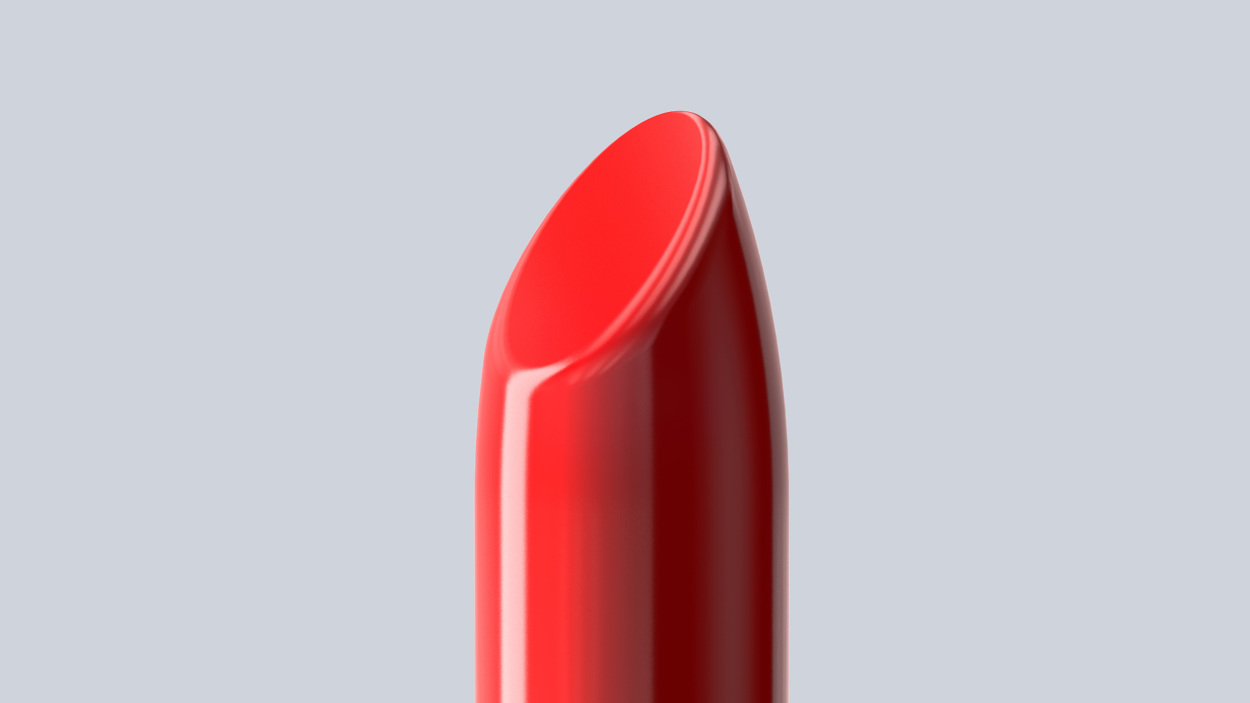
    Blooming Sweet, the online shopping mall specialising in DIY nail art materials is rapidly gaining popularity in Hong Kong, Japan, Singapore and the US.

    CEO Kim Sun-Hee has been a famous nail artist in Korea for over 10 years, and launched Blooming Sweet in 2011 to promote the nail art market in Korea.

    Currently, Blooming Sweet carries gel nail products and accessories essential for creating nail art. Unlike existing nail polish products, gel is applied to nails and cured under an LED or UV lamp. Gel nails have gained great popularity for their excellent colors and long-lasting effects.

    Blooming Sweet has been selling its products worldwide since 2012 after participating in an international expo held in Japan, a pivotal moment which led to an influx of orders from buyers globally. Blooming Sweet also sells customised accessories especially designed based on suggestions by buyers keeping in mind the local circumstances and trends.

    The products of Blooming Sweet can be purchased through both Korean and English pages of theonline shopping mall developed by Korea’s largest eCommerce solution brand, cafe24.

    “It would be great if products related with K-Beauty can gain more international recognition,” said Kim, later adding: “Blooming Sweet will continuously make efforts to learn about the beauty trends around the world to grow into the world’s best nail art brand.”