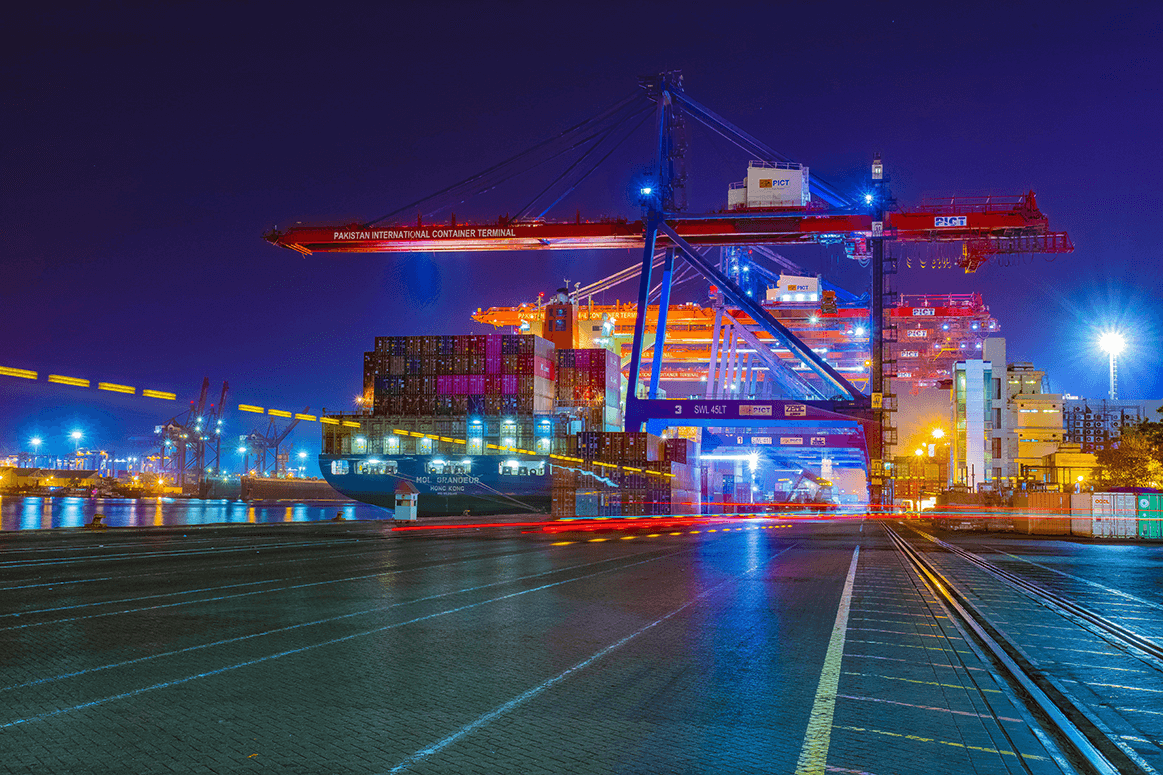
Karachi Port handled 19.286 million tonnes of cargo between July and October 2026, lifting throughput 3.8 per cent as shipping lines rerouted vessels away from Middle East disruptions.
Total ship calls climbed 13.7 per cent to 764 vessels during the four-month window, up from 672 calls a year earlier.
Export cargo rose 10.5 per cent, while dry bulk volumes jumped 26.1 per cent across the same period. The gains follow fiscal year 2025-26, when terminal operators processed an all-time peak of 55.438 million tonnes, handled 2.749 million 20-foot equivalent units and berthed more than 2,100 vessels.
Fee Cuts and Free Storage
Commercial incentives drove the shift. Federal authorities rolled out a unified transshipment framework in August 2026 that lowered wet cargo vessel tariffs by 20 to 80 per cent and gave shippers 14 days of free terminal storage at Karachi Port Trust facilities.
Port Qasim Authority waived wharfage completely and expanded free storage to between 7 and 21 days. Terminal concessions followed quickly.
Four private container handlers, Karachi International Container Terminal, South Asia Pakistan Terminal, Karachi Gateway Terminal Limited and Qasim International Container Terminal, reduced terminal handling charges by up to 25 per cent.
Customs agencies also opened the gates to off-dock transshipment, sea-to-air cargo transfers, around-the-clock physical checks and pre-arrival paperwork to clear quayside bottlenecks.
Direct European and Gulf Links
Global carriers responded by adding direct tonnage. Mediterranean Shipping Company opened a weekly direct European loop called Premium IPAK through Karachi Gateway Terminal Limited in October 2026.
A dedicated feeder run connects Karachi directly to Khor Fakkan in the United Arab Emirates. These links bypass congested regional transfer hubs and cut transit days for consumer goods entering and leaving South Asia.
Connectivity scores tracked the added routes. Karachi Port gained 30 spots to place 69th on the Container Port Performance Index for 2025, while its Port Liner Shipping Connectivity score climbed from 309 in the first quarter of 2026 to 357 in the third quarter.
The Logistics Bottleneck Outside the Gate
Terminal efficiency alone does not protect supply chains if cargo stalls on city streets. Retailers and manufacturers moving freight into northern Pakistan face crumbling municipal roadways between terminal gates and national transport corridors.
Karachi Port Trust delivers 12 billion rupees annually in federal taxes and 5 billion rupees to Sindh province, while provincial authorities collect 160 billion rupees through the Sindh Infrastructure Development Cess on seaborne goods. Yet freight corridors linking maritime docks to inland distribution hubs remain heavily congested, inflating drayage fees and stretching inventory holding costs for importers.
The maritime trust wants provincial administrators to allocate 50 per cent of provincial cess receipts straight into access road repairs. Without quick road fixes, transit gains made at berths evaporate once containers clear the main gates.
Reforms After Red Sea Shifts
Government initiatives began taking shape in March 2025 with targeted tariff reductions and cargo discounts designed to draw mainline vessels skipping high-risk waterways. The country later climbed to 34th place on the global Liner Shipping Connectivity Index, up from 35th.
Long-stay auction containers were shifted out of primary yards to secondary off-dock facilities, clearing physical ground for transshipment boxes. The country also secured removal from Lloyd’s war-risk list, lowering marine insurance surcharges for commercial fleet owners.
Contractors will finish capital dredging across the main Karachi Port navigation channel by December 2026 to clear access for deeper-draft mother vessels. Commercial managers are also tendering 250 acres for fresh terminal buildouts alongside 140 acres earmarked for an integrated marine commercial district.
