The target of creating a better credit environment for SMEs is KBank’s strategy upon entering the Vietnamese market.
Tag: kasikorn
-
Lu Launches Wealth Management Platform in Thailand
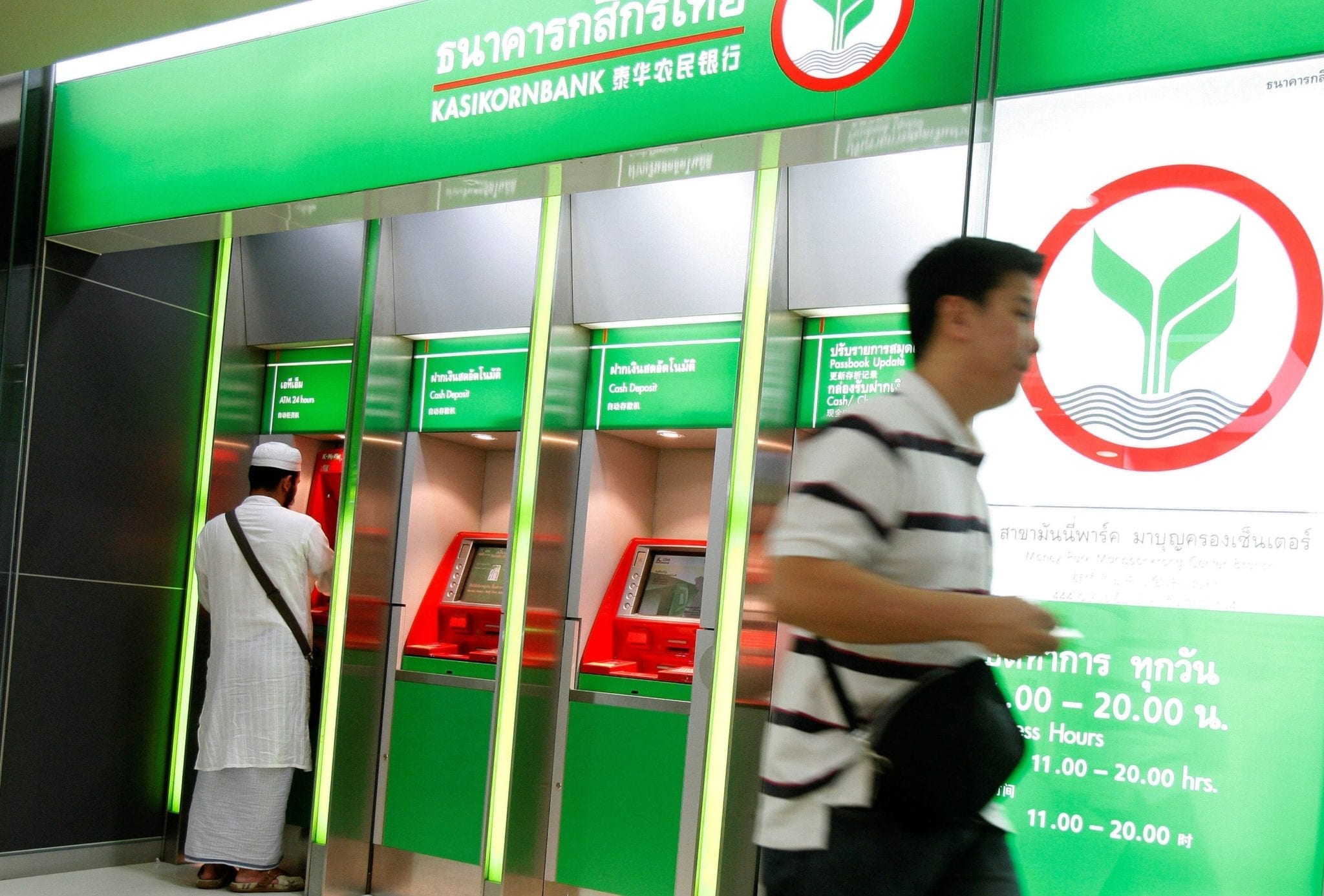
Lu International, a Singapore-based subsidiary of leading Chinese retail fintech Lufax, is expanding its reach in the region via a strategic partnership with Kasikornbank.
The FinVest digital investment platform aims to cater to the growing market of retail investors in Thailand by providing access to a full spectrum of onshore and offshore investment products with low minimum investment amounts and management fees, according to an announcement on Tuesday.
The partnership was previously announced in August. The platform currently offers investors access to more than 600 funds from 15 asset management companies in Thailand, with a minimum of 1,000 baht ($35).
Established in 1945, Kasikornbank is the fourth-largest commercial bank in Thailand, with 17.3 million customers. The bank also works closely with Geneva-based private bank Lombard Odier, which manages global investment funds on behalf of its private clients. Lombard Odier also acts as an exclusive offshore custodian for Kasikornbank clients, using Singapore as a booking center.
Thailand is one of the fastest-growing markets in Southeast Asia and continues to see rapid wealth growth and economic development,» Greg Gibb, CEO of Lufax Holding, said in the announcement.
Thailand’s total outstanding capital market value stands at around 44 trillion baht ($1.46 billion), of which 4.8 trillion baht, or around 10 percent, is invested in mutual funds, Kasikornbank noted.
Of late, the younger generation has shown increasing interest in mutual funds, preferring to conduct transactions via digital channels and seeking products related to Thai and foreign equity instruments. Moreover, open-architecture investment is growing every year, Patchara Samalapa, Kasikornbank CEO, said.
-
Thai shoppers put trust in card payments when paying online during
As we pass the halfway point of 2020, the world today looks very different from when we started the year. The impact of the COVID-19 pandemic has affected more than our health, as our daily habits have changed, and how we use goods and services has transformed. We do more online than ever before, buying things we’d never imagined buying remotely: from shopping for groceries to ordering break-time bubble tea from our favorite shop. And not being present in the store means we have changed the way we pay too.
In reality these changes were already in progress, but the pandemic has accelerated new customer habits. According to a recent study conducted by Visa, the global leader in digital payments, many Thai consumers turned to eCommerce for this first time, with two-thirds saying they were most likely to increase their online shopping. Similarly, two-thirds said they intended to stick with digital payment methods, including contactless card and ecommerce, instead of reverting back to cash when the situation returns to normal. For digital payments, the new normal is here to stay.
As more Thai consumers shop and pay with digital payments, KASIKORNBANK and Visa have been working closely to pioneer new ways and solutions to secure digital payments and eCommerce experiences during and after your payment is made. These are some of the behind the scenes security measures we carry out that will allow you to have more peace of mind when transacting digitally, and will shine a light onto why you should never look at digital payments the same way again.
One-time password, or OTP, may be familiar. This is most commonly used when you receive a unique password sent by SMS to your phone that you use to authorize your payment.
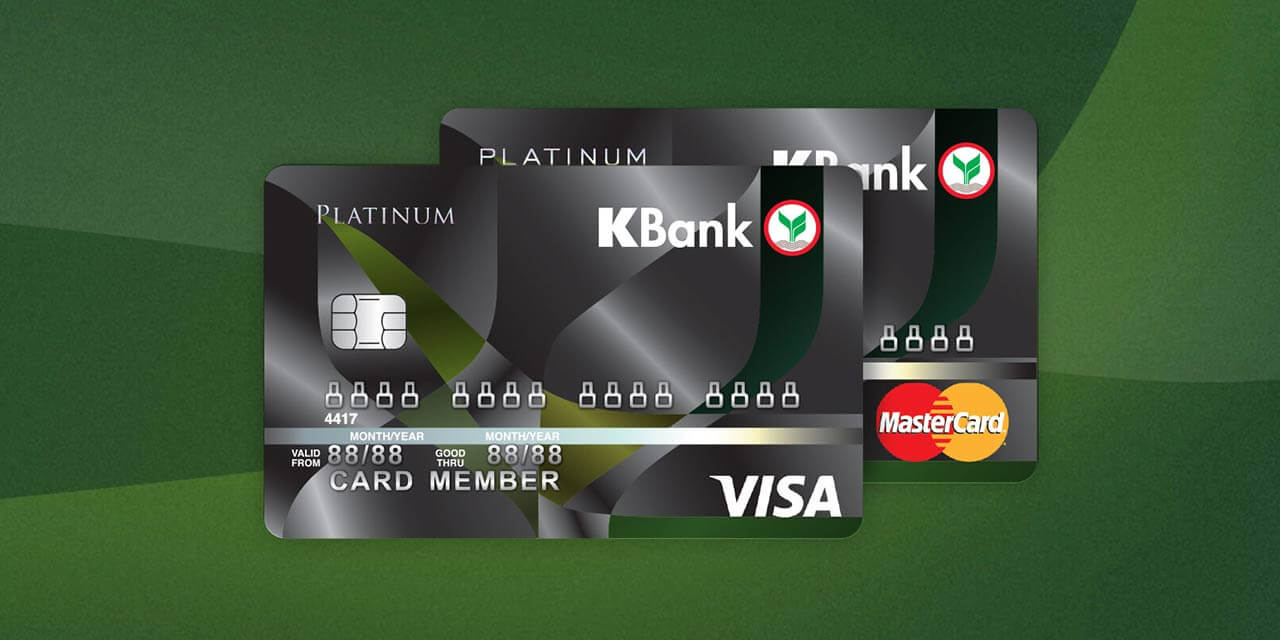
EMV CHIP is the small chip you see on your plastic card, and every time you pay this chip generates a dynamic one-time use code for each transaction. Using EMV CHIP cards means we are able to provide an additional layer of security known as dynamic authentication in addition to the real-time fraud scans conducted when the transaction is authorized by the issuing financial institution.
Visa Advanced Authorisation is a service that uses predictive analytics combined with machine learning and artificial intelligence (AI) to analyse more than 500 unique risk attributes and allocates a risk score for each transaction. This score is then shared with KBank Credit Card so we can make an informed decision on whether to approve or decline a transaction. On average, Visa analyses more than six billion pieces of data every day. When data analytics is used with authentication methods like biometrics to verify the cardholder, payment security is enhanced.
Visa Tokenization will help ensure no sensitive data is transmitted during an online transaction. It replaces sensitive account information, such as the 16-digit account number, with a unique digital identifier called a token. This token then allows payments to be processed without exposing actual account details that could potentially be compromised. This means your card number and expiry date is not shared and your account is kept secure.
Although most sales transactions are processed, posted and paid for with few problems, you may see a charge on your card that is unfamiliar or incorrect. To settle any disputes, KBank Credit Card has a chargeback policy. The purpose is to protect cardholders from fraud and unfair billing practices. This allows cardholders to feel more confident using cards freely, knowing that they will not be held responsible for the actions of identity thieves, deceptive merchants and other fraudsters.
You can also imagine if your wallet gets stolen with cash in it, it can be virtually impossible to replace that money, unless the wallet is retrieved. On the other hand, with cards, the process to replace lost or stolen cards is relatively seamless. All you have to do is contact your card-issuing bank and they will work with you to disable the card and prevent your funds from being exploited by fraudsters.
-
KBank Completes First Transaction Reference to New Thai Overnight Repurchase Rate
Murex, the global leader in trading, risk and processing solutions for capital markets, powered an overnight indexed swap derivatives transaction for KBank based on THOR, the new Thai reference rate. KBank successfully completed the first such transaction referencing THOR on August 31.
The interest rate swap transaction based on THOR represents a critical inaugural step—it sets the stage for new markets for THOR-linked derivatives and cash products.
KBank, also known as KASIKORNBANK, executed the transaction after bespoke THOR mechanisms and configuration facilitated by Murex, a long-term technology partner to the Thai bank. KBank is Thailand’s largest lender by assets and has 70 years of experience in the country.
“This is a remarkable moment and an important milestone for KBank history and the local financial community to create a robust interest rate derivatives market based on THOR,” said KBank Capital Markets Business Division Head Thiti Tantikulanan. “The KBank team is excited to have been a part of this transaction. Our close collaboration with various stakeholders in Thailand, including the Bank of Thailand and the Murex teams, will contribute to the development of a liquid derivatives market based on the new benchmark rate after the LIBOR discontinuation at the end of 2021.”
In 2019, the Bank of Thailand, with inputs from the Thai Bankers’ Association and the Association of International Banks, established a Steering Committee on Commercial Banks’ Preparedness on LIBOR Discontinuation.
KBank was an active part of the committee, whose tasks included proposing the replacement rate for the Thai Baht Interest Rate Fixing contract (THBFIX), which LIBOR cessation puts at risk. That replacement rate is THOR, which was finalized in April.
“We’re very proud to have been an advising financial institution to the Thai central bank in this critical initiative,” said Thiti Tantikulanan. “To have completed the first transaction using this rate is a great feather in our cap. It is also an important milestone for THOR.”
Murex was thrilled to deliver the core technology to KBank, according to Guy Otayek, CEO of Murex APAC.
“Collaborating with KBank has always resulted in innovative solutions,” said Guy Otayek. “Though we’ve been working with them for many years—KBank has more than 500 active users of MX.3—this transition project represents a longstanding commitment to bringing innovative solutions in Thailand and Southeast Asia. This first transaction powered by MX.3 is another great illustration of our unique expertise to help our client community transition away from LIBOR on data, analytics, operations and accounting, and provide them with the mechanisms to easily adopt new RFRs. This first transaction proves that Murex is the right partner to serve the capital markets here in Thailand.”
-
KBank establishes fintech company in China to be financial innovation lab
KBank has established KASIKORN Vision Information Technology Co., Ltd. It is a fintech company wholly owned by KASIKORN Vision Co., Ltd. (KVision) with registered capital of RMB 300 million. It is the first fintech company to be set up by a foreign bank in Shenzhen this year. The company’s main business will involve the design, creation and research of new technologies. It has formulated a five-year operating plan to support the future development and provision of financial technology.
Mr. Ruangroj Poonpol, Chairman of KASIKORN Business-Technology Group (KBTG), said that KBank has established KASIKORN Vision Information Technology Co., Ltd. which is registered in Luohu district, Shenzhen, People’s Republic of China. It is a financial technology, or fintech, company which is wholly owned by KVision. Its registered capital is RMB 300 million, or equivalent to THB 1,300 million. It is the first fintech company to be established by a foreign bank in Shenzhen this year. The company’s main business involves the design and creation of IT systems, research of new technologies, search for new business models conducive to digital banking and digital economic systems, as well as the development and testing of prototype products and provision of new financial technologies to KASIKORNBANK FINANCIAL CONGLOMERATE and its customers.
KASIKORN Vision Information Technology Co., Ltd. has formulated a plan involving three steps over the course of five years: The first step, in the first year of business, is to consolidate the foundation, focusing on the completion of team building, business models and other basic work, to support KASIKORNBANK (China) Co., Ltd.’s digital strategy as the main development direction. The second step, over the second and third years, involves steady progress through in-depth integration with shareholder resources, key business group in Thailand and China + ASEAN regional institutions; and the integration of leading domestic technological achievements, especially those of Shenzhen, to provide innovative financial science and technology solutions. The third step, over the fourth and fifth years, is the acceleration of development in the course of becoming an influential fintech company in the region. At the same time, in the fields of technology accumulation, research and development, the company will join with leading international research and educational institutions to explore the establishment of financial science and technology laboratories to support the research and application of related basic disciplines.
KASIKORN Vision Information Technology Co., Ltd. will promote the expansion of financial science and technology services to ASEAN countries, and make Shenzhen an important node for the Guangdong-Hong Kong-Macau Greater Bay Area, which is an important support pillar for the Belt and Road Initiative to reach out and connect with ASEAN countries. This would benefit ASEAN and enhance China-ASEAN economic and financial cooperation.
Luohu district is a newly developed area in Shenzhen, a central business district which houses the headquarters of more than 70 licensed financial institutions and first-line branches, or the approximate equivalent of one-fifth of the city’s licensed financial institutions. Thus, Luohu district serves as a frontrunner in terms of development, with technological innovation serving as the primary driving force. Additionally, the district has been able to attract new investment and new talent, which will comprehensively improve the scale and quality development of its emerging industries. KASIKORN Vision Information Technology Co., Ltd. is expected to receive the full benefit of being located in this region.
-
KResearch revises downward its 2019 economic projection to 3.7 percent
KResearch held a panel discussion on “Measuring the Thai Economic Temperature after Election” on Tuesday April 2, 2019. According to KResearch poll conducted among members of the general public and the business sector before and after the election, it was found that the election has given a boost to confidence. Nevertheless, close attention should be paid to the formation of the new government which may influence the confidence.
Ms. Nattaporn Triratanasirikul, KResearch Assistant Managing Director, holds the view that, “No matter how the government is formed, Thailand will be challenged by the global economic slowdown which will, in turn, affect its exports. The new government has to expedite the implementation of economic stimulus policies under the FY2019 budget, including the passing of the FY2020 budget bill. If the new government can be formed within June 2019 and the economic stimuli can be implemented as expected, household consumption will be boosted by 0.2-0.4 percent of GDP, and the Thai economy in 2H19 will be brighter than in 1H19.”
However, KResearch has revised downward its growth forecast for the 2019 Thai economy to 3.7 percent, or within a band of 3.2-3.9 percent, from the 4.0 percent pace before. The new economic growth projection reflects an expected slowdown in Thai exports resulting from the economic downturn in Thailand’s key trade partners despite better-than-expected improvements seen in the US-China trade dispute. KResearch has also cut its export growth projection for 2019 to 3.2 percent from previously 4.5 percent, and its 2019 import growth forecast to 4.3 percent from 5.3 percent.
For the outlook of domestic interest rates, Ms. Nattaporn expects the policy rate to be kept at the 1.75 percent throughout this year. High liquidity in local commercial banks and the banks’ approach to gradually approve loans currently should not intensify the competition in the commercial banks’ interest rates. As for the movement of Thai Baht, KResearch forecasts that the Thai Baht will weaken and move within the range of THB31.20-32.50 per dollar. Factors deserve close attention are domestic issues, especially, political and economic situations.
-

Japan’s NETSTARS joins Singtel’s VIA alliance
Singtel‘s cross-border mobile payments alliance VIA has expanded into Japan through a partnership with Tokyo-bassed mobile payment technology NETSTARS.
The addition of NETSTARS to the alliance will add 100,000 stores to the network’s current 1.6 million merchant partners in Asia.
With the agreement, users of mobile wallets supported by VIA, including Singtel’s Dash and AIS Global Pay, will be able to use their respective wallets at merchants including airports, shopping malls, transportation modes and food and beverage outlets.
Users will be able to pay instantly in their local currency with competitive foreign exchange rates in Japan.
NETSTARS aims to grow its merchant base to 1 million stores throughout Japan by the end of next year
As well as Dash and AIS Global Pay, Thailand’s Kasikornbank and Malaysia’s Boost will soon be adding their mobile wallets to the VIA alliance.
Singtel Group plans to expand the VIA alliance to include other mobile regional associates including Airtel in India, Globe in the Philippines and Telkomsel in Indonesia, as well as more non-telco partners.
-
Kasikornbank aims high as K Plus users pass 10 million
Thailand’s fourth-largest bank by assets – by loans and deposits it also ranks fourth – has set some eye-catching targets. Take its K-Plus mobile banking offering. Already K-Plus has 10 million customers; that in itself is an already impressive number, given that Kasikornbank has around 14 million customers in total. And it represents impressive annual growth: the bank ended 2017 with 7.3 million users, up from 4.6 million the previous year, but it is a drop in the ocean compared to the target it has set.
The bank believes it can grow K-Plus numbers to up to 100 million by expanding it to the regional market via partnerships. It is also continuing to target low-income earners who are not currently Kasikornbank customers.
Organic growth targets for retail loans are in the range of 9-12% for 2019, and it is using machine lending and artificial intelligence technology to initiate financial and life solutions related to customers’ lifestyles and needs.
K Bank grabs ride-hailing deal
And then there is the investment in Grab: in November last year, K Bank invested $50m in the ride-hailing firm, with an aim to help launch the GrabPay electronic wallet in its sixth South-East Asian market in 2019.
The deal also enables K Bank to use Grab’s data on merchants and drivers. The goal is to craft loan products while minimising non-performing loans with optimised use of data. So the Grab app will be integrated with the K Plus app and the bank will offer loans via the apps.
Other 2018 highlights included a local chart-topping success in the Apple App store. K Plus is Thailand’s most popular app on Apple’s iOS platform outside the gaming segment, ahead of local rival banks Siam Commercial, Krung Thai Bank and Bangkok Bank.
But it is the use of data and its potential for monetisation that really is attention-grabbing. K Bank really is aiming high in terms of becoming what it terms a ‘data-driven bank’, and believes that project data-driven data will account for one-half of its income by 2020.
Such ambitions do not come cheap. K Bank’s IT group has set an investment budget for tech development this year of around $160m. It is, admittedly, a modest sum by Chase or Citi standards, but in the context of the Thai market, it is a significant investment. And if K-Plus can grow user numbers to anything approaching 100 million, and get close to its data revenue targets, K Bank will certainly put itself on the map.
Mastercard trumps Visa for Earthport
As EPI goes to print comes news that Mastercard looks to head off rival Visa as it attempts to buy Earthport for £233m ($306m).
Over the Christmas period, Visa made an unexpected £198m bid for the company. The offer was recommended by the Earthport’s board and put to shareholders; however, in a statement to the market on 25 January, Earthport’s board withdrew its recommendation for Visa’s offer and urged shareholders to instead take Mastercard’s deal, which is at a 10% premium to Visa’s. Earthport’s shares, which have risen four-fold since Visa first offered to buy the company, rose another 30% to £0.36.
Earthport has been around the block a few times since it was founded in 1997. It floated on AIM in 2009, and its adjusted operating loss for 2018 rose by 33% to £8.4m (FY2017: £6.3m). Its share price stumbled around single-digit territory for much of 2018, reaching a low of £0.055 in December, having peaked at £0.48 in April 2015.
Earthport provides cross-border payment services in the UK, Europe, North America and internationally, operating through two segments: transactional and professional services. It does this through a combination of a network of segregated bank accounts in various geographies, software that mirrors movements of funds from bank to bank, and a knowledge base embedded in the platform and organisation related to each country.
A deal for either Mastercard or Visa makes sense from the perspective of growing revenue from international money transfers. In other words, Earthport offers a revenue stream not dependent on traditional plastic cards. At the figures being canvassed the purchase price does seem steep, but is quite a coup for the new management team that took over at Earthport last year.
-
Kasikornbank Joins Visa’s B2B Connect Project in Thailand
Visa’s blockchain-based B2B Connect project is gaining steam, with Thailand’s fourth-largest bank, Kasikornbank, joining the fold. The bank will be the first Thailand bank to use the technology, joining other well-respected financial institutions such as the U.S. Commerce Bank, Shinhan Bank in South Korea, the Union Bank of Philippines, and the United Overseas Bank in Singapore.
Kasikornbank may not be the largest financial institution in Thailand, but it still has substantial $96 billion in assets. The bank was established in 1945 with a registered capital of only five million baht.
The move shouldn’t come as too surprising, considering the fact that Thailand as a nation is much more pro-cryptocurrency, especially in the context of Asia. For example, China, the largest economy in the region, has banned ICOs completely, even while its state-owned banks have implemented blockchain technology to optimize its operations.
In contrast, the Bank of Thailand has revealed just last month that it actually plans on issuing its own state-issued cryptocurrency. The Bank of Thailand has also even allowed local banks much more leeway in terms of cryptocurrency – such as allowing them to issue tokens, invest in cryptocurrency markets through subsidiaries, and even provide crypto brokerage services.
While Japan and South Korea have expressed positive sentiments about cryptocurrency before – such as Japan declaring that bitcoin is a legal form of payment, and the mayor of Seoul expressing interest in developing his own cryptocurrency – the amount of regulation involved has allowed Thailand to become an international hub when it comes to cryptocurrency.
While Thailand’s economy might not be as powerful as its neighbors, it still has been drawing in cryptocurrency enthusiasts and companies internationally.
Suripong Tantiyanon, Visa’s Thailand country manager, praised the decision, pointing out that Visa B2B will help guide the country when it comes to “security, governance, and distributed ledger technology”. He believes that Visa will be an industry leader in this space.
Visa’s B2B program was already launched last year but is obviously making great progress in Asia already. The platform is built on Chain, which was actually acquired by Stellar recently. The platform is meant to enter the corporate cross-border payment sector, which many analysts believe will grow tremendously over the years and is one of the main ways that many cryptocurrency enthusiasts believe the cryptocurrency sector will grow, with institutional money helping lead the charge to mass adoption.
The idea is that blockchain technology will allow for faster and cheaper transactions, which will save banks massive amounts of money. Visa also believes that blockchain technology allows for the cross-border payment sector to be more transparent than ever, as well. Kasikornbank is the first Thailand bank to join the platform.
-
KBank joins rush to tap postal network in Thailand
Kasikornbank (KBank) and Thailand Post, a state-owned enterprise, yesterday sealed a business deal that saw one of the country’s biggest banks appoint the postal operator as a banking agent.
KBank became the first of the large banks to enter such an arrangement with Thailand Post.
“We aim to service 250,000 online vendors across the country under this deal, which will allow them to send out their parcels and deposit money with Thailand Post’s branches across the country,” said Patchara Samalapa, KBank’s president.
Patchara indicated that Kasikornbank was looking at broader gains from the initiative, saying that with the bank’s large deposit base it did not need to attract more deposits.
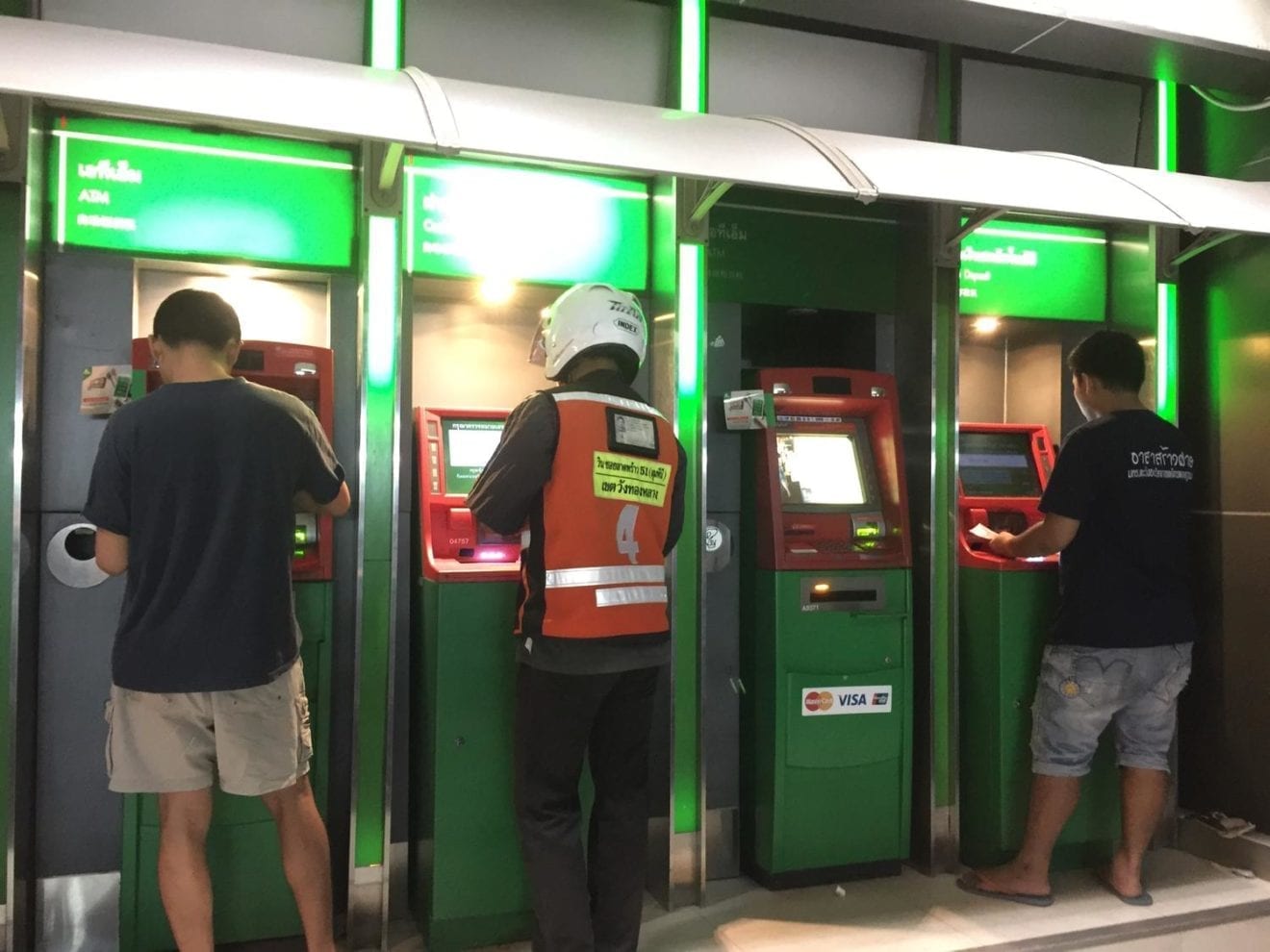
In the first stage of service, the bank’s customers can deposit up to Bt20,000 per transaction – or up to Bt40,000 a day – via 964 Thailand Post branches. The service costs Bt10 until the end of the year, before rising to Bt20.
The bank targets 150,000 transactions derived from the banking agent channel by the end of 2018. The volume of transactions is expected to reach 600,000 in the first three years of operation.
Cash withdrawal and money transfer services would be offered next year should the central bank give the green light, Patchara said.
“The use of banking agents is cheaper for us than setting up full bank branches nationwide, but that does not mean than we plan to shut down some bank branches,” he said.
Smorn Terdthampiboon, president of Thailand Post, said that doing business with Kasikornbank would improve its logistics business in the face of more competitors entering in the market.
“We did not set out to make more revenue from it since it is not our core business, but we aim to provide a better service for our customers,” she said.
Some seven small commercial banks have appointed Thailand Post as a banking agent since 2011, and its Bank@Post service has grown about 13 per cent annually.
Smorn said the logistics business in Thailand is growing due to the increased popularity of shopping online.
Traditionally, Thailand Post provided a basic service of sending letter from senders to receivers. Now, the dispatch of goods accounts for the biggest share of the agency’s business, at more than 40 per cent. Mail delivery makes up about 30 per cent, with the rest of the revenue from money services and sales of parcel packaging items and stamps, she said.
Thailand Post has 1,300 branches nationwide and 3,000 more come under its postal network operated by private entities.
Parcel delivery has grown about 20 to 30 per cent annually, as people were shopping online more, Smorn said.
Some other large banks had also sought business partnerships with Thailand Post, she added. Thailand Post targets revenue of Bt30 billion this year, up from Bt25 billion last year. Last year it made a profit of Bt4.2 billion and this is expected to rise to Bt4.5 billion this year, Smorn said.
-

KBank teaming with Com7 to expand the BaNanas IT stores
Com7 has teamed with Kasikornbank (KBank) to expand the BaNana store chain, enabling younger consumers to access IT products and services more conveniently.
Their first joint BaNana pilot branch was in Yasothon, and the two companies plan to have 20 more mini-branches by year’s end offering more diverse retail business and comprehensive financial services in Thailand, says Com7 CEO Sura Khanittaweekul.
The listed company aims to achieve 600 branches under its management by the end of the year, up from 434 last year. Com7 has set an income-growth target of not less than 15 per cent for this year. Last year’s income came in at THB22.584 billion and net profit at THB608.8 million, both records for the business.
-
Kasikorn enhances the role of Thai-Myanmar Border Trade Business Center
Kasikorn Bank (KBank) teams up with Kanbawza Bank (KBZ Bank), Myanmar’s largest bank, to implement a staff exchange program of Mae Sot-Myawaddy, aimed at boosting Thailand-Myanmar border businesses. Focus is made on import-export settlements via banking system and promotion of cross-border funds transfer via Mae Sot Border Trade Business Center, which is aimed to increase to about THB200 million.
Mr. Kittichart Potithat, First Vice President for World Business Strategy and Marketing Management Department, KBank, said the bank has always placed importance on Myanmar market, given a large volume of border trade with Thailand. With an aim to facilitate investors and business operators in the border areas, KBank’s Border Trade Business Center was set up in Mae Sot, Tak. To date, the center has granted credits of more than THB150 million to businesses in Mae Sot for investment in Myanmar, completed 10 successful cases of business matching and organized various seminars to share knowledge on trade and investment, in order to promote trade and financial transactions between the two countries.
Recently, KBank expanded the cooperation with KBZ Bank by sending KBank’s staff to work at Myawaddy branch of KBZ Bank and in turn accepted KBZ Bank’s staff to work at Mae Sot branch of KBank for one year. This cooperation should enable KBank to gain in-depth expertise about business operational format and banking regulations in Myanmar, as well as consumer insight in using financial services of Myanmar consumers. Moreover, KBank staff under this staff exchange program can help advise Myanmar entrepreneurs on how to conduct financial transactions in Thailand, thus allowing both Thai and Myanmar entrepreneurs to conduct border trade transactions more smoothly.
It has been found that Thai SMEs still need help to understand more about Myanmar’s banking system and reliable channels in seeking business partners in Myanmar, while Myanmar SMEs want to use financial products and services of Thai banks, but have been limited by communications barriers. Therefore, it is hoped that this cooperation will help enhance knowledge and understanding about financial and border trade transactions between the two countries. In 2018, KBank will offer financial facility to support border trade as always, focusing on cross-border money transfer service. KBank will also place a greater emphasis on cross-border funds transfer to promote import-export settlements via regulated banking system because nearly 100 percent of such transactions now are settled through non-regulated system. KBank is targeting an increase in Thai cross-border funds transfer transactions to Myanmar via KBank’s Border Trade Business Center at Mae Sot branch to about THB200 million in 2018.
In addition to cross-border trade, KBank has always placed emphasis on businesses in Myanmar. KBank and KBZ Bank have also jointly developed cross-border payment services, namely funds transfer in local currency and Myanmar Worker Remittance service to enable Myanmar workers in Thailand holding KBZ Bank account to transfer money back to Myanmar more conveniently by simply scanning the barcode of their Myanmar Remit Card at KBank ATM machines.
Moreover, KBank teams up with the Union of Myanmar Federation of Chambers of Commerce and Industry (UMFCCI) to host the annual “SME Capacity Building Program” seminar to enhance the capacity of SME entrepreneurs in Myanmar. The seminar is aimed at equipping them with knowledge about business operations and internal work processes to prepare for their business expansion, as well as preparation of financial statements in compliance with international standards for use in loan application. Since 2016, the seminar has been held in six main cities including Yangon, Myawaddy, Bago, Mawlamyine, Myeik and Taunggyi. So far, over 600 Myanmar entrepreneurs have participated in the seminar. This year, the activity will also be held to fortify Myanmar entrepreneurs amid flourishing cross-border business and investment.
-
New digital marketplaces seek to reshape economy
The age of digital transformation is dawning on Thailand’s economy and society as evidenced by crucial developments in banking, retail and other sectors.
The Bank of Thailand reported that commercial banks had shut down nearly 300 bank branches in the country in 2017 as customers moved towards Internet and mobile banking services, ushering in a new era of digital banking.
In the meantime, Siam Commercial Bank (SCB) is leading the pack by launching its “SCB Express” concept – fully-automated banking centres in various Bangkok locations.
SCB and Kasikorn Bank are seeking regulatory approval to operate e-commerce platforms to link millions of mobile customers with vendors of various goods and services, especially small and medium-sized enterprises (SMEs). In the retail sector, SCB is working with The Mall group, one of Thailand’s biggest retail and shopping centre chains, to introduce an automated cashier-less supermarket service at selected locations.
Central department store group has joined forces with China’s No 2 e-commerce giant, JD.com, to create an “online marketplace”, and the country’s top e-commerce sites, led by Lazada (part of the Alibaba group), 11 Street and Shoppe, have been challenging traditional retail models with disruptive technologies.
With many payments now possible through the ease of touching a mobile-phone screen or waving a card, consumers are expecting more from goods and service providers.
E-commerce, mobile payments using QR Codes, digital banking on the go, cashier-less grocery shopping and other innovations will start to become the norm this year as traditional business models merge with digital technology to stay relevant. Artificial intelligence (AI) is becoming the new tool for banks, retail chains and other service providers to stay ahead of their consumers’ expectations.
Since machine-learning technology is now cheaper and easier to manage, it is likely that predictive analytics that capitalise on the abundance of consumer and other data will be more widely used by Thai businesses and industries.
AI will soon usher in a new term, “machine commerce”, in which transactions are automatically generated by computer software using the huge amount of available data in real time.
This will happen this year if the major commercial banks get approval from the Bank of Thailand to launch e-commerce platforms that automatically match millions of bank customers with SMEs and other vendors.
Kasikorn Bank has said it has about 7 million mobile customers and is enlisting SMEs to join its proposed e-commerce platform pending regulatory approval, while SCB has about 6 million mobile customers and is planning a similar marketplace platform.
AI and machine learning will become more commonplace in other sectors, especially in logistics and warehouse management as well as in food, beverage and other manufacturing sectors in which the use of robots and automation systems is rapidly replacing human workers.
To facilitate the advent of a digital economy and society, government and private sector organisations have joined forces to launch the National Digital ID programme to provide reliable online confirmation of personal identities for various activities, including online government services and financial transactions. For example, a person may open a bank account online using the government’s demographic database to verify his or her identity based on the 13-digit ID number assigned to each person.
Such a use will be sanctioned by law to ensure that this and other online activities are legally binding in the digital age.
-
Thailand’s Kasikorn Bank eyes B&R business boost
Thailand’s Kasikorn Bank is setting up its China headquarters in Shenzhen, southern Guangdong province, to further strengthen its presence in the country and seize growing business opportunities brought about by the Belt and Road Initiative.
The China headquarters is an important step for Kasikorn Bank to expand its business in the Chinese market, said Banthoon Lamsam, chairman and chief executive officer of the bank.
Besides traditional financial business, the Thai bank will work with Chinese financial technology enterprises to build a digital banking platform to promote digital payments and set up a regional settlement center to carry out cross-border settlement of foreign currency in the Association of Southeast Asian Nations plus China, Japan and South Korea.
It will also provide investment consultancy services for enterprises in the region.
“The Chinese and Thai governments are making active efforts to synergize the Belt and Road Initiative and Thailand’s 4.0 strategy, especially between China’s pan-Pearl River Delta region and Thailand’s Eastern Economic Corridor. That will bring unprecedented opportunities for cross-border financial services,” Banthoon said.
The bank will further integrate its resources in China, Thailand, ASEAN and Asia to offer more services to Chinese, Thai and ASEAN enterprises in order to promote cross-border trade and investment in the region, he said.
Ai Xuefeng, deputy mayor of Shenzhen, said finance is one of the pillar industries of Shenzhen and the local government has introduced a number of policies to support the development of its finance industry, hoping to attract more foreign financial institutions to set up office in the city.
“With the implementation of the Belt and Road Initiative, more and more Shenzhen enterprises are entering Thailand and, more broadly, ASEAN markets. They need support from local financial institutions,” Ai said.
“As the only ASEAN bank with its China headquarters in Shenzhen, Kasikorn Bank will play an important role in supporting Shenzhen enterprises to go global and facilitate Thai and ASEAN enterprises to do business in Shenzhen.”
Founded in 1945, Kasikorn Bank is one of the four commercial banks in Thailand.
-

Vietnam state investment arm SCIC partners Thai Kasikornbank
Vietnam’s government investment arm SCIC, the state investor in the country’s biggest firm Vinamilk, has inked a deal with Thai Kasikorn Bank to unlock more investment opportunities in Vietnam. SCIC, or the State Capital Investment Corporation, said the collaboration will help woo foreign investors into the country as well as improve its investment climate through the exchange of expertise.
Thailand has accounted for significant investments into Vietnam, notably in the retail sector. TCC Holding and Central Group put a war chest to acquire retail assets in Vietnam over the past two years to secure top positions in this $118 billion market. SCIC last year sold 5.4 per cent of Vinamilk to Thai beverage firm F&N in a $500 million deal. F&N had been already a major shareholder at the dairy company with an 11 per cent interest.
Thai brewer Singha also played big with a $1.1 billion infusion into Masan Group’s units. Thai investors are also beefing up their direct investments. Direct investment and M&A capital from Thailand in Q1, 2017 were valued at $168 million, a surge of 20 times compared to the same period in 2016. Vietnam has been seen as a magnate for foreign investors thanks to its stable economic annual growth of some 6.5 per cent, blended with a rising middle class and improving infrastructure.
The total new committed FDI and M&A capital into the country in the first four month of this year reached $10.6 billion, in which share purchases accounted for $1.36 billion, according to the General Statistics Office. The SCIC represents the State ownership in shares of major local businesses, including Vinamilk, Hau Giang Pharmaceutical, Vietnam Construction and Import-Export JSC, tech firm FPT, insurer Bao Viet and Traphaco. In March, the sovereign wealth fund had also signed a similar agreement with Singapore property developer Keppel Land to promote investment opportunity in Vietnam.