Retail News CRM

Tag: Kasikornbank

  • Thailand’s 2nd largest bank set for Vietnam entry

    Thailand’s 2nd largest bank set for Vietnam entry

    Thailand’s second-largest lender by assets, Kasikornbank, plans to open a branch in Ho Chi Minh City in the third quarter this year.

    “Attention is now focused on Vietnam as a regional investment hub that has attracted the world’s leading companies, including from Thailand, thanks to its strong economy,” the bank’s executive vice-president, Pattarapong Kanhasuwan, said in a statement, adding its recovery should be helped by its success in containing Covid-19.

    The new branch gained regulatory approval in January and plans to lend THB10 billion ($333 million) in its first year of operation.

    The bank will focus on Thai and foreign businesses investing in Vietnam and startups in digital technologies.

    Thailand was the seventh-largest foreign investor in Vietnam last year with $292 million, according to the Ministry of Planning and Investment.

  • Thai’s KBank presses ahead with 2019 loan growth target of 5-7%

    Thai’s KBank presses ahead with 2019 loan growth target of 5-7%

    In the recently announced 2019 business plans, KASIKORNBANK (KBank) will press ahead to become the “Customers’ Life Platform of Choice” by using K PLUS to introduce financial and lifestyle services that suit individual clients. KBank’s financial and IT capabilities will be further enhanced through using data for decision making and steering business toward becoming a “Bank of Sustainability. The Bank has set 2019 loan growth target of 5-7%

    Mr. Banthoon Lamsam, Chairman of the Board of KBank, said that the Thai economy will likely post steady growth in 2019. Despite sagging demand abroad, domestic spending, buoyed by both public and private investments, may play a more important role in bolstering the Thai economic performance. It is expected the Thai GDP growth will reach 4.3 percent in 2019, which would be lower than the 4.6 percent pace projected for 2018 due to the slowdown in the export sector and tourism caused by the high 2018 base and the protracted US-China trade dispute that may dampen the global trade overall. Major drivers for the Thai economy in 2019 may include steady public infrastructure investment and the scheduled general election that will likely help reinvigorate investment climate overall while Thailand’s interest rates will be on the upward trend amid lofty household debt.

    Amid numerous challenges, KBank’s 2019 business operations will continue to focus on our “Customer Centricity” philosophy. With this mantra, we will press ahead with the “Customers’ Life Platform of Choice” strategy by using K PLUS, which has the highest number of users of any mobile banking applications in the country, to introduce financial and lifestyle services to meet the needs of individual customers. Our financial and IT capabilities will be enhanced further to allow KBank to be more responsive to every situation and become a data-driven bank, thus paving the way toward being a “Bank of Sustainability”.

    With regard to overall goals for 2019, KBank looks forward to achieving loan growth of 5-7%, which would be consistent with the 2019 economic growth, breaking down into corporate loan growth at 3-5%, SME loan growth at 2-4% and retail loan growth at 9-12%. We also set growth targets for our net interest margin (NIM) at 3.3-3.5%, and non-interest income growth at -5 to -7%. KBank’s NPL ratio is projected at 3.3-3.7%.

    Mr. Banthoon added that KBank continues to operate business, based on being a “Bank of Sustainability”, and under appropriate risk management and good governance. We are also building a balance in economic, social and environmental dimensions via strategies that will enable us to achieve and create sustainable returns over the long term. Such a sustainable development philosophy has been instilled in all of our operations until it becomes part of our corporate DNA, which has helped create maximum benefit for all stakeholders and promote sustainable growth to Thailand.

  • Vietnam state investment arm SCIC partners Thai Kasikornbank

    Vietnam state investment arm SCIC partners Thai Kasikornbank

    Vietnam’s government investment arm SCIC, the state investor in the country’s biggest firm Vinamilk, has inked a deal with Thai Kasikorn Bank to unlock more investment opportunities in Vietnam. SCIC, or the State Capital Investment Corporation, said the collaboration will help woo foreign investors into the country as well as improve its investment climate through the exchange of expertise.

    Thailand has accounted for significant investments into Vietnam, notably in the retail sector. TCC Holding and Central Group put a war chest to acquire retail assets in Vietnam over the past two years to secure top positions in this $118 billion market. SCIC last year sold 5.4 per cent of Vinamilk to Thai beverage firm F&N in a $500 million deal. F&N had been already a major shareholder at the dairy company with an 11 per cent interest.

    Thai brewer Singha also played big with a $1.1 billion infusion into Masan Group’s units. Thai investors are also beefing up their direct investments. Direct investment and M&A capital from Thailand in Q1, 2017 were valued at $168 million, a surge of 20 times compared to the same period in 2016. Vietnam has been seen as a magnate for foreign investors thanks to its stable economic annual growth of some 6.5 per cent, blended with a rising middle class and improving infrastructure.

    The total new committed FDI and M&A capital into the country in the first four month of this year reached $10.6 billion, in which share purchases accounted for $1.36 billion, according to the General Statistics Office. The SCIC represents the State ownership in shares of major local businesses, including Vinamilk, Hau Giang Pharmaceutical, Vietnam Construction and Import-Export JSC, tech firm FPT, insurer Bao Viet and Traphaco. In March, the sovereign wealth fund had also signed a similar agreement with Singapore property developer Keppel Land to promote investment opportunity in Vietnam.

  • Kasikornbank expands in China with local incorporation

    Kasikornbank expands in China with local incorporation

    Kasikornbank will soon be Thailand’s second bank to be locally incorporated in China, with hopes of cashing in further on the growing trade between the two countries.

    Thailand’s fourth largest bank by assets is currently going through the final procedures with the Chinese authorities, with official approval to be completed by mid-2017, Chairman Banthoon Lamsam told reporters on Thursday. Incorporation in China will enable Kasikornbank to operate on the same conditions as a local bank, including offering full-scale renminbi services to local clients. It would become the second Thai bank to incorporate in the country after Bangkok Bank.

     Also in 2017, the bank will open a new branch in Shanghai, its fourth in Chinese territory after those in Chengdu and Shenzhen on the mainland, and one in Hong Kong.

    “China is a super power country, especially at a time when so much change is going on in the global political landscape,” Banthoon said. He added: “The trading power of the West will be more difficult to rely on. We must lead on the East in which China stands as an important country.”

    Neither the economic slowdown nor the massive shadow banking industry in the country seems to bother Banthoon. “China does have its own problems but they have the system to adjust and control so the situation will remain manageable and can go on,” he said.

    Currency settlement

    Additionally, Kasikornbank on Thursday signed an agreement with Chinese fintech firm International Business Settlement to develop a baht-yuan cross-currency settlement system using blockchain technology.

    It will be based on an IBS platform which the Chinese company claims will be a cheaper, quicker and safer alternative to the dominant SWIFT settlement system. IBS Chairman Luo Feng said that his company is working with central banks in Europe and other regions in the world to develop the new settlement and clearing network.

    “IBS has the technology and network to facilitate international settlement that is not based just on the U.S. dollar, at a time when the yuan’s international presence is increasing,” Banthoon said.

    The system IBS is developing will enable direct settlement of transfers between baht and yuan, without the need to use U.S. dollar conversions at any point in the procedure.

  • Thai Kasikornbank Eyes Regional Expansion, Plans 2nd Branch in Laos

    Thai Kasikornbank Eyes Regional Expansion, Plans 2nd Branch in Laos

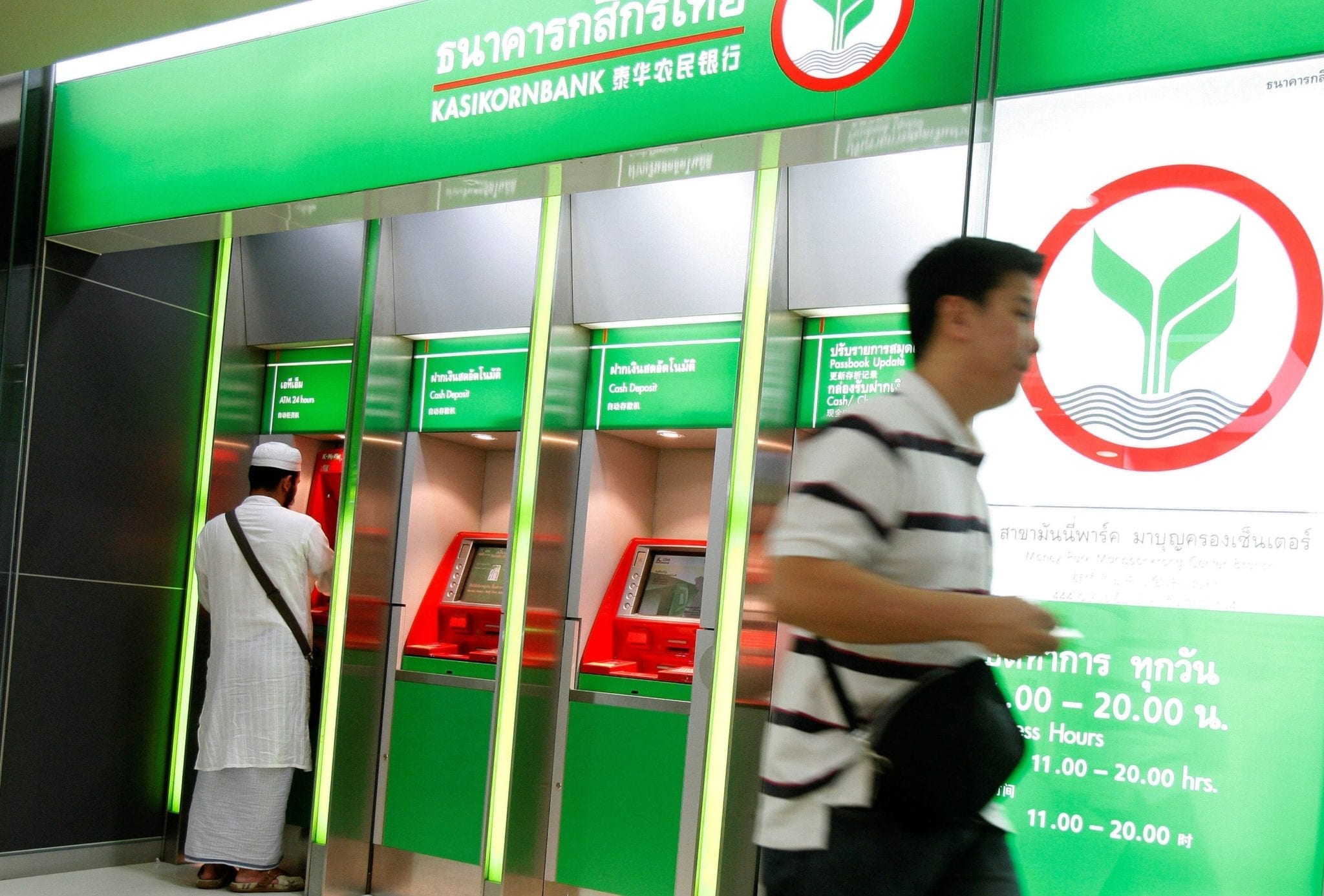
    Thailand’s Kasikornbank said on Tuesday (29/11) it plans to open a second branch in Laos and upgrade the status of its local bank in China in 2017 as part of a regional expansion.

    With assets of $68 billion, Thailand’s fourth-largest lender by assets is looking to open branches in Vietnam, Indonesia and Myanmar by 2018, Kasikornbank president Kattiya Indaravijaya said in a news conference.

    Loans and assets from foreign operations accounted for less than 5 percent of the bank’s current total loan portfolio, and the proportion is expected to gradually increase over the next few years, she added.

    Like other major Thai banks, Kasikornbank is looking to expand its business in fast-growing economies in Southeast Asia to help offset a slowdown in the domestic market.

    Kasikornbank is aiming at a loan growth of 4-6 percent in 2017 — assuming the Thai economy would grow 3.3 percent next year — and expected its non-performing loans to make up 3.3-3.4 percent of total loans, Kattiya said.

    In the first nine months, the bank’s loans grew 5 percent, versus a target of 6-7 percent for the whole of 2016, she said.

    The bank targets loan growth from retail clients at 5-7 percent next year when the number of it retail customers is expected to rise to 14.1 million, up 5-6 percent on year, the bank’s president said.

    Loan growth for large companies and small to medium sized firms is targeted at 4-6 percent next year, she said.

    Kasikornbank aimed to spend 4 billion baht on developing information technology (IT) next year to maintain its leading position in digital banking, the bank’s president in charge of IT, Teeranun Srihong, said.

  • Thai Kasikornbank, IBM join forces on blockchain network

    Thai Kasikornbank, IBM join forces on blockchain network

    Thailand’s Kasikornbank Pcl has joined with the Thai unit of International Business Machines Corp to develop blockchain services in a bid to save costs and speed up transaction process, the companies said on Thursday.

    Kasikornbank will be the first Thai bank to apply the blockchain technology and aims to start the services in the first half of 2017, Somkid Jiranuntarat, vice chairman of Kasikornbank’s technology group, told reporters.

    Kasikornbank is also in talks with other Thai banks to share the blockchain network, he said.

    Blockchain is a web-based transaction-processing and settlement system whose efficiency banks say could slash costs. It creates a “golden record” of any given set of data that is automatically replicated for all parties in a secure network, eliminating any need for third-party verification.

    Financial services companies around the world have been focusing on developing blockchain technology, with advocates saying it has the potential to save billions of dollars in costs and speed up transaction times.

    The technology will be used to certify original documents by using IBM’s Hyperledger infrastructure. At the initial stage, a system called OriginCert API is used to certify letters of guarantee (LG), which helps simplify and speed up the LG issuance process for customers, according to a joint statement.

    Kasikornbank, Thailand’s fourth-largest lender by assets, is the leader in digital banking with a market share of almost 40 percent. It aimed to spend 5 billion baht ($143 million) to develop information technology, it said in April.

  • Thai Kasikornbank to cut retail and overdraft lending rates

    Thai Kasikornbank to cut retail and overdraft lending rates

    Kasikornbank Pcl, Thailand’s fourth-largest lender, will cut its minimum retail and minimum overdraft rates by 25 basis points (bps) on April 25, it said in a statement.

    The cut, which follows similar move by Bangkok Bank on Thursday, is aimed at helping the bank’s small and medium-sized (SME) business and retail customers who have been hit by the slowing economy, the bank said.

    Kasikornbank is among the top four lenders that cut their minimum lending rate (MLR) by 25 bps on April 5.


  • Japanese stores target Thai tourists

    Japanese stores target Thai tourists

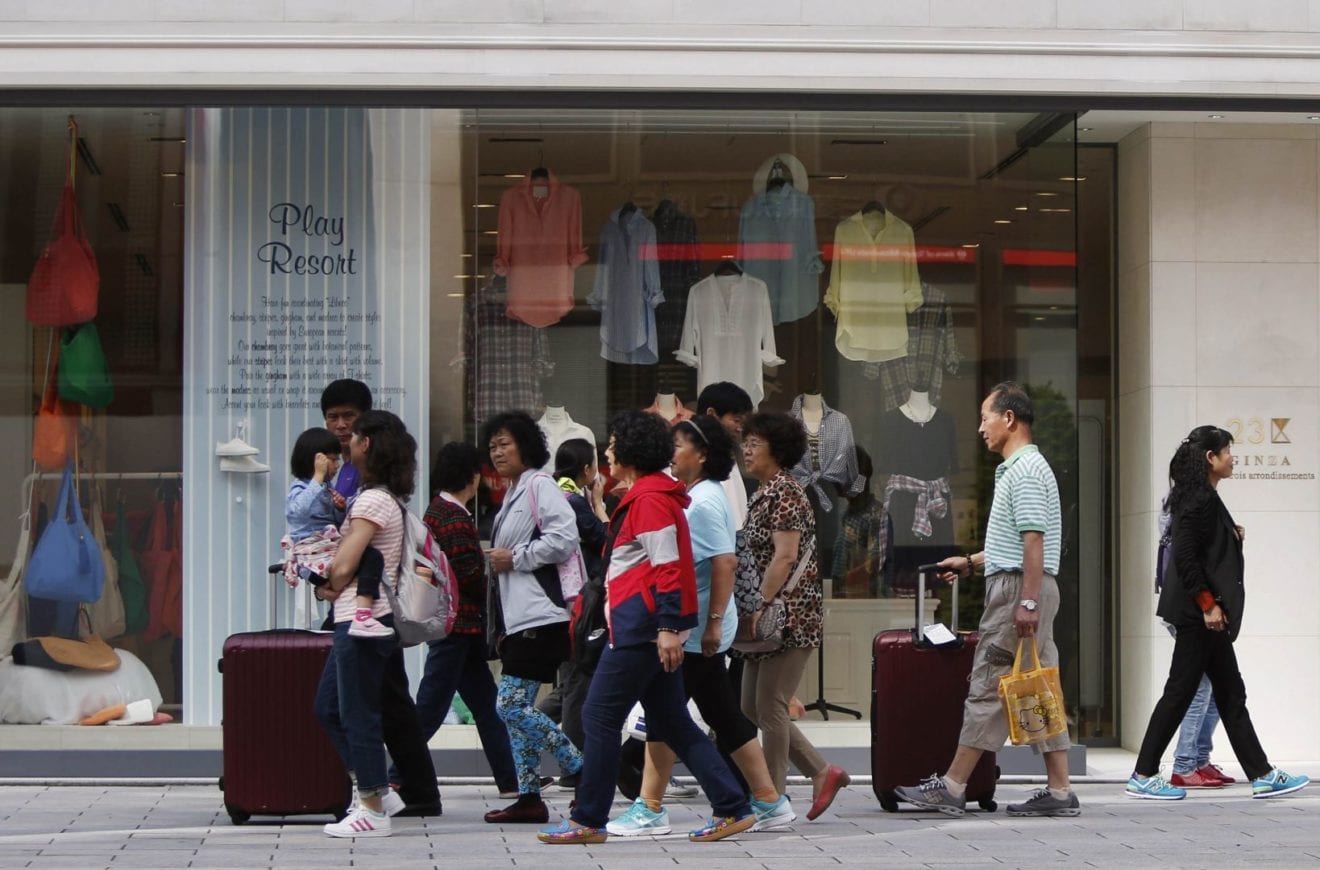
    Thai tourists are now in the sights of Japanese department stores after their success in luring Chinese during Lunar New Year.

    Such companies as Isetan Mitsukoshi Holdings and J.Front Retailing, which run the Daimaru and Matsuzakaya department stores, are ramping up efforts to lure Thai tourists during their traditional New Year holiday Songkran, which this year runs from April 13 to 15, reports Nikkei Asian Review.

    A weaker yen has helped boost tourism numbers to Japan, and visitors from Thailand have grown steadily to nearly 800,000 last year following the relaxing of visa requirements in July 2013.

    While most foreign visitors last year came from China, they were followed in volume by South Korea, Taiwan, Hong Kong, the US and then Thailand.

    Isetan Mitsukoshi and J.Front issued pamphlets and other materials to promote their Japanese stores during the Thai International Travel Fair at the Queen Sirikit National Convention Center on February 21, one of Southeast Asia’s largest travel-industry events. They mainly targeted Thai travel agencies.

    J.Front’s Daimaru and Matsuzakaya stores distributed flyers with discount coupons, and also plans to hand them out aboard Asia Atlantic Airlines flights between Thailand and Sapporo. The coupons will also be given to tourists buying the Japan Rail Pass at Thai outlets of Japanese travel agency HIS.

    Daimaru’s store in Sapporo has even prepared a floor guide in Thai language.
    Matsuya, another Japanese department-store chain, will give preferential treatment to customers of three Thai banks – Bank of Ayudhya, Kasikornbank and Krung Thai Bank – at its Ginza store in Tokyo. They will receive discounts and gifts.

    In January, Matsuya had a similar offer for customers holding membership cards from Thai retailer The Mall Group. Sales of duty-free goods at Matsuya during last year’s Songkran holidays surged 50 per cent from a year earlier, the company says.
    Visitors from Thailand spent a total of Y120 billion (US$1 billion) in Japan last year, up a quarter on 2014’s figures, according to a survey by the Japan Tourism Agency.