Tag: kate spade

  • Starbucks teams with Kate Spade New York

    Starbucks teams with Kate Spade New York

    This Holiday season, Starbucks is collaborating with acclaimed American life and style brand kate spade new york for the first time to offer a curated designer merchandise collection, available for a limited time at select Starbucks stores in Asia.

    The Starbucks X kate spade new york collection embodies the holiday spirit, incorporating colorful and playful designs against a New York City backdrop. Motifs of curious cats, as well as kate spade new york’s signature dots and stripes, ring in the season, is a celebration of joy, femininity, and optimism.

    “Starbucks is excited to partner with kate spade new york to bring this fun and festive collection to customers across Asia,” said Erin Silvoy, vice president, Product, and Marketing, Starbucks Asia Pacific. “The Starbucks X kate spade new york collection was created to inspire joyful connections and optimism for the future, two values at the heart of both brands.”

    “We are thrilled to bring our iconic kate spade new york spirit to the Starbucks customers in Asia this holiday season,” shared Charlotte Warshaw, Vice President, Wholesale, Travel Retail and Global Licensing at kate spade new york.  “The Starbucks x kate spade new york collection reflects the playfulness, color, and optimism that our brand is known for around the world, and we hope the product will spark joy for shoppers throughout the holidays.”

    This unique line-up of Starbucks X kate spade new york drinkware and lifestyle accessories is perfect for holiday gifting or as a special treat for yourself. Highlights include a ceramic mug, stainless-steel tumbler, and a stainless-steel water bottle.

    The designer collaboration will be available for a limited time starting December 1, 2020 at select Starbucks stores across Asia, including Australia, Vietnam, Hong Kong, Indonesia, India, Japan, Malaysia, New Zealand, Philippines, Singapore, Thailand, and Taiwan while supplies last.

  • Coach & Kate Spade power Tapestry sales

    Coach & Kate Spade power Tapestry sales

    One year into its major push to become an American luxury conglomerate, things appear to be moving in the right direction at Tapestry, which recently posted first-quarter results that topped expectations across the board. The firm — parent of Coach, Kate Spade and Stuart Weitzman — said its Q1 sales advanced 7 percent to $1.38 billion, driven mostly by the flagship Coach brand but also helped by Kate Spade, which it acquired in 2017.

    “Results were driven by continued growth at Coach, where global comparable store sales rose 4 percent, led by outperformance in digital, and reflected our compelling offering across categories and channels,” said Tapestry CEO Victor Luis. “Kate Spade contributed to our overall performance, as we made continued progress on our integration efforts, including the realization of synergies and the execution of strategic initiatives.”

    Trends at Stuart Weitzman, improved from the prior quarter, according to Luis, but results continued to be negatively impacted by development and delivery delays, which pressured sales and margins.

    “Production levels and shipments have now stabilized, reflecting the investment in talent and processes, as well as added manufacturing capacity. As a result, we remain on track to achieve profitable sales growth in the holiday quarter,” Luis added.

    Overall, the company reversed the prior year’s losses, posting profits of $122 million, or 42 cents per diluted share. Adjusted profits were $142 million, or 48 cents per share, topping analysts’ bets for 45 cents per share.

    By brand, net sales at Coach rose 4 percent to $961 million, Kate Spade’s sales surged 21 percent to $325 million, and Stuart Weitzman fell 1 percent to $95 million.

    “Our first-quarter performance and progress on our strategic priorities to date give us confidence in our ability to achieve the goals we’ve set out for fiscal 2019,” said Luis.

    “We continue to expect to deliver strong revenue and operating income growth, while making investments to support our long-term vision and drive a return to both double-digit operating income and earnings-per-share growth in fiscal 2020.”

    To that end, the firm lifted its profit outlook for the fiscal year and now projects earnings per diluted share in the range of $2.75 to $2.80, compared with the previous range of $2.70 to $2.80. It continues to expect revenues to increase at a mid-single-digit rate to $6.1 billion to $6.2 billion.


  • Coach boosts Tapestry growth

    Coach boosts Tapestry growth

    Tapestry growth continues to be boosted by the inclusion of Kate Spade.

    The US apparel retailer has reported fourth-quarter revenue of US$1.48 billion and a net income of $211.7 million. A 31 per cent uplift in sales is the result of the acquisition of the Kate Spade business subsequent to the fourth quarter of the previous financial year.

    However, this is the final quarter during which the sales line will be flattered by this anomaly, which means the next fiscal year will present a much truer picture of underlying growth.

    For this quarter, the results are generally good – but mostly thanks to Coach which has driven the whole business forward. The numbers from Stuart Weitzman and Kate Spade are less impressive. The latter is understandable given that the brand remains in transition, but the former is somewhat disappointing as it is the result of operational missteps.

    Looking at Coach in more detail, total revenue increased by a solid 5.1 per cent, with a supporting rise of 3 per cent on a comparable basis. This is a very respectable result which, once again, underlines the return to full health of a brand that once suffered from ubiquity and excessive discounting. The performance in the US was particularly strong, aided in large part by the more robust consumer economy which has spurred spending on luxury products. However, Coach deserves credit for securing a slice of this growth – something that not all higher-end brands have been able to accomplish.

    Within Coach, the Signature line has been a particular success and has helped to drive both sales and interest in the brand. The development of smaller leather goods in this range has helped to expand the number of products consumers can buy and has created some good gifting options which should help the company in the all-important holiday quarter. We are encouraged by this development as it suggests that Coach has now found a sweet spot in terms of balancing a premium positioning with accessible products that help maximise sales.

    Another win for the company is the men’s range, where an expanded offer has helped to boost sales. While men’s remains a small component of the sales mix, we are heartened by a good performance over Father’s Day and a growing awareness of this part of the assortment. In our view, this part of the business has good potential and will likely be a driver of future growth.

    Kate Spade rebuilding 

    Kate Spade has now been part of Tapestry for a year. Over that time the group has taken a disciplined approach to rebuild brand equity, including pulling back on excessive promotional activity and reducing exposure to unfavourable wholesale channels. This effort is now almost complete and while global comparable sales were down 3 per cent, margins are strengthening and top-line revenue is starting to look more favorable. The brand is now in a better position and should start making a solid top and bottom line contribution over the next fiscal year.

    Stuart Weitzman continued its run of poor performance with a slip in sales and margin. Most of the issues at Stuart Weitzman still stem from production problems, which delayed key seasonal styles. Not only did this reduce sales of those products, it also weakened overall interest in the brand which meant core products had to be discounted to stimulate demand. Unfortunately, these second-half issues undid most of the advancement during the first quarter.

    Looking ahead, we believe Tapestry is in good shape. It should have a successful holiday quarter which will boost the first-half of its new fiscal year. And now that Kate Spade is in order, we do not preclude further acquisitions in the year ahead.

  • Citygate’s Outlets Hong Kong is ready

    Citygate’s Outlets Hong Kong is ready

    Citygate Outlets is ready for the summer.

    With over 80 international brands offering 30% to 70% discounts, the mall has collaborated with brands to bring its customers unique Summer Pop-ups, memorable experiences with special performances and rewards for its most loyal customers.

    Direction New-York for this Summer’s Pop-ups.

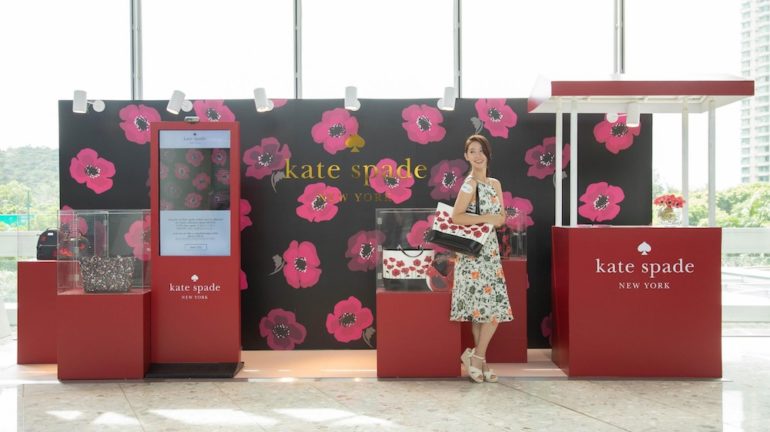
    Starting with a fresh breeze of air to break the summer heat, Citygate Outlet is showcasing Kate Spade New York’s Poppy Floral Collection in a Insta-worthy pop-up area. Following Kate Spade and its free popsicles comes Travel Destiny-themed Michael Kors’ pop-up. Popsicles will still be on the menu along with exclusive shopping privileges, heart-shaped balloons and a limited-edition gift, free with any in-store purchase.

    Malls are also engaging in customer experience.

    Citygate Outlets is bringing performers from around the world for a series of lively musical performances. From African master drummers Mamadou and Drum Jam to Japanese percussionist Kumi Masunaga or collaborations with the Ukulele Federation and Hula Association the mall is creating unforgettable instants for its customers. Shoppers will have the opportunity to give a try to playing drums and ukulele with performers and truly feel and live the beats and Hawaiian vibes.

    All the summer essentials are offered at the mall with limited discounts. Customers can get ready from head to toe with Havaianas’ flip-flops up to 40% off, Arena’s and Speedo’s pop-ups featuring swimsuits up to 65% off and all the essential summer accessories with sales promotions on Brands such as luxury watchmaker Breitling or designer sunglasses Optical 88.

    More surprises awaits the mall’s visitors. Indeed, as their shopping session comes to an end, consumers having reached a pre-defined amount of spending on the same day using their credit card or EPS during the promotion period will be eligible to redeem fashionable and practical travel gifts.

    The icing on the cake to end a memorable day.

  • Kate Spade committed suicide

    Kate Spade committed suicide

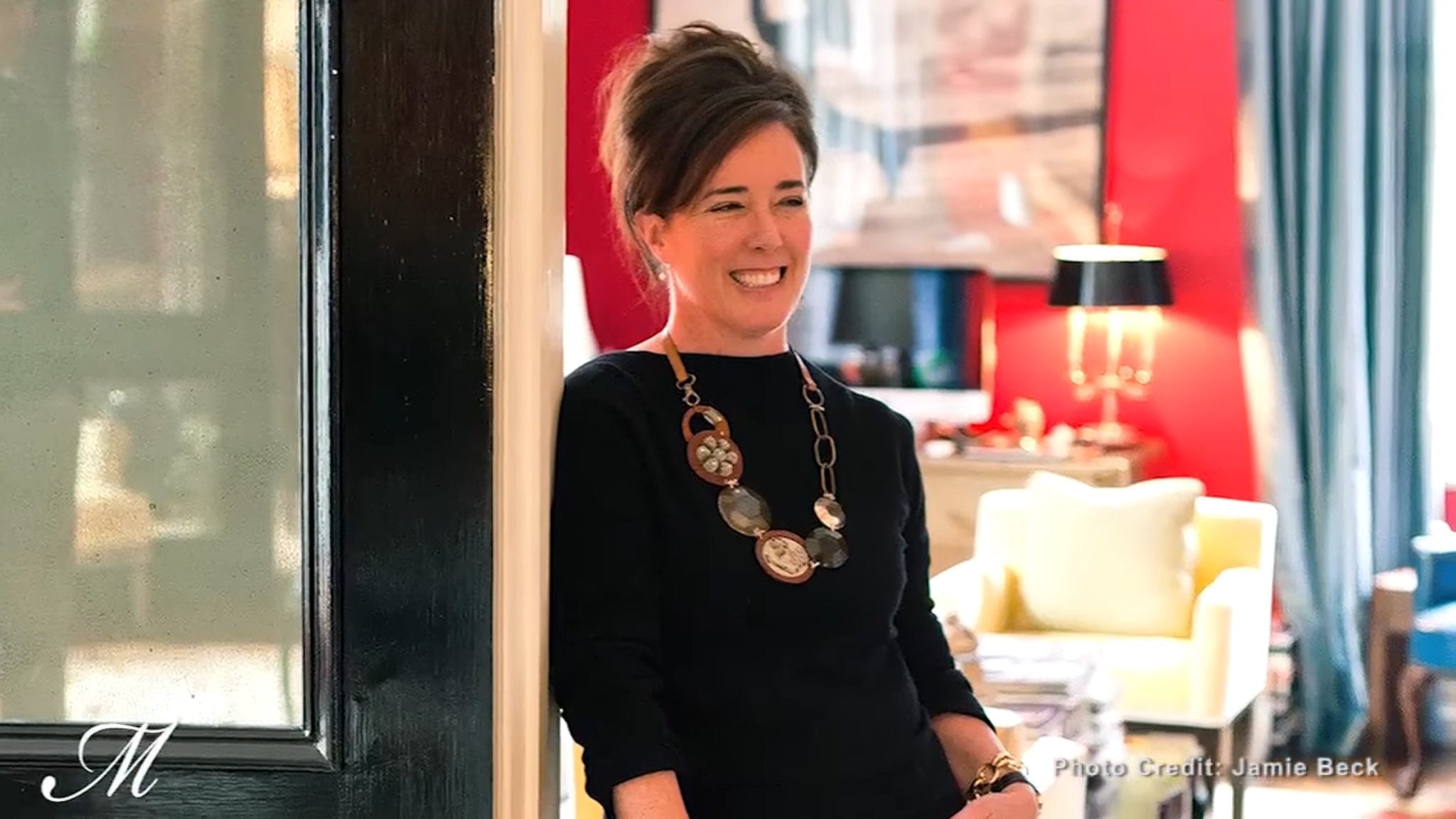
    Kate Brosnahan Spade, who created an iconic, accessible handbag line that bridged Main Street and high-end fashion, hanged herself in an apparent suicide Tuesday at her Manhattan apartment, according to New York Police Department sources.

    Police responded at 10:10 a.m. after Spade was found by her housekeeper, NYPD Chief of Detectives Dermot Shea said. A suicide note was found at the scene, he said. Spade addressed her daughter in the note, according to two NYPD sources. Spade’s husband also is referenced in the note, according to one of the sources.
    The designer, 55, started Kate Spade New York in 1993 and opened her first shop in the city three years later, the company’s website states.
    Best known for its colorful handbags, Kate Spade New York has more than 140 retail shops and outlet stores across the United States and more than 175 stores internationally, the site states.
    Over time, she distanced herself from her business.
    In 1999, she and her husband, Andy Spade, sold 56% of the brand to Neiman Marcus for $33.6 million. Liz Claiborne acquired the company in 2007, and Spade left her namesake brand. The luxury fashion company Coach announced plans in May 2017 to buy Kate Spade for $2.4 billion.
    Kate Spade New York issued a statement confirming the “incredibly sad news” of their eponymous founder’s death.
    “Although Kate has not been affiliated with the brand for more than a decade, she and her husband and creative partner, Andy, were the founders of our beloved brand,” the statement said. “Kate will be dearly missed. Our thoughts are with Andy and the entire Spade family at this time.”
    “We honor all the beauty she brought into this world,” the company said in a tweet.
  • Tapestry takes back Kate Spade China business

    Tapestry takes back Kate Spade China business

    Tapestry, the fashion retailer formerly known as Coach, has taken back operational control of its Kate Spade China joint ventures in Hong Kong, Macau, Taiwan and the mainland.

    CEO Victor Luis described the move as “an important business development initiative” and part of a plan by the group to assume greater direct control over its international distribution.

    The company has also entered into a purchase agreement to acquire the Stuart Weitzman business in Northern China from its distributor.

    “These transactions are in keeping with our strategic priority to maximise the opportunity with Chinese consumers globally across our brands,” said Luis.

    “In addition, we are excited to announce the buyback of the Coach business in Australia and New Zealand from our distributor, with an expected closing in the third fiscal quarter. As a result, we will be creating a Tapestry hub and center of excellence in Sydney to drive growth across our portfolio, further unlocking the value of a multi-brand operating model.”

    The news was included in the company’s second quarter results announcement in which Tapestry revealed a 35 per cent increase in sales, largely fuelled by the addition of the Kate Spade operations to its figures after its acquisition last July.

    Net sales totalled $1.79 billion for the second quarter, up from $1.32 billion in the prior year, while net income was $63 million.

    Luis said the second quarter performance exceeded the company’s expectations, with a return to growth for Coach, improved sales at Stuart Weitzman and the contribution of Kate Spade which continued to make progress after its integration into the business.

    A “significant step forward”

    Neil Saunders, MD of GlobalData Retail, said after removing the Kate Spade data from Tapestry’s comparable sales numbers, a modest growth rate of 2.2 per cent was achieved, which was still a “a significant step forward for the group”.

    “Most pleasing is the return to growth of the Coach brand which has, for some time, seen revenue slide as the result of a pullback from a number of sales channels, including department stores. The 2.2 per cent increase signals that this period of painful adjustment is mostly over and that Coach has a stable platform from which to expand. A more disciplined approach to discounting and promotions helped margins at the brand, which flowed through to some healthy gains in operating income. In short, Coach’s game plan of becoming less ubiquitous and selling more at higher price points is now delivering.”

    Saunders said Coach deserves credit for an on-trend holiday line up, a compelling marketing campaign, and great in-store execution.

    “However, we also believe that gains were aided by a confident consumer and flattered by a very soft prior year comparative. Both factors were particularly influential in the key North American market.

    This leads us to be a bit more cautious about prospects over the upcoming quarters, especially as comparatives become tougher and gifting sales are less significant.”

    But he said any softness in the North American market can be offset by a more aggressive and coordinated approach to international expansion.

    “On this front, we are encouraged that Tapestry is taking back direct control of the Coach business in Australia and New Zealand and believe that this will help to improve the brand’s presence and influence in the region.”

    Looking beyond Coach, Tapestry’s newest brand, Kate Spade performed less well. Global comparable sales declined by 7 per cent over the period, driven in part by a fall in e-commerce.

    “As much as this looks disastrous, the dip is mostly the result of a deliberate change in strategy, with Tapestry pulling back from the flash sales and heavy discounting that Kate Spade previously used to drive revenue. Predictably, this has resulted in a dramatic volume decline and waning interest among some consumer segments.

    “The intention is clear: Tapestry wants to take Kate Spade through the same process used to rebuild Coach. This is a necessary step to bolster brand value as Kate Spade had become too value-oriented and overly reliant on excessive, and margin depleting, promotions to drive results. We are conscious that weaning Kate Spade off the discounting drug will be far from easy and better numbers will only come through over the medium to longer term.”

  • Xidan Joy City’s new zone unveiled to mark 10 year anniversary

    Xidan Joy City’s new zone unveiled to mark 10 year anniversary

    Beijing’s iconic Xidan Joy City celebrated its 10 year anniversary today by unveiling its newly renovated Rose Garden relaxation zone. The celebration also marks the completion of the first phase of a significant upgrade of the mall’s interior and public areas that will continue until 2019.

    Mall owner COFCO has commissioned Woods Bagot to lead the interior design of renovation works as part of its wider strategy to deliver a new generation of Joy City malls that continue to stay ahead of changing lifestyles and interactive digital technology in China.

    Already a favourite destination among Beijing’s trend-setters and fashion-conscious youth, the 185,000 m2 mall is arranged over 12 floors in an established downtown shopping district and is home to a range of global brands including Apple, Kate Spade, Michael Kors, Sephora and Zara.

    When the renovation is complete in 2019 the mall’s leading brand portfolio will be showcased across eight diverse thematic areas, providing a change of pace and an engaging journey for visitors as they move through the space.

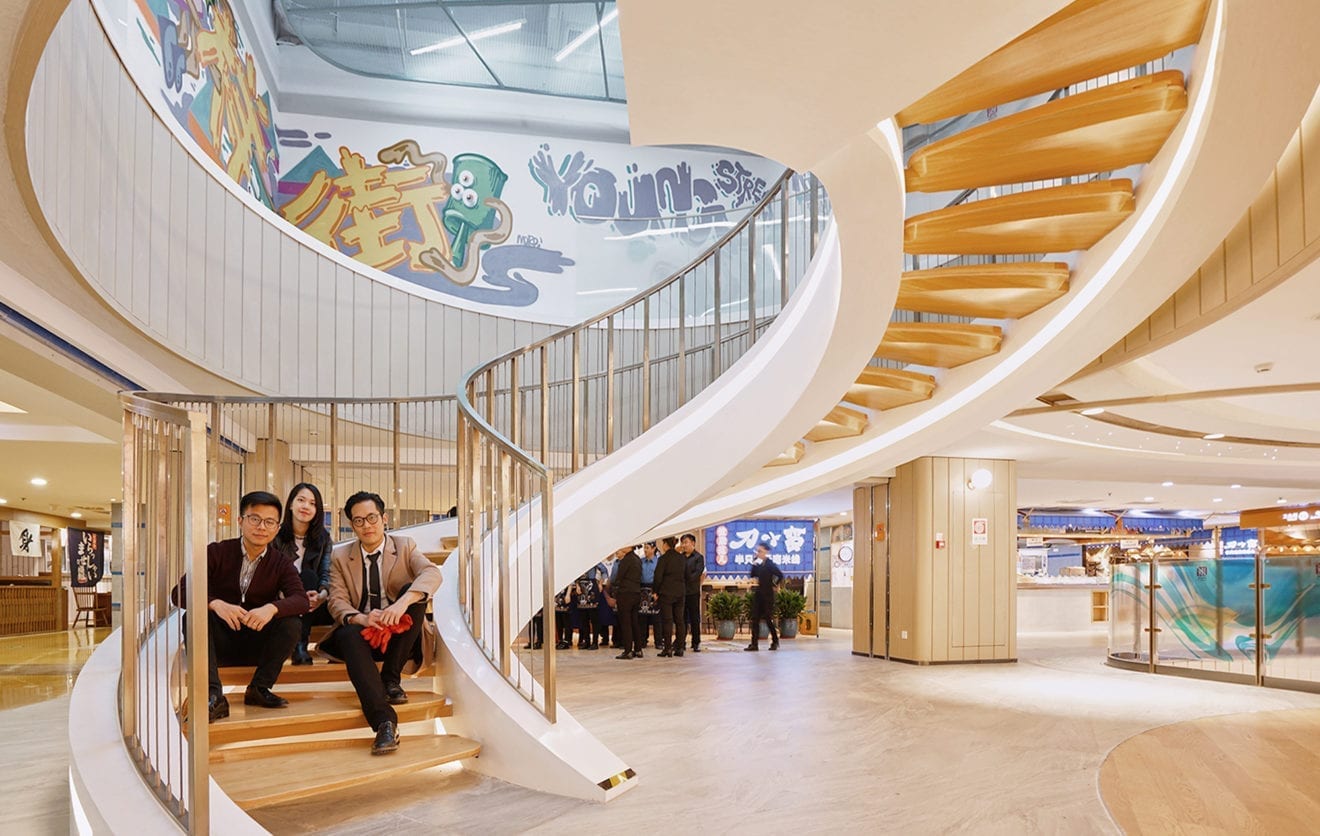
    Xidan Joy City’s reimagined Rose Garden is a spacious relaxation area within the F&B zone featuring a spectacular organic-form wood and glass spiral staircase as its focal point.

    The Rose Garden offers breathing space in an outdoor-themed environment, bathed in abundant natural light during the day and lit dramatically from above at night by an abstract rose ceiling light fixture. Different-height seating scattered with foliage and greenery gives shoppers a unique line of sight to enjoy a more natural and personal experience as they relax.

    Billy Ip, Woods Bagot, said:

    “Beijing’s youth market has evolved greatly over the last decade, with social, economic and technological developments driving new trends, desires and lifestyles. Visitor experience is the new battleground for this sophisticated audience who seek to spend time in unique, engaging environments.

    “For Xidan Joy City’s many fans, the Rose Garden is a space where many happy memories have been made. We have honoured this sentiment by creating a place for visitors old and new to both recall and build new memories.

    “Woods Bagot’s concept for the revived Rose Garden provides an avant-garde interpretation of an energising and peaceful ambience, and we look forward to sharing our creative direction for the other spaces as works progress over the next year.”

  • Tapestry sales report

    Tapestry sales report

    The leather goods company formerly known as Coach Inc., Tapestry, has reported earnings for the first time since the name change.

    Tapestry, which is in the midst of a major rebranding, posted a 24.2 per cent increase in revenue to $1.29 billion and a net loss of $17.7 million compared with a profit of $117.4 million the previous year.

    Same store sales dropped two per cent for the Coach brand.

    Neil Saunders, managing director at GlobalData Retail, said the current period is one of transition for Tapestry, which changed its name from Coach last month as it grows into a multibrand lifestyle company following the acquisitions of accessories retailer Kate Spade and shoemaker Stuart Weitzman.

    “The inclusion of Kate Spade flatters the overall revenue number, which rose by almost 24 per cent,” Saunders said. “However, if this is excluded, a weaker picture emerges with sales down by 1.7 per cent over the prior year. This is solely the result of the continued revenue slide at Coach where overall sales dipped by 2.8 per cent, including a two per cent decline in comparables.”

    The pullback from department stores and other channels that Tapestry considers to be detrimental are part of the reason for the slide in Coach’s numbers. Saunders said this is not an unusual pattern.

    “However, we feel that there is an additional softness in this quarter’s results and that they indicate a slight worsening of performance since the prior period,” he said. “Fortunately, much of this appears to be down to transitory factors such as a shift in the Chinese Mid-Autumn festival and natural disasters in the United States. Even so, they serve as a reminder of the fickleness of demand when it comes to higher-end brands – which is why Tapestry wants to move away from being reliant on just one label.”

    Saunders said their recent store visits to Coach has led them to believe that the holiday quarter will be a positive one.

    “The collection is looking strong with some good gifting stories; merchandising is compelling and engaging,” he said. “Our consumer data also indicates that perceptions of Coach continue to rise and its status as a brand that people want to receive and to gift have both improved since last year.”

    Tapestry’s newest addition, Kate Spade, also suffered a sales decline, with comparables down by 9 per cent.

    “While this is a less than auspicious start, it is the result of deliberate action by Tapestry to wean the brand off its reliance on discounting and flash sales,” Saunders said. “Predictably, this had a negative impact on volumes, especially online where global e-commerce declined by 600 basis points.”

    As much as this is beneficial to gross margins, the shift put severe pressure on the bottom line.

    “Thanks to this, and the disruption and expense of the acquisition, Kate Spade fell firmly into the red,” Saunders said. “However, we are not overly concerned by this as we believe Kate Spade needs to take two steps back before it can move forward.”

    With Tapestry’s two leading brands in negative sales territory, it fell to Stuart Weitzman to try and make up some lost ground. The division duly delivered with a 10.2 per cent uplift in sales. Better collections in store coupled with improved demand for footwear drove the results.

    “We are confident that this uptick will continue into the holiday quarter and beyond, bolstered by the much-awaited collection from Giovanni Morelli,” Saunders said.

    According to Saunders, as important as the performance of the individual brands is, it is the way in which Tapestry will bring them together that will determine business performance. “Here, despite the negative revenue growth and this quarter’s net loss of $17.7 million, we are encouraged by the progress,” he said. “Synergy savings from the Kate Spade integration are ahead of schedule, which allowed the company to beat its earnings forecast. Moreover, Tapestry has increased its targeted savings out to 2019 from $50 million to $115 million.”

    Saunders added that all of this suggests that the current period is one of transition for Tapestry and that better numbers will come through over time.

    “Overall, we have confidence in the general direction and strategy of the group.”
  • Sales up, revenue down for Michael Kors Holdings

    Sales up, revenue down for Michael Kors Holdings

    While retail net sales grew 9.2 per cent to US$836.7 million for luxury lifestyle brand Michael Kors in its third quarter, ended December 31, its revenue decreased 3.2 per cent to $1.35 billion.

    It sales growth was mainly driven by 193 store openings since the end of the third quarter, including 143 stores associated with the company acquiring its the previously licensed outlets in Greater China and South Korea. This resulted in licensing revenue dropping 22.9 per cent to $43 million, but revenue in Asia growing 89.1 per cent to $112.3 million.

    At the end of December, the company had 816 retail stores, including concessions, compared to 623 at the same time the previous year. There were also 128 retail outlets run by licensing partners.

    Chairman/CEO John Idol says the company believes Asia represents a $1 billion opportunity over the long term.
    For the first nine months ended December 31, the company saw retail net sales increase 9.6 per cent to $2 billion while comparable store sales fell 6.6 per cent. Wholesale net sales dropped 15 per cent to $1.32 billion. Gross profit eased 2.8 per cent to $2.04 billion.

    “More work to do”

    Neil Saunders, MD of research company GlobalData Retail, says the poor holiday quarter shows that Michael Kors has a lot more work to do before it is back on track.

    “The numbers provide a marked contrast to those of Coach, a company going through a similar brand reinvention, which had a much more positive third quarter. To be fair, the overall decline is partly because of the decision to cut back on distribution through department stores and other channels, which Michael Kors believes have been undermining its brand through excessive discounting, ” says Saunders.

    While the resulting 17.8 per cent slide in wholesale revenues and 22.9 per cent drop in licensing revenues was painful. “We believe the decision to dial back is a necessary step in making the brand less ubiquitous, and driving higher margins.

    “However, the issue is that the reduction in the number of doors through which Michael Kors is available is not immediately translating into an uplift in sales through its own stores. With a 9.2 per cent rise in retail sales, the numbers look robust enough, but most of this is down to store openings and the shops acquired in Asia where Michael Kors bought out the brand licence.”

    Saunders says the underlying comparable sales tell a more revealing story. “These remain weak and have actually deteriorated since the previous quarter. Only a small element of this decline is because of the stronger dollar; indeed, on a constant currency basis same-store sales are still down by 6.4 per cent.

    “As much as we believe that Michael Kors is headed in the right direction, and that its new lines are generating interest, it has much more work to do in reconnecting with customers who have been alienated by the overexpansion of the brand. As yet, it is simply not exciting customers in the same way that Coach or Kate Spade are. ”

    Saunders says that reconnecting customers with the brand is particularly important as Michael Kors expands its range.

    “The new Access smartwatches and fitness trackers, and the new fragrance lines are sensible additions to the portfolio. However, they will only really drive sales as part of a strong lifestyle brand that consumers want to buy into. In our opinion, on this front Michael Kors has more convincing to do. ”

  • Kate Spade & Co trying to find buyer

    Kate Spade & Co trying to find buyer

    Handbag and accessories maker and retailer Kate Spade & Co, under pressure from activist investor Barry Rosenstein, is working with a bank to sound out possible buyers.

    Quoting insiders, the Wall Street Journal says potential buyers contacted include retailers, with the process at an early stage.

    Rosenstein’s Jana Partners already has a minor stake in the company.

    Kate Spade has a market value of about $1.86 billion, but sales have dropped as the demand for handbags has weakened over the past year in the US, with people shopping less often at department stores and tourists spending less because of a strong dollar.

    Known for its quirky and colourful satchels and totes, Kate Spade was expecting dampened earnings over the holiday shopping quarter because of pricing competition.

  • Kate Spade figures reveal slowing growth

    Kate Spade figures reveal slowing growth

    While the latest Kate Spade figures are respectable, there is a clear slowdown in the pace of growth compared to last quarter.

    This is most noticeable in the direct-to-consumer segment, where comparable revenue rose by a fairly meagre 4 per cent, compared to the 19 per cent uplift posted during the first quarter. Although it is not unreasonable to expect growth to moderate from its heady pace, the expectation of Kate Spade’s management team was that this would not happen quite so soon.

    It is notable that the slowdown is mostly confined to North America, with international sales growth advancing steadily from last quarter’s 3.2 per cent growth rate. Kate Spade has suggested that much of this is tourist related with reduced international visitor footfall at key stores in New York, and lower spending from those that do visit thanks to the strong dollar.

    There is some truth in this, but it does not completely explain away the very slim growth rate in the direct segment – which is now running at just 1 per cent on a comparable basis once eCommerce has been excluded.

    There are three other factors at play which negatively affected growth.

    The first of these is the comeback of competitors like Coach, which thanks to brand repositioning and lower discounting are now attracting more customers. While there is only a partial overlap between Coach and Kate Spade, Conlumino customer data suggests that shopper sharing between the two brands has increased over recent months.

    The second factor is an increase in consumer uncertainty, especially among younger female shoppers. Such softness in Kate Spade’s target market likely reduced both the volume and value of purchasing over the period. This had a slight knock-on effect in terms of discounting which affected margins over the quarter.

    Thirdly, although Kate Spade’s marketing is still achieving cut through with campaigns like Miss Adventure, the impact seemed to weaken over the summer. This likely had a negative impact in terms of visiting and purchasing.

    Given that all of these trends are things that will not suddenly disappear, the danger for Kate Spade is that it is now entering a period of weaker sales growth: something it has reflected in its guidance. That said, slower sales uplifts are not necessarily indicative of a group in trouble. Indeed, Kate Spade will still grow and will do so at a pace that is above overall market growth. It will also continue to deliver healthy profits, which at net income level are running at $38 million in the year to date, compared to a loss of $47 million over the same period last year.

    Kate Spade is still a company moving forward – even if it now does so with slightly less momentum.

    • Neil Saunders is, CEO of retail analyst Conlumino.
  • Kate Spade plans furniture future

    Kate Spade plans furniture future

    The luxury apparel retailer has announced four new licensing agreements – for bedding, bath, wallpaper, rugs, furniture and household items, according to a report on Bloomberg.

    In the first year, Kate Spade aims to sell US$100 million to US$150 million worth of the new lines, representing a fraction of its total turnover. But if it makes target in the year it will encourage a broader international rollout of the new categories, and further expansion of the range.

    “The breadth of our home décor line will feature products at all access points in both pricing and distribution from an $8 notebook to an $8000 piece of furniture,” Kate Spade CEO Craig Leavitt said.

    Bloomberg opines the move would make Kate Spade more like Ralph Lauren, and differentiate it from other fashion rivals like Coach, Michael Kors and Tory Burch “which don’t sell couches”.

  • Kate Spade targets 100 stores in Greater China

    Kate Spade targets 100 stores in Greater China

    Kate Spade is to buy out its Chinese joint venture partner in favour of a new partnership with Lane Crawford Group.

    Walton Brown, the brand wholesaling and retailing subsidiary of Hong Kong-based department store operator Lane Crawford, will team with Kate Spade in a major expansion of the New York brand into mainland China, Hong Kong, Macau and Taiwan in a new joint venture announced overnight, targeting 100 stores long term.
    The newly formed partnership will leverage the expertise of Walton Brown, and the global demand for Kate Spade & Company products, to establish a strategic network of stores in key cities, enhanced by a robust organisational and marketing platform across China, Hong Kong, Macau and Taiwan.

    Kate Spade’s current Chinese JV partner is E-Land Fashion China Holdings which owns 60 per cent of KS China Co Ltd. Next month, Kate Spade will pay US$36 million to buy out E-Land’s 60 per cent share in KSC.

    The new partnership will align Kate Spade & Company’s existing businesses in China and Hong Kong, Macau and Taiwan under one combined structure, owned 50-50 by the two parties. Kate Spade & Company and Walton Brown will actively manage the business together. The partnership will have an initial term of 10 years.
    Kate Spade CEO Craig A Leavitt said the new partnership is a pivotal next step as Kate Spade continues to advance a key axis of its growth strategy – geographic expansion.

    “Walton Brown is the right strategic partner as we position Kate Spade & Company for sustainable growth, allowing us to take a holistic approach to expansion, influence consumers and leverage resources across the Greater China region. Walton Brown’s relationships, operations and marketing expertise will help us create a cohesive foundation of stores surrounded by a vibrant ecosystem to help deepen our connection with consumers in Asia.”
    Walton Brown president Thomson Cheng said Kate Spade already has strong appeal in the market, with strong growth potential.

    “Together, we will build upon this momentum to establish a broader foundation and fuel Kate Spade & Company’s scale in the region. Drawing upon our best-in-class expertise and network, we look forward to partnering with Kate Spade & Company to enhance its global presence during this exciting time in the company’s transformation.”
    Kate Spade’s distribution agreements with Valiram in Singapore, Malaysia, Indonesia and Australia and with AT Luxury in Thailand are not affected by these transactions.