Tag: kathleen tan

  • Ex-AirAsia marketer Kathleen Tan shares her personal challenges as a female boss

    Ex-AirAsia marketer Kathleen Tan shares her personal challenges as a female boss

    While there have been a wave of female leaders breaking the glass ceiling, women still face challenges in the workplace and those in leadership positions are often seen as aggressive or difficult. In 2018, Malaysia was ranked the sixth lowest in East Asia and the Pacific by the World Economic Forum in its Global Gender Report 2018, which measures countries on their progress towards gender parity.

    The country had a score of 0.676 out of 1.0 and was ranked 101th globally. Meanwhile, Singapore came in 67th with a score of 0.707, while Indonesia was ranked 85th with a score of 0.691. In line with International Women’s Day, A+M speaks to female leaders in the industry about their views on being a female boss and the challenges that come with it.

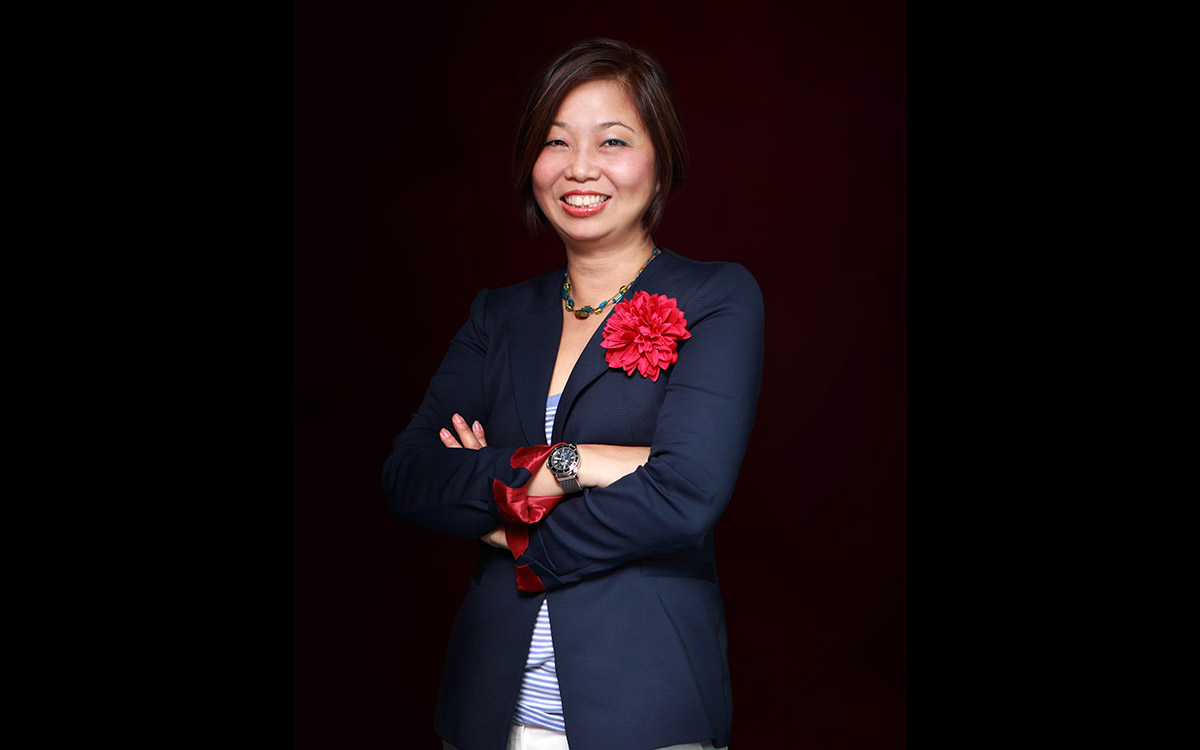
    Kicking off the series is marketing veteran Kathleen Tan (pictured), former AirAsia president of China who also previously helmed regional roles at Warner Music and FJ Benjamin. Tan shares her journey about being a female boss and the biggest challenges women on top in the advertising and marketing world face today.

    A+M: What has been the toughest thing about being a female boss?

    Tan: In my corporate journey, I have never put a lot of focus on my gender but rather on what I can contribute, and leverage on my ability to make a difference in whatever I do in my position as a professional and to do my best. However, there are some moments where I have to deal with male staff who let me or themselves down when it came to performance, and the toughest times for me is to see a man break down in front of me. Such moments strike the raw nerves of my gender and breaks my heart to see a man, who is traditionally seen as “macho”, cry.

    I worked in one of toughest industries – aviation – which is highly male-dominated who view women differently, and they see senior management roles more suited for qualified men than women. My toughest challenge is to combat prejudices in my early days as someone who came from an entertainment background and knew nothing about the aviation industry while also being a woman. I had to constantly deal with government regulators, especially in China. Many possess traditional views and dealing with foreign woman like me shocked their system.

    Instead of being daunted, I chose to view my role as a ‘novelty’ and took on the challenge to win and influence them with wit, charm and smartness.

    A+M: Staff members aren’t always the kindest to opinionated female leaders, how do you deal with this?

    Tan: I get this a lot and I either ignored them or squared with them. If things get out of control, confrontation is best way to handle them. Generally, people are still not used to seeing women speaking up or calling the shots as corporate boardrooms are still dominated by men. It takes courage, honesty to confront the issue and deal with it in a professional manner. After we became friends, I have had male leaders confess that they too get intimidated with strong women and are sometimes unsure of how to handle them, as well as what to wear when they had to meet me for the first time and what my expectations were.

    A+M: What are some of the biggest challenges women on top in the ad/marketing world face?

    Tan: Prejudices, discrimination and sometimes sexual harassment as women are viewed as the “the weaker sex” in the corporate world. However, to address and improve this, women must step up, be aware of our rights and not be afraid to call them out. Just focus on your competence and confidence to deliver results. The way we carry ourselves is also important so as to not send wrong signals.

    The ability to deliver results and be professional will silence critics.

    A+M: What was the toughest thing about getting to the top?

    Tan: As women contributors, we should not focus too much on our gender and if we want to be taken seriously, we should not expect to be treated differently but rather focus on our ability to deliver, work smart and not just work hard. While women have attributes that some may see as weakness, focus on turning them into advantages.  This has worked so well for me in a male dominated industry where I spent many years.

    My respect goes to women who can strike a good balance, to have a career, be a wife and mother. The key is to also build a strong support system whether it is in the workplace or at home. Having a strong mental resilience is essential.

    For women who are ambitious, build advocates with your male colleagues to win and influence them. Honest engagement with HR and management also helps.

    A+M: Is sexism and harassment in the ad/marketing industry an issue in Southeast Asia markets? 

    Tan: I believe it’s not just in Southeast Asia but an issue that is getting more attention and awareness by regulators especially through social media.

    A+M: Do you see tides changing locally since the emergence of the #MeToo movement?   

    Tan: It will take time but Asia is still behind and I believe with the Millennial generation, the issue may be lessened as their values are very different from the colonial era.
  • Kathleen Tan to step down as AirAsia China president

    Kathleen Tan to step down as AirAsia China president

    Kathleen Tan, AirAsia’s president of China, is stepping down from her role. She was responsible for providing leadership and strategic direction to the airline. Tan confirmed the move in a statement, and added that she has decided to “take a long break” and her last day is on 8 October 2018.

    Tan was promoted to her current role in June 2017. Prior to that, she was president, North Asia, a role she was appointed to in June 2016. During that period of time, she was responsible for building the China, Hong Kong, Macau, Japan, Korea and Taiwan markets.

    In 2015, Tan left her role as CEO of AAE Travel, previously a joint venture formed by AirAsia and Expedia Group in 2011. The airline disposed of its remaining 25% equity interest in AAE Travel to Expedia Group this August.

    Between 2004 to 2013, Tan helmed the roles of regional head of commercial and senior vice president of China. During the period, she championed marketing campaigns, such as giving away one million discounted seats in 2005. She also spearheaded the airline’s social media strategy and development.

    Tan also worked at FJ Benjamin as divisional head of marketing for Southeast Asia before moving to Warner Music, where she was regional marketing director of Warner Music Asia Pacific and later, managing director of Warner Music Singapore until 2004.

    When asked what prompted her departure, Tan said: “I love the company but the culture has changed, and it is no longer what it used to be. When the company grows bigger, you need to find the perfect structure and ways to integrate the new people into the company,” Tan explained. She added that she also grew tired of travelling nonstop and reached a point where she felt like she was “living out of a suitcase”.

    While Tan has yet to decide on her next move, she is considering various possibilities, including giving motivational talks and mentoring the younger generation and educating them about marketing.

    Working in the China market with AirAsia

    During an interview, Tan said she faced plenty of challenges during her time in China, one of them being the fact that the country is still rather traditional.

    “No matter how modern the country is in terms of technology, their values and cultures are still very traditional. Face time is still very important. When you have meetings with people, you need to be there all the time. Trust, respect and guanxi (relationships) are still valued in China business,” she said. Tan added:

    You need to win and influence people. You cannot just sit around when you are dealing with the government, especially when you are a foreign brand.

    Tan describes herself as someone passionate about marketing and urges more marketers to “take ownership” of customer care. “Building a brand is important and customer care is part of that building block that helps shape consumers’ perception of a brand,” she said.

    “If you don’t handle customer care promptly, it will hurt your brand, especially in today’s social media age. Consumers will slam you and it will go viral,” she said.

    During her tenure, Tan claims AirAsia also adopted the use of artificial intelligence and machine learning to manage customer queries in China via WeChat, gradually shifting away from traditional call centres. Tan also claimed that the airline had over 60,000 chats within two weeks of its launch on WeChat. It also made sure the bots knew when to use stickers, which are a hit with Chinese consumers on WeChat, when communicating with them.

    It also made it a point to alleviate the anxiety of travellers when they encounter flight disruptions by offering AirAsia consumers a QR code for crisis management, as part of enhancing customer experience where they can get live flight updates. This was available to consumers during the eruption of Mount Agung in Bali in July.

    She told that during her time at AirAsia, the brand was going through “restructuring” as was undergoing digital transformation. She added that the airline was also increasingly focused on collecting data, building dashboards and looking at algorithms, integrating operations, customers and commercial, all in a bid to position AirAsia as a “digitally smart airline”.

    “As a marketer at AirAsia, I never had much data to look at in the past. It would have been heavenly if I could turn back time and see the number of engagements I had for a post in the early days of social media, so I know if I’m moving in the right direction. It’s a great time right now as companies have data made available to them. Think of the wonders companies can do with data,” Tan said.