Tag: Kawasaki

  • Japan Prize-Game Market Hits 417.7 Billion Yen as Groceries Fill Arcades

    Japan Prize-Game Market Hits 417.7 Billion Yen as Groceries Fill Arcades

    Japanese arcade operators are stripping out video games and filling claw machines with rice, toilet paper, and other necessities to capture inflation-pinched household spending across Greater Tokyo.

    The shift follows an expansion that pushed Japan’s prize-game market to 417.7 billion yen ($2.7 billion) in 2024, accounting for nearly 70 percent of total arcade industry revenue.

    Venues charging 100 yen ($0.64) per attempt now pitch everyday grocery staples alongside licensed character toys. At the Benex arcade chain in Kawasaki, south of Tokyo, operator Tisco stripped out its conventional video games and coin-op token machines last year. Hundreds of prize cranes across its floor now hold laundry detergent, soft drinks, and pantry goods.

    Household Goods Drive Footfall

    Tisco runs five large-format venues across Greater Tokyo drawing more than one million visitors each year. Revenue generated through household products across its estate jumped 2.6-fold over the past two years.

    Its locations operate on large suburban footprints where cheaper real estate mirrors the warehouse retail models of Costco or Ikea. Families arrive by car, loading bulk household winnings straight into trunks rather than carrying single plush toys home on commuter trains.

    Retail conglomerate Aeon Group is deploying identical mechanics inside shopping malls. Its entertainment arm, Aeon Fantasy, opened a dedicated food and household prize section aimed at mothers in October 2025.

    The company expanded that trial to seven operational zones and plans to operate roughly 60 dedicated grocery-crane locations by 2030. Shoppers use the prize games to secure center-plate basics like vegetables or eggs, before walking into the supermarket next door to complete their evening dinner basket.

    The Margin Play for Suburban Landlords

    For shopping center owners and retail park landlords across suburban Japan, trading floor space to prize-game operators resolves an urgent occupancy headache. Core consumer spending on everyday goods has dropped for five consecutive years as domestic wage growth trailed inflation, pulling shoppers away from discretionary apparel and mall specialty stores.

    Arcade crane setups deliver immediate rent coverage and predictable footfall without requiring the fresh-produce refrigeration lines or stock-replenishment staff of a full supermarket tenant. Suppliers gain an unconventional bulk liquidation channel that sells commodity goods without disrupting their existing wholesale price contracts with national supermarket chains.

    The model carries margin risk if domestic food inflation cools. Claw machine economics rely on players perceiving a 100-yen coin drop as a viable discount mechanism against supermarket shelf prices. If wholesale grocery costs normalize while game payout odds remain mechanically tuned, consumer interest can evaporate faster than it arrived.

    Arcade Payouts Outpace Video Games

    Prize-machine dominance inside Japanese amusement centers has built up steadily over the past decade. The sector doubled in total value between 2014 and 2024, squeezing classic arcade fighting games and rhythm stations out of prime floor space.

    Japan’s headline inflation rate has hovered near the Bank of Japan’s two percent target in recent months, cementing higher shelf pricing across everyday fast-moving consumer goods. That continuous price pressure has entrenched consumer discount-hunting across suburban commuter belts, driving foot traffic into suburban prize halls rather than traditional convenience stores.

    Aeon Fantasy’s rollout schedule marks the commercial metric to track through the rest of the decade. The operator needs 53 additional grocery-crane venues across its mall network to hit its 60-store target by 2030.
  • Kawasaki To Unveil Three New Electric Motorcycles In 2022

    Kawasaki To Unveil Three New Electric Motorcycles In 2022

    Kawasaki Motors President and CEO Hiroshi Ito have announced that the Japanese brand will introduce not one, but three new electric models in 2022. Addressing the assembled crowd at the EICMA 2021 show in Milan, Italy, Hiroshi Ito laid down a broad outline for Kawasaki’s immediate future plans, including alternative fuels, as well as new products. What is clear from the comments from EICMA 2021 quoted by several sources, is that Kawasaki intends to fully embrace a carbon-neutral society. And what is important is that Kawasaki seems to be almost ready with several new electric models.

    “I would like to share a new commitment with you now. Next year, in 2022, we will show a minimum of three electric vehicles globally. That is a promise,” said Hiroshi Ito, President and CEO, Kawasaki Motors.

    The news seems to be part of Kawasaki’s plans to introduce 10 electric and hybrid motorcycles by 2025. But what is also interesting is Kawasaki’s plans to evaluate other forms of cleaner transportation. In his address, the Kawasaki Motors President and CEO also made mention of the Japanese brand’s commitment to exploring other power sources, including hydrogen, hybrids, and eFuels.

    “In addition to electric vehicles, Kawasaki is looking at all options as we work towards achieving a carbon-neutral society. One example is a hydrogen engine. In Japan, all industries supported by the government are making great efforts to make hydrogen a practical domestic alternative are currently moving forward. The Kawasaki Group is taking on a key role in this project, leading the way in hydrogen production, transport, storage, and use.

    “And just recently, on November 13, Kawasaki Motors decided to take the first steps in developing a hydrogen-powered motorcycle engine with Yamaha. Of course, we will look at the possibilities of other alternative fuels, like biofuel and eFuels,” added Hiroshi Ito.

    The announcement is a clear indication that Kawasaki is serious about cleaner transportation and is leading the development and pursuit of alternative power sources. And it will be interesting to see what the three new electric products will be, but even more interesting will be the development of alternative fuels, including hydrogen power.

  • Motorbike sales slump, blamed on pandemic

    Motorbike sales slump, blamed on pandemic

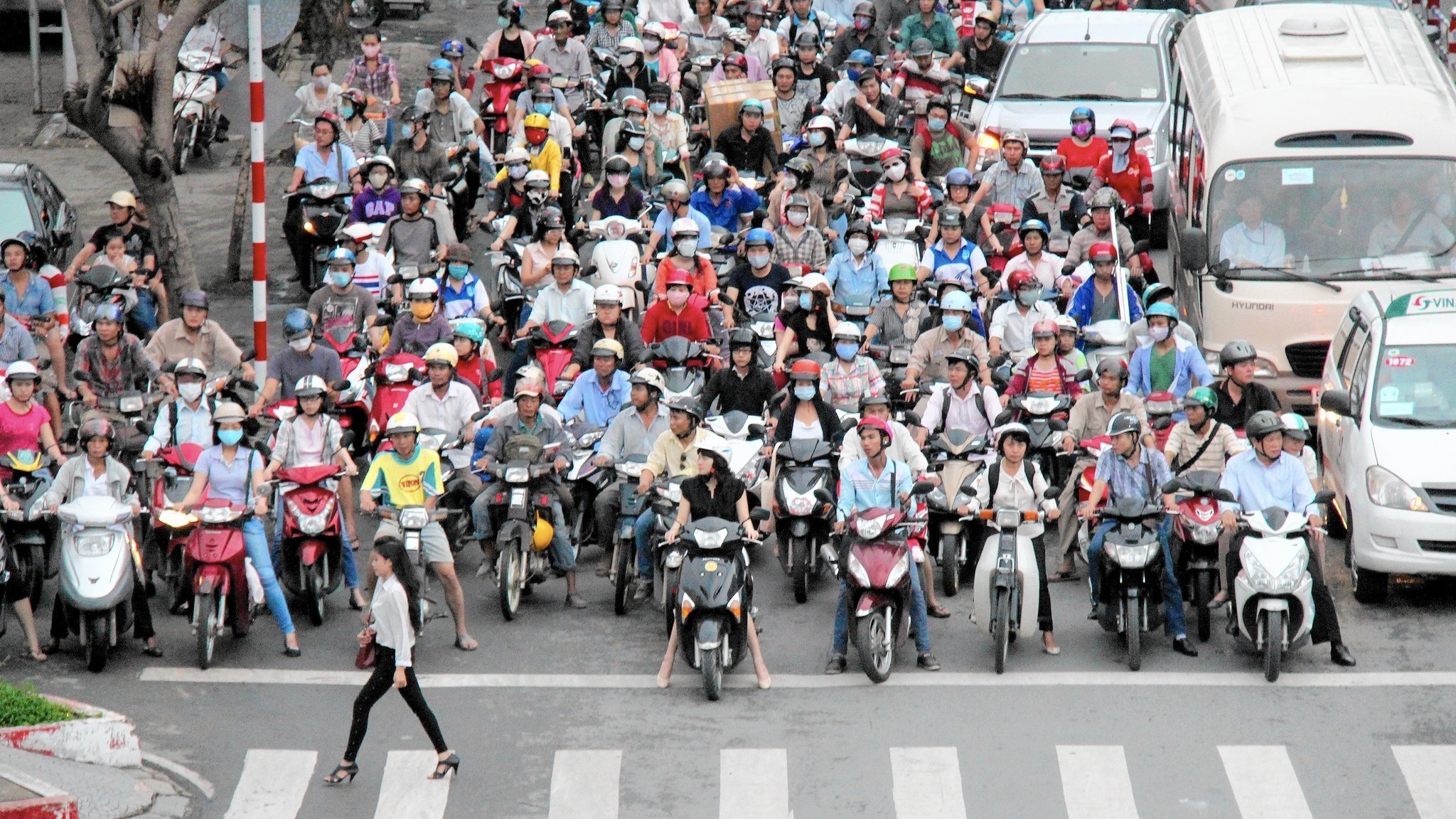
    Motorbike sales fell 16.6 percent to 2.71 million units last year, according to the Vietnam Association of Motorcycle Manufacturers.

    The industry group comprises five major companies, Honda, Piaggio, Suzuki, SYM, and Yamaha, who account for most of the market.

    Industry insiders said sales fell in double digits because of the Covid-19 pandemic, which hit people’s incomes.

    Although VAMM’s report did not list each company’s sales, Honda said it accounted for nearly 80 percent.

    Other brands not included in report were VinFast, Kymco, BMW Motorrad, Ducati, Harley-Davidson, Kawasaki, and others.

    In the second half last year several companies introduced.

  • Apple Japan opens its first store in Kawasaki

    Apple Japan opens its first store in Kawasaki

    Apple Japan has opened its 10th store – in Kawasaki.

    The new single-story outlet in Lazona Kawasaki Plaza features the brand’s distinctive all-glass front as well as a large video wall, a forum, and avenue shelving.

    The venue will be used as a family learning hub via the store’s Today at Apple educational sessions, using products in store for educational purposes in AR, coding, photography and music-making, amongst others.

    The Kawasaki venue is differentiated from other more spectacular Apple Japan stores for being more community-focused.

  • Kawasaki India To Increase Prices From April Onwards

    Kawasaki India To Increase Prices From April Onwards

    India Kawasaki Motors (IKM) today announced that it will be increasing the prices of select models in India by up to 7 per cent. The revised prices for the motorcycles will come into effect from April 1, 2019, onwards and the new prices will be disclosed on the Kawasaki India’s official website. Stating the reason for the price hike, Kawasaki India says, “IKM strives hard to keep the price of its models very competitive in the India market. However, due to the increasing costs of raw materials and fluctuations in foreign exchange rates, IKM is compelled to change the price of our models.”

    Kawasaki hasn’t mentioned which all model will be receiving the price hike, however, we expect the India-made Kawasaki Ninja 300 to be a part of it. Mainly considering the fact that the motorcycle was launched at quite a competitive price and the company recently even slashed the prices of its spare parts by a considerable amount. Much recently, Kawasaki India also launched two models, namely Ninja ZX-6R and Versys 1000, at very competitive prices.

    In India, Kawasaki currently offers the Z250, Ninja 300, Versys-X 300, Ninja 400, Ninja 650, Z650, Versys 650, Vulcan S, Versys 1000, Ninja 1000, Ninja ZX-6R, Ninja ZX-10R and Ninja ZX-10RR, all of which are assembled at the Chakan plant. In total, however, Kawasaki offers a total of offers 29 products which include super-sports, naked, sports-tourer, cruiser and off-road variants.