Tag: Kazakhstan

  • Mom’s Touch Signs Master Franchise Deal for 50 Stores in Kazakhstan

    Mom’s Touch Signs Master Franchise Deal for 50 Stores in Kazakhstan

    South Korean fast-food brand Mom’s Touch signed a master franchise agreement with Shin-Line Group to open more than 50 restaurants across Kazakhstan over the next decade. The chain plans to launch its first flagship restaurant in the country before the end of 2026.

    The partnership gives Mom’s Touch exclusive development rights in Kazakhstan and includes territorial rights to expand into neighboring Kyrgyzstan. Shin-Line Group will oversee local real estate selection, operations and distribution across both Central Asian territories.

    Central Asian Franchise Structure

    Seoul-based Mom’s Touch, established in 1997, built its domestic business on made-to-order fried chicken and its core Thigh Burger sandwich. The master franchise framework shifts development risk and store capital expenditure directly onto Shin-Line Group, letting the Korean franchisor draw recurring royalty streams without funding store buildouts directly.

    Central Asia has emerged as an active proving ground for international fast-food chains seeking territory outside crowded East Asian capitals. For food and beverage operators in the region, teaming up with Shin-Line provides an existing logistics foundation in frozen foods and distribution that solves supply chain friction for quick-service poultry and bakery supplies.

    Supply Lines and Regional Risk

    Entering Kazakhstan requires managing long cold chains and securing quality poultry that matches parent company specifications. Franchisors taking this route depend entirely on the balance sheet and execution speed of their master franchisee, especially when consumer spending fluctuates against local currency pressures.

    Rival Korean food brands have focused primarily on Southeast Asia and North America to scale their offshore footprints. Taking a chicken concept into Central Asia tests whether Korean casual dining menus can secure repeat traffic against incumbent American burger giants already operating in major Kazakh hubs.

    Ten-Year Development Horizon

    The Korean quick-service brand spent recent years consolidating its domestic market presence before accelerating international franchise deals. Moving through local master partners has become its default model for international expansion, minimizing balance-sheet liabilities while testing brand appetite in emerging consumer markets.

    Attention turns to the exact launch date and location of the initial flagship store scheduled before the close of 2026. The pace of the subsequent rollout toward the 50-unit target will determine when Shin-Line exercises its development rights across the border in Kyrgyzstan.

  • Broekman Logistics Highlights Middle Corridor for Europe-Asia Project Cargo

    Broekman Logistics Highlights Middle Corridor for Europe-Asia Project Cargo

    On 13 October 2026, Broekman Logistics highlighted the growing strategic importance of the Middle Corridor as European and Asian shippers seek alternative transport routes for project cargo, industrial equipment and high-value freight.

    The Netherlands-based logistics company said continued investment in rail infrastructure, ports and terminals along the Trans Caspian route is improving connectivity and creating new options to reduce dependence on established maritime corridors.

    Multimodal Links Across the Caspian Sea

    Running through Turkey, Georgia and Azerbaijan, the corridor crosses the Caspian Sea to reach Kazakhstan, Turkmenistan and Uzbekistan. Shippers combine short-sea shipping, rail freight and road haulage to bypass maritime bottlenecks and geopolitical flashpoints.

    Moving breakbulk cargo across the route requires coordination across multiple rail gauges, seaports and customs jurisdictions. Broekman Logistics focuses on synchronised route surveys, transit permits and heavy-lift transfers at Caspian terminal interchanges.

    Transit Coordination and Gateway Roles

    Turkey serves as the western anchor for the corridor, feeding European traffic through rail and highway links toward the South Caucasus. Turkish ports handle transshipment for landlocked Central Asian destinations that lack direct maritime access.

    Route selection depends on physical constraints along the way. Axle-load limits, bridge clearances, rail tunnel dimensions and Caspian port crane capacities dictate whether oversized equipment can move intact or requires disassembly before crossing inland borders.

    Operational Bottlenecks for Project Cargo

    Terminal upgrades along the Trans-Caspian line have expanded container handling, yet breakbulk cargo faces different operating realities. Transporting industrial machinery requires dedicated roll-on/roll-off vessel capacity and heavy-lift handling gear, which remain limited across Caspian Sea crossings.

    Customs alignment across five transit countries is the primary variable for schedule reliability. For equipment suppliers and engineering contractors, single-point delays at rail-to-ship transfer points can disrupt installation timelines at Central Asian mining and energy developments.

    Border Clearances and Caspian Vessel Capacity

    Infrastructure authorities along the corridor have invested in rail sidings and port berths across Baku, Aktau and Kuryk to improve transfer speeds. These terminal projects aim to establish predictable transit intervals for industrial shippers evaluating overland options against long-haul sea routes.

    Commercial viability for heavy freight now rests on the delivery of scheduled Caspian ferry slots and standardised customs transit documentation across Kazakh and Azerbaijani border points.

  • Beeline Kazakhstan Launches Starlink Direct-to-Cell Service for 11.8 Million Users

    Beeline Kazakhstan Launches Starlink Direct-to-Cell Service for 11.8 Million Users

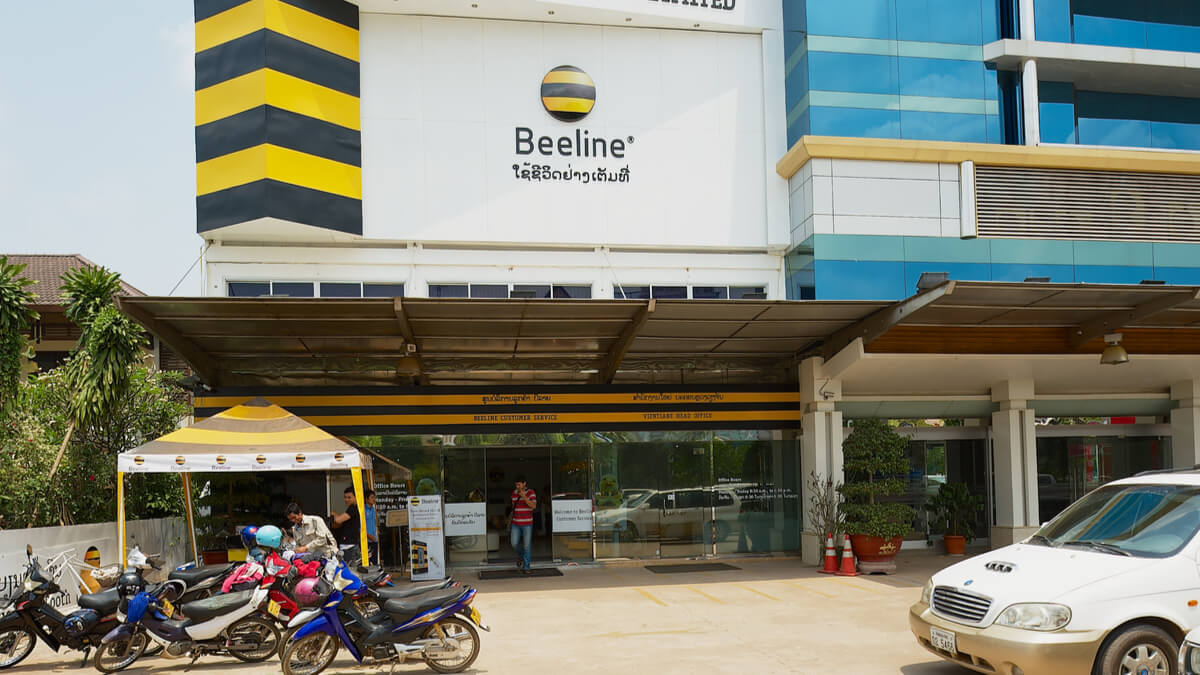
    Beeline Kazakhstan rolled out commercial satellite-to-mobile connectivity with Starlink on October 5. The launch gives its 11.8 million subscribers messaging access in dead zones without specialized equipment.

    The service connects standard, compatible smartphones directly to low-Earth-orbit satellites. Coverage spans Kazakhstan’s 2.7 million square kilometers of territory.

    How Direct-to-Cell Connectivity Operates

    Standard smartphones link straight to Starlink satellites once users travel beyond terrestrial base station reach. Customers need no external antennas, satellite handsets, or add-ons to connect.

    Subscribers activate and manage the feature through Janymda, Beeline Kazakhstan’s consumer application. It works via line-of-sight satellite links across remote highways, steppe corridors, and mountainous terrain where ground networks are absent or disabled by adverse weather.

    Messaging and selected app access are free of charge during an initial commercial promotional window.

    Network Economics and Rural Coverage Shifts

    Building terrestrial towers across sparsely populated land carries high capital costs and low average revenue yields. By routing rural dead-zone traffic through satellite links, mobile operators avoid laying fiber and powering standalone remote base stations in harsh climates.

    Logistics fleets and consumer tech users on Central Asian trade routes gain failover protection without buying satellite handsets. The service also secures an emergency fallback during network outages caused by natural disasters.

    Hardware Limits and Handset Compatibility

    Bandwidth limits keep this initial phase confined to text messaging and select data-light applications. Voice and high-speed data transmission depend on future satellite payload upgrades and device radio capabilities.

    Indoor reception remains zero without open sky. Handset users inside dense urban canyons or thick indoor structures will receive no satellite signal without a clear line of sight.

    Agreements and Development Timeline

    Official talks during President Kassym-Jomart Tokayev’s visit to the United States in 2025 set up the rollout. Following that trip, Beeline Kazakhstan and the Ministry of Artificial Intelligence and Digital Development signed a formal cooperation memorandum with Starlink in November 2025.

    Technical trials began in December 2025 to verify direct handoffs between satellite transceivers and standard consumer chipsets across rural regions. Kazakhstan became the first Central Asian nation to transition the technology from testing to live consumer service.

    Jabbor Kayumov, CEO of Beeline Kazakhstan, said: “This was a real team effort and close collaboration with the Ministry of Artificial Intelligence and Digital Development and with Starlink Mobile to get the technology right for our market. We’re proud to be the first operator in Kazakhstan to bring Starlink Mobile to market, helping people stay connected when it matters most.”

    Next Steps for Regional Rollout

    Parent group VEON operates mobile networks across five countries covering a total base of 150 million connectivity subscribers and 228 million digital users. The carrier tracks network performance in Kazakhstan before evaluating rollouts across its other Central and South Asian operating units.

    Beeline Kazakhstan will review customer uptake figures and data usage patterns on the Janymda platform before setting commercial tariff pricing at the close of the promotional term.

  • South Korea Partners with Shin-Line on Food Cluster and 70 CU Stores

    South Korea Partners with Shin-Line on Food Cluster and 70 CU Stores

    South Korea’s food cluster agency signed a partnership on Tuesday with Kazakhstan’s Shin-Line Group to build an industrial food hub and expand bilateral market cooperation.

    The agreement opens a pathway for food producers from the National Food Cluster in Iksan to gain access to Central Asia’s largest ice cream manufacturer and its network of about 70 CU convenience stores.

    Advisory terms and network access

    Korea Food Industry Cluster Promotion Agency Chairperson Kim Deok-ho and Shin-Line Group Chairman Andrei Shin signed the memorandum of understanding at the Four Seasons Hotel in Seoul during the Korea-Kazakhstan Business Roundtable. Under the agreement, the Korean agency will consult on operating strategies, infrastructure planning, and enterprise support programs for the planned food cluster.

    Packaged goods made by tenants at South Korea’s National Food Cluster will flow directly into Shin-Line’s retail footprint. The company operates local production plants, cold-chain routes, and roughly 70 CU franchised convenience stores across Kazakhstan.

    Supply chains push into Central Asia

    For Korean packaged food manufacturers, the deal tackles their toughest operational bottleneck in Central Asia: shelf space and cold-chain logistics. Exporters entering Kazakhstan typically face fragmented wholesale channels and unpredictable refrigerated transport. Partnering with Shin-Line gives suppliers an immediate pipeline into modern convenience retail.

    Operational risk centers on product fit and price positioning. Central Asian consumers embrace Korean pop culture, but everyday convenience store spending remains sensitive to freight costs and local purchasing power. Shin-Line must balance higher-margin imported Korean inventory with high-turnover domestic staple foods. That balance keeps store traffic steady.

    Expanding the Iksan blueprint

    In North Jeolla Province, the Korean agency runs the National Food Cluster in Iksan, providing research, development, and pilot production support to domestic food processors. The Kazakhstan project exports that state-managed industrial model. It also secures captive export destinations for cluster tenants.

    This agreement provides an opportunity to expand food industry cooperation with Kazakhstan by drawing on our experience operating the National Food Cluster.

    Store counts and development timeline

    Teams from both sides will now set working schedules for technical consultations on the industrial park and outline vendor requirements for Korean exporters. The key early milestone is tracking how quickly National Food Cluster packaged lines reach shelves across Shin-Line’s 70 CU stores in Kazakhstan.

  • Astana Panel Explores Hong Kong Capital Routes for Central Asian Firms

    Astana Panel Explores Hong Kong Capital Routes for Central Asian Firms

    In September 2026, financial leaders and exchange executives gathered in Astana to discuss how Central Asian companies can connect with international capital through Hong Kong.

    The panel, titled “Capital Pathways for Central Asia, Dual Listings, RMB Funding, Private Capital and the Astana-Hong Kong Route,” featured Assel Mukazhanova of AIX, Johnson Chui of HKEX, Askar Bilisbekov of Alem Capital Management, and Thomas G. Tsao of Gobi Partners, with SCMP’s Eugene Tang moderating.

    Mukazhanova noted that Kazakhstan’s domestic market cannot fully meet regional financing demand, while Bilisbekov highlighted that Alem Capital Management is operating two funds, including a venture capital fund investing regionally and globally, alongside plans for an infrastructure fund.

    Hong Kong Listing Halo

    Venture capital firms operating between East and Central Asia view Hong Kong regulatory scrutiny as a vetting mechanism for international fund managers hesitant about frontier markets. Thomas G. Tsao, founding partner of Gobi Partners, pointed out that Hong Kong listings provide emerging Central Asian companies with regulatory credibility similar to how early Chinese tech firms used Nasdaq listings to establish trust with global institutional backers.

    For institutional investors across Asia, the channel offers exposure to Central Asia’s tech and natural resources sectors without navigating fragmented local legal structures. The primary operational risk rests on liquidity: smaller Central Asian tech firms must demonstrate sufficient scale and recurring revenue to attract trading volume once listed in Hong Kong, rather than becoming dormant secondary listings.

    Talent and Regional Trade Routes

    Central Asian founders increasingly build software and services designed to interface across Chinese, Russian, and Western commercial systems. Tsao noted that the region’s multilingual, mobile-first workforce gives early-stage companies an advantage in operating across multiple trade jurisdictions simultaneously.

    The push to build financial corridors follows years of physical trade expansion between China and Central Asia along traditional overland freight routes. Financial institutions in Astana now aim to match those physical supply chains with institutional capital flows, moving Central Asian funding beyond bilateral state debt into equity markets.

    Broadening the Investor Base

    Market participants also view the Hong Kong link as a way to diversify capital sources, reducing concentration risk from single-nation strategic investors in resource extraction and mining. Channelling investments through public equity and institutional funds brings a wider mix of global asset managers into Central Asian enterprises.

    AIX and its regional partners are now screening candidate companies for initial dual-listing pipelines and private rounds, with the first wave of cross-border listings targeted as market benchmarks.

  • Uzbekistan Commits $100 Million to Subsidise AI Across 10,000 Businesses

    Uzbekistan Commits $100 Million to Subsidise AI Across 10,000 Businesses

    Uzbekistan will spend at least $100 million to subsidise artificial intelligence adoption across 10,000 enterprises, covering half the cost of software implementation for commercial operators. The state-backed program targets manufacturing and consumer supply sectors, extending automation subsidies from the textile trade into food processing, electrical engineering, and construction materials.

    President Shavkat Mirziyoyev announced the funding following consultations with business owners in the Khorezm region. Government data presented at the meeting showed that 54 per cent of domestic companies using modern management and AI systems saw product demand increase. A quarter of those businesses lowered production costs, while higher sales allowed 40 per cent to raise worker wages by more than 10 per cent.

    Subsidies for Factory Automation

    Under the initiative, the state will reimburse 50 per cent of what companies spend to introduce automated management systems and machine learning tools. Participating enterprises will also receive access to pre-built, open-platform software designed to eliminate the cost of developing proprietary applications from scratch.

    Hardware support will run through the Center for Digital Government Project Management, where authorities recently brought online Uzbekistan’s first supercomputer cluster. Companies building AI models for commercial products can process workloads on the facility without charge, with research and development bills settled directly by the state budget. Computing capacity at the cluster will triple next year.

    The push reflects how Central Asian governments are attempting to modernize domestic supply chains and bypass legacy enterprise systems. While Southeast Asian manufacturing hubs rely heavily on private capital and foreign software vendors to automate shop floors, Tashkent is using direct treasury subsidies to pull mid-tier producers into modern data workflows.

    Supercomputing and Regional Education

    Administrative processes are seeing similar investments. The Ministry of Digital Technologies signed an agreement with South Korea’s National Information Society Agency and UZINFOCOM to build an AI system that processes and manages citizen appeals to state bodies, starting with a feasibility study and pilot rollout.

    Across the border, Kazakhstan is focusing resources on technical labor. First Vice Minister of Artificial Intelligence and Digital Development Rostislav Konyashkin confirmed the establishment of Qazaq AI Research University under orders from President Kassym-Jomart Tokayev. The institution will embed machine learning coursework into outside degree programs and build research links with partner centers in China, Finland, and the United Arab Emirates.

    Uzbek authorities will open the enterprise application window in stages, with initial disbursements prioritized for food processors and light industrial plants preparing export shipments.

  • Papa John’s launches in Cambodia

    Papa John’s launches in Cambodia

    US pizza chain Papa John’s is launching in Cambodia with 15 restaurants scheduled to open during the next three years. The company opened its flagship store in Phnom Penh last month.

    “Papa John’s Cambodia team is truly passionate about pizza,” said Peter Xu, Papa John’s Cambodia franchisee.

    “With our ‘Better ingredients – Better pizza’ promise, we look forward to providing local pizza lovers with quality products and outstanding services.”

    Xu also owns a Papa John’s franchise in New York and other business ventures in Cambodia.

    Jack Swaysland, Papa John’s COO, international, said that following a record year of sales and growth, Papa John’s is well-positioned to accelerate international development, a key pillar for the brand’s long-term growth.

    Papa John’s has restaurants in 48 countries, with the latest new openings in France, Spain, Tunisia, Iraq, the Netherlands, Morocco, Kazakhstan, Kyrgyzstan, Poland, the Bahamas, Pakistan, and Portugal. The company is eyeing expansion in Brazil, Japan, and Southeast Asia.