
Tag: kazuo ueda

  • Japan Nominal Wages Rise 4.6% in September in Fastest Gain Since 1997

    Japan Nominal Wages Rise 4.6% in September in Fastest Gain Since 1997

    Japanese nominal wages grew 4.6% year-on-year in September, recording the fastest growth rate since 1997 as widespread staffing shortages forced employers across the country to pay higher rates.

    Base pay climbed 3.7%, while a benchmark stripping out bonuses, overtime, and sampling distortions rose by a record 3.1% for full-time staff, according to data from the Labour Ministry released on Nov 6.

    Inflation-adjusted real cash earnings, excluding rent, increased 2.2% from a year earlier. That beat consensus forecasts of 1.3% and accelerated past the revised 1.6% rise logged in August, despite fewer working days during the month.

    Central Bank Tightening on the Horizon

    The acceleration gives the Bank of Japan clear room to raise its benchmark rate at its next policy meeting on Dec 18. More than 80% of surveyed economists anticipate a hike at that session.

    Median forecasts project the terminal policy rate will hit 1.75%, requiring two quarter-point increases. Other institutions, including BNP Paribas and J.P. Morgan Securities, forecast the rate will peak at 2.5%.

    Bank of Japan governor Kazuo Ueda confirmed underlying inflation sits broadly in line with the official 2% target, asking company management and labour groups to build that figure into upcoming negotiations.

    Squeezing the Small Business Operating Margin

    Consumer brands face a divergent operating environment across Japan. Higher take-home pay creates real purchasing power for urban workers who absorbed two years of sticky grocery and utility bills, lifting floor spending at major supermarket chains and suburban convenience stores.

    The cost side tells an entirely different story for independent shopkeepers, franchise operators, and logistics suppliers. Retailers cannot absorb an annual 3% to 4% base salary increase without hiking shelf prices, yet passing those costs along risks alienating cash-sensitive shoppers.

    The financial strain already shows up in business mortality tables. Tokyo Shoko Research counted 240 labour-linked corporate insolvencies in the first half of the fiscal year, a record high. More than half of those cases cited higher labour costs.

    Union Demands for the Next Shunto Round

    The September numbers follow three consecutive years in which Japanese trade unions secured wage increases topping 5%, breaking three decades of flat compensation that followed the asset bubble collapse of the early 1990s.

    The country’s largest labour union federation advised affiliates in October to demand wage increases near 6% for 2027. That stance sets a higher opening bid than the target established for 2026.

    Mitsubishi Research Institute researcher Yasunari Tanaka projected settlements in the next round will settle near 5%, matching the 2026 pace. Sustained pay gains at that level keep upward momentum behind consumer service costs.

    Subsidies and the Winter Retail Basket

    Prime Minister Sanae Takaichi faces a balancing act between supporting household spending power and protecting public finances. The government plans to taper petrol subsidies starting in December while restoring targeted relief for winter electricity and heating gas bills.

    The Bank of Japan’s October Tankan survey confirmed that corporate labour shortages match the tightest conditions on record. With open jobs outnumbering applicants across distribution hubs and retail shop floors, companies have little choice but to bid higher for shift workers.

    The central bank convenes to decide its benchmark borrowing rate on Dec 18.
  • US Dollar Drops Across Asia as AI Debt Jitters Shake Currency Markets

    US Dollar Drops Across Asia as AI Debt Jitters Shake Currency Markets

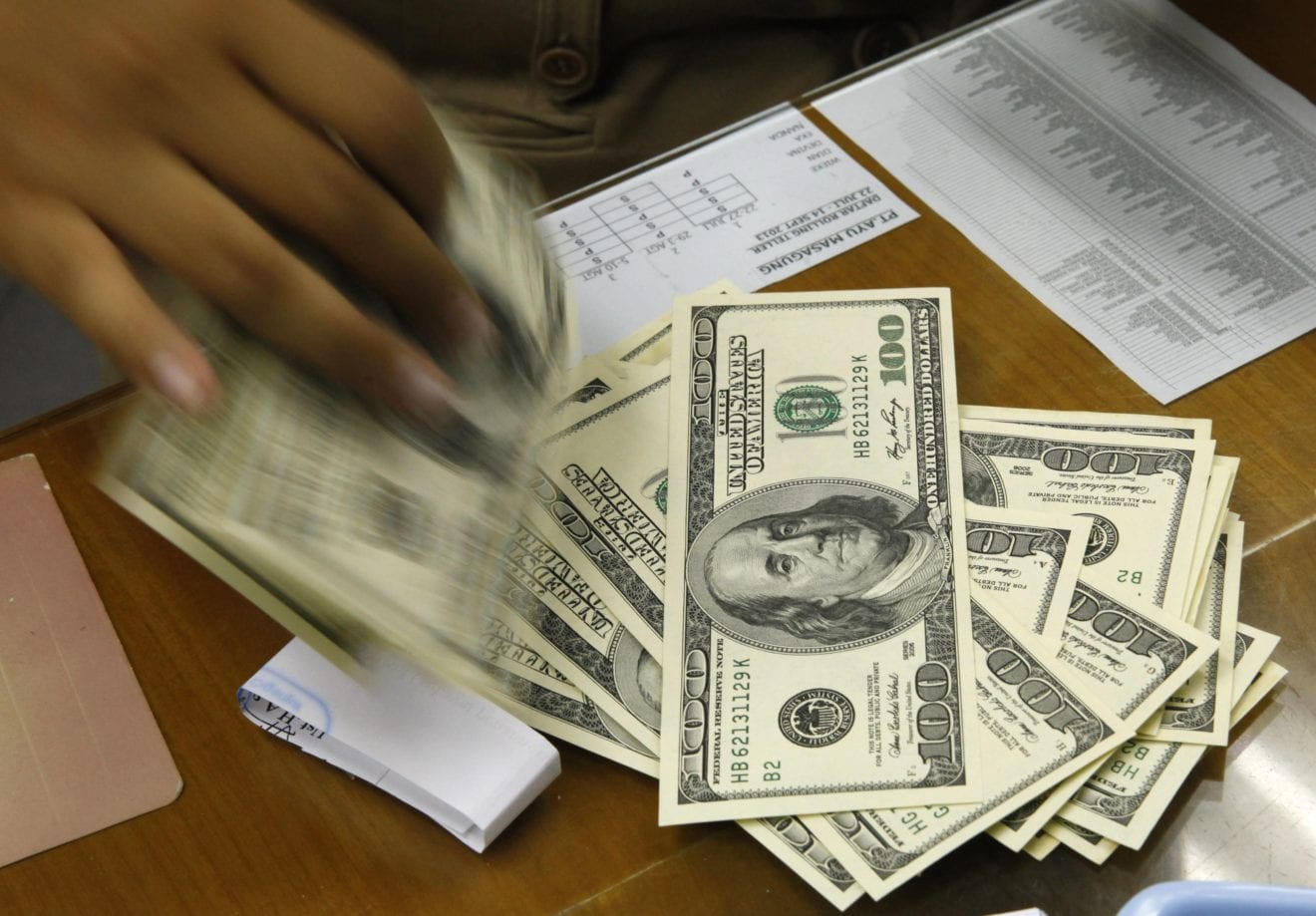
    The US dollar fell 0.25 per cent to 101.77 on Friday. The drop puts the greenback on course for a 0.45 per cent weekly decline as debt strains across the tech sector rattled global markets.

    A selloff across artificial intelligence infrastructure providers drained momentum from the American currency. That handed gains to the Japanese yen, the euro and the Swiss franc.

    Traders redirected capital away from dollar assets. Heavy losses across tech hardware and data centre operators raised doubts about near-term returns on computing infrastructure. The pullback broke four consecutive weeks of dollar gains against the yen. On Friday, the Japanese currency traded up 0.28 per cent for the week at 157.89 per dollar.

    Tech debt stress spills into currency trades

    Credit stress across the artificial intelligence supply chain triggered the shift in foreign exchange sentiment. Data centre operators face mounting financing expenses. Bond investors now question whether operating cash flows can service the borrowing loads accumulated during the recent hardware expansion.

    Cloud provider CoreWeave became the focal point of market anxiety this week. The company carries about $50 billion in debt. Yields on its April-issued notes climbed to roughly 15 per cent, while credit default swaps jumped to about 1,000 basis points. That pricing signals a 63 per cent probability of default over five years.

    Pressure on high-yield debt shook equity valuations across hardware suppliers. Options traders responded by buying downside protection at record volumes. The fallout altered currency dynamics. Instead of serving as a traditional haven during equity declines, the dollar softened as investors priced in reduced US economic momentum and lower bond issuance.

    Central banks chart divergent regional paths

    In Tokyo, monetary policy signals provided direct support for the yen. Bank of Japan Governor Kazuo Ueda confirmed on Friday that authorities will keep raising benchmark interest rates as economic and financial conditions develop.

    That stance contrasts with expectations in Washington. Traders assign an 87 per cent probability to the Federal Reserve holding interest rates steady at its late October meeting. Softer US yields earlier in the week removed support from the greenback, even after firm inflation data.

    Elsewhere in the Asia-Pacific region, the Australian dollar climbed 0.55 per cent on Friday to $0.6959. Despite the daily rebound, the currency remained down 0.3 per cent over the week. A weak domestic employment report dampened expectations of further rate increases by the Reserve Bank of Australia.

    European currencies attract defensive capital flows

    European currencies captured much of the capital rotating out of dollar assets. The euro rose 0.14 per cent to $1.1235 on Friday. The move built on a 0.56 per cent surge on Thursday, securing a 0.39 per cent weekly advance.

    Switzerland’s currency drew the strongest defensive buying among major peers. The Swiss franc tracked toward a 0.61 per cent weekly climb against the dollar. Investors expect Swiss policymakers will keep benchmark interest rates at zero rather than pushing borrowing costs into negative territory.

    Equity investors also adjusted their exposure. Funds rotated out of high-valuation technology names and into consumer products and healthcare shares to protect portfolio returns.

    Corporate capital plans face valuation hurdle

    Tech spending drove the market correction after months of heavy debt financing for data centre construction and processor purchases. Tech giants Alphabet and Meta Platforms expanded their balance sheets to secure computing capacity. Specialized cloud operators relied on private debt and bond markets.

    Market volatility has already disrupted corporate fundraising schedules. Smart ring maker Oura postponed its planned US initial public offering. Private artificial intelligence developers such as Anthropic face heightened scrutiny over their revenue multiples ahead of potential public listings.

    Currency traders are looking ahead to the Federal Reserve rate decision later this month. Upcoming third-quarter corporate earnings will reveal whether enterprise software revenue can support those debt commitments.

  • Japan Benchmark Yield Tops 3.1% as Tokyo Property Prices Drop

    Japan Benchmark Yield Tops 3.1% as Tokyo Property Prices Drop

    Japan’s benchmark government bond yield topped 3.1 percent on Friday morning. The rise accelerated a regional debt sell-off and pushed Tokyo residential property prices lower.

    Average asking prices for existing condominiums in central Tokyo dropped for four straight months through August. Higher borrowing costs chilled buyer demand.

    Sovereign debt selling spread across Asian trading desks as investors factored in prolonged monetary tightening. Energy markets added pressure. Elevated crude oil prices reinforced inflation expectations across importing economies.

    Central Tokyo Condo Market Cools

    Central Tokyo apartment valuations have dropped for four straight months, reversing years of steady price growth. Domestic buyers face higher monthly mortgage payments. Long-term lending rates continue to track government bond yields higher.

    Commercial landlords and retail operators face a similar squeeze on debt refinancing. Property developers that relied on ultra-cheap bank credit are lowering sales targets. Both institutional and retail purchasers are reassessing yield spreads.

    Central Bank Rate Tightening

    Yields surged after the Bank of Japan lifted its policy rate to 1.25 percent. Governor Kazuo Ueda pointed to a formal shift in monetary policy. Currency authorities also conducted foreign exchange rate checks, steadying the yen in the upper-156 range against the US dollar.

    US policy expectations amplified the pressure on Asian debt. Under Chair Kevin Warsh, the Federal Reserve raised interest rates and signaled further tightening. The moves pushed the greenback toward a two-month peak.

    Funding Pressures Mount for Corporates

    Higher sovereign yields are driving up corporate borrowing costs across Tokyo. Prime Minister Sanae Takaichi’s administration faces rising debt-servicing costs. The government is trying to fund fiscal initiatives without issuing fresh deficit-financing bonds.

    Corporate issuers are testing market appetite with higher coupons. SoftBank Group prepared an $11 billion bond offering to fund its investment commitments in artificial intelligence firm OpenAI.

    Asian Real Estate Outlook

    Japanese developers can no longer depend on zero rates to support capital values. Institutional asset managers are demanding wider capitalization rates on central Tokyo assets. That push is forcing a price discovery phase across residential and retail properties.

    Traders are watching upcoming economic data and Tokyo condominium sales figures for September. The numbers will show whether secondary housing prices stabilize or slide further into the fourth quarter.

  • Bank of Japan Expected to Raise Rates to 1.25 Percent on September 18

    Bank of Japan Expected to Raise Rates to 1.25 Percent on September 18

    The Bank of Japan will raise its key interest rate to 1.25 percent on September 18, according to 97 percent of surveyed economists. The projected hike marks an accelerated tightening cycle that would push benchmark borrowing costs to 1.75 percent by the second quarter of 2027.

    A survey of 68 economists conducted between September 1 and September 8 showed 66 respondents anticipate the immediate 25-basis-point increase, up from 57 percent in the previous polling round. More than one-third of respondents, 24 of 66, expect the central bank to deliver another hike to 1.50 percent in October or December. Beyond this year, 89 percent of analysts see the policy rate reaching at least 1.50 percent by the end of March, while 62 percent expect a 1.75 percent rate by mid-2027.

    Washington Pressure and Currency Shifts

    Over 80 percent of polled economists said joint United States and Japanese currency intervention to rescue the yen from 40-year lows, alongside statements from US Treasury Secretary Scott Bessent, substantially lowered domestic political barriers to tightening. Bessent met with BOJ Governor Kazuo Ueda during a gathering of G20 finance leaders, urging decisive monetary action to anchor inflation expectations and curb yen volatility. Following those interventions, the yen strengthened to around 153.37 per dollar, its firmest trading level since February.

    Half of the 54 economists who answered a supplementary question identified 1.75 percent as the terminal policy rate. The proportion projecting a terminal rate of 2.00 percent or higher expanded to 40 percent, up from 36 percent in August and 23 percent in July.

    Cost Pressures for Retail and Consumer Markets

    For consumer goods importers, supermarket chains, and multinational brands operating in Japan, a faster rate hike trajectory creates a double-edged commercial environment. A firmer yen provides relief against imported food and raw material costs that squeezed operating margins over the past two years. Food processors and apparel retailers that absorbed higher procurement prices can begin stabilizing shelf prices without sacrificing unit margins.

    Higher domestic borrowing rates will elevate debt servicing expenses for heavily used retail developers and franchise operators. Household budgets face higher mortgage repayments just as wage gains struggle to outpace core consumer inflation. Retailers relying on discretionary consumer spending will need to defend basket sizes as debt costs rise for domestic shoppers.

    Fiscal Spending and the Planned Food Tax Cut

    Government spending plans are complicating the central bank’s inflation calculus. Budget requests for the upcoming fiscal year climbed to 143.1 trillion yen ($931.2 billion), matching spending levels seen during the pandemic as Prime Minister Sanae Takaichi advances an expansionary fiscal platform. Nearly three-quarters of surveyed economists reported that the request volume elevates market concerns regarding Japanese fiscal discipline.

    With a consumption tax cut on food items also planned, financial markets are likely to have strong concerns about securing funding.

    The earlier policy inertia that allowed price pressures to broaden across services and food now forces faster rate adjustments. The Bank of Japan delivers its rate decision on September 18, with investors tracking the final budget compilation and government debt issuance volumes due before year-end.