Tag: KBank

  • KBank to launch USD100-million sustainability bonds to finance green and social projects

    KBank to launch USD100-million sustainability bonds to finance green and social projects

    KASIKORNBANK (KBank) is the first Thai and ASEAN bank to issue sustainability bonds totaling USD100 million, where the proceeds will be used to finance green and social projects. Such bond issuance is aimed at supporting the development of Thai and regional capital markets and promoting investments that generate returns in parallel with driving sustainable growth of Thailand and global communities.

    Mr. Banthoon Lamsam, Chairman of the Board of KBank, said KBank has adhered to the Sustainable Development concept in relation to the economic, social and environmental aspects as a foundation of its operations, to create maximum benefits for all stakeholders. Recently, KBank issued sustainability bonds totaling USD100 million for foreign investors, which has made KBank the first bank in Thailand and Southeast Asia to offer such bonds. The proceeds of bond issuance will be used to finance projects that will bring about environmental and social benefits in accordance with international standards set up by the International Capital Market Association (ICMA) and the ASEAN Capital Markets Forum (ACMF).

    Sustainability bonds of KBank are senior, unsecured bonds, with floating interest rate based on LIBOR plus 0.95 percent. Under a five-year term, the maturity will be in 2023. The entire amount was offered to foreign institutional investors via KBank’s Hong Kong Branch. Related parties include BNP Paribas that acts as the Sustainability Bond Framework Structuring Advisor and Sole Lead Manager, and Sustianalytics – an independent global provider of ESG and corporate governance research – that has provided a second party opinion on the sustainability bond framework.

    Mr. Banthoon added that the success in the sustainability bond sale reinforces KBank’s core concept of sustainable development. The fact that the bonds were fully subscribed within only one day reflects KBank’s ability to create a balance between the return and the policy of the bond which is up to international standards, thus being widely accepted by institutional investors who have placed their trust in KBank. KBank is strongly confident that the issuance of the sustainability bonds – the first time in Thailand and in ASEAN – will set a new benchmark for domestic and regional capital markets. The initiative will be a prelude for the launch of capital products offering attractive returns to investors while also driving sustainable growth for the nation and the world.

    KBank’s business operations are based on being a bank of sustainability under appropriate risk management, good governance and balance in economic, social and environmental dimensions. Given the adherence to the Sustainable Development concept, KBank is the first bank in Thailand and ASEAN that has been granted membership of the Dow Jones Sustainability Indices (DJSI) in both their DJSI World Index and DJSI Emerging Markets 2018 for the third consecutive year. In addition, KBank has been selected as a member of the FTSE4Good Emerging Index for three straight years.

    At the national level, the Stock Exchange of Thailand has included KBank in the Thailand Sustainability Investment List 2018 (THSI List) and the SET THSI Index, the first-of-its-kind index in Thailand, among other 45 companies. In addition, KBank is the first and only commercial bank in the country that has been granted the Carbon Neutral Certification by Thailand Greenhouse Gas Management Organization (Public Organization).

  • KBank joins rush to tap postal network in Thailand

    KBank joins rush to tap postal network in Thailand

    Kasikornbank (KBank) and Thailand Post, a state-owned enterprise, yesterday sealed a business deal that saw one of the country’s biggest banks appoint the postal operator as a banking agent.

    KBank became the first of the large banks to enter such an arrangement with Thailand Post.

    “We aim to service 250,000 online vendors across the country under this deal, which will allow them to send out their parcels and deposit money with Thailand Post’s branches across the country,” said Patchara Samalapa, KBank’s president.

    Patchara indicated that Kasikornbank was looking at broader gains from the initiative, saying that with the bank’s large deposit base it did not need to attract more deposits.

    In the first stage of service, the bank’s customers can deposit up to Bt20,000 per transaction – or up to Bt40,000 a day – via 964 Thailand Post branches. The service costs Bt10 until the end of the year, before rising to Bt20.

    The bank targets 150,000 transactions derived from the banking agent channel by the end of 2018. The volume of transactions is expected to reach 600,000 in the first three years of operation.

    Cash withdrawal and money transfer services would be offered next year should the central bank give the green light, Patchara said.

    “The use of banking agents is cheaper for us than setting up full bank branches nationwide, but that does not mean than we plan to shut down some bank branches,” he said.

    Smorn Terdthampiboon, president of Thailand Post, said that doing business with Kasikornbank would improve its logistics business in the face of more competitors entering in the market.

    “We did not set out to make more revenue from it since it is not our core business, but we aim to provide a better service for our customers,” she said.

    Some seven small commercial banks have appointed Thailand Post as a banking agent since 2011, and its Bank@Post service has grown about 13 per cent annually.

    Smorn said the logistics business in Thailand is growing due to the increased popularity of shopping online.

    Traditionally, Thailand Post provided a basic service of sending letter from senders to receivers. Now, the dispatch of goods accounts for the biggest share of the agency’s business, at more than 40 per cent. Mail delivery makes up about 30 per cent, with the rest of the revenue from money services and sales of parcel packaging items and stamps, she said.

    Thailand Post has 1,300 branches nationwide and 3,000 more come under its postal network operated by private entities.

    Parcel delivery has grown about 20 to 30 per cent annually, as people were shopping online more, Smorn said.

    Some other large banks had also sought business partnerships with Thailand Post, she added. Thailand Post targets revenue of Bt30 billion this year, up from Bt25 billion last year. Last year it made a profit of Bt4.2 billion and this is expected to rise to Bt4.5 billion this year, Smorn said.

  • KBank teaming with Com7 to expand the BaNanas IT stores

    KBank teaming with Com7 to expand the BaNanas IT stores

    Com7 has teamed with Kasikornbank (KBank) to expand the BaNana store chain, enabling younger consumers to access IT products and services more conveniently.

    Their first joint BaNana pilot branch was in Yasothon, and the two companies plan to have 20 more mini-branches by year’s end offering more diverse retail business and comprehensive financial services in Thailand, says Com7 CEO Sura Khanittaweekul.

    The listed company aims to achieve 600 branches under its management by the end of the year, up from 434 last year. Com7 has set an income-growth target of not less than 15 per cent for this year. Last year’s income came in at THB22.584 billion and net profit at THB608.8 million, both records for the business.

  • KBank buys 10% stake in Bank Maspion Indonesia

    KBank buys 10% stake in Bank Maspion Indonesia

    Kasikornbank has taken a 9.99% stake in Bank Maspion Indonesia for US$20 million to help strengthen its regional presence, the bank said on Monday.

    The price paid was 615 rupiah (S$0.06) per share, nearly 62% premium to the stock’s closing price on Friday. The shares traded over 2% higher on Monday.

    “Bank Maspion is the best partner for Kbank to establish a presence in the Indonesian market,” KBank president Predee Daochai said in a statement, noting its activity in logistics and property development.

    The move would increase KBank’s presence in Southeast Asia, China, Japan and South Korea, which it considers a crucial market for Thai businesses, according to a company statement.

    KBank already has a partnership with Indonesia’s top lender, Bank Central Asia.

    Bank Maspion would benefit from KBank’s expertise in digital banking and SME banking operations, said president director and CEO of Maspion Group in a statement.

    Indonesia’s banking sector limits foreign ownership of a financial institution to 40%.

  • New KBank JCB Credit Card for Japan Enthusiasts and Travelers

    New KBank JCB Credit Card for Japan Enthusiasts and Travelers

    KBank and JCB International (JCBI), the international operations subsidiary of JCB Co., Ltd., have introduced the “KBank JCB Credit Card” to accommodate Japanese culture and lifestyles. A wide range of attractive privileges are offered, with first-year targets of 100,000 cards and spending of 2 billion Baht.

    Mr. Pipit Aneaknithi, KBank President, said the popularity of Japan has continued to flourish in Thailand. Being among the most-visited destinations of Thai travelers, Japan welcomed 900,000 tourists from Thailand in 2016, generating the sixth-highest tourism receipts of worldwide visitors. In addition to their charming shopping venues and unique cultural tourism sites, appealing marketing activities and promotional campaigns have been added as attractions for Thai customers. Last year, spending in Japan via K-Credit Card amounted to approximately 3.3 billion Baht, with accommodations, apparel and retail merchandise ranked as the top three spending categories. Japan is therefore an interesting market.

    On account of all this, KBank has partnered with JCBI to launch the KBank JCB Credit Card under the concept, “Superb Deals! for Japan Lovers”. There are Platinum, Gold and Classic cards, beautifully designed in a modern Japanese style. More fun is found with card envelopes in a Moire’ pattern that is animated when the card is pulled out of the envelope, unique among credit cards in Thailand. A target of 100,000 new cards has been set for the card’s initial year, with total card spending of 2 billion Baht.

    The KBank JCB Credit Card offers multiple exclusive privileges selected for Japan lovers to enjoy their experiences both in Thailand and Japan. Cardholders, especially career people, who prefer Japanese food or shopping for Japanese brands, will get many more discounts and special offers from airlines, hotels and leading stores, which can be divided into three categories as follows.

    – J-Highlighto: Scores of unique privileges are offered, such as 2x KBank Reward Points for any spending in Japan without minimum amount, zero-percent installment payment up to 10 months for purchase of air tickets and package tours to Japan with Majestic Travel, a discount of 0.15 Baht for every 100 Yen purchased with Thai Baht using the KBank JCB Credit Card at any KBank branch or Foreign Exchange Booth (excluding Suvarnabhumi and Don Mueang International Airport branches), as well as the use of airport lounge services worldwide.

    – J-Discounto: Japan enthusiasts in Thailand can enjoy numerous discounts when spending with the KBank JCB Credit Card in dining, shopping and travel categories. For instance, they may get up to a 20-percent discount on foods at participating Japanese restaurants or with leading Japanese brands, specially-priced packaged foods, mobile Wi-Fi rental at a special rate, and cheaper Cathay Pacific air tickets, or they may redeem their accumulated points for extra discounts at leading department stores.

    – J-Benefito: These include discounts, special reward points and other privileges at well-known shopping malls, retail and drug stores, such as Matsuya, Takeya, Big Camera, Marui, Matsumoto Kiyoshi, Sundrug, Sapporo Drug Store, Tsuruha Drug Store, Kirindo, and Big Drug, as well as personal accident insurance coverage of up to 8 million Baht.

    Mr. Kimihisa Imada, President and Chief Operating Officer (COO) of JCB International Co., Ltd., said that Thailand is one of JCB’s top destinations for business expansion and service provision to JCB credit cardholders, because of the growing popularity of Japanese culture in Thailand. The present cooperation with KBank is an important step for JCB’s business strategy in Thailand, given that KBank is the market leader in the merchant business and credit card spending, as well as being JCB’s strong business partner. This cooperation will offer KBank JCB credit cardholders greater convenience in spending and traveling in both Thailand and Japan, as well.

    Currently, as JCB’s paying agent, JCB cards are issued in 23 countries and territories, with a combined total of 105 million cards. Cooperating with business partners is one of JCB’s strategies to bolster business growth. As a provider of payment solutions, JCB is committed to offering superior products and services to its customers globally. The company has formed partnerships with hundreds of leading banks and financial institutions worldwide to expand its credit card and merchant bases.

  • KBank unveils capital branch

    KBank unveils capital branch

    Kasikornbank (KBank), one of the largest banks in Thailand, officially unveiled its first branch in Phnom Penh with the aim of offering financial services to local businesses as well as corporate and retail customers.

    KBank entered the Cambodian financial market in November and initially, the branch’s objective was to facilitate Thai businesses in Cambodia in the area of corporate finance and fund mobilization for investment in infrastructure projects towards the production of garments and processed food.

    KBank services are available in Thai baht, US dollars and Cambodian riel for bilateral trade activities and other transaction services.

    KBank president Predee Daochai said the bank’s first injection of investment capital into Cambodia was $50 million and it will increase, based on bank performance and demand.

    Mr. Predee said recently that KBank’s loan portfolio was $2 million with a small amount of deposits. However, the bank expects to expand its loan portfolio to about 1.5 billion baht ($43 million) to corporate customers, local businesses and retail customers, both Thai and Cambodian, in the next three to five years.

    “We have to grow in terms of loans and deposits. Our loan portfolio is $2 million, but we have targeted that within the next three to five years, it should rise to two billion baht [$57 million] and we aim to have 800 million baht [$22.8 million] in deposits,” he said.

    “We can grow faster than that because there are many big Thai customers here since they came here many years ago. Most of them use our services in Bangkok so they are pleased to use our services here.”

    Mr. Predee said that KBank is not only looking to serve the financial sector in Cambodia, but also wants to help boost investment and trade between Cambodia and Thailand.

    He said if the first branch performs well, the bank will look to open a second branch in the country.

    Nattavudh Photisaro, Thai ambassador to Cambodia, said that KBank opened its representative office in Cambodia in February 2015, and had a soft opening of its Phnom Penh branch in November.

    He added that although KBank just officially unveiled its branch, it was no stranger to the Thai embassy in Phnom Penh as the bank had worked closely and has strong ties with the Thai diplomatic staff in Cambodia for the past couple years.

    “With KBank, Thailand has a total of four banks in Cambodia including Bangkok Bank, Krungthai Bank and Cambodian Commercial Bank. Now KBank has brought another Thai business to Cambodia,” he said.

    Mr. Nattavudh added that bilateral trade between Thailand and Cambodia reached $5.6 billion last year. He said several Thai companies have expanded their operations in Cambodia and more will follow.

    “I have always encouraged Thai businesses here to operate on three principles: mutual trust, mutual respect and mutual benefit. I think that Kasikornbank has taken these principles to implement here,” he said.

  • KBank keen to buy Indonesian banks

    KBank keen to buy Indonesian banks

    The regulations require foreign banks to buy more than one bank, and that the targets must not be strong institutions.

    KBank president Pipit Aneaknithi said yesterday that the bank currently had partnerships with two banks in Indonesia, and was prepared in terms of facilities and capital to establish its own footprint in the Indonesian market.

    While Indonesia has very high potential for KBank and the takeover of local banks is an option, the requirement that foreign banks have to purchase more than one bank is something that it might not be particularly comfortable with, he said.

    The Bank of Thailand acknowledges this concern, he said, adding that market entry via the Qualified Asean Banks (QAB) scheme is another potential solution for KBank.

    The bank is therefore interested in applying for QAB status if the scheme’s framework is implemented.

    Meanwhile, the establishment of a physical branch in Indonesia is likely to be more difficult than doing so in Vietnam, which is another focus country for KBank, the president said.

    The best solution right now for KBank is therefore seen as the continued partnership with two local banks in Indonesia, he explained.

    Elsewhere in Asean, KBank currently has physical branches in two markets, one each in Cambodia and Laos.

    The Cambodian branch will be officially opened on February 8, with the Vientiane branch in Laos due to be opened later this year.

    With the presence of a physical branch in a foreign market not always the best solution, and the cost of establishing such an operation today a major matter, partnering with local banks is a tangible way to conduct business, he said.

    However, the difficulty is whether the bank and its partners have the same policy direction and share a similar interest in accommodating clients, he added.

    KBank, meanwhile, has been active in terms of international banking business in the past seven years by focusing on China, where it is upgrading to local banking this year.

    The market share of KBank in trade finance between Thailand and China has risen from 5 per cent to 15 per cent in seven years, Pipit said.

    He said the next step for KBank in tapping a regionalised trade-finance market dominated by China would be for the bank to facilitate financial services to Thai clients for business between one foreign country and another. “We should open a letter-of-credit service to our clients in China who want to run a business in Myanmar,” he said by way of example.

    Furthermore, KBank must embrace the digital platform in order to integrate its regional operating model.

    Under its banking-platform plan for 2016-2017, KBank must be able to service cross-border mobile transfers, multicurrency transactions and cross-border direct settlement, he stressed.

    KBank yesterday reported a 2016 net profit of Bt40.17 billion, some 1.77 per cent higher than the previous year’s level.

    The bank and its subsidiaries set aside a loan-loss reserve of Bt33.75 billion at the year’s end, up 28 per cent from Bt26.37 billion the year before.

    The higher reserve reflects the rise in non-performing loans last year, from 2.7 per cent to 3.32 per cent.

    Lending growth, meanwhile, supported net interest income, for which KBank recorded year-on-year growth of 5.5 per cent to Bt89.67 billion.

  • Massive Failure of KBANK before New Year

    Massive Failure of KBANK before New Year

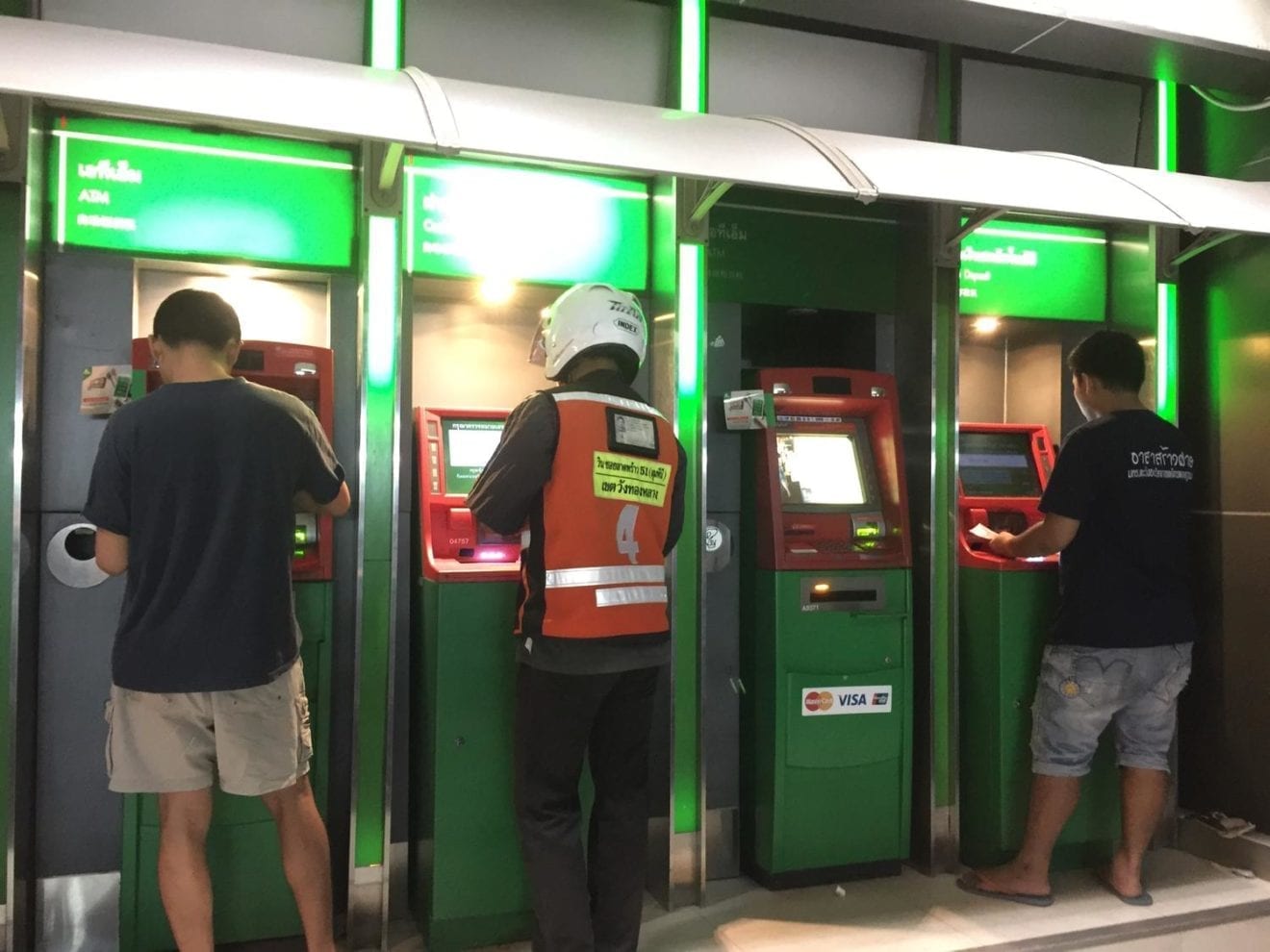
    Kasikorn Bank says it is working to fix the complete outage of its services Friday before New Year, which comes just before a bank holiday.

    On a day many say they need access to their money the most, K-Bank’s ATMs as well as online and mobile banking systems have been offline since Friday morning and were still unavailable as of 5pm.

    The bank has yet state the cause of the error, but responded to complaints on its Facebook page and Twitter account it was trying to solve the problem.

    The bank said it could not provide the specific time its website and application services would be working again.

    K-Bank’s mobile system was also disrupted briefly Thursday evening.

  • KBank, Aeon connect in Laos

    KBank, Aeon connect in Laos

    Both parties are also ready to jointly develop payment channels and other innovative services in a bid to assist Thai investors in Laos.

    Suwat Techawatanawana, KBank’s first senior vice president, said Aeon Leasing Service (Lao) had been granted kip-denominated loans by the bank’s Laotian unit to be used for its retail and motorcycle-loan businesses.

    Aeon Group is a successful financial conglomerate in Thailand, offering personal-loan and credit-card services. Given the promising trends in Laos, the group’s business expansion into this marketplace is expected to bring fruitful results.

    Aside from financial support, KBank will cooperate with Aeon to develop products and services such as innovative payment channels to facilitate its customers in Laos.

    Shiro Kitano, managing director of Aeon Leasing Service (Lao), said this cooperative effort with KBank would be supportive to the company’s business, making it more flexible in its operations.

    Aeon Group now centralises its business management of the Asean region in Thailand. After branching out into the Laotian market, the conglomerate may contact KBank. The one-stop service will help reduce the number of relevant procedures and time needed.

    The cooperative endeavour between the two companies to develop complete payment channels will not only provide greater convenience to customers in Laos, but also assist in modernising transactions in this market.

    Having its headquarters and first branch in Vientiane, Aeon Leasing Service (Lao) is now expanding its services in other major cities in that country.

    Amid slowing economic conditions, loans extended during the first half of 2015 accounted for 30 per cent of this year’s target of 50 billion Lao kip (Bt208 million).

    The company plans to launch more marketing activities to boost its business during the second half of the year, wherein the overall economy is expected to benefit from the advent of the Asean Economic Community.

    Suwat said KBank had operated its locally incorporated institution in Laos since last December, offering loans and financial-transaction services to both individual and corporate customers there, including Thai businesses that have invested in the country.

    Providing credit, KBank assesses their business potential in Laos, plus their company outlook in Thailand. Such risk assessment is conducted to evaluate the entire group prospect. Therefore, the bank can better underwrite credit and give other supporting services to the businesses.

    Amid Laos’ high economic-growth potential, some Thai operators may wish to cash in on growing business opportunities. KBank says it stands ready to support Thai businesses in advisory services, business matching activities and diverse financial services.