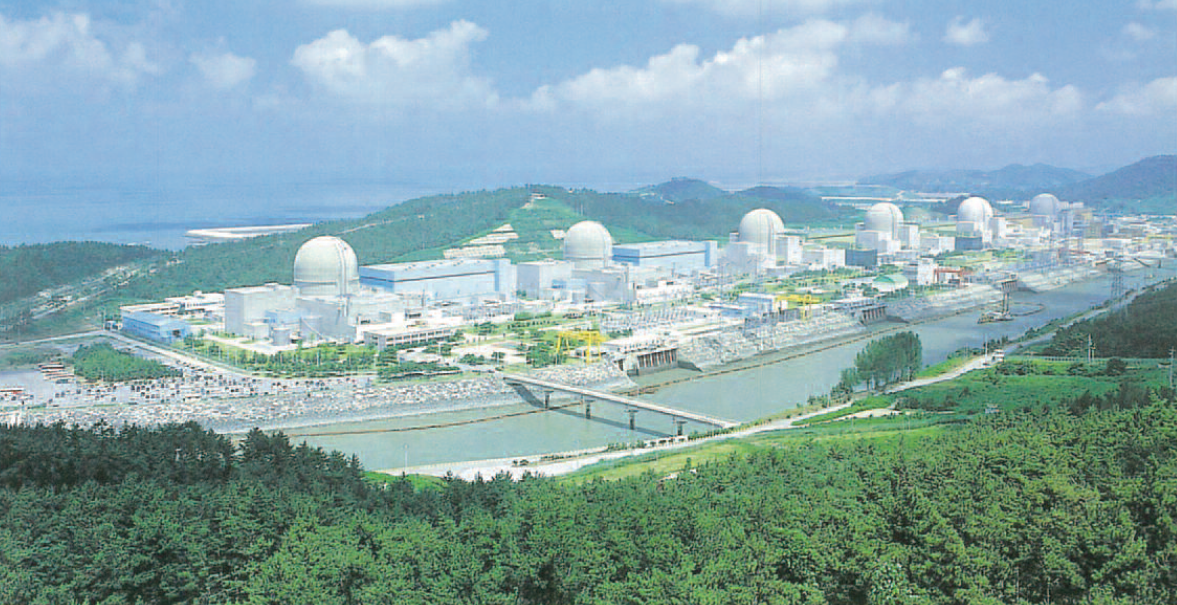
NFD Korea has started development on a 300-megawatt artificial intelligence data center campus in Dangjin, roughly 90 kilometers southwest of Seoul.
Building permits for an initial 200-megawatt phase came through in September 2026. General contractor DL E&C broke ground in early November.
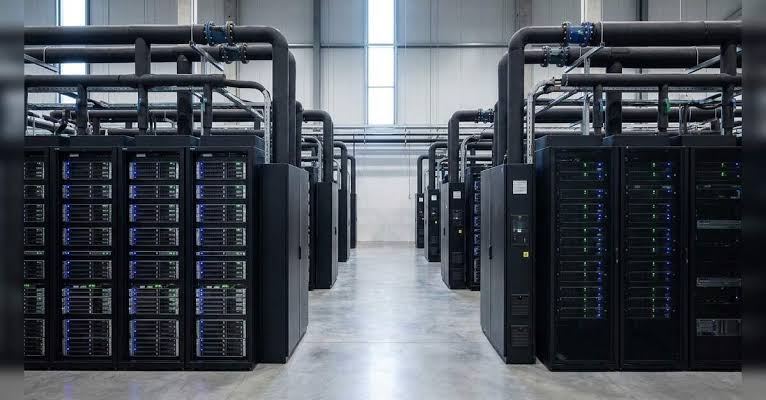
A second agreement signed on September 9 with Chungcheongnam-do Province, Dangjin City, and EFD Co. Added a 100-megawatt parcel (Building C) valued at 1.24 trillion won ($920 million). Permitting for that final block wraps up in December 2026. The completed 300-megawatt facility will use liquid cooling engineered for rack densities up to 160 kilowatts to handle AI model training and inference workloads.
Securing power outside the capital
Grid bottlenecks in greater Seoul have pushed data center developers into industrial belts further south. Securing high-voltage power allocations near the capital now takes years. Operators also face regulatory delays and local residential pushback.
Placing the campus inside the Songsan 2 General Industrial Complex avoids urban zoning disputes and secures grid access. Korea Electric Power Corporation has committed a full 300-megawatt supply. LS Electric will deliver step-up transformers in stages across 2027 and 2028.
Between low community-opposition risk inside the industrial complex, proximity to the Seoul metro, and strong local government backing, Dangjin is positioned to deliver AI data center capacity quickly.
The race for high-density capacity
High-density space remains scarce for cloud providers and hyperscalers entering South Korea. Standard enterprise facilities cannot handle the heat generated by modern graphics processing units. Most of these processors require dedicated liquid cooling.
Institutional real estate investors across Asia are shifting capital away from speculative logistics and into purpose-built computing hubs backed by long-term leases. NFD Korea is currently negotiating terms with international cloud service providers and AI firms to anchor the Dangjin site before commercial rollout.
Building out a national pipeline
Dangjin’s buildout follows an initial memorandum of understanding signed in 2023 for the first 200 megawatts across Buildings A and B. Founder and chief executive Choi Jae-woo, a former infrastructure lead at Amazon Web Services and Brookfield-backed DCI Data Centers, launched NFD Korea to develop a gigawatt-scale pipeline across the country.
In Yongin City, the developer broke ground on an 80-megawatt hyperscale facility in September 2025. That site will also go live in 2028.
Commercial service for Dangjin’s Phase 1, consisting of Building A, begins in the first quarter of 2028. Phases 2 and 3 are scheduled to come online before the end of that year.