Retail News CRM

Tag: Keppel

  • Keppel & Uniqlo Parent Ink Deal for Exciting Retail Expansion in Asia-Pacific

    Keppel & Uniqlo Parent Ink Deal for Exciting Retail Expansion in Asia-Pacific

    Singapore’s Keppel Corporation and Japan’s Fast Retailing, Uniqlo’s parent company, have entered into a Memorandum of Understanding (MOU) to investigate the potential for retail-oriented real estate opportunities throughout the Asia-Pacific region.

    Key Signatories

    Christina Tan, CEO of fund management and chief investment officer at Keppel, and Takayuki Miki, group executive officer at Fast Retailing, were the signatories to the agreement.

    Promising Collaboration

    The partnership is already bearing fruit with Uniqlo set to become a tenant in Keppel’s forthcoming Hanoi Centre in Vietnam. Slated to open next year, the Hanoi Centre is expected to be the city’s largest shopping destination.

    Uniqlo first made its entrance into the Vietnamese market in 2019 and has since established 30 stores nationwide. These are primarily located within major malls and shopping centres.

    A Year of Record Profits

    Fast Retailing recently announced record profits for the year ending in August. The company also forecast a fifth straight year of record earnings for fiscal 2026, attributing this predicted success to its aggressive expansion in North America and Europe.

    Questions & Answers

    What is the purpose of the MOU between Keppel Corporation and Fast Retailing?
    The MOU signifies the two companies’ intent to explore retail-focused real estate opportunities in the Asia-Pacific region.

    What is the first visible outcome of this collaboration?
    The first notable outcome of this partnership is that Uniqlo is set to become a tenant in the Hanoi Centre, a major retail mall being developed by Keppel in Vietnam.

    How is Fast Retailing performing financially?
    Fast Retailing recently reported a record profit for the year ending in August, and anticipates a fifth consecutive year of record earnings by fiscal 2026, largely due to its rapid expansion in North America and Europe.
  • Keppel granted license to provide telecommunications services in Singapore

    Keppel granted license to provide telecommunications services in Singapore

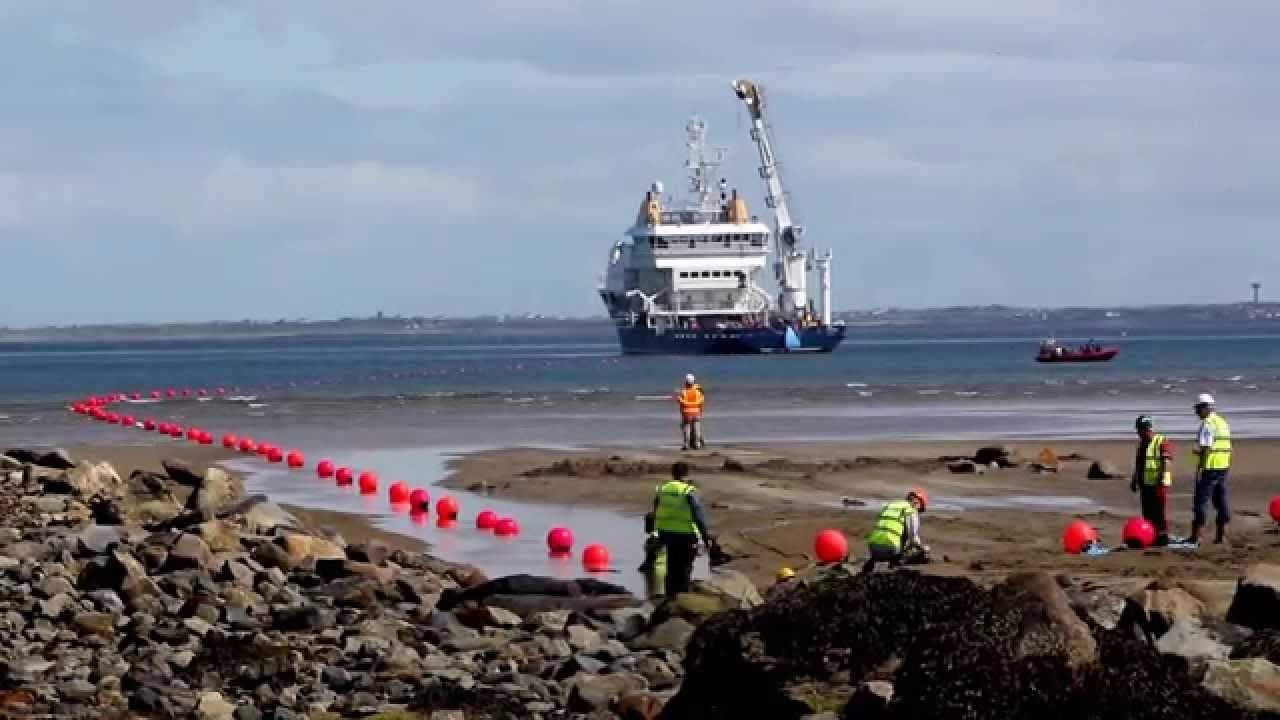
    Keppel Telecommunications & Transportation’s (Keppel T&T) wholly-owned subsidiary, Keppel Midgard Holdings Pte. Ltd. (KMH), has been granted a Facilities-Based Operator (FBO) license by the Infocomm Media Development Authority of Singapore (IMDA). The FBO license will allow KMH to own, maintain and operate telecoms infrastructure in Singapore and to provide telecommunications services in connection with the Bifrost Cable System, which Keppel T&T is undertaking with its partners, Facebook and Telin.

    FBOs are operators intending to deploy any form of telecommunication network, systems and facilities to offer telecommunication switching and/or telecommunication services to other licensed telecommunication operators, businesses, and/or consumers.

    Mr Thomas Pang, CEO of Keppel T&T, said, “Securing the FBO license is an important milestone for Keppel as it marks the start of our subsea cable business in Singapore. The Bifrost project is in line with Keppel’s Vision 2030 roadmap, which includes growing our connectivity platform, and will strategically strengthen and broaden the Group’s play across the spectrum of data communications, from network infrastructure, data centers to wireless 5G connectivity. It can give rise to potential opportunities for cross-selling or creating new profit pools across Keppel’s different connectivity businesses, for example by leveraging Keppel Data Centres’ network of data centers as potential points of presence. We may also collaborate with funds managed by Keppel Capital to help provide funding for the project. Drawing from our experience in Bifrost, we will also explore other opportunities in subsea cables.”

    The Bifrost Cable System, which will be the largest capacity high-speed transmission cable across the Pacific Ocean when completed, will bolster Singapore’s role as a digital hub for the region.

    Expected to be completed in 2024 and spanning over 15,000 km, the Bifrost Cable System is the world’s first subsea cable system that directly connects Singapore to the west coast of North America via Indonesia through the Java Sea and Celebes Sea. It will connect Singapore, Indonesia, the Philippines, Guam and the west coast of North America.

    The Bifrost cable system will boost the connectivity of the region’s governments and businesses, including cloud operators, telecommunications operators, network providers, over-the-top (OTT) providers, data centres, governments, enterprises, and consumers by offering them competitive pricing and capacity resilience.

  • Keppel, Sovico Plan Vietnam-Singapore Subsea Cable Project

    Keppel, Sovico Plan Vietnam-Singapore Subsea Cable Project

    Currently, there are four operational submarine cable systems linking Vietnam to the rest of the world: AAE-1, AAG, TGN-IA, and APG. The SEA-ME-WE 3 cable system previously connected with Vietnam, however, it was retired in early December.

    Three new cables are under construction to connect Vietnam: ADC, ALC, and SJC2. Moreover, Viettel and Singtel have signed a Memorandum of Understanding (MOU) to construct the Vietnam-Singapore Cable System (VTS).

    Vietnam has experienced frequent internet disruptions due to faults in its underwater cables. For instance, both the APG and AAE-1 cables are currently not functioning and awaiting repairs. In June, three out of five undersea cables connecting Vietnam to the world (APG, AAE-1, and TGN-IA) encountered issues, causing internet speed reductions across the country. The repair of the AAE-1 cable is still pending. In January 2023, four out of five undersea cables (AAG, IA, APG, and AAE-1) were not operational, leading to slow internet speeds across Vietnam.

    In January 2024, the Prime Minister of Vietnam issued Decision 36/QD-TTg (Decision 36), approving Vietnam’s Digital Infrastructure Master Plan 2030. According to this plan, Vietnam aims to add two-to-four international internet cables by 2025 and another four-to-six international undersea fiber optic cables by 2030.

    Furthermore, by 2030, Vietnam plans to increase the total number of submarine cables to 15, each with a total capacity of at least 334 Tbps. Sovico Group will focus on providing high-quality products and services in various sectors to meet customer needs and integrate with the global economy. In September, Sovico Group signed an MoU with U.S.-based tech company, Supermicro, to develop a hyperscale data center in Vietnam.

    According to SCMP, Keppel and Sovico Group are considering laying a cable that will directly connect Vietnam with Singapore, predicted to cost an estimated USD 150 million.

    The new projects led by Keppel and Sovico Group will be separate from previous investments announced by Vietnamese companies in four new undersea cables. These include the ADC and SJC2 cables, built by Japan’s NEC; ALC, built by China’s HMN Tech; and the Vietnam-Singapore submarine cable system announced by Vietnam’s Viettel and Singapore’s Singtel.

    Given its proximity to China, Vietnam faces challenges in aligning with the U.S. on strategies and policies related to digital infrastructure and undersea cables.

  • DBS and Keppel to Collaborate Under MOU

    DBS and Keppel to Collaborate Under MOU

    Under the memorandum of understanding (MOU), the two sides will collaborate on a range of initiatives that harness digital technologies to better serve customers and suppliers.

    DBS Bank and Keppel Technology & Innovation have agreed to work together on digital technologies to create more opportunities and efficiencies for both companies, according to an announcement on Tuesday.

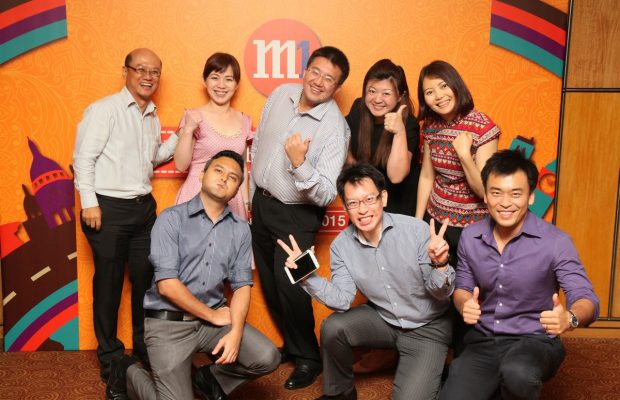
    Three areas are covered under the MOU: exploring synergies between Keppel Group’s consumer businesses like M1, Keppel Electric and City Gas, and DBS’ consumer marketplace platforms; developing 5G-enabled digital banking solutions, and developing digital tools and platforms to provide bundled services from both M1 and DBS to large corporates and small-to-medium enterprises (SMEs); and providing digital supply chain financing solutions to Keppel Group’s supplier ecosystem.

    The initiatives will be rolled out over the rest of the year, the announcement said.

    The value of knowledge grows when it is shared. Our collaboration with Keppel’s ecosystem of businesses exemplifies this by demonstrating how the cross-pollination of expertise and networks from different industries can help Singapore seize new opportunities here and in the global marketplace, Tan Su Shan, DBS group head of institutional banking, said about the partnership.

  • OCBC, Keppel, Validus Make Digital Banking Pull Out

    OCBC, Keppel, Validus Make Digital Banking Pull Out

    Despite initial interest, a consortium made up of Singaporean lender OCBC, marine giant Keppel and peer-to-peer lending platform Validus has decided not to pursue a digital banking license in the city-state.

    The decision against applying for a license is believed to be linked with an ongoing strategic review of Keppel’s core operations, according to a report, in the midst of a takeover via a partial offer by Temasek.

    The consortium was expected to leverage the network of small vendors from Keppel with financing through the Validus platform which houses several large corporates including shipyards and logistics firms. Effectively, the partnership would allow large corporates to take advantage of their blue chip status to provide financing to their small contractors and suppliers to ensure the completion of projects on schedule.

    The Monetary Authority of Singapore will issue just five licenses which include two full licenses, which covers retail banking, and three wholesale banking licenses. The latest reported interest came from a partnership between Grab and Singtel which envisions their establishment of a truly customer-centric digital bank.

  • Konnectivity to buy out remaining shares of M1

    Konnectivity to buy out remaining shares of M1

    Konnectivity, the joint venture buying out Singapore’s M1, has revealed plans to embark on a multi-year transformation of the operator to enhance its competitiveness in the market. The venture revealed it will compulsorily acquire the remaining shares in M1 after securing a 94.55% stake.

    Konnectivity, which is jointly owned by Keppel Corporation and Singapore Press Holdings, announced it will exercise its rights to acquire all remaining M1 shares at the offer price of S$2.06 ($1.52) per share, and then take the company private.

    After the compulsory acquisition, Konnectivity will own 80.69% in M1, while Keppel Corp subsidiary Keppel Telecommunications and Transportation will own the remainder.

    After the acquisition closes, Keppel Corporation and SPH plan to work with M1 on a transformation strategy focused on the three prongs of innovation, technology adoption, and digitalization to help Singapore’s smallest operator better compete with larger rivals Singtel and StarHub.

    “As a member of the Keppel Group, M1 looks forward to working closely with the Keppel Group and with SPH to accelerate the changes needed to deliver even more innovative and compelling products and services, to stay ahead of the competition,” M1 CEO Manjot Singh Mann said.

    “M1 shall endeavour to transform to be at the heart of convergence of various digital services and technologies that present day consumers and enterprises demand. Keppel and SPH bring with them their organisational strengths and stability, which will help us chart our growth plans aggressively, while seeking significant opportunities of synergy with them.”

  • Keppel to sell 70 pct stake in Vietnam waterfront township

    Keppel to sell 70 pct stake in Vietnam waterfront township

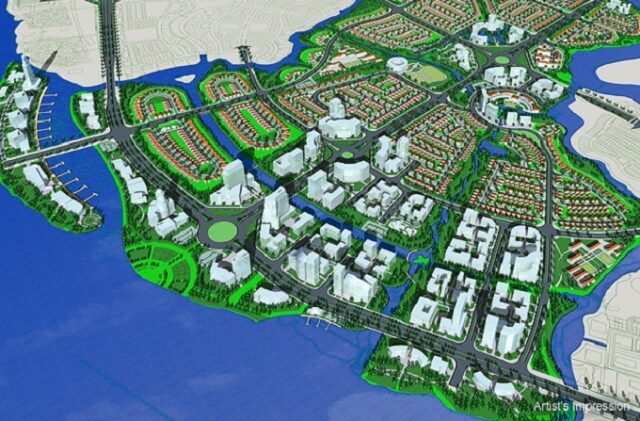
    Singapore-based Keppel Corp will sell 70 percent stake in a waterfront township project to a Vietnamese investor for $100 million. The company said in a release Monday that, pending certain developments, it will sell its stake in the Dong Nai Waterfront City Company (DNWC) to Ho Chi Minh City-based Nam Long Investment Corp for VND2.31 trillion ($99.72 million).

    The DNWC is a company incorporated under Vietnam’s laws that has been granted the right to develop the Dong Nai Waterfront City township project.

    Keppel Land, Keppel’s real estate arm, is currently in the process of taking over complete control of DNWC from an unnamed joint venture partner through a demerger.

    Once the demerger is done, DNWC will become a wholly-owned subsidiary of Keppel with the rights to develop a 170-hectare plot of land.

    DNWC also holds a 28-hectare plot of land which is excluded from the proposed divestment.

    The 70 percent stake sale will depend on demerger going through.

    Dong Nai Waterfront City is a 170-hectare residential township project in Dong Nai Province, located 28 kilometers to the northeast of HCMC.

    It will have about 7,850 homes, including townhouses, villas and high-rise apartments with various commercial facilities.

    Keppel Corp said that the stake sale was in line with Keppel Land’s strategy to recycle assets for higher returns. The funds generated will be used to pursue other opportunities in Vietnam, it said.

    The Dong Nai Waterfront City will be Keppel Land’s second township project in Vietnam after the 64-hectare Saigon Sports City in HCMC’s District 2 which is under construction.

  • Keppel in joint venture for first commercial development in India

    Keppel in joint venture for first commercial development in India

    Keppel Land, the property subsidiary of Singaporean conglomerate Keppel Corporation, is in a partnership to develop its first commercial property in India.

    The group has acquired a well-located 3.09ha site from Metro Cash & Carry India in Yeshwanthpur through a majority 51:49 joint venture with Indian property developer Puravankara.

    The total consideration of INR 4.05 billion (US$81 million) includes the cost of $16 million for the construction of a 160,000sqft retail/office complex. The total development cost, including the land, is $207.4 million.

    Yeshwanthpur is 5km northwest of central Bangalore, one of the primary hubs for the technology industry in India. The area is among the largest and fastest-growing office markets in the country.

  • PCCW Global, Keppel launch ICX in HK

    PCCW Global, Keppel launch ICX in HK

    Hong Kong based PCCW Global has teamed up with Keppel Data Centres to launch a joint international carrier exchange (ICX) in Hong Kong.

    The PCCW Global-Keppel International Carrier Exchange has more than 7,800 square feet of dedicated network facility management space.

    It is located in the same building as the Hong Kong point of presence for the Asia-Africa-Europe 1 (AAE-1) subsea cable and connects to the subsea cable landing station of Hong Kong hyper scale data centers via PCCW Global parent HKT’s extensive domestic fiber network.

    PCCW Global and Keppel Data Centres entered into a long-term agreement covering the development of the ICX last year. It aims to use the region’s subsea cable capacity to provide fast and robust connections to Asia, the Middle East, Africa, Europe and North America.

    The partners said the initiative is ultimately aimed at addressing the demand for access performance and network security arising from cloud services, big data, and rich media in business critical applications

    “We are very pleased to see the exciting ICX opening which highlights our very positive relationship with (Keppel Data Centres parent company) Keppel T&T,” PCCW Global CEO Marc Halbfinger said.

    “Our customers and carrier partners now have more low-latency Hong Kong Island choice in accessing digital solutions for responding to the increasing cloud adoption in the region.”

  • Keppel boosts Saigon Centre stake

    Keppel boosts Saigon Centre stake

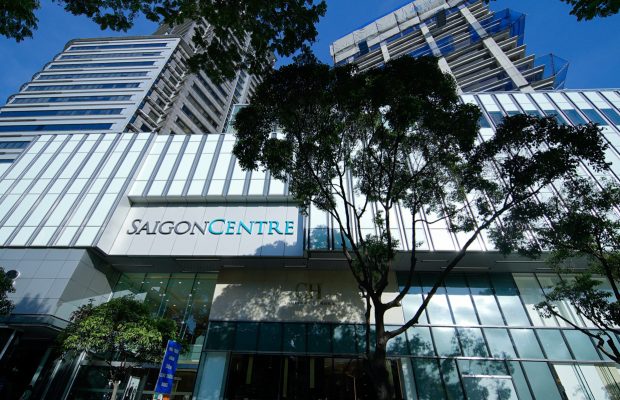
    Singapore-headquartered Keppel Corp has paid VND 845.9 billion (S$53.5 million) to boost its stake in Ho Chi Minh City’s Saigon Centre beyond 50 per cent.

    Saigon Centre, a mixed-use development incorporating a shopping centre anchored by Takashimaya department store, apartments and office space, is a joint venture between Keppel and local company Watco. The first stage, a small shopping mall beneath an 11-story tower, opened in 1996. Last year the expanded 55,000 sqm mall opened, and construction continues on a second tower of approximately 40 stories above it.

    The mall is trading well, 100 per cent leased, with several Japanese retailers, including Owndays, making their debut in the market. Chanel is constructing what is expected to be a make-up studio on the ground level in a prime space previously used for events and pop-ups.

    Keppel now owns 53.5 per cent of the Keppel Land Watco I, II and II companies and 76.2 per cent of Keppel Land Watco IV and V.

    “Keppel Land is committed to grow its commercial portfolio in key Asian cities. Vietnam, one of our key growth markets, continues to attract foreign direct investments which will drive positive demand in the property market from homes to offices and mixed-use developments,” said Keppel Land CEO Ang Wee Gee in a statement.

  • Keppel Logistics aims to stay relevant with e-commerce

    Keppel Logistics aims to stay relevant with e-commerce

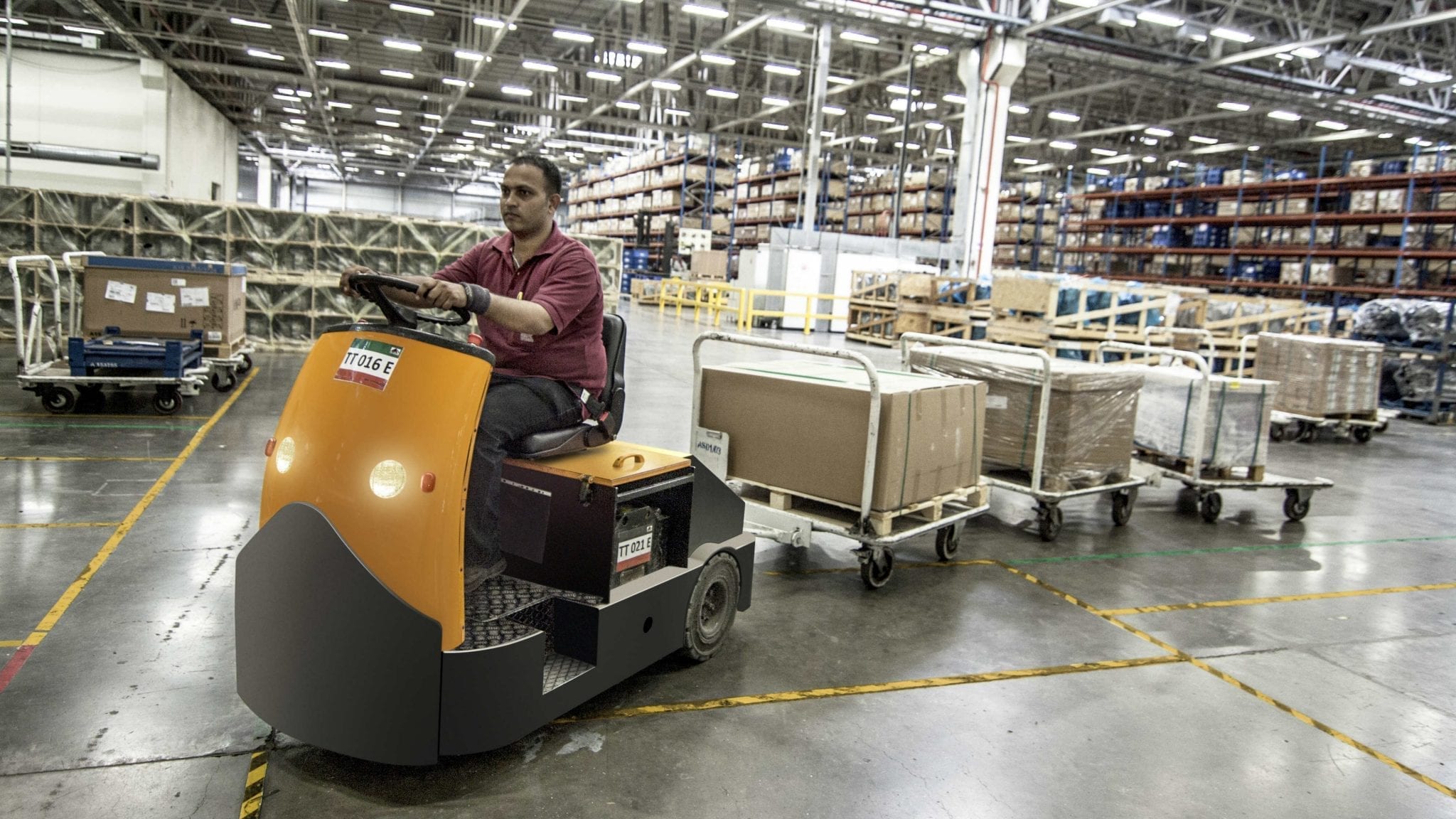
    Staying relevant in a fast-changing sector is a key strategy for Keppel Logistics, said chief executive Desmond Gay.

    This is why the company – a wholly-owned unit of Keppel Telecommunications & Transportation – embarked on a $4.6 million acquisition of a majority stake in e-commerce logistics company Courex in October.

    Mr Gay told us recently: “We are constantly striving to innovate and evolve, and the Courex acquisition has allowed us to structure ourselves in a way that we become more relevant to the market and the new economy. It is just the first step of things to come.”

    Courex is a third-party logistics service provider that supports the needs of retailers, from last-mile delivery to international shipping and warehousing. It counts Singapore Airlines and Hachi.Tech among its clients.

    Keppel Logistics holds a 59.6 per cent stake in Courex, while the remaining 40.4 per cent is held by founder Joe Chua, who continues to lead the company.

    Mr Gay noted that the acquisition came as a “natural progression” for Keppel Logistics, as it moved to expand from its traditional B2B (business to business) business into the B2C (business to consumer) space, or the e-commerce market.

    “As companies, including our customers, begin to re-look and evolve their supply chains against the backdrop of an e-commerce dominated landscape, we likewise have to adapt and grow new muscle, and develop new capabilities and competencies,” he said, noting that doing so will ensure the company remains competitive.

    Incorporating Courex’s capabilities into Keppel Logistics’ business also allows the firm to better cater to its customers, he said. This is key as more brick-and-mortar retailers turn to online platforms to complement their sales channels.

    The growth prospects for e-commerce in South-east Asia are significant, Mr Gay noted.

    He cited a recent study by Google and Temasek Holdings, which says e-commerce in the region is expected to soar from US$5.5 billion (S$7.8 billion) last year to about US$88 billion over the next decade, and possibly up to US$128 billion even. Singapore’s e-commerce market is forecast to grow from US$1 billion to US$5.4 billion over the same period.

    “Being in the middle of a region like South-east Asia, with more than 600 million people – there we have a huge market opportunity,” said Mr Gay. “With the acquisition, we’re only just starting, and we’re ready to have a bite of the e-commerce pie.”

    Mr Gay expects Keppel Logistics, which has a presence in Australia, China, Indonesia, Malaysia, Singapore and Vietnam, to grow its e-commerce logistics business by at least 15 per cent in annual revenue over the next few years.

    He singled out Indonesia and Vietnam as “bright spots”, noting that Indonesia, in particular, is expected to make up over half the South-east Asian e-commerce market by 2025. The firm will explore opportunities to enter new markets such as Thailand, the Philippines and Myanmar.

    Amid a hyper-competitive market – reports last month said the US-based Amazon is set to enter South-east Asia next year – Mr Gay is positive Keppel Logistics will be able to maintain its edge.

    “A market that is US$88 billion and possibly US$128 billion is big enough, I think, for the various players,” Mr Gay, said.

    “If you look at South-east Asia, it’s still very fragmented. This means you have specialists that provide only last-mile services, for example, or parts of the supply chain, but not quite the entire supply chain.”

    He added: “Our synergies with Courex will also help us move towards being an omni-channel logistics service provider, while retaining our core strengths in providing best-in-class third-party logistics solutions.”

  • Keppel director steps down

    Keppel director steps down

    Keppel Corporation says non-executive and independent director Tony Chew Leong-Chee will retire from its board on May 1.

    Chew will concurrently cease to be chairman of the nominating committee and member of the audit committee.

    Dr Lee Boon Yang, Keppel Corporation chairman, thanked Chew for 13 years distinguished service to the property developer.

    “The Keppel Group has benefited from his extensive business experience, wisdom and entrepreneurial spirit. Tony was lead independent director from 2006 to 2009 and has been chairman of the nominating committee since 2009,… instrumental in overseeing the top leadership succession of the group in recent years. That the leadership transition process was achieved smoothly is a clear testimony to Tony’s capability and commitment to Keppel’s interests.”

    Chew will be succeeded by Tan Puay Chiang as chairman of the nominating committee. Till Vestring, who joined the board in February, will be appointed as member of the committee and the remuneration committee.