
Tag: key

  • WhatsApp announces passkeys support for Android users

    WhatsApp announces passkeys support for Android users

    Last week, Google announced that passkeys would become the default authentication method for its users on personal accounts. Within that announcement, Google also stated that passkeys support is growing, listing a few of the companies that had already enabled them on their apps and websites, with a mention of WhatsApp as one of the ones that would be adding compatibility soon.

    This confirmed earlier reports that WhatsApp had already tested this functionality with its beta users and would be tied to Google’s Password Manager. Today, WhatsApp finally announced that passkeys support is now official for its Android users who can now use their device’s screen lock method to unlock their accounts, such as their face, fingerprint, or device pin.

    Previously, WhatsApp had implemented an optional two-step verification pin and a fingerprint lock feature that users could set to trigger automatically after a set length of time. This type of authentication is not being removed from the app, but rather joined now by passkeys, offering an additional layer of security.

    Although passkeys support has now been made public by the company, it appears that the feature is not yet live on the latest stable version of the app (v2.23.20.76). However, it is definitely working in the latest beta (v2.23.21.12) for those enrolled in the WhatsApp beta program.

    The signup process is quick and straightforward as it is using the screen lock method that you already use on your phone. Additionally, through this signup process, you learn that your newly created passkey is indeed being stored in Google’s Password Manager, which makes it possible to use on other devices where you are signed in to your Google account. It is unclear at this time if an app update is forthcoming for the stable version of the app, or if the feature will be rolled out in stages via a server push.

  • Henley & Partners Opens Australia Office

    Henley & Partners Opens Australia Office

    New office caters to burgeoning international demand for Australia’s investor migration programs, as well as interest from within Australia for alternative residence and citizenship options abroad. Global firm in residence and citizenship planning Henley & Partners has announced its expansion into Australia and has made several key personnel hires, the firm said in a media release.

    The office is located in Melbourne, and will be led by director Tony Le Nevez.

    «Australia is the number one resettlement destination for high-net-worth individuals. With our global presence and expertise in assisting these clients acquire alternative residence or citizenship, it makes perfect sense for us to open an office in Australia,» Dominic Volek, managing partner and head of Southeast Asia, said.

    Strong Regional Growth

    This has been a period of strong growth in the region for the firm, which recorded 48 percent year-on-year growth in Southeast Asia. It opened a Thailand office in 2018 to cater to the burgeoning demand for residence and citizenship planning services among HNWIs there.

    «We expect the interest and demand that we are seeing in Southeast Asia to continue with eight of the top 10 fastest growing wealth populations forecast to be in Asia over the next five years,» Volek said.

    Key Appointments

    • Tony Le Nevez, Director, Henley & Partners Australia

    Le Nevez has over 35 years’ experience in the migration services industry. He previously worked for the Australian Department of Immigration in Canberra, and at for the Australian foreign service in Bangkok, Athens and Vienna, where he was a senior policy advisor and First Secretary. He joined the private sector in 2006 and is a member of the Investment Migration Council.

    • Jacky Poh, Deputy Head, Henley & Partners Singapore

    A wealth management professional for over 10 years, Poh has worked closely with HNWIs to execute prudent investment strategies inclusive of discretionary portfolios. Poh works closely with the managing partner to ensure the smooth operations and resource management of the Singapore office. He is also focused on establishing and maintaining relationships with key clients and stakeholders to drive business growth, with an emphasis on progressive Southeast Asian markets.

  • Hyundai Develops Smartphone Based Digital Key

    Hyundai Develops Smartphone Based Digital Key

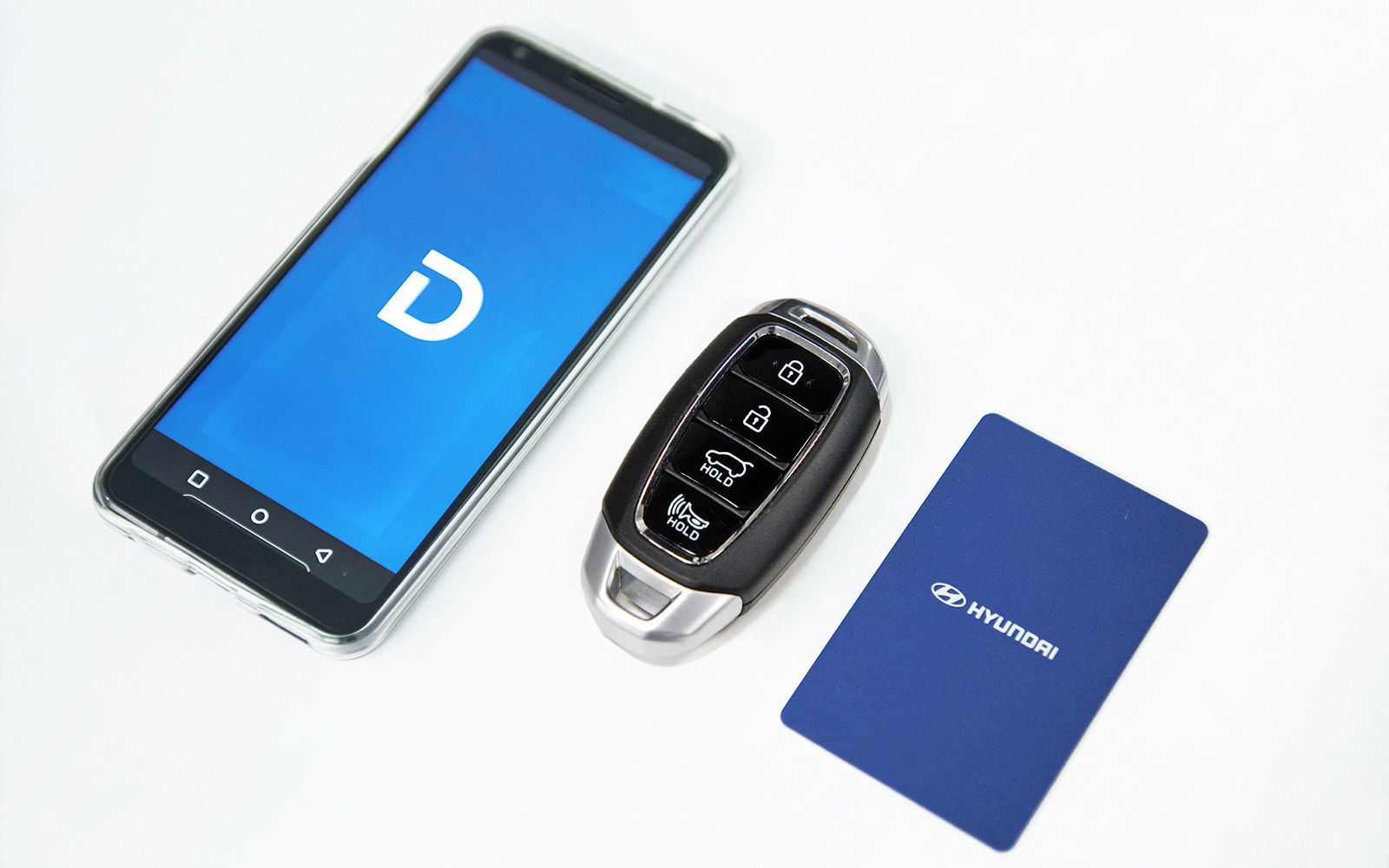
    Hyundai Motor Group announced the development of a Digital Key, which allows users to unlock and start a vehicle via their smartphone. Replacing a traditional physical key, the new Digital Key can be downloaded via an app and can be used by up to four authorised people. The Digital Key can be downloaded via a cell phone application and Near Field Communication (NFC) technology detects the presence of an authorized Digital Key-enabled cellphone in close proximity to the vehicle door. NFC is a form of Radio Frequency Identification (RFID), which boasts a high level of security. The NFC wireless data communication takes place only when the device and the reader are placed several centimetres apart.

    The NFC antenna for entry identification is located in the handles of the driver and front passenger’s doors, whilst one for starting the engine is located within the wireless charging pad. After unlocking the vehicle, the user can start the engine by placing the smartphone on the wireless charging pad in the centre console and pressing an engine Start/Stop button on the dashboard.

    The user’s preferred vehicle settings are stored in the vehicle. When the key is recognized those settings are adjusted automatically – including the position of mirrors, seats and the steering wheel, as well as controls for the audio, video and navigation (AVN) systems and head-up display.Hyundai’s Digital Key can be used to control selected vehicle systems remotely via their smartphone. Using Bluetooth Low Energy (BLE) communication, users can lock and unlock the vehicle, activate the alarm and start the engine. In addition, once the vehicles with autonomous parking features are commercialized, such features are also expected to be remotely controlled.

    The level of access to different vehicle functions can be tailored to each user, for a defined period. The vehicle owner can pre-set the duration of vehicle use or limit the use to only certain features when renting the vehicle. For instance, it can even be used to enable a courier to open the trunk to deliver a parcel.

    For cases such as using a valet service or visiting a repair shop, where handing over a digital key is not feasible, conventional smart key and card type key are also provided. Hyundai Motor Group aims to gradually implement the technology in its new production vehicles, starting later this year.

  • Amazon offering deliveries to parked vehicles

    Amazon offering deliveries to parked vehicles

    Expanding on its Amazon Key, which enables access for in-home deliveries, Amazon has started offering deliveries to vehicles.

    With Amazon Key-in-Car, Prime members with compatible vehicles can have packages delivered to the boots and back seats of their cars when parked at home or in public areas.

    Customers need to have a compatible vehicle from Buick, Cadillac, Chevrolet, GMC or Volvo, reports The Verge.

    Free for Prime members, the service is so far available in 37 US cities following beta tests in California and Washington State for the past six months. Amazon is using multiple layers of verification to secure the in-car deliveries.

    The Amazon Key app also shares notifications with users throughout the four-hour delivery-time window, such as when the delivery is on its way, when the package was delivered and when the car was relocked.

    The service expands on the Amazon Key program, a lock-and-camera service that enables Prime members to receive packages directly inside their homes.