Tag: kindle

  • Amazon Kindle Vella to be discontinued in February 2025

    Amazon Kindle Vella to be discontinued in February 2025

    Amazon has made the decision to shut down its Kindle Vella serialized story platform in February 2025. The platform, launched in 2021, was intended to be a way for readers to discover new fictional stories and for authors to earn money from the Kindle Direct Publishing service. However, the platform has not gained the traction Amazon had hoped for, leading to its discontinuation.

    Authors can continue to publish stories on Vella until December 4th, which is also the last day readers can purchase tokens. After this date, readers can still use their tokens to unlock episodes until the program closes in February. Readers who have already unlocked episodes will not lose access to them and can read them in their library on the Kindle app. Any unused tokens will be refunded by Amazon.

    Vella has received mixed responses since its launch. Some authors appreciated the ability to earn money from unfinished stories, while some readers expressed a preference for purchasing complete books rather than installments. The mixed reception highlights the challenges of introducing new reading formats and subscription models in a market accustomed to traditional publishing models.

    Despite efforts to increase interest, such as offering free episodes and bonuses to authors, Amazon has decided to discontinue the platform. The closure of Kindle Vella marks the end of an experiment in serialized storytelling. While it did not achieve the success Amazon had hoped for, it provided a platform for authors to connect with readers in a new way. It also offered a unique opportunity for readers to discover and engage with stories as they were being written.

    The decision to shut down Vella reflects the dynamic nature of the digital publishing landscape. As technology and reader preferences evolve, platforms and services must adapt to remain relevant. While Vella may not have found its niche, it contributed to the ongoing exploration of new ways to create, share, and experience stories.

    While it is always disappointing to see a service end, it also opens up opportunities for new and innovative platforms to emerge. I am interested in seeing how this will affect the landscape of serialized fiction and what new developments may arise in the future.
  • Amazon confirms the Kindle Oasis will be discontinued

    Amazon confirms the Kindle Oasis will be discontinued

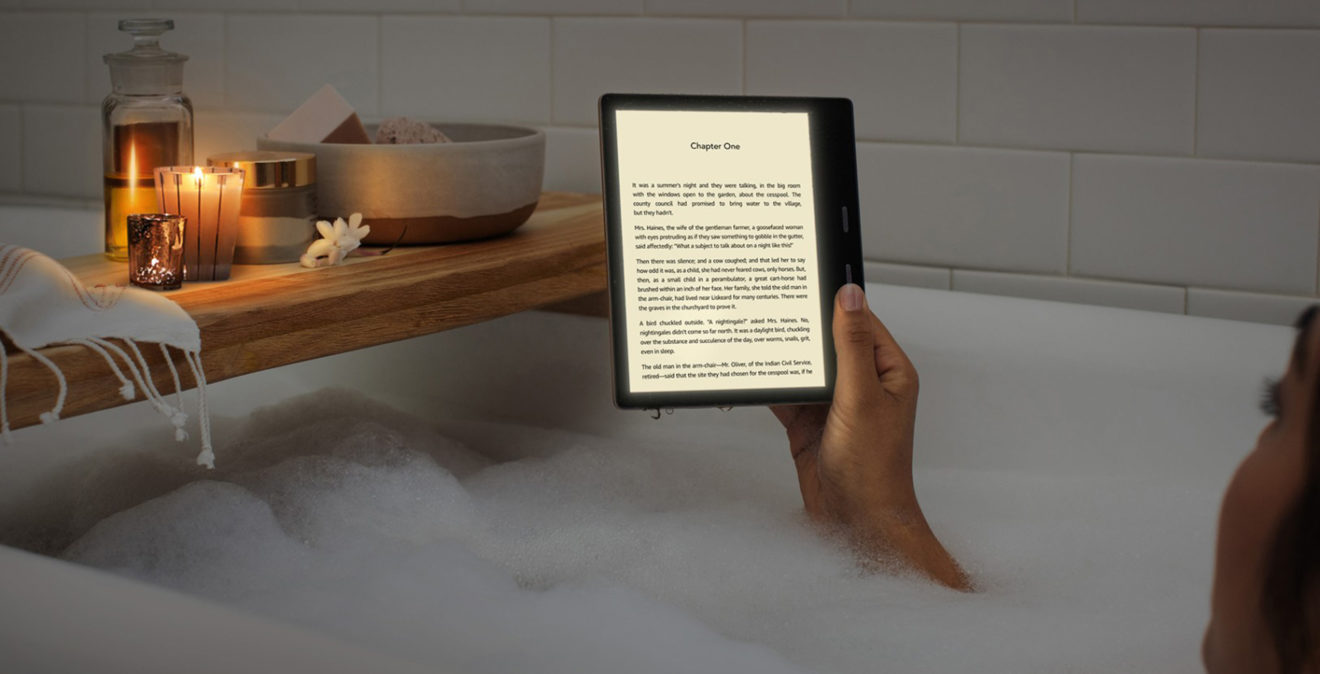
    Fresh on the heels of the Kindle Colorsoft Signature Edition announcement, Amazon confirmed that it’s retiring its last Kindle e-reader to feature physical buttons, the Kindle Oasis.

    The information doesn’t really come as a surprise considering the e-reader made its debut on the market more than eight years ago. What’s surprising is that many of those who bought the e-reader when it was launched are still using it. There’s an entire thread on reddit where Kindle Oasis users express their love for Amazon’s e-reader.

    Unfortunately, Amazon’s rep Devon Corvasce told The Verge that “once current inventory of Kindle Oasis sells out online and in stores, we will not restock the device. Today, all of our devices are touch-forward which is what our customers are comfortable with.”

    The Kindle Oasis can no longer be bought from Amazon, as the e-reader’s page mentions the product is “currently unavailable,” and that’s probably how it will stay until all stock is depleted. The Oasis will probably be completely removed from Amazon’s website in just a couple of months.

    After its original launch back in 2016, the Kindle Oasis received some updates in the form of two new versions, which landed in 2017 and 2019, respectively. Since then, Amazon focused completely on releasing touch-only Kindle models, which made the Oasis rather obsolete.

    Still, it would have been nice for Amazon to have at least one Kindle model that features physical buttons in its portfolio, as many customers prefer the Oasis over the newer models.

    Thankfully, if you’re more of a traditional person who prefers their e-readers have physical buttons, there are plenty of alternatives from the competition like the Kobo Libra, Kobo Sage, Pocketbook Verse Pro, Onyx Boox Page or the Hi Reader Pro.

    Some of these are better than others, but what’s important is that e-readers with physical buttons are still a thing, despite Amazon’s decision to discontinue its only model with this specific perk.

  • Amazon launches Kindle Kids Edition

    Amazon launches Kindle Kids Edition

    Amazon just announced the Kindle Kids Edition, an e-reader geared towards children. Though the internet giant has sold Fire tablets marketed under the Kids Edition label, this is the first time Kindle e-readers have gotten the same treatment. The bundle is available for pre-order now.
    The Kindle Kids Edition comes with the base 10th-generation Kindle, along with one of four colorful, kid-friendly covers and a two-year replacement guarantee. The e-reader is a good match for kids with its portable size and month-long battery life. This model also comes with special software features for younger readers, such as Achievement Badges for reaching reading goals, Word Wise for automatic definitions of more difficult words, and an enhanced book search designed for kids.
    The bundle also includes one free year of FreeTime Unlimited, Amazon’s all-in-one subscription for children’s content. The subscription gives access to a curated selection of books, movies, TV shows, audiobooks, and more content, as well as powerful parental control features. Recently, Amazon also announced that the service will also start working on Echo devices, Fire TV sticks, and Fire TVs.
    Given that FreeTime Unlimited normally costs about $3 a month for Prime members, the free subscription adds a good deal of value for potential buyers. The Kindle Kids Bundle is set to start shipping at the end of October.
  • Amazon launches new Kindle Oasis e-reader

    Amazon launches new Kindle Oasis e-reader

    Two years after launching the second-generation model, Amazon is refreshing the Kindle Oasis lineup with a third e-reader. We’re not sure about Amazon’s naming convention, but the US retailer has decided to call the device the all-new Kindle Oasis.

    If you already own a previous generation Kindle Oasis, read further if you’re wondering whether or not it’s worth to upgrade to the new model. First off, the all-new Kindle Oasis includes Amazon’s best Paperwhite display. It has a 7-inch size, 300ppi and features a new color adjustable front light. The latter will allow users to adjust the color tone from cool to warm depending on the environment.

    The third-generation Kindle Oasis features a thin and light design, especially created for one-handed use. The device includes dedicated page turn buttons, as well as the most recent e-ink technology to enable fast page turns.

    Furthermore, the new e-reader is IPX8 rated to protect against immersion in up to two meters of water for up to 60 minutes. But it’s also been designed to withstand accidental drops.

    Potential customers can pre-order the all new Kindle Oasis starting today for $250 for the 8GB, and $280 for the 32GB model. The ereader is available in two color options – Graphite and Champagne Gold, and will ship on July 24.

  • The guy who built the Kindle is leading Amazon’s retail plans

    The guy who built the Kindle is leading Amazon’s retail plans

    Amazon’s long-time executive Steve Kessel is in charge of running the company’s new retail business, according to a report by Re/code’s Jason Del Ray.

    Kessel joined Amazon in 1999 and was part of the team that built the original Kindle. He’s known to be close with Amazon CEO Jeff Bezos, as he was one of the 10 people who directly reported to him before leaving for a sabbatical in 2012.

    In early 2015, Kessel returned to Amazon, but his role has been unclear until now. Re/code says he’s been working on this project secretly for a long time.

    Amazon’s retail ambitions were first revealed in November 2015 when it opened its first brick-and-mortar bookstore in downtown Seattle.

    Aside from the bookstore, Kessel’s team is also planning to open physical stores that sell things other than books, although it’s unclear what they will be. Another idea it’s testing is a store without a payments gateway, allowing the customer to pay with a smartphone app instead.

    Amazon is planning to open a new bookstore in Southern California, based on the job listings spotted by Re/code. One of the jobs says it’ll be in La Jolla or San Diego, the report said.

    The news comes on the heels of a report that said Amazon could soon open 300 to 400 additional bookstores. Although the mall CEO who made those statements backpedaled Wednesday, saying his comments were “not intended to represent Amazon’s plan,” it’s seems clear that Amazon is getting serious about the retail space.