Retail News CRM

Tag: kitchen

  • JustKitchen enters Thailand via GrabKitchen deal

    JustKitchen enters Thailand via GrabKitchen deal

    Just Kitchen, an operator of ghost kitchens specializing in the development of delivery-only food brands, announces the expansion of JustKitchen’s in-house brands to Thailand (the ” Thailand Location “) via GrabKitchen. For the Thailand Location in the Phayathai area of Bangkok GrabKitchen provides the physical kitchen on a Kitchen-as-a-Service (” KaaS “) basis. The Thailand Location is situated near a busy commuter rail hub that is supplemented by a steady flow of other traffic. As previously announced in April, the Company hasa partnership with GrabExpress Inc. (” Grab “) in the Philippines that enables it to access GrabKitchen and GrabFood resources.

    Immediately upon opening, the Thailand Location will serve JustKtichen’s Master Don food brand, followed shortly after that by the K.Bao brand, featuring a customized menu with a local twist, as well as the Bodyfit brand. The Southeast Asian on-demand food delivery market is experiencing a high annual growth rate of 14%, which implies that the market will eventually reach a total value of $49.7 billion by 2030.

    Grab is Southeast Asia’s leading ‘super app’ based on gross merchandise value in 2021 in each of food delivers, mobility, and the e-wallets segment of financial services, according to Euromonitor.

    Management Commentary

    “International expansion is critical to our company’s growth plan, but it is also an opportunity to learn from the locals in each new market. In Thailand , the food delivery market is mainstream and growing, which is something we plan to study very carefully and hopefully master as well,” said Jason Chen , Co-Founder and Chief Executive Officer of JustKitchen. “People in Thailand want access to new and exciting foods that are affordable and convenient. We aim to provide exactly that to them,” added Mr. Chen.

  • JustKitchen expands into the Philippines

    JustKitchen expands into the Philippines

    Ghost kitchens operator, JustKitchen, has expanded its presence into the Philippines through a joint venture with TDG Ventures (TVI).

    Named ‘JV Co’, the joint venture will be the exclusive operator of the JustKitchen brand and distributor of its products in the country. The launch is part of JustKitchen’s global expansion plan, which will see kitchens opening in markets including Japan, Singapore, Malaysia and Vietnam next year.

    “Forming this joint venture with TVI to enter the Philippines market is a significant milestone for JustKitchen as it marks the third country in which our company will be operating in just a short period,” said Jason Chen, co-founder and CEO.

    “With our home base in Taiwan, established operations in Hong Kong, and the addition of this large population to our customer base, we continue to execute on our international growth plan to bring JustKitchen’s unique operating model, portfolio of food brands, and technology stack to new markets,” he said.

    Under the partnership, JustKitchen will maintain a 51 percent ownership interest in JV Co with the remainder owned by TVI. The joint venture will develop the infrastructure necessary to replicate the operating model from Taiwan and shall lease out kitchens to sub-franchisees. Ghost kitchen operation is expected to begin in the first quarter of next year.

  • Foodpanda partners with Indian cloud kitchen firm Rebel Foods

    Foodpanda partners with Indian cloud kitchen firm Rebel Foods

    Online takeaway delivery firm Foodpanda is partnering with Indian virtual kitchen company Rebel Foods to roll out the latter’s virtual restaurant brands at 2,000 outlets across ten Asian countries, Foodpanda’s chief operating officer said.

    “Foodpanda is Asia’s largest’s food delivery company while Rebel Foods is the largest virtual brands operator in the world,” COO Pedram Assadi said. “This is the largest virtual food brand partnership of its kind.”

    Under the deal, Foodpanda, which is owned by Berlin-based Delivery Hero, has recruited and trained hundreds of outlets to franchise the global restaurant brands created by Rebel Foods and offer their food on its platform.

    Mumbai-based Rebel Foods, which offers multiple cloud kitchen brands across countries including India and the United Arab Emirates, raised US$175 million this month at a US$1.4 billion valuation. It plans to launch an IPO in the next two years.

    Cloud kitchens that prepare food for delivery got a boost from the shift to online buying during the COVID-19 pandemic. Low overhead costs versus traditional restaurants and fast scale-up potential have also enabled “internet restaurant chains” to grow quickly.

    Foodpanda’s partnership with Rebel Foods is already being tested in six of the twelve Asian markets that Foodpanda is active in, and there is the option to expand to the other regions Delivery Hero is active in, Assadi said.

    He did not give any financial details of the deal but described it as core to Foodpanda’s strategy in Asia – along with its expansion into grocery delivery in Southeast and East Asia – as it takes on competitors such as British rival Deliveroo and Singaporean startup Grab Holdings.

    “Over the last year, we now have built over 250 ‘cloud stores’ that are operating grocery end to end, which makes us the largest e-commerce delivery player in APAC (Asia-Pacific)” Assadi said, referring to distribution centers dedicated to online grocery orders.

    Delivery Hero, which is active in 50 countries worldwide, announced on Tuesday it had invested US$235 million in Berlin-based grocery delivery company Gorillas, as the global race to dominate the rapid delivery service sector intensifies.

    Earlier this year, it also picked up a minority stake in Deliveroo.

  • Melbourne baker brings back in-store kitchen at revitalised flagship

    Melbourne baker brings back in-store kitchen at revitalised flagship

    Baker Bleu has had a busy few years. After outgrowing its original 60-square-metre home in Elsternwick, which opened in 2016, and moving to a grand 400-square-metre space in Caulfield North in 2018, owners Mike and Mia Russell have just announced they’re upsizing – again.

    The pair is opening a new location in Hawksburn Village in Prahran, just off Malvern Road, in May.

    Just as exciting is who they’ve recruited to join the team. Carlton Wine Room head chef John Paul Twomey is leaving his current role to head up product and recipe development for Baker Bleu. He’s a veteran chef who spent a decade working for Andrew McConnell, including five years as head development chef.

    Baker Bleu, one of Melbourne’s best bakeries, is known for its long-fermented sourdough with beautiful caramel-hued crusts. And its dinner rolls, in 2019 he wrote, “To deny yourself the Baker Bleu dinner roll with good butter is to miss a moment of pure joy”.

    The new location will serve as both a pastry-production space (with controlled-temperature rooms and proofing cabinets “to allow for more control when creating sourdough croissants”) and a retail shopfront.

    The already exceptional offering will expand to include filled ficelles, granola pots, grab-and-go drinks and Market Lane filter coffee.

  • Restaurants find silver lining in cloud kitchens

    Restaurants find silver lining in cloud kitchens

    Amid business blues courtesy of the Covid-19 pandemic, cloud kitchens are finding increasing favor from restaurants in Vietnam’s two major cities.

    Nguyen Van Tung saw revenue from the two restaurants he runs in Saigon plunge 70 percent after the Covid-19 pandemic disrupted daily life in Vietnam. He cut his staff from four to two, but the business continued to suffer.

    Then he joined two cloud kitchens, centralized food production facilities set up for multiple restaurants to prepare food, specifically for deliveries. Things began to look up for Tung, then.

    The two kitchens, operated by ride-hailing company Grab, have helped increase revenue, Tung said.

    Another restaurant owner in the city, Ton Nu Quy Nhi, joined a cloud kitchen after demand for her traditional Saigon food surged two to three times amidst the pandemic. Expanding and managing her restaurant would have been expensive and difficult, so she decided to partner with a cloud kitchen service.

    “I don’t know if the business will continue to thrive next year, so I went with the cheapest expansion option, using the cloud kitchen.”

    Tung and Nhi are among many small business owners in Vietnam who want to take advantage of rising demand for food delivery services in major cities.

    There are at least seven cloud kitchens operating in HCMC and Hanoi, three of them operated by Grab, two by South Korean ride-hailing company Baemin and another two by independent companies.

    The cloud kitchens help lower costs, being located outside of high-rent locations. They help established restaurants with dining-in services to expand their delivery operations without adding stress to the existing kitchen, free up parking space taken by the delivery vehicles, and expand users’ reach to new neighborhoods.

    Hoang Tung, founder of the FoodHome cloud kitchen in Hanoi, said that his facility was fully rented and he was mobilizing funds to open a new one in the Old Quarter area.

    Tung said restaurants are moving their cooking to cloud kitchens because they want to focus on selling via apps to access a market of 20 million users that is growing by 30 percent annually.

    Industry insiders said that the Covid-19 pandemic has been a catalyst in the recent transition from traditional brick and mortar kitchens to cloud kitchens.

    Nguyen Ngoc Giao, manager of GrabKitchen, said that this model allows restaurant owners to expand quickly at minimum cost. “Amid the Covid-19 pandemic, opening a physical store carries greater risks than an online one.”

    Huy Ngo, founder of a fast food and dessert restaurant chain in Da Nang City and Hoi An Town, has recently started trying out the cloud kitchen model after having to close five of seven branches due to Covid-19 impacts.

    The new model allows Huy to focus only on ensuring high food quality inputs. The cloud kitchen employees will help prepare food for delivery, which means operating costs are just half or one-third of his traditional physical store.

    Even big and established restaurant chains are also jumping on to the cloud kitchen bandwagon, though it is yet to become a tried and tested concept in Vietnam. Fried chicken chain Otoke Chicken, with 15 outlets, has established a cloud kitchen in Saigon’s Binh Thanh District, seeking to expand its delivery service.

    Details of average investment and rents charged were not available at the time of writing.

    When Grab launched a cloud kitchen in Saigon’s Thu Duc District last year, it had 12 restaurants make food exclusively for GrabFood drivers to pick up and deliver to customers.

    Then Grab had given them space to cook for free, with the restaurants having to pay their utility bills and a commission on orders received.

    Jerry Lim, CEO of Grab Vietnam, had said then the cloud kitchen model has great potential in Vietnam, and that his company would open more such facilities in Saigon, Hanoi and Da Nang.
    However, this concept does not guarantee success for all restaurants. The cloud kitchen service, Now Station, began operations in 2017, but closed a year later.

    Giao of GrabKitchen said there have been cases where restaurants and the service have had to part ways. He declined to get more specific.

    The food delivery services have also come under scrutiny for excessive use of plastic wrappings and cutlery. Giao said his company is studying the possibility of using more environment-friendly materials.

    Tung of FoodHome said that joining a cloud kitchen doesn’t mean young business owners will not fail, but it will help them “fail fast and fail cheap” so they can get back up fast and try out other new ideas.
  • California Pizza Kitchen opens new outlets in Manila and Daegu

    California Pizza Kitchen opens new outlets in Manila and Daegu

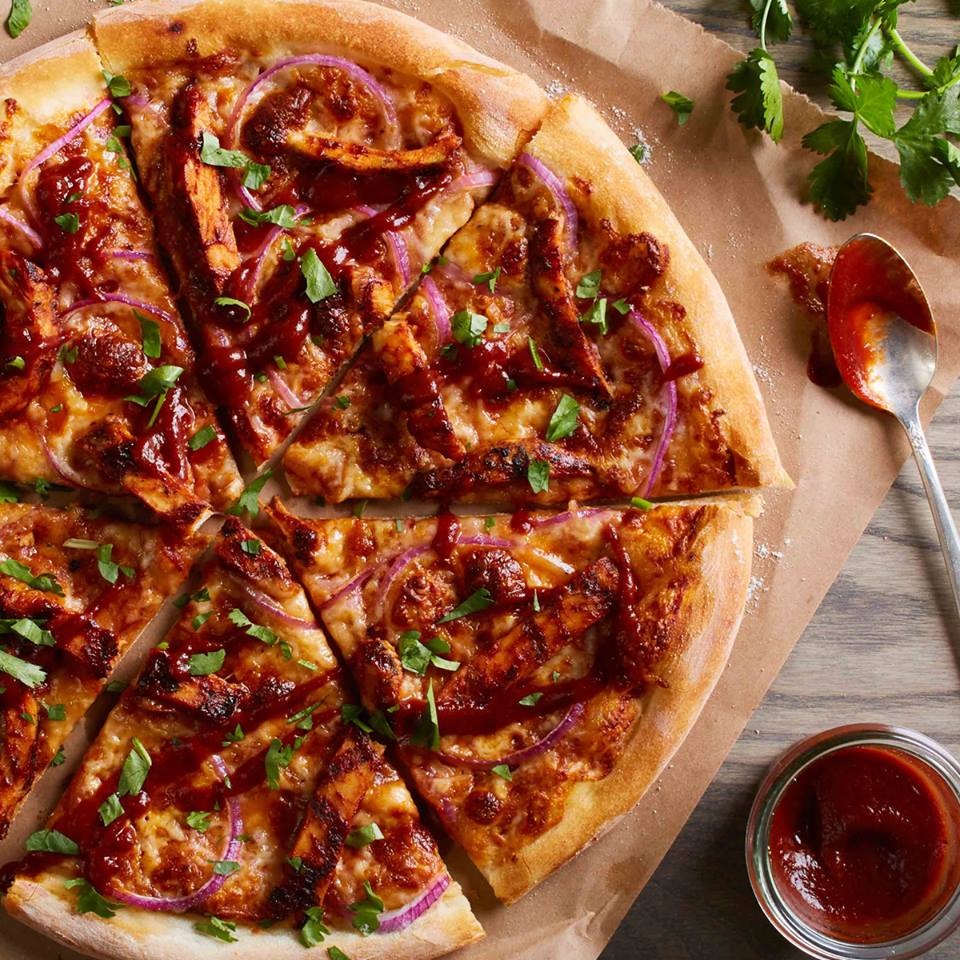
    The openings in Salt Lake City, Manila, and Daegu, South Korea, mark the beginning of CPK’s emergence from Chapter 11 bankruptcy. Los Angeles-based California Pizza Kitchen (CPK) has opened new franchise locations in Salt Lake City as well as Manila, Philippines, and Daegu, South Korea, as it begins to emerge from its Chapter 11 restructuring process, the company announced.

    CPK is planning three additional new international locations that are already under construction.

    CPK announced in July that it had filed for Chapter 11 protection and had entered into a restructuring support agreement with lenders to equitize most of its long-term debt.

    The new stores are located at the Salt Lake City Airport; the Evia Mall in Manila; and the Daegu Mall in Daegu. The Manila restaurant will be CPK’s fifth location in the Philippines, while the Daegu store is the seventh in South Korea. According to a CPK press release, the openings offer “evidence of the company’s strategic expansion in growing markets and its business and financial health.”

    “This has been truly an unprecedented year due to COVID-19 headwinds, but these openings and future construction highlight the confidence we and our partners have in the strength of the brand and its restructuring plan,” said Giorgio Minardi, CPK’s executive vice president of global development and franchise operations.

    The new Philippines location opened at the Evia Mall after government officials eased COVID-19 lockdown restrictions. All new restaurants will implement rigorous cleaning and safety measures, the press release said.

    “We’re very proud to partner with Pie Co., Seoulland, and HMSHost and expand our franchise relationships in these three CPK markets,” Minardi said. “It takes a lot of trust, passion, and strength during these times to make such an investment, and these openings are a clear indication of that commitment.”

  • Singapore startup opening ghost kitchens globally

    Singapore startup opening ghost kitchens globally

    Singaporean food tech firm TiffinLabs is creating an international network of ghost kitchens based in more than 1000 locations across the US, Europe and Asia.

    The move is designed to take advantage of the rapid global transformation and growth of the online food-delivery market, with the kitchens rolling out progressively from the last quarter of this year following 12 months of negotiations.

    According to material released by the firm, the traditional restaurant industry – largely structured for dine-in – has led to a mismatch between customer demand and the supply of cuisines due to current production capability. TiffinLabs’ solution, focused on creating cuisines linked to consumer needs, is an attempt to innovate in the food delivery and restaurant industry in reshaping the business model and tapping new growth opportunities.

    TiffinLabs currently operates nine digital-first restaurant brands out of its kitchens in Singapore, including Publico Pastabar and Hureideu – Korean Fried Chicken, as well as soon-to-be-launched Singapore Makan.

    “Singapore is known globally for its quality standards and as a food lover’s paradise, with its wide mix of local and western foods,” said Tiffin Labs founder & chairman Kishin RK, “and TiffinLabs looks forward to sharing this globally.”

    TiffinLabs will leverage its AI-driven kitchen operating and management system across its network to deliver an international menu from digital-first restaurant brands, with a potential reach of more than 15 million households. The team also harnesses data analytics to identify food trends and changing consumer preferences while optimizing its supply chains with local smart kitchens to fill gaps in delivery zones.

    “What customers get when they order food for delivery is dramatically different from a dine-in experience,” said Kishin. “By enabling over 1000 kitchens for delivery-focused operations globally, we are making food ordering relevant for the future, at scale. In the next three years, we see two very different winners in this space – the local niche specialty cuisine player that can create value through distinction for a specific segment of the market.

    “The other will be global delivery businesses which will scale brands and menus with suppliers and delivery platforms and invest in innovation specifically to create food for delivery, reinventing customers’ experience of in-home dining.

    “As someone who has been in this industry for the last 10 years, I strongly feel that the value of real estate and the monetization capability of its adjacent business models will be determined by how well it integrates into the digital economy. Our business aims to help all players in the food industry tap into the growth of this sector.”

    The online food delivery market is expected to more than double to US$200 billion by 2024.

  • BeChef plans 50-strong shared kitchen network across Japan

    BeChef plans 50-strong shared kitchen network across Japan

    BeChef has launched a shared kitchen in Kyoto, with plans to host 300 eateries across Japan within the next three years.

    The first BeChef + Kyoto-branded shared kitchen occupies a 50sqm area which features three separate kitchens. There is available space for up to six stores, which can work with different delivery services, including UberEats and Rakuten.

    The Kyoto shared kitchen also houses a dine-in space for customers.

    “For those involved in the restaurant business, I think opening a business independently is a big dream,” said Masafumi Tobe, representative director. “However, about 70 percent of restaurants close after three years of operation, and it is said that only about 10 percent of the stores are still open after 10 years.”

    According to BeChef, brands opening at the BeChef + Kyoto shared kitchen will not be charged fees to move in or out and restaurants affected by Covid-19 will be exempted from administrative fees.

    BeChef is to open more facilities in Fukuoka, Tokyo, and Osaka later this year. The company said that it aims to host 300 eateries in 50 facilities nationwide within three year

  • First Grab Kitchen in Singapore opens

    First Grab Kitchen in Singapore opens

    Grab has launched its first Grab Kitchen in Singapore, which takes its cloud kitchen network in Southeast Asia to 50.

    Located at 63 Hillview Avenue, the shared kitchen is operated for 10 restaurants including PlayMade, Wolf Burgers and Thai Dynasty. Occupying a 6000sqft area, Grab Kitchen also has a dine-in area for small lunch groups.

    “Together with our merchant partners, we hope to bridge cuisine demand and supply gaps, complement and expand the variety of food options at different price points in the area,” said Dilip Roussenaly, head of GrabFood Singapore, at the opening of the Grab Kitchen in Singapore.

    As operations in cloud kitchens cost less than setting up physical outlets, the concept has become popular among food and beverage merchants.

    “Partnering with GrabFood has enabled us to have an expanded reach to more consumers while minimizing the hassle for them to travel to a location for food,” said Ian Lin, founder of Thai Dynasty.

    Grab’s food-delivery business has become a major pillar for growth as it expands beyond its taxi-hailing roots into other areas, including financial services. Grab’s food delivery business witnessed 5.2 times growth in gross merchandise value last year, and nearly tripled its number of active users.

    Rivals Deliveroo and Foodpanda already operate their own shared kitchen spaces, also known as ghost or cloud kitchens, in Singapore. The firm’s regional rival Go-Jek has also been testing cloud kitchens in Indonesia.

  • Singapore’s Voids Cafe takes up just 28sqm, carved out of a concrete block

    Singapore’s Voids Cafe takes up just 28sqm, carved out of a concrete block

    Singapore’s tiny Voids Cafe is carved out of a monolithic concrete block, reshaped to produce an operational space in just 28sqm.

    The design, by Studio SKLim’s and featured by online architectural magazine Designboom, was inspired by the “empty space in a coffee cup or matcha bowl” with negative spaces and circular geometries “consistently carried throughout the rest of the built form, carving out seating booths, countertops, display shelves, and overhanging canopies”.

    “In this condensed space, it was essential that we balanced the numerous kitchen inventory with the customer zones, utilizing every nook to add to that experience,” said a representative of the studio.

    The block features several working and customer zones, such as an experience corner, a takeaway counter, booths, and a counter for conducting workshops and making drinks.

  • Grab launches first shared kitchen in Vietnam

    Grab launches first shared kitchen in Vietnam

    Grab launched a shared kitchen in Vietnam on Tuesday to cater to the growing demand for food delivery.

    It is in Thu Duc District, Saigon, and 12 restaurants make food exclusively for GrabFood drivers to pick up and deliver to customers.

    Grab has given each of them space to cook for free though they have to pay utility bills, and get a commission on the orders.

    Vietnam is the second place where it has launched GrabKitchen after Indonesia, and there is great potential for this model in the country, Jerry Lim, CEO of Grab Vietnam, said in a statement.

    Thu Duc was chosen because of its young demographic comprising students and workers who want to order from their favorite restaurants which are located too far away, he said.

    More such kitchens would be opened in the city this year and the model would be expanded to Hanoi and Da Nang next year, Lim added.

    Shared kitchens have become popular in Asian countries such as China, Japan and India in recent years as restaurants can focus completely on the food and do not need to find, rent and manage a shop.

    Between January and June this year the number of GrabFood transactions quadrupled to an average of 300,000 orders a day.

    Competitors for GrabFood in Vietnam now are Foody’s Now, Go-Viet’s GoFood and South Korean-owned Baemin.

    Vietnam’s ride-hailing and food delivery market is expected to top $1 billion this year and $4 billion in 2025, according to a recent report by Google, Singaporean investment firm Temasek and U.S. consultancy Bain.

  • First Wolfgang Puck Kitchen opening in in Hong Kong

    First Wolfgang Puck Kitchen opening in in Hong Kong

    The first Wolfgang Puck Kitchen in Hong Kong has opened its doors.

    The founder of popular Hollywood eatery Spago is steadily rolling out a network of fast-casual dining concepts across the US and more recently internationally, with outlets in Singapore and Sydney.

    This month he has opened Wolfgang Puck Kitchen on level 5 of the arrivals hall of Terminal 1 at Hong Kong International Airport. A grand opening is planned for October 9.

    The restaurant, in collaboration with Lagardere Travel Retail, features a grab-and-go collection for consuming on the plane, as well as booths and bar seating, serving breakfasts, pizzas, salads, burgers and other fast-casual fare, all influenced by California cuisine.

    The Wolfgang Puck Kitchen in Hong Kong will trade daily from 6.30am to 12.30am.

    The Austrian-born chef’s Wolfgang Puck Kitchen brand now has more than 50 outlets, located in airports, casinos, universities and amusement parks. He also owns the high-end steakhouse Cut, has authored multiple books and is a part-time actor.

  • BSH opens Asia’s first UnserHaus

    BSH opens Asia’s first UnserHaus

    BSH Home Appliances has opened Singapore’s first UnserHaus Customer Care Centre and a UnserHaus Experience Centre.

    Meaning “our house” in German, the UnserHaus centre is a lifestyle concept featuring Bosch and Gaggenau appliances in a home-like environment.

    “UnserHaus is an exciting new proposition that gives BSH’s home appliance brands, business partners and collaborators a chance to flourish,” said Hendrik Kretzer, CEO and head of BSH Home Appliances Asia Pacific Region.

    “Our philosophy and core ethos are focused on building long lasting trust with all of our customers and partners. We provide a platform to learn and experience unique ideas, future thinking, and real passion and understanding of the products that could benefit the way we live.”

    Located next to the Bosch building, the 1350sqft UnserHaus Customer Care Centre resembles a modern-day home, with a repair room that allows customers to watch technicians through a glass divide.

    While waiting for their appliances to be repaired, customers can visit either the dining room, which provides a hands-on experience with built-in appliances like dishwashers, coffee machines and ovens; or the living room, where they can sit down, unwind and relax with music or a wide-screen television. There is a children’s playing space as well.

    All products at UnserHaus come tagged with a QR code that allows visitors to purchase and pay for them online.

    UnserHaus Experience Centre

    Previously known as the Bosch Experience Centre, the UnserHaus Experience Centre is a functional open-concept home that allows customers to experience the latest Bosch and Gaggenau appliances.

    Located in the Bosch Building, the centre is divided into adjacent Bosch and Gaggenau brand zones. Visitors can try and choose Bosch- or Gaggenau-themed kitchens for their own kitchen planning. Hands-on experiences are available for appliances from six product categories: laundry, dishcare, cooking and baking, refrigeration, food preparation and indoor cleaning.

    Customers can also join cooking classes, held with partner chefs in live kitchens.

  • Ixina Kitchens opens first China stores

    Ixina Kitchens opens first China stores

    European kitchen retailer Ixina has opened stores in both Beijing and Shanghai, marking the brand’s official launch in China.

    Brought to China by Gome Retail, Ixina plans to open six more stores this year – including in Wuxi and Nanjing – expanding to 100 within the next three years.

    China’s kitchen furniture and appliances market is estimated at more than RMB400 billion (US$57.86 billion) currently.

    The president of Gome Retail, Wang Junzhou, says selling individual products far from meets new consumption habits, with package solutions more popular.

    For more than a year, Gome Retail has extended its business scope and strategic outreach based on its strong home appliance supply chain. New businesses such as Comfortable Home, Ixina and Kitchen Space have now been introduced, and a self-operated home-decoration business will soon be launched.

    “These businesses are essential approaches to achieving Gome Retail’s Home Life strategy,” said Wang.

    Gome Retail currently operates more than 2100 stores in 630 Chinese cities.

  • Stosa Cucine opens first Singaporian store

    Stosa Cucine opens first Singaporian store

    Italian kitchen-design studio Stosa Cucine has opened its first store in Singapore.

    Located at the Apex @ Henderson building, the showroom spans 140sqm, displaying four kitchen models: Aliant, Natural, Infinity, and Aleve, for customers to experience.

    Products on display add a hi-tech touch to the kitchen as well as a functional solution for shelves, baskets and drawers.

    Customers can also get personalized options and design their own Stosa Cucine kitchens.

    The brand says it chose Singapore for its first international store because the city is one of the world’s most cosmopolitan, and an important hub for international trade.

    After Singapore, Stosa Cucine plans to expand into other Asian markets.