Tag: kitkat

  • Nestlé Rolls Out 3 Limited-Edition KitKat Dark Ice Cream Packs in Malaysia

    Nestlé Rolls Out 3 Limited-Edition KitKat Dark Ice Cream Packs in Malaysia

    Nestlé has released three limited-edition packaging formats for KitKat Dark Ice Cream across Malaysia in September 2026. The rollout ties single-origin Borneo cocoa supply chains directly to the Visit Malaysia 2026 campaign.

    First launched in Malaysian freezers in 2025, the product uses Trinitario cocoa beans harvested in Sabah and Sarawak. Sourcing runs through the Nestlé Borneo Cocoa Initiative.

    Sourcing and packaging design

    Three collectable designs make up the revised line: Heritage, Island, and City. Each wrapper depicts Malaysian tourist destinations to drive impulse sales in convenience stores and hypermarket freezer aisles.

    Under the wrapper, the recipe remains unchanged. A dark chocolate shell made with 100 per cent single-origin Borneo cocoa covers a vanilla core mixed with crushed wafer pieces.

    Regional supply and brand strategy

    The release puts local provenance directly into mass-market confectionery. FMCG manufacturers across Southeast Asia face steep raw cocoa costs on global commodity exchanges. Contracted farming programmes like the Borneo initiative provide an operational hedge alongside their marketing value.

    Pitching KitKat alongside government-backed travel campaigns planned for 2026 secures shelf appeal before tourists arrive. Merchandising single-origin confectionery at mass retail price points yields higher margins than standard dairy lines. It also avoids specialized premium distribution networks.

    Cross-promotional retail campaigns

    On the ground, a wider consumer marketing drive supports the new packs. Roadshow activations are running across commercial centres, wrapping up with an interactive installation at The Exchange TRX from 22 to 27 September.

    Shoppers entering roadshow contests and uploading on-pack receipts can win Grandstand passes to the Formula 1 race at Sepang International Circuit, scheduled for 2 to 4 October 2026.

    Retail buyers will monitor sales velocity through the fourth quarter of 2026 as tourist footfall builds across store networks.

  • Sustainable Snacking: Aussie Trial Launches KitKat Bars in Recycled Packaging

    Sustainable Snacking: Aussie Trial Launches KitKat Bars in Recycled Packaging

    A unique production run of the popular KitKat 4 Finger chocolate bars is now available in Australia, with the chocolate bars enclosed in wrappers made from locally recycled polypropylene (PP). This initiative is part of an experimental collaboration between Viva Energy and Nestlé, where soft plastic pyrolysis oil is transformed into food-grade recycled polypropylene.

    Recycling Plastic into Edible Packaging

    The experimental journey commenced in Victoria and extended across the entire production chain. Viva Energy processed over 9.5 tonnes of pyrolysis oil from plastics at its Geelong Refinery last year. This led to the creation of approximately 5 tonnes of recycled PP. The recycled PP was then used to fabricate seven million ISCC-certified KitKat wrappers in March, a joint venture involving Taghleef Industries and Amcor. The KitKat 4 Finger bars now on the market are encased in these environmentally friendly wrappers.

    The pyrolysis oil derived from plastic was imported from Alterra in the United States for the trial, as Australia lacked the necessary materials at a commercial scale. To ensure the origin and journey of the recycled material were traceable, ISCC certification was implemented across the production chain.

    The Geelong Refinery and the connected polymers plant, both owned by Viva Energy, are the only facilities in Australia with the capability to convert waste soft plastics into food-grade plastic feedstock chemically.

    Creating a Circular Plastics Economy

    Viva Energy’s executive GM energy and infrastructure, Bill Patterson, emphasized that the trial had proven that soft plastics pyrolysis oil could be used as a feedstock. This demonstrated the potential of adapting existing industrial infrastructure to support a circular plastics economy.

    This trial project stemmed from a partnership formed in 2022 between Viva Energy and Nestlé, when the companies first used recycled soft plastic packaging for KitKat 4 Finger bars. Andrew Lawrey, Nestlé Oceania confectionery GM, expressed that the trial could provide valuable insights into the design of future packaging and commercial-scale recycling processes.

    This ambitious plan’s successful implementation will rely on the domestic supply of feedstock, efficient collection and sorting systems, robust recycling infrastructure, and a comprehensive producer responsibility scheme.

    Viva Energy and Cleanaway are currently conducting a feasibility study on a large-scale plastics recycling project. The Front-End Engineering and Design phase is anticipated to commence after the Australian Government finalizes the details regarding its packaging reforms.

    Questions & Answers

    What material are the new KitKat 4 Finger wrappers made from?
    The wrappers are made from locally recycled polypropylene.

    Why was the pyrolysis oil for the trial imported from the US?
    The necessary materials for producing pyrolysis oil were not available at a commercial scale in Australia.

    What could be the impact of this trial on future packaging design and recycling processes?
    The trial could lead to more sustainable packaging design and improved commercial-scale recycling processes.

  • Nestle Halts Production Of Vegan Kitkat Amid Rising Costs And Declining Sales

    Nestle Halts Production Of Vegan Kitkat Amid Rising Costs And Declining Sales

    Nestle, the multinational food and beverage company, has announced its decision to cease production of its vegan KitKat range after a four-year span. This decision is attributed to the escalating production expenses and declining sales figures.

    Background and Production Details

    The vegan KitKat, identified as KitKat V, was conceived at Nestle’s confectionery research and development center located in the UK. The product was initially launched in 2021 to serve as a plant-based substitute for the globally popular classic chocolate bar. However, the company disclosed that the manufacturing of this product necessitated the dedication of exclusive facilities, which escalated the operational costs considerably.

    As of now, the company has halted all production lines for the global Vegan KitKat version. A representative from Nestle shared this news, further highlighting that the remaining stock of this product will continue to be available in Tesco and Sainsbury’s stores until the current stock is exhausted.

    Global Trends for Plant-Based Products

    Nestle’s decision aligns with the observed deceleration in the demand for plant-based products worldwide. Market analysts have noticed a shift in consumer interest from processed alternatives to fresh produce. This change is propelled by consumers questioning the health benefits of plant-based options, which were previously regarded as healthier alternatives.

    The future of the vegan KitKat brand remains clouded in uncertainty. Nestle has not yet disclosed whether it might reconsider the revival of this brand should there be a resurgence in demand.

    Questions & Answers

    What led to Nestle discontinuing its vegan KitKat range?
    High production costs and diminishing sales were the primary factors that led Nestle to discontinue its vegan KitKat range.

    What was the vegan KitKat range?
    The vegan KitKat, labeled as KitKat V, was a plant-based alternative to the traditional chocolate bar. It was developed at Nestle’s research and development center in the UK.

    Is there a possibility for the revival of the vegan KitKat range?
    Currently, Nestle has not indicated any plans for the revival of the vegan KitKat range. However, the potential for reconsideration exists if there is a substantial increase in demand.

  • Kitkat Unveils Revolutionary Beverage Machine In Global Collaboration With Nestlé Professional

    Kitkat Unveils Revolutionary Beverage Machine In Global Collaboration With Nestlé Professional

    In a recent collaboration with Nestlé Professional, KitKat has unveiled its inventive beverage machine on a global scale, enriching Nestlé’s vast food and beverage solutions portfolio. This innovative machinery provides an array of cocoa-infused beverage choices, featuring KitKat’s unique blend of crisp wafer and lush cocoa.

    The KitKat Beverage Machine

    The KitKat-themed beverage machine is a noteworthy addition to the Nescafé Fusion system. This comprehensive selection of coffee machines presents an assortment of personalized hot, cold, and iced beverages to cater to diverse customer preferences.

    Joe Aouad, the Global Head of Nestlé Professional’s beverage division, expressed optimism for the new offering. He stated, “The KitKat beverage will empower us to persistently back our operators across the globe, delivering the distinctive KitKat flavour in a convenient cup format.”

    Global Launch and Availability

    The pioneering KitKat Beverage product made its debut in Brazil. It will be accessible globally to Nestlé Professional beverage providers and professionals who supply to out-of-home locations. These locations include convenience stores, bakeries, healthcare facilities, and travel sites.

    KitKat’s Past Endeavors

    KitKat’s past efforts have resulted in an array of products, taking their brand beyond just a chocolate bar. These products range from confectionery items and ice creams to coffee mixes and cereals, all carrying the beloved KitKat taste.

    Questions & Answers

    What is the new KitKat beverage machine?
    The KitKat beverage machine is a result of a collaboration between KitKat and Nestlé Professional. It is designed to create an array of cocoa-infused beverages with components of KitKat’s signature crisp wafer and smooth cocoa.

    Where has the KitKat Beverage product been initially launched?
    The KitKat Beverage product was initially launched in Brazil and is planned for a global rollout.

    What type of locations can use the KitKat beverage machine?
    The KitKat beverage machine is designed for use in out-of-home locations such as convenience stores, bakeries, healthcare facilities, and travel sites.

  • KitKat launches its most decadent bar to date

    KitKat launches its most decadent bar to date

    KitKat has launched its KitKat Gooey Choc – a new wafer bar version enriched with chocolate sauce. 

    The new Gooey bars feature a combination of chocolate syrup wrapped in smooth milk chocolate, and layered with crisp wafers.

    Melanie Chen, Nestle’s head of marketing for confectionery, said that the most decadent block KitKat Gooey Choc is irresistible, offering next-level indulgence with a gooey, chocolatey sauce that will delight KitKat fans. 

    “Chocolate lovers already adore our filled KitKat blocks, and we can’t wait for Aussies to experience this new treat during their next break.” 

    KitKat Gooey Choc will be sold at an RRP of $7 through all major retailers across Australia starting this month.  

    Last week, the brand also partnered with Nescafe to launch a new ready-to-drink product, KitKat-inspired coffee mix.

  • Nestle launches Milo flavoured KitKat

    Nestle launches Milo flavoured KitKat

    It’s official, the KitKat team is launching its biggest collaboration ever with the NEW KitKat packed with MILO – an iconic pairing bringing KitKat and MILO together for the ultimate Aussie break.

    Set to satisfy all chocolate-lovers, KitKat packed with MILO combines the classic crisp wafer and smooth milk chocolate Australians know and love, with a delicious MILO choc-malt fudge filling. The new range will be available in three mouth-watering formats for your break – block, bar and chunky – each boasting a memorable MILO flavour.

    Nestlé Head of Marketing (Confectionery), Joyce Tan said: “We’re beyond thrilled and proud to announce KitKat’s biggest ever collaboration with KitKat packed with MILO.”

    “We know KitKat lovers are passionate about how they eat their KitKat and similarly, MILO fans have unique ways of enjoying their hot or cold MILO. So now, we can’t wait to see how Aussies enjoy their KitKat packed with MILO!”

    KitKat packed with MILO is available from late July available in three formats: KitKat packed with MILO Block (170g, RRP $5.00), KitKat packed with MILO Bar (45g, RRP $2.00) and KitKat Chunky packed with MILO (47g, RRP $2.00. You can also pre-order now at www.kitkat.com.au/milo

  • KitKat unveils world-first packaging in Australia

    KitKat unveils world-first packaging in Australia

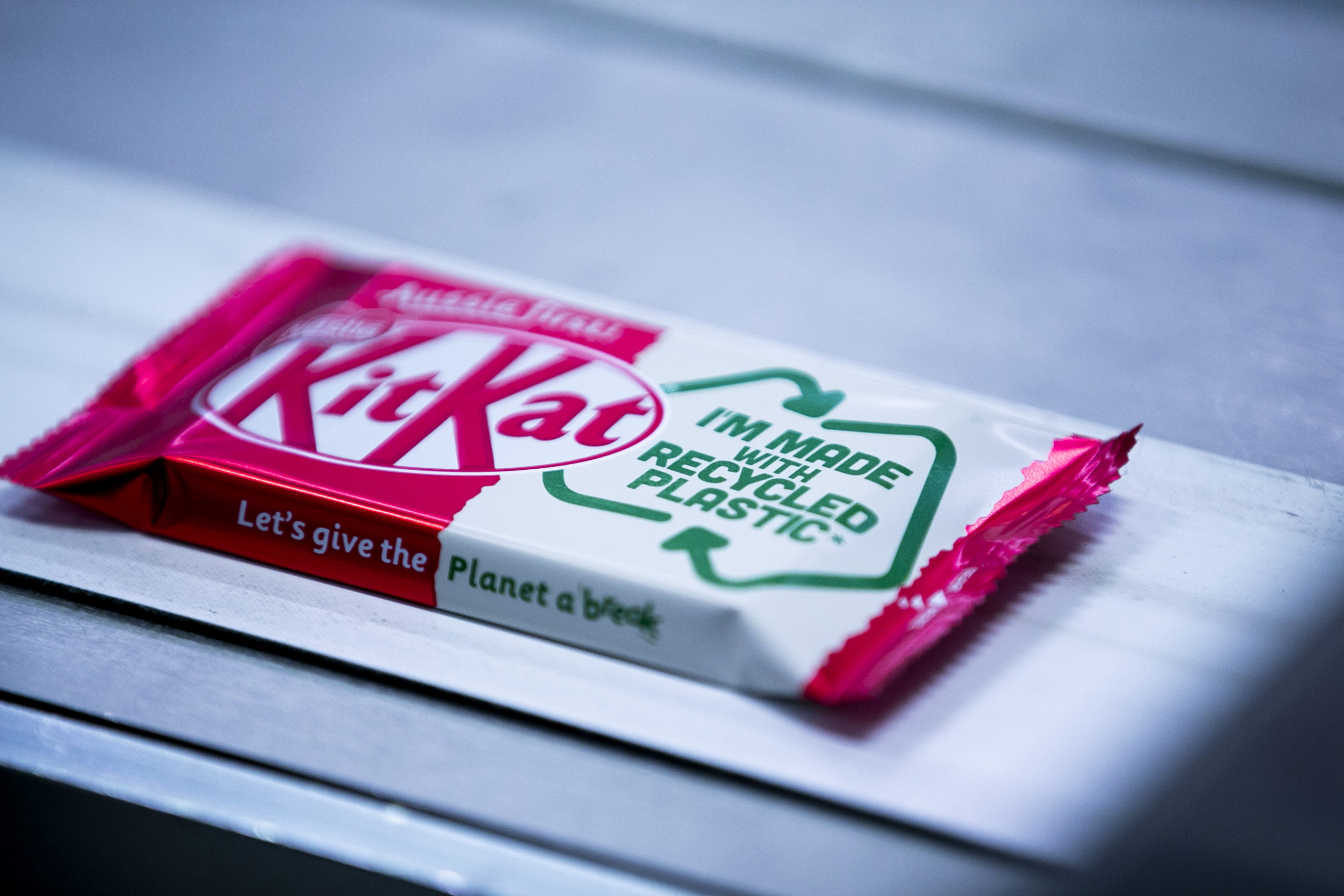
    Nestlé Australia has announced that KitKat will be Australia’s “first” chocolate bar with a wrapper using recycled plastic.

    More than 40 million 45g KitKat bars will be packed in the 30% recycled content wrapper in the next year, cutting virgin plastic use by around 250,000sqm.

    Nestlé Oceania General Manager Chris O’Donnell says the company is on a mission to cut its virgin plastics use by a third by 2025.

    “Introducing recycled content in our packaging will make a significant impact against our 2025 ambition. We’ve implemented a number of changes to reduce our use of virgin plastic but this switch, the first of its kind, will be a huge step change.

    “We know consumers want our packaging to use more recycled content, so we’re delighted to deliver the KitKat 45g bar as Australia’s first food product to be wrapped in soft plastic made with recycled content.

    “For KitKat fans, the news is all good. The 30% recycled plastic wrapper will keep KitKat bars crisp, fresh and delicious, while we focus on giving the planet a break. When they’re finished, they can continue to recycle their wrappers through the REDcycle scheme.”

    The wrapper is also Nestlé’s first soft plastic food wrapper globally to use recycled content.

    “Soft plastic with recycled content that’s suitable for food packaging isn’t widely available anywhere in the world – we’ve been searching high and low to find as much of this material as we can from our suppliers. As more becomes available we’re hoping to increase the amount we can source for our packaging,” Mr O’Donnell said.

    “We’re focussed on less packaging, better packaging and better systems. This is a big step in the right direction but we’re not at our end destination yet. This is a journey of ongoing innovation.

    “In the meantime, we’ve committed to invest CHF 2 billion globally to stimulate the market and lead the shift from virgin plastics to food grade recycled plastics.”

    The 30% food grade recycled plastic wrapper is supplied by Huhtamaki. The recycled content has been allocated using the mass balance approach and certified by ISCC.

  • KitKat collaborates with Byron Bay Cookies

    KitKat collaborates with Byron Bay Cookies

    KitKat has teamed up with Byron Bay cookies to create every dessert lover’s dream. Chocolate and cookies are two of the best sweet snacks in existence. We don’t make the rules.

    And clearly, KitKat is onto the same thing as us because they’ve launched two new flavors inspired by everyone’s favorite café treat, the Byron Bay cookie. It’s every cookie and chocolate lover’s dream.

    Dubbed the “sweet treat collab of the summer”, there are two flavors to choose from – KitKat inspired by Byron Bay Cookies – Milk Choc Chunk and KitKat inspired by Byron Bay Cookies – Triple Choc.

    For cookie lovers, the Milk Choc Chunk will be right up your street. With crisp wafer fingers covered in white chocolate, topped with cookie pieces on a milk chocolate base. For those wanting an extra hit of chocolate, the Triple Choc option has you sorted with milk chocolate-covered chocolate wafer fingers topped with crunchy cookie pieces.

    Upon announcing the launch, Nestlé’s head of marketing – confectionery, Joyce Tan said: “We’re so excited to introduce KitKat brand’s first Australian collaboration to the market, and thrilled that it’s with the iconic and beloved local cookie maker Byron Bay Cookies.

    “We know Aussies will love these tasty additions to the KitKat range, and each bite is sure to transport them to their own beachside Byron Bay break!”

    Meanwhile, Byron Bay Cookie company director, Bill Quayle said: “We are thrilled to be partnering with a global brand like KitKat to create such a delicious collaboration.”

    Both creations are available in a 170g block, selling for $5.00. The Milk Choc Chunk option is also available in a 45g bar ($2.00), and the Triple Choc in a 65g bar ($2.50).

    You can find the new creations in supermarkets and convenience retailers nationally, as well as online, in-store, and within a hamper from KitKat Chocolatory.

  • New KitKat bar made with Aero Mint

    New KitKat bar made with Aero Mint

    Nestle has merged two of its best-known chocolate brands – KitKat and Aero – with the launch of KitKat Chunky Aero Mint.

    The new bar has three layers of crisp wafer, topped with aerated peppermint and covered in milk chocolate.

    Joyce Tan, head of marketing confectionery at Nestle, said the company wanted to create a new flavour and texture combination that would excite consumers.

    “There’s so much love for both of these chocolate bars, so we’re excited for them to become one and take the KitKat choc mint experience to the next level,” said Tan.

    KitKat Chunky Aero Mint is available in grocery and convenience stores nationwide for RRP $2.

  • Handmade KitKat goes on sale in Manila

    Handmade KitKat goes on sale in Manila

    Nestle-owned global chocolate brand KitKat is running a pop-up concept at SM Megamall in Manila until December 25.

    Called KitKat Chocolatory, the concept store allows customers to customize their own KitKat creations by choosing from a range of ingredients including almonds, macadamias and pretzels. It also offers limited edition local flavors such as mango graham, ube, saba and quezo.

    “Filipinos can enjoy their own KitKat break and enjoy exclusive KitKat. This is definitely something that every chocolate lover should not miss,” said Nestle Confectionery CEO Gerard Poa.

    KitKat Chocolatory concept also exists in countries including Japan, Thailand and some parts in Europe.

    First launched in 1935 in the UK, chocolate-covered wafer bar KitKat is present in more than 80 countries today.

  • Nestlé goes pink for Valentine’s Day

    Nestlé goes pink for Valentine’s Day

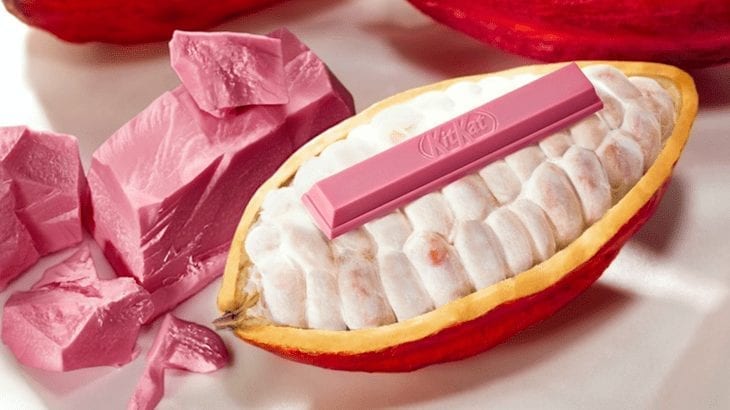
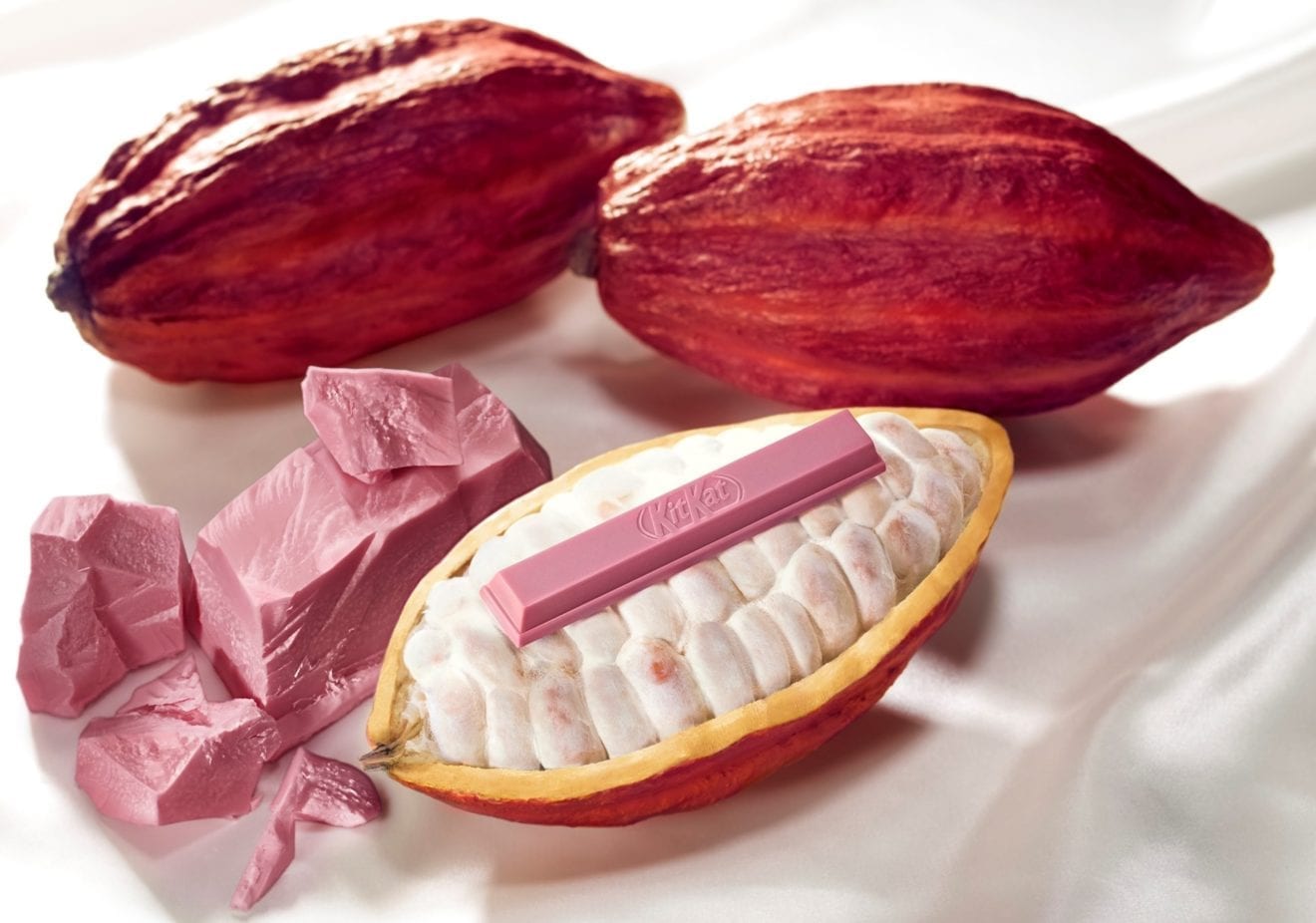
    Nestlé may have struck gold with the release of a new type of Kit Kat made using special “ruby” cacao beans. The new flavor, Kit Kat Chocolatory Sublime Ruby, was launched in select stories in Japan and South Korea on 19 January 19 2018 and shows signs of being a hit.

    The first limited run of 5,000 bars in Japan has sold out and there is even a small black market–or pink market if you prefer–of people reselling the chocolates at a slightly marked up price online.

    In September 2017, the Swiss chocolatier Barry Callebaut announced that they had developed a brand new type of chocolate, using ruby cacoa beans.

    Historically, there have only been three other types of chocolates in existence, according to the company: dark, milk and white. Ruby chocolate is “the fourth chocolate.” The beans have a pinkish red tint and unique taste; they are cultivated in Brazil and the Ivory Coast, among other countries. Chocolate aficionados have eagerly awaited the first ruby chocolates to be released since last summer.

    Nestlé claims to be the first the company to turn the beans into a product. In Japan, the Sublime Ruby Kit Kats were first sold individually at 400 yen ($3.60) for a single package from January 19-25, either at Kit Kat boutique stores or online. From February 1, you can purchase five or seven-piece assorted flavor Valentine’s Day boxes, each including two Ruby Chocolate Kit Kats, that will sell for about $16 and $21 respectively. The main retail shop in Tokyo’s Ginza area will also be offering a Ruby Hot Chocolate set in their cafe, that includes one Ruby Kit Kat, for 1000 yen ($9).

    Kit Kat has been a tremendous success in Japan, partly because the name when pronounced in Japanese, sounds like “Kitto Katsu (きっと勝つ)” which translates as “you (he, she) will surely win.” The company, through clever marketing, convinced Japanese consumers that Kit Kats were auspicious gifts to give to those applying for college or seeking jobs.

    Nestlé has launched over 350 different Kit Kat flavors over the years, including the highly successful green tea version, as well as wasabi, cherry blossoms, beni imo (vermillion potato) and even azuki bean sandwich versions. The firm never has all the flavors available at the same time, but many kinds can be purchased at airports as souvenirs or at boutique Kit Kat stores. It should be noted that some variations have been less successful than others. Last year, Throat Candy (のど飴味) flavored Kit Kats did not appear to do well. These whitish Kit Kats were poorly rated on a website devoted to appraising chocolate snacks, although you might like them, if you like medicinal mint chocolate-chip ice cream, and some ended up on the discount racks of convenience stores.

    The Sublime Ruby edition was designed by a top Japanese pastry chef, Yasuma Takagi, who has spearheaded many Kit Kat creations. Of course, I tried these pinkish delights before writing this. They had a distinct flavor and pleasant sourness that was slightly like a tart berry, but also with a mild sweetness that was reminiscent of milk chocolate.

    Chef Takagi, is quite proud of his work, commenting in press materials: “I am extremely honored to be part of this landmark moment in the history of chocolate, with which I have worked intimately for over thirty years. I have created an especially simple Kit Kat that allows you to enjoy the characteristic fruity fragrance and subtle acidity of Ruby cacao to the fullest. Enjoy wonderful flavors that have never been experienced before.”

    Nestlé suggests that since their new Kit Kat is such a rare and precious chocolate, you should want to give some to that “special person” in your life on Valentine’s Day. It is not a bad sales pitch.

  • Kit Kat Flagship Store to Open Its First Location in Korea

    Kit Kat Flagship Store to Open Its First Location in Korea

    A KitKat flagship store has been launched in Shinsegae’s Gangnam department store in South Korea.

    It has been opened by Swiss food giant Nestle’s Japanese unit, which has developed special flavours for the chocolate wafer snack in collaboration with chef Yasumasa Takagi, who has just rolled out a special ruby version. As well as the original KitKats, the new Seoul store offers such exotic variations as cherry blossom and wasabi.

    “Nestle decided to open the first flagship store to reflect Korean customers’ needs for new and trendy premium chocolate,” says Nestle Korea CEO Erwan Vilfeu.

    Nestle Japan is looking into taking its special flavours to other Asian countries with similar flagship stores.

  • World’s first Ruby KitKat drops in Japan for Valentine’s Day

    World’s first Ruby KitKat drops in Japan for Valentine’s Day

    Forget a diamond ring for Valentine’s Day – this has been trumped by a ruby KitKat chocolate snack by Nestle Japan.

    Its Sublime Ruby KitKat has been unveiled with due ceremony in Tokyo, and has been rolled out in KitKat Chocolatory boutiques across Japan, a further addition to Nestle’s “Made-In-Japan” luxury flavours for the snack.

    It is made from the new Ruby chocolate, which differs in flavour from traditional bitter, milk and white chocolate. Swiss chocolate maker Barry Callebaut spent more than 10 years developing its masterpiece, released in Shanghai in September.

    Made from the ruby cocoa bean, it is described as a new experience with an intense taste and characteristic reddish colour. It is not bitter, milky or sweet, but has a balance between berry fruitiness and smoothness. No berries, flavours or colours are added.

    Chef/patissier Yasumasa Takagi, who has been supervising new KitKat products since 2003, managed to encompass the new chocolate in KitKat form in time for the product to be ready in Japan ahead of Valentine’s Day.

    Units of Sublime Ruby KitKat will be available in limited numbers, with an assortment box to follow including the new product.i

  • How Nestle plans to grow in travel retail

    How Nestle plans to grow in travel retail

    Nestle’s travel retail unit is a US$100m-plus business, which generates the lion’s share of its revenue from confectionery. Stewart Dryburgh, who heads the company’s travel retail business, says the sector, while a small part of the Nestle empire, presents a strong growth avenue for the group. However, Dryburgh acknowledges it is also a competitive and fast-paced channel and those companies that want to cash in need to navigate some unique challenges. Katy Askew spoke to Dryburgh to find out more.

    Nestle generates more than US$100m in annualised revenues through its dedicated travel retail unit, which has gained market share since the world’s largest food maker set it up in 1999.

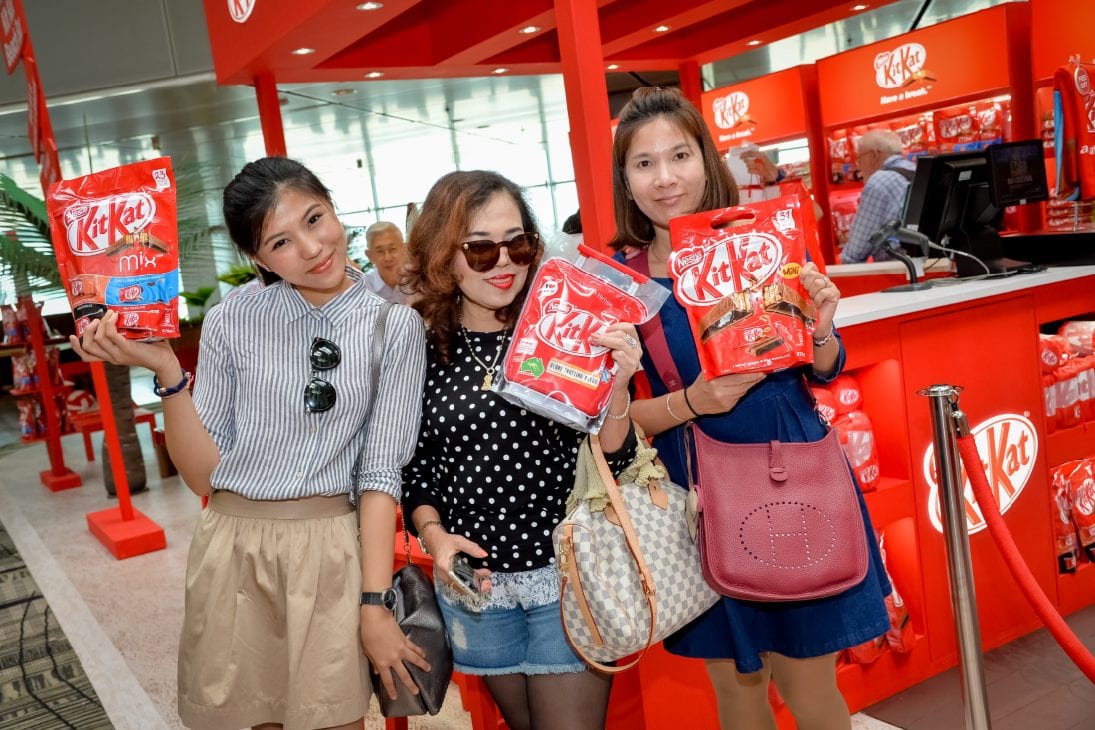
    The KitKat maker is aiming to capitalise on the expansion in international travel retail, which it expects to see as air travel continues to grow. “There were roughly 3.45bn individual airport travellers last year. Roughly split 50-50 between domestic and international. And that is projected in the next ten years to basically double to over 7bn by 2025,” Stewart Dryburgh, the general manager of Nestle’s international travel retail unit, stresses.

    However, this expanding consumer base makes the high-traffic sector a highly competitive one in which to operate. “Most people want to play here that is for sure,” Dryburgh says. “You have got at the moment [almost] 3.5bn people travelling through airports every year. And if you take the top 50 airports – the likes of Heathrow, Frankfurt, Singapore, Dubai, JFK – internationally there are 1bn travellers going through those airports every year. So there is a huge audience there in what is a relatively limited number of locations that they are going through.”

    Standing out in this competitive environment – especially because consumers are not expressly travelling though terminals to shop but as part of their journey – is one of the key challenges for companies operating in the sector.

    “That is a perpetual challenge no matter what channel you are in. A brand has to work hard to understand consumers needs and remain relevant. I have worked in big domestic markets like the UK, in emerging markets like India and I have looked after some of Nestle’s biggest brands including KitKat. No matter where you sit it is a challenge. Our challenge in this particular industry is to engage in a way that is relevant to the moment that consumers are experiencing. And that is a journey.”

    Of course, there are different types of journey, Dryburgh continues. This gives rise to two distinct need-states Nestle wants to meet through its travel retail range. “It may be a business journey and if they are heading out they might want to take a gift to somebody who they are going to meet, or they might be heading back and want to take something to their loved ones. You might be going off for a long weekend and you want something more snacking oriented. There is a mix if you come very specifically into the confectionery world of gifting chocolate and consumption chocolate. The whole world of millennial consumer and the emerging middle-class consumer in Asia and LatAm continually creates opportunities for us. Then it is understanding how they can be relevant.”

    Within the travel retail channel, chocolate and confectionery “comfortably” account for 80% of Nestle’s sales, Dryburgh notes. “The main category focus is chocolate and confectionery for the simple reason that is one of the key categories within the [travel retail] industry,” he observes.

    The pressure cooker atmosphere of the channel means that trends born out in travel retail frequently develop ahead of the winder market, Dryburgh suggests. “I think as a whole this industry has done things that have been pushing the envelope. I think the challenge is always to stay ahead because often what you see being executed in this industry at certain premium price points then becomes translated into domestic markets. The continual challenge is to stay ahead of that curve.”

    Dryburgh points to Nestle’s decision to expand its Cailler brand via the travel retail channel as part of a push to internationalise the 200-year-old brand of premium Swiss chocolate.

    “We have been focusing in particular on Cailler as a first instance. It is one of the strategic priorities that has been called out by the organisation. Cailler is the original Swiss chocolate brand. It is the home of chocolate in Switzerland. It dates back to 1819 and Francois-Louis Cailler who set up the company making chocolate in the factory where we are [still] manufacturing at the foot of the Alps.

    “This is an undiscovered diamond that Nestle has been sitting on. I would say, Lindt & Sprungli have done an outstanding job of driving the premium end of Swiss chocolate without a doubt, I take my hat off to what the team from Lindt have done. However, Nestle is sitting on the first and the original Swiss chocolate. It is a strong brand in Switzerland, but we have not done a good job of internationalising it.”

    This year, Nestle kicked off “activations” first in Swiss airports, Geneva and Zurich. The company then piloted the brand in Dubai and Singapore, the “two big hub airports heading east”. Dryburgh says this roll out has gone “extremely well”. Marketing has included virtual reality point of sale activities to communicate the brand’s heritage and build a rapport with consumers.

    Rolling out the brand to travel retail is a “premier example” of how Nestle’s travel retail business works to add value to the industry, Dryburgh says. “The way you add value is giving consumers a reason to buy because they are going to get something they can’t get at home. That is one of the things that people look for when they are travelling, part of the experience.”

    Ultimately, Nestle does plan to broaden Cailler’s base, but the company does not intend to roll the brand out in traditional retail channels. “We are going to go high-end with this particular brand. I think the focus is very much on leveraging the travel retail channel as a spearhead in giving consumers the chance to engage with the brand in the first place and then encouraging them out.”

    While confectionery sales dominate Nestle’s travel retail sales, Dryburgh says the trend-setting nature of the sector and evolving consumer demand mean in the longer term the company is likely to capitalise on opportunities to exploit other categories.

    “You will be aware of Nestle’s journey in the direction of health science, delivering nutrition via food and health benefits via food, which is something that has historically always been part of what food brings you. Over the centuries people have understood the more holistic benefits that food can bring when consumed in the right way. That is also where our company is heading. For the future, [our travel retail business] tends to be far broader than confectionery and it will be far broader than that as consumer needs change with ageing populations. In the short term it is still going to focus on confectionery,” he says.

    Nestle is also taking advantage of some niche opportunities in travel retail that are created by local conditions, Dryburgh continues. For example, the company has developed “interesting” business selling milk powders in the Middle East.

    The company spotted an opportunity to cater to “blue collar workers” who have come from the Indian sub-continent to places like Dubai as part of the city’s construction boom. “These individuals have a once a year trip home and the opportunity to sell them milk powder was a very interesting one… What we discovered along with the airport authority was the opportunity to sell a relatively bulky, relatively heavy product like 2 kgs of milk powder in the airport duty-free store. The reason the consumer wanted to buy it there was because they didn’t have to put it in their checked luggage and they could carry it on the plane. It is a very simple little story but it is a hugely successful business. And that is about understanding your local consumer and local needs. That is something that is relatively unique to the Middle East.”

    While Nestle picks up local opportunities such as this, they are not the “core thread” of the business because it would “create such complexity that it wouldn’t be worth focusing on,” Dryburgh adds.

    Nestle’s focus on international brands, such as KitKat or Cailler, does not mean the company does not tailor its offering to cater to local preferences. “You have to deal with regional taste and you have to understand who is flying where. Often, in the bugger hub airports certain airlines fly through certain terminals… You have to tailor your offering subject to the terminal and the airport. If you have a brand that is a global proposition – like KitKat or Cailler – well that proposition is quite universal it is just a function of how you communicate or engage with consumers around it.”

    Those operating in the travel retail sector face some unique channel-specific challenges. According to Dryburgh, while branded manufacturers still have negotiations around pricing “the environment you work within and also the margin structures” are specific to the channel.

    “This is different because of the nature of the industry. Effectively, the way the industry is set up now, the airport authorities as a general rule of thumb earn around 70% plus of their revenue comes in now from non-aeronautical sources,” Dryburgh explains.

    “The very clever game that the airport authorities play is for the main duty-free store they auction the space off. The retailers come and tender for a five or ten-year contract. But it is a very different world to a domestic supermarket world… retailers either win the tender or they don’t, you are either in or out. That means they have to put a very specific sum of money on the table as a guaranteed payment to the airport on an annualised basis. And therefore they demand extremely high margins from brand owners to be in the stores.

    “The big four categories – tobacco, alcohol, perfumes, cosmetics – they are all offering 80-85% margin that is being earned by the retailer. But the retailer is having to earn that money because they are paying extremely high rental costs to the airport authorities. The airport authorities are the ones making the money, and they are ploughing it back into infrastructure because the whole sector has seen a dramatic growth curve. More people are flying so they have to invest in the infrastructure.”

    Overall, Dryburgh says the underlying growth drivers for travel retail are “extremely positive”. However, the sector does face exposure to “very big peaks and troughs” that track ahead of the economic growth curve.

    “For example, when 9-11 happened people tended to travel a little less and people weren’t shopping. The same when the SARS epidemic hit SE Asia back in 2003. That basically stopped people travelling in Hong Kong, Bangkok, Manilla. The industry collapsed. The Singapore industry collapsed. You can get some significantly negative downturns.

    “You can also get some significantly positive upswings. When the globalisation trend was at its peak you had some more Russians travelling, more Brazilians travelling, more Chinese travelling. There were some extremely positive growth years for the industry. It tends to follow a more exaggerated curve than global GDP growth – you get very strong years and negative years. It is more of a roller coaster in that sense.”

    The Nestle executive concedes this aspect of travel retail makes the business more difficult to manage. “If you have a crystal ball and you know what is coming you can do it very easily. But without one it is not so easy to call what is coming. It is one of the first discretionary spend items that goes. It is a challenging channel because of the peaks and troughs, but it is also part of the fun.”