Retail News CRM

Tag: kobe

  • Rakuten, AWL, and Vissel Kobe Unveil Exciting New Edge AI Initiative

    Rakuten, AWL, and Vissel Kobe Unveil Exciting New Edge AI Initiative

    In a groundbreaking initiative, Rakuten Mobile, AWL, Inc., and Rakuten Vissel Kobe have joined forces under the auspices of the Ministry of Internal Affairs and Communications’ Regional Digital Transformation (DX) Promotion Package Project, managed by the Mitsubishi Research Institute. This collaboration officially kicked off this month with a joint demonstration in Kobe City, signaling a significant step in the integration of cutting-edge technology in Japan’s security landscape.

    Transforming Security with Edge AI

    This project will harness edge artificial intelligence (AI) technology to optimize communication loads in large venues, such as Noevir Stadium Kobe, home to the professional soccer team Vissel Kobe, a proud member of the Rakuten Group. By fusing AWL’s intelligent camera systems, Rakuten Mobile’s robust network infrastructure, and sophisticated AI algorithms, the initiative aims to create a more responsive security environment.

    Aiming for Smart Solutions Amidst Challenges

    The overarching goal is to tackle persistent challenges in the security sector, particularly labor shortages and rising personnel costs. While digital transformation and AI-driven automation offer promising solutions, employing cloud-based AI for surveillance in expansive arenas has proven complex. The sheer volume of video data transmission can overburden communication networks, leading to inflated operational costs and unveiling infrastructural limitations.

    Innovative Demonstrations to Test New Technologies

    This partnership is structured around three innovative demonstration areas. The first involves deploying far-edge devices at surveillance camera locations to conduct real-time risk assessments and analyze video feeds using AI-powered image recognition. These devices will compress video data dynamically into three formats—text, image, and video clip—based on the assessed risk levels and live network congestion feedback from edge servers. These servers will consolidate surveillance data, generating actionable reports for security personnel through a small-scale language model (SLM).

    The second demonstration will put AI’s image recognition capabilities to the test, evaluating its performance in identifying critical incidents such as falls and aggressive behaviors. This robust assessment aims to ensure the reliability of AI in various environmental conditions, with the ambition of developing versatile applications that can adapt to the security needs of different venues.

    In the final demonstration, the project aims to pioneer portable, environment-agnostic security solutions that minimize disruptions to existing communication infrastructures. By merging portable camera systems with integrated AI processing and mobile network technologies, the initiative seeks to create adaptable security applications for a spectrum of environments—from bustling event venues and amusement parks to transportation hubs and retail stores, potentially even in rural settings.

    Set to span from June 2025 to January 2026, this collaboration aims to significantly enhance the safety and security of communities across Japan, marking a bold stride in the practical applications of AI and innovative network solutions. After all, in the realm of technology, a secure future isn’t just closer—it’s right on the horizon.

    Questions & Answers

    How will this collaboration improve security in large venues?
    The collaboration aims to enhance security by utilizing edge AI to optimize communication loads and conduct real-time risk assessments, making surveillance systems more responsive and efficient.

    What are the three demonstration areas of the project?
    The project is structured around real-time risk assessment with intelligent cameras, evaluating AI’s reliability in recognizing critical incidents, and developing portable security solutions that reduce the impact on existing communications infrastructure.

    How long will the project run?
    The initiative is scheduled to run from June 2025 to January 2026, seeking to advance community safety through innovative AI applications.
  • Fred Segal opens Kobe store

    Fred Segal opens Kobe store

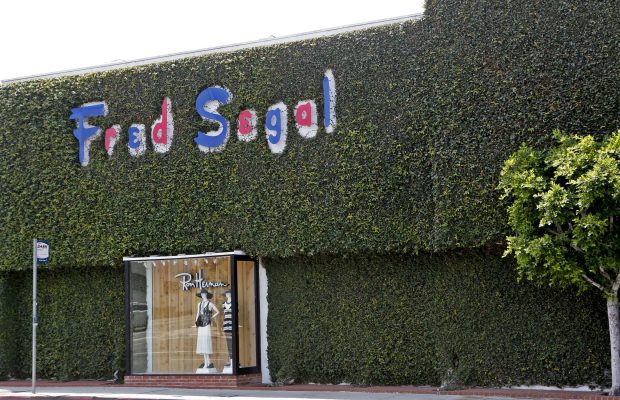
    American fashion retailer Fred Segal has opened its third store in Kobe, expanding its footprint in Japan.

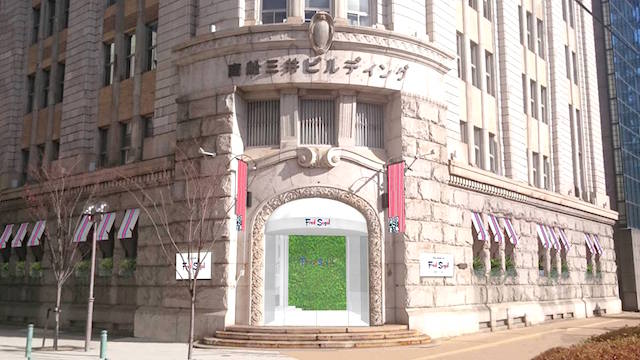
    Spread over the first and second floors of a Daimaru affiliated shop in Shosen Mitsui Building, Kyu-kyoryuchi area, the 1175 sqm store features an all-white interior.

    Fred Segal Japan Kobe 1

    Fred Segal brings exclusive lines from the US such as SMN jeans, Jaguar Design shirts, Delfina Balda skirt and tops, Thomas Wylde swimwear and scarves, and Sigerson Morrison shoes.

    Brands such as LA’s Atelier & Repairs, Buaiso are displayed in the “Sunset” showroom along with “La Cienega” VIP salon.

    Fred Segal Japan Kobe 2

    The store’s second floor offers a new dining concept called The Cellar at Fred Segal with a wine bar and restaurant featuring more than 200 varieties of California wine and cuisine.

    The Cellar mirrors the experiential retail trend with a focus on dining, and California flavours specifically, which, like its fashion, is considered an enviable novelty in Asia.

  • Hong Kong gets early taste of Hanwoo, Korean beef that rivals Kobe

    Hong Kong gets early taste of Hanwoo, Korean beef that rivals Kobe

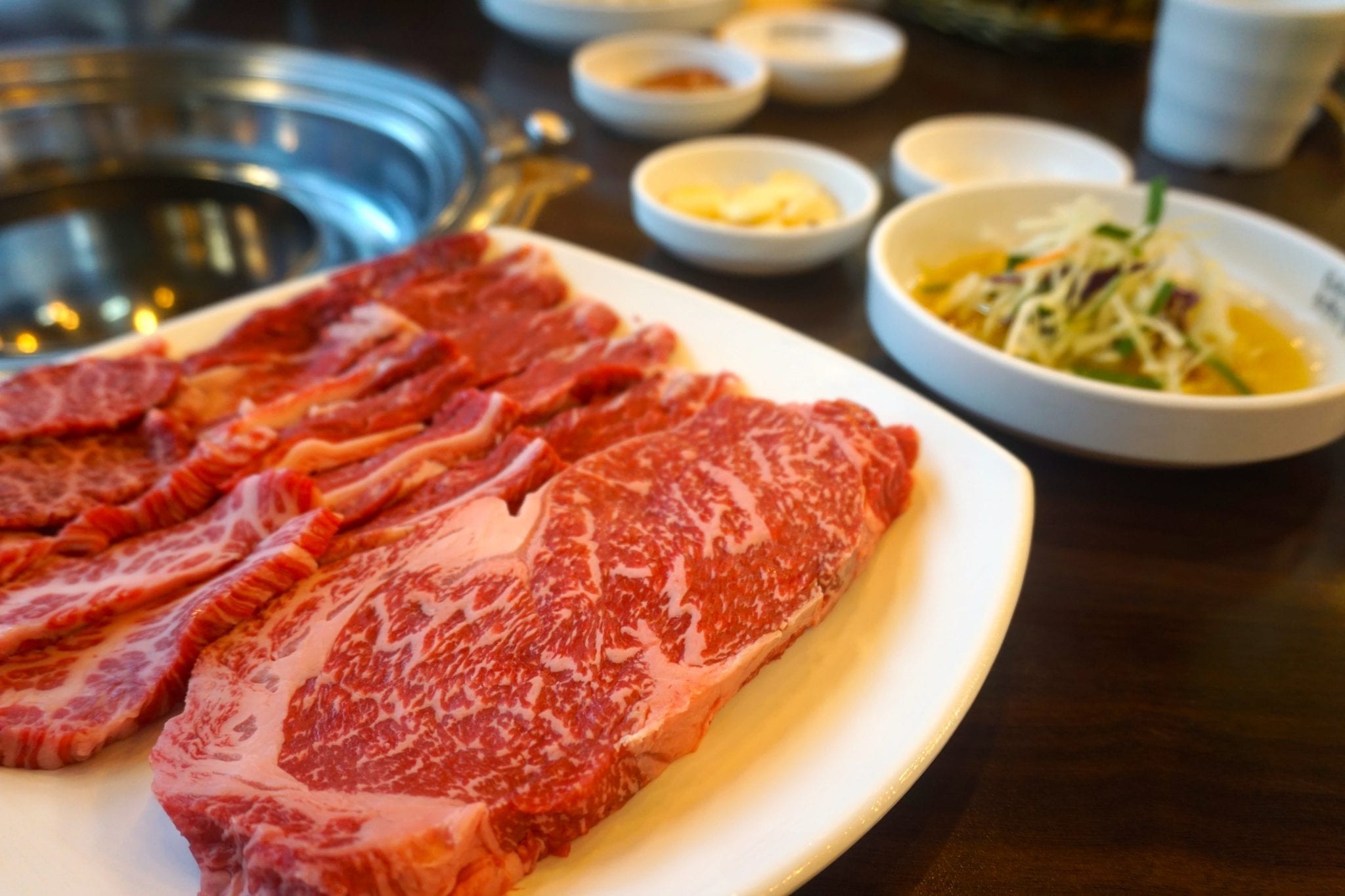
    Since late last year, premium Korean beef, called Hanwoo, has been making its way onto menus in some Hong Kong restaurants, as the city is one of the first places allowed to import it. Hanwoo refers to cattle indigenous to Korea which are raised only in the country, unlike wagyu (Japanese beef), which is bred in countries outside Japan, including Australia and the United States.

    One of its biggest fans is Korean-American chef Judy Joo, whose restaurant Jinjuu in Lan Kwai Fong was one of the first in Hong Kong to serve it.

    “It’s similar to Kobe beef and wagyu, and there are different types of Hanwoo, depending on which farm you go to,” she says. “It’s basically coveted for its high marbling. Wagyu and Hanwoo of the same grade look similar. But Hanwoo has a rich texture and is deeply marbled so it has a sweeter taste.”

    She has visited farms that raise Hanwoo cattle, and reports the animals are “raised like humans”. “Some farmers give them beer,” Joo adds.

    Each farmer has his own secret recipe for the cattle’s feed mixture, which for the most part is made up of barley and mixed grains. Joo says many farmers include fermented pine needles in the feed.

    “It’s a healthy way for the cattle to get probiotics so they don’t need hormones,” she explains. “It’s a more organic way to raise them, and they don’t need to inject as much medicine so they are more healthy.”

    In addition to the organic approach to feeding Hanwoo cattle, Joo says they are free-range, grazing on grass, though there isn’t much land for pasture, as 70 per cent of Korea’s geography is mountainous. Joo says the central and southern parts of Korea are where cattle farms are located, with each one typically raising about 40 cattle at a time.

    She says the best cuts of Hanwoo beef are rib-eye, fillet and sirloin, and adds it can be more expensive than wagyu. Her restaurant recently introduced steak boards featuring Hanwoo and USDA beef that diners can cook on sizzling hot stones. The 200-gram marinated sirloin bulgogi is HK$680 and is grade 9, the highest quality available.

    But when it comes to taste, the chef-owner says it’s about personal preference. “Hanwoo beef is very popular in Korea and people can’t get enough of it. You just need to try it.”

    Elite Fresh Food Company is the first firm in Hong Kong to import Hanwoo beef. Associate director Andrew Lee Chi-ho says the company was in talks with officials in Korea for more than two years before it was allowed to bring the first shipment into Hong Kong last December.

    “It’s a very special breed because it takes a long time to get consistent cattle,” he explains. “It takes five to 10 generations, 15 to 30 years, to get consistent marbling, flavour and good structure.”

    Lee says until recently Korean beef was rarely exported because there is so much demand for it domestically. As a result, Hong Kong importers like himself have to pay a premium to buy Hanwoo beef.

    We can only get the parts that don’t sell well in Korea … But this works out for the Hong Kong market because those cuts are popular here

    Andrew Lee

    “We can only get the parts that don’t sell well in Korea [where they prefer short ribs], like rib-eye and sirloin. But this works out for the Hong Kong market because those cuts are popular here.”

    He says the cost of Hanwoo beef is about the same as Japanese-raised wagyu, selling at about HK$240 per 100 grams retail. When it comes to taste, Lee also seems partial to Korean beef.

    “They are two different products. Wagyu has highly intense marbling that is very fatty and melts in the mouth, but is oily and lacks a strong beef flavour. Hanwoo is very tender, has good marbling and has more beef flavour. It also has a wider application for other cuisines because of this,” Lee explains.

    For example, steaks are usually grilled to medium rare or medium for optimum taste. But Lee claims Hanwoo beef can even be cooked well done and it still tastes good. “Wagyu beef has a ratio of 70 per cent fat and 30 per cent meat, whereas with Hanwoo it’s about 50-50 or 60-40. American beef is more lean, with a maximum of 15 to 20 per cent fat.”

    Lee reports Elite Fresh Food’s first shipment of Hanwoo beef to Hong Kong totalled 700kg. Now it ships twice a month, bringing in 1.5 tonnes to 1.7 tonnes a month. It’s not a lot when you compare it to the seven to nine tonnes of wagyu the company imports each month.

    The Steak House Winebar + Grill at the InterContinental Hong Kong recently featured Hanwoo beef on its menu. Restaurant manager Franco Leung Wai-keung agrees with Lee’s assessment of Korean beef, saying that when the rib-eye or striploin is chargrilled, the fat drips off and tastes less oily than wagyu.

    “It’s in between wagyu [grade] A5 and US beef, but they don’t have as strong a beef taste as Hanwoo,” he says.

    Leung says overall feedback during a recent two-month promotion was mostly positive. He says the restaurant is already planning to put the premium Korean beef back on the menu soon.

    “They taste the quality,” he reports, adding Hanwoo is best complemented with more acidic Italian or Spanish wines.

    At the nearby Oyster & Wine Bar at the Sheraton Hong Kong Hotel & Towers, chef de cuisine Oscar Chow Kwok-ho says he first tried Hanwoo on a trip to Korea two years ago during a cooking competition.

    Chow says locals took him to a store that served the premium beef and he was deeply impressed by the taste and texture. He finally managed to get Hanwoo on the menu in February, and diners can have a starter of Hanwoo beef carpaccio, then a main course of either chargrilled sirloin or rib-eye.

    He reports that his guests enjoyed the Korean beef, as it is rare in the Hong Kong market. He says the price in the restaurant is reasonable when compared to other premium beef (HK$1,100 for Hanwoo versus HK$1,300 for wagyu).

    Six places in Hong Kong to get your hands on Hanwoo beef

    Oyster & Wine Bar

    18/F, Sheraton Hong Kong Hotel & Towers, 20 Nathan Road, Tsim Sha Tsui, tel: 2369 1111 ext 3145

    Mr Steak Café

    Shop 702, 7/F, New Town Plaza Phase 1, 18 Sha Tin Centre Street, Sha Tin, tel: 2691 6263

    Shop G03A, Maritime Square, 33 Tsing King Road, Tsing Yi, tel: 2449 9945

    Myung Ga

    Shop 2702, 27/F, iSquare, 63 Nathan Road, Tsim Sha Tsui, tel: 2369 1177

    Shop 1, 13/F, World Trade Centre, 280 Gloucester Road, Causeway Bay, tel: 2882 5056

    Jinjuu

    UG/F, California Tower, 32 D’Aguilar Street, Lan Kwai Fong, tel: 3755 4868