Tag: koea

  • South Korea set to ban Google, Apple in-app payment dominance

    South Korea set to ban Google, Apple in-app payment dominance

    South Korea is likely to bar Google and Apple from requiring software developers to use their payment systems, effectively stopping them from charging commissions on in-app purchases, the first such curbs on the tech companies by a major economy.

    An amendment of the Telecommunications Business Act, dubbed the “Anti-Google law,” that takes aim at app store operators with dominant market positions, is being considered by lawmakers in South Korea, who have pushed the issue of the commission structure since mid-2020.

    In a statement, Apple said the bill “will put users who purchase digital goods from other sources at risk of fraud, undermine their privacy protections, make it difficult to manage their purchases.”

    The iPhone maker said it believes “user trust in App Store purchases will decrease as a result of this proposal — leading to fewer opportunities for the over 482,000 registered developers in Korea who have earned more than KRW8.55 trillion to date with Apple.”

    Adam Hodge, the spokesman for the U.S. Trade Representative’s office, said U.S. officials were still considering how to balance the views of the U.S. tech companies with the Biden administration’s push to increase competition in the industry.

    “We are engaging a range of stakeholders to gather facts as legislation is considered in Korea, recognizing the need to distinguish between discrimination against American companies and promoting competition,” Hodge said.

    Both Apple and Google have faced global criticism because they require software developers using their app stores to use proprietary in-app payment systems that charge commissions of up to 30% on in-app purchases.

    “For gaming apps, Google has been forcing app developers to use its own payment system … and it wants to expand its policy to other apps like music or webtoon,” said Kwon Se-hwa, a general manager at the Korea Internet Corporations Association, a nonprofit group representing Korean IT firms.

    “If the new bill becomes the law, developers will have options to use other independent payment systems,” Kwon said.

    Naomi Wilson, vice president of policy for Asia at the Information Technology Industry Council, a trade group that includes Apple and Google, said the legislation would violate South Korea’s multilateral and bilateral trade commitments.

    “If enacted, the bill would present challenges both for app developers and app stores seeking to do business in the Korean market,” she said, urging Korean legislators to re-examine the obligations for app markets and ensure they do not disproportionately affect U.S. companies.

    The European Union last year proposed the Digital Markets Act, taking aim at app store commissions. The rules are designed to affect large companies, but some European lawmakers are in favor of tightening them to specifically target American technology giants.

    Earlier this month in the United States, a bipartisan trio of senators introduced a bill that would rein in app stores of companies that they said exert too much market control, including Apple and Google.

    In South Korea, the home market of Android phone maker Samsung Electronics, Google Play Store earned revenue of nearly 6 trillion won ($5.15 billion) in 2019, according to a government report published last year.

    Earlier this year, Google said it would lower the service fee it charges developers on its app store from 30% to 15% on the first $1 million they earn in revenue in a year. Apple has made similar moves.

    For Apple too, commissions from in-app purchases are a key part of its $53.8 billion services business and are a major expense for some app developers.

    In May, an antitrust lawsuit filed by the maker of the popular game Fortnite against Apple revealed that the game maker paid $100 million in commissions to Apple over two years.
  • South Korean department stores look to VIPs as sales slide

    South Korean department stores look to VIPs as sales slide

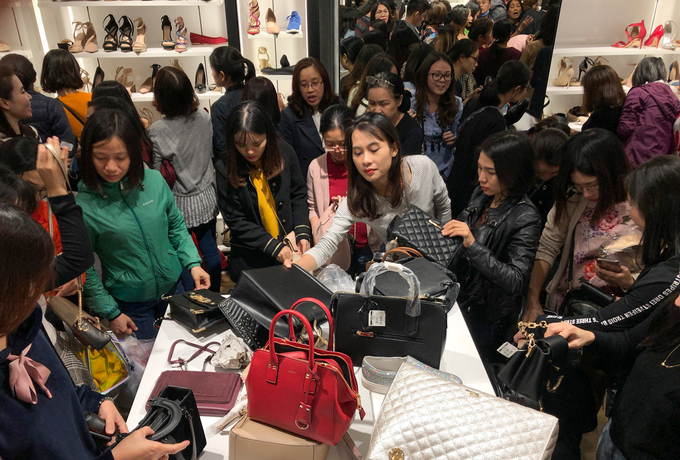
    South Korean department stores have launched an all-out effort to secure VIP customers who spend more than ordinary customers.

    Department stores have suffered fallout from the surge in popularity of online shopping malls for years, but sales have come under further pressure with the coronavirus outbreak.

    Sales at Lotte Department Store from March 1 to 22 decreased by 37.8 percent compared to the same period last year.

    At the height of the pandemic, and under the burden of its economic consequences, the top priority for South Korean department stores is to secure VIP customers.

    While VIP customers at the Galleria Department Store account for only 10 percent of all customers, their consumption amounts to 60 percent of sales.

    According to Shinsegae Department Store, the number of VIP visits last month was 2.5 times that of regular customers.

    Even when the number of visits by regular customers dropped by half after the Covid-19 outbreak, the number of VIP customers dropped by only about 20 percent.

    Managing loyal VIP customers and securing more big players in the future is a matter directly related to a store’s survival.

    This is why Lotte Department Store made changes to its VIP system. Under the old scheme, customers had to spend 20 million won (US$16,400) per year to qualify for the lowest level VIP program, as part of what was a four-level system.

    However, Lotte recently added another lower-level program to expand the scope of its VIP offerings.

    Meanwhile, Galleria Department Store, unveiled the largest VIP lounge in South Korea on the 12th floor of its newly opened Gwanggyo branch in Suwon, south of Seoul.

    VIP lounges in South Korean department stores have typically been places for customers who spend tens of millions of won a year. However, at the Gwanggyo branch, customers who spend 5 million won per year can enjoy the VIP lounge.

    “The fact that VIP thresholds have been lowered is indicative of a sales strategy to secure loyal customers by providing better services to more customers,” said a source in the department store industry.

  • Isetan Mitsukoshi closing down Ebisu department store

    Isetan Mitsukoshi closing down Ebisu department store

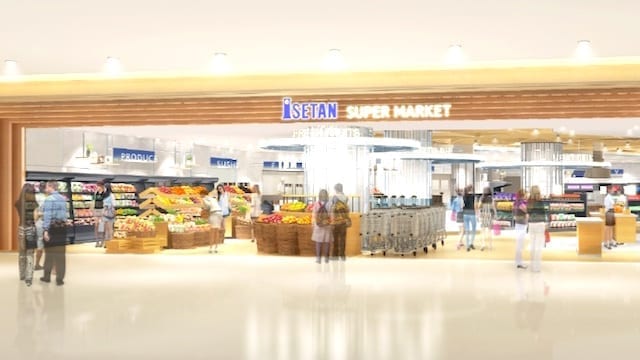
    Isetan Mitsukoshi is to close its 26-year-old Ebisu department store next year after failing to turn around mounting losses.

    The downtown Tokyo store will close in March or April and the company will redeploy all of its staff to other stores.

    The closure is the latest in a long string for the troubled retailer which since 2008 has reduced its network from 29 to 21. With a stagnant economy and Japan’s aging population, many large-scale retailers are finding it tough to maintain growth and some are looking offshore for opportunities.

    The company has spent two years progressively refurbishing the 18,000sqm Ebisu Mitsukoshi department store, with a special focus on its food and cosmetics departments. But the changes failed to draw enough customers to make the store viable.

    When it opened at the Yebisu Garden Place commercial center in downtown Tokyo, the store was expected to tap into a large catchment of nearby condominium residents. However, since the late 1990s, other retail developments have opened nearby, drawing customers away.

    News of the closure was broken by the Nikkei Asian Review, which says the board reached a decision this week and a formal announcement will be made by the end of this month.

    Negotiations over an orderly exit from the space have been underway for the last two years.

    “The facility has likely posted several million dollars in operating losses a year for the last two to three years,” Nikkei reported.

  • South Korea’s Crispy Chicken n’ Tomato expands in Japan

    South Korea’s Crispy Chicken n’ Tomato expands in Japan

    South Korean chicken chain Crispy Chicken n’ Tomato has expanded its retail network into Tokyo, opening 10 stores in the city this month.

    Besides selling at stores, Crispy Chicken n’ Tomato has also partnered with UberEats to offer “sharing brand service” which allows one store on UberEats to bear two brands at the same time.

    The company introduces this type of business as unlike franchises, owners do not need to change interiors, uniforms, equipment or their existing menu.

    Crispy Chicken n’ Tomato’s operator, E-mate Co, said food-delivery sales are increasing significantly in a local restaurant market that has traditionally suffered slow sales growth for various reasons.

    “We are looking for restaurant partners and agencies that want to secure new profits”, said a spokesperson.

  • Korea’s largest retailers forced to think about delivery services

    Korea’s largest retailers forced to think about delivery services

    South Korea’s largest retailers are having to invest in logistics to cope with rising online spending and personalized delivery services.

    South Korean online shopping malls Coupang and Market Kurly have led the paradigm shift in the delivery industry after introducing the early morning delivery service, which has led many to adjust to the new and more convenient ways to purchase goods.

    Large brick-and-mortar retailers can no longer wait for the customers to visit their store.

    Homeplus, a South Korean hypermarket chain operator, said this week it has opened two fulfillment centers, located in Anyang and Suwon, Gyeonggi Province to provide better online delivery services.

    In a 6600sqm logistics center, pickers collect products in a tray to ship them for online orders. A Digital Picking System informs the picker on which tray to use, where the product is located, and the final results of the picking process.

    Homeplus plans to improve 140 stores across the country with enhanced capabilities for online shopping and delivery by 2021.

    SSG.com, Shinsegae Group’s online marketplace, currently runs NE.O, logistics centers for online shopping located in Yongin and Gimpo. NE.O will open its third center in Gimpo later this year.

    SSG.com is also in charge of receiving orders at E-mart’s picking and packing centers as part of a two-track strategy.

    Lotte Mart plans to expand its logistics centers for online shopping to meet the rising demand from the online community.

    Lotte’s signature delivery service is same-day nighttime delivery service. If a customer places an order before 8pm, the product will be delivered before midnight on the same day.

    As such, large offline retailers are now in competition over expanding logistics centers for online shopping, which may turn out to be the only way to outlive the ‘delivery war.’

    But for South Korea’s largest retailers, building separate logistics centers for online shopping may also provide stores with a wider leeway since offline malls are subject to various restrictions, including mandatory business holidays.

  • SK Telecom using quantum cryptography for 5G security

    SK Telecom using quantum cryptography for 5G security

    South Korean mobile carrier SK Telecom said it will use quantum cryptography technology to ensure security of its 5G mobile networks.

    The mobile carrier said Monday it has completed applying Quantum Random Number Generator (QRNG) technology of ID Quantique (IDQ), to its 5G subscriber authentication center. The move is designed to prevent hacking and ensure quantum-safe security.

    “The subscriber authentication process is the first and essential step in verifying a mobile device user before he/she is granted access to any voice and video data service, SMS, etc,” SK Telecom said in a statement.

    “Security in this process is crucial since the leakage of authentication key value can lead to serious crimes such as eavesdropping and hacking.”

    In February 2018, SK Telecom invested $65 million into IDQ to accelerate development of quantum technologies for the IoT and telecoms markets.

    SKT plans to expand the use of QRNG in its long-term evolution (LTE) networks in April.

    The mobile carrier will also strengthen security further by applying IDQ’s quantum key distribution (QKD) technology to its 5G and LTE networks between Seoul and Daejeon – the area which has highest mobile data traffic in the country- next month.

    QKD provides cryptographic security based on the laws of quantum mechanics. It enables two parties to produce a shared random secret key known only to them, which can then be used to encrypt and decrypt messages, the mobile carrier noted.

    “As security emerges as one of the most important issues in the 5G era, SK Telecom is determined to provide the most secure 5G network and focus on expanding the ecosystem by developing quantum cryptography technologies,” SK Telecom CTO Park Jin-hyo said.

    SKT will further enhance the safety and security of its mobile networks by expanding the application of quantum cryptography technologies by stages, Park added.

  • What’s behind Style Nanda’s success?

    What’s behind Style Nanda’s success?

    When Style Nanda announced last month that French beauty giant L’Oreal will be snapping up a majority stake, it sent shockwaves across the industry.

    Sure, the company was doing fabulously well and had created quite a stir with its success, but then it was soon forgotten — although not by investors — before being lurched back into the spotlight with the latest news.

    Style Nanda was established in 2005 amid a boom of boutique-sized internet fashion businesses. Out of the throng of budget fashion shopping websites — most of whom sold products they bought wholesale from Dongdaemun fashion market — Style Nanda stood out. Below are the three reasons why.

    1. My way or the highway 

    Style Nanda founder Kim So-hee had a nickname in Korea: Bold Lady. She earned it due to her preference for bold colors and styles. Kim is also famous for her brutal honesty, which became evident when she refused to remove the tags off her Dongdaemun goods to hide their origin. She said she didn’t mind because she was confident about her merchandising choice. She also didn’t want to lie to her customers.

    A spokesperson for cafe24, which first provided a sales platform for Style Nanda, put it this way: “Style Nanda successfully formed its own unique style appealing to younger customers. That’s Style Nanda’s core competitiveness.”

    2. Bravo Hallyu 

    Style Nanda also benefited from the popularity of K-pop and Korean dramas when celebrities began to don Style Nanda items on air.

    “It was a trickle-down effect, and Style Nanda definitely benefited from it,” Seo Yong-ku, a professor of business management at Seoul’s Sookmyung University said.

    Whenever anyone famous appeared wearing Style Nanda items, it was cheap, instant promotion. Later on, Style Nanda paid celebrities on popular dramas to promote stuff to an even wider audience.

    3. She stayed hungry, stayed stupid 

    Style Nanda never settled, and the present was never enough.

    After successfully launching the company’s cosmetics brand 3CE, it launched Speak Undervoice, a new brand selling limited products personally selected by the founder.

    Style Nanda was also constantly trying out new marketing styles. For instance, it recently used a so-called “product truck” to promote its 3CE brand. Employees handed out free makeup products to university students from a vehicle resembling an ice-cream truck — the first for a cosmetics firm.

    Despite these recipes of success, some industry watchers believe Style Nanda should spend more money on research and development. They say more experts should get onboard to grow the brands, especially those like 3CE — currently designed by Style Nanda and produced by ODM companies like Korea Kolmar and Cosmax.