Tag: Korean Air

  • Korean Air Marks Half a Century of Flying High on the Seoul-Zurich Route: A Legacy of Connection and Culture

    Korean Air Marks Half a Century of Flying High on the Seoul-Zurich Route: A Legacy of Connection and Culture

    Korean Air celebrates its golden jubilee of the Seoul-Zurich route, highlighting half a century of unifying Korea and Switzerland through travel and cultural exchange.

    In honor of this significant achievement, a gala reception was held at Zurich’s Widder Hotel on May 27. About 70 esteemed attendees, including Woosik Shin, the Chargé d’Affaires of the Republic of Korea to Switzerland, Stefan Gross, the Chief Commercial Officer of Zurich Airport, and prominent members from the Swiss-Korean community, graced the occasion. Representing Korean Air were Jungho Choi, the Executive Vice President and Head of Sales, Sukwoo Lee, the Managing Vice President of Passenger Sales, and Euisuk Byun, the Regional Manager for Switzerland.

    Seoul-Zurich Route: A Long-standing Bridge Between Two Nations

    Korean Air pioneered the first direct flight between Korea and Switzerland on July 14, 1976, with the launch of the Seoul-Zurich route. Over half a century, the route has played a crucial role in fostering bilateral ties, and catalyzing business, tourism, and cultural exchanges between the two nations.

    The airline constantly broadens its reach via Zurich, one of its fundamental European entry points. A recent collaboration with Swiss Federal Railways (SBB) has led to the launch of a Rail & Fly service, facilitating seamless post-flight journey to major Swiss cities from Zurich Airport for passengers.

    To elevate the passenger experience, Korean Air plans to deploy its Boeing 787-10 Dreamliner on the Zurich route from June 2, 2026. This aircraft, furnished with the latest Prestige Suites 2.0, promises superior privacy and an exquisite cabin interior inspired by Korean traditional design. The revamped Economy Class cabin also offers improved comfort, with a seat pitch of 32 inches and a recline angle of 120 degrees.

    Looking Ahead: Korean Air’s Commitment to the Future

    With a legacy of five decades of secure operations and customer trust, Korean Air remains dedicated to boosting the Zurich route as an integral fragment of its European network. The airline is unwavering in its commitment to service innovation and network connectivity, with a view to maintaining the route as a pivotal bridge between Korea and Switzerland for many more decades.

    Jungho Choi, Executive Vice President and Head of Sales, emphasized the airline’s steadfast dedication to linking Korea with Europe’s core. He stated, “As we look towards the next 50 years of operations, our focus remains firmly on upholding the highest standards of safety, comfort, and premium service for our customers.”

    Questions & Answers

    What does the Seoul-Zurich route signify for Korean Air?
    The Seoul-Zurich route symbolizes Korean Air’s enduring commitment to establishing a connection between Korea and the heart of Europe.

    What new developments are in store for the Seoul-Zurich route?
    Korean Air plans to introduce its Boeing 787-10 Dreamliner, offering superior privacy and comfort, on the Zurich route from June 2, 2026. The airline also recently launched a Rail & Fly service in collaboration with Swiss Federal Railways.

    How has the Seoul-Zurich route impacted bilateral relations between Korea and Switzerland?
    The Seoul-Zurich route has significantly strengthened bilateral relations and promoted business, tourism, and cultural exchanges between the two nations over the past 50 years.
  • Korean Air to order up to 50 widebody Boeing aircraft

    Korean Air to order up to 50 widebody Boeing aircraft

    Korean Air signed a Memorandum of Understanding with Boeing on July 22 at the Farnborough International Airshow to upgrade and expand its widebody fleet. The airline has announced its intent to procure 20 Boeing 777-9s and 20 Boeing 787-10s with options for 10 more of the largest 787 Dreamliner variant.

    The signing ceremony was attended by Walter Cho, Chairman and CEO of Korean Air, and Stephanie Pope, President and CEO of Boeing Commercial Airplanes.

    The 777-9s and 787-10s, with their capability of long-haul flights to regions such as North America and Europe, are expected to play an important role after Korean Air’s merger with Asiana Airlines.

    The 777-9 is known as the most reliable and efficient airplane in the 777 series. The new carbon-fiber composite wings are longer than the previous 777 family airplanes, enabling the airline to achieve an improved fuel efficiency of more than 10%. With a range of over 13,000 kilometers, the 777-9 can provide direct services to all U.S. destinations from Incheon International Airport. The 777-9 has the longest fuselage in the 777 series, with a typical seating capacity of 400 to 420 seats.

    The 787-10 is the largest variant in the 787 family, capable of carrying 15 percent more passengers and cargo than the 787-9 currently in service. It is also more fuel efficient compared to similar-sized aircraft with reduced carbon emissions of over 20%.

    “The addition of the Boeing 777-9 and 787-10 aircraft marks a significant milestone in our strategic objective to expand and upgrade our fleet,” said Walter Cho, Chairman and CEO of Korean Air. “This investment underscores our commitment to providing a best-in-class flying experience. These new airplanes will elevate passenger comfort and enhance operational efficiency, while significantly reducing carbon emissions, supporting our long-term commitment to sustainable aviation.”

    “We are honored Korean Air has selected two of our largest, most efficient widebody airplanes to add capacity to their global network,” said Stephanie Pope, president and CEO of Boeing Commercial Airplanes. “Boeing airplanes have played an integral role in the growth of Korean Air over the past 50 years, and we are confident the 777X and 787 Dreamliner will support the airline’s long-term sustainability goals and continued growth.”

    With the addition of the Boeing 777-9s and 787-10s, Korean Air plans to have a total of 203 next-generation, eco-friendly aircraft in its fleet by 2034, including 33 A350s, 50 A321neos and 20 Boeing 787-9s.

  • Korean Air selects Air Incheon as preferred bidder of Asiana Airlines’ freighter business

    Korean Air selects Air Incheon as preferred bidder of Asiana Airlines’ freighter business

    Korean Air has selected Air Incheon as the preferred bidder for the sale of Asiana Airlines’ global cargo freighter business. The decision was made at the Board of Directors meeting held on June 17.

    Korean Air selected Air Incheon as the preferred bidder based on several key criteria: the certainty of completing the transaction, the ability to maintain and enhance long-term competitiveness of the air cargo business, and the capability to mobilize funds through a competent consortium.

    Founded in 2012, Air Incheon is Korea’s only all-cargo airline, with operations focused in Asia. Air Incheon is expected to strengthen its competitiveness by utilizing Asiana Airlines’ long-haul network to the Americas and Europe, and fleet of larger cargo aircraft.

    Korean Air plans to sign a framework agreement with Air Incheon in July after agreeing on the contract conditions. The agreement is subject to review by the European Commission.

    “The preferred bidder was selected through a comprehensive evaluation of all factors crucial to the growth of the air cargo industry, a key national industry, while maintaining the existing competitive environment,” said a Korean Air representative. “We are committed to quickly finalizing the sales process through flexible negotiations, and completing the acquisition of Asiana Airlines.”

  • Korean Air wins best airline onboard menu in Global Traveler’s awards

    Korean Air wins best airline onboard menu in Global Traveler’s awards

    Korean Air has received top honors for its food and beverage service from Global Traveler in the magazine’s 2024 Leisure and Lifestyle Travel Awards.

    The carrier won the best airline onboard menu for its first-class cabin, chalking up another win for its catering program. The airline previously won best airline cuisine, among other awards, in Global Traveler’s 2023 Tested Reader Survey awards.

    Depending upon the route and season, the airline offers such menu choices as roasted Chilean sea bass with vermouth sauce, spicy beef short rib stew, spicy buckwheat noodles and traditional Korean bibimbap.

    Global Traveler is a U.S.-based monthly luxury travel magazine and conducts annual surveys in which its online and offline subscribers vote for the best companies in travel-related categories. This is the 12th year the magazine has conducted its leisure travel survey.

    Korean Air’s continued recognition can be attributed to its ongoing investment and focus on service enhancements. Last year, the airline introduced vegan menu options based on traditional Korean temple cuisine. It also has a diverse selection of pre-order meals, including vegetarian, glucose-free, and children’s selections.

    The airline also refined its wine program with the guidance of internationally renowned sommelier Marc Almert and introduced more than 50 new wines to its award-winning collection.

    Korean Air continues to be recognized worldwide for its efforts to enhance customer service. Last year, the airline was awarded a Skytrax 5-star airline rating for the second consecutive time, an APEX 5-star global airline rating for the seventh consecutive year, and named Best Business and First Class Airline in the USA Today 10 Best Readers’ Choice Awards.

  • Korean Air to launch new route to Macau

    Korean Air to launch new route to Macau

    Flights depart from Incheon International Airport at 9:15 pm and arrive at Macau International Airport at 11:55 pm. The return flight departs from Macau International Airport at 1:10 am the next day and arrives at Incheon International Airport at 6:00 am. The flight time is approximately 3 hours and 40 minutes.

    Macau, a special administrative region of China, offers a unique blend of Chinese and Portuguese cultures. With its mild winters, it is considered a great travel destination year round. Visitors can explore exotic streets, historic buildings and the vibrant skyline as well as enjoy many activities such as night bus tours and fountain shows.

    Macau’s proximity to Hong Kong, accessible within an hour by ferry or bus, offers further travel convenience. Korean Air also operates four daily flights between Seoul Incheon and Hong Kong.

    In response to growing travel demand, Korean Air is restoring services and exploring new markets to strengthen its China network. The airline has resumed three weekly flights between Seoul Incheon and Zhangjiajie and four weekly flights between Seoul Incheon and Zhengzhou from April 23 and 24, respectively.

  • Korean Air plans to make 16 trillion won in sales by 2023

    Korean Air plans to make 16 trillion won in sales by 2023

    Korean Air unveiled its mid-term business strategy Tuesday, saying it aims to record 16.2 trillion won ($14.4 billion) in sales by 2023. The goal comes as the airline’s March shareholders’ meeting draws near. Korean Air Chairman Cho Yang-ho’s term at the country’s largest airline ends this year and shareholders will vote on his re-election. To achieve the sales target, it needs to grow by an average 5.1 percent every year. Last year, the airline inked 12.7 trillion won in sales.

    Its operating profit target for 2023 is 1.7 trillion won, about 2.5 times more than last year’s 692.4 billion won.

    The company said it will work to raise the profitability of its business to reach a 10.6 percent profit to sales ratio. Last year, the ratio stood at 5.5 percent. Along with improved profits, the company plans to lower its debt ratio to below 400 percent from last year’s 699 percent.

    To expand sales, Korea’s largest full-service carrier plans to expand routes connecting America and Asia through a joint venture inked with U.S. airline Delta Air Lines last year. The partnership enables the two companies to share revenue, costs, flights and sales networks with antitrust immunity on their trans-Pacific operations.

    The airline also plans to open up new flight routes headed to Europe and Southeast Asia, both growing as popular travel destinations.

    As for its cargo business, the airline plans to bolster its business with emerging markets like Vietnam, India and Central and South America.

    In the aerospace business, the company said it will develop new technologies to build parts for passenger aircraft and start mass producing unmanned aerial vehicles to secure future growth engines.

    This year, Korean Air proposed a target of 13.2 trillion won in revenue and 1 trillion won in operating profits.

  • Korean Air swings to net loss in 2018 from 2017 profit

    Korean Air swings to net loss in 2018 from 2017 profit

    Korean Air Lines said Tuesday it swung to a net loss in 2018 from a year earlier due to hefty foreign-exchange losses. The Korean flag carrier posted a net loss of 167.59 billion won ($150 million), after a net profit of 801.9 billion won a year earlier. As the dollar rose to 1,118.1 won at the end of 2018 from 1,071.4 won at the end of 2017, foreign-exchange translation losses reached 363.6 billion won and it cut into the annual earnings results, the statement said.

    The won’s weakness also drove up net interest costs to 454.8 billion won, up 55.5 billion won from the previous year, it said. Operating profit fell 28 percent to 676.33 billion won last year from 939.78 billion won a year ago. Sales climbed 7.7 percent.

  • Korean Air’s jets get name of East Sea badly wrong

    Korean Air’s jets get name of East Sea badly wrong

    Korean Air, the country’s flag carrier, displayed maps with the “Sea of Japan” aboard some its flights rather than the East Sea, the name supported by the Korean government. The Japanese name of the sea, which is opposed by Korea, was found on a number of passenger-entertainment monitors. According to news reports Sunday, 3-D maps on the displays aboard 787-9 Dreamliner aircraft were found to make the designation.

    Korean Air confirmed Monday that seven of its nine B787-9 planes had the problem. All other aircraft marked the location as the East Sea.

    A spokesman explained that a software upgrade was undertaken to change the maps into 3-D visuals, and that the company failed to notice the wording supplied by the developer.

    “The developer of the 3-D map is a company in the United States,” he said.

    Adjustments to replace the Sea of Japan by the East Sea in the seven aircraft were to be finalized Monday.

    “I was told that the modified version was sent to us today and delivered to the division in charge by 5 p.m,” added the spokesman, saying that the changes would be made by the end of the day.

    He said the company did not know why the other two B787-9 aircraft did not have the same problem.

    The controversy is the result of an ongoing dispute between Korea and Japan over the name of the sea located between the two countries. Both argue that their respective names had been used historically.

    Since South and North Korea first raised objection to the “Sea of Japan” name in 1992, the research on the subject has yielded conflicting conclusions.

    Korean Air received similar criticism in 2012, when its official homepage used the “Sea of Japan” name instead of the East Sea. The problem resulted from the company’s use of the Google Map service.

  • With China business back, Korean Air’s net triples in Q3

    With China business back, Korean Air’s net triples in Q3

    Korean Air’s net profit in the third quarter more than tripled in comparison to last year largely due to increased sales of long-haul flight tickets and a business recovery in China, the company said in an earnings report on Tuesday. The company posted 267.8 billion won ($236 million) in net profit for the quarter that ended in September, more than three times the 75.7 billion won it earned last year when the airline suffered from China’s economic retaliation for the deployment of a U.S. anti-missile system in Korea.

    The airline posted a record 3.4 trillion won in revenue for the quarter, up 9.1 percent year on year. For operating profit, the company posted 392.8 billion won, up 3.7 percent year on year.

    Despite a rise in international oil prices and a deterioration in foreign exchange rates, the company said joint venture operations with Delta Air Lines launched in May contributed to an increase in transfer passengers. General increase in demand for travel in Korea also pulled up sales.

  • Korean Air shifting most of its data to Amazon’s AWS

    Korean Air shifting most of its data to Amazon’s AWS

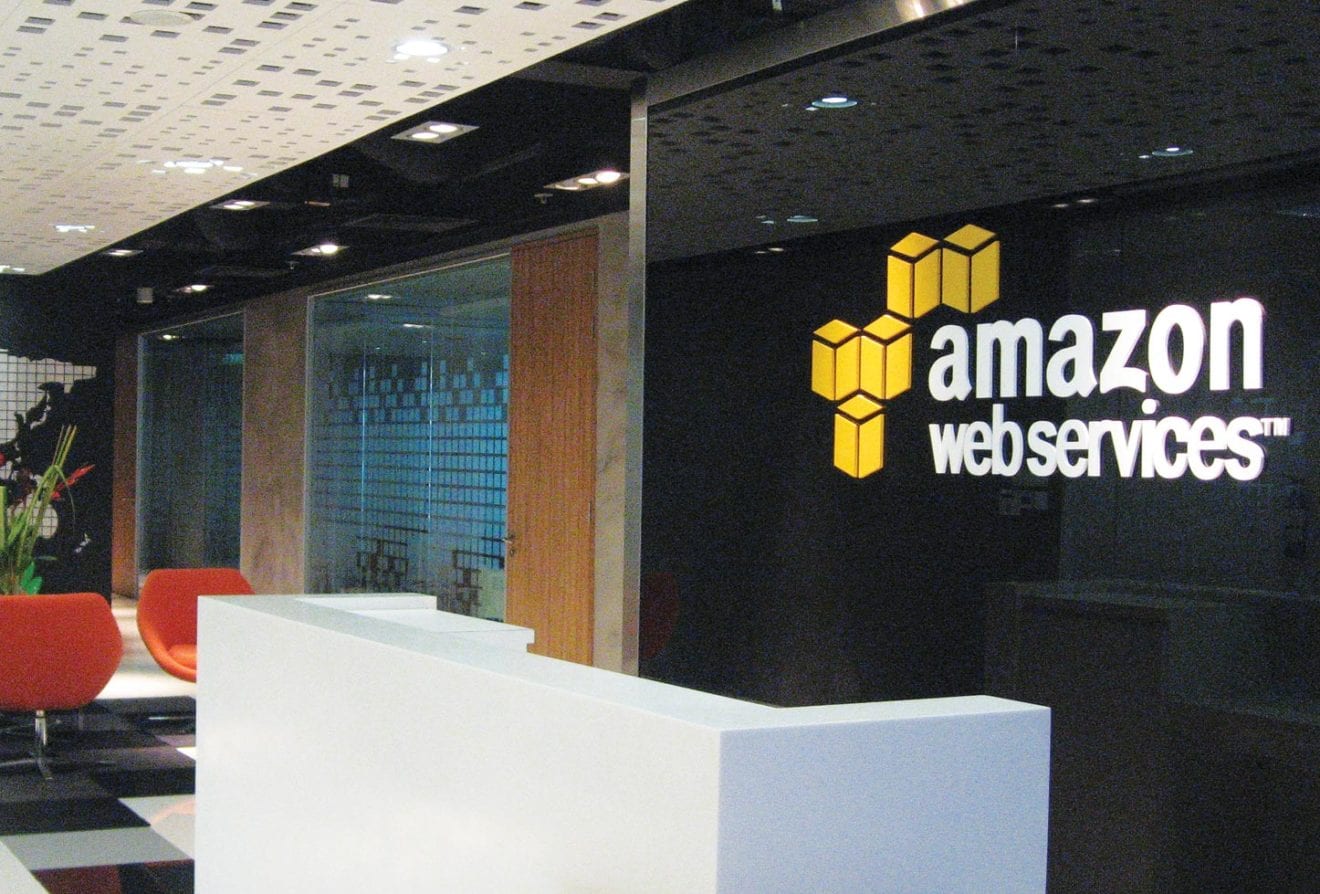
    Korean Air Lines said Tuesday it will transfer most of its data and applications to Amazon’s cloud computing platform as it overhauls its IT infrastructure over the next three years. The planned data migration to Amazon Web Services (AWS) is part of Korean Air’s broader plan to invest 200 billion won ($178 million) over the next 10 years to accelerate the company’s digital innovation and transformation, Korean Air said in a statement.

    “Leveraging cloud technologies means we will be able to provide faster and more efficient services that are tailored to the needs of our customers,” Korean Air President Walter Cho said in the statement.

    Cho, AWS Managing Director Ed Lenta and LG CNS Chief Executive Kim Young-seob signed a data center outsourcing agreement. LG CNS, one of Korea’s leading IT outsourcing providers, will help Korean Air move its data to the AWS system.

  • Korean Air launches new route to Boston with Delta

    Korean Air launches new route to Boston with Delta

    Korean Air Lines, the country’s flag carrier, said Monday it will open a new route to Boston in April next year as part of a joint venture with Delta Air Lines.

    Korean Air plans to use Boeing 787s to provide five flights per week on the Incheon-Boston route, beginning April 12, the company said in a statement.

    Delta Air will allocate its Boeing 777-200ER to serve on the Incheon-Minneapolis route on a daily basis from April 2.

    On May 1, the two airlines launched a joint business that permits Korean passengers to use multiple routes when traveling to the United States by taking flights from either Korean Air or Delta Air.

    The partnership has allowed local travelers to fly on 370 routes to 192 cities in the U.S. since May. Until April, Korean Air customers leaving the country could only enter the United States for travel or business trips at a handfuls of airports.

  • Korean Air brand value plummets following scandal

    Korean Air brand value plummets following scandal

    The brand value of Korean Air fell sharply in the second quarter over a series of allegations involving the family that owns it, an appraisal website showed Sunday.

    The flag carrier’s brand value ranked 36th in the April-June period, down from 11th a quarter earlier, according to Brandstock, a South Korean market research firm that determines the rankings of local brands.

    The decline reflects the intense public criticism directed at Korean Air Chairman Cho Yang-ho’s family over a series of allegations of physical and verbal abuse, as well as smuggling and tax evasion.

    Korean Air’s brand value dropped 39 notches in the quarter following the incident.

    Brandstock said Korean Air’s smaller local rival, Asiana Airlines, saw its brand rank rise to 25th place in the second quarter from 35th place three months earlier.

  • Korean Air hiring flight attendants

    Korean Air hiring flight attendants

    Korean Air’s reputation may be in the gutter due to ongoing investigations into its owner family, but it’s hiring.

    Korea’s largest airline is looking to take on 600 new flight attendants this year, the company said on Tuesday.

    Korean Air began recruiting 200 new flight attendants on Tuesday. The company already hired 200 attendants in the early half of the year, and is currently in the middle of hiring 100 experienced flight attendants.

    Korean Air usually takes on about 500 new flight attendants every year, so this year’s hiring represents a bit of a bump. A company spokesperson said that it increased its hiring to keep up with its expanding flight routes.

    Last year, the company hired only 180 new flight attendants, so it decided to hire more this year.

    Most of the company’s statements in recent months have been in response to allegations against the Cho family, which owns Korean Air.

    A series of investigations into the family began in April, when Korean Air Chairman Cho Yang-ho’s youngest daughter Cho Hyun-min was caught throwing a drink at an advertising executive during a meeting in March. Since then, the airline has been busy responding to complaints rather than promoting its business.

    Korean Air is expecting steep growth in its business this year. It moved to Incheon International Airport’s second terminal, which opened in January, and started a joint venture partnership with U.S. airline Delta in May.

    However, the scandalous stories of the Cho family have dominated coverage of the company. Various family members are under investigation for different charges and allegations including smuggling, tax evasion and unfair trading through affiliates.

    Most recently, Lee Myung-hee, the wife of the company’s chairman, was summoned by the Korea Immigration Service on Monday for about 13 hours of questioning into whether she illegally hired Filipino housekeepers.

    While only ethnic Koreans or immigrants married to Koreans can work as housekeepers in Korea, Lee is accused of making the airline’s branch in the Philippines recruit around 10 housekeepers and dispatch them to Korea, supposedly as Korean Air trainees. According to reports, Lee acknowledged that she hired Filipino housekeepers, but denied that she was involved in their hiring process.

  • Korean Air Charters Flight Directly to Lombok

    Korean Air Charters Flight Directly to Lombok

    Korean Air is set to open a chartered flight from Incheon airport to Lombok, West Nusa Tenggara (NTB), starting on July 29. According to Head of the NTB tourism agency, Lalu Moh Faozal, the South Korean airline has prepared seven flights up to October 9.

    “The flight will carry 200 passengers in each flight from Incheon,” said Faozal on Wednesday, July 12. Australian Jet Star will also open a flight from Sydney, Australia to Lombok.

    South Koreans have been attracted to Lombok ever since a Korean drama series shot an episode in gili Trawangan and several other locations in Lombok.

    Considering that Lombok has successfully grabbed the attention of international tourism community, Faozal urged the people of NTB to improve the quality of several aspects in NTB such as problems of traffic congestion and environmental problems.

    Tourism has been the fourth largest contributor for Indonesia’s economy, devoting 9.3 percent to the national income compared to other national industrial aspects. Tourism also contributes 10 percent of Indonesia’s total gross domestic product (GDP).

    Previously, South Korean ambassador, Taiyoung Cho met with the governor of West nusa Tenggara, Muhammad Zainul Majdi. “Lombok is really popular there,” said Taiyoung Cho. Korean businessmen will be diverted to invest in the property sector.

    Direct flights between Incheon and Lombok by the Korean Air are expected to help improve foreign tourist arrivals in NTB.

  • Korean Air to fly to Lombok Island

    Korean Air to fly to Lombok Island

    The South Korean airline and flag carrier company Korean Air is ready to fly to Lombok Island, West Nusa Tenggara, Indonesia, in July and Aug 2017.

    “The Korean Air will open a charter flight for seven times,” Lombok International Airports General Manager I Gusti Ngurah Ardita stated in Mataram District, the capital of West Nusa Tenggara Province, on Monday.

    Ardita confirmed the information to journalists after a meeting with the Korean Airs Network and Sales General Manager of South East Asia/Oceania, Bae Sang Wook, and Regional Manager of Indonesia Park Kee Hyun in Mataram, Lombok.

    The Gonghang-dong, Gangseo-gu, Seoul-based airline companys aircraft would arrive at the Lombok International Airport (LIA) from July 29 to the end of Aug 2017, Ardita noted.

    “This charter flight is, of course, expected to open a fixed route for Korea-Lomboks flights,” he noted.

    Ardita explained that the arrival of Korean Air to Lombok Island was a result of the last meeting between the LIA and the Korean Air company on April 25, 2017, which was also supported by the regional government and the Tourism Board of West Nusa Tenggara.

    Earlier in a separate interview, West Nusa Tenggara Governor TGH Muhammad Zainul Majdi remarked during a visit by South Korean Ambassador to Indonesia Cho Tai Young and his wife Madame Cho Gye Young that the flight charter from South Korea to Lombok in Aug 2017 could be continued into a regular flight.

    Majdi expected that a regular flight would increase the number of South Korean tourists and ease the investment inflow to West Nusa Tenggara.

    The Indonesian government is hopeful of attaining 20 million foreign tourists annually by 2019 amid concerted efforts to make the archipelago a world-class tourism destination, one of which is in Lombok Island.