Retail News CRM

Tag: korean car

  • Hyundai Motor rejects renewed Gwangju plan

    Hyundai Motor rejects renewed Gwangju plan

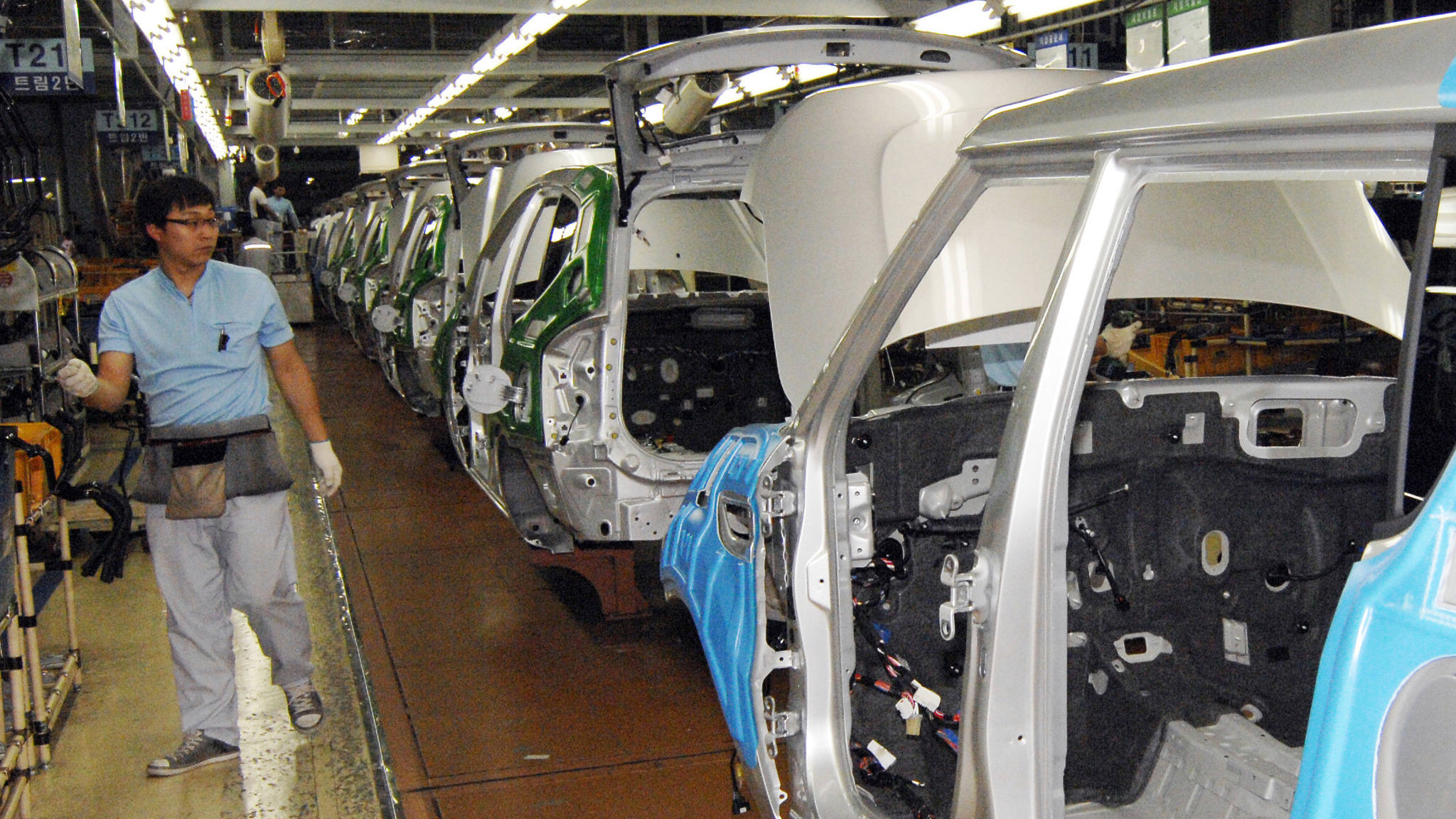
    Hyundai Motor refused a revised plan that removed a restriction on collective wage bargaining at a proposed plant in Gwangju, further complicating plans for the factory. A council with representatives from the local government and area employers, labor unions and citizens on Wednesday agreed to remove a clause from the agreement that would have suspended collective bargaining for about five years at the new joint venture between the Gwangju city government and Hyundai Motor.

    The new company will be hiring workers for a production plant to be built on 628,000 square meters (155 acres) of land in the Bitgreen National Industrial Complex. The venture is the first in Korea to bring government and private industry together in the formation of a new manufacturing facility.

    Union representatives strongly protested the clause, calling it toxic.

    Rather than pushing the clause, the council decided to offer three alternative proposals to Hyundai Motor. The city and the automaker will continue negotiations.

    “Over time, Hyundai Motor and the labor union have retreated in their demands,” said Lee Byung-hoon, Gwangju vice mayor. “But the suspension of the wage bargaining clause was the biggest issue.”

    After the announcement was made, it was Hyundai that refused the proposal.

    “We cannot help but to point out the repeated revisions and backtracking [done by the Gwangju government],” Hyundai said through a statement.

    In the first meeting held at 10:30 a.m., all nine labor representatives, including Yoon Jong-hae, head of the Federation of Korean Trade Union’s Gwangju office, refused to attend in protest of the wage bargaining ban.

    The agreement between Gwangju city and the Korean automaker had included a clause in which wage negotiations were to be suspended until the cumulative production of compact SUVs reached 350,000 units. As Hyundai Motor guaranteed a minimum of 70,000 units a year, the labor union estimated that it would take about five years before the employees at the new plant would be able to negotiate.

    The meeting resumed at 3 p.m., and Yoon joined, raising the number of attendees to 22 out of a possible 28.

    The plant proposal has been under a tight deadline as an agreement needs to be reached before the National Assembly passes the budget. The ruling Democratic Party has announced that it plans to pass next year’s budget soon.

    Meeting the budget deadline is crucial as the city needs government funding to build the necessary infrastructure, including housing that will cost roughly 300 billion won ($269 million).

    The Gwangju plant project, first proposed in June 2014, has generated significant public interest as it could keep manufacturing jobs in Korea and contribute to the revitalization of the regional economy. It would also help ease the burden of high labor costs.

    The plan is for the Gwangju government and Hyundai Motor to create a new joint-venture company. The new Hyundai Motor plant will have the capacity to produce 100,000 compact SUVs a year.

    One of the key factors in this new job creation model is that employees will receive an annual salary of 35 million won, 38 percent of the 92 million won average salaries of Hyundai Motor workers.
  • Kia swings to profit in third quarter after 2017 one-off

    Kia swings to profit in third quarter after 2017 one-off

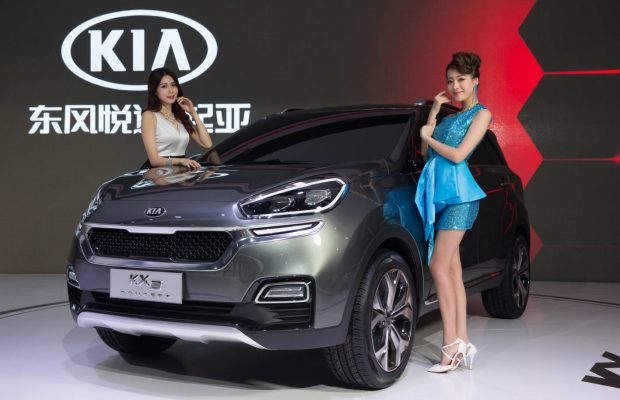
    Kia Motors Friday reported a swing to profit in the third quarter from a loss a year earlier. For the three months ending Sept. 30, Kia posted a net profit of 297.74 billion won ($262 million) from a net loss of 291.77 billion won a year ago, the company said in a statement.

    “In the third quarter of 2017, a one-off cost of 864.1 billion won was reflected in the bottom line when a local court ordered the company to retroactively make an overdue payment to employees,” a company spokesman said.

    According to the court ruling issued in August last year, regular bonuses are to be included in the “ordinary wage” used as the basis for calculating overtime, severance and other payments.

    The won’s strength against the dollar and currencies in emerging markets also weighed on the quarterly net results, the company said.

    Kia reported an operating profit of 117.28 billion won in the third quarter from an operating loss of 427.02 billion won a year earlier. Sales fell 0.24 percent to 14.074 trillion won from 14.108 trillion won over the same period, it said.

  • Hyundai to set up $100 million hydrogen fund in China

    Hyundai to set up $100 million hydrogen fund in China

    Hyundai Motor has partnered with a Chinese institute to set up a $100 million fund for local investments in hydrogen technologies and related industrial infrastructure, the company said Monday. Hyundai Motor and the Beijing-Tsinghua Industrial R&D Institute have kicked off the Hydrogen Energy Fund, with venture capitalists from Asia, Europe and the United States expected to join as investors, Korea’s largest carmaker said in a statement.

    “The fund, once fully set up, will be used in the infrastructure needed for the hydrogen industry and venture startups with core hydrogen technologies,” the statement said.

    Yield Capital, an investment organization under the Chinese institute, will be responsible for raising funds and managing them, it said.

    Hyundai has expanded investments in hydrogen fuel-cell electric vehicles, such as Nexo, while expanding partnerships with global companies to gain a share in the next-generation car markets.

  • Hyundai brings wearable robotics to factories

    Hyundai brings wearable robotics to factories

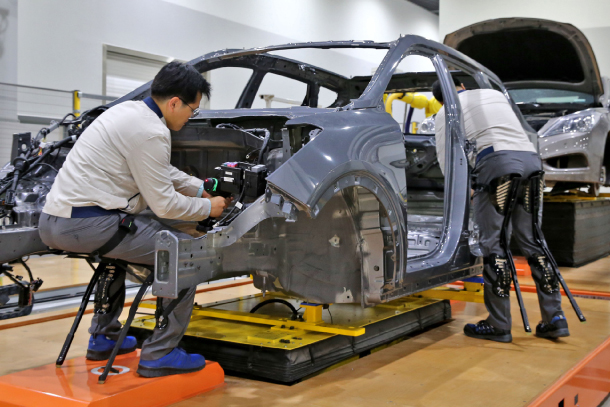
    The Hyundai Motor Group will expand the use of wearable robots at its facilities as it works to make robotics a major source of revenue, the company said Monday. Since September, Korea’s largest automaker has been testing the Hyundai Chairless Exoskeleton (H-CEX) at its North American factory. The H-CEX is an assistive robot for workers who have to stay in a seated position throughout the day. By the end of this year, the carmaker will introduce the Hyundai Vest Exoskeleton (H-VEX) at the same facility.

    The H-CEX, the first wearable developed by Hyundai for use at production sites, reduces the use of waist and lower body muscles by 80 percent, reducing the fatigue that results from being in the same seated position for a long period of time, Hyundai said in statement. The soon-to-be introduced H-VEX exoskeleton is for workers in jobs that require a lot of arm lifting. The machine vest will support the upper body and protect neck and shoulder muscles.

    “By expanding test applications, we hope to prove the technological effectiveness of our wearable robots,” Hyundai said in statement.

    The two exoskeletons were developed by Hyundai’s robotics team, established in May after the company named robotics as one of its five pillars for the future.

    The team is preparing to launch other robots focusing on three main areas: wearables, service robots and mobility robots.

    Hyundai is gearing up to test a hotel robot capable of providing room service and guiding guests. It will be introduced at the Haevichi Hotel & Resort on Jeju Island and at the Rolling Hills Hotel in Hwaseong, Gyeonggi, from the end of this year.

    A car-selling robot with natural language conversation capabilities and artificial intelligence will be prototyped by early next year. By 2020, the automaker plans to introduce a robot that can autonomously charge electric vehicles at charging stations.

    “We believe that robotics could be a solution not only for mobility but also for production in areas suffering from population decline,” a spokesperson for Hyundai said. “We plan to make notable achievements in robotics using technological data we have accumulated while developing autonomous cars.”

    Hyundai is not the only automobile maker bringing exoskeletons to assembly lines. U.S. automaker Ford has tested EksoVest, an upper-body assisting wearable jointly developed with Ekso Bionics. It was introduced at two U.S. factories in November last year. Ford announced in August a plan to bring the robot to 15 plants globally.

    German automakers BMW and Audi are also developing wearable aids for factory workers.

    According to market tracker BIS, the world’s wearable robot market is due to grow by 50 times from $96 million in 2016 to $4.65 billion by 2026.