Tag: koreas

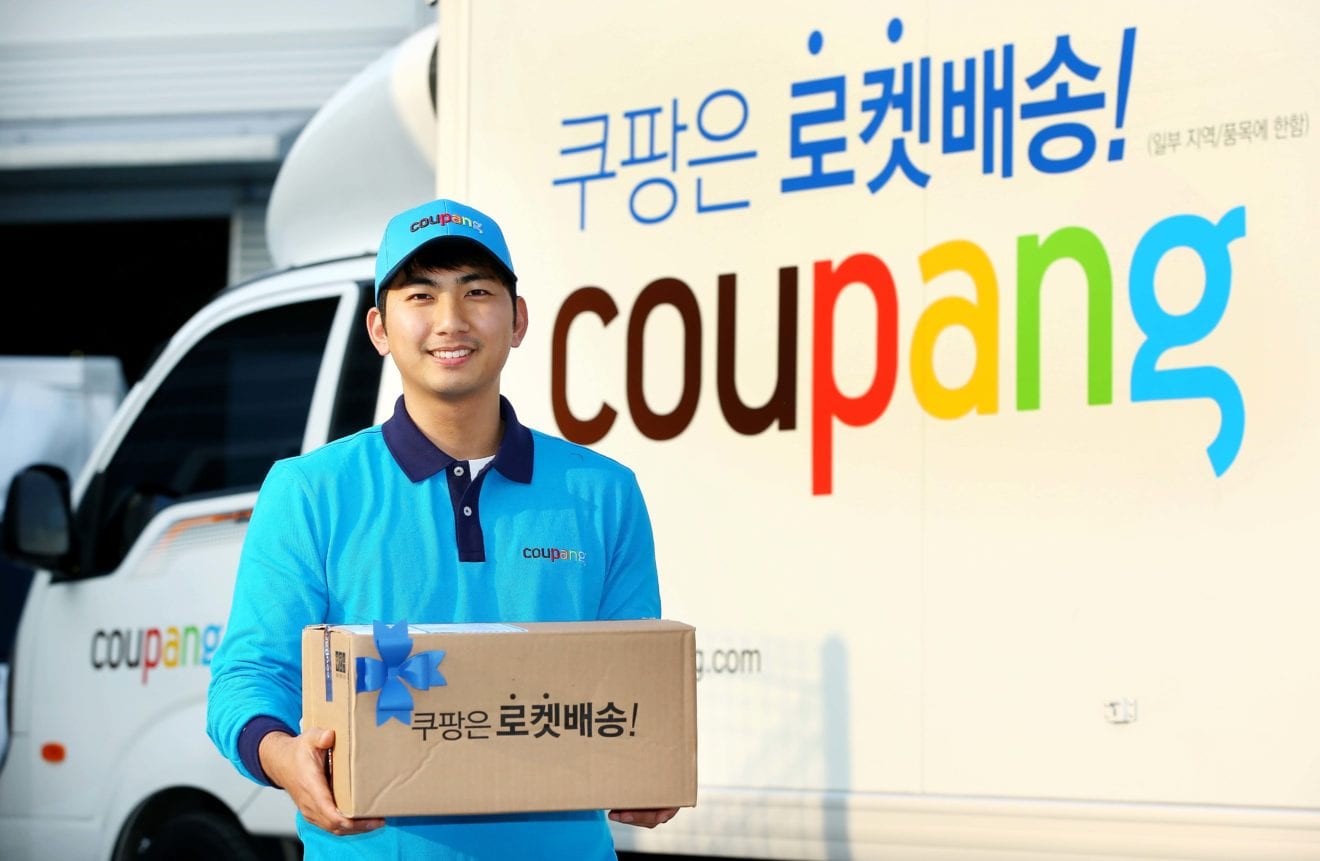
  • Coupang in Hot Water: US Investor Lawsuit Challenges South Korea’s E-commerce Giant over Massive Data Breach

    Coupang in Hot Water: US Investor Lawsuit Challenges South Korea’s E-commerce Giant over Massive Data Breach

    South Korea’s major e-commerce entity, Coupang, is facing a class-action lawsuit from investors in a US court over alleged violations of securities laws. The lawsuit is in relation to a significant cybersecurity breach that led to the exposure of personal information of over 33 million customers.

     The Allegations

    The class-action lawsuit, instigated last week in a California federal court, accuses Coupang, its CEO and chairman, Bom Kim, and its CFO, Gaurav Anand, of misleading investors about the company’s data security measures and failing to disclose the breach promptly.

    Coupang, often referred to as South Korea’s answer to Amazon, expressed regret over the unauthorized data access that led to the breach of personal information last month. Following the aftermath of the breach, Park Dae-jun, CEO of the subsidiary Coupang Corp, decided to step down earlier this month.

    In response to the breach, Coupang has stated its intent to enhance its security measures to prevent any future data leaks.

     Response from Coupang and Legal Representation

    As of now, Coupang and the legal counsel representing the investor who initiated the lawsuit on the 18th of December have not offered any comments.

    Coupang, a global operation with offices in California and other cities across the US, dominates South Korea’s e-commerce market. The company offers services ranging from same-day delivery to video streaming and food delivery. The recent data breach has triggered investigations in South Korea.

     Details of the Breach

    According to the lawsuit, Coupang discovered on November 18th that a former employee had illicitly retained access to its internal systems for several months. As a result, customer names, email addresses, delivery addresses, and some order histories were compromised. Coupang has assured that no payment details or login credentials were exposed in the breach.

    The lawsuit also alleges that Coupang failed to disclose the breach in compliance with US securities rules in a timely manner.

    The lawsuit further contends that Coupang’s US regulatory filings downplayed the company’s susceptibility to cyberattacks and exaggerated its protective measures. The plaintiff is seeking damages for investors who acquired Coupang securities between August 6th and December 16th.

    Questions & Answers

    What are the allegations raised against Coupang in the class-action lawsuit?
    The lawsuit alleges that Coupang misled investors about its data security measures and failed to disclose a major cybersecurity breach promptly.

    What was the impact of the data breach?
    The breach led to the unauthorized exposure of personal information of over 33 million customers, including names, email addresses, delivery addresses, and some order histories.

    What is the relief sought in the lawsuit?
    The plaintiff is seeking damages for investors who acquired Coupang securities between August 6th and December 16th.

  • SK Telecom and SK AX Join Forces with AWS: Aiming for Rapid Expansion in Korea’s AI Cloud Market

    SK Telecom and SK AX Join Forces with AWS: Aiming for Rapid Expansion in Korea’s AI Cloud Market

    SK Telecom (SKT) and SK AX have entered into a Strategic Collaboration Agreement (SCA) with Amazon Web Services (AWS) to stimulate a significant expansion in Korea’s AI cloud sector. This partnership will bolster the rapid development of AI infrastructure, cloud migration, and industry-specific service innovation.

    Strategic Agreement to Boost AI Cloud Services

    SKT plans to merge its telecommunications and AI technologies with SK AX’s specialized AI development skills and AWS’s international cloud infrastructure. The intention is to offer unique AI cloud services that facilitate the swift uptake of sophisticated AI tasks within the Korean market.

    A recent development saw AWS investing a staggering USD 8.3 billion in India’s cloud expansion. Now, SKT and SK AX will collectively work on developing personalized AI solutions for critical industries such as finance, gaming, the public sector, manufacturing, and startups. Their aim will be to ensure smooth transitions from preliminary AI projects to extensive operational environments, with a focus on delivering tangible business results.

    At the heart of the agreement is the development of a hybrid AI cloud model. SKT will amalgamate AWS’s international infrastructure with its own AI compute resources, including GPUs, to cater to industries with stringent data protection needs. This strategy will allow sensitive data to stay on-site while scaling workloads via AWS, guaranteeing a compliant, secure, and reliable AI service delivery.

    Building AI Cloud Hub & Enhancing Security

    The collaboration will also trigger the K-AI Alliance to construct an AI Cloud Hub that integrates infrastructure, services, and business channels. The endeavor will aim to generate industry-specific innovation models and expand AI adoption across Korea.

    In addition, SKT is planning to create cloud AI security standards and launch a new assessment framework rooted in its AI Governance Portal. This will enable customers to concentrate on developing AI services in a safe and effective manner. SK AX will develop an industrial AI cloud stack that mirrors unique data structures, regulatory needs, and operational models across diverse sectors, ensuring its practical applicability.

    Introduction of AI FinOps Solution

    The trio will introduce an AI FinOps solution that examines AWS usage patterns, optimizes cost structures, and enhances the total cost of ownership through constant monitoring and ongoing efficiency improvements. This solution is expected to aid businesses in streamlining their spending as AI workloads expand.

    In the coming five years, SKT and SK AX intend to offer stable access to AWS cloud infrastructure and AI services. At the same time, they plan to refine their cloud management skills to strengthen their position as managed service providers.

    Questions & Answers

    What is the focus of the Strategic Collaboration Agreement (SCA) between SK Telecom (SKT), SK AX, and Amazon Web Services (AWS)?
    The SCA focuses on driving large-scale expansion into Korea’s AI cloud market through AI infrastructure development, cloud migration, and service innovation.

    What is the role of the K-AI Alliance in this collaboration?
    The partnership will activate the K-AI Alliance to build an AI Cloud Hub, aiming to unify infrastructure, services, and business channels, fostering industry-specific innovation and broadening AI adoption in Korea.

    What is the proposed AI FinOps solution?
    The AI FinOps solution will analyze AWS usage patterns, optimize cost structures, and improve the total cost of ownership through real-time monitoring and continuous efficiency enhancements, aiding businesses in managing spending as AI workloads scale.

  • Korean Wave Drives Tourism Boost: Retailers Enhance Strategies To Meet K-culture Demand

    Korean Wave Drives Tourism Boost: Retailers Enhance Strategies To Meet K-culture Demand

    The rising popularity of South Korean culture, often referred to as the ‘Korean Wave’, is driving record numbers of international tourists to the country. In response, South Korean retailers are intensifying their marketing strategies to cater to the growing demand for K-beauty products, K-pop merchandise, and unique cultural experiences.

    Boost in Tourist Numbers

    Data from the industry, released on October 19, indicated that the number of foreign tourists visiting Korea between January and August reached 12.38 million. This is a 16 per cent increase compared to the same time frame in 2024 and even exceeds pre-pandemic levels in 2019 by nearly 8 per cent. Capitalizing on this influx, retailers are offering a variety of services such as beauty consultations, pop-up stores, and immersive events that blend modern retail with traditional Korean culture.

    Beauty and Tourism Merge

    One of the leading health and beauty retailers, CJ Olive Young, expanded its ‘personal shopper’ and skin consultation services at its flagship stores, which are typically frequented by foreign visitors. At its Central Gangnam location, tourists can schedule a 45-minute personalized shopping session via the travel platform Klook. These sessions include product recommendations and makeup advice.

    At Olive Young N Seongsu, guests are offered skin and scalp analysis, personalized color consulting, and custom beauty tutorials. A company spokesperson highlighted the high interest of foreign tourists in understanding K-beauty trends and receiving customized product advice. They noted that foreign customers now constitute 60 to 70 per cent of consultation users at the Seongsu branch.

    Olive Young has also introduced K-pop pop-up stores at its Myeongdong, Seongsu, and Hongdae locations. These stores allow shoppers to buy albums and receive exclusive photo cards, a strategy aimed at capturing the worldwide K-pop fan base.

    Convenience Stores and Duty-Free Retailers Participate

    Convenience store chains are also morphing into mini K-culture centers. GS25’s “New Annyeong Insadong” location features an AI-powered beauty device that analyzes a visitor’s facial shape and personal color, providing immediate product recommendations that can be bought on-site.

    Seven-Eleven, under Lotte Group, has established special retail zones that sell albums and merchandise from popular groups like SF9, NCT Wish, and Seventeen.

    Duty-free retailers are also providing experiences beyond shopping. Shilla Duty Free’s Seoul branch offers complimentary jjimjilbang (Korean sauna) vouchers to Taiwanese customers who buy a certain amount of K-brand products. Lotte Duty Free’s Myeongdong main store organizes postcard-writing events, allowing visitors to send messages overseas.

    Combining Pop Culture and Tradition

    Retailers are also leveraging the global interest generated by the Netflix animated film K-Pop Demon Hunters, which showcased traditional Korean medicine and crafts. Lotte Duty Free is issuing discount coupons to tourists visiting Seoul K-Medi Center, the real-life counterpart to the film’s setting.

    Hyundai Department Store’s The Hyundai Seoul recently hosted a traditional crafts event. Here, foreign visitors could create Korean accessories like norigae charms and bracelets, guided by English-speaking instructors.

    According to industry experts, these initiatives reflect the retail sector’s transformation beyond conventional shopping towards immersive experiences steeped in Korean culture. As articulated by a tourism official, “Korean retailers are no longer just selling products – they’re selling a piece of Korea itself.”

    Questions & Answers

    Q: What is the ‘Korean Wave’?
    A: The ‘Korean Wave’ refers to the global rise in popularity of South Korean culture, encompassing music, television dramas, films, fashion, and beauty trends.

    Q: How are South Korean retailers responding to the increased number of foreign visitors?
    A: Retailers are tailoring their services to cater to these visitors. This involves offering personalized shopping sessions, setting up pop-up stores dedicated to K-pop, and organizing events that blend modern retail with traditional Korean culture.

    Q: How are convenience stores participating in the trend?
    A: Convenience stores are transforming into mini K-culture hubs. For example, GS25 provides an AI-powered beauty device that provides immediate product recommendations, while Seven-Eleven sells albums and merchandise from various K-pop groups.

  • South Korea’s Retail Industry Expands Private Label Business Beyond Food And Household Items

    South Korea’s Retail Industry Expands Private Label Business Beyond Food And Household Items

    South Korea’s retail industry is swiftly growing its private label (PB) business by extending beyond food and household items to include clothing, innovative digital platforms, and even international markets. This expansion comes as firms ranging from convenience stores and hypermarkets to e-commerce businesses vie to fortify their brand identities and profitability.

    Private Label Sales on the Rise

    BGF Retail, the parent company of the CU convenience store chain, reported noteworthy growth in PB sales. The years 2023 and 2024 saw increases of 17.6 percent and 21.8 percent, respectively, followed by an additional 19.1 percent surge during the first nine months of 2025.

    GS25, another retail chain, offers around 800 PB items via the YouUs line, which now make up nearly 30 percent of total sales. Their affordable Real Price range saw a significant year-on-year increase of 125 percent.

    Leading supermarkets are also jumping on the bandwagon. Approximately 8 percent of Emart’s sales and 10 percent of Lotte Mart’s sales come from private-label goods. Emart boasts well-known PB labels such as No Brand, Peacock, 5K Price, and Days, while Lotte Mart promotes Today’s Good and Cookit.

    Online retailers aren’t left behind either. Kurly, for example, reported a year-on-year increase of over 10 percent in sales of its flagship PB lines, echoing the growing consumer demand for retailer-exclusive products.

    Expanding Across Platforms and Borders

    The once rigid boundaries between retailers are now blurring as PB products start to appear across rival platforms. Even Coupang, an e-commerce platform, sells Lotte Mart’s Today’s Good and Homeplus’s Simplus brands, while Emart’s Peacock products can be found on Kurly’s online marketplace.

    Convenience chains are also making their mark on the global stage. GS25 exports PB products to 33 countries, including the United States, Australia, Japan, and China. CU also sells its own-label items in more than 20 countries, through outlets such as Japan’s Don Quijote stores.

    Earlier this year, BGF Retail forged a partnership with China’s Ningxing Youbei, a prominent importer and distributor. The partnership’s goal is to introduce CU-branded sections on Chinese e-commerce platforms and operate pop-up stores that showcase its products.

    In addition, 7-Eleven Korea ventured into the clothing sector in April, launching its own line of socks, underwear, and T-shirts, and recently, knitwear.

    A spokesperson from the retail industry emphasizes that selling robust PB products via external channels provides both marketing and revenue advantages. The more positive experiences that customers have with a retailer’s PB products, the more likely they are to become loyal to that retailer’s own platform.

    The Challenges and Risks of Brand Identity

    Despite the success of the PB trend, it has stirred concerns about potential conflict with national brands. For instance, Coupang was previously accused of allegedly manipulating search rankings to favor its own PB products.

    Experts also caution that expanding PB lines too broadly across platforms could blur brand identity and complicate logistics and inventory management, thereby undermining the very benefits that PB lines are intended to provide.

    Kurly, which previously sold select CU PB products, reverted to an in-house-only model. A spokesperson stated that the company is more interested in preserving brand integrity than achieving broader exposure, and has no plans to offer its PB products on external platforms.

    Questions & Answers

    What is the trend of private label sales growth in South Korea’s retail industry?
    The trend shows consistent growth, with companies like BGF Retail reporting significant year-on-year increases in private label sales.

    How is the expansion of private labels affecting the retail industry?
    The expansion is blurring boundaries between retailers, causing them to compete on multiple platforms. It’s also leading retailers to venture into new markets like clothing and international sales.

    What are the potential risks associated with the expansion of private label lines?
    Potential risks include conflicts with national brands, the blurring of brand identity, and complications with logistics and inventory management.

  • Homeplus Announces Closure Of 15 Outlets Amid Growing Financial Crisis And Rehabilitation Efforts

    Homeplus Announces Closure Of 15 Outlets Amid Growing Financial Crisis And Rehabilitation Efforts

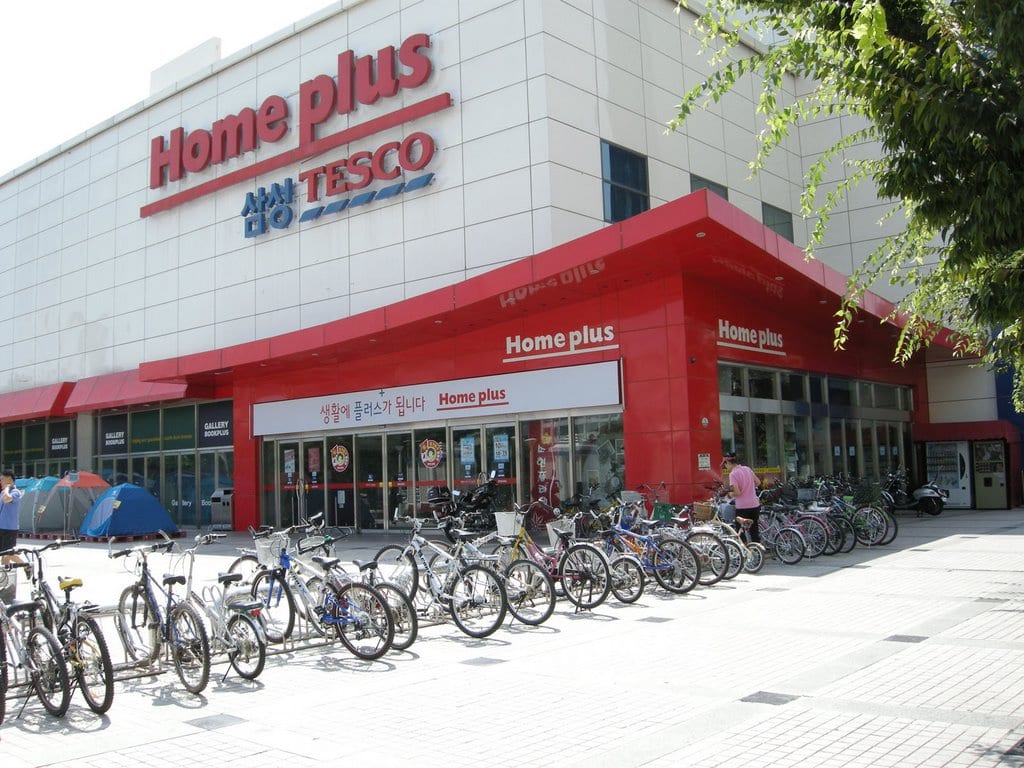
    Homeplus Co, a discount store chain experiencing financial troubles, disclosed on Wednesday its plans to shut down 15 outlets due to increasing operational challenges in the business environment.

    Undergoing a court-led rehabilitation process since March this year, Homeplus has been grappling with its dipping financial health. The company’s corporate bonds value was adjusted from A3 to A3- by two local credit rating agencies, given its unsatisfactory financial state. The organization is expected to present its rehabilitation strategy to the Seoul Bankruptcy Court by the 10th of September.

    Samil PricewaterhouseCoopers, the court-assigned accounting firm, suggested conducting a merger and acquisition (M&A) auction before the court endorses the plan, as the liquidation value of Homeplus surpasses its ongoing concern value. The court has given its consent to this recommendation.

    In recent times, the company has witnessed a slump in sales due to plummeting consumer confidence, decreased transactions with suppliers and the latter’s insistence for upfront payments, thereby instigating a prospective liquidity crisis.

    Joh Joo-yun, the co-CEO, expressed his concerns in a message to the employees stating that if this situation prolongs, the company’s revival through an M&A prior to the court’s approval of the rehabilitation plan might be jeopardized.

    Joh further emphasized that the company has resorted to emergency management actions to avert the crisis. He highlighted that the issue transcends beyond a mere management problem to one that impacts the broader economy and the job security of 22,000 workers employed with Homeplus and its subcontractors.

    Joh, along with Kim Kwang-il, the vice-chairman of MBK Partners, are the two court-appointed managers. MBK Partners took over a 100 percent stake in Homeplus from the British retailer Tesco Plc in 2015, amounting to 7.2 trillion won (US$5.2 billion).

    As of Wednesday, Homeplus operates 125 outlets.

    Questions & Answers

    What is the financial state of Homeplus Co?
    The discount store chain is currently under a court-led rehabilitation program due to its poor financial health.

    What was the recommendation of Samil PricewaterhouseCoopers regarding the company’s current situation?
    The court-appointed accounting firm suggested a merger and acquisition auction before the court approves the rehabilitation plan, as the company’s liquidation value is higher than its going concern value.

    What is the impact of Homeplus’ financial troubles on its employees?
    The co-CEO, Joh Joo-yun, expressed concerns that the ongoing situation could affect the broader economy and the job security of 22,000 workers at Homeplus and its subcontractors.

  • Bolloré Logistics Korea Installs an Urban Farm in the Center of Seoul

    Bolloré Logistics Korea Installs an Urban Farm in the Center of Seoul

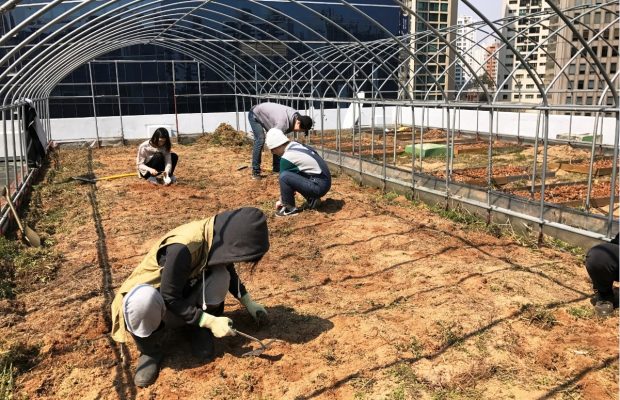
    Bolloré Logistics Korea recently installed an urban farm on its office rooftop building in Seoul, South Korea, as part of the Group’s initiative to promoting “Green Projects” and protecting biodiversity.

    Urban farming is a practice of growing your own food in the city, with limited space. Bolloré Logistics Korea has transformed the available rooftop space of its 6-floor office building into an urban farm, optimizing current available space resources. This urban farm is split into four parcels and covers a total space of 264 sqm.

    Bolloré Logistics Korea signed an agreement with Pajeori*, a non-profitable organization, to maintain the farm with volunteers from the nearby neighborhood in order to cultivate each a small parcel of the Urban Garden, therefore making it a community base project as well.

    The urban farm is growing organic fruits and vegetables as only natural fertilizers mostly made from rice bran are and will be used. Bolloré Logistics Korea also plans to grow traditional Korean fruits and vegetables which are not always found anymore in big retail stores, as they are difficult to grow and conserve since they require a wide range of unique resources for food and agriculture.

    Some honey plants will also be planted in order to attract pollinators. Back in 2016, Bolloré Logistics Korea sponsored a wooden beehive structure (“Honey Factory”) to create awareness of the vital role of bees in our lives as they are a crucial component of food production and are responsible for a third of the food that we eat.

    Bolloré Logistics Korea looks forward to harvesting the very first crops in the upcoming months.

    Fully in line with the biodiversity action plan put into effect within the Group, Bolloré Logistics’ biodiversity strategy has three fundamental pillars based on the ARC concept (Avoid / Reduce / Compensate):

    • Embracing biodiversity as one of the company’s environmental concerns;
    • Working with customers and suppliers on biodiversity issues and the impact of our activities;
    • Make our sites models for biodiversity, all over the world.
  • Sout Korea Costco stores’ move to all US beef a positive for exporters

    Sout Korea Costco stores’ move to all US beef a positive for exporters

    On the heels of two Costco stores in South Korea beginning the transition to sourcing chilled beef from US sources, with the remaining 11 to make a similar shift from Australian beef to US imports, officials from the Iowa Beef Industry Council (IBIC) were part of a trade mission to get a closer look at the supply chain in South Korea. The US Meat Export Federation’s (USMEF’s) Spring Seminar drew more than 200 representatives to make the Feb. 11-18 trip, which also included members of the Iowa Pork Producers Association and representatives from the beef-processing segment and pork exporting officials from the US.

    USMEF officials coordinated tours of the processing plant and cold storage facility at Haesung Provision and Kyunwoo Foods, followed by a visit to a Costco warehouse in Kwangmyung. The recent resumption of red meat exports to South Korea was a windfall for USMEF and its members and the decision by Costco, the region’s largest importer, to convert the remaining 11 stores to selling US beef exclusively signals more positive trade relations moving forward.

    “The retail market is vital for US beef. Costco’s announcement to move from 17 percent to 100 percent US beef in their stores is exciting for cattle producers,” said Dave Rueber, an IBIC member and Iowa beef producer who was part of the mission. “USMEF has been working on this for 13 years. This will result in a 15,000 metric ton increase in beef purchases this year.”

    Expectations of record exports of chilled beef to South Korea are based on the momentum realized in 2016, when beef exports jumped 31 percent in value (to $1.059 billion) and 42 percent in weight (to 179,280 metric tons).

    Knowing South Korea is one of the most social media-savvy cultures in the world, USMEF invited well-known bloggers and foodservice professionals to network with attendees in addition to hosting a cookbook launch, which focuses on US meats.

    “As beef producers, we cannot become complacent, we must continue to focus on building long-term beef demand and being aware of future opportunities,” said Daryl Strohbehn, another Iowa beef producer who made the trip. “As an industry, we have to continue listening to what our consumers want, including our overseas customers.”