Retail News CRM

Tag: Kpop

  • K-pop girl-group Twice to open first pop-up store in Singapore

    K-pop girl-group Twice to open first pop-up store in Singapore

    K-pop girl-group Twice is to open a pop-up store called Twaii’s Shop in Singapore this month, marking its first Asia stop after the theme stores in Korea and Japan.

    Located at *Scape between October 12 to 14, Twaii’s Shop will feature more than 30 exclusive Twice merchandise items, including the Candybong light stick and Twaii-design T-shirt.

    The Twaii’s Shop will also set up a special lucky draw for fans to win a Twice-autographed album if they spend a S$50 or more on a single receipt.

    The South Korean group successfully held three sold-out concerts in Singapore with the most recent Twice World Tour 2019 Twicelights in July at Singapore Indoor Stadium. They also just released a mini album called Feel Special.

  • The Best K-Drama Shows of 2019

    The Best K-Drama Shows of 2019

    Do you live for the drama? Then you’ve probably heard about some of the names in this article. Even if you have been living or traveling to countries such as China where Netflix geo-restricts their content, you have no excuse for missing out. You can easily fix the issue by using one of the best VPN for China to unblock restricted websites. These K-dramas bring back everyone’s favorite actors on screen in 2019. They can go from funny or sappy to heartbreaking in the blink of an eye. We have put together below a list of the best K-dramas of the year:

    Chief of Staff

    Chief of Staff is very similar to Netflix original series House of Cards. Chief of staff, Jang Tae-jun leads the game from the shadows while trying to rise to the top. The drama is right at home here, as there’s manipulation, criminal activity, scheming, illicit affairs, and of course lots of lying

    Sky Castle

    Sky Castle is a series that follows the story of four women part of the high-class South Korean society. The drama is created by the fact that these wealthy parents try to control every aspect of their children’s lives. Of course, they must face the consequences. One of the mothers is obsessing with getting her daughter enrolled in this elite university. She is willing to do whatever it takes to accomplish this mission. If you enjoy a soapy drama with a hint of comedy and romance, Sky Castle is definitely for you.

    Doctor Prisoner

    This K-drama follows the story of a skilled doctor (Namkoong Min) who has to work in prison after a malpractice incident costs him his hospital job. His ultimate goal is to get revenge on those who outed him and become the prison’s chief doctor. Kim Byung Chul and Choi Won Young from Sky Castle are also part of the cast.

    The Last Empress

    If you are the kind of person who enjoys the stress and often shouts at the screen at characters who can’t even hear you, this 52 episodes drama is perfect for you. However, it is not for the weak of heart. The action is set in an alternative reality in which South Korea is a constitutional monarchy. If you like a neat plot, things might get confusing. A musical actress marries the Emperor but ends up falling in love with the bodyguard. Meanwhile, a mysterious murder threatens the stability of the monarchy. How’s that for drama?

    The Fiery Priest

    The Fiery Priest is an action-packed crime show about a priest who can’t control his anger, some bad guys, a foolish detective, and a bad prosecutor. The 40-episode drama takes place in a wicked city where the leads investigate the murder of an older priest. Besides all the action and suspense, you are also at risk to laugh out loud.

    Angel’s Last Mission: Love

    This premiered KBS drama is about an angel who likes to get in trouble. While completing his duties on earth, he falls in love with Lee Yeon-Seo, a former ballerina. Dan becomes her guardian angel and tries to help her find true love, but ends up falling in love with her. This drama is filled with dancing, music and an intriguing story. K-pop fans will recognize the lead character, L (Kim Myung-soo) from the boy band Infinite.

    Arthdal Chronicles

    Arthdal Chronicles is an epic Netflix series about the dramatic power struggles that take place in a mythical ancient land. If you are a fan of drama and fantasy, this is the kind of thing you would appreciate. The cast doesn’t disappoint, featuring Song Joong-ki, Jang Dong-gun, and Kim Ji-won.

    My Fellow Citizens

    Choi Si-won, a member of Super Junior, returns this year on the big screen in the K-drama My Fellow Citizens.  His character, Yang Jung Kook is a conman who falls in love with a woman who hides a secret. Both were going through a hard time, so they find comfort in each other’s arms. She finally decides to confess her true identity on their wedding day. Warning, drama alert!

    My First First Love

    If you love binge-watching dramas, this is the right movie for you! You can find it streaming on Netflix now. This coming-of-age story follows the story of five college students sharing the same roof, so it’s pretty obvious things are going to get messy. The love triangle brings enough drama to keep you hooked. We also love seeing Ji Soo and Jinyoung together on the screen.

    Touch Your Heart

    Touch Your Heart is a really fun drama to watch. The action is set in a law firm where an actress caught in a scandal works as a secretary for a moody attorney. The reason why she does the job is to land a part in a famous writer’s drama. The leading actors have great chemistry, as they’ve played together in Goblin, another drama. Also, it’s another love story that takes place in the workplace.


  • K-Pop group Red Velvet marks Beauty&You’s first year at HKIA

    K-Pop group Red Velvet marks Beauty&You’s first year at HKIA

    The Shilla Duty-Free’s 2019 brand ambassador, K-pop group Red Velvet, performed at Hong Kong International Airport to celebrate the first anniversary of travel-retail concept Beauty&You.

    The performance coincided with a new pop-up store at the airport, an all-immersive space featuring several experiential zones, including Beauty&You’s DIY Mobile Sticker Photo Booth and weekly exclusive zones by YSL Beauty, Sulwhasoo, Marc Jacobs fragrances, and Ray-Ban.

    The Shilla Duty-Free plans to continue in-store activities and promotions throughout the summer.

    Beauty&You’s anniversary celebration event, featuring an exclusive performance by K-pop group Red Velvet, was attended by The Shilla Duty-Free’s senior management, representatives of the Airport Authority Hong Kong and brand and business partners.

  • South Korean K-pop merchandise sales surge to US$132 million

    South Korean K-pop merchandise sales surge to US$132 million

    South Korea’s K-pop merchandise market is booming, reaching KRW 150 billion (US$132 million) last year.

    Led by the recent global fame of BTS, K-pop’s popularity has expanded far and wide, and a growing number of fans are enthusiastically spend their time and money collecting even the smallest souvenirs that remind them of their favorite pop stars.

    Mugs, notebooks, pens, bags, T-shirts, tumblers and slippers with photos of BTS, EXO, Blackpink, Twice and the like all stir K-pop fans’ desire to be closer to the performers they like the most.

    “I spent more than 1 million won ($881) buying BTS merchandise last year,” one BTS fan told Yonhap, requesting anonymity. “Sometimes even I think it’s a bit excessive, but it’s one of my big hobbies.”

    According to the latest data from the Korea Creative Content Agency (KCCA), the total sales of the South Korean music industry reached 2.87 trillion won in the first half of last year, up 9.2 per cent from a year earlier.

    K-pop merchandise sales of 150 billion won last year alone includes privately created items and pirated goods.

    “Fans with huge loyalty to their singers buy albums and goods together. Many of them create unofficial goods too,” said Sung Mi-kyoung, a senior researcher at the KCCA. “The idol culture started to explode in the latter half of 2017 on the back of the rising global popularity of BTS. Estimates of 150 billion won in sales are not groundless.”

    She said the three leading music labels — SM Entertainment, JYP Entertainment Corp. and YG Entertainment Inc. — have already acknowledged the potential of the goods market and started to rack up revenues there.

    According to their regulatory filings, the three listed companies’ combined sales of albums and digital music content reached 76.69 billion won in the first half of 2018.

    And they posted a combined 105.44 trillion won in sales from K-pop merchandise, royalties and other fees over the cited period.

    YG alone earned 76.91 billion won in royalties and brand-related sales as the company runs fashion and cosmetics subsidiaries using artist brands like Big Bang, iKon and Blackpink.

    SM, which manages Exo, Shinee and Super Junior, runs its official merchandise shops SUM Market and SMTown Gift shop in southern Seoul, selling collaborative products combined with its artists’ brands.

    “It has been a minor culture among young fans of K-pop,” said Sung. “But from now on, its huge potential will attract the entire entertainment industry to focus on this market.”

    She said 50 per cent of South Korean teenagers have bought a K-pop item at least once.

    “These young teens who are very willing and familiar with spending money on goods related to their idols will grow up and have greater purchasing power when they become 30-somethings or 40-somethings.”

    Against this backdrop, the K-pop market is broadening into a comprehensive content industry linked with performance, fashion, food, tourism and even manufacturing.

    Tens of money-making goods and events can be derived from a picture of a K-pop singer, she noted.

    “People do not only consume music to listen to but also enjoy such entertainment in other forms. The music industry now comes with concerts, merchandise and intellectual property,” the KCCA expert said. “I hope the public sector will fine-tune the legal issues involving intellectual rights to level the playing field and foster the content industry further.”

  • Korean wave fuel 25% growth in Korean e-commerce exports

    Korean wave fuel 25% growth in Korean e-commerce exports

    South Korea’s online exports surged 25 percent in 2018 from a year ago on the back of growing demand for K-beauty and K-pop related items such as album records and stationery supplies, government data showed. According to Korea Customs Service, Korea’s electronic commerce (e-commerce) exports or reverse overseas direct purchase volume reached US$3.25 billion last year, up 25 percent from a year earlier. The total number of online export cases also jumped 36 percent to 9.61 million during the same period.

    E-commerce growth is staggering when compared to the modest 5 percent annual growth in total Korean exports last year.

    The customs agency said that the rapid growth of online exports comes amid growing demand for Korean items on the back of hallyu or Korean Wave, as well as simplified retail procedure, and aggressive overseas marketing integrated with offline stores.

    By item, apparels and cosmetics accounted for 69 percent of total online export. In particular, the number of export cases for clothing surged a whopping 162 percent last year from a year ago, becoming the top pick after beating out cosmetics. Online exports of cosmetics jumped 43 percent last year from a year ago, recovering to average level after falling in 2017 as a result of diplomatic tension between Korea and China over Seoul’s deployment of U.S. anti-missile system.

    The customs agency said that exports of K-pop related items such as albums and stationery items surged significantly last year amid hallyu or Korean Wave overseas. In particular, sales of items related to K-pop icon BTS rose sharply.

    Data from Korea Customs Service, meanwhile, showed that overseas direct purchases of foreign goods amounted to US$2.75 billion last year, up 31 percent from a year ago. There were a total 32.25 million purchases last year, up 37 percent from a year ago.

    By region, the United States accounted for the largest 50.5 percent of Koreans’ direct purchases, followed by China with 26.2 percent, European Union with 12.5 percent, and Japan with 8 percent. The U.S. share fell from the previous year’s 56.4 percent while that of China jumped almost 10 percentage points from the previous year’s 17.3 percent.

  • Amorepacific facing painful dilemma

    Amorepacific facing painful dilemma

    For Amorepacific, the last year has been painful in terms of both sales and brand development. The cosmetics giant saw its operating profit halve to 549 billion won (US$491 million) in 2018, just two years after it joined the “1 trillion-won sales club” in 2016 for the first time as a cosmetics maker. With its glory falling to the past, Amorepacific has been outpaced by rival LG Household & Healthcare. LG Group’s cosmetics arm became the newest member of the 1 trillion-won sales club last year, cementing its No. 1 status in terms of market capitalization, which totaled 23.1 trillion won as of June last year.

    In the fourth quarter of 2018, Amorepacific’s operating profit came to 16.4 billion won, down 82 percent on-year.

    The company had many reasons to blame for its profit decline, including a rise in the minimum wage, weak performance of its budget cosmetics brand with the advent of numerous competitors at health and beauty stores, e-commerce and even home shopping channels.

    This has put the brakes on Amorepacific’s drive to construct a beauty industrial complex in Yongin, Gyeonggi Province. In 2017, the cosmetics giant had unveiled its plan worth 163 billion won for the complex to develop cosmetics and beauty products.

    But the company announced last month that it would scrap its complex project due to dwindling profits as well as fierce opposition from local residents.

    Market watchers voice concerns that this year will be a make-or-break period for the group, as a continued sales downfall will make it harder for the company to recover from its ongoing slump.

    “Profit recovery from the domestic beauty market as well as pulling up sales among Chinese customers will be the major points for Amorepacific to overcome this year,” said Na Eun-chae, a researcher from Korea Investment and Securities.

    Sulwhasoo vs. History of Whoo

    Although South Korea-China ties started mending last year after the detrimental diplomatic and economic fallout from the deployment here of the US Terminal High Altitude Area Defense missile system in 2017, the China comeback is still not so evident.

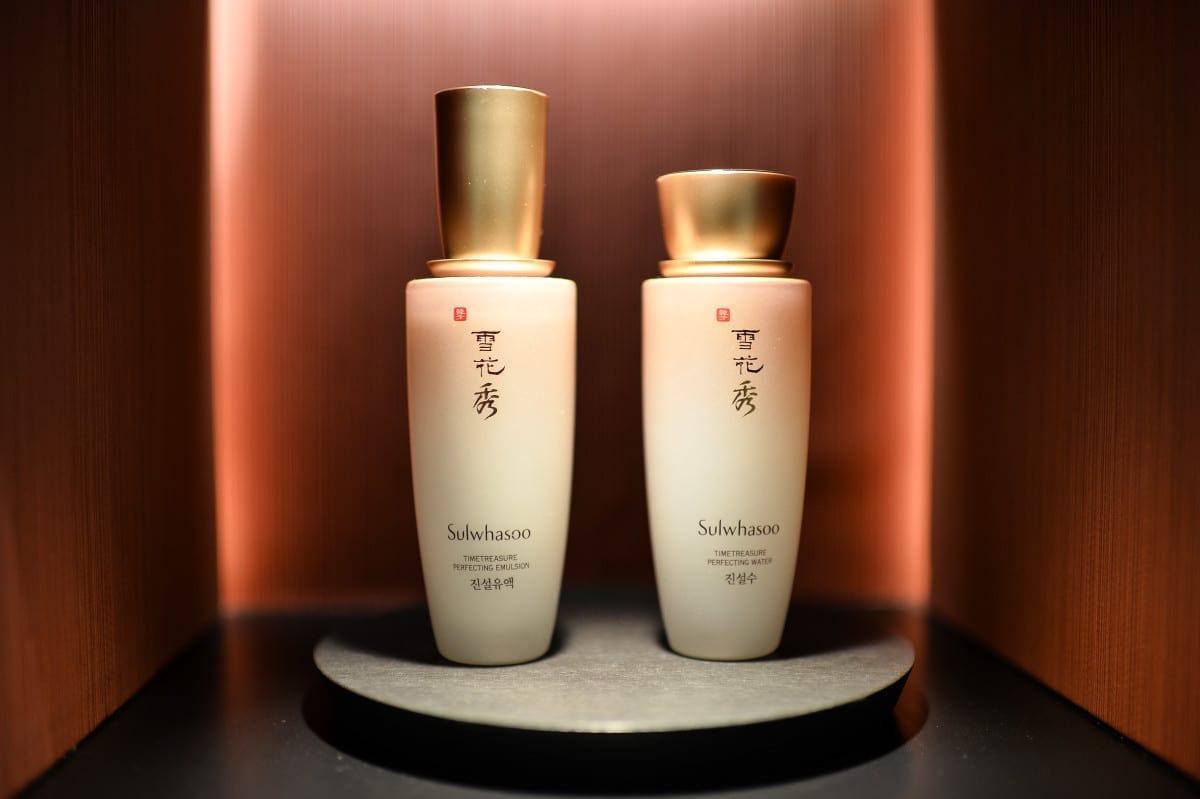
    Amorepacific’s Sulwhasoo, the company’s flagship luxury skin care brand, had been the most favored brand among Chinese tourists in the past few years. Market data showed that mainland China accounted for at least 10 percent of Sulwhasoo’s total sales, followed by Hong Kong at 6 percent and Taiwan with 0.5 percent as of 2018.

    But The History of Whoo, the latecomer in herbal cosmetics, has now taken the limelight.

    Whoo, a luxury skin care brand by LG Household & Healthcare, posted high sales at duty-free shops largely backed by Chinese consumers. This led Sulwhasoo to hire actress Song Hye-kyo as its global brand ambassador, seeking a breakthrough. It was Sulwhasoo’s first-ever attempt to have a celebrity promote its products.

    In terms of sales, Whoo has outpaced Sulwhasoo by recording 2 trillion won of sales last year. Whoo has also made a 40.8 percent on-year increase. Sales of Sulwhasoo had been around 1 trillion won since it peaked in 2015.

    “It is not an exaggeration that Sulwhasoo is the only, but very strong, cash cow of Amorepacific Group. It is the most important department in the entire company. Employees, especially in that department, feel grave responsibility and pressure about having to pull up the sales,” an insider said.

    According to the group, around 55 percent of the company’s sales come from its luxury cosmetics brands. Of them, Sulwhasoo is responsible for 36 percent.

    Market insiders said budget cosmetics brands are also enduring fierce competition in the “red ocean” market, with more consumers looking for luxury, premium brands as the beauty trend now centers on anti-aging efforts.

    Industry experts see the causes of Sulwhasoo’s lackluster performance as coming from its brand positioning and sales strategy at duty-free stores.

    “In the luxury cosmetics market, Sulwhasoo has only focused on its simple, basic skin care products, whereas Whoo diversified its luxury product lineup and upgraded all the products of the brand,” said an industry insider surnamed Jung, who has been in charge of overseas sales for a cosmetics brand for 30 years.

    Amorepacific also restricted Chinese shoppers, or “daigou,” from purchasing in bulk at duty-free stores, he added.

    “As a result, Amorepacific could not stabilize its supply chain in China. But LG, unlike Amorepacific, rolled out flexible rules for daigou and increased their demand,” Jung added.

    Others added it may simply be the product design and brand concept that work better for Chinese customers, who prefer gold, royal and fancy images.

    “To Korean customers, design and concept of Whoo may be regarded as ‘too much.’ But Whoo wisely focused in the concept that can appeal to Chinese customers. Hiring Lee Young-ae as its main model was also very clever, because Hallyu stars like her are still very influential in the Chinese market,” said an industry insider who is very familiar to exporting cosmetics to China.

    Is overseas sales expansion only way?

    To overcome the situation, Amorepacific plans to once again focus on strengthening its luxury brand lineup, including cosmetics brand Amorepacific, which is a luxury skin care brand named after the company.

    The brand rolled out only 2,000 limited edition facial creams last year, priced at 750,000 won per bottle.

    The reason is largely due to weak sales of budget cosmetics brands such as Innisfree and Etude in the domestic market, as well as in China.

    In 2012, the company launched budget cosmetics brand Innisfree in China. It now operates 512 stores in cities like Hangzhou and Shanghai. As of last year, 50 percent of sales of Amorepacific’s Chinese corporation came from Innisfree.

    But sales had been on a decline amid competition with local players that launched brands like One-leaf with similar concepts — natural and clean.

    “There are already too many budget cosmetics in China. That’s why Chinese tourists coming to Korea are now looking for luxury, premium cosmetics that they cannot find in their market,” said a market insider, adding that the trend is especially evident among Asian countries.

    The company said it will renew the Innisfree brand and debut Primera to China this year, aiming for 601 billion won in operating profit by the end of the year. It will also accelerate Sulwhasoo store openings in additional Chinese cities, and expand touch points in online retail in major e-commerce sites such as VIP.com and JD.com.

    Earlier this year, the cosmetics giant announced the business goal of securing a 10 percent increase in sales and a 24 percent increase in operating profit this year. The group said it would focus on investing in innovative beauty sectors such as customized cosmetics or overnight beauty items based on developing the customer experience.

    “The company believes in the value of traditional Korean beauty. It is also Chairman Suh Kyung-bae’s business philosophy to create beauty products that can instill Korean beauty, products with value that can last for a century,” said a company insider.

    Overseas expansion actually did pay off for Amorepacific last year. Despite its increased investment in overseas markets, both sales and operating profits inched up by 8 percent to 1.9 trillion won and 6 percent to 2.6 trillion won, respectively.

    But some say it is time for Amorepacific to bring in a new cash cow for practicality, referring to LG Healthcare & Household’s budget brand The Face Shop that bought Avon’s manufacturing facility in China last year.

    “It is time for Amorepacific to make the bold move and seriously consider active M&A ideas. M&A can offer positive opportunities in terms of global market expansion and investment for future. Especially when global beauty companies like Loreal and Unilever are buying Korean beauty brands, it is important for the company to take a strategic position to diversify brand portfolio for global competition,” said a researcher at Euromonitor International.

    Seo Yong-koo, a professor of business at Sookmyung Women’s University, said Amorepacific should not put all its risk in the Chinese market.

    Seo said since Amorepacific saw aggravating sales following its downfall in the Chinese market, the company experienced that its market portfolio is important. He added the group should also take the Muslim market into consideration, which will add up to 1.8 billion customers.


  • Time for South Korean cosmetics to face challenges

    Time for South Korean cosmetics to face challenges

    South Korean cosmetics stores that have been the drivers of the ‘K-Beauty’ industry for the past 15 years are facing a crisis, exposing their limitations. The cosmetics industry is undergoing a series of transformations due to decreased demand from China and a change in distribution structure resulting from stagnant domestic demand and increased competition.

    Nowadays, it is common to see health and beauty shops (H&B) such as Olive Young and LOHBs reorganise and shift their main focus online.

    According to cosmetics industry analysts, the size of the South Korean cosmetics stores’ market was 2.29 trillion won (US$2.05 billion) in 2017, which reflects a rapid decrease since the peak in 2016. It is estimated that total sales last year decreased by 15 per cent from the previous year.

    With sales decreasing, the industry is closing down branches. The number of South Korean cosmetics stores began to shrink in 2017 and is estimated to have fallen to 5200 last year.

    Popular brand Skinfood is facing an imminent crisis. The company, once a huge hit with the phrase “Don’t eat, give it to your skin” entered corporate restructuring last October, after encountering difficulty securing liquidity due to excessive debts.

    Those who suffer the most in the process are franchise owners, who are protesting that the company is trying to avoid the worsening situation without taking responsibility.

    The causes of the decline of the retail shop are numerous. The first reason is the excessive competition within the industry.

    Add to this, China’s retaliatory actions as part of the THAAD missile crisis in 2017 led to huge decrease in sales.

    Changes in distribution structure have also played a role. H&B shops are now leading the market, offering a variety of brands in one place, instead of a closed structure.

    These types of stores are a gaining competitive edge as they can sell occupy low and medium-priced brands and new venture brands as well as establish strategic products.

    Retail shops became a mainstream cosmetics market in the early 2000s. Amid the economic slump, retail shops continued to grow in number as brands gradually added fast product launch strategies and functional products aligned with trends based on affordable prices.

    Chinese tourists clearing out the shops in the wake of the Korean wave contributed to the growth of retail shops. However, in the current situation, retail shops are only beginning to restructure.

    While some chains of South Korean cosmetics stores are choosing to downsize their branches, others have chosen to invest aggressively.

    Those who chose aggressive investment plans in a bid to become global cosmetics companies hope to achieve economic success despite the difficult situation and uncertain prospects for the future.

  • Korean Netflix shows target a global audience

    Korean Netflix shows target a global audience

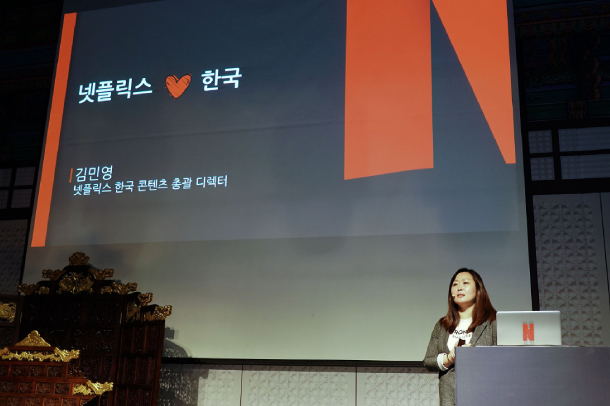
    Ahead of the launch of Netflix’s first original Korean drama series today, executives from the streaming giant expressed confidence in the global popularity of Korean content at a press briefing in Seoul, Thursday. Kim Min-young, the director of content at Netflix in Korea, said that she expected to win over fans with the company’s first-ever original Korean drama series “Kingdom,” a highly-anticipated zombie series that launches on the streaming platform.

    “‘Kingdom’ will launch in 190 countries in 27 languages at the same time, with dubbing provided in 12 different languages,” Kim said.

    “We expect many users will want to watch it, as it can appeal to both people who like zombie thrillers or just Korean content … I believe in our creators and [the popularity] of Korean media, which is also the reason why Netflix launched Korea’s own content team in the country last year.”

    Before last May, the team that produced and licensed content to Netflix for the Korean market worked from Singapore at the company’s Asia-Pacific headquarters. Following the relocation, the Korean content team has been pursuing licensing and production activities more actively, working with domestic content producers like JTBC and Studio Dragon.

    Regarding original production in Korea, Kim said she benchmarks successful foreign Netflix original dramas like Spanish title “Elite” and Turkey’s “The Protector” that became huge hits with users across the world.

    “Our ultimate goal is to present entertainment to consumers, and from our experience, we found it necessary to give creators the freedom to tell the story they want to share,” said Kim.

    “As you can see with ‘Black Mirror: Bandersnatch,’ we will help producers to not be hindered from doing what they want because of technological limits.”

    “Black Mirror: Bandersnatch” is a choose-your-own-adventure film by Netflix that allows users to choose one of many action courses for the characters throughout the movie to determine how the plot progresses. Kim hinted that the impressive technological feats as shown via the interactive video could also be made possible in Netflix’s Korean programs.

    “We were also satisfied with the performance of our original entertainment program ‘Busted!,’ as reflected by our decision to produce a second season,” she said.

    The Netflix team also addressed concerns that Netflix provided limited service offerings and imposed unfair deals on its Korean partners.

    “Although we can’t provide all content available out there, we conduct analyses to discover what content users want,” Kim said. “But we have contents like ‘Friends,’ ‘Walking Dead’ and ‘Kim’s Convenience’ which users can’t access elsewhere.”

    In response to a rumored nine-to-one profit division between Netflix and Korean distributors like IPTV operator LG U+, Nigel Baptiste, director of partner engagement at Netflix, said that he could not “go into the specifics of what the deals are with our partners,” but the goal was to help “everyone in the ecosystem benefit.”

    The team did reassure users that subscription fees will not rise anytime soon in Korea.

    “We did increase prices in the U.S. … but we don’t have plans to do so right now [in Korea],” said the vice president of Asia-Pacific communications, Jessica Lee.

    Netflix is planning to release several new series in Korea this year – the first seasons of “Love Alarm,” “My First First Love,” “School Nurse Ahn Eun Young” and the second season of “Busted!”

    Mobile app research company WiseApp reported that some 900,000 Koreans used the Netflix mobile app on Android phones alone last September.

  • Love Yourself a BTS-themed coca cola

    Love Yourself a BTS-themed coca cola

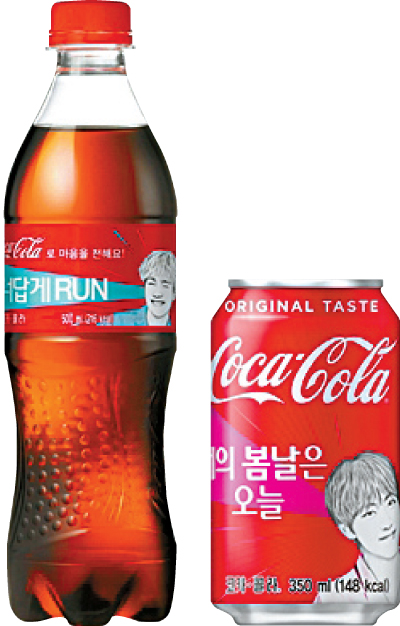
    Coca-Cola launched BTS-themed bottles as part of its “Share a Coke” campaign on Monday. The bottles come in seven different designs – each one representing a member of the K-pop boy group – with inspirational messages referencing the group’s song titles. This year, the special Coke bottle labels read in Korean “Your spring day is today,” “I’m fine if it’s you,” “Run like yourself,” “You’re really dope,” “You are my idol,” “Go instead of worry” and “This year is blazing fire.”

    Bottles are also decorated with images of the members’ faces and vivid colors like pink, yellow and green.

    The BTS-themed drinks are available in grocery stores and convenience stores across Korea. They come in 350-milliliter (12-ounce) aluminum cans and 500-milliliter, 1.5-liter and 1.8-liter bottles.

    Coca-Cola in Korea has been launching special edition Coke bottles as part of its Share a Coke storytelling campaign since 2014. The campaign’s goal is to help consumers share hopeful messages with friends and family by exchanging the drinks with one another.

  • BTS to promote new Hyundai Palisade SUV

    BTS to promote new Hyundai Palisade SUV

    Global K-pop sensation BTS has been chosen as the face of Hyundai Motor’s new large Palisade SUV, which will premiere at the upcoming LA Auto Show. The carmaker said Tuesday that it has appointed the seven-member boy band as the global ambassadors for the vehicle. The group will introduce the car in a video to be shown at the auto show today.

    According to Hyundai Motor, the group’s explanation will focus on the large SUV’s spacious interior and the convenient features found throughout its three rows of seats.

    “Hyundai Motor appointed BTS as the global brand ambassador of the Palisade as the K-pop group was considered the most suitable to introduce the new vehicle that is throwing the gauntlet down in the large SUV market,” the company said in a statement Tuesday.

    “The group will be able to deliver the greatly spacious interior of the Palisade, which is able to accompany seven to eight people.”

    Hyundai Motor said it would live stream the premiere on the automaker’s Facebook page. It will also post a range of videos featuring BTS and the Palisade on its social media accounts.

  • Merchandise from K-pop is popular with Chinese

    Merchandise from K-pop is popular with Chinese

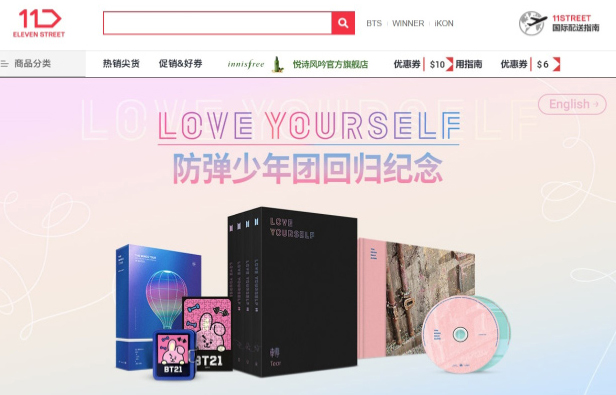
    K-pop merchandise is selling well on e-commerce platform 11st’s global website, boosted by fans from the greater China region, which account for 43 percent of the products’ sales.

    According to figures for the first five months of the year, 43.2 percent of customers for K-pop merchandise online are from China, Hong Kong, Macau and Taiwan.

    A large part of that demand – 30.7 percent – came from Taiwan, which was the No. 1 destination for goods bought on 11st. Japan was second place (10.8 percent), followed by the United States (10.6 percent), China (6.6 percent) and Hong Kong (6.2 percent).

    “Until last year, cosmetics and beauty products were the majority of items bought by foreign customers on our website,” said a spokeswoman for 11st. “But recently revenue from idol-related products, apart from CDs, has started to account for a significant proportion of our sales.”

    The company just started this year to launch promotion and marketing events to sell K-pop merchandise in partnerships with domestic entertainment companies.

    11st sold K-pop merchandise to 60 countries worldwide that included South America, Europe, Middle East and Africa.

    Taiwanese customers had a big preference for merchandise featuring Super Junior, SHINee, TVXQ, Blackpink, iKON and GOT7, while Japanese were keen on merchandise related to Eun Ji-won, a member of Korea’s first-generation idol group SechsKies.

  • Oh!K expands into Indonesia

    Oh!K expands into Indonesia

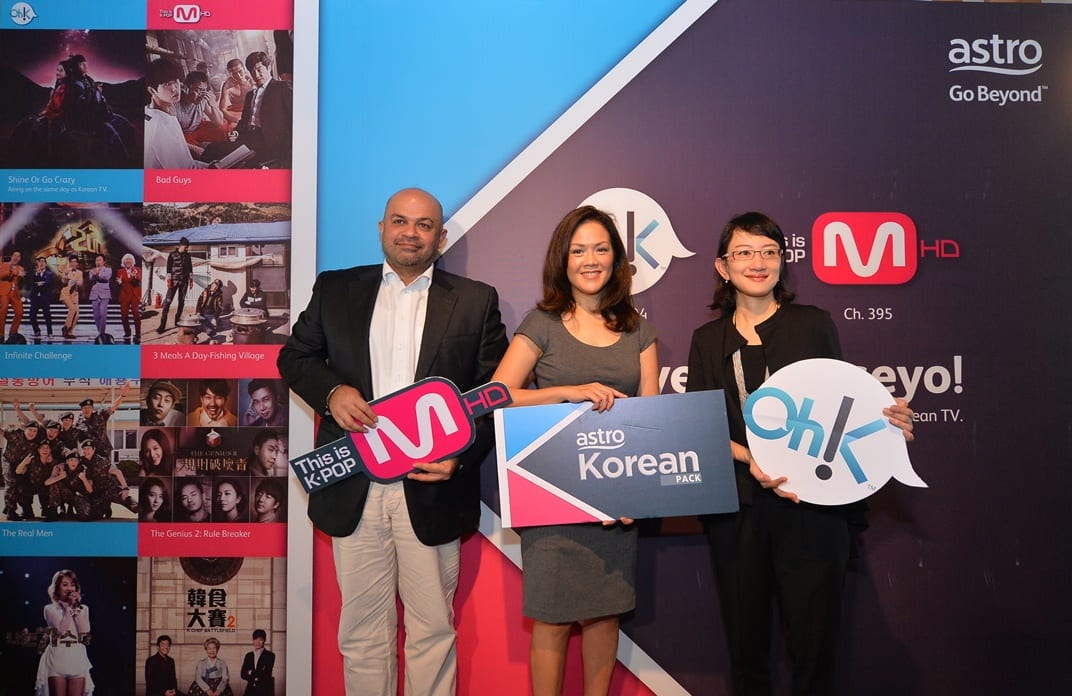
    K-entertainment fans in Indonesia will now be able to catch the latest and best Korean content within hours of its world premiere with the launch of Oh!K on Tribe.

    This new OTT service from XL, a telecommunications operator, offers its subscribers via the Tribe app exclusive access to fresh, first-run, localized and high-quality video, via mobile devices and online.

    Oh!K currently boasts a slew of popular series including Monster, which will premiere later this month, and Marriage Contract, which is currently running on the channel. These express titles air within 24 and 48 hours of Korean telecast, respectively.

    “Since Turner launched Oh!K in October 2014, the channel’s reach and popularity has grown significantly,” said Phil Nelson, Turner’s managing director for Southeast Asia. “In just 18 months, partners in Singapore, Malaysia, Hong Kong and now in Indonesia with Tribe, have responded to the growing appetite for quality Korean content.”

    Other express titles on Oh!K include Just Married and Korea’s No. 1 variety show Infinite Challenge – starring celebrity hosts Yoo Jae Suk, Park Myung Soo, Jung Joon Ha, Jung Hyung Don, Hwang Kwang Hee and Haha.

    Oh!K’s programming is also supplemented by special live simulcasts from Korea, such as the MBC Drama and Entertainment Awards and Gayo Daejun (Korean Music Festival) available on the channel.