Tag: Kraft

  • San Francisco Makes Legal Moves Against Kraft & Mondelez: An Obesity, Cancer Link to Ultra-Processed Foods at Stake?

    San Francisco Makes Legal Moves Against Kraft & Mondelez: An Obesity, Cancer Link to Ultra-Processed Foods at Stake?

    The city of San Francisco has lodged a legal complaint against multiple ultra-processed food manufacturers, including Kraft, Mondelez, and Coca-Cola. The city claims these companies have knowingly endangered the health of Californians with their addictive and damaging products.

    A Public Health Crisis

    San Francisco’s City Attorney, David Chiu, filed the lawsuit in San Francisco Superior Court. The suit alleges that these corporations implemented strategies mirroring those of the tobacco industry, deliberately creating and promoting products to induce consumer addiction. The city accuses these companies of contravening California’s public nuisance and misleading marketing laws.

    In a statement, Chiu commented, “These companies have manufactured a public health crisis, profited substantially, and must now be held accountable for the damage they’ve inflicted.”

    The city argues that the surge in ultra-processed foods has precipitated a rise in obesity, cancer, and diabetes rates. Chiu’s office has underscored that heart disease and diabetes – both connected to ultra-processed foods – are among the principal causes of death in San Francisco, with low-income and minority communities experiencing higher diagnosis rates.

    Industry Response

    At the time of reporting, representatives for Mondelez, Coca-Cola, and Kraft Heinz had not yet provided comment on the lawsuit. However, Sarah Gallo, the Senior Vice President of Product Policy for the Consumer Brands Association, countered that there is currently no universally accepted scientific definition of ultra-processed foods. She suggested that categorizing foods as unhealthy based purely on their processed nature, or vilifying food by disregarding its complete nutrient content, can mislead consumers and exacerbate health disparities.

    Implications and Precedence

    The city aims to obtain restitution and civil penalties to alleviate its healthcare costs and is seeking a court order to prevent these corporations from engaging in misleading marketing and mandate changes in their practices.

    While the classification of ultra-processed foods is still disputed, researchers typically refer to many packaged snack foods, sweets, and carbonated drinks made using processing methods, additives, and industrial ingredients, which primarily contain little whole foods.

    The lawsuit is significant as it is the first instance of a municipality suing over allegations that food companies have knowingly advertised and sold harmful and addictive ultra-processed foods.

    This lawsuit follows a similar case brought forward by a man from Philadelphia, who alleged that he was diagnosed with Type 2 diabetes and non-alcoholic fatty liver disease at the age of 16 due to his consumption of ultra-processed foods. However, this lawsuit was dismissed in August after a federal judge in Pennsylvania stated the plaintiff failed to link specific products to his health conditions.

    Questions & Answers

    What is the basis of San Francisco’s lawsuit against ultra-processed food manufacturers?
    The city alleges that these companies have knowingly endangered Californians with their addictive and harmful products, contributing to a public health crisis.

    What is the city’s objective in filing this lawsuit?
    The city aims to obtain restitution and civil penalties to offset its healthcare costs. It is also seeking a court order to prevent these corporations from engaging in deceptive marketing and mandate changes in their practices.

    What is the significance of this lawsuit?
    This lawsuit marks the first time a municipality has sued over claims that food companies have knowingly marketed and sold harmful and addictive ultra-processed foods.
  • Kraft Heinz Q3: Dipping Sales, Savory Split in 2026 & the Crunch for Iconic Brands

    Kraft Heinz Q3: Dipping Sales, Savory Split in 2026 & the Crunch for Iconic Brands

    Food industry behemoth Kraft Heinz reported a disappointing third quarter with lower than anticipated results. The company attributes the underperformance to persistent cost pressures and diminishing consumer demand, which have compelled a downward revision of its forecast for fiscal year 2025.

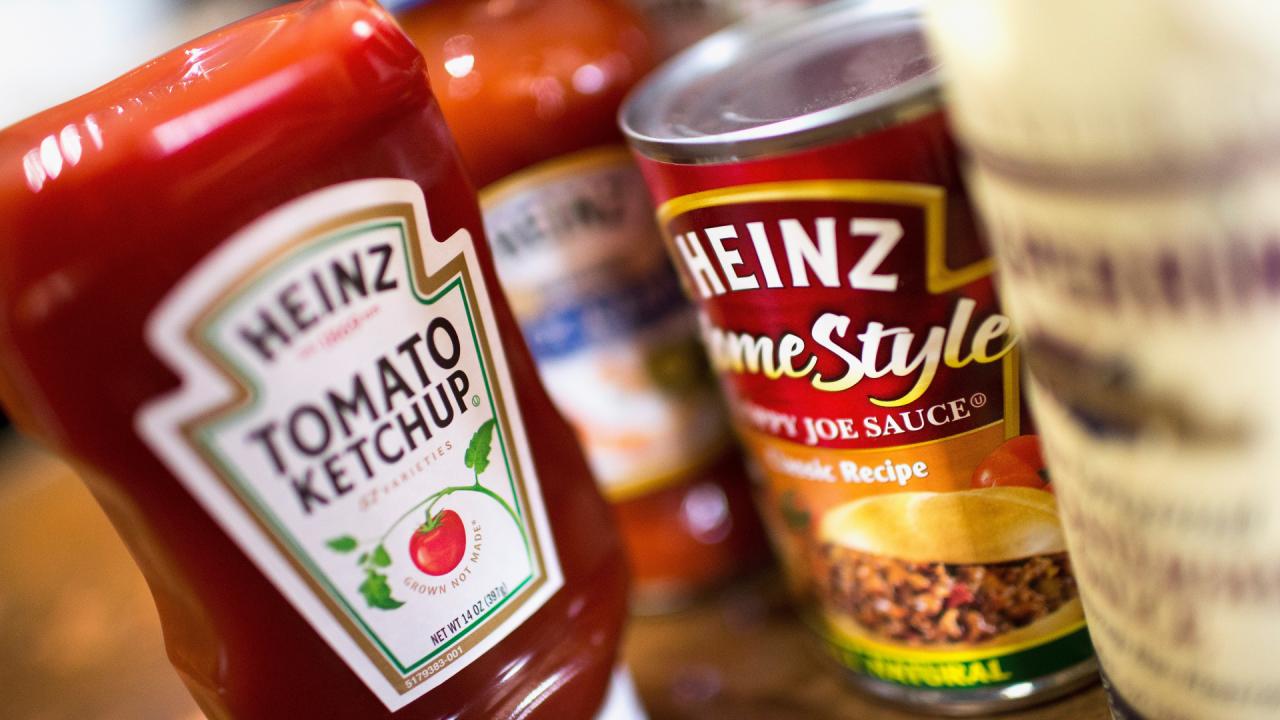
    Kraft Heinz, the name behind iconic products like Heinz Ketchup and Kraft Mac & Cheese, recorded global net sales of US$6.24 billion. This represents a decline of 2.3% from the corresponding quarter in the previous year, with organic sales dipping by 2.5%.

    The company’s adjusted operating income fell by 16.9% to US$1.1 billion, marking a significant decrease of nearly 19% from the same period last year.

    CEO’s Statement

    According to Kraft Heinz’s CEO, Carlos Abrams-Rivera, the company’s third quarter performance reflects a slight improvement in their top-line performance compared to the first half of the year.

    Despite this, North America, the company’s largest market, continues to experience challenges as customers scale back on their spending on pantry essentials.

    In this region, the net sales declined by 3.8%, a consequence of a 4.2-point decrease in volume and mix. Contrarily, net sales in international developed markets saw an increase of 1.6%, and emerging markets, including those in Western and Eastern parts, as well as Asia, experienced growth of 3.8%.

    Challenges and Market Positioning

    Daniel Binns, Global CEO of brand consultancy firm Elmwood, highlighted the company’s struggle with volume declines across its famous brands. According to him, the prime challenge lies in maintaining a premium positioning while staying relevant to shifting consumer needs.

    Binns emphasized that legacy brands need to assert their value in visible and relevant ways, be it through innovation, revitalized storytelling, or superior consumer experiences.

    “I believe consumers need to perceive brands as ‘meaningfully different’ to accept premium pricing. Simply being ‘reassuringly expensive’ no longer suffices,” Binns asserted.

    Future Plans

    Going forward, Kraft Heinz confirmed its plan to divide into two publicly traded companies during the latter half of the next year.

    The first entity, Global Taste Elevation Co, will encompass Heinz, Philadelphia, and Kraft Mac & Cheese. The second, North American Grocery Co, will include a curated portfolio of North American staples with three billion-dollar brands – Oscar Mayer, Kraft Singles, and Lunchables.

    Abrams-Rivera expressed confidence that this separation would allow each business to better concentrate resources, improve execution, reduce complexity, and foster further efficiencies.

    Binns advanced the view that Kraft Heinz’s planned division could enable the portfolios to follow distinct strategies. The core challenge, however, is that heritage brands must evolve thoughtfully, engaging consumers while maintaining their price premium through real benefits and authentic differentiation rather than merely relying on nostalgia.

    Questions & Answers

    What were the Q3 results for Kraft Heinz?
    The company reported lower than expected results, with global net sales of US$6.24 billion, marking a decline of 2.3% from the same period last year.

    What is Kraft Heinz’s plan for the future?
    Kraft Heinz plans to split into two publicly traded companies during the second half of the coming year.

    What challenges does Kraft Heinz face?
    The key challenge for Kraft Heinz is to maintain the premium positioning of their heritage brands while staying relevant to shifting consumer needs. This involves portraying their brands as ‘meaningfully different’ to justify premium pricing.

  • Kraft Heinz Announces Strategic Split Into Two Independent Companies

    Kraft Heinz Announces Strategic Split Into Two Independent Companies

    The Kraft Heinz Company recently announced its comprehensive strategy to divide its current operations into two independent companies. This decision is aimed at enhancing functionality and reducing operational complexity.

    The Plan for Separation

    The company’s board has given its approval for this plan, which will result in the formation of two separate, publicly traded entities through a tax-free spin-off.

    The first of these entities will be Global Taste Elevation Co. This company will focus on spices and shelf-stable meals, boasting net sales of approximately US$15.4 billion and an adjusted EBITDA of $4 billion in the previous year. Its brand portfolio will include well-known names like Heinz, Philadelphia, and Kraft Mac & Cheese. Notably, sauces, spreads, and seasonings will make up 75% of its sales.

    The second entity, North American Grocery Co, will have net sales of $10.4 billion and an EBITDA of $2.3 billion. This firm will oversee brands such as Oscar Mayer, Kraft Singles, and Lunchables.

    Expected Outcomes

    The division is expected to grant each new company greater strategic and operational focus. This will allow them to allocate resources appropriately, streamline operations, and distribute capital based on their individual strategies.

    Miguel Patricio, the board’s executive chair for Kraft Heinz, noted that while their brands are celebrated and iconic, the current structural complexity impedes effective capital allocation and prioritization of initiatives. The split into two companies will enable the unlocking of each brand’s potential, driving improved performance and long-term shareholder value.

    Carlos Abrams-Rivera will maintain his leadership role at Kraft Heinz during the separation, transitioning to become the CEO of North American Grocery Co once the process is complete. Meanwhile, the board is collaborating with an executive search firm to find suitable CEO candidates for Global Taste Elevation Co.

    Kraft Heinz has no plans to relocate its current headquarters. The board has also created a Separation Committee, led by Vice-Chair John Cahill, to supervise the spin-off’s execution.

    The company expects to finalize the separation by the second half of next year. It also anticipates dis-synergies of up to $300 million, with clear opportunities to offset a significant portion of these in the near term.

    Questions & Answers

    What are the two new companies that will be formed from the Kraft Heinz split?
    The two new companies will be Global Taste Elevation Co and North American Grocery Co, each specializing in different areas of the food industry.

    Who will lead North American Grocery Co?
    Carlos Abrams-Rivera, who currently leads Kraft Heinz, will become the CEO of North American Grocery Co once the separation is complete.

    When is the split expected to be finalized?
    The separation is expected to conclude by the second half of next year.

  • Kraft Heinz Reports $8 Billion Loss Amid Rising Costs And Impairment Charge: A Resilient Sales Performance Amid Turbulence

    Kraft Heinz Reports $8 Billion Loss Amid Rising Costs And Impairment Charge: A Resilient Sales Performance Amid Turbulence

    In the second quarter of 2025, multinational food company Kraft Heinz reported a net loss of $8 billion (AUD$12 billion). This financial downturn was primarily due to a $9.3 billion impairment charge. However, despite significant market challenges, the company’s overall sales exhibited resilience.

    Sales Performance

    Kraft Heinz saw a slight decline in its net sales by 1.9%, dropping to $6.35 billion. Organic sales also fell by 2%, where increased pricing countered a 2.7% volume decrease across various product categories. These categories included cold cuts, coffee, lunchables, frozen snacks, and powdered beverages.

    Operating Loss and Adjusted Income

    Operating income sharply fell into a loss of $8 billion. Similarly, adjusted operating income experienced a 7.5% decrease, landing at $1.3 billion. Kraft Heinz attributed these decreases to rising commodity costs and unfavorable volume and mix. However, these pressures were somewhat alleviated by price increases, reductions in advertising expenditures, and beneficial effects from foreign exchange.

    The company pointed to the impairment charge as the main factor driving their losses. This was largely due to a consistent decrease in share price and market capitalization.

    Strategic Initiatives

    Despite these challenges, Kraft Heinz remains committed to its long-term strategic plans. These include targeted investments in their brands, innovative product development, and improvements in operational efficiency. These initiatives aim to counterbalance the softness in volume and cost inflation.

    Carlos Abrams-Rivera, CEO of Kraft Heinz, commented on the company’s Q2 results, stating, “Our second quarter top-line results reflect this dedication, improving from the first quarter. We are delivering value and driving improvement, underpinned by our Brand Growth System and our Go To Market model.”

    Earlier in the year, it was rumored that Kraft Heinz was considering a spinoff of parts of its grocery division, as it continues to adapt to changing consumer preferences and a general shift away from processed foods.

    Questions & Answers

    What were Kraft Heinz’s net losses in Q2 2025?
    Kraft Heinz reported a net loss of $8 billion (AUD $12 billion) in the second quarter of 2025.

    What factors contributed to the company’s financial downturn?
    The company’s financial downturn was primarily due to a $9.3 billion impairment charge. Other contributors were rising commodity costs and an unfavorable volume and mix.

    What strategic initiatives is Kraft Heinz focusing on to combat these challenges?
    Kraft Heinz is focusing on strategic initiatives like targeted brand investments, product innovation, and operational efficiencies to help counterbalance volume softness and cost inflation.

  • Kraft Heinz is mulling the sale of brands to ‘unlock shareholder value’

    Kraft Heinz is mulling the sale of brands to ‘unlock shareholder value’

    Kraft Heinz, a leading food and beverage corporation, recently disclosed that it’s considering “potential strategic transactions” as a measure to boost shareholder value.

    Strategic Moves for Value Creation

    According to Kraft Heinz’s CEO, Carlos Abrams-Rivera, the company lays significant emphasis on delivering high-quality, great-tasting food to its consumers. This commitment, he believes, is vital to driving sustainable profitability, growth, and value creation.

    Potential Brand Transactions

    While Kraft Heinz is considering strategic transactions, the company has made it clear that it will not offer a timeline for any such potential deals, nor does it guarantee the sale of any of its brands.

    Kraft Heinz is a global powerhouse with more than 80 brands under its belt. In Australia, it owns Greenseas and Golden Circle; in New Zealand, it owns Watties, Cats Prefer Chef, Food in a Minute, and the Good Taste Company. The company hasn’t specified which markets may be targeted for potential brand transactions.

    Board Reorganization

    In related news, Kraft Heinz also announced that Berkshire Hathaway would no longer maintain its seats on the Heinz board, a decision that aligns with its other non-controlled investments. Consequently, Timothy Kenesey and Alicia Knapp have resigned from the Heinz board due to their affiliations with Berkshire Hathaway as executives, reducing the board’s size to 10 members.

    Questions & Answers

    What strategic transactions is Kraft Heinz considering?
    The specifics of the potential strategic transactions that Kraft Heinz is considering have not been disclosed. However, they are aimed at enhancing shareholder value.

    Will Kraft Heinz sell any of its brands?
    As of now, Kraft Heinz has not guaranteed the sale of any of its brands, nor has it provided a timeline for potential transactions.

    Why have Timothy Kenesey and Alicia Knapp stepped down from the Heinz board?
    Timothy Kenesey and Alicia Knapp have resigned from the Heinz board due to their executive associations with Berkshire Hathaway, which has relinquished its seats on the board.

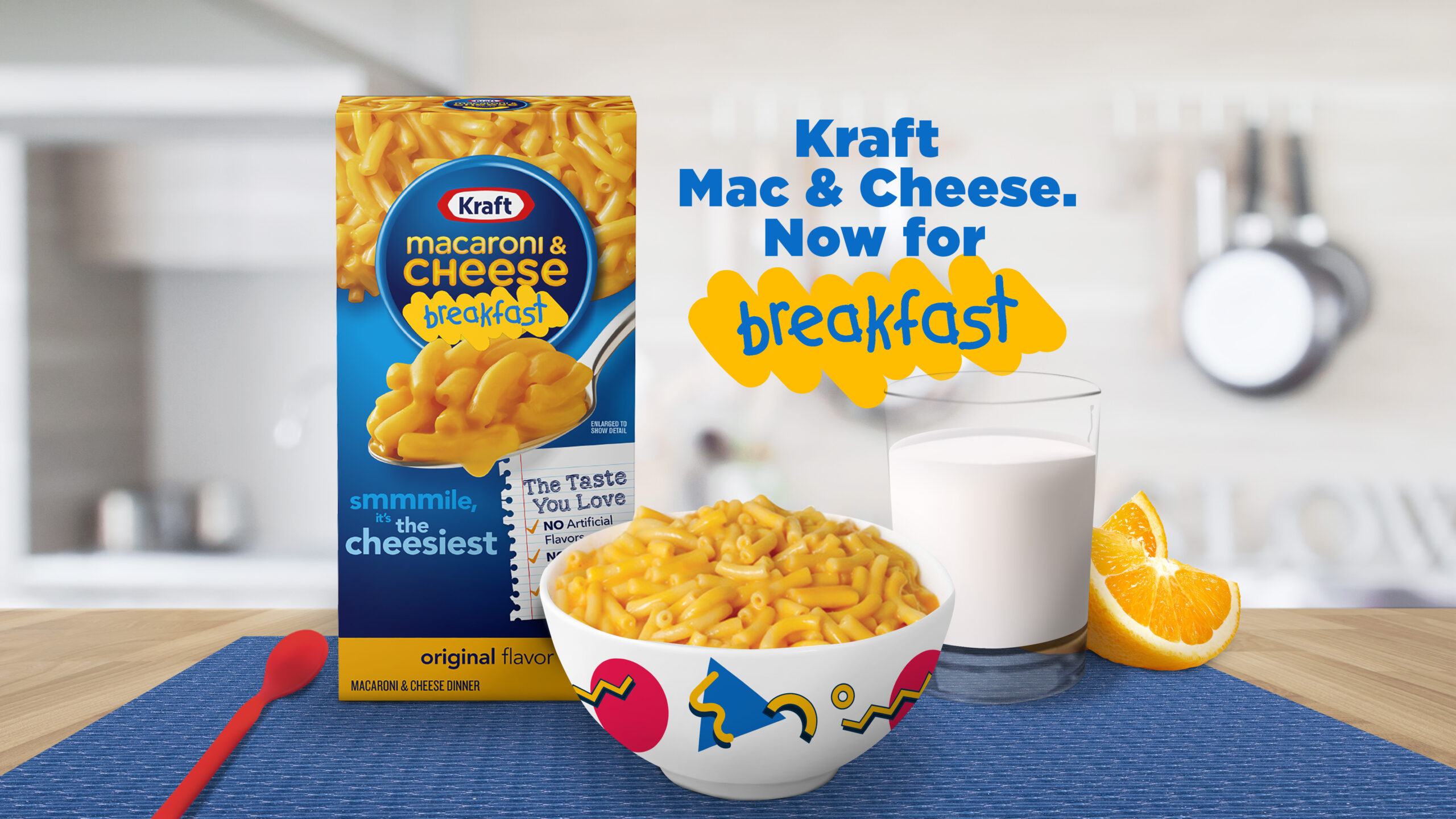
  • Kraft US launches plant-based Mac & Cheese

    Kraft US launches plant-based Mac & Cheese

    Kraft US has launched its first plant-based Mac & Cheese, strengthening its plant-based portfolio in the market.

    The range features Original and White Cheddar flavors and is available now nationwide through early next year.

    Kraft NotMac&Cheese is an example of the brand’s plan to expand its portfolio of plant-based solutions across a broad range of categories.

    “The Kraft Heinz Not Company creates plant-based versions of fan-favorite foods that taste like the real thing, yet don’t require people to change their eating habits drastically,” said Lucho Lopez-May, CEO of Kraft Heinz Not Company.

    “NotCo brings its revolutionary AI technology that has a proven track record in creating mouthwatering plant-based foods to Kraft – the beloved mac & cheese brand that sells over a million boxes daily.”

    In addition, the introduction expands on The Kraft Heinz Not Company’s existing plant-based options, which include Kraft NotCheese Slices and NotMayo. The Kraft Heinz Company plans to expand into five additional categories and begin worldwide operations next year.

  • Kraft Heinz launches frozen vegetarian snacks

    Kraft Heinz launches frozen vegetarian snacks

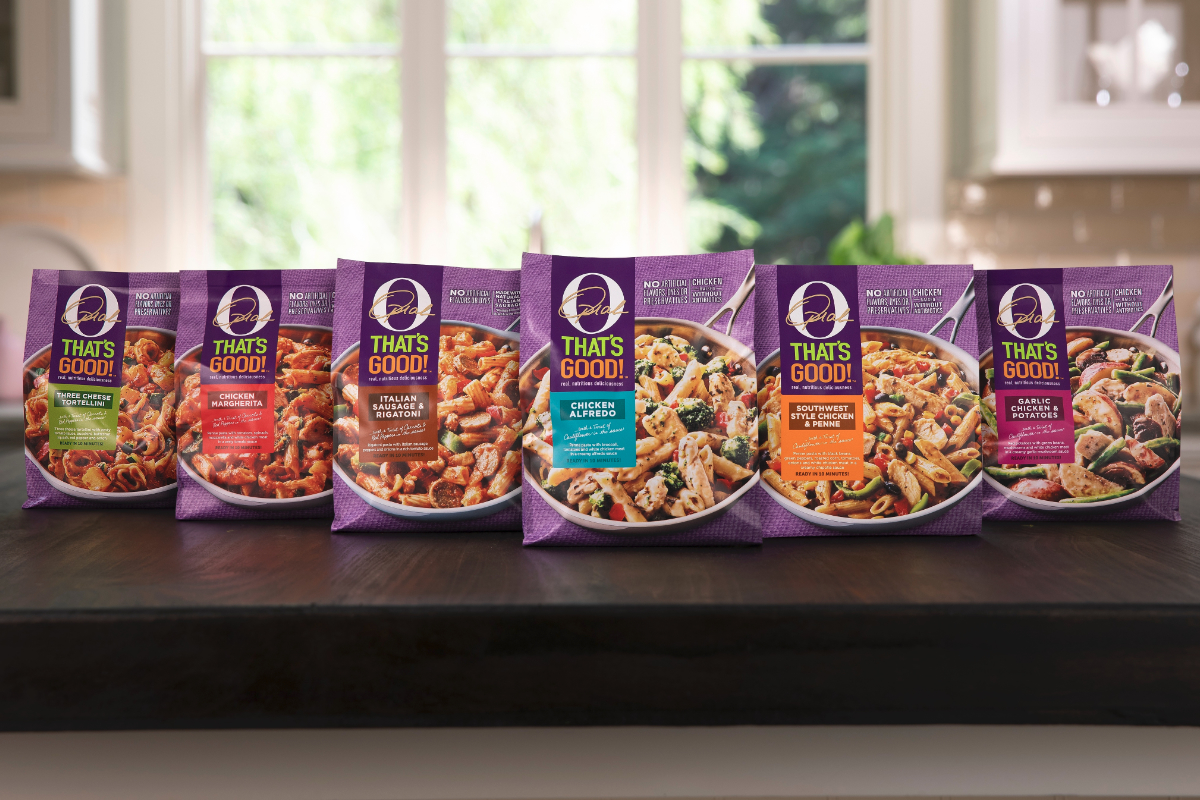
    Kraft Heinz in collaboration with Oprah Winfrey unveiled a series of new O, That’s Good! Frozen Skillet meals.  This launch is the fourth category from Mealtime Stories, LLC, the joint venture between Kraft Heinz and Oprah Winfrey, which includes refrigerated soups, sides, and frozen pizza.

    The O, That’s Good! brand was inspired by Oprah’s love for nutritious food. The newcomers are said to be comfort foods with a twist of veggies, ready in just 10 minutes. For example, the Chicken Alfredo meal swaps cream in the sauce with pureed cauliflower to bring the fat content down with 35%.

    “Comfort food gets a bad rap, but not anymore. With the new skillets, there’s a twist of veggies in the sauce, but you’d never know the difference,” said Winfrey.

    O, That’s Good! Frozen Skillet Meals (suggested retail price: USD6.99) are available nationwide in six varieties: Chicken Alfredo, Chicken Margherita, Southwest Style Chicken & Penne, Italian Sausage & Rigatoni, Garlic Chicken and Potatoes, and vegetarian-friendly Three Cheese Tortellini. All are made with high-quality ingredients, including antibiotic-free chicken and natural sausage, and have no artificial flavors, preservatives or dyes.

    Kraft Heinz will support O, That’s Good! Frozen Skillet Meals with a robust 360-degree marketing campaign, including a new national TV ad featuring Winfrey.

    Along with skillets, O, That’s Good! is extending its pizza line to include three new frozen thin-crust pizza options (USD6.99) with a twist of cauliflower in the crust: BBQ

  • Kraft launches vegan Mac & Cheese

    Kraft launches vegan Mac & Cheese

    After researching plant-based alternatives for its Philadelphia cream cheese, international food conglomerate Kraft has released a vegan version of its classic Mac & Cheese box. Gluten-free and vegan-certified, the new product is available via Woolworths supermarket in Australia – though it is currently sold out.

    Excitement grew on social media as it flooded with images and posts about a vegan version of Kraft’s iconic Mac & Cheese boxes, but little information has been forthcoming regarding the launch. Now known as Kraft Heinz, the multinational has been slow to move in the plant-based market, but did launch vegan mayo and salad dressing options last year

    The new Mac & Cheese Vegan is perfect for quick dinners and is free from artificial colours and flavours. Made with rice flour pasta and a dairy-free sauce, the cooking instructions also suggest using a plant-based milk in place of cow’s milk.

    Kraft has yet to release information about whether the product will be made available in other markets.

  • Kraft Heinz gives away bulk ketchup to Melbourne small businesses

    Kraft Heinz gives away bulk ketchup to Melbourne small businesses

    Food and beverage company Kraft-Heinz is giving away 12-liter cartons of Heinz Tomato Ketchup to small business owners in Melbourne, including burger restaurants and other quick-service restaurants.

    As restrictions ease across Victoria, the company says it wants to help business owners affected by Covid-19 lockdowns get back on their feet with complimentary product deliveries. 

    “We know that the Melbourne restaurant industry has been hit hard by the latest lockdowns, with small, independent businesses particularly impacted,” said Marisa Jones, head of marketing foodservice ANZ at Kraft Heinz.

    “Whether you’re a burger bar, cafe owner or run another quick-service restaurant, we want to provide our foodservice community with an offer of assistance,” she said. 

    Eligible businesses are those located in the Melbourne metropolitan area, of 30 employees or less, privately owned and not part of a franchise group. The offer will be limited to one carton per business, who do not have to be an existing customer of Kraft Heinz.

    Business owners can apply for this offer from Kraft Heinz here until June 30 or until supplies last. Each delivery will consist of a carton of Heinz Tomato Ketchup containing three 4-litre bottles. 

  • Kraft Heinz and DKSH expand their strategic partnership to Malaysia

    Kraft Heinz and DKSH expand their strategic partnership to Malaysia

    DKSH Business Unit Consumer Goods, the leading partner for FMCG companies seeking to grow their business in Asia, is expanding its partnership with The Kraft Heinz Company, the fifth-largest food and beverage company in the world, to Malaysia.

    DKSH had a long-lasting relationship with Kraft Foods, dating back to 2001. Since Kraft Foods and Heinz joined forces, DKSH has been supporting the company in Singapore and Hong Kong, which are both key markets in the region.

    The expansion of the partnership to Malaysia is an example of DKSH’s track record and capabilities as pan-Asian services provider for multinational FMCG companies. The strategic decision of Kraft Heinz to appoint DKSH as partner in Malaysia aims at simplifying its operation in the region, by decreasing time spent on distributor management and by moving from a multi-distributor model to one service provider.

    DKSH will provide a full-service solution for Kraft Heinz to accelerate growth for household brands, such as Heinz, ABC, HP Sauce, Lea & Perrin’s and Wattie’s in Malaysia. DKSH’s approach to drive growth is fourfold: First, DKSH will be decreasing Kraft Heinz’s operational complexity in Malaysia, including East Malaysia. Second, it will also improve accessibility by closing distribution gaps in Modern Trade and expanding coverage in General Trade and Food Services. Third, the company will strongly focus on operational excellence and on raising on-shelf availability. Lastly, DKSH will enable effective analysis through data sharing and business intelligence.

    Joao Leitao, Managing Director, SEA, NWA, India and APAC Exports at Kraft Heinz, commented: “We believe the partnership with DKSH will simplify our operation and open new doors for us. Having one partner that provides a full-service solution in multiple markets in the region is a key strategic reason for us the expand our partnership to Malaysia.”

    Terry Seremetis, Global Head, Business Unit Consumer Goods at DKSH, commented: “We are excited to expand our relationship with a leading company like Kraft Heinz, as this is a testament to the strength of our growth platform and will further strengthen our position in the market. We are fully committed to driving the availability and visibility of globally renowned brands like Heinz and regional hero’s like ABC.”

  • World’s biggest brands put on notice over 5,000,000-tonne laminate packaging problem

    World’s biggest brands put on notice over 5,000,000-tonne laminate packaging problem

    Big brands have been put on notice about their inaction over the world’s growing 5,000,000-tonne problem of plastic aluminium laminate waste.

    Following revelations about the scale of the problem in the UK and internationally, the CEO of the company behind the world’s only solution for recycling laminates – food pouches, pet food pouches, toothpaste tubes, sachets – has called on the world’s biggest FMCG companies to support investment in new processing capacity.

    Enval CEO Dr Carlos Ludlow-Palafox has written an open letter addressed to the CEOs of companies that benefit from laminate packaging, such as Unilever, Kraft, Nestlé Mars, Colgate, Campbell’s, GSK and Hain-Celestial to get behind efforts to process post-consumer waste.

    Across Europe and the US, billions of plastic aluminium laminate pouches, tubes and sachets are being discarded and sent to landfill or incineration while consumers are often misled into thinking that they are recycled, as reported.

    In the UK alone more than 10 billion laminate packaging items are sold annually but fewer than 1 in 20,000 is recycled. Of the remainder two thirds go to landfill and the rest are incinerated. This recycling rate is 50 times worse than that of disposable coffee cups, which has received great attention from media and politicians alike.

    Because the material contains bonded plastic and aluminium, the packages cannot be treated either as plastic or as aluminium. Only the Enval process can deal with them, however currently there are no major initiatives in place in the UK or the world to collect and sort post-consumer packages and genuinely recycle them.

    To process the waste, Enval has developed the world’s only commercial scale plant to deal with the material, which uses a microwave heating method to recover the aluminium into reusable ingots and process the plastic into reclaimed oil.

    Manufacturers and waste companies have undertaken successful trials with the Enval plant but have failed to support wider collection and processing efforts due to a reluctance to make the initial investment required.

    Enval CEO Dr Ludlow-Palafox said the lack of involvement by the FMCG brand owners and the risk-averse nature of the waste handling sector has meant the Huntingdon plant is still the only one in operation.

    “We believe the time for complacency is over. FMCG brands are using laminate packaging because of its exceptional characteristics and cost and environmental benefits. Yet the fact remains that more than 10 billion pouches, tubes and sachets end up being thrown away in the UK alone. This is inexcusable now that we have an environmentally sustainable and economically viable solution. These same companies boast about their environmental credentials: it is time for some action.

    “Consumers are buying laminate packaging in good faith – often either thinking it can be recycled or because there is no other choice. Big brands have reaped the benefits of advancements in packaging technology while delivering no certainty to consumers.

    “The problem of single-use laminates dwarfs that of coffee cups. Brands and regulators now need to put their money where their mouth is and ensure that laminates can be genuinely reprocessed and these materials brought into a circular economy that benefits both the market and the planet.”

    Independent studies commissioned by WRAP UK and the UK’s Department for Environment, Food and Rural Affairs (DEFRA) have shown that laminates can be readily separated from waste streams using conventional sorting technology. These studies also proved that a majority of householders, when asked, sort laminates for recycling for collection as they do with other materials.