Tag: Krungsri

  • Krungsri Targets 350 Billion Baht in Sustainable Finance as SME Transition Accelerates

    Krungsri Targets 350 Billion Baht in Sustainable Finance as SME Transition Accelerates

    Bank of Ayudhya completed the latest cycle of its business transition programme in Bangkok on Sept 16. The lender committed 350 billion baht in sustainable financing through 2030.

    Operating as Krungsri, Thailand’s fifth-largest commercial bank by assets evaluated transition roadmaps from local suppliers. It awarded five mid-sized companies for practical decarbonisation and circular economy projects.

    Held at The Okura Prestige Bangkok, the Krungsri ESG Minute of Changes gathered corporate participants from the bank’s training academy and awards programme. Krungsri runs the scheme to push commercial borrowers past broad net-zero pledges. The programme focuses on operational carbon cuts, waste conversion, and verified supply chain upgrades.

    Transition Roadmaps for Supply Chains

    Five commercial enterprises earned top honours after the bank evaluated plans to cut emissions and recover daily operational waste. The winners spanned food processing, retail property, agriculture, healthcare, and industrial recycling.

    In retail and commercial property, market operator Supavee Tumwattana Co restructured waste management across Yingcharoen Market. The business separated food waste, coffee grounds, orange peels, and used cooking oil into raw materials for commercial repurposing. That cut haulage volumes and municipal disposal costs.

    Industrial materials maker Mailaivijit Co developed ReFoam, a composite product manufactured directly from sawdust and discarded foam scraps. In food processing, S. Ruamthai Co redirected seafood byproducts into new product lines. The shift captured secondary revenue streams and eliminated disposal overheads.

    Agricultural supplier Thai Quality Starch Co built an integrated procurement system and distributed disease-free cassava planting stock to protect raw supply against crop loss. Meanwhile, Panapan Healthcare Co deployed commercial solar arrays. The installations cut grid power consumption and lowered operational emissions.

    Cross-Sector Scrutiny and Evaluation

    Shortlisted companies submitted transition strategies to a live pitching session before a multi-sector panel. The review board examined implementation viability, commercial competitiveness, policy alignment, and measurable environmental impact.

    Panel representatives came from the Federation of Thai Industries, the Thai Chamber of Commerce and Board of Trade of Thailand, Social Enterprise Thailand, the Department of Business Development, the Thailand Greenhouse Gas Management Organisation, the Office of SMEs Promotion (OSMEP), and Thammasat University.

    Technical training relied on corporate and advisory partners, including the Stock Exchange of Thailand, KPMG Thailand, the Board of Investment, Onnex by SCG, Schneider Electric, and Alto Tech. These specialists supplied data tools, energy management frameworks, and compliance audits. The tools helped participants structure viable capital expenditure plans.

    Krungsri President and Chief Executive Kenichi Yamato said: “Advancing sustainability is not simply about setting ESG targets. It is about turning transition plans into action and delivering tangible results, which requires collaboration across sectors.”

    Credit Allocation and Transition Risks

    Thai commercial lenders are shifting their approach from broad sustainability pledges toward rigorous project-level verification. For years, financial institutions across Southeast Asia marketed green credit facilities that mid-sized operators struggled to tap. Rigid reporting rules and vague return profiles blocked access.

    By integrating technical consultants and trade federations into the vetting process, the bank pre-qualifies suppliers for dedicated loan tranches. Kasikornbank and Siam Commercial Bank run similar programmes. Both rivals have rolled out tailored decarbonisation loans for exporters facing strict overseas supply chain audits.

    Execution remains the primary commercial risk for smaller suppliers. Rising capital expenditure on solar arrays, waste-sorting machinery, and certified agricultural stock must deliver clear margin gains. Trade volatility, raw material inflation, and changing European import rules continue to squeeze operating cash flows.

    For manufacturers, failure to decarbonise risks outright exclusion from multinational supply contracts. For lenders, unsecured transition lending requires close technical monitoring. Capital spending must translate into verified carbon cuts rather than balance-sheet stress.

    The Path to 2030 Targets

    Since 2023, Krungsri has run its sustainability academy and awards format annually. Over the past three years, the platform expanded from classroom instruction into an operational incubator for commercial and industrial banking clients.

    This initiative forms a core part of the bank’s domestic systemic banking mandate in Thailand. As the country works toward its 2050 Net Zero target, heavy industries, transport networks, and commercial supply chains face tighter regulatory demands to document emissions cuts.

    Borrowers will now deploy the awarded transition blueprints as the lender works toward its 350 billion baht sustainable finance target for 2030.
  • Krungsri and Schneider Electric Unite to Boost Energy Efficiency for Small and Medium Enterprises

    Krungsri and Schneider Electric Unite to Boost Energy Efficiency for Small and Medium Enterprises

    Driving Sustainable Energy Solutions in Thailand

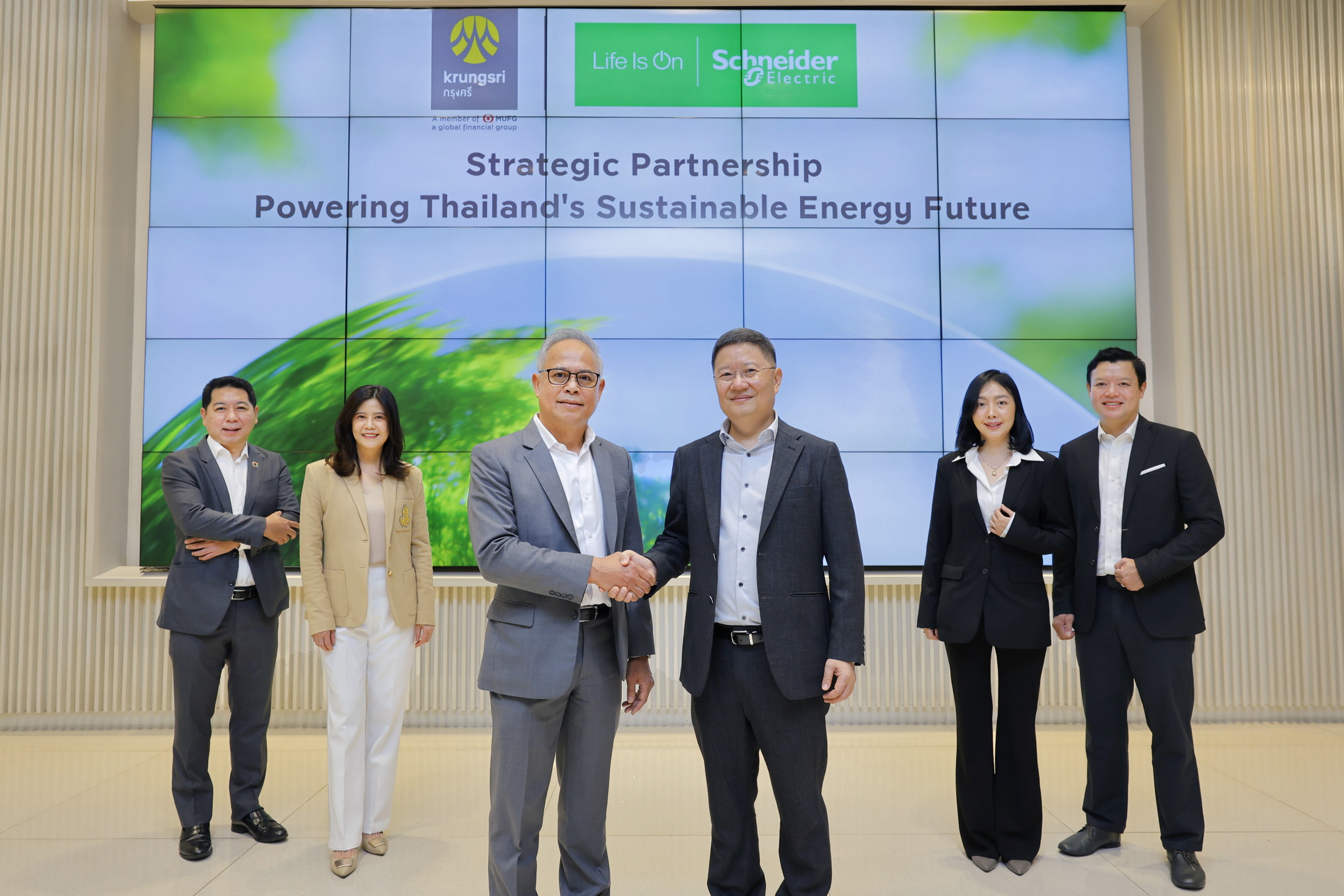
    In a progressive move to enhance energy efficiency in Thailand, Krungsri (Bank of Ayudhya) has joined forces with Schneider Electric. This partnership aims to empower the nation’s entrepreneurs, particularly small and medium enterprises (SMEs), to embrace cutting-edge energy technologies.

    By blending Schneider Electric’s renowned expertise in energy management and automation with Krungsri’s prowess in sustainable finance, the two organizations are set to tackle pressing energy and environmental challenges facing Thailand. “In our pursuit of becoming The Leading Sustainable and Regional Bank, we are committed to promoting ESG practices among Thai businesses,” stated Pairote Cheunkrut, Krungsri’s Chief Strategy Officer, in a press release.

    Focusing on the unique needs of SMEs, which can face electricity costs ranging from 10% to 30% based on their industry, Krungsri is determined to facilitate their transition to more sustainable operations. “We understand how crucial these shifts are for SMEs struggling with high energy expenses, and our initiative is designed to support them through these evolving energy landscapes,” added Cheunkrut.

    Collaboration will center around two vital areas: decarbonization and ecosystem development, as well as sustainable finance solutions. Notably, Krungsri plans to provide financial assistance that enables SMEs to invest in energy-efficient technologies. As a result, businesses can expect not only a reduction in carbon emissions but also improved long-term sustainability. After all, who wouldn’t want to turn their energy bills into a business opportunity?

    Questions & Answers

    How will Krungsri and Schneider Electric support SMEs in Thailand?
    They will combine their strengths to provide access to advanced energy technologies and financial solutions, helping SMEs transition to energy-efficient operations.

    What is the significance of decarbonization in this partnership?
    Decarbonization is a central focus as it addresses the urgent need to reduce carbon emissions, offering a pathway for businesses to operate more sustainably.

    What are the expected benefits for SMEs adapting to these energy solutions?
    SMEs can expect to reduce their electricity costs significantly, enhance their sustainability, and improve their business resilience through the adoption of energy-efficient technologies.

  • Krungsri Launches Exciting Corporate Banking Initiatives Across ASEAN Markets

    Krungsri Launches Exciting Corporate Banking Initiatives Across ASEAN Markets

    Bank of Ayudhya, known as Krungsri, is set to enhance its partnerships and consulting services geared towards high-potential industries, as it seeks to expand its corporate banking operations throughout ASEAN. With its eyes firmly on the future, the Thailand-based institution is prioritizing engagement with sectors that promise significant growth, including bio green technology, semiconductors, food innovation, and smart agriculture — all of which are pivotal for Thailand’s economic landscape in 2025.

    A Spotlight on Innovation and Collaboration

    The recent Japan-ASEAN Startup Business Matching Fair stands out as a key initiative underlining Krungsri’s strategic roadmap. This event saw participation from over 54 startups and showcased cutting-edge Japanese technologies focused on disaster prevention, culminating in an impressive 400 business connections made in just one day. Such endeavors reflect the bank’s commitment to bridging gaps and fostering collaboration within the region.

    Paving the Way for Tailored Financial Solutions

    As part of its ambition to deepen ties across ASEAN, Krungsri intends to roll out customized financial solutions for businesses, positioning itself as a valuable partner in their growth journeys. Moreover, the bank is unwavering in its dedication to achieving net-zero greenhouse gas emissions, emphasizing the importance of collaboration with public entities to facilitate knowledge sharing and elevate awareness around sustainable practices.

    Empowering Japanese Corporations

    Krusgri is particularly focused on supporting Japanese firms operating in Thailand, a community it serves robustly, covering over 70% of these businesses. The bank’s commitment is evident in its mission to empower these companies and help them realize sustainable growth metrics.

    Bunsei Okubo, head of Japanese corporate banking at Krungsri, echoed this ambition, stating, “Krungsri will remain a key driving force for Japanese corporations and support for the growth of the Thai economy, advancing innovation, nurturing growth, and fostering regional partnerships to support customer success. We are committed to being the first call business partner and Platformer for Society and Environment.”

    With plans for continuous development and collaboration, Krungsri stands ready to build the retail landscape of tomorrow, one innovative solution at a time. After all, in the fast-paced world of banking and retail, adaptability is as essential as a strong foundation.

    Questions & Answers

    What sectors is Krungsri focusing on for its expansion in ASEAN?
    Krungsri is concentrating on emerging sectors like bio green technology, semiconductors, food innovation, and smart agriculture as part of its strategy for growth in ASEAN by 2025.

    How does Krungsri plan to support Japanese companies in Thailand?
    The bank aims to empower Japanese firms by providing tailored financial solutions and helping them achieve sustainable growth, covering over 70% of Japanese businesses operating in Thailand.

    What commitment has Krungsri made regarding environmental sustainability?
    Krungsri is dedicated to achieving net-zero greenhouse gas emissions, focusing on collaboration with public sectors to enhance knowledge exchange and promote sustainable operational practices.

  • Krungsri gears up for return of investors from Japan

    Krungsri gears up for return of investors from Japan

    Bank of Ayudhya, commonly known as Krungsri, is reinforcing its commercial banking after seeing a return by Japanese companies considering investment in the Kingdom in light of the government’s “Thailand 4.0” industrial goals.

    Pornsanong Tuchinda, head of commercial banking, said yesterday that healthcare and wellness and real estate were currently the priority focus of Japanese businesses looking to invest in Thailand again since the government announced the Thailand 4.0 industrial-development policy.

    The actual level of new Japanese investment will be seen when these companies have a clear picture of development plans under the policy, he added.

    Japanese companies invested in Thailand have been a crucial part of the customer base for Krungsri’s commercial-banking operations since 2015, reflecting the successful integration between the Thai bank and BTMU (Bank of Tokyo-Mitsubishi UFJ) Bangkok Branch, which is part of Japan’s MUFG (Mitsubishi UFJ Financial Group), he said.

    Pornsanong said Japanese investors were currently eyeing healthcare and wellness business in Thailand because of this country’s increasingly “greying” population.

    Japan has expertise in healthcare and wellness in light of its own ageing population, while real estate is another business that investors are keen on because of its being tourism-related.

    The bank will offer investors total financial solutions, catering to corporate customers that may not only require financing but also financial advice and business-matching services, he said, adding that Krungsri would therefore focus more on how to deliver a package of solutions to such clients.

    A number of medium-sized Thai hospitals also are interested in expanding their healthcare and wellness business, presenting a further opportunity for the bank’s commercial-banking arm, he said.

    Last year, the unit enjoyed loan growth of 11 per cent, with outstanding lending rising to Bt642 billion thanks to the financing of major deals involving Siam City Cement, which acquired a cement business in Sri Lanka; Central Group, which purchased a retail business in Vietnam; and Thai Union Group, which acquired a business in the European Union, Pornsanong said.

    Excluding those large deals, loan growth was 7-8 per cent.

    This year, while the bank’s commercial-banking arm targets 5-per-cent growth due to fewer big deals on the horizon, it should still outpace its peers thanks to the recovering Thai economy and Thailand 4.0-related business activity, he predicted.

    Moreover, with the unit’s customer base sufficiently large for the provision of improved total solutions, it wants to give more importance to the quality of customers and offer value-added solutions to its current clients, he explained.

    Commercial banking at Krungsri covers corporate customers with annual sales revenue of more than Bt1 billion, and small and medium-sized enterprises with annual revenue below that level.

    Based on the loan-growth target of 5 per cent, most lending this year will be contributed by medium-sized enterprises, a segment in which the bank has witnessed lending demand, he said.

    “These firms [mid-sized enterprises] are more confident in the Thai economy, and many of them are in retail, where there is purchasing power but consumer sentiment |has not yet returned. If sentiment improves, purchasing power will be released and SMEs will benefit.

    “On the other hand, most corporate customers are not requiring new lending at present, as they first want to see how the global trade situation settles,” the commercial-banking head said.