Tag: kurt geiger

  • Carvela Launches Direct Retail Network in Australia After David Jones Collapse

    Carvela Launches Direct Retail Network in Australia After David Jones Collapse

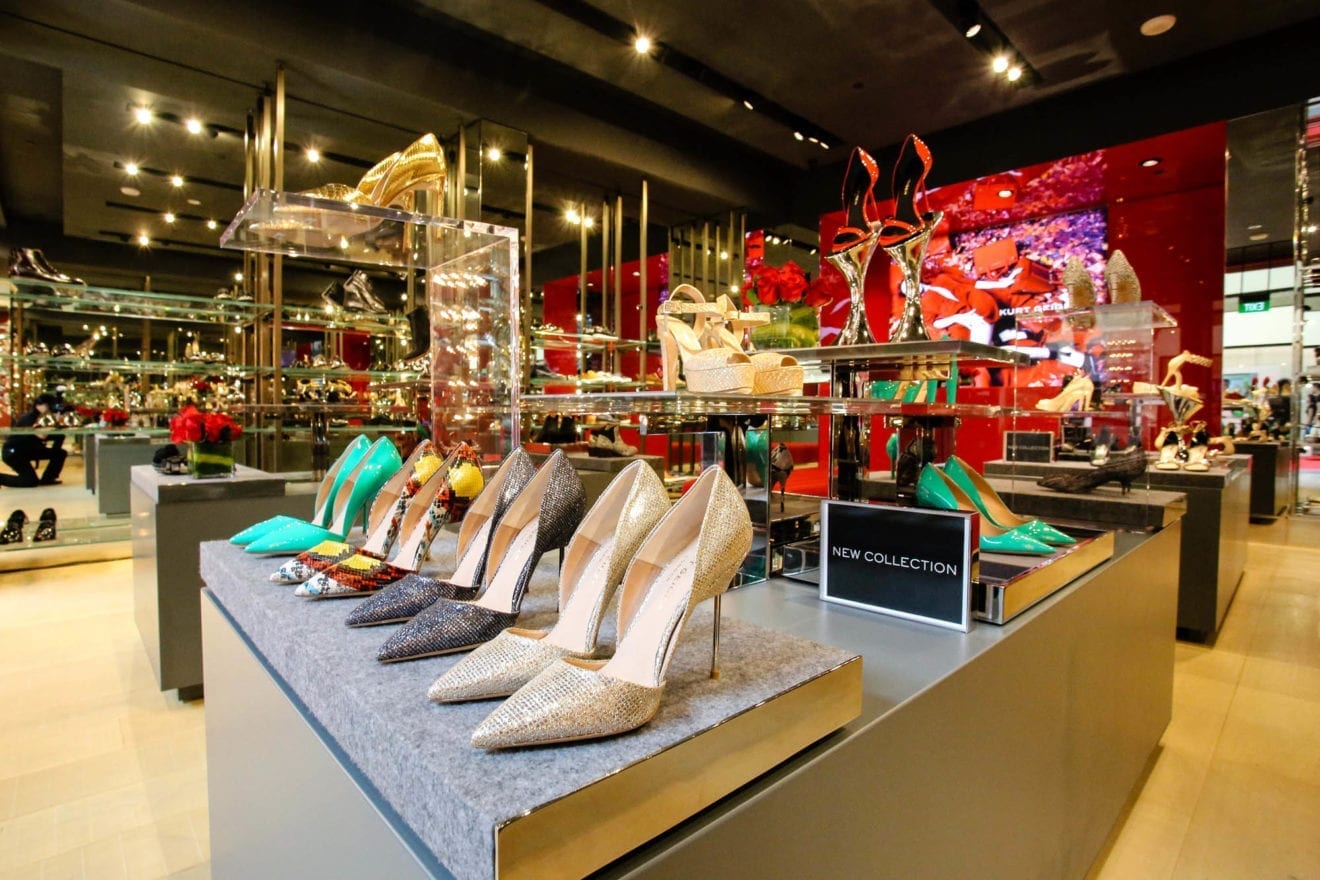
    Carvela opened a dedicated Australian e-commerce platform and outlined plans for standalone physical stores after department store chain David Jones entered receivership, cutting the brand’s sole wholesale channel in the country.

    The footwear and accessories label, which sold exclusively through David Jones locally, shifted distribution directly to consumers just days after administrators announced the closure of 19 of the department store’s 38 branches.

    Wholesale Collapse Forces Direct Retail

    Steve Madden acquired Carvela’s parent company, the Kurt Geiger group, last year and assigned its Australian operations to Charlene Perera, general manager of Steve Madden Australia. Perera will run the local Carvela business, overseeing fulfillment, online sales and subsequent lease acquisitions.

    Carvela’s Australian operation holds inventory locally and offers free shipping on orders above $170, alongside free returns. The product catalogue covers sandals, heels, flats, sneakers, bridal shoes and handbags, with matched sets intended to raise order values.

    “Going ecommerce first means we hold full control of the brand experience from day one and we read the market in real time,” said Perera. “Every order tells us something about where our customer lives and what she’s buying. That’s how we’ll choose our store locations.”

    Data-Driven Site Selection

    Ross Warden, chief retail officer for Carvela Global, pointed to the company’s dual-channel network in the United Kingdom as the template for Australia. The brand plans to mine online basket data and customer postal codes to pinpoint sites for its upcoming standalone store rollout.

    By treating the initial digital launch as a mapping tool, Steve Madden reduces the risk of committing to expensive leases in sub-optimal metropolitan centres. Footwear brands shifting away from concession models typically face high customer acquisition costs online, but local order data gives leasing teams clear foot-traffic targets before signing retail contracts.

    Department store concessions historically absorbed store-fit capital, retail staffing and customer footfall generation in exchange for margin splits. Replacing that wholesale volume requires Steve Madden to build brand awareness independently while funding prime retail leases.

    Replacing the Wholesale Footprint

    For Australian shopping centre landlords, the entry of international single-brand operators provides partial relief as anchor department stores shrink their footprints. Yet standalone footwear boutiques operate on tighter inventory margins than multi-category anchors, making rent negotiations critical.

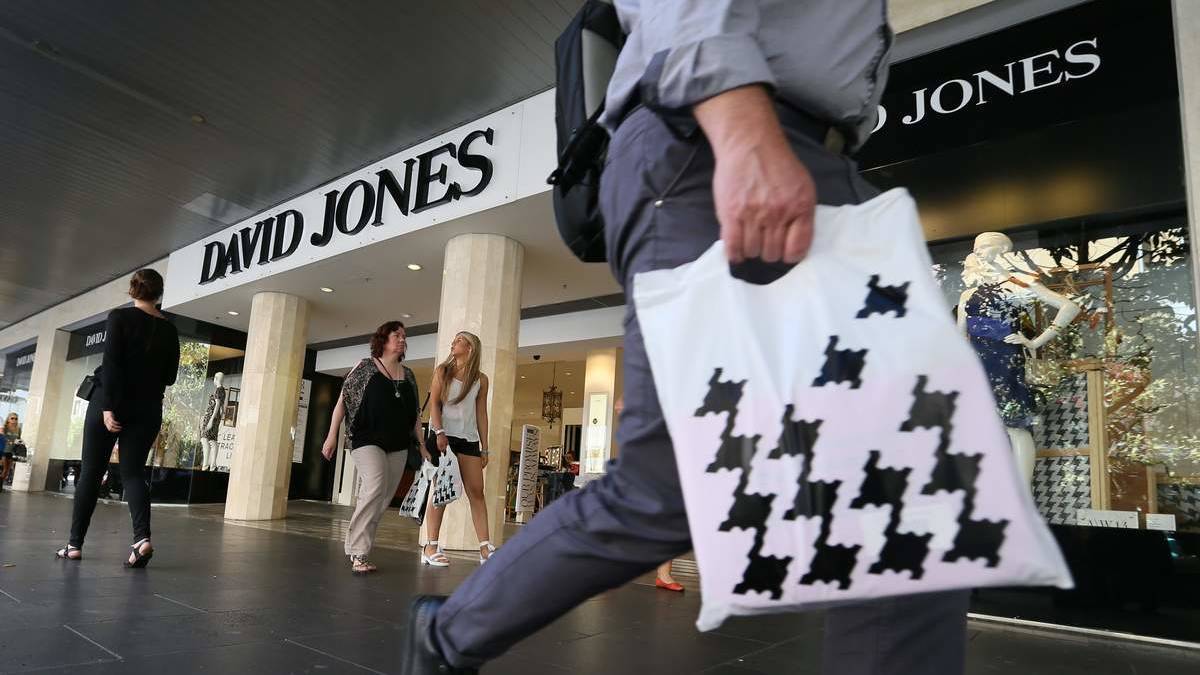
    The disruption stems from the collapse of 188-year-old David Jones, which appointed administrators and receivers last week. Receivers immediately scheduled the closure of half its retail network, stranding wholesale partners that relied on the chain’s central business district and suburban flagships.

    Perera’s team is now reviewing initial checkout metrics from the newly launched carvela.au site to finalise the location and timing of the brand’s first brick-and-mortar storefront in Australia.
  • Mainland China, US and Japan fuel I.T Group sales growth

    Mainland China, US and Japan fuel I.T Group sales growth

    I.T Group sales slipped in the company’s home market, but the fashion retailer is achieving high growth in Mainland China, the US and Japan. Unaudited sales data for the three months to November show an 8.5 per cent year-on-year improvement in Japan and the US and 6.8 per cent growth on the mainland. Hong Kong and Macau sales slipped by 1.8 per cent in the same period.

    Figures for the nine months to November are even better in the US and Japan, up 11.1 per cent, while sales growth in the home market reached 4.8 per cent and on the mainland 1 per cent.

    I.T Group operates its own brands, including Chocoolate and 5cm, concept stores Izzue and Double-Park; international brands it has local licences for including Kurt Geiger and Camper; and A Bathing Ape, which the company rescued from Japanese owners in 2011.

    Chairman Sham Kar Wai said “complex macroeconomic conditions” affected the business in all three regions during the third quarter.

    “Our Hong Kong and Macau operations registered negative same-store sales growth as a result of multiple typhoons, and weaker consumption appetite during the period. In contrast, our Mainland China business delivered positive same-store sales growth, and our Japan and  the US regions continued to progress on a positive trend.”

    He said the group continued to execute measures to safeguard its gross margin, including holding back discounting.

    “However, enhancements to gross margin was overshadowed by the negative impact of the depreciation of currencies of our merchandise purchase. As a result, gross margin decreased during the period.”

    Sham Kar Wai said the company has been even more cautious about the overall operating environment over the last few months, as the recent escalation of trade dispute between Mainland China and the US has cast “greater uncertainties on the future economic outlook”. “Moreover, the warm weather in Hong Kong and Macau may further weigh negatively on the consumer spending momentum across the region.”

  • I.T Limited sales goes up in China and Japan, but down in HK

    I.T Limited sales goes up in China and Japan, but down in HK

    Solid growth in Japan and China compensate for subdued sales in Hong Kong for fashion retailer I.T Limited.

    While Hong Kong sales slipped 5.1 per cent to HK$3.28 billion, much of that was related to store network rationalisation, with like-for-like sales down just 0.9 per cent. Mainland China sales rose by 10.9 per cent to HK$3.837 billion and in Japan, sales soared 29.3 per cent in Hong Kong currency, or 31.6 per cent in local currency, to HK$945.8 million.

    Total group turnover was up 4.8 per cent to HK$8.383 billion and net profit by 37.1 per cent to HK$431.9 million.

    I.T Group operates its own brands, including Chocolate and 5cm, concept stores Izzue and Double-Park; international brands it has local licences for including Kurt Geiger and Camper; and A Bathing Ape, which the company rescued from Japanese owners in 2011.

    I.T Limited’s total trading area shrunk by just 0.3 per cent in Hong Kong, reflecting the sheer size of its various brands’ network. But the company said the consolidation exercise and controlled discounting initiatives helped profitability. Same-store sales growth turned positive in the second half of the year.

    “The results in our Hong Kong and Macau segment are particularly noteworthy,” said chairman Sham Kar Wai.

    “They are not only due to the fact that Hong Kong is the home of the group and is one of the leading fashion marketplaces in Asia. They also reflected the determined efforts we made to move the business in our Hong Kong and Macau segment into positive territory in the second half of the financial year. We are also particularly encouraged by the recent relevant data showing signs of gradual recovery in the fashion retail industry in Hong Kong.”

    On the mainland, the group now has 492 stores and an online business. While same-store growth of less than 1 per cent was far lower than the previous year’s 17 per cent, it was against an unusually high base.

    I.T Limited is also experiencing solid growth in the US,m where it opened two new stores in Los Angeles.

    “Our business in Japan and the US continued to outperform, and we are particularly gratified that the responses to the two new Los Angeles shops have been overwhelmingly positive.”

  • I.T group positive sales despite store closures

    I.T group positive sales despite store closures

    Improved consumer sentiment across Greater China and strong sales growth in Hong Kong helped boost third-quarter business for Hong Kong multi-brand fashion group I.T Limited.

    With fewer discounts offered, the group also enhanced its gross margin for the three months to the end of November.

    However, store closures continued in Hong Kong in the face of a persistent upsurge in running costs, causing downward pressure on sales.

    I.T Group operates its own brands, including Chocolate and 5cm, concept stores Izzue and Double-Park; international brands it has local licences for including Kurt Geiger and Camper; and A Bathing Ape, which the company rescued from Japanese owners in 2011.

    While comparable-store sales growth in Hong Kong and Macau rose 2.4 per cent for the quarter, there was a 3.9 per cent dip for the first nine months.

    For Japan and the US, sales growth soared by 25.5 per cent for the quarter and 30.7 per cent for the nine months, while for China the growth was 1.5 and 1.1 per cent respectively.

    Gross profit margin for the quarter was up 1.6 points to 62.9 per cent in Hong Kong and Macau, edging up 0.8 points to 60.9 per cent for the nine months.

    For Japan and the US, the margin fell 0.8 points to 68.9 per cent, and eased 0.1 points to 70.8 per cent for the nine months, while in Mainland China it edged up 0.3 points to 64.8 per cent for the quarter, and rose 2.1 points to 62.8 per cent for the nine months.

    For the group overall, the rise was 1 point to 64.9 per cent for the quarter, and 1.6 points to 63.4 per cent for the nine months.

  • Kurt Geiger sales soar despite ownership carousel

    Kurt Geiger sales soar despite ownership carousel

    Kurt Geiger should now be focusing on expanding internationally after a solid performance in 2015.

    Despite going round and round the carousel of ownership with three owners in the last four years, Kurt Geiger has maintained sales momentum and posted an impressive set of full year 2015 results, doubling operating profit and growing turnover to £281.6 million. The retailer’s fashion-led proposition, premium – yet accessible – price points and distinct design aesthetic is unrivalled on the high street, and has kept it top of mind of footwear shoppers.

    These results do not reflect its latest change of ownership, as it was sold to European private equity group Cinven in December 2015, and the footwear market in 2016 has been considerably less forgiving than that in 2015. Kurt Geiger has not been immune to the pressures of waning consumer confidence and volatile weather patterns, as evidenced by the fact that it has been discounting heavily over the last few months, even on new season A/W 2016 stock.  The retailer has to be careful to not dilute the Kurt Geiger brand too much, and ensure it remains aspirational and recognised for its quality and design credentials.

    Initiatives such as signing supermodel Karlie Kloss as the face of its brand for S/S 2016 and advertising its celebrity fan following on its website and social media channels through the ‘As Seen On’ function will continue to build its destination appeal and grow brand awareness. Given its robust product proposition and the continuing desirability of its brand, Kurt Geiger is in prime position to benefit from further investment from its new owners, whose focus must now be on nurturing the brand and expanding internationally as its domestic presence matures.