Tag: L Catterton

  • Nebula Brands Secures $50 Million Series B at $530 Million Valuation

    Nebula Brands Secures $50 Million Series B at $530 Million Valuation

    Beijing-based e-commerce aggregator Nebula Brands raised $50 million in a Series B funding round, valuing the enterprise at $530 million. Consumer private equity firm L Catterton Asia led the capital injection.

    Matrix Partners China and early backer Alpha Startups joined the round, lifting total capital raised by the rollup operator to roughly $60 million across two institutional financings. Founded in May 2021, the venture acquires profitable, high-volume Chinese third-party merchants operating on Amazon’s international storefronts and integrates them into a centralised supply chain and brand management network.

    Financing the Buyout Pipeline

    Proceeds from the transaction provide dedicated balance-sheet capacity to accelerate merchant acquisitions. Nebula Brands had already completed one vendor purchase and lined up several pipeline targets before the round closed.

    The business model targets established domestic vendors that have reached multimillion-dollar annual sales volumes on Amazon but lack the working capital, brand marketing expertise, and overseas infrastructure required to scale. The company handles cross-border operations, product development, digital marketing, and local manufacturing relationships directly from its headquarters in China. The company’s prior equity raise was a $10 million Series A led by Matrix Partners China in January 2021.

    The Cross-Border Vendor Battle

    Chinese storefronts account for more than one-third of Amazon’s active merchant base. About 600,000 mainland third-party vendors generate roughly $135 billion in gross merchandise value on the marketplace, with projections showing their share expanding to 45 per cent of all third-party sales on the platform by 2025.

    Foreign aggregators including Berlin Brands Group, Razor Group, and Thrasio have set up sourcing outposts inside China to acquire those same merchants. Nebula Brands takes an opposing position by establishing domestic operational control, banking on local proximity to manufacturing clusters to outmanoeuvre European and American acquirers. Aggregators operating from Western markets struggle to verify proprietary supplier contracts and factory relationships on the ground. Operating locally removes that information barrier.

    Valuation Demands and Operational Realities

    A $530 million valuation on $60 million of equity capital raised establishes aggressive performance targets for an operator that launched within the same calendar year. The Fulfillment by Amazon aggregation model demands continuous operational improvements across acquired storefronts, not merely passive balance-sheet consolidation.

    Risk sits directly in marketplace execution. Amazon’s routine algorithmic changes, advertising cost inflation, and account enforcement policies expose rollup portfolios to sudden operational disruptions. Public comparable operators demonstrate the broad spread of multiples applied across digital consumer channels, where marketing service providers like Shanghai Lily & Beauty trade around 1.5 times revenue while facing volatile operating income margins. Sustaining profitability requires Nebula Brands to avoid the inventory bloat that penalises aggregators once acquisition pipelines outpace supply chain integration.

    The Trajectory of China’s Amazon Aggregators

    The institutional backing from L Catterton matches the playbook private equity applied across North American and European direct-to-consumer networks over the past decade. L Catterton provides global operational channels and consumer marketing resources, while Matrix Partners China supplies local capital syndication.

    Competition for high-margin third-party sellers remains tight across consumer categories including household goods, electronics, and personal wellness accessories. Aggregation platforms must balance acquisition purchase multiples against rising inventory carrying costs and international container shipping friction.

    Nebula Brands plans to complete its initial slate of pending vendor acquisitions while preparing its infrastructure for the targeted 45 per cent market share expansion anticipated from Chinese Amazon sellers through 2025.

  • L Catterton Invests in InMobi Subsidiary Glance

    L Catterton Invests in InMobi Subsidiary Glance

    Consumer-focused private equity firm L Catterton has made a strategic investment in Glance, an artificial intelligence shopping agent run out of a subsidiary owned by tech company InMobi. Glance is currently accessible on more than 60 million devices in the U.S. Through an app and hardware partnerships with Samsung, Android TV and DirecTV.

    Scott Dahnke, global chief executive officer of L Catterton, noted that the private equity firm has backed shifts in consumer behavior for nearly four decades. “Agentic commerce is fundamentally changing how consumers discover and shop for products, creating significant opportunities for brands that can make the journey more personal, intuitive and engaging,” Dahnke said. “Glance is uniquely positioned to capitalize on this evolution, combining a differentiated consumer proposition with broad distribution across the screens where people spend their time.”

    Operating like a personal shopper, Glance remembers user preferences, scours the web for deals, offers virtual try-ons, and secures approval before completing purchases. “We have 10 million monthly active users in the U.S.,” said Naveen Tewari, founder and CEO of Glance and InMobi, noting that users average 120 shopping prompts a month and nearly 15 percent make a monthly purchase.

    Screen distribution and checkout mechanics

    Users on the service enter roughly 120 shopping prompts every month, with approximately 15 per cent completing a transaction within thirty days. Glance collects an affiliate cut from final sale totals. For an added fee, the company trains its underlying algorithms on individual brands to make sure those labels surface accurately during consumer queries.

    Naveen Tewari, founder and chief executive of Glance and InMobi, said: “The model does not have a limitation like you and I to remember only a hundred brands. The model can actually remember a million brands. As different brands start to get trained on Glance, they get discovered for the right user at the right time. And especially brands that are smaller, that do really authentic work, but not at scale.”

    Hardware integrations give the system immediate visibility into living rooms and mobile screens. Shoppers watching connected television displays can use prompts to identify clothing worn by characters on screen, search for retail stock, and complete purchases on linked devices.

    The private equity wager on agentic retail

    L Catterton, which manages global consumer investments, is banking on algorithmic agents handling discovery rather than traditional online search boxes. Glance intends to allocate the new capital to accelerate model training runs and expand its distribution network beyond its initial television deployments.

    By backing an InMobi venture, L Catterton wagers that consumer software can control retail discovery funnels in Western markets. Ad-tech operators spent a decade selling display space. Now they want direct conversion cuts from retailer inventories.

    The structural risk for brand owners sits in recommendation control. When an algorithm decides which dress or shoe matches a television prompt, unpartnered labels risk exclusion unless they pay the platform to train its model on their catalog.

    From lock-screens to commerce agents

    Glance built its initial scale by delivering news, media and casual games to Android mobile lock-screens. Its parent InMobi used that installed base to expand abroad.

    The commercial test will be whether Glance can replicate its US hardware conversion rates across its core device base, where average basket values run lower and marketplace apps dominate customer search habits.

  • L Catterton Buys $30 Million Minority Stake in Nandhana Foods

    L Catterton Buys $30 Million Minority Stake in Nandhana Foods

    L Catterton has acquired a minority stake in South Indian restaurant chain Nandhana Foods for $30 million this week.

    The cash injection gives the global consumer private equity firm a direct foothold in India’s regional casual dining market. Regional food service businesses across southern India have historically relied on internal cash flows and promoter capital to fund new locations. That pattern is breaking down as institutional investors seek scalable dining concepts with proven local demand.

    Capital deployment in regional dining

    Consumer appetites in tier-1 and tier-2 Indian metros continue to shift toward organized dining formats. Nandhana Foods built its brand identity around regional South Indian cuisine, catering to everyday lunch traffic and family dining. Securing $30 million in equity funding provides the balance sheet capacity required to expand kitchen footprints, secure premium retail real estate, and build out centralized supply chains.

    Institutional backing allows regional operators to compete directly with national multi-brand conglomerates. When well-funded private equity sponsors enter single-concept restaurant groups, the immediate focus turns to margin protection and real estate acquisition. Prime retail frontage across major South Indian commercial corridors commands rising rents, making external capital essential for multi-city expansion.

    Private equity playbook in Indian food service

    L Catterton has targeted consumer-facing food and lifestyle brands across Asia-Pacific to capture rising household discretionary spending. The firm looks for high-repeat transaction models with defensible regional loyalty. Fast-casual and specialized regional dining concepts offer clear unit economics, predictable inventory cycles, and steady cash generation compared to untested Western formats.

    Competition among private capital allocators in India has tightened around profitable consumer businesses. Global funds that previously backed digital consumer platforms are now directing capital into cash-generating physical retail and restaurant chains. Food service operators that control their supply relationships and maintain consistent kitchen standards represent defensive bets against broader market volatility.

    Operating risks and scaling discipline

    Scaling a regional dining chain beyond its home base presents operational friction. Standardizing recipes, managing bulk procurement of specialty ingredients, and maintaining identical service quality across dozens of outlets tests management teams. Expanding too fast across state borders often dilutes the brand equity that made the original footprint successful.

    Labor retention and kitchen staff training create additional cost pressures. As restaurant networks grow, operators must invest in central commissary hubs to keep unit costs manageable. Centralized production cuts kitchen square-footage requirements at retail outlets, lowering rental expenses while stabilizing gross margins.

    Valuation discipline and the road to liquidity

    Private equity investors enter minority positions with clear timetables for liquidity. For Nandhana Foods, bringing in a global investor sets an institutional governance framework and prepares the operating company for larger equity rounds or a public listing once network scale is achieved.

    The benchmark for this investment sits in how effectively the chain uses the $30 million check to open new doors without compressing unit-level operating margins. Industry attention now shifts to the company’s real estate pipeline across key southern metro hubs and the rollout speed of its next batch of restaurant locations.

  • KKR Agrees to Buy Japanese Beauty Platform Ci Flavours

    KKR Agrees to Buy Japanese Beauty Platform Ci Flavours

    KKR has agreed to acquire Japanese personal care platform Ci Flavours from existing shareholders, including consumer buyout specialist L Catterton.

    The buyout firm will take full ownership from all current equity holders, which include founder Yusaku Horiuchi, Ebeauty Group and Yanagi Capital Partners. Financial terms were not disclosed.

    Horiuchi and Ci Flavours chief executive Yoshiaki Okura will reinvest alongside KKR to retain management stakes in the company. Founded in 2011, the Tokyo-based firm built a retail footprint across Japan and expanded overseas distribution into Asia and North America.

    Brand roster and overseas distribution

    Ci Flavours operates a portfolio spanning haircare, skincare, body care and lifestyle goods. Its primary labels include &Honey, 8 The Thalasso, Unlabel, Theratis and Moroccan Beauty.

    The business handles product lines through multiple channels, including original equipment manufacturing, direct-to-consumer digital storefronts, department store counters and international ingredient sourcing. Mass-market and premium haircare lines in domestic drugstores provided the company with steady cash flow to push into regional export markets.

    Private equity shifts in Japanese consumer assets

    L Catterton backed Ci Flavours in 2022, completing an exit four years later as global private equity funds continue trading established Japanese consumer brands. KKR has actively adjusted its regional consumer portfolio, having completed the sale of supermarket chain Seiyu to Trial Holdings for US$2.55 billion.

    Okura and his executive team plan to deploy fresh capital into foreign market distribution, recruitment and targeted add-on acquisitions in personal care.

  • BA&SH expects to quadruple sales in Greater China

    BA&SH expects to quadruple sales in Greater China

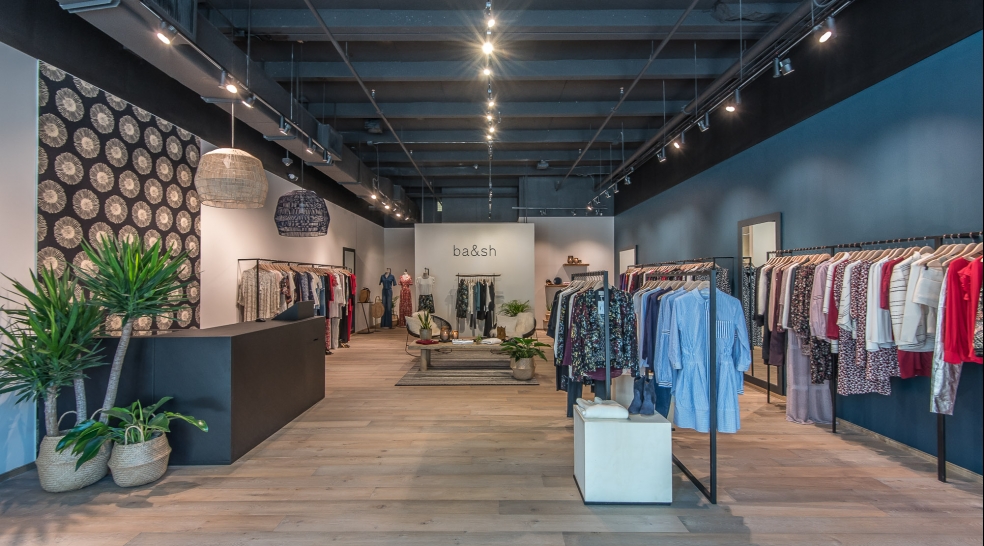
    Affordable luxury brand BA&SH has marked the second anniversary of its launch in Asia by revealing plans to quadruple its sales in the region within two years and introduce a new store concept. Last year the company opened seven stores in Mainland China, three in Hong Kong and two in Macau, taking its Greater China footprint to 20 points of sale.

    “We are thrilled about Hong Kong hitting the podium already and convinced China has the potential to drive the brand’s growth in a near future,” says Isolde Andouard, BA&SH’s CEO for Apac.

    “Asian market accounts for 6 per cent of our global sales as of today and we are targeting to reach 17 per cent by 2020. We forecast to multiply our turnover fourfold within the next two years,” she said.

    Stores in Hong Kong and Mainland China achieved profitability after just three months of operation, allowing the brand to build a regional store pool contributing significantly to global results.

    BA&SH unveiled a new store concept in the US last September, located in New York City’s Nolita neighbourhood, a store designed around themes of friendship and customer experience.

    “We chose New York to test the water with this new concept as this retailtainment experience must be combined with a heavy digital approach and US is clearly ahead of time on this,” says the company’s global CEO Pierre Arnaud Grenade.

    “As the US and Asia are our two strongest focuses for the time being, Hong Kong will definitely be the second city to inaugurate this model.”

    Sustained investments from LVMH-sponsored L Catterton have been supporting BA&SH’s strong growth over the past years and a strong emphasis on Greater China was seen as critical to the brand’s globalisation.

    Hong Kong stores, the first of which opened almost two years ago, now rank within BA&SH’s top five worldwide in turnover. Andouard says that proves the BA&SH concept is a great fit for Asia, with the Hong Kong stores recording average like-for-like sales growth of more than 40 per cent year on year. Some stores in Greater China doubled their sales year on year.

    BA&SH has focused on opening boutiques in premium locations and already counts most of the city’s major retail property owners among their landlords – including Swire, Sun Hung Kai, Sands, Wharf, China Resources and Value Retail.

    “We didn’t bet on such a warm welcome from the local operators, because BA&SH is quite a new concept to Asia,” says Laura Marquant, strategy & development director Apac. “Yet we see the market is becoming more mature and is looking for the freshness BA&SH is offering.”

    E-commerce focus

    Meanwhile, on the strength of the Greater China success, BA&SH has expanded its reach online through Alibaba, opening a flagship on Tmall last June, less than a year after the brand launched in Mainland China.

    “As far as digital is concerned, New Retail and omnichannel are more than ever on the table, and the redesign of the brand’s Hong Kong website with new features and tools are the next steps to come,” says Andouard.

  • L Catterton makes exit from China mall operator Sasseur

    L Catterton makes exit from China mall operator Sasseur

    International private equity firm L Catterton has substantially divested from Chinese mall operator Sasseur Cayman Holding. The firm has reduced its shareholding from 58.86 per cent to just 1.36 per cent, as part of ongoing efforts to optimise its portfolio. Sasseur Cayman is the sponsor of listed Sasseur Reit.

    L Catterton Asia chairman Ravi Thakran said: “We continue to strongly believe in the long-term growth prospects of Sasseur and the opportunities it offers to investors in terms of exposure to China’s fast-growing outlet mall industry. We will continue to support the company’s growth initiatives as a Sasseur shareholder.”

    In a separate statement, Sasseur said that growth prospects for China’s outlet sector remain solid – projected to expand at approximately 25 per cent annually for the next five years – with the fastest sales growth among the retail segments in China, even outpacing that of e-commerce.

  • L Catterton Asia, JD.com Invest In Secoo

    L Catterton Asia, JD.com Invest In Secoo

    LVMH-linked L Catterton Asia and JD have jointly invested US$175 million into Asian luxury fashion platform Secoo, via convertible notes.

    L Catterton and JD together will have the right to appoint a director and an observer to Secoo’s board of directors. But in a broader tie-up, Secoo will have access to L Catterton’s network of luxury leaders and strengthen relationships with leading luxury brands in the L Catterton stable, including Pepe Jeans and eyewear brand Gentle Monster.

    “We are excited about this strategic partnership with L Catterton Asia and JD,” said Richard Li, Secoo’s chairman and CEO. “L Catterton is the leading consumer-focused investment firm in the world, and JD is China’s largest retailer and the leading e-commerce giant in China. By establishing relationships with leading partners in the consumer, luxury goods and e-commerce spaces, Secoo is poised to gain invaluable name recognition and further boost the company’s reputation in the international luxury consumer space.

    Through this partnership, Secoo will be able to leverage L Catterton and JD’s operational expertise and vast resources to expand and deepen our market presence not only in China, but across the globe.”

    Shengli Hu, president of JD fashion & lifestyle, said the partnership will help JD enhance its luxury capabilities and provide the best possible luxury shopping experience to consumers in China.

    “Chinese consumers are increasingly discerning about their luxury purchases, demanding more variety and choice than ever. As we look to continue to meet this demand, we see many potential areas for future collaboration with Secoo.”

    Secoo sells a wide collection of authentic, upscale products and lifestyle services on Secoo.com, mobile applications and offline experience centers, offering more than 300,000 SKUs, covering over 3000 global and domestic brands.

  • BA&SH to have more stores in Asia

    BA&SH to have more stores in Asia

    French label BA&SH is planning to open more stores in China, Hong Kong and Macau.

    Since December the label has been planning to grow is retail network by a third including its 200 monobrand stores and department-store concessions.

    L Catterton investment fund acquired a 50 per cent stake in the label in 2015, with Pierre-Arnaud Grenade being appointed GM.

    BA&SH landed in Asia and the US last year, setting up two subsidiaries. By the end of last year, the label had 130 stores in Europe, the US and Asia.

    As well as further openings in Asia (three stores in Hong Kong, seven in China and two in Macau), BA&SH is planning to open another shop in New York. BA&SH says it has outgrown its original business model, which relied on wholesale distribution, and now 80 per cent of its revenue is generated via department-store concessions and its monobrand stores.

    Meanwhile, the label has set up a direct-to-consumer team in New York working on all aspects of e-commerce. It has launched e-commerce sites in various languages and currencies (nine so far in total) and has also started working with Tmall.com in China.

    In June last year, BA&SH chose Hong Kong for its first stores in Asia, and within five months was considering ramping up its Asia presence.

  • Affinity Equity to bid on Stylenanda

    Affinity Equity to bid on Stylenanda

    Hong Kong’s Affinity Equity Partners has joined a bidding scramble for Korean budget fashion and cosmetics brand Stylenanda.

    Also in the race are LVMH-backed L Catterton, L’Oreal and Shiseido, with the bid worth up to KW500 billion (US$467 million), insiders say.

    Parent company Nanda has received letters of intent from potential bidders, including a local department-store chain, to sell a stake of up to 70 per cent.

    Launched in 2005, Stylenanda saw its sales soar to KW170 billion last year. While it started as a fashion brand, it has lately been focusing more on its cosmetics business. Now more than half of its sales come from its budget cosmetics brand 3CE.

    For its fashion business, the firm is focusing more on upscale boutique shops.

    CEO Kim So-hee, who owns the company outright, in 2016 sought to sell a sizeable portion along with management rights. There were negotiations with such candidates as Hyundai Department Store and TPG, but these collapsed.

    Meanwhile, L Catterton has been buying stakes in Korean companies in recent years, including US$80 million in YG Entertainment, $50 million in cosmetics maker Clio, and US$230 million in eyewear brand Gentle Monster.

    Affinity has also been buying into Korean firms. In August it bought plastic container company Lock&Lock for KW629.3 billion.

  • L Catterton Asia to form JV sportswear

    L Catterton Asia to form JV sportswear

    LVMH-backed private-equity firm L Catterton Asia has launched a JV between two of its portfolio companies, Chinese menswear fashion group GXG, and Australian compression activewear company 2XU.

    The strategic partnership will enable both companies to capitalise on the growing fitness and sportswear market in China.

    Established in 2007, GXG has a portfolio of four brands – GXG, gxg.jeans, gxg.kids and Yatlas. Its lines are available in more than 2100 stores across China, as well as online through third-party platforms such as Tmall and VIPshop. Its e-commerce GMV is expected to surpass RMB2.5 billion (US$378.5 million) this year, an increase of more than 50 per cent over last year. The company also achieved record sales of RMB485 million in this year’s Tmall 11.11 shopping festival.

    Since acquiring a controlling stake in GXG last year, L Catterton Asia has been working with the company’s management team to expand into new categories. It has supported GXG by offering extra collaboration opportunities and helping with global expansion.

    “GXG and 2XU are led by seasoned management teams with deep understanding and complementary knowledge of the fashion and retail industries, and we look forward to continuing to work alongside and support both teams,” says L Catterton Asia chairman/managing partner Ravi Thakran.

    Founded in 2005, 2XU produces technical athletic wear that is endorsed by elite athletes internationally.

    “Since L Catterton Asia’s investment in 2013, 2XU has experienced significant growth and I am grateful for their partnership as we continue to expand into attractive markets around the world,” says 2XU CEO Paul Higgins.

    With more than $14 billion of equity capital across six fund strategies in 17 offices globally, L Catterton has a team of more than 140 investment and management professionals. L Catterton Asia (previously L Capital Asia) was launched in 2009 and manages more than $ 1.6 billion across two private equity funds, and more than $2 billion including co-investments. It has offices in Singapore and Mauritius, with a regional advisory presence in Hong Kong, Mumbai and Shanghai.

    L Catterton Asia draws on its strategic relationship with Groupe Arnault and LVMH across the investment process. Its investments include Jorya Group, Marubi, Pepe Jeans, Sasseur, Trendy International and YG Entertainment.

  • L Catterton Asia launches beachwear platform

    L Catterton Asia launches beachwear platform

    Australian swimwear brand Seafolly and Colombian beachwear brand Maaji are the first signings for a global lifestyle platform launched by L Catterton Asia.

    Based in Singapore, L Catterton Asia is an arm of private equity firm L Catterton, formed last year through a partnership between Catterton, LVMH and Groupe Arnault. It will be the controlling shareholder of the combined business, with the Maaji and Seafolly founders as minority shareholders.

    It is the first step in the aggregation of the fragmented swimwear/beachwear industry.

    Seafolly was founded in 1975 by Peter and Yvonne Halas, and has been led by Anthony Halas since he became CEO in 1998. He has built the business across international markets in Europe, North America and Asia. L Catterton Asia acquired a controlling interest in the brand in December 2014, and now it is sold in 41 countries (there are four stores in Singapore) as well as online.

    Maaji was founded by sisters Manuela and Amalia Sierra in 2002, and has a presence in more than 54 countries.

    “With this unparalleled combination of Maaji and Seafolly we look to grow our portfolio and create the largest independent house of beach lifestyle brands,” says L Catterton Asia chairman/managing partner Ravi Thakran. “This combination will drive many synergies, including geographic expansion, retail rollout and product sourcing.”

    L Catterton Asia’s goal is to preserve each brand’s DNA and heritage, while enabling the brands to enhance their global growth.

    Previously known as L Capital Asia, L Catterton Asia was launched in 2009 and manages more than US$1.6 billion across two private equity funds, and more than US$2 billion including co-investments. It has offices in Singapore and Mauritius, with further regional advisory presence in Hong Kong, Mumbai, Shanghai and Sydney. Its investments include Charles & Keith, Crystal Jade, Pepe Jeans Group and YG Entertainment, which promotes Korean singers and entertainers like Big Bang and Psy.