Tag: Labels

  • Nestlé Advocates for Simplified Food Labels in Bid to Demystify Scientific Ingredients

    Nestlé Advocates for Simplified Food Labels in Bid to Demystify Scientific Ingredients

    As consumer awareness increases, more people are inspecting ingredient labels and avoiding products that seem heavily processed. Nestlé, the global food and beverage company responsible for products such as Nescafe coffee and KitKat chocolate, has been advocating for the use of simpler, commonly recognized terms on packaging in the United States.

    This move aims to replace scientific names such as “ascorbic acid” with more familiar terms like “vitamin C” and “beta-carotene” with “vitamin A”. The goal is to prevent consumers from rejecting products with unfamiliar ingredient names, despite these ingredients being naturally derived or deemed safe by regulatory bodies. A former senior executive at Nestlé commented that sometimes the current way of labelling in the US can give off an impression of “Frankenstein food,” despite these being natural ingredients that consumers can recognize.

    Nestlé’s Efforts and Current Labelling Policies

    Nestlé has been in direct talks with Health Secretary Robert F Kennedy Jr’s team, discussing food labelling policies as part of the administration’s “Make America Healthy Again” initiative. The initiative aims to inform and educate the public about healthier food choices.

    Under current U.S. regulations, packaging often uses less familiar technical terms, which can discourage consumers from purchasing products and sometimes even compel companies to modify recipes to exclude certain ingredients. On the other hand, in Europe, the labelling depends on the intended use of an ingredient. For example, an ingredient used as an additive could be labelled as “antioxidant (ascorbic acid)” or simply as “vitamin C”.

    According to a report by Innova Market Insights, around 75% of North American consumers reconsider their purchases based on the ingredients list on packaging. The majority of consumers prefer real ingredients and an ingredient list that is easy to understand.

    Public Health Advocacy and the Food Industry

    While some public health advocates believe that simplified labelling can be misleading and allow large food companies to be vague about their use of additives, food companies are spending billions to remove artificial colors, preservatives, and additives in response to consumer preferences for simpler, more recognizable ingredient lists.

    Stefan Palzer, Nestlé’s technology chief, confirmed the company’s lobbying efforts, noting that it is a difficult task. The company aims to reduce ingredients that aren’t easily understood by consumers, without compromising on product safety, quality, or functionality. Palzer added that consumers globally prefer ingredients that look “familiar” and products with understandable labels.

    Industry groups such as the Americans for Ingredient Transparency coalition and the International Food Additives Council argue that technical ingredient names can unjustly stigmatize products, even when the ingredients themselves are widely accepted and considered safe. These groups include significant food and consumer companies such as Nestlé, Coca-Cola, PepsiCo, and Cargill.

    Questions & Answers

    What is the motivation behind Nestlé’s lobbying for simpler ingredient labels?
    Nestlé aims to replace scientific ingredient names with more commonly recognized terms to prevent consumers from rejecting products with unfamiliar ingredient names, even if these ingredients are natural or deemed safe by regulatory bodies.

    What is the current state of food labelling in the U.S.?
    Current regulations often require the use of less familiar technical terms on packaging, which can discourage consumers from purchasing certain products. This has prompted some companies to change recipes to avoid using these less recognizable ingredients.

    What is the stance of public health advocates on simplified labelling?
    Some public health advocates argue that using simpler labelling can be misleading and might allow large food companies to be non-transparent about the inclusion of additives in their products.

  • Private Labels Fuel 8% Surge in Global FMCG Sales Growth

    Private Labels Fuel 8% Surge in Global FMCG Sales Growth

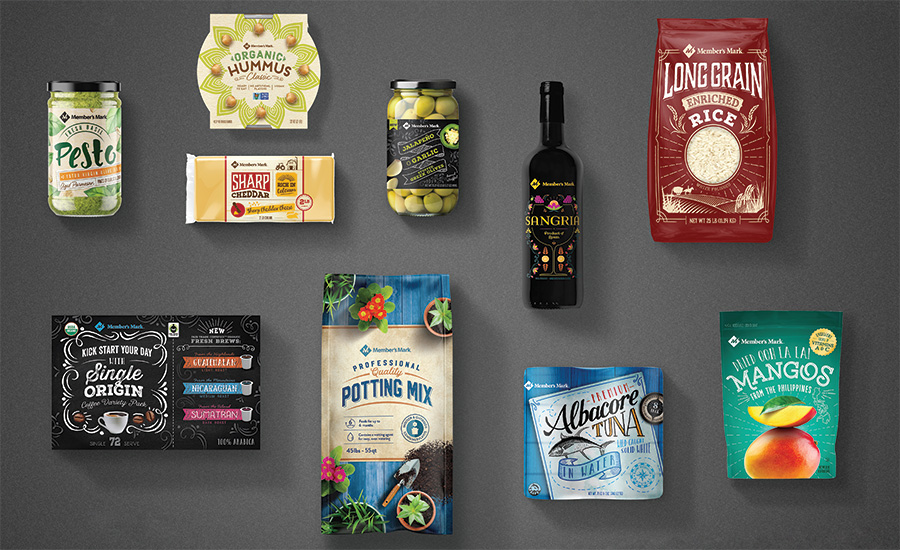
    In a notable shift within the retail landscape, private label products are becoming increasingly popular among consumers, contributing nearly 8% to global sales growth in the fast-moving consumer goods (FMCG) sector in the past year, according to recent insights from NIQ. With 53% of global shoppers indicating they are purchasing more private labels, retailers are reimagining these store brands as innovative alternatives to traditional national brands.

    Rising Demand for Private Labels
    The study reveals a striking 4.3% year-over-year increase in global private label sales, showing strong growth potential as these brands carve out significant share in the marketplace. Furthermore, projections from Technavio indicate a compound annual growth rate of 6.64% for private labels through 2028, signaling sustained consumer interest and brand expansion potential.

    Innovation Drives Brand Perception
    Retailers are shifting from viewing private labels as mere budget options to positioning them as premium offerings. This transformation is fueled by consumer demand for innovative products that prioritize wellness, sustainability, and convenience. Brands that can effectively adapt and showcase these qualities stand to benefit greatly.

    Omnichannel Strategy Becomes Essential
    To capitalize on the growing trend, retailers must enhance their omnichannel strategies. Today’s consumers expect private label products to match, if not exceed, the quality and presentation of established national brands. This means robust digital content is essential, with a focus on making private label offerings informative, discoverable, and visually appealing.

    The Importance of High-Quality Visuals
    Visual appeal plays a crucial role in influencing purchasing decisions. High-resolution images allow consumers to assess product quality and foster trust, simultaneously reducing return rates. With 87% of grocery shopping now conducted via mobile devices, optimizing visuals for smaller screens is increasingly important.

    Leveraging CGI for Consistency
    Computer-generated imagery (CGI) presents a scalable solution for retailers managing large portfolios of private label products. This technology enables consistent, high-quality product images, which is particularly beneficial for those frequently updating packaging or launching seasonal items.

    Detailed Information Enhances Discoverability
    Beyond visuals, providing comprehensive product details—such as dietary claims and allergen information—improves discoverability on e-commerce platforms. This is particularly vital for categories witnessing rapid growth, such as gluten-free foods or eco-friendly household items.

    Consistency Across Channels
    As consumers expect a seamless shopping experience, maintaining consistency in product naming, packaging visuals, and descriptions is critical. A cohesive presentation across online and offline channels not only fosters brand trust but also helps shoppers navigate their choices confidently and efficiently.

    Conclusion: Implications for the Retail Sector
    The rise of private labels reflects shifting consumer trends and heightened demand for value, quality, and innovation. As retailers adapt to this changing landscape, the focus on strong digital strategies and consistent branding will be pivotal in defining the future of the retail sector. This dynamic evolution will ultimately empower consumers, offering them more choices and enhancing their shopping experiences.

  • Lotsa Goodies fined over unsafe toys

    Lotsa Goodies fined over unsafe toys

    Toy importer and retailer 2 Boys Trading, which operates Lotsa Goodies, was fined for selling unsafe toys for a period of seven years.

    2 Boys was slapped with a $74,250 on 13 toy safety-related charges under the Fair Trading Act 1986 after a Commerce Commission investigation.

    The Commerce Commission said 2 Boys had been importing toys and selling them in eight Lotsa Goodies retail outlets, which are owned by companies linked to the 2 Boys owners. The shops are in Auckland, Hamilton and Christchurch.

    “2 Boys sold approximately 1700 units of three toys, all of which failed to pass testing undertaken by the Commission,” the Commerce Commision NZ said.

    The Commission said small parts came free from the toys during testing, and those parts were small enough to be a choking hazard for young children. In addition, some toys fitted fully inside a testing template, meaning they were also a choking hazard.

    The toys in question include an aquatic toy set, supplied between October 2015 and March 2018; baby star baby rattles, supplied between May 2012 and November 2016 and a 5.5-inch soft plastic doll, supplied between May and December 2017.

    The baby rattle packaging was labeled “3+” and “not suitable for children under 3 years”. The aquatic toy set was labeled “Warning: Choking Hazard – Small parts, Not for children under 3 years” and the same wording was on the rear of the doll packaging.

    Judge Chris Field said during the sentencing on June 20 at the Manukau District Court that they needed to “send a clear message to other companies trading in this way that significant penalties can be imposed for breaches of this kind.”

    Field said 2 Boys “did not conduct any of its own checks apart from generally checking the product was as ordered and relied on guidelines which stated the toys were for use for children aged 3 and over.”

    Commission chair Anna Rawlings said the labeling is a notable feature of the case.

    “It attempts to suggest the toys are not suitable for children under 3 years of age,” she said. “These are clearly toys intended for children 36 months of age and under, and traders cannot avoid their legal obligations by including ‘3+’ labeling or similar.”

  • Retail gets personal

    Retail gets personal

    In this year of the 400th anniversary of the passing of William Shakespeare, we’ll borrow some inspiration from the great bard and say: The store is dead – long live the store.

    For, despite the stellar rise of online shopping, it accounts for just 7.3 per cent of total global retail spending.

    The store’s “renaissance,” if it were needed, reflects the fact that shopping remains popular. It also comes on the back of investment from retailers keen to make the most of the store as a differentiator – the place where shoppers touch the brand. A big feature of this spending has been the drive to make the store central to an omnichannel shopping experience where shoppers can conveniently mix how they try, buy, and return items through online, in-store, and mobile channels.

    To achieve this versatility, retailers have deployed RFID and barcode labels to track and trace items across the supply chain, into the store, and back from the customer (via returns). By using such labels, which can be automatically recorded by RFID systems or handheld computers and scanners, retailers can capture what we call Enterprise Asset Intelligence (EAI). As we move forward, EAI will play a key role as retailers look to make the in-store experience ever more enjoyable and rewarding.

    Continuous improvement

    Smart labels and sensors can be attached to any object – associates, stock, vehicles, equipment, totes and pallets, and many more. The stream of data collected from the labels is connected over wireless and cell networks to your back office, providing visibility into every area of your operations. This opens boundless opportunities to manage processes more efficiently, improve the customer experience, and free your associates from time-consuming to spend more time in the shop floor. A couple of interesting examples include:

    • Being more responsive to customers: we spoke to one UK retailer recently who told us they have 100,000 people working to restock their stores at night. Indeed, the cost of their associates is 66 per cent of their store overheads. The interesting thing is this retailer, and others we speak with, is not looking to cut these costs: it’s looking to allocate them more wisely – to free staff to spend less time on operations and more with customers. This can be achieved by using smart labels to provide a continuous view over inventory and supporting teams with better technology – including voice-guided workflows through mobile and wearable devices – to help them manage replenishment more efficiently and spend more time providing attentive and personal experiences to shoppers.
    • Being more rewarding: Using your wireless network, you can connect with the sensors that most of us carry with us all the time – in our smartphones. If the customer agrees, every time they come into store their phone can register on to your system to allow you to offer a more personalized service. For example, you can send a welcome message and offer a wide range of promotions from money-off based on their preferences, to loyalty bonuses, to gifts for their birthday, and much more. You can also build in “help” features so associates’ mobile devices can alert them, and help them easily find shoppers who’ve asked for assistance.

    What really excites us about retail right now is that we’re getting back to those halcyon days: the days when your local shop keeper would know who you are, know what you want, and engage with you in compelling ways – ways that you’d value and that encouraged your loyalty. We can use technology to achieve similar things – to not only free staff to spend more time with customers but increasingly to offer customers more intriguing, engaging, and rewarding ways to shop.