Retail News CRM

Tag: labor

  • Vietnam’s low-skilled labor force threatened by robots

    Vietnam’s low-skilled labor force threatened by robots

    86 percent of garment workers could lose their jobs in the coming decades, according to the International Labor Organization. Vietnam’s workforce is made up largely of untrained and low-skilled workers who are at high risk of being replaced by automation and robots in the near future, labor experts said at a conference in Hanoi on Tuesday.

    Dao Hong Lan, vice minister of labor, said Vietnam currently has 54.36 million workers but nearly 80 percent of them have not received any training or degrees for their jobs.

    The country’s labor force is expected to grow to 62 million in 2025, posing a very difficult task for the country to create more than 700,000 thousand jobs every year.

    “Globalization and technological revolution are posing increasingly greater challenges for Vietnam’s economy,” Lan said.

    Skill enhancement must be a priority to secure Vietnam’s labor market ahead of the time when low-cost labor will no longer be competitive, officials said at the National Policy Dialogue on Future of Work held by the labor ministry and the International Labor Organization (ILO).

    David Lamotte, ILO deputy director for Asia and the Pacific, said: “It will certainly shift in the coming years as technology costs decline while labor costs increase.”

    A recent ILO study found that workers in Vietnam’s two major and growing production sectors – garments and electronics – are at risk.

    In the garments sector, 86 percent of workers face increased automation, while about 75 percent of workers in the electronics sector could be replaced by robots in the coming decades, it found.

    The sectors provide the country’s key exports and account for around 40 percent of the nation’s manufacturing jobs, but productivity and the application of technology in the workplace are much lower than in other Southeast Asian countries.

    Productivity in Vietnam’s garments sector, for example, is only 20 percent of Thailand’s and nearly the same as Cambodia.

    Garment production in Vietnam currently relies on a large number of workers rather than highly-skilled employees while the electronics sector targets low-value production and low-skilled assembly work, according to the ILO.

    The ILO said young people in Vietnam should pursue courses in science, technology, engineering and mathematics to meet employment demands in the age of technology.

    “This is important, particularly among girls and young women who are more susceptible to job loss than men, when automation becomes more popular in manufacturing industries,” said Lamotte.

    A recent survey by the Institute of Labor Sciences and Social Affairs at the ministry also named creativity, foreign languages, teamwork and problem solving as the core competencies needed to survive the modern workplace.

    Both the ILO and the institute called for better connections between Vietnam’s policymakers, employers and training institutions to adapt to the changing workplace and technological innovations.

    The current link between businesses and training institutes mainly comes in the form of internships while their cooperation remains weak when it comes to training and planning for skilled workers.

  • Across China, Walmart Faces Labor Unrest as Authorities Stand Aside

    Across China, Walmart Faces Labor Unrest as Authorities Stand Aside

    In a one-man war room in his apartment, a laid-off Walmart employee named Wang Shishu was tapping out a message on his phone to a group of workers and plotting his next move.

    Over the past few months, Mr. Wang, 56, has helped organize a national movement in China against Walmart. Labor strikes have hit stores in the south simultaneously. There have been boycotts in the northeast. And here in Shenzhen, where Walmart opened its first outlet in China two decades ago, employees have filed a lawsuit demanding back pay.

    “We want a snowball effect,” he said in the booming baritone of a street preacher. “We want everybody to know what to do next.”

    As the Chinese economy has slowed, strikes and labor protests have broken out across the country, mostly scattered episodes targeting a single factory or business. The government has responded aggressively, detaining activists and increasing censorship to keep unrest from spreading.

    But activism against Walmart’s more than 400 stores in China in recent months has followed a different pattern: workers in several cities agitating against the same company, bypassing official unions controlled by the Communist Party and using social media to coordinate their actions — while the authorities largely stand aside.

    Across China, Walmart employees have raised their fists at protests, chanting, “Workers, stand up!” They have appealed to local officials with patriotic fervor, invoking the struggles of Mao Zedong against foreign imperialists. They have posted screeds online against unkind bosses and “union puppets.”

    In doing so, the Chinese work force of the world’s largest retail chain has put the ruling Communist Party in an uncomfortable position, publicly testing its Marxist commitment to defend the working class and pitting that against its fear of independent labor activism.

    Ever since the Solidarity trade union helped topple Communist rule in Poland, Beijing has sought to prevent the emergence of a nationwide labor movement, suppressing efforts by workers to organize across industries or localities.

    But the authorities appear to be hesitating in the case of Walmart, whose workers have complained of low wages and a new scheduling system they say has left them poorer and exhausted.

    In recent months, as many as 20,000 people, about a fifth of the company’s work force in China, have joined messaging groups set up by Mr. Wang and other activists on WeChat, a popular app. In these forums, they vent about company policies, share protest slogans and discuss plans to coordinate demonstrations for maximum effect.

    Mr. Wang, a former customer service representative whom Walmart has fired twice, spends his days babysitting his granddaughter and trading messages with workers across the country, often as late as 2 a.m.

    “What they’re doing is inhumane,” he said. “I want Walmart to return to the sympathetic company it used to be.”

    Eli Friedman, a labor scholar at Cornell University, said the Walmart movement was “probably the most substantive example of sustained, cross-workplace, independent worker organizing we’ve ever seen in China’s private sector.”

    The government appears to be keeping a distance because it is worried about provoking a backlash, or about acting on behalf of a prominent American company against Chinese workers at a time when nationalism in China is rising.

    But by doing little or nothing, it risks encouraging disaffected workers elsewhere, especially at the growing number of national chain businesses with operations across China. Already, workers at Neutrogena stores and China Unicom, a state-owned telecom operator, have used similar tactics, while avoiding serious punishment.

    “We can only expect that online organizing will continue to break down local barriers,” said Keegan Elmer, a researcher for China Labour Bulletin, an advocacy group based in Hong Kong.

    The retail sector in particular has become a hotbed of worker activism. The government wants to shift growth from manufacturing to service industries, but many new jobs at restaurants, hotels and stores are low-paying or part-time.

    From July through September, there were 124 strikes and protests at service-sector firms, about double the number last year, outpacing episodes in manufacturing for the first time since at least 2011, according to China Labour Bulletin.

    Chinese law requires businesses to establish labor unions, but they are almost always controlled by management, and companies generally use the unions to contain worker activism. In the face of labor strife, some businesses have offered back pay, bonuses and other benefits to workers.

    But others, concerned that labor activism could force costly concessions, have resorted to tougher tactics, retaliating against those who help organize protests. At Walmart, some of the most vocal workers have been deprived of raises, reassigned, or in some cases fired, according to interviews with more than a dozen employees.

    At one store in Zhongshan, west of Shenzhen, a labor activist said a supervisor photographed her in the bathroom as retribution for speaking out. She asked not to be identified for fear of further antagonizing her bosses.

    Much of the discontent stems from a new scheduling system that Walmart put in place this summer as a way, the company said, of giving workers more flexibility. Workers have argued that it has resulted in cuts to overtime pay and excessively long shifts, and some say they were coerced into signing new contracts agreeing to the system.

    Walmart denied that it had treated its employees unfairly or had pressured them to accept the new schedules. Rebecca Lui, a spokeswoman, said that the vast majority of its work force supported the new system, and that employees were free to keep their old schedules.

    “Our associates are our most valuable asset,” she said in a statement.

    Zhai Xiuhua, a former greeter at a Walmart store in Shenzhen, said she was fired in September after leading a fight against the new scheduling system.

    “I told them, ‘Even if you put a knife to my neck, I’ll never agree,’” she recalled at her home, where her uniform and identification badge — No. 14470 — still hang on the wall. Ms. Zhai, worried about medical bills, says she now hopes to find work in her hometown in the southwestern province of Sichuan.

    Walmart, which has resisted unionization at its thousands of stores across the world, was forced by the government in 2006 to establish branches of the Communist Party-controlled All-China Federation of Trade Unions for its roughly 100,000 Chinese employees, part of a broader push by the party to unionize foreign businesses.

    But union branches at many Walmart stores are under the thumb of store managers, and higher-level union officials appear torn about how to respond to complaints from workers like Ms. Zhai.

    While union officials here in Guangdong Province have criticized Walmart for not seeking governmental approval for the new scheduling system, they have not taken more forceful action or helped mobilize workers.

    Labor activists at Walmart have cited the ideals of President Xi Jinping and the Communist Party’s history of protecting workers, and experts said they appeared to be benefiting from a belief among some officials that the influence of foreign companies such as Walmart should be curtailed.

    “If the Chinese authorities try to suppress the workers on behalf of Walmart,” said Wang Jiangsong, a Chinese labor scholar, “it will hurt the country’s image.”

    When Walmart opened its first store in China in 1996, workers rushed to snap up jobs that paid more than those at Chinese competitors.

    Now, some employees say, a Walmart job does not pay enough to comfortably support a family, with wages hovering around minimum wage, or about $300 a month. While Walmart has led a high-profile campaign in the United States to raise pay, salaries in China have remained largely stagnant, workers said, barely keeping pace with inflation.

    Walmart has struggled to keep up with the fast-changing tastes of Chinese consumers and tried to re-energize its business by making investments in online retailers.

    But the continuing labor unrest poses a potential hurdle.

    You Tianyu, 45, a customer service employee at a Walmart store in Shenzhen, caught the attention of her supervisors in August when she wrote a letter to the president of Walmart, Doug McMillon, to complain about the company’s efforts to silence aggrieved workers.

    Ms. You said her bosses now harassed her daily because she spoke out, and she has received a diagnosis of anxiety and depression.

    She spends most of her nonworking hours rummaging through a mess of worker manifestoes, union laws and pay slips in her tiny apartment, hoping to find a new line of attack against Walmart.

    “I’m on the verge of collapsing,” she said. “I don’t know how much longer I’ll last.”

  • More than 20 labor law violations by Indofood alleged in Indonesia

    More than 20 labor law violations by Indofood alleged in Indonesia

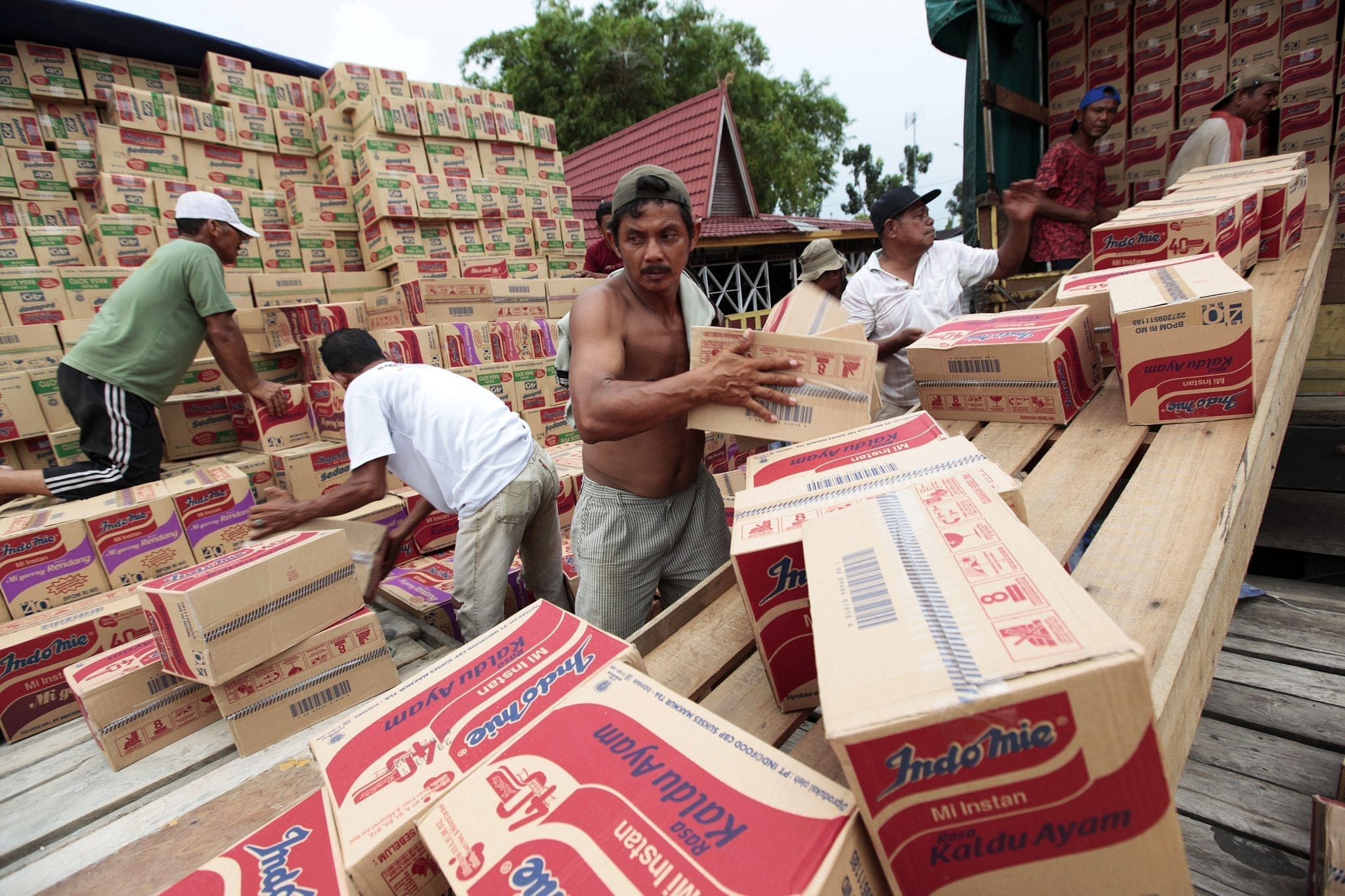
    Amid allegations of widespread abuses on its plantations, including the use of child labor, three NGOs this week lodged a formal complaint against Indonesian palm oil giant Indofood, calling for two of its subsidiaries to be suspended from the industry’s largest certification scheme.

    The complaint, signed by Rainforest Action Network (RAN), Indonesian labor rights advocacy group OPPUK and the International Labor Rights Forum (ILRF), was filed with the Roundtable on Sustainable Palm Oil (RSPO) on Tuesday.Citing numerous violations of the roundtable’s principles and Code of Conduct, the complaint calls for Indofood subsidiaries PT London Sumatra and PT Salim Ivomas Pratama to be suspended from the RSPO “until transparent actions are taken” to resolve the issues.

    The complainants also raise doubts over the RSPO’s own credibility in detecting and responding to labor violations on member plantations — not the first time this has been called into question.

    “It is time for the RSPO to act in the interest of palm oil workers. The evidence is clear: Indofood is systematically violating the fundamental rights of workers on its palm oil plantations,” OPPUK director Herwin Nasution said in a statement.

    Indofood, which operates a joint venture with global snack food brand PepsiCo, is the largest private oil palm plantation company in Indonesia that has yet to adopt a commitment to use only responsibly produced palm oil.

    The complaint comes four months after the NGOs released the results of an investigation into abuses on two Indofood plantations in North Sumatra.

    Their report, The Human Cost of Conflict Palm Oil, included detailed allegations of child labor, exposure to hazardous chemicals, a reliance on temporary workers, below minimum-wage payments and the suppression of independent unions.

    In response to the accusations, an assessment was conducted by the RSPO’s accreditation body, Accreditation Services International (ASI), on a third Indofood operation, the Gunung Mas palm oil mill and supply base in North Sumatra.

    ASI’s report, released last month, found similarly widespread violations of Indonesian labor law and evidence of unsafe practices. Several of the violations had already been identified in a previous audit, but had never been addressed.

    In total, Indofood has violated more than 20 Indonesian labor laws, according to the complaint filed this week, which also highlights violations of the RSPO Code of Conduct requirement that members “commit to open and transparent engagement with interested parties and actively seek resolution of conflict”.

    Indofood’s head of public relations, Stefanus Indrayana, told Mongabay he was out of the office and unable to provide comment. Other Indofood representatives did not respond to questions about the RSPO complaint.

    The company previously said the allegations were unsubstantiated. In a June interview with Indonesian newspaper The Jakarta Post, Indofood director Franciscus Welirang responded to claims that children as young as 12 were working on the plantations.

    “Plantations in Indonesia are usually close to villages and thus there’s a plantation culture based on targets. It’s standard for families to ask for help from their children,” he said.

    “There’s a law in Indonesia and we are in compliance but there’s also a culture that cannot be perceived as the same as Western culture.”

    Emma Lierley, forests communications manager at RAN, said the NGOs hoped Indofood’s suspension from the RSPO, the world’s largest association for ethical production of palm oil, would “force the company to take these findings seriously…and endeavor to clean up its business practices.”

    She added that if Indofood fails to take action, “buyers, business partners and investors must enforce their own policies by suspending relationships” with the company, citing its ties with global brands including PepsiCo, Nestle and HSBC.

    PepsiCo, which is a joint venture partner with Indofood but does not otherwise buy its palm oil, said it was discussing the issues with the company.

    “Are we completely aligned? No, not at this minute. But the conversations are going on. Indofood has been very responsive,” a spokesperson told Mongabay earlier this year.

    But, the spokesperson claimed, the nature of PepsiCo’s relationship with Indofood made it more difficult to force changes.

    “You can be much more demanding with a supplier. A joint venture is much more delicate, especially because the joint venture preceded any discussion about sustainability and what was needed regarding that.”

    Beyond Indofood and the companies it has relationships with, the complaint says the RSPO’s own credibility is at stake.

    “The RSPO’s ‘sustainable’ label means nothing without enforcement. If the RSPO is not willing to uphold its own standards, it threatens its credibility on the market and the brand reputations of all its members,” explained Lierley of RAN.

    “Its standards still have major shortcomings…but this complaint provides an opportunity for the RSPO to demonstrate that it can, and will, take actions to enforce compliance with its standards,” she added.

    Eric Gottwald, legal and policy director at the ILRF, said there is a “culture of non-compliance” on many RSPO-certified plantations regarding both Indonesian labor laws and the RSPO’s own policies.

    “As a first step toward addressing the issues, Indofood should sit down with the RSPO and complainants to discuss the report, audit findings, and necessary reforms to its employment practices,” he said.

  • Apple Begins Hiring for Flagship Chinese Retail Store in Macau

    Apple Begins Hiring for Flagship Chinese Retail Store in Macau

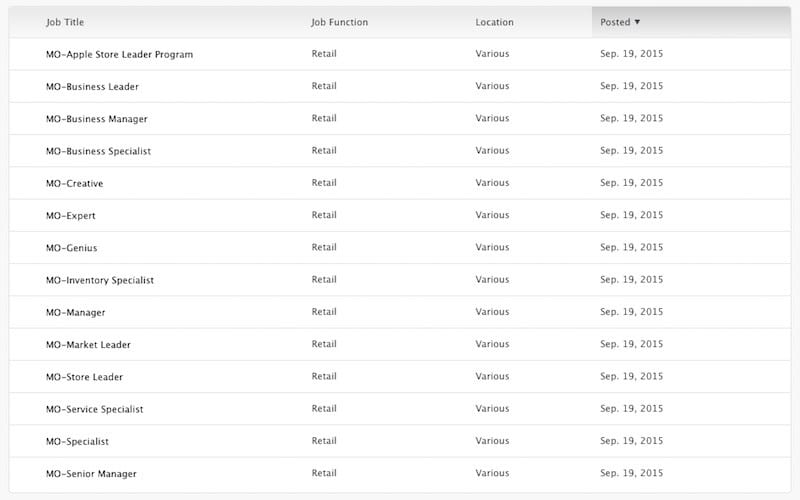
    Apple has posted several job listings for an upcoming retail store in Macau, a Special Administrative Region of China. The store is looking to fill Specialist, Creative, Genius, Store Leader and Manager positions, in addition to hiring for the Apple Store Leader Program and multiple business-related positions.

    Chinese-language newspaper Macao Daily reported in June that Apple is planning to open a flagship store in Macau, which is located across from Hong Kong, but the news went largely uncovered by mainstream media. At the time, the report claimed that Apple had not finalized a location for the upcoming store.

    Apple-Store-Macau
    Apple celebrated the grand opening of its Apple Store in Brussels today, while two new Apple Stores also open in Nanjing, China and Florence, Italy today and September 26 respectively. Apple now operates over 460 retail stores worldwide.

  • Myanmar sets daily wage minimum to boost apparel manufacturing

    Myanmar sets daily wage minimum to boost apparel manufacturing

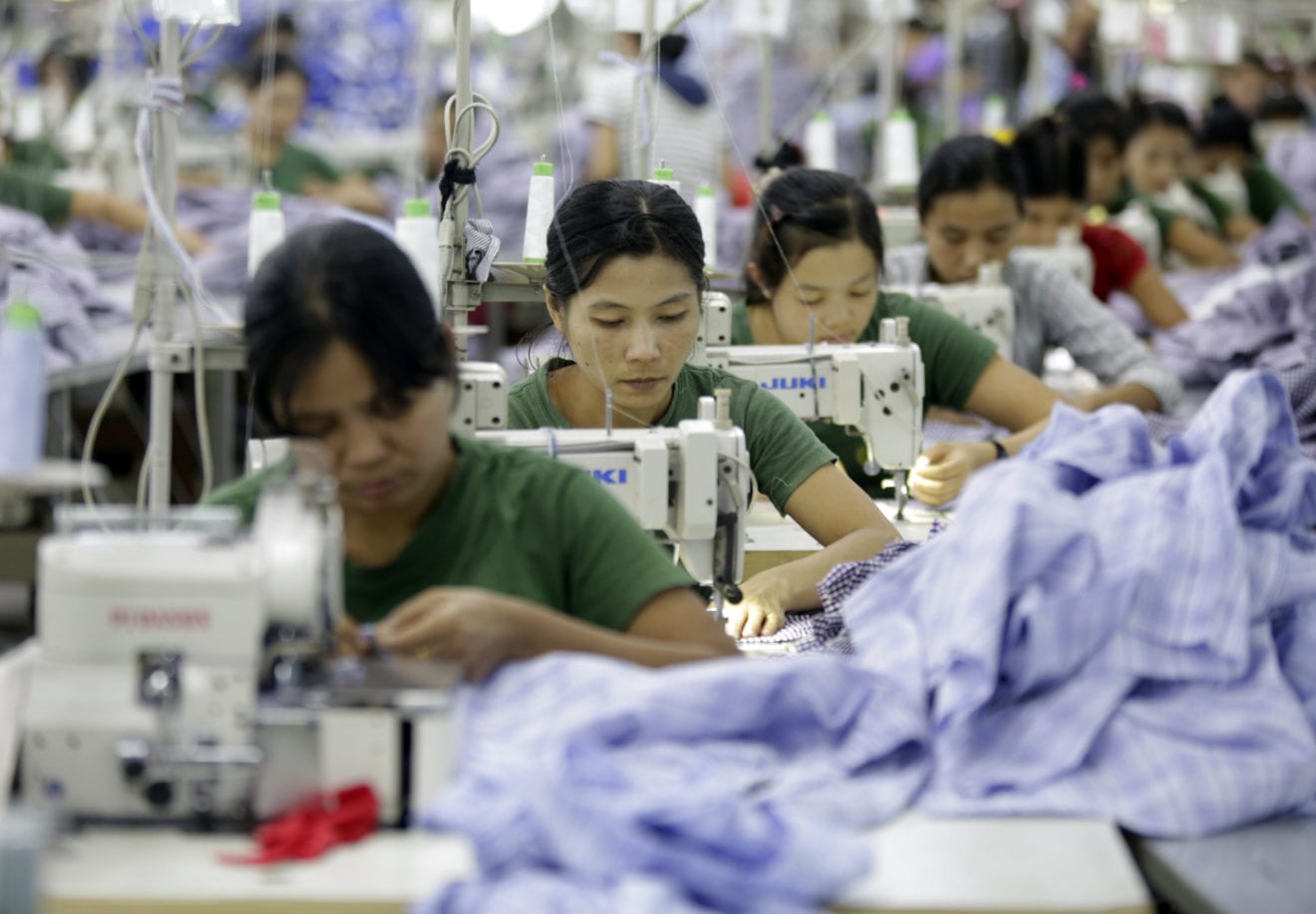
    Last year Gap Inc. was the first U.S. retailer to return to Myanmar for its apparel manufacture, a major sign of the potential return of the country’s once-thriving garment industry.

    But demonstrations by labor unions over working conditions and pay have hampered progress in the three years since U.S. sanctions were lifted, after which Myanmar also attempted its first minimum wage boost.

    Even with the increase in minimum wage that is apparently acceptable to most labor groups and factory owners, Myanmar will still have among the lowest wages in the world. And its standards for factory conditions are seen as lower than in Bangladesh, the site one of the deadliest garment factory collapses in history.

    The government was under pressure not to raise the wage too high out of fear that retailers would turn to South Korea, China, and other countries with established manufacturing. The wage is for eight-hour days in a six-day week; it doesn’t address overtime pay or working conditions. Last year Myanmar exported $1.5 billion of clothes and materials, up from $1.2 billion in 2013 and $947 million in 2012, according to the Global Trade Atlas.

    Still, the stability and the raise, if slight, is seen as an encouragement to more investment by U.S. and other apparel retailers, which can now count on an official wage structure to help them determine costs. Gap and H&M already source goods from there. The country’s economy is predicted to grow 8% this year, according to the World Bank.