Tag: labubu

  • Pop Mart Overseas Revenue Falls 11% as Labubu Toy Craze Cools

    Pop Mart Overseas Revenue Falls 11% as Labubu Toy Craze Cools

    Pop Mart International Group posted an 11.1 per cent decline in overseas revenue to RMB4.97 billion for the first half, hit by cooling international sales for its signature Labubu character.

    Shares in the Beijing-based toy maker fell more than 4 per cent in Hong Kong following the release, even as strong domestic sales lifted total group revenue 23.8 per cent to RMB17.17 billion ($2.55 billion). Profit attributable to shareholders rose 10.1 per cent to RMB5.04 billion, while operating profit gained 11.3 per cent. Revenue from Greater China jumped 47.3 per cent to RMB12.20 billion, now generating 71 per cent of group sales compared with 59.7 per cent a year earlier.

    Online sales slump outside China

    The international drop was sharpest across digital channels. Online sales fell 45.6 per cent in the Americas, 39.8 per cent in Asia Pacific excluding Greater China, and 59 per cent in Europe. The company’s own app and website sales in the Americas dropped 44.6 per cent.

    Physical stores showed resilience abroad. Offline sales grew 19.5 per cent in the Americas, 16.2 per cent in Asia Pacific, and 49.8 per cent in Europe. Yet store expansion failed to offset the online drop in the Americas, where regional sales fell 16.5 per cent despite the local store count jumping from 41 to 86 locations over the twelve-month period.

    Plush toys replaced vinyl figurines as Pop Mart’s primary sales driver, surging 60 per cent to RMB9.82 billion to account for 57.2 per cent of total turnover. Figurine sales remained flat with 0.3 per cent growth. Revenue from The Monsters series, which includes Labubu, contracted 7.5 per cent to RMB4.45 billion, marking its first recorded drop and shrinking its revenue share to 26 per cent. Twinkle Twinkle rose 580.6 per cent to RMB2.65 billion to become the second-largest intellectual property, while Crybaby, Dimoo, Skullpanda, and Hirono each surpassed the RMB1 billion mark.

    Rivals step up domestic pressure

    Domestic retail chains across Asia are accelerating their push into collectible toys to capitalize on the same customer demographic. Miniso has refiled to list its Top Toy business in Hong Kong, while rivals Kayou and 52Toys expand store networks across tier-one and tier-two Chinese cities. Frost & Sullivan projects China’s collectible toy market will reach RMB110 billion this year.

    Pop Mart is diversifying into location-based entertainment and hospitality through its Pop Land theme park, Pop Bakery food outlets, and a live-action Labubu feature film developed with Sony Pictures. Chief executive Wang Ning stated the company may fall short of its full-year 20 per cent revenue growth target as management executes operational adjustments across international distribution networks.
  • Pop Mart First-Half Revenue Rises 23.8% to RMB 17.17 Billion

    Pop Mart First-Half Revenue Rises 23.8% to RMB 17.17 Billion

    Pop Mart grew first-half revenue by 23.8 per cent to RMB 17.17 billion (US$2.4 billion) in Beijing as newer character lines diversified earnings beyond Labubu. Gross margin reached 69.7 per cent for the six-month period.

    The Monsters franchise, which includes Labubu, generated RMB 4.45 billion to remain the company’s largest intellectual property. Its share of total corporate revenue dropped to 26 per cent from 34.7 per cent a year earlier, reflecting faster gains in secondary product lines.

    Twinkle Twinkle Gains on The Monsters

    Twinkle Twinkle surged 580.6 per cent year on year to RMB 2.65 billion, making it the fastest-expanding property in the catalogue. Four other lines, Crybaby, Dimoo, SkullPanda and Hirono, each generated more than RMB 1 billion during the half.

    Product formats showed similar diversification away from standard vinyl blind boxes. Revenue from plush items climbed 60 per cent to RMB 9.82 billion as shoppers bought bag charms, soft figures and related lifestyle goods.

    Collectibles makers across Asia face rapid fad cycles once single characters peak on social media. By shifting production capacity toward plush accessories and scaling multiple character rosters simultaneously, Pop Mart is attempting to build a multi-franchise licensing business modeled on Sanrio rather than a single-hit novelty toy brand.

    Global Store Count Reaches 676 Locations

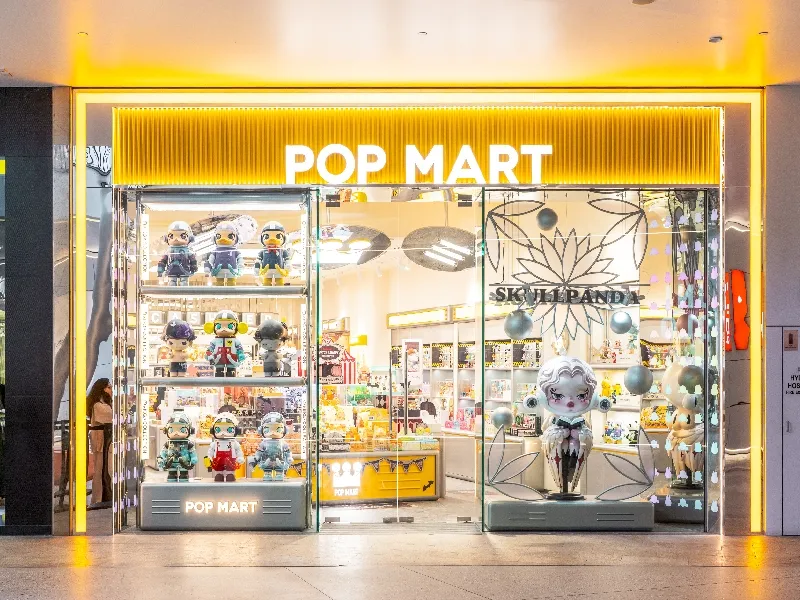
    Physical distribution expanded by 46 net new stores and 190 roboshops in the first six months of the year. That brought the global brick-and-mortar network to 676 physical outlets and 2,827 automated vending units.

    The Americas led store additions with 22 net openings to reach 86 sites. Asia-Pacific locations outside Greater China grew by five to 90, while Europe and other regions added nine stores to stand at 45.

    Food and beverage formats are also rolling out internationally. Following trial pop-ups across mainland China and a permanent venue in Aranya, the group opened its first overseas Pop Bakery site on Sentosa Island in Singapore, setting up the brand’s next wave of lifestyle retail openings.

  • Boost for UK Economy as Labubu Creator Pop Mart Establishes London HQ and Unveils Major Store Expansion

    Boost for UK Economy as Labubu Creator Pop Mart Establishes London HQ and Unveils Major Store Expansion

    Pop Mart, renowned for creating the popular Labubu doll, has revealed London as the location for its new regional headquarters. In addition, it has plans to launch seven more stores across the UK. This decision is viewed as a significant investment for the UK, secured by British Prime Minister, Keir Starmer during his visit to China.

    Strengthening Economic Ties

    The purpose of Starmer’s four-day trip to China was to stimulate the UK’s economy through bolstering the ties between the two nations. This strategy includes enhancing market access, diminishing tariffs, and arranging investment deals like the one involving Pop Mart.

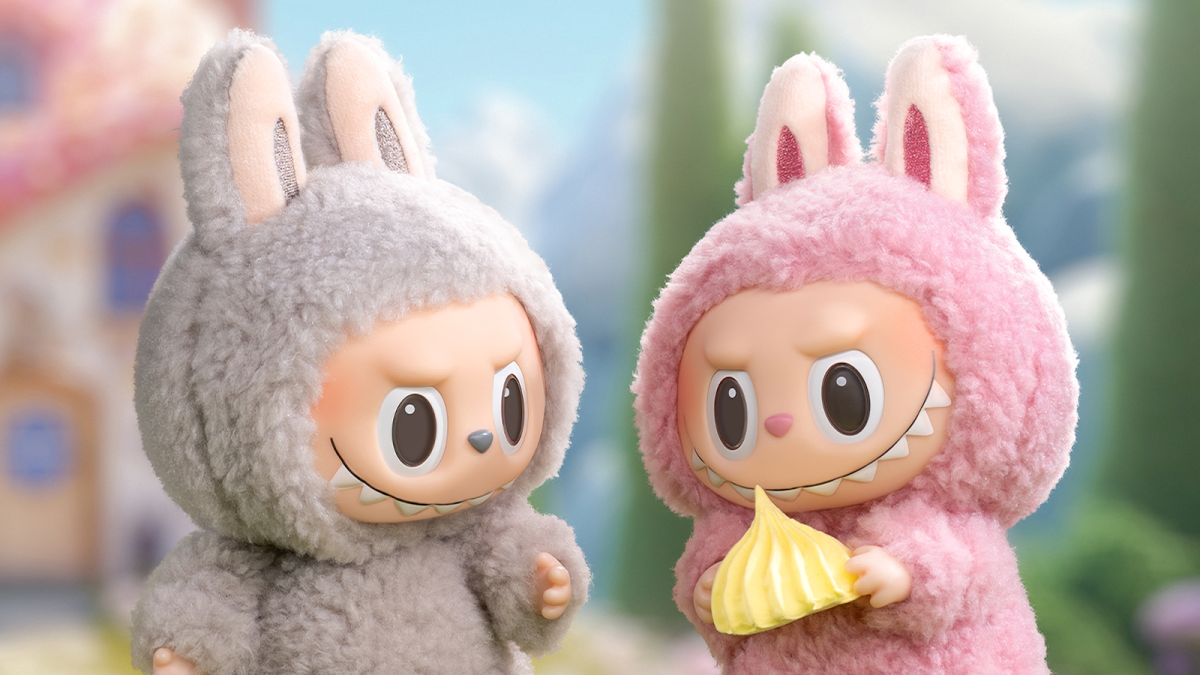
    The Labubu dolls, distinctive for their pointy ears and toothy smiles, exemplify an intentionally flawed ‘ugly-cute’ aesthetic. These dolls have gained collector status after gaining significant popularity on social media, a mere 18 months ago.

    Starmer’s diplomatic visit resulted in export deals amounting to £2.2 billion (approximately US$3.02 billion). It has also facilitated market access estimated at £2.3 billion over the next five years, and secured hundreds of millions of pounds in investments, according to a recent statement from his office.

    UK Expansion Plans

    Pop Mart has plans to establish its presence in seven locations throughout the UK, with Birmingham, Cardiff, and London’s Oxford Street as key locations. The latter will host Pop Mart’s new flagship store. In addition, the firm also intends to open 20 more stores across Europe.

    This new venture is expected to generate over 150 jobs in the UK, as stated in the official release.

    Grant Wang, the founder and CEO of Pop Mart, expressed his excitement about the firm’s European expansion. He stated, “London is at the core of the global creative ecosystem, and we are ecstatic to establish our European base here.”

    Pop Mart is part of a group of Chinese consumer-facing companies, including the fashion retailer Urban Revivo and coffee chain Luckin, looking to tap into overseas markets. This move comes in response to weaker domestic spending in China, associated with an extended property crisis and wage stability concerns.

    HITHIUM, a Chinese energy storage company, is also set to invest £200 million in the UK, creating an additional 300 jobs. Additionally, life sciences group Asymchem is planning to expand its UK operations, which will create 150 jobs.

    Questions & Answers

    Why has Pop Mart chosen London for its new regional headquarters?
    Pop Mart perceives London as a central hub within the global creative ecosystem, making it an ideal location for their European base.

    What are the broader implications of Pop Mart’s expansion into the UK?
    In addition to strengthening relations between China and the UK, this expansion is set to create over 150 jobs and contribute to Britain’s economy.

    How are other Chinese consumer-facing companies reacting to domestic economic pressures?
    In response to a prolonged property crisis and wage security issues leading to weaker domestic spending, companies like Urban Revivo and Luckin are exploring opportunities in overseas markets.