Retail News CRM

Tag: Lacoste

  • Lacoste unveils expanded retail space at Don Mueang International Airport

    Lacoste unveils expanded retail space at Don Mueang International Airport

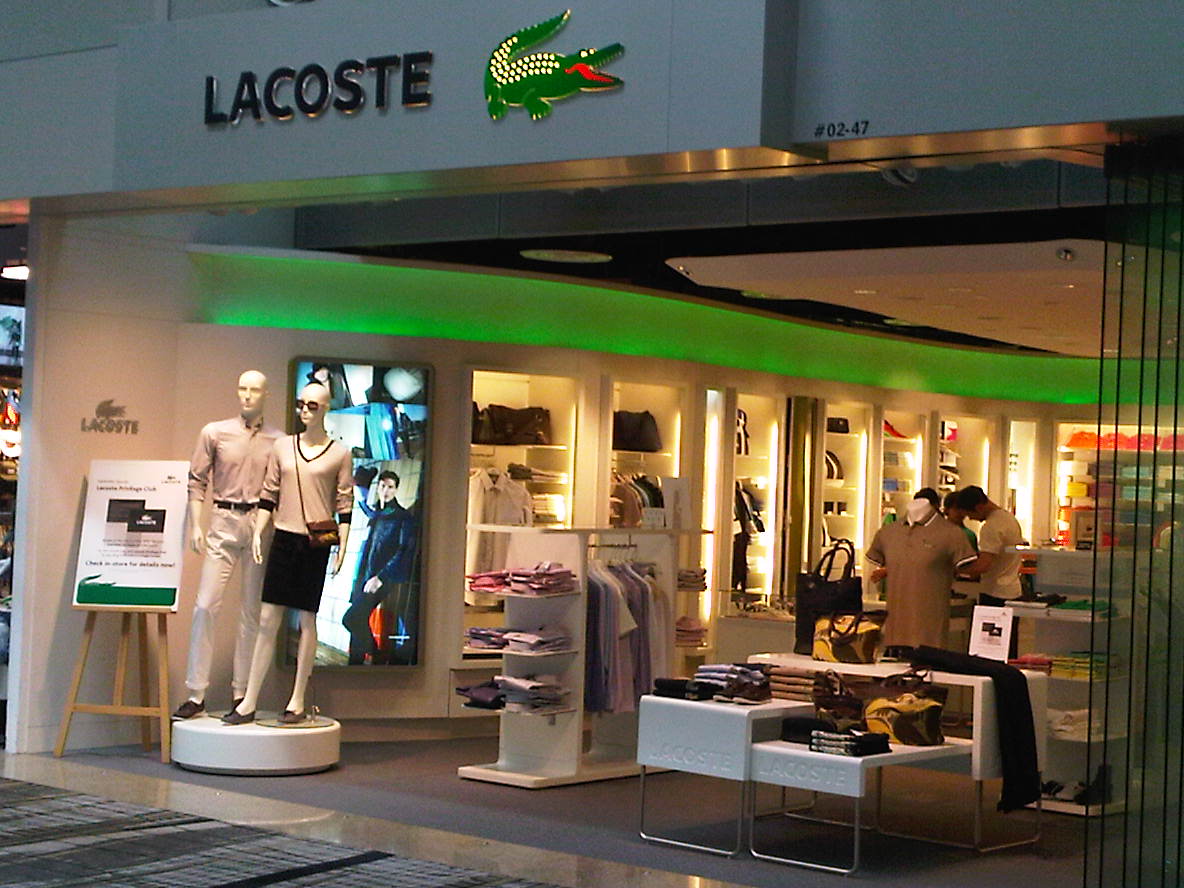
    Lacoste has opened its revamped Sport corner at Don Mueang International Airport Terminal 1.

    Lacoste kicks off its new Sport concept at Don Mueang Airport.

    The space has been enlarged and upgraded to feature Lacoste’s new Sport concept. It now offers additional options for customers alongside the brand’s signature polo shirts and leathergoods ranges.

    Don Mueang International Airport, Asia’s oldest international airport, recorded 35 million passengers in 2016.

  • Lacoste opens boutique at Indira Gandhi International Airport

    Lacoste opens boutique at Indira Gandhi International Airport

    Lacoste has opened a 1076sq ft store at Indira Gandhi International Airport Terminal 3, Delhi, India.

    The brand said the boutique aims to offer a premium shopping experience to both local and international travellers.

    Lacoste said it reinforces the consumer experience in travel retail through channel specific products and visual merchandising

    Lacoste has more than 170 travel retail boutiques worldwide. The company said it will continue to leverage the travel retail channel to strengthen or expand in new areas, develop new channels, such as e-commerce and cruise, and new ways of connecting with consumers before, during and after their trips.

  • US investor buys into Mitra Adiperkasa

    US investor buys into Mitra Adiperkasa

    US private-equity company General Atlantic has made its first investment in Indonesia by buying into lifestyle retailer Mitra Adiperkasa (Map).

    It has subscribed for Rp1.08 trillion (US$80.5 million) in bonds issued by Map which are convertible into shares in its F&B subsidiary Map Boga Adiperkasa (MBA), which runs Cold Stone Creamery, Godiva, Krispy Kreme, Pizza Express and Starbucks in Indonesia. It has more than 300 stores across 24 cities, and has more than doubled its store count over the past five years.

    Map runs multi-channel retail concepts in Indonesia across a diversified portfolio of department stores, sportswear, specialty fashion, F&B, and lifestyle products. It has nearly 2000 retail stores.

    “We believe the rapid rise in Indonesia’s middle and young working classes, the increase in this population’s disposable income, and the continued rural-to-urban migration represents an opportunity for us to strengthen our international food brands and cement our leadership position in the F&B market,” says Map CEO V.P.

    Sharma. A portion of the investment money will be used to accelerate the F&B division’s network expansion.
    “Indonesia’s domestic consumption comprises more than half of gross domestic product, and consumption patterns are increasingly shifting toward modern and aspirational lifestyle brands,” says General Atlantic Southeast Asia head Wai hoong Fock. “These secular trends position MBA’s food & beverage portfolio well for further expansion.”

    Regional commitment

    The partnership, General Atlantic’s first investment in Indonesia, indicates its commitment to long-term market prospects in South-east Asia,” says Fock, who joined General Atlantic from CVC Capital Partners last year to lead its South-east Asia investing program. He is based in the firm’s Singapore office.
    General Atlantic has 18 investment professionals in Asia, based in offices in Beijing, Hong Kong, Mumbai and Singapore. The firm opened its Singapore office in 2011, investing three years later in Singapore-based online mobile entertainment/communication Garena platform. It has also supported the growth of retail and F&B companies including lifestyle brand Tory Burch, luxury fashion brand Zimmermann, restaurant group Barteca Holdings, urban juice-bar concept Joe & The Juice, community accommodation marketplace AirBNB and transportation network company Uber.

    Map has 1921 retail outlets in 68 cities throughout Indonesia. Its retail concepts include department stores (Debenhams, Galeries Lafayette, Seibu and Sogo), fashion and lifestyle (Crabtree & Evelyn, Kipling, Lacoste, Marks & Spencer, Massimo Dutti, Nautica, Sephora, Swarovski, Topman, Topshop and Zara), sports (Converse, Golf House, Oakley, Payless ShoeSource, Reebok, Rockport, Skechers, The Athlete’s Foot and The Sports Warehouse), F&B (Burger King, Cold Stone Creamery, Domino’s Pizza, Godiva, Krispy Kreme and Starbucks), kids (Kidz Station and Oshkosh B’Gosh) and bookstore Kinokuniya.

  • Lacoste Korea upgrades boutique

    Lacoste Korea upgrades boutique

    Fashion apparel brand Lacoste Korea has renovated its boutique unit inside the Shilla Jeju Duty Free store, showcasing its “standard premium” concept.

    The retail space is on the fourth floor of the store on Jeju Island, close to Jeju International Airport. The store offers more than 300 brands.

    Lacoste says Korea is a key market for its travel-retail business.

  • Japan’s Uniqlo targets global stature with fashion identity

    Japan’s Uniqlo targets global stature with fashion identity

    Japanese clothing chain Uniqlo has leveraged its prowess in mass production to build a fashion empire filled with shelves upon shelves of affordable, good quality items like down jackets, underwear and T-shirts.

    Now the 17-nation, 1,734-store retailer is on a quest to beat Western giants like Gap, H&M and Zara to become the world’s biggest apparel maker.

    In the overcrowded, highly competitive casual fashion market, size is important but no guarantee of success: analysts say Uniqlo’s challenge is to carve out a brand identity of its own, going beyond its formula of delivering no-nonsense quality at good prices.

    “To win over consumers and break through the clutter, Uniqlo needs to get even more personal,” says Stuart Green, chief executive of Asia Pacific at Interbrand, which consults and ranks brands.

    “It will be critical for Uniqlo to maintain product quality and, most importantly, create a deeper, more emotional connection with its customers to drive brand loyalty,” he said.

    Interbrand ranks Uniqlo as Japan’s most valuable retail brand, and eighth among Japan’s global brands, including Toyota, Sony and Nintendo. The company’s founder and chief, Tadashi Yanai, is Japan’s richest man, according to Forbes magazine.

    Analysts say that to move it to its next stage of growth, Uniqlo also needs to beef up its digital presence and adapt to non-Asian markets. Winning over the huge market of suburban American shoppers will be crucial.

    Consumers these days are picking brands on digital platforms and social networks, as they increasingly shop online. To cope with the mind-boggling volumes of information online, consumers now rely on brands to serve as filters and curators, Green said.

    To help drive its global expansion, Uniqlo is tapping outside talent.

    It just hired Christophe Lemaire, formerly of Hermes and Lacoste, who started his own Uniqlo line last year, to head its Paris research center.

    In 2014, it brought in a global branding expert, John Jay. An American of Chinese origin, he who worked on ad campaigns for Nike, Coca-Cola and Microsoft, and a fleece campaign for Uniqlo, at U.S. marketing company Wieden+Kennedy.

    “Whether they’re in Beijing or New York, there is a commonality to young people and what they want in life,” Jay, whose title is president of Global Creative at Uniqlo’s parent company Fast Retailing, said at a recent Tokyo event, centered on Uniqlo’s second fashion show ever.

    “We have barely scratched the surface. Our potential is amazing,” he said.

    Uniqlo is still relatively small, with 44 stores in the U.S., 449 stores in China and 846 in Japan, its biggest market. Retail giant H&M of Sweden has 4,000 stores around the world, Gap Inc. of the U.S., 3,700 stores, and Inditex of Spain operates 7,000 Zara, Bershka and other brand stores.

    H&M and Inditex have posted healthy financial results recently, but Gap, which has the Old Navy and Banana Republic brands, is struggling, slashing prices to draw buyers and closing dozens of stores, including some in Japan. The Standard & Poor’s credit rating agency recently downgraded Gap’s debt to junk status.

    Uniqlo’s profits also have slowed recently, hurt by a warm winter that slowed sales of its down jackets, HeatTech underwear and other winter apparel.

    Fast Retailing, with 100,000 employees, forecasts a profit of ¥60 billion ($560 million) for the fiscal year through August, down 46 percent from the previous fiscal year, mainly because of falling profits at Uniqlo.

    Yanai’s turnaround plan includes sweeping cost cuts, improved efficiency, pricing reviews, and, perhaps most importantly, greater flair in the company’s fashion offerings, building on collaborations with designers.

    The company asked Nigo, a Japanese DJ with a reputation for innovation who created The Bathing Ape clothing line, to add more flair and edge to his T-shirts.

    Nigo added to the T-shirt line motifs from pop artist Andy Warhol, music producer and singer Pharrell Williams and from traditional Kabuki theater, in addition to old-time favorites like Mickey Mouse.

    A partnership with Carine Roitfield, former editor-in-chief of Vogue Paris, has brought into Uniqlo stores chic designs unlike most anything else you’d find.

    The company has strengthened its sportswear, signing on tennis stars Kei Nishikori and Novak Djokovic.

    Uniqlo also has partnerships with labels like Liberty London, with its colorful flower-pattern fabrics, and Hana Tajima, a designer who specializes in Muslim clothing such as head scarves and long dresses.

    “Uniqlo has a smart format, which stands out from most of the mass fashion retailers. Less concerned on fashion trends, and more focused on ‘basics’ or ‘investment pieces’ of good fabric and quality,” said Luca Solca, analyst with BNP Paribas. “They are trying to spice this up with designer collaborations.”

    Uniqlo executives believe fashion is globalizing, and people around the world, from China to New York, more or less want the same thing — quality for reasonable prices, and clothes that suit their lives.

    On a recent weekday, the company’s 12-story Ginza store was crowded, as tourists milled around snapping selfies in front of what has become a city landmark.

    Olga Symonenko, an IT worker from the Ukraine, said she had heard about Uniqlo from friends who had been to the store in the U.S.

    “The prices are good, and the quality,” she said, happily clutching two blue dresses. She said she and her husband planned to pick up 20 items.
  • Lacoste India targets flyers

    Lacoste India targets flyers

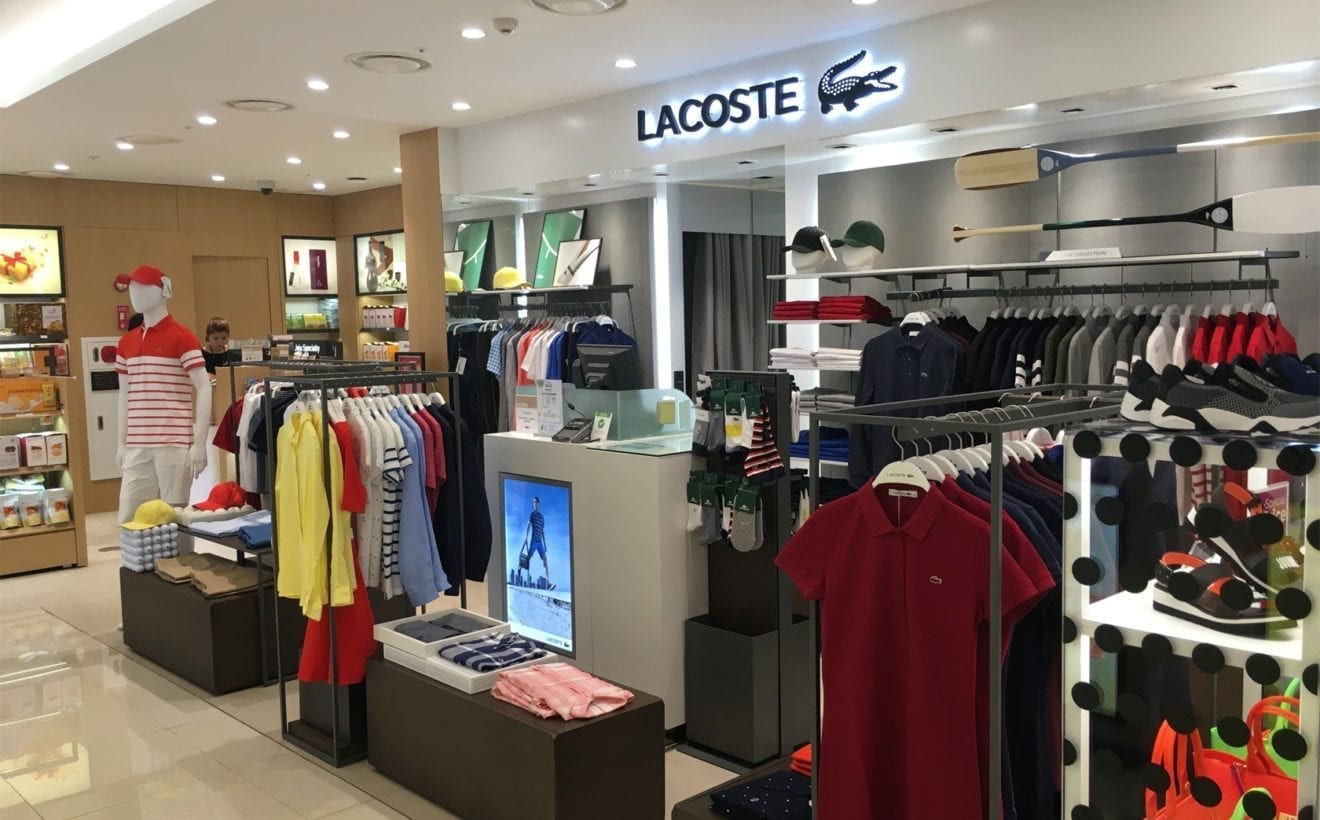
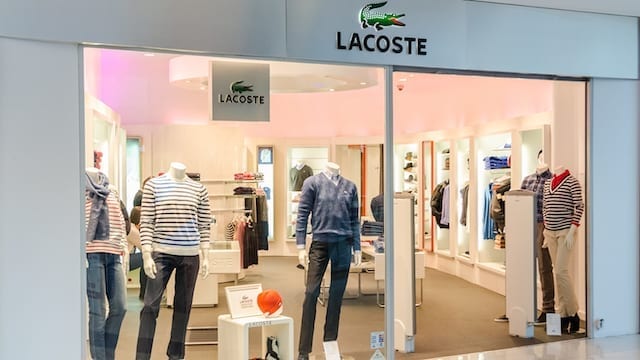
    French apparel brand Lacoste hopes to score more impulse sales by opening stores in Indian airport terminals.

    Lacoste India plans to open three new stores this year in Mumbai and Hyderabad airports and another five in shopping centres as it gradually builds its footprint in tier one cities.

    “We will be opening one outlet at the Hyderabad domestic terminal and at Mumbai airport,” Lacoste India director & CEO Rajesh Jain told PTI in an interview.

    “The new retail stores at airports would start contributing up to seven per cent of our total sales from next financial year.”

    Lacoste already operates a store inside Bangalore Airport. It is eyeing Kochi and Delhi as well.

    The company currently operates 46 stores in 18 Indian cities.