Tag: language

  • Revolutionizing Language Switch: Google Translate’s New Pinned Languages Feature for Android and iOS Users

    Revolutionizing Language Switch: Google Translate’s New Pinned Languages Feature for Android and iOS Users

    Google Translate, the language translation app that has become an essential tool for global travelers and multilingual professionals, is set to introduce a new feature that will streamline the process of switching between languages. Launched in 2011, Google Translate currently boasts a user base of one billion monthly active users worldwide, translating over one trillion words each month.

    Enhancing Language Access

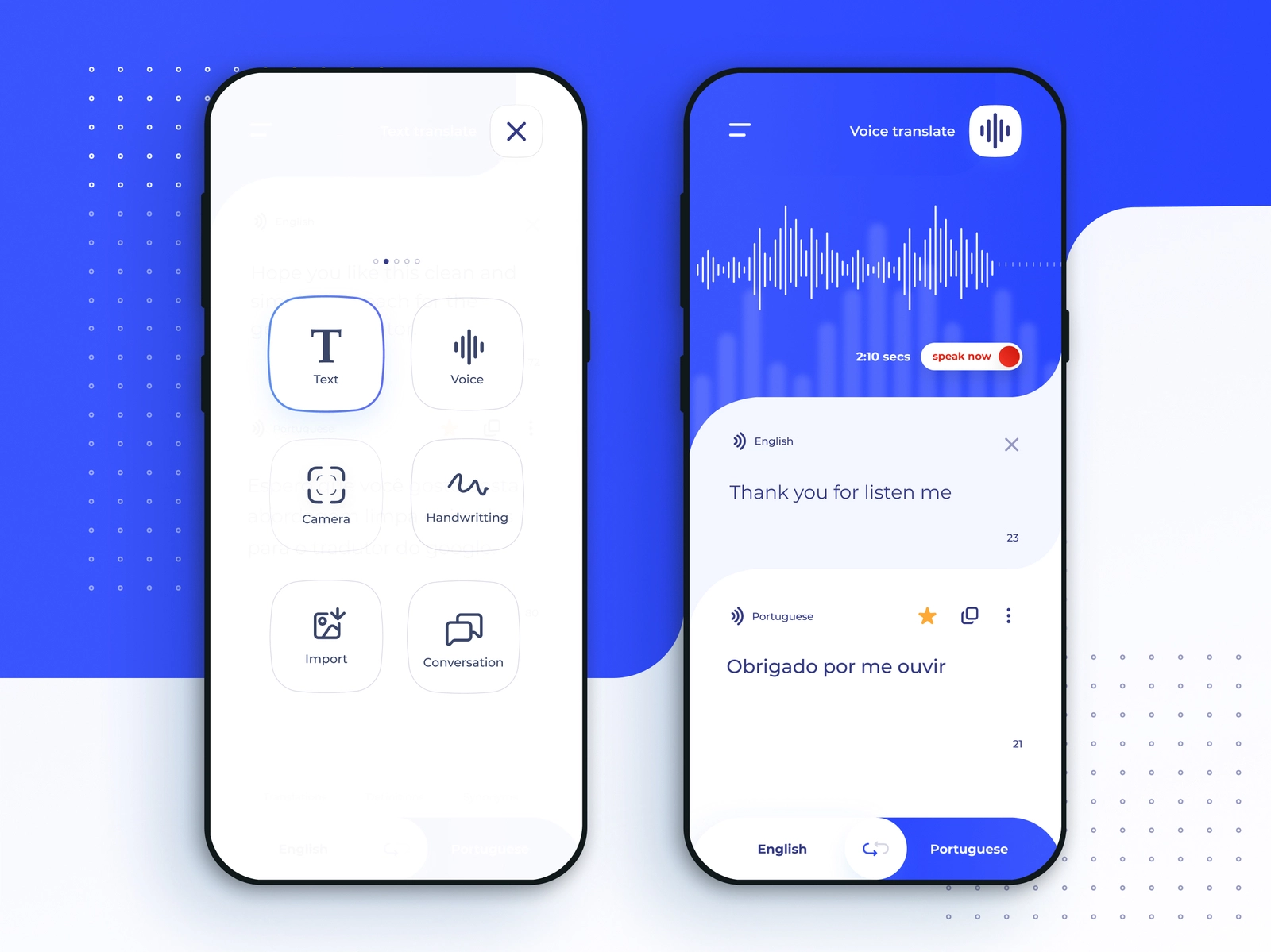
    The upcoming update of the Google Translate app (version 10.8.48.878519627.2) will introduce a feature that allows users to pin their frequently used languages to the language selection page. This feature will enable users to have up to 10 language options readily available for quick selection.

    Currently, the app offers a ‘Recent languages’ list, which displays up to nine recently used languages at the top of the screen. However, adding another language to the list causes one to be removed. The forthcoming ‘Pinned languages’ section, which will be positioned above the ‘Recent languages’ list, will allow users to keep up to 10 languages permanently visible on the screen.

    Though it may seem like a minor addition, for those who regularly switch between languages, this feature could significantly enhance the functionality of the app. For instance, when visiting a country with multiple prominent languages, users will be able to conveniently switch between them via the ‘Pinned languages’ section.

    Using the Pinned Languages List

    To pin a language, users should open the Google Translate app and tap the button on the left side, which showcases the language being translated from. Under the ‘Recent languages’ heading, users can select a language and swipe right to reveal a pin icon next to the language name. Tapping the pin icon will add the chosen language to the pinned section in the app. If users wish to unpin a language, the process is the same, but instead, an unpin icon will be displayed next to the pinned languages, which can be tapped to remove the language from the pinned list.

    Questions & Answers

    What does the new feature of Google Translate do?
    The new feature allows users to pin their frequently used languages to the language selection page, enabling quick and convenient language switching.

    How many languages can be pinned to the Google Translate app?
    Users can pin up to ten languages on the Google Translate app.

    How can a language be pinned or unpinned in Google Translate?
    In the app, under the ‘Recent languages’ section, users can swipe right on a language to reveal a pin icon. Tapping this icon will pin the language. Similarly, tapping the unpin icon next to a pinned language will remove it from the pinned list.

  • Expand Your Language Spectrum: Google Translate Adds New Languages to Its Learning Tool

    Expand Your Language Spectrum: Google Translate Adds New Languages to Its Learning Tool

    Google Translate, the popular language translation application, has recently broadened its language tutoring capabilities. An update to the app has introduced several new languages that users can learn and practice, providing increased linguistic accessibility to users across the globe.

    Expanding Language Learning

    Since its introduction, Google Translate’s Practice Mode has offered learning capabilities for Spanish and French to English speakers. For non-English native speakers, the app has provided English language training for French, Spanish, or Portuguese speakers. The recent update extends the application’s language range by introducing Portuguese and German into the list of languages that English speakers can learn.

    English Language Learning Extension

    The update has also expanded the application’s ability to teach English to speakers of additional languages. As a result, speakers of the following languages can now benefit from Google Translate’s English language teaching capabilities:

    – Bengali
    – German
    – Hindi
    – Italian
    – Dutch
    – Romanian
    – Swedish
    – Chinese (Simplified)

    Enhancing Language Proficiency

    Google Translate’s tool provides an excellent platform for users to refine their language skills. Its recent update includes an option that allows users to practice English, even if their display language is set to English. This feature caters to users who are looking to improve their English language capabilities or simply wish to practice English in a risk-free environment.

    AI-Powered Features

    In recent months, Google has introduced a range of new features to the Translate app, many of which leverage artificial intelligence. These features include real-time conversation translations and large-font translations. The recent developments underscore Google’s understanding of the common scenarios where people use the Translate app – primarily in real-life situations.

    Aspirations for Further Language Options

    Despite the recent advancements and Google being a US company with a focus on English language learning, there is a desire for more diverse language training options, specifically between two non-English languages. This is due to Google’s global presence, with offices worldwide. Additionally, users are expressing interest in seeing the app move beyond repetitive speaking and listening practice by including grammar lessons.

    Questions & Answers

    What new languages can English speakers learn on Google Translate?
    English speakers can now learn Portuguese and German on Google Translate.

    What new languages can non-English speakers learn English in on Google Translate?
    Non-English speakers of Bengali, German, Hindi, Italian, Dutch, Romanian, Swedish, and Chinese (Simplified) can now learn English on Google Translate.

    What are some new features Google has added to the Translate app?
    Some new features include real-time conversation translations and large-font translations.

  • Samsung adds more language availability within Galaxy AI

    Samsung adds more language availability within Galaxy AI

    Samsung is taking a big leap forward today in its AI ambitions. Galaxy AI, the company’s on-device intelligence engine, just got closer to overcoming language limitations across the world with a huge expansion in language support.

    This spring, Arabic, Indonesian, and Russian support will be added to the thirteen available languages. Additionally, Australian English, Cantonese, and Canadian French dialects are now supported.

    But Samsung is not stopping there as later this year the company plans to bring Romanian, Turkish, Dutch, Swedish, and both traditional Chinese and European Portuguese support as well to Galaxy AI. This is a huge step in bringing AI capabilities to everyone globally, just like TM Roh, President and Head of Mobile eXperience Business at Samung, said: “Committed to democratizing mobile AI for all, Galaxy AI’s language expansion this year will allow even more Galaxy users to communicate beyond language barriers on a scale that is completely unique to Samsung.”

    As a reminder, these are the things that Galaxy AI can do for you:

    • Live Translate: If you make phone calls to another country or to someone who speaks another language, Galaxy AI can act as your own interpreter.
    • Interpreter: In-person chats can now be a breeze, even when they take place in different languages, with split-screen translations.
    • Chat Assist: Helps you tone down work emails and write snappy social posts with grammar and tone check.
    • Note Assist and Transcript Assist: Get summaries, formats, and even translations for those long meeting notes.

    You’ll be able to add these additional languages to your Galaxy device by downloading the new language packs that can be grabbed right from the Settings app. Right now, newer devices such as the Galaxy S24 series, Galaxy S23 series, Galaxy S23 FE, Galaxy Z Flip 5, and Galaxy Tab S9 series. However, more devices will be joining the Galaxy AI family soon.

  • Duolingo Launches in Thailand With a Free English Language Course for Thai Speakers

    Duolingo Launches in Thailand With a Free English Language Course for Thai Speakers

    Duolingo, the most popular language-learning platform and most downloadededucation app in the world, announced today its launch in Thailand with a free English language course for Thaispeakers. Using Duolingo, Thai speakers can learn to read, write and speak English through fun, game-like lessons. Duolingo is available now as a free app on the App Store and Google Play, and on the web at Duolingo.com.

    With more than 170 million users worldwide, Duolingo stands out for its free learning content, game-like approach to teaching, and bite-sized lessons that can be done in five to ten minutes per day. This appeals to anyone in Thailand who lacks time and resources to sign up for expensive language classes.

    “Of the 1.2 billion people worldwide who are learning a foreign language, 800 million are learning English in order to improve their job prospects and gain access to better life opportunities,” said Luis von Ahn, CEO and co-founder of Duolingo. “We started Duolingo to make language education free and accessible to everyone, and are excited to now offer the first free online English language course for Thai speakers. We hope the course will help open up new educational and job opportunities for Thais, while providing a fun learning experience.”

    The Duolingo English course for Thai speakers is the first free language-learning program of its kind in Thailand. Like most of Duolingo’s courses, this one was created by a team of bilingual volunteers. The team behind this course includes Songphon Klabwong, chief technology officer of a Bangkok-based software company, who was previously a lecturer of Computer Science at Rajamangala University of Technology.

    “During the time I was teaching, I noticed that the language barrier among my students was one of the biggest challenges to their learning experience and encouraged my students to start learning English,” said Klabwong. “When I found out that Duolingo was developing an English course for Thai speakers, I was inspired by the company’s mission and decided to contribute to the course. I am hopeful that it will encourage more Thais to develop their English skills.”

    For Thais who already read, write and speak English, Duolingo currently offers 22 language courses, with plans to add Japanese, Korean and even Klingon, the extra-terrestrial lingo from Star Trek, this year, too.

    Based in Pittsburgh, Pennsylvania in the United States, Duolingo has raised USD $83.3 million in venture capital from investors including Google Capital, Union Square Ventures, New Enterprise Associates, Kleiner Perkins, Hollywood actor Ashton Kutcher and internationally renowned author Tim Ferriss. While all learning content on Duolingo is free, the company monetizes through optional in-app purchases, ads at the end of lessons and a relatively low-cost English language certification test that is widely accepted at universities and organizations around the world.

    Duolingo is available on Android, iOS, Windows devices and the Web with seamless switching between platforms.

  • Samsung Vietnam develops intensive language programe

    Samsung Vietnam develops intensive language programe

    Samsung Electronics Việt Nam (SEV) in association with University of Social Sciences and Humanities and the University of Languages and International Studies on Saturday held a ceremony to mark completion of the 14th Korean language course.

    The course was taken by outstanding employees at SEV and Samsung Electronics Việt Nam Thái Nguyên (SEVT) plants.

    The programme is a part of SEV’s sustainable development plan to contribute to the country’s high quality human resource development in general and to provide Samsung’s employees opportunities to learn and improve their capabilities.

    The programme is undertaken by Samsung annually for free for its employee, with the company spending nearly VNĐ50million (US$2,200) spent per trainee, and is exclusive for employees performing exceptionally well in the SEV and SEVT plants.

    Each course, which continues for 12 straight weeks, will be taught by Korean lecturers and Vietnamese teachers with PhD and master’s degrees from the two leading universities.

    On returning to work, the employees can practice their intensive Korean skills at their department by self-study or through spending time with Korean dispatchers. Following the 12-weeks course, all trainees will get the opportunity to obtain the TOPIK certificate. All the trainees are provided with training, accommodation and meals for free.

    “We believe every Samsung employee comes here not just to work, but to also get an opportunity to develop soft skills and hard skills for their personal development. Therefore, their development is a high priority within the company. We hope through these training programmes, our Vietnamese employees will be more proactive and confident in the global working environment and develop solid skills during the management process in the future”, Cho Hoseok, general director of Human Resources, said.

    Established in 2014, Samsung has organised 14 Korean training courses for nearly 250 employees. Samsung expects to host another six training courses for 120 employees next year.

    Samsung has also established several training programnes for management levels, as well as the entire staff body at the two factories.