Tag: Last-mile delivery

  • Shopee Expands Local Fulfillment Network Across Southeast Asia and Taiwan

    Shopee Expands Local Fulfillment Network Across Southeast Asia and Taiwan

    Shopee is overhauling its logistics network across Southeast Asia and Taiwan. The push aims to cut transit times and protect delivery margins across its core marketplace.

    The Singapore-based platform, owned by Sea Group, uses a mix of in-house couriers, third-party fulfillment centers, and external delivery networks. These teams process merchant orders across multiple regional hubs.

    How the routing model operates

    Merchants use a split fulfillment model. They either ship directly from their own facilities or hold stock inside platform-managed hubs. Storing fast-moving inventory near dense urban areas cuts transit distance and speeds up dispatch. Automated systems then route each parcel to external couriers or internal fleets based on carrier capacity, pricing, and destination.

    Surges during promotional events like 11.11 and 12.12 test this setup. Shopee handles these spikes by enforcing strict cut-off windows. It also synchronizes warehouse picking schedules with local freight partners.

    Cross-border friction and last-mile costs

    Last-mile transport remains the most expensive link in regional logistics. Island geography in Indonesia and the Philippines creates delivery hurdles. Heavy traffic in capital cities adds further friction, forcing platforms to run separate delivery setups for urban and rural buyers. Cross-border consignments face extra delays from customs clearance and import duties, requiring close coordination with regional freight handlers.

    Marketplace operators across the region face steady pressure to balance speed against parcel subsidies. Moving higher volumes through dedicated fulfillment nodes lowers per-package handling costs. It also helps platforms retain larger brand merchants.

    Sellers are now preparing inventory allocations for year-end shopping campaigns, setting up the network’s next operational test.

  • Rakuten Doubles Tokyo Autonomous Delivery Fleet to 10 Robots

    Rakuten Doubles Tokyo Autonomous Delivery Fleet to 10 Robots

    Rakuten Group has expanded its autonomous sidewalk delivery fleet in eastern Tokyo, targeting 24,000 households across the Harumi, Tsukishima, and Kachidoki districts. The Japanese group is doubling its deployment of US-built Avride delivery robots to 10 units after launching the commercial run in November 2024.

    The service connects more than 90 drop-off points to local merchants, including Starbucks, FamilyMart, Yoshinoya, and Supermarket Bunkado. Each cart carries one order per trip inside a 54-liter cargo hold, twice the volume of earlier testing units. They run for up to 12 hours on a 3.5-hour charge, navigating at speeds capped by Japanese law at 6 kilometers per hour.

    Sidewalk Hardware and Route Rules

    Avride builds the hardware with light detection and ranging sensors alongside ultrasonic arrays, allowing navigation at night and in rainfall up to 20 millimeters per hour. Operations pause during heavier storms, snow, or high winds. Japanese transport regulations require off-site human overseers to monitor the machines remotely, though operators do not need to walk alongside them on the pavement.

    Integrating different property access points and door locks remains the main operational hurdle for sidewalk robotics in dense Asian cities. Rakuten uses custom unlocking instructions tailored to individual apartment complexes to let buyers retrieve parcels from the cargo bay.

    Expanding Beyond Food Orders

    Japan’s food delivery sector reached 800 billion yen ($5.41 billion) in 2024, but acute courier shortages and tightening overtime limits on drivers are forcing platform operators to automate ground transport. While automated carts still handle a sliver of Rakuten’s total volume, the group is setting up the software routing engine to support mixed fleets across commercial hubs.

    Rakuten plans to test the 10-robot fleet on business-to-business shipments and prescription pharmaceuticals once domestic retail operations stabilize across the initial three Tokyo neighborhoods.

  • Asia-Pacific Delivery Drone Market to Expand 33.7% Annually Through 2031

    Asia-Pacific Delivery Drone Market to Expand 33.7% Annually Through 2031

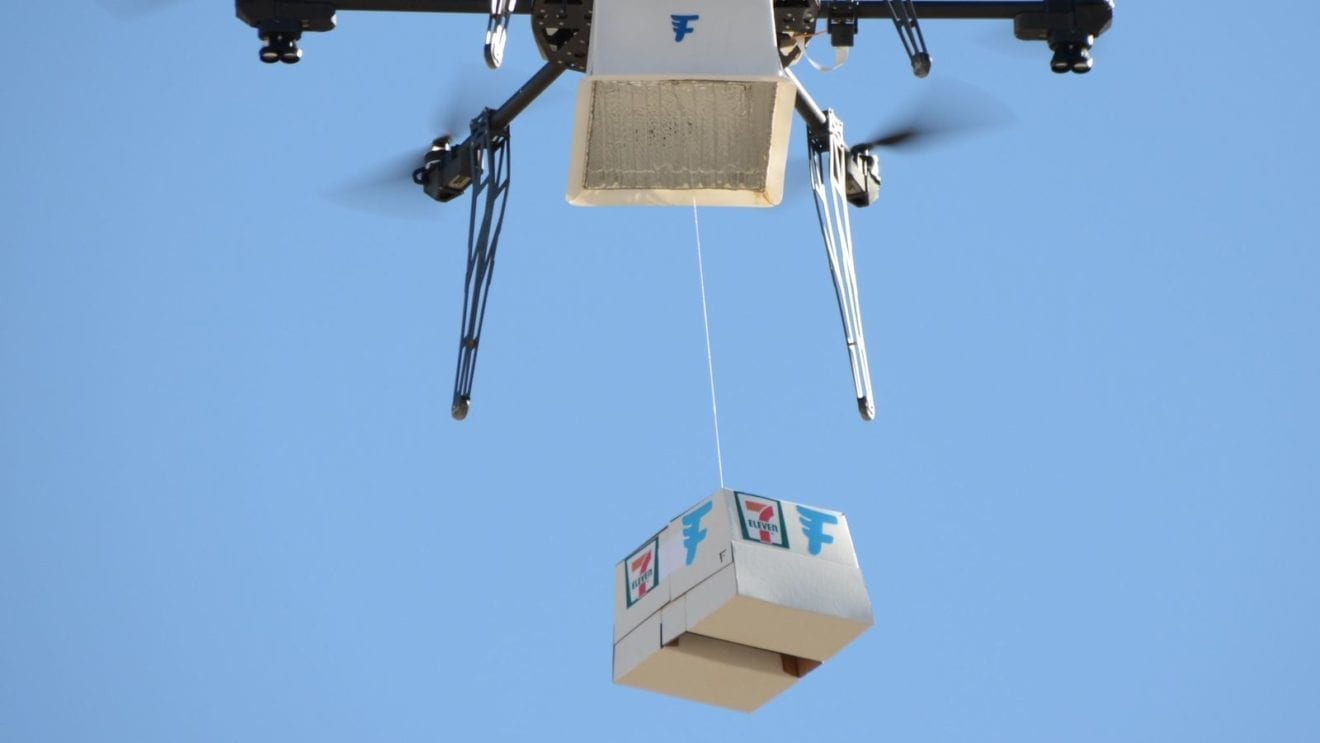
    The Asia-Pacific delivery drone market will expand at a compound annual rate of 33.68 per cent through 2031 as retailers and carriers shift from pilot trials to commercial flight networks.

    Global market revenue reached 1.47 billion dollars in 2026 and is projected to hit 6.74 billion dollars by 2031. The expansion relies heavily on dense urban on-demand delivery alongside rural distribution corridors across Asia.

    Economics and Airspace Pressures

    Operating costs explain the push into commercial airspace. At sufficient route density, autonomous drone delivery can drop to approximately 2 dollars per parcel, compared with roughly 13.50 dollars for traditional truck-based last-mile transport. That cost gap is accelerating investments from e-commerce platforms seeking two-hour order fulfillment from urban micro-hubs.

    Technical hurdles continue to cap immediate capacity. Rotary-wing aircraft captured 72.56 per cent of shipments in 2025 because they can hover and access tight landing spots in crowded cities. However, payloads under 5 kilograms made up 65.71 per cent of all deliveries, limiting most operations to prepared meals, pharmaceuticals, and small consumer packages.

    Unmanned traffic management systems around metropolitan airports also remain incomplete. Regulators require geofencing and collision-avoidance systems, yet aviation authorities still lack the digital infrastructure needed to coordinate thousands of simultaneous commercial flights over dense residential blocks.

    Payload Limits and Regional Flight Paths

    Asian operators are tackling geography by deploying different airframes for different terrains. In China, JD Logistics now flies fixed-wing drones across approximately 200 rural routes, using the platform’s longer range to bridge transport gaps where road links add hours to delivery times.

    Government policy is shaping fleet deployment across the rest of the region. India has carved out dedicated corridors for medical supplies under its Drone Rules while offering incentives for domestic airframe manufacturing. Japan has cleared multi-prefecture autonomous flight operations, and logistics providers in Indonesia and the Philippines are testing island-to-island freight runs.

    For retailers across the region, aerial logistics is ceasing to be an experimental marketing exercise. While western operators like Walmart and Wing Aviation scale across suburban markets in the United States, Asian carriers are building high-frequency routes where physical geography makes ground transport uncompetitive.

    The next metric to track is the commercial rollout of hybrid vertical-takeoff aircraft and 5-to-10-kilogram payload capacity, which operators plan to clear with regional civil aviation bodies before 2028.

  • Myntra India taps 9,000 kirana stores to boost last-mile delivery

    Myntra India taps 9,000 kirana stores to boost last-mile delivery

    Flipkart-owned ecommerce platform Myntra that saw 80 percent revenue fall in FY2018 has doubled down on last-mile delivery, tapping into over 9,000 kirana stores across 50 cities to fast deliver packages. Today, nearly 60 percent of all Myntra’s product pick-ups and deliveries happen through its ‘Kirana Delivery Programme’ — helping the company reduce delivery costs, the company said on Tuesday.

    “Myntra’s ‘Kirana Delivery Programme’ is a successful model introduced by the company to accelerate order delivery in the most efficient way possible, while ensuring we provide a good partnership opportunity to our kirana partners,” a company spokesperson said.

    “We will continue to innovate, expand and hope to register more kirana partners in the future as well,” the spokesperson added.

    The ‘Kirana Delivery Programme’ is an ingenious model introduced by the company to accelerate order delivery, while creating a platform for kirana stores to have an additional source of income.

    “A mutually beneficial model, it has helped Myntra achieve greater consumer satisfaction and is enhancing the standard of living of the owners of several ‘mom & pop’ stores across the country,” said the company.

    Several tailors and beauty parlour owners, among others, have also signed up with Myntra for the programme.

    The online fashion retailer narrowed its consolidated losses to Rs 178.7 crore for 2017-18, compared with a loss of Rs 655.8 crore in the previous fiscal.

    According to business intelligence platform Tofler, the company saw its income growing nearly threefold to Rs 427.4 crore in 2017-18 as against Rs 155.6 crore in the previous financial year.

    Ananth Narayanan, Chief Executive of e-tail portals Myntra and Jabong, stepped down from the post on January 14 “to pursue external opportunities”.

    The 11-year-old Flipkart Group, owned by US retail giant Walmart, includes e-tail sites Flipkart, Myntra, Jabong and digital payment platform PhonePe.

    In May last year, Walmart bought a 77 percent equity stake in the company for a whopping US$ 16 billion.

  • Last-mile delivery investment will boost sales

    Last-mile delivery investment will boost sales

    Increased investment by retailers in last-mile delivery is essential to uncover new revenue streams, according to a new study released by the Capgemini Research Institute. According to the report, 97 per cent of organisations believe that current last-mile delivery models are not sustainable for full-scale implementation across all locations, and that free shipping costs cannot be maintained unless delivery costs are reduced through automation.

    “Today, customers are neither satisfied with the quality of delivery services, nor willing to bear the total cost of last-mile delivery,” said Tim Bridges, global sector leader, consumer products, retail and distribution at Capgemini.

    “Therefore, the dilemma facing retailers is to provide last-mile delivery services that customers value, without damaging their own profitability. If done right, and their last-mile experience can win over customer satisfaction, retailers stand to gain loyalty, increased purchase value and frequency, while mitigating profitability risk through automation and optimisation of fulfillment locations,” he said.

    Among its conclusions, the report stated that with warehouse and product sorting representing one-third of supply chain costs, there is a significant opportunity in automation. Recognising this opportunity, 89 per cent of organisations are investing in the mechanisation and automation of store back-rooms to expedite fulfillment and deliveries.

    Speed boosts sales

    Fast and effective last-mile delivery were also shown to increase customer spend and loyalty. Seventy-four per cent of satisfied customers intend to increase spend by as much as 12 per cent with retailers they frequently purchase from. The majority (82 per cent) of customers have shared positive experiences with friends and family, and just over half (53 per cent) would be willing to purchase a paid membership for a good delivery service. However, despite 55 per cent of customers expressing that offering two-hour deliveries would increase loyalty, only 19 per cent of firms currently provide this compared to 59 per cent of firms that offer a delivery timeframe of more than three days.

    The report found that consumers are not satisfied with the current state of last-mile delivery with high prices (59 per cent), non-availability of same-day delivery (47 per cent), and late deliveries (45 per cent) driving delivery dissatisfaction.

    According to the findings, 97 per cent of organisations believe that current last-mile delivery models are not sustainable for full-scale implementation across all locations. As such, they must be viewed as a key investment for this year, with only 1 per cent of customers willing to absorb the total cost incurred for last mile deliveries.

    Despite low delivery costs being the top priority for half of all customers, only 30 per cent of organisations considered it a top priority for themselves.

    Recommendations for retailers

    The report closes with the following recommendations for last-mile delivery success:

    Optimise fulfillment locations: Increasing store-based deliveries by 50 per cent could potentially lead profit margins to soar by as much as nine per cent. Dark stores – retail outposts with store-like layouts intended only to fulfil online orders – can also process high delivery volumes and are 23 per cent cheaper than conventional stores for same-day deliveries. Additionally, if 30 per cent of deliveries and returns are routed through parcel locker collection arrangements, organisations could expect an eight percent increase in profit margins.

    Automate delivery options: Back-room automation could increase profits by up to 14 per cent by reducing the cost of click-and-collect orders and deliveries from store. Furthermore, automation offers a range of benefits including reduction of fulfillment errors and managing returns (which forms 26 per cent of the delivery cost).