Tag: laundry

  • Koh Disrupts $2.3b Laundry Industry With Groundbreaking Sensitive Skin Product Range

    Koh Disrupts $2.3b Laundry Industry With Groundbreaking Sensitive Skin Product Range

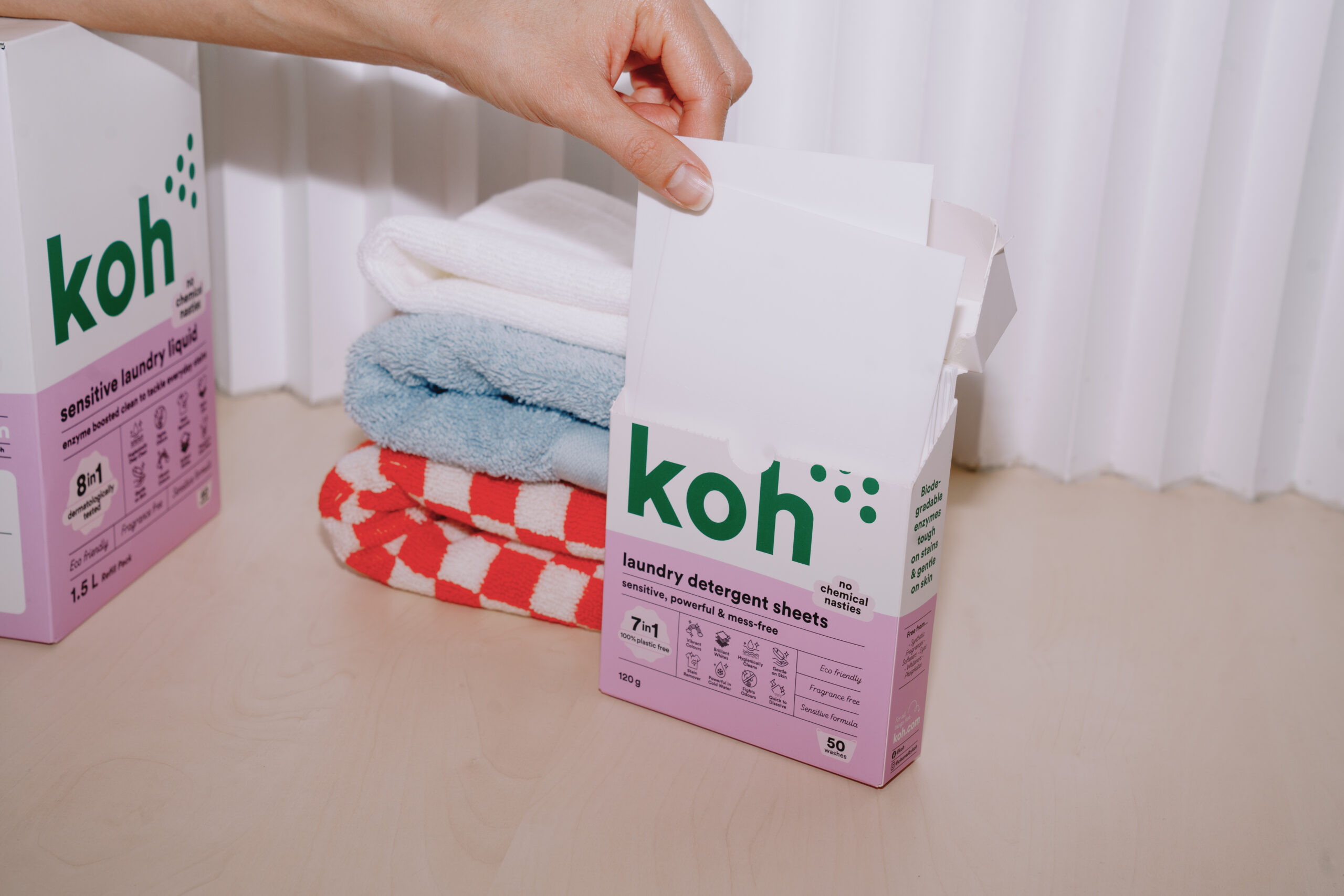
    Australian cleaning company, Koh, is making a strategic entrance into the nation’s $2.3 billion laundry industry by introducing a trilogy of products that leverage advanced enzyme technology and are tailored for sensitive skin.

    The New Laundry Range

    Koh is set to release three new products: Sensitive Laundry Detergent Sheets, Sensitive Laundry Liquid, and Sensitive Stain Remover. These offerings are designed to streamline laundry tasks by providing less but more potent alternatives as substitutes for several traditional items.

    The revamped Sensitive Laundry Liquid incorporates Lipex Evity, a specialty lipase enzyme created to dissolve stubborn greasy stains like body oils, sunscreen, and cooking fats. These stains often present a tough hurdle for many eco-friendly or sensitive skin products.

    The Sensitive Stain Remover features a unique combination of five enzymes: protease, amylase, cellulase, mannanase, and lipase. This blend is engineered to address a wide spectrum of household stains, sidestepping the use of bleach, synthetic scents, or optical brighteners.

    Revolutionizing the Cleaning Industry

    “The residential cleaning sector is undergoing rapid changes,” said Charli Walters, Koh’s CEO. She further added, “Customers are increasingly scrutinizing the ingredients and efficacy of the products they use, and we view this as an excellent opportunity to redefine what effective, sustainable cleaning should look like.”

    Koh’s venture into the laundry segment places it in direct competition with established mass-market brands as well as those with an eco-focused ethos.

    Questions & Answers

    What is the new product range that Koh is introducing?
    Koh is launching a three-product range, including Sensitive Laundry Detergent Sheets, Sensitive Laundry Liquid, and Sensitive Stain Remover.

    What unique features does Koh’s new laundry liquid offer?
    The updated Sensitive Laundry Liquid uses Lipex Evity, a specialist lipase enzyme, to break down stubborn greasy stains like body oils, sunscreen, and cooking fats.

    What is the aim of Koh’s new product range?
    Koh aims to simplify laundry routines by providing fewer, more concentrated options that can replace multiple traditional items and set a new standard for effective, responsible cleaning.

  • Earth Rescue Launches Plastic-free, Biodegradable Cleaning Products In Sustainable Shift

    Earth Rescue Launches Plastic-free, Biodegradable Cleaning Products In Sustainable Shift

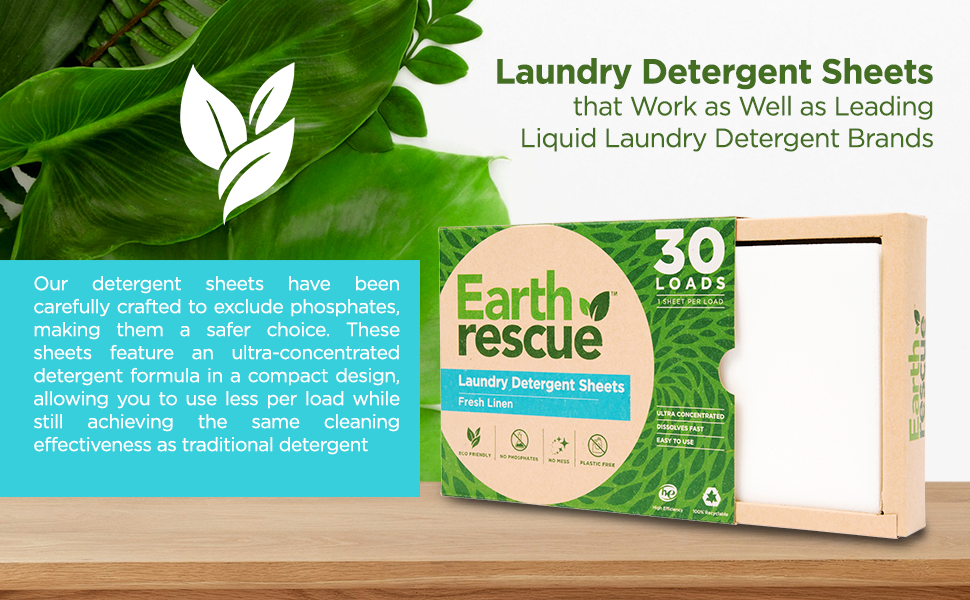
    Earth Rescue, a brand known for its sustainable cleaning products, has introduced a new line of plastic-free scent-boosters, as well as laundry and dishwashing sheets in an effort to contribute to a reduction in plastic waste.

    Eco-Friendly Product Range

    Earth Rescue’s latest products are not just devoid of plastic, but they are also lightweight and pre-measured to ensure zero wastage. These products are packed in compostable cardboard packaging, further reinforcing the brand’s commitment to sustainability.

    The new line includes plant-based biodegradable sheets that are cruelty-free and devoid of parabens and harsh additives. With ultra-concentrated formulas, these sheets are designed to effectively eliminate stains, grease, and odours.

    Addressing Consumer Concerns

    According to Pete Camilleri, Senior VP of Earth Rescue, the launch of these products comes in response to Australians’ growing dissatisfaction with bulky bottles, unnecessary packaging, and ineffective eco products.

    Camilleri explains that Earth Rescue’s goal was to offer consumers a choice that is not only convenient and effective but also affordable and truly beneficial for the environment. He emphasized that the brand aims to make sustainable options the most accessible ones for consumers.

    Availability

    Earth Rescue’s range of detergent sheets for laundry and dishwashing, as well as the in-wash scent boosters, are now available for purchase in Woolworths stores across the country.

    Questions & Answers

    What is unique about Earth Rescue’s new product line?

    The new line is completely plastic-free and designed to minimize waste. The products are lightweight, pre-measured, packaged in compostable cardboard, and made with plant-based, biodegradable ingredients.

    What was the motivation behind the launch of these products?

    Earth Rescue identified a growing concern among Australians regarding bulky and wasteful packaging and ineffective eco products. The brand sought to address these concerns by offering a sustainable, effective, and convenient alternative.

    Where can consumers purchase these new products?

    The new line of products from Earth Rescue is available in Woolworths stores across Australia.

  • P&G Debuts Exclusive ‘unstoppable Collection’ At Us Walmart: A Revolutionary Leap In Laundry Fragrances

    P&G Debuts Exclusive ‘unstoppable Collection’ At Us Walmart: A Revolutionary Leap In Laundry Fragrances

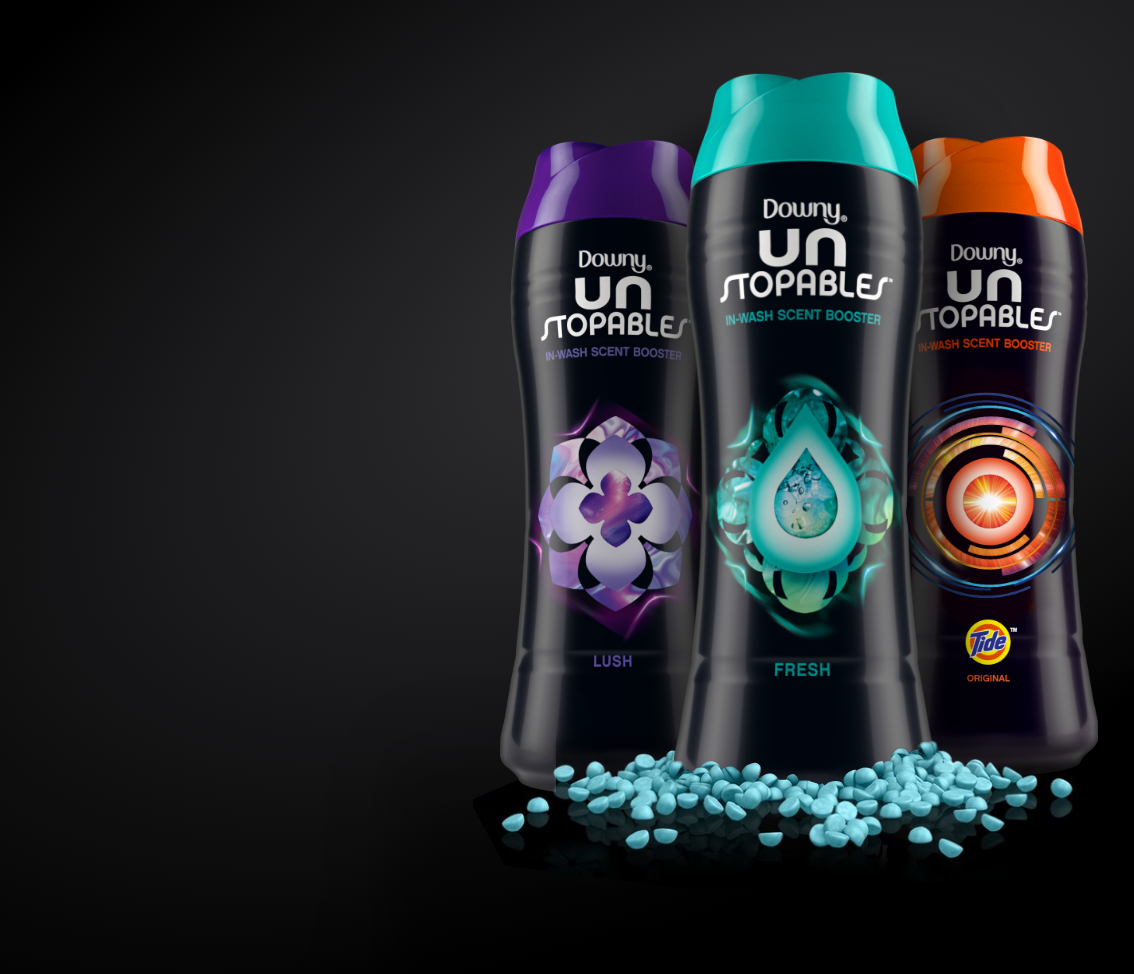
    Procter & Gamble (P&G) has unveiled an exclusive new product line, the Unstoppable Collection. This range, currently exclusive to US Walmart stores, is a first-of-its-kind category expansion consisting of in-wash laundry scent boosters.

    Unique, Long-Lasting Fragrances

    The Unstoppable Collection comprises three distinct fragrances crafted to last and integrate seamlessly into laundry routines. The first fragrance, Unlimited N09, unites the scents of eucalyptus, pine, and cedarwood to produce a robust, woody aroma. The second fragrance, Unlimited N26, offers a floral-woody concoction, blending rose, sweet honey, and earthy oakmoss. Lastly, Unlimited N37 combines bergamot, orris, and vetiver to create a luxurious and sweet scent, as described by the company.

    Promotional Partnership

    To promote the launch of the Unstoppable Collection, P&G has collaborated with acclaimed supermodel, entrepreneur, and mother Jasmine Tookes. Tookes stars in three promotional advertisements designed to showcase and amplify the range’s introduction.

    Redefining Laundry Fragrance

    Redge Abueva, vice president of North America fabric enhancers at P&G, spoke excitedly about the new collection. He expressed that with the Unstoppables Unlimited Collection, P&G is redefining the possibilities within the laundry category. The goal is to provide consumers with sophisticated, fine-fragrance experiences at an unprecedented scale.

    Questions & Answers

    What is the Unstoppable Collection?
    The Unstoppable Collection is a unique product line by Procter & Gamble comprising long-lasting, in-wash laundry scent boosters.

    What are the fragrances available in the Unstoppable Collection?
    The collection includes three fragrances: Unlimited N09, a blend of eucalyptus, pine, and cedarwood; Unlimited N26, a mixture of rose, sweet honey, and earthy oakmoss; and Unlimited N37, a combination of bergamot, orris, and vetiver.

    Who is the brand ambassador for the Unstoppable Collection?
    Procter & Gamble has partnered with supermodel and entrepreneur Jasmine Tookes to promote the Unstoppable Collection.

  • China Records First Case of Money Laundering via CBDC

    China Records First Case of Money Laundering via CBDC

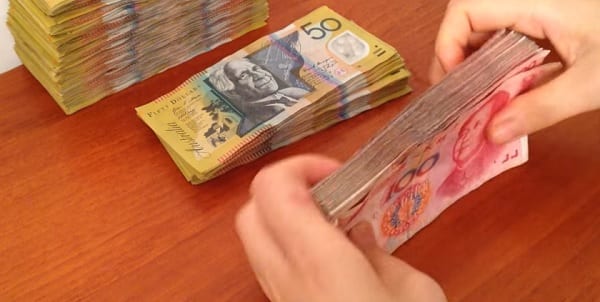
    The pioneer of central bank digital currency, China recorded its first case of money laundering via the electronic yuan.

    Officials arrested 11 members of a criminal group in the Fujian province last week for allegedly laundering money using the country’s central bank digital currency (CBDC), according to Chinese media reports.

    The group allegedly scammed an individual after making false claims of ordering an item with quality issues.

    The victim was instructed to transfer more than 200,00 yuan ($31,000) to multiple accounts provided by the suspects.

    China is widely considered a CBDC pioneer after starting research into the field as early as 2014 and recently rolling out the digital yuan for public use via pilot programs.

    Although there is still no official launch date, many onlookers expect a full introduction in February 2022 in time for the Beijing Winter Olympics.

  • Hong Kong Customs Arrest $400 Million Money Laundering Family

    Hong Kong Customs Arrest $400 Million Money Laundering Family

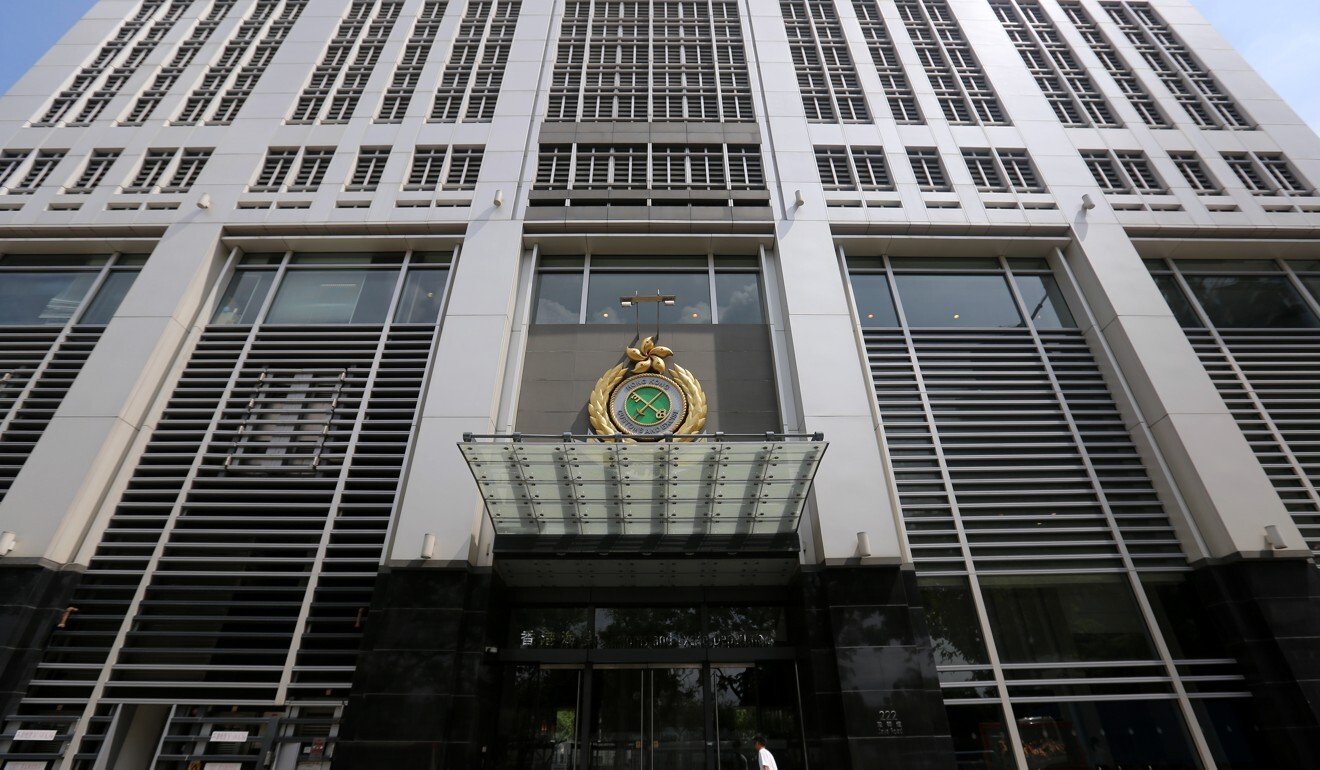
    Parents, three children, and a money exchange owner were arrested by Hong Kong customs over alleged money laundering of nearly $400 million.

    Investigations first kicked off in 2018 after a tip-off from a bank and since then, the family made 6,000 «suspicious financial transactions» involving more than HK$3 billion ($387 million) through over 100 accounts from nine banks, according to Hong Kong customs authorities.

    The arrested include the parents, aged 58 and 62; the eldest son, 34; a second son, 30, who works at the money changer involved; a daughter, 25; and a 60-year old owner of the money changer. The latter suspect has been arrested and his money exchange license suspended due to suspicions over alleged transactions with the family totaling $22 million despite reporting just $3.9 million.

    According to investigators, the family had around $3.9 million in assets – half in bank accounts and another half in two properties – but a monthly income of just around $9,000.

    The assets held by this family are not commensurate with their profiles and backgrounds,» said the syndicate crimes investigation bureau’s senior superintendent Mark Woo Wai-kwan. We suspect this family has a hidden income which may be the crime proceeds from assisting money laundering.

    Woo said the funds had come from unknown sources or shell companies and the family’s assets have since been frozen.

    Investigators currently believe that the family had helped other syndicates launder crime proceeds for a cash reward.

    According to Woo, investigations about the funding source and illegal activities are still underway but there are indications that third party individuals or shell company owners involved were from mainland China.

    Money launderers in Hong Kong face a maximum penalty of 14 years in prison and a $650,000 fine.

  • Money Laundering’s Last Bastion Set to Fall

    Money Laundering’s Last Bastion Set to Fall

    Financial regulators are cracking down on the opaque international fine art market’s untoward methods and loopholes for money laundering. The Swiss «Bouvier case» was the trigger.

    Prosecutors in Geneva and New York are wading through reams of evidence allegedly documenting one of the largest frauds in the secretive market for fine art. Russian oligarch Dmitry Rybolovlev is suing Swiss art dealer Yves Bouvier as well as auction house Sotheby’s.

    Rybolovlev alleges that he was cheated of $380 million in superfluous payments for artworks because of market collusion. In a separate complaint against Bouvier, he is suing for $1 billion, which is what the Russian alleges is how much he overpaid for a total of 38 pieces of fine art.

    The document-rich Bouvier case has preoccupied courts for years – and is exemplary for how opaquely the market for international art is. The cash-friendly marketplace is closely linked to private banking – and art has grown in importance as an asset class.

    A European money-laundering rule aimed at shutting loopholes for fine art came into force two weeks ago. The changes including similar «know your client» rules as apply in banking, for transactions of more than 10,000 euros ($11,084). That means galleries, dealers, agents, and other intermediaries to the rich must apply a type of due diligence to their clients before buying and selling.

    Regulators have also drawn up an extensive list of fine art of various mediums which are subject to value-added tax at purchase. It is meant to force buyers as well as sellers into a regulatory framework, and to cleanse the market of improprieties.

    Glitzy art fairs in Basel, Geneva, Hong Kong, and Miami have until now been accompanied by lots of cash – as well as more than a whiff of scandal. The specter of sudsing out ill-gotten money with a few pricey art buys is one that clashes with the image of well-heeled, refined culture mavens that galleries and auction houses have long cultivated.

    The estimated $70 billion annual art market until now has operated largely outside the purview of international regulators – as well as to its own capitalist tune. «It can be hidden or smuggled, transactions often are private, and prices can be subjective and manipulated— and extremely high,» former U.S. prosecutor Peter Hardy said.

    In other words, a valuable work of art is the perfect vehicle to conceal untaxed assets, or to launder dirty money.

    Commissions in art deals can be astronomical, while collusion and price-fixing through agents and intermediaries are reportedly rampant – and until the Bouvier case blew open, super-wealthy art clientele had rarely complained about it.

    Undoubtedly wounded in pride over being hoodwinked, Rybolovlev was the first major art buyer to blow the whistle, so to speak. Bouvier is known more as «king of Swiss freeports», tax-free storage facilities that play a huge role in stowing illicit loot, than as an art dealer. The Swiss government estimates that the country’s freeports hold more than $100 billion in assets – in secret, and untaxed.

    A Louvre director called the facilities «the biggest museums that no one can visit». The European rules are set to rob art sellers and auction houses one of their biggest advantages: vendor anonymity.

    The move comes as private banking is forced to abandon secrecy in major jurisdictions like Switzerland – a bid to crack down on lost tax income. It remains unclear whether customs and tax officials have the resources to enforce compliance in the art market – but the new money-laundering rules are a first step to force the industry into an era of oversight.

  • Mr Jeff plans more outlet in Singapore and Philippines

    Mr Jeff plans more outlet in Singapore and Philippines

    Spanish on-demand laundry startup Mr Jeff plans Singapore and the Philippines expansion. The company aims to open more than 75 franchises in the Philippines, and 30 in Singapore by the end of this year.

    A Mr Jeff app allows users to book laundry services on-demand and through a subscription model. By using the app, website, or the company’s physical store network, customers can choose the exact location, time and day for their laundry to be collected and delivered. A driver visits the user’s home or office, collects the garments and delivers them back later, cleaned and ironed.

    According to Mr Jeff’s research, laundry services are popular among the younger generation, and considered by 78 per cent as the most-disliked domestic chore.

    “With our digital approach and our subscriptions plans, we intend to change the traditional function of the dry cleaning sector,” said Luis Eduardo Quintero, of Mr Jeff Philippines.

    “Singapore and the Philippines are two of the countries in which maximum revenue is expected.”

    Founded in 2015, Mr Jeff is currently operating 370 laundry points in more than 10 countries, mostly in Central and Southern America.

  • Rise of the machines: Vending machine culture comes to Singapore

    Rise of the machines: Vending machine culture comes to Singapore

    Bananas, live crabs, make-up and even guitar strings are just a few things that one can find in vending machines around the world.

    While Singapore’s convenience culture is not quite there yet, the country is catching up. We now have the “first vending machine cafe”, launched yesterday at Blk 320C along Anchorvale Drive, which dishes out hot food such as Nasi Goreng Istimewa or Vegetarian Rice Noodle. There are even snacks such as cookies to go along with your meal, and there are tables and chairs where you can tuck into your vending machine meals in comfort.

    Meanwhile, independent bookstore BooksActually made the news when it started selling works from home-grown authors in vending machines in June. The machines have been a hit — three have been launched, and one machine located in the National Museum of Singapore has sold more than 100 books (as of July 11, 2016).

    Kenny Leck, BooksActually director and co-founder, said: “The book vending machines were done with marketing value and publicity in mind than sales. But we have been surprised by the sales generated by at least one of the machines, located at the National Museum of Singapore. It has done well enough for us to replenish stocks once every week.” Sales are a little slower at the machine at the Singapore Visitor Centre, but it still gets stocked every two weeks, he revealed.

    At 10 FairPrice outlets, consumers can find iCash machines, which accept cash on behalf of a cashier. The machine also dispenses change. The system was rolled out late last year, and is also available in 17 Cheers outlets. According to a FairPrice spokesman, you will see these machines in another 16 FairPrice and 13 more Cheers outlets by the end of this year.

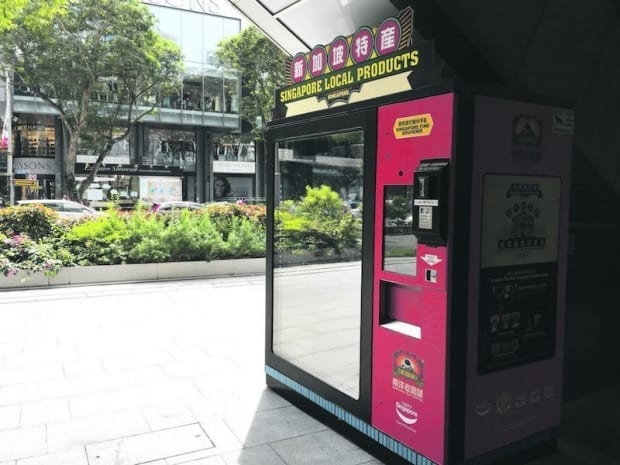
    A vending machine that accepts your dirty laundry? Why, yes please. — TODAY pic

    A vending machine that accepts your dirty laundry? Why, yes please. — picLaundry services via the help of a machine are another automated service you will find at some FairPrice Finest outlets, such as at Marine Parade and UE Bizhub. There, you will see a dry-cleaning locker machine called My Laundry Box where you drop off your clothing and pick it up as soon as two working days later. You can even get curtains and stuffed toys cleaned.

    Vending culture

    Some say that Singapore is behind countries such as Japan, which for decades has been renowned for its vending machines (its first was reportedly a cigarette-dispensing machine, which debuted in 1888). Vending machines have certainly become a common sight, no matter where you are in the world. They spit out everything from the mundane (think headphones in many United States airports) to the unexpected such as condoms (Italy).

    Consumer experts say Singapore is moving that way. A Spring Singapore event was held last week for vending machine operators. There, exhibitors gathered to show new technology — such as machines with innovative robotic arms — and to be part of panel discussions.

    Head of SIM University’s School of Business, Allan Chia, explained that Singapore is lagging behind not because of our culture or technology. “The main issue is sales volume, which is linked to our small market size,” he said. SIM University has received research funding to study consumer usage on self-service technologies, particularly in the food and beverage sector.

    He notes that while unusual items have not taken off on a wide scale, there could be a market for more as the machines do fill a certain gap in the retail scene. A shop could be closed, for instance, but a vending machine could offer products at all hours — and without the need for a sales person.

    Ironically, some machines aid in human interaction. FairPrice’s iCash system was installed to optimise manpower, said its spokesman. But ultimately, the system has helped the stores’ checkout staff by allowing them to focus more wholly on the customer, rather than on handling cash.