Retail News CRM

Tag: law

  • DLA Piper Bolsters Asia Capabilities

    DLA Piper Bolsters Asia Capabilities

    The global law firm is has made a senior energy partner hire in Hong Kong.

    DLA Piper has appointed Russell Wilkinson as a partner in its Finance, Projects, and Restructuring (FP&R) practice, based in Hong Kong, the firm announced on Thursday.

    Wilkinson joins the firm from Baker Botts in Hong Kong, where he has been a senior energy partner since 2006. He focuses his practice on the development, acquisition/divestment, and financing of energy businesses and infrastructure, and the commercialization of energy resources. He has extensive experience in upstream and midstream petroleum projects, power generation, and transmission projects.

    He is widely recognized as an authority in the energy, oil, and gas markets, with rare expertise in liquefied natural gas, making him one of only a handful of specialist energy practitioners in Asia. He regularly advises national oil companies, oil majors, regional energy players companies, and energy traders across the region.

    Wilkinson’s arrival closely follows that of capital markets partner George Wu, announced earlier this week. The firm has been growing its corporate practice in Hong Kong, with Kristi Swartz joining in November as a partner in its Intellectual Property and Technology (IPT) practice, and the addition of capital markets partner Arthur Tso in March 2021.

    Over the past couple of years, DLA Piper has also welcomed partners Philip Lee and David Kuo in Singapore, and Samata Masagee in Bangkok.

  • Hong Kong Anti-Sanctions Law Details Begin Surfacing

    Hong Kong Anti-Sanctions Law Details Begin Surfacing

    China’s top parliament is in the last of its four-day meeting on draft bills with some broad indications unveiled about Hong Kong’s anti-sanctions law, including a rough timeline and government entities to be involved.

    China’s National People’s Congress (NPC) Standing Committee is expected to formally approve the anti-sanctions law today, marking an end to its four-day closed-door talks on various draft bills.

    Although approval of the law is a foregone conclusion – Hong Kong’s sole delegate to the NPC Standing Committee Tam Yiu-chung had already flagged Friday as the day the legislation will be officially introduced – the financial industry is still closely watching for signs on how and when implementation will occur.

    While the NPC Standing Committee is expected to approve the law’s insertion into the Basic Law – Hong Kong’s own constitution – the city will draft its own version locally, according to a report citing unnamed government insiders.

    The government had no choice but to address growing corporate concerns due to the critical importance of upholding’s Hong Kong’s status as a global financial hub, the source explained.

    The mainland’s version is a bit too broad, which has caused great fear among international businesses in the city, the source said. Some suggested the local version should be more specific so as to alleviate worries, while others also think a vague law could give the government flexibility. The government, therefore, has to get a green light from the central government on how much it can do.

    According to the report, entities to be involved with drafting the local legislation include chief executive Carrie Lam, Financial Secretary Paul Chan, the Hong Kong Monetary Authority as well as the bureaus for financial services, security and constitutional and mainland affairs.

    Separately, Chan was scheduled to meet lawmakers over the matter this week but the discussions were abruptly canceled.

    The government has not decided which bureau should take the lead, while the financial secretary has been listening to views in society, one of the sources said.

    And in order to obtain sufficient feedback from key stakeholders, Hong Kong lawmakers will be working on a local draft of the anti-sanctions at least until next year.

    Lam had previously said that she did not have an explicit deadline for implementation but added that completion within the current term, which ends in October before the next session opens in early 2022, would be an extremely tight timetable to rush a piece of legislation with the necessary consultation with stakeholders.

    In addition to the NPC Standing Committee meeting this week, the industry will also look for more clarity from a delegation led by Huang Liuquan, a deputy director of the State Council’s Hong Kong and Macau Affairs Office, when they visit the city next week to brief lawmakers on the nation’s 14th five-year plan.

  • Foreign e-tailers must have registered entity in India: Draft policy

    Foreign e-tailers must have registered entity in India: Draft policy

    E-commerce sites or apps available for download in India must have a registered business entity in the country, according to latest draft e-commerce policy, which also proposes regulation of cross-border flow of data collected by sector players in India.

    According to analysts, the move to make it mandatory for foreign online retailers to register entities in India follows the relatively recent spread and expansion in the country of Chinese e-commerce platforms which do not have an Indian presence.

    These include Chinese portals such as Shein, Romwe and AliExpress and the proposed registration norms come after complaints made to the government by traders’ bodies like the All India Online Vendor Association about Chinese online operators shipping cheaper products to Indian customers as gifts in order to avoid customs duty.

    As per the proposed norms, all foreign e-commerce sites must have a registered business entity in India as the importer on record or as the entity through which all sales in India are transacted.

    The draft policy has also proposed a ban on all parcels designated as gifts, with the exception of life-saving drugs.

    Moreover, as per the draft policy, all data collected by e-tailers in India and stored abroad should not be made available to other business entities outside the country, for any purpose, even with customer consent.

    However, the government will have the right to access the data of Indian consumers stored abroad.

    Restrictions on cross-border flows of data would not apply to data which is not collected in India, business-to-business (B2B) data sent to India as part of a commercial contract between a business entity located outside India and an Indian business entity.

    Software and cloud computing services involving technology-related data flows, which have no personal or community implications and multi-national companies, moving data across borders, which is largely internal to the company and its ecosystem, would not have to follow the regulations.

    New foreign direct investment (FDI) norms, which prohibit the e-tailers from selling products of companies in which they have stakes, came into effect on February 1 despite both Amazon and Walmart seeking a six-month delay in their implementation.

    The second e-commerce draft policy has been welcomed by sector players like Snapdeal and trader associations such as the Confederation of All India Traders (CAIT).

    Snapdeal said the draft policy’s rejection of inventory based e-commerce must be followed by effective implementation of FDI norms to ensure marketplaces do not own or control inventory, directly or indirectly.

    “The recognition of data as a strategic national asset is well-timed and will lead to the development of required regulation in this regard,” a Snapdeal spokesperson said.

    US giants Amazon and Walmart, which recently acquired a 77 percent majority stake in the Indian e-retail major Flipkart, said they are reviewing the draft e-commerce policy and will share their inputs on the proposals in course of time.

    Amazon has been forced to remove an array of products from its India website in order to comply with the new FDI regulations in e-commerce.

  • Vietnam prosecutors support Grab appeal against Vinasun

    Vietnam prosecutors support Grab appeal against Vinasun

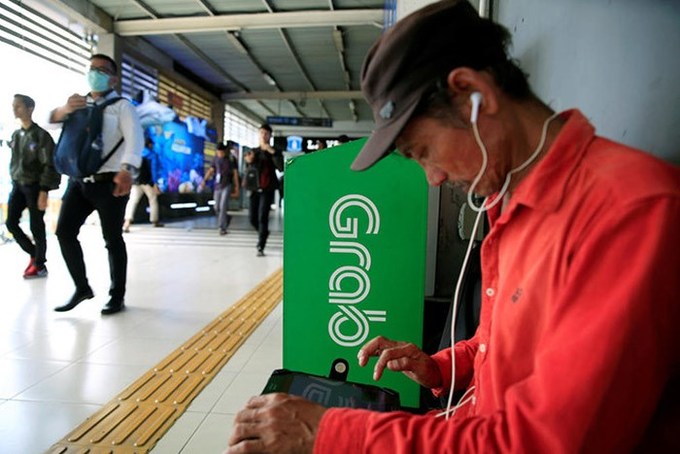
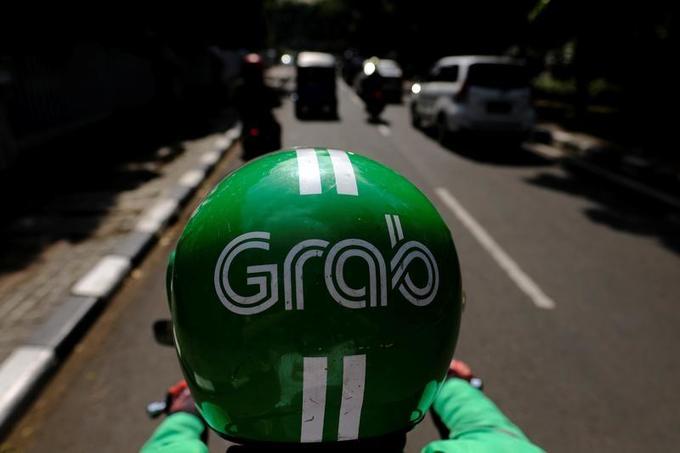
    Prosecutors in Ho Chi Minh City have appealed a verdict ordering Grab to pay compensation to domestic taxi firm Vinasun. They want the appeal court to quash the order requiring the Singapore ride-hailing firm to pay VND4.8 billion ($206,000) in compensation for alleged losses and reject all of Vinasun’s demands. Grab violated a pilot transport ministry scheme and government decree for ride-hailing services, according to the verdict.

    But the prosecutors argue this is groundless since Grab is a passenger transport firm licensed by competent authorities under the pilot scheme and its activities did not violate the law.

    They also dismiss the contention that Grab had caused Vinasun losses of nearly VND42 billion ($1.81 million) as one-sided with no practical or legal basis since it was based solely on an assessment by the court-appointed Cuu Long Inspection Company.

    “In reality, Vinasun’s decline in revenue involves many factors such as the corporate governance capability and the government’s policies and laws.”

    “Therefore, Vinasun’s demand for compensation from Grab is completely groundless.”

    They say Grab’s business activities are legal and Vinasun’s decline in revenues and profits have been partially due to consumers switching to Grab as they found the ride-hailing firm’s services to be superior to those provided by Vinasun and other traditional taxi firms.

    “Grab did not violate the law, there is no causal link between Grab’s allegedly illegal activities and Vinasun’s losses, Grab is not at fault.”

    Vinasun filed the suit against Grab at the HCMC People’s Court in June 2017, accusing it of abusing the Ministry of Transport’s pilot scheme and committing violations.

    The trial began last February, but was adjourned several times before the court last December accepted parts of Vinasun’s demands and ordered Grab to pay the compensation. Grab has appealed.

  • Snapdeal bats for new FDI policy in e-commerce from Feb 1

    Snapdeal bats for new FDI policy in e-commerce from Feb 1

    Leading Indian e-tailer Snapdeal on Tuesday supported the implementation of revised Foreign Direct Investment (FDI) policy on e-commerce from February 1. “Snapdeal supports the immediate implementation of the current FDI policy on e-commerce so that marketplaces are not misused to run inventory operations,” Delhi-based Snapdeal told IANS in a statement.

    The Ministry of Commerce and Industry on December 26 issued revised policy guidelines on FDI in e-commerce.

    The policy revision, which will be in force from February 1, dictates that e-commerce platforms providing a marketplace will not exercise control or ownership over the inventory.

    E-tail majors Flipkart and American online retailer Amazon’s Indian arm, however, sought an extension on the implementation of the new norms, amid protesting voices from retail traders’ bodies against granting the extension.

    “Government policy changes will have long-term implications in the evolution of the promising sector and the whole ecosystem,” American retail giant Walmart-owned Flipkart told IANS through a statement earlier.

    The new norms also barred e-tail firms from allowing any company to sell its products exclusively on their e-commerce platforms alone.

    While Amazon India had said in a statement to IANS that “it has always operated in compliance with the laws of the land”, it did not respond to queries on the changes it may have to make to its business model to suit the new norms.

    On the other hand, the Confederation of All India Traders (CAIT) has asserted that delaying the execution of the policy will allow the e-tailers to continue with their “dominance over retail trade”.

    “The modus operandi of these e-commerce companies for seeking extension (on implementation of new FDI norms) is to keep delaying fair execution of the policy,” CAIT wrote in a letter to the Ministry of Commerce and Industry this month.

    “They (e-commerce platforms) may continue with their sinister designs of operating all kinds of malpractice including predatory pricing, deep discounting and exclusivity, in order to ensure their control and dominance over retail trade and wipe out the competition,” the letter said.

    The Ministry, however, has not indicated any possible extension of deadline to implement the new norms.

  • Global business leaders raise concerns over e-commerce policy changes in India

    Global business leaders raise concerns over e-commerce policy changes in India

    Several global business leaders have raised concerns over the evolving regulatory challenges concerning the e-commerce sector in India and said they want a stable policy regime to help this space achieve its robust growth and investment potential. According to a report, multiple business leaders attending the World Economic Forum Annual Meeting here said there are confusions in their mind in the backdrop of recent policy changes for e-commerce players having FDI in India.

    They did not want to be named, given the sensitivity of the subject and the evolving nature of the proposed rules, but said they have directly, or through their representatives, raised their concerns with the Government. They wanted to raise the issue directly with Commerce and Industry Minister Suresh Prabhu in Davos, but his plan to come here got changed at the last moment.

    At a session here at the WEF meeting, WTO Chief Roberto Azevedo also said there was a need for a global multilateral framework on e-commerce business.

    India’s FDI policy allows 100 percent foreign direct investment in marketplace model, but investors also want a stable policy and regulatory regime, a senior official of a leading online retailer said.

    An industry lobby group official said there is a fear that certain new rules proposed by the Government could lead to discrimination against investors as this policy is only for foreign players and not for domestic ones in the e-commerce sector.

    Another executive claimed it is being seen as a non-consultative approach even with investors who bring in huge foreign direct investment.

    However, Government officials rejected these allegations and said the new changes seek to safeguard competition and the interest of domestic players. The rules have been made after due consideration and consultations with concerned stakeholders, they added.

    The Commerce and Industry Ministry brought certain changes to Press Note 2 on December 26, 2018 which prohibited e-commerce companies from entering into an agreement for exclusive sale of products along with tightening norms for firms having foreign investment.

    The Government has also barred online marketplaces like Flipkart and Amazon from selling products of companies where they hold stakes and banned exclusive marketing arrangements that could influence product prices.

    The revised policy on foreign direct investment in online retail also requires these firms to offer equal services and facilities to all its vendors without discrimination. The policy would be effective from February 2019.

    In India, the policy as such does not permit FDI in inventory-based model of e-commerce.

    Companies have been seeking more time to implement the changes even as some of them have warned that these substantial modifications in the way they do business pose risks of derailing the e-commerce sector that has been a big job creator.

    Executives from another global retail major said the impact could also be felt by several connected sectors such as advertising, logistics, warehousing and manufacturing.

  • Walmart, Amazon India seek extension of Jan 31 deadline on e-commerce compliance

    Walmart, Amazon India seek extension of Jan 31 deadline on e-commerce compliance

    There is trouble in paradise. The Government’s drastic intervention in e-commerce at the behest of vested domestic interests and the powerful traders lobby has created consternation in the bulge bracket world of e-commerce in India. With the big players having reached out to the Government to give them breathing space on the new compliance measures beyond the January 31 deadline, the Industry ministry has not responded, leading to panic attacks across the board.

    Powerful stakeholders led by Walmart and Amazon from the e-commerce eco system have sought a six-month extension since lakhs of sellers – small and medium-sized – in the market place need to be educated, IT-enabled and connected to meet the statutory audit requirements. Moreover, contracts have to be re-negotiated so that the compliance measures remain ongoing with time being of the essence.

    It is believed that the DIPP or Industry Secretary Ramesh Abhishek, who was earlier encouraging the major players to ramp up their investments in India, has not responded to their pleas and petitions.

    The situation has become precarious primarily because the clarification to press note 2 was even more confusing. On a granular level, the market place cannot have any equity in the seller.

    Hence, Amazon which has five percent equity in Shoppers Stop has to comply with the new standards. The new government directive does not allow private labels, nor does it allow big brands to have commercial tie-ups with the market place. Basically, the rules of engagement have been turned on their head.

    Bain Capital reckons that the heavy lifting e-com players have generated three lakh jobs in India. Over and above this, there are lakhs of vendors.

    Further, the eco system has multiple spin-offs like advertisements, courier companies, logistics companies, supports innumerable manufacturing operations and caters to large scale supply chains. Flipkart has 80,000 employees, 80 fulfilment centres (warehouses), nearly one lakh plus sellers and artisans of all hues across the land. Ditto for Amazon, which has similar numbers across its business spectrum.

    Walmart paid US$ 14 billion for Flipkart stock with a promise of an additional US$ 2 billion in physical structure investment. So, there is a lot riding on these heavy lifters for both know that this is the last frontier in terms of a consumption market, since India consumes 67 percent of its own US$ 2.6 trillion GDP. Interestingly, Walmart runs Flipkart as a stand-alone entity.

    For Walmart this is a priority market and it is keen that the January 31 compliance window deadline is extended. Its commitment to the Indian market can be gauged from the fact that it recently got 100 acres in Bengal for warehousing as a pivot to the northeast market. Hence the size of the commitment is seeing enlargement almost daily.

    It is on the verge of closing another 100 acre fulfilment centre in Telengana to service the southern market. Remarkably, the Indian retail market is estimated to be US$ 650 billion, of which 90 percent is the kirana stores while nearly eight per cent is made up of Indian retail players and only two percent is e-commerce. However, since the biggies in e-com are global behemoths, impediments are being placed in their path.

    At the kernel of the government notification and clarificatory statement is the targeting of e-commerce giants who are quick to retort that they helping small sellers with a channel that is tech-enabled to put their products on the marketplace.

    At the time same time, even as they try and get the government to listen to their litany of woes on immediate compliance, the process of evaluation of sellers will continue and remain ongoing so that they are effectively compliant every single day. The government’s intervention is perceived to be through a non-consultative process and the global giants want more time for compliance and enhanced level of dialogue.

    The audit requirement on the sellers by opening their books to the marketplace in such a short time is reminiscent of the haste in the launch of GST, which threw small businesses out of gear.

    Many of the sellers will now have design IT systems and the marketplace cannot be liable for this. In parallel, there is no clarification on how to conduct the private label business.

  • Nissan Korea fined 900 million won for inflating mileage figures

    Nissan Korea fined 900 million won for inflating mileage figures

    Korea’s antitrust watchdog said Wednesday that it has fined Nissan Korea 900 million won ($802,100) for inflating gas mileage figures for its Infiniti Q50 2.2d sedans. The Japanese car’s fuel efficiency reaches 14.6 kilometers per liter (34.3 miles per gallon), but the local unit of the Japanese carmaker overstated the fuel efficiency as 15.1 kilometers per liter in its stickers, catalogues and magazines between February and November 2014, according to the Fair Trade Commission.

    Nissan Korea sold 2,040 Infiniti Q50 2.2d sedans valued at 68.68 billion won during the cited period.

    “There are concerns that Nissan Korea’s advertising could hurt fair trade by distorting consumers’ reasonable choice, considering that fuel efficiency is a priority factor when they buy vehicles,” the commission said.

    Repeated calls to Nissan Korea seeking comment went unanswered.

  • Toyota fined W817 million for false advertising

    Toyota fined W817 million for false advertising

    Korea’s antitrust watchdog said Tuesday that it has fined Toyota Motor Korea 817 million won ($729,000) for deceptive advertising of its RAV4 sport utility vehicle (SUV). Toyota Motor Korea advertised that its RAV4 obtained a top safety pick in five test categories, including the driver’s side small overlap front and roof strength, from the U.S. Insurance Institute for Highway Safety (IIHS) in 2015.

    In 2016, the RAV4 earned the Top Safety Pick Plus rating from the independent nonprofit organization that aims to reduce deaths, injuries and property damage from motor vehicle crashes, according to the Fair Trade Commission.

    The commission said that RAV4 models sold in the United States in 2015 and 2016 were equipped with a bracket, or shock absorber, that allowed it to get the top rating.

    The same SUV model sold in Korea during the same period was not equipped with the bracket, but Toyota Motor Korea advertised the RAV4’s earning the Top Safety Pick rating from the IIHS.

    “Toyota Motor Korea concealed and omitted that there was a difference between RAV4 models sold in the United States and Korea,” the commission said.

    It said the advertisement could mislead Korean consumers into believing that RAV4 models sold in Korea had all the safety features covered by the Top Safety Pick rating.

    Toyota Motor Korea said it cannot give an immediate comment on the issue and that it is reviewing the commission’s decision.

    Toyota is the second foreign automaker to be fined this year. BMW Korea was fined 14.5 billion won last week for manipulating documents on emissions.

  • Indonesia to Regulate Ride-Hailing Rates Threatens Grab, Go-Jek Expansion

    Indonesia to Regulate Ride-Hailing Rates Threatens Grab, Go-Jek Expansion

    The government is preparing to launch regulations fixing the rates drivers and riders for ride-hailing services such as Grab and Go-Jek receive, two officials said this week, creating potential obstacles for the companies’ expansion. The regulations would meet drivers’ demands for more oversight and higher rates but there are concerns that the rising costs to the companies could stifle their development as they battle to dominate the ride-hailing market in Southeast Asia’s biggest economy.

    Singapore-based Grab and homegrown Go-Jek have been locked in price wars in Indonesia, part of a wider fight to bring banking, e-commerce, ride-hailing, food-delivery and other services to every corner of Southeast Asia.

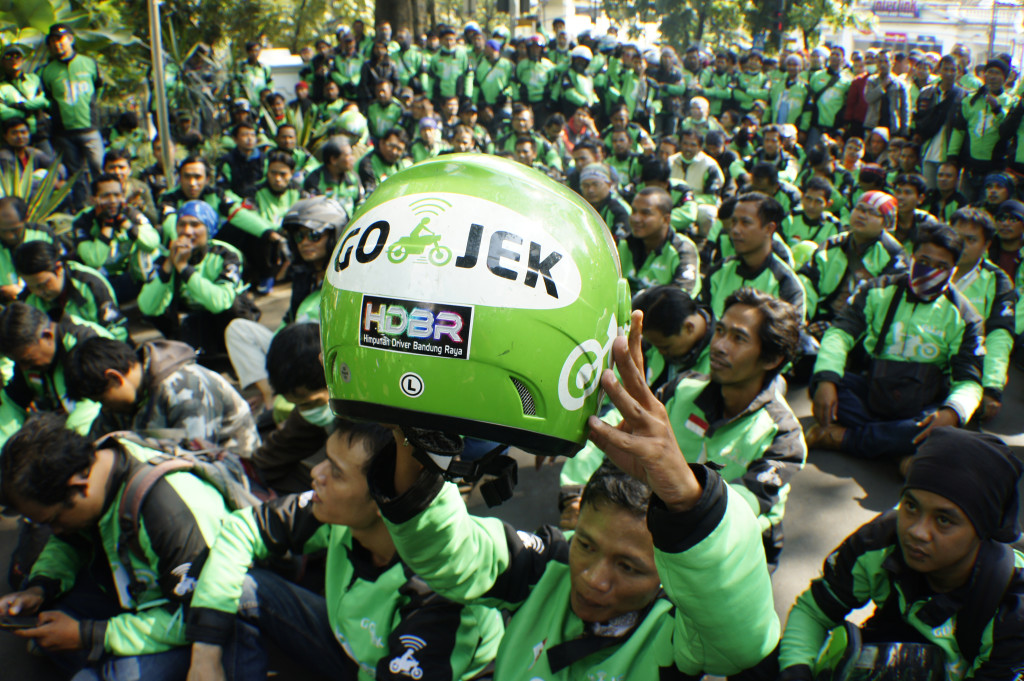
    However, since 2018, motorcycle taxi drivers working for Grab and Go-Jek in Jakarta have held protest rallies calling for higher fares and better conditions.

    The Ministry of Transportation plans to implement minimum and maximum tariffs for car and motorbike ride-hailing that will be “higher than Go-Jek and Grab’s current rates” and impose limits on promotional price cuts, said Budi Setyadi, director general of land transportation at the ministry.

    “This is for the safety and protection of drivers,” he said.

    Ahmad Yani, public transportation director at the ministry, said dependency on incentive-driven payments and low fixed rates per kilometer created a safety risk as it led to drivers overworking.

    He said Grab paid Rp 1,200 (8 US cents) per kilometer with a focus on bonuses, while Go-Jek’s rate was Rp 1,400 per kilometer.

    The officials said fixed fare ranges for motorbikes were still being finalized but would be implemented from March.

    Fixed rates for ride-hailing cars will start in June and be set at between Rp 3,500 and Rp 6,000 per kilometer on the islands of Java, Sumatra and Bali.

    The drivers were pushing for increases to a standard fare of Rp 3,000 to Rp 4,000 per kilometer.

    New Rules

    The firms said they welcomed the new rules, though they had not seen details of the motorbike regulations.”Grab believes the government will develop the best regulatory framework and hopes that all stakeholders will be included in the process,” said Tri Sukma Anreianno, the company’s head of public affairs .

    A Go-Jek spokesman said: “We support the government’s spirit to encourage our driver partners … and hope the regulation will have a positive impact on the sustainability of drivers’ income … and fair business competition.”

    However, both transportation officials said the companies are worried about the pending regulation since they have spent heavily on driver subsidies to slash their customer rates and build their businesses.

    “Grab and Go-Jek have told me they would prefer there was no regulation,” Ahmad said. “Due to the competition between them … they are scared what could happen if they don’t keep up with each other.”

    The Supreme Court blocked a previous attempt in 2017 by the transportation ministry to fix ride-hailing rates after drivers sued, saying the rules favored the taxi firms.

    Both ministry officials said the new regulations met anti-competition standards and followed extensive discussions with driver syndicates.

    Grab and Go-Jek drivers welcomed the prospect of standard fares.

    “I have been working for Grab since 2015. Before, I could earn Rp 300,000 to Rp 400,000 per day. Now, I can only get Rp 150,000,” said Hermansyah, a Grab motorcycle driver partner.

    Another driver, who had worked for both companies, said neither provided much protection, leading drivers to bear operational costs. He asked not to be identified since he had a role in organizing protests.

    The fixed rates will be a challenge to a business model that has depended on cheap passenger prices for growth and could undermine innovation.

    “Cheap fares has been the firms’ main way to attract customers,” said Yayat Suprityatna, urban and transportation observer at Trisakti University in Jakarta.


  • Vietnam says Facebook violated cybersecurity law

    Vietnam says Facebook violated cybersecurity law

    Vietnam says Facebook has violated its new cybersecurity law by allowing users to post anti-government comments on the platform. “Facebook had reportedly not responded to a request to remove fanpages provoking activities against the state,” the official said, citing the Ministry of Information and Communication. In a statement, a Facebook spokeswoman said: “We have a clear process for governments to report illegal content to us, and we review all these requests against our terms of service and local law.”

    She did not elaborate. The ministry said Facebook also allowed personal accounts to upload posts containing “slanderous” content, anti-government sentiment and defamation of individuals and organizations, the agency added.

    “This content had been found to seriously violate Vietnam’s Law on cybersecurity” and government regulations on the management, provision and use of internet services, it quoted the ministry as saying.

    Facebook had refused to provide information on “fraudulent accounts” to Vietnamese security agencies, the agency said in Wednesday’s report.

    The information ministry is also considering taxing Facebook for advertising revenue from the platform.

    The report cited a market research company as saying $235 million was spent on advertising on Facebook in Vietnam in 2018, but that Facebook was ignoring its tax obligations there.

    In November, Vietnam said it wanted half of social media users on domestic social networks by 2020 and plans to prevent “toxic information” on Facebook and Google.

  • Domestic, foreign e-commerce players should be treated alike: CUTS India

    Domestic, foreign e-commerce players should be treated alike: CUTS India

    The Government needs to create a level-playing field for both domestic and foreign e-commerce platforms through a comprehensive e-commerce policy, said Pradeep S. Mehta, Secretary General, CUTS International on Sunday. He noted that the current norms for the segment are applicable to foreign online retailers and this might create a discriminatory environment towards the domestic players.

    “The Government may not be wrong in its clarificatory policy on Foreign Direct Investment (FDI) in e-commerce, as it was a case of backdoor entry in multi-brand retail trade. But vital issues remain to be resolved to promote healthy economic democracy”, said Pradeep S Mehta, Secretary General, CUTS International.

    “However, the issue of creating a level-playing field between domestic and foreign players in retail sector is yet to be resolved, for which a comprehensive National E-Commerce Policy is need of the hour”, he said.

    The Department of Industrial Policy and Promotion (DIPP) recently had said that 100 percent FDI is permitted in the market place model of e-commerce and not in the inventory-based model or the multi-brand retail segment.

    The Commerce Ministry in December revised the FDI policy for e-commerce players whereby it barred online retail firms such as Amazon and Flipkart from selling products of companies in which they have stakes. It also prohibited e-tailers from mandating any company to sell its products exclusively on its platform only.

    Mehta said: “The new guidelines are stricter for e-commerce companies with FDI providing marketplace, but there are no such restrictions for companies without FDI.”

    He also observed that there is no need for a separate regulator for the e-commerce segment.

    “India does not need a separate regulator for e-commerce, which would be yet another parking place for retired babus who are generalists and turn into controllers.

    Most of the malpractices adopted by e-commerce platforms, for instance, discrimination among its vendors, deep discounts etc, can be dealt by the Competition Commission of India. If need be, the Competition Act, 2002 can be tweaked for which the process is going on,” he said.

    The Consumer Protection Bill, 2018, which is likely to be passed soon by the Rajya Sabha, also has specific provisions on e-commerce, he added.

  • Korea to ban single-use plastic bags

    Korea to ban single-use plastic bags

    South Korea is to ban big-time supermarkets and retailers nationwide from selling single-use plastic bags in an attempt to conserve natural resources and reduce recyclable waste. The ban will come into effect on Tuesday as part of a revised law on conserving resources and encouraging the reuse of recyclable waste. Subject to the ban are 2000 outlets of major discount chains and 11,000 supermarkets with sales floor spaces of 165sqm or more where handing out free plastic bags are currently prohibited.

    Stores that violate the ban could face fines of up to 3 million won (around US$2683). Instead, those shops are required to offer customers recyclable containers, cloth shopping bags or paper bags.

    Plastic containers for wet goods, such as meat and fish, will still be used.

    Under the revised law, 18,000 bakeries nationwide will be barred from handing out free disposable plastic bags.

    In cooperation with local governments, the Environment Ministry plans to encourage the affected stores to observe the ban from January through March.

    The ministry is also pushing ahead with a plan to reduce the use of plastic garment bags at laundry shops.

  • FastGo can’t go, say Vietnamese authorities

    FastGo can’t go, say Vietnamese authorities

    Vietnamese ride-hailing firm FastGo, at odds with authorities over its legal status, asserts it is going by the book. According to the Ministry of Transport and the Ministry of Industry and Trade, FastGo is not yet eligible to be approved for a pilot phase, nor is it registered as a tech platform.

    In a written reply to the Da Nang Department of Transport’s proposal to permit FastGo to operate, the Ministry of Transport has said that the application falls under the category of “electronic contract service based – management support platform.”

    But, the ministry adds, it is yet to receive a proposal to launch the app directly from FastGo Vietnam JSC, which means the application is not yet ready to be approved for a pilot phase.

    The ministry has also requested the Da Nang Department of Transport to inform cab companies not to use FastGo if the app is offered to them. Furthermore, FastGo is not allowed to provide its services directly to taxi drivers, it says.

    However, Nguyen Huu Tuat, FastGo CEO, is adamant that the app is not violating any law. He said that he has not received a written response the ministry or from the Da Nang Department of Transportation.

    Tuat clarified that FastGo does not provide transport support management services to individual drivers in Da Nang. It only services drivers of local transport cooperatives.

    “FastGo has filed the information and sent a request for approval for a pilot phase, but has not received a response from the Ministry of Transport,” said Tuat.

    He said Fastgo is neither defined as a transport service provider nor is it a transport cooperative. It is merely an application connecting drivers with customers. Tuat said that he was waiting for new transport regulations on this issue, following which the company will determine the specific business category for registering its app.

    FastGo has been functioning in Vietnam’s major cities since June. It is only after six months that regulators have backtracked and declared that its registration is incomplete.

    A representative of the Department of E-Commerce and Digital Economy under the Ministry of Industry and Trade said: “FastGo has not registered its tech platform with the Ministry of Industry and Trade. Therefore, it is unlawful for FastGo to engage with drivers or operate a transport management platform.”

    In response to this comment, Tuat asserted that he has submitted this proposal, but is yet to receive a reply.

    Launched in June 2018, FastGo now operates in Hanoi, Ho Chi Minh City and Da Nang with more than 30,000 drivers. At the end of August, the local company received funding from VinaCapital, and is planning to mobilize up to $50 million for a second expansion phase that will target Indonesia and Myanmar.

    FastGo Vietnam Joint Stock Company was established in April 2018 with its headquarters in Hanoi. The company belongs to a wide network of services provided by Nextech, a leading tech firm in Vietnam.

    A Nikkei Asian Review report quoted the company as saying it hopes to make its service available in 20 cities in Vietnam and five other Southeast Asian markets, including the Philippines, Cambodia and Thailand, by the end of next year.

  • Grab Vietnam says Uber deal ‘no breach of competition laws’

    Grab Vietnam says Uber deal ‘no breach of competition laws’

    Ride-hailing firm Grab has asserted that it did not breach Vietnam’s competition laws, contesting authorities’ definitions and interpretations. The assertion was a response to the Ministry of Industry and Trade, which said Wednesday that it had evidence that Grab’s acquisition of Uber violated Vietnam’s Competition Law .

    In a statement released Thursday, Jerry Lim, country head of Grab Vietnam, said that the transaction between Grab and Uber earlier this year was conducted “in the good faith belief that there is no breach of competition laws, after diligent consultation with legal counsels.”

    Lim explained that the issue has become contentious because of differences in the authorities’ and Grab’s definitions of relevant market and what constitutes a competitive playing field.

    He said that the entrance of new ride-hailing companies into Vietnam shows that they believe there is a chance to succeed, with some of them claiming high market shares.

    In June, Vietnam’s first ride-hailing services FastGo and Aber were launched. Go-Viet, an affiliate of Indonesia’s Go-Jek, entered Vietnam in August, claiming to take 15 percent of the market share in Ho Chi Minh City within two weeks of launching.

    Vietnam’s top taxi operator Mai Linh and second-ranked Vinasun have also invested in a ride-hailing service to compete with Grab.

    Grab said that a ride-hailing app was just one of many options for customers. It cited a third-party survey, without revealing details, which said more than 59 percent of Vietnamese car ride-hailing users and 62 percent of motorbike ride-hailing users surveyed would switch to a different transport service other than ride-hailing if there was a 10 percent increase in prices.

    Lim also said that Grab was not the only ride-hailing company in the market, as the Vietnamese government has granted ride-hailing pilot licenses to nine other companies, including established taxi companies, to operate services in five cities and provinces.

    Both customers and drivers can respectively decide to switch to other forms of transport and join other companies if prevailing conditions such as pricing and income are not favorable to them.

    “The power of choice remains in the hands of customers,” Lim said.

    He said Grab has fully cooperated with the Vietnamese authorities for the purpose of a fair investigation and recommendation. “We fully understand that all governments seek to protect the best interests of consumers. Grab truly shares the same goals.”

    Lim said he hopes that the final verdict of the Vietnam Competition Committee will take into account the “vibrancy and contestability of the current Vietnamese market landscape and support the competitive business environment brought about by technology application and innovation.”

    Singapore-based Grab acquired Uber in Southeast Asia in return for a 27.5 percent stake in the U.S. company, with Uber CEO Dara Khosrowshahi joining Grab’s board.

    The 2004 Competition Law requires any merger or acquisition that results in a company gaining a 30 percent market share to be reported to competition authorities.

    If a company gains a 50 percent market share from the deal, it can only be implemented with express permission from the authorities.

    Preliminary investigations by Vietnamese authorities have found that Grab’s market share in Vietnam was in excess of 50 percent after Uber quit the market last April.

    But Grab has countered this, saying that since its combined market share with Uber in Vietnam was less than 30 percent, it did not have to “inform the competition authority before proceeding and completing this transaction in the country.”