Tag: lawsuit

  • Nykaa Faces $210K Lawsuit for Alleged Copyright Violation on Instagram Reels

    Nykaa Faces $210K Lawsuit for Alleged Copyright Violation on Instagram Reels

    Zee Entertainment, an entertainment company based in India, has initiated a lawsuit against Nykaa, a fashion and beauty retailer. The entertainment company has accused Nykaa of using its copyrighted songs in promotional reels on Instagram, without the necessary permissions. As a result, Zee Entertainment is seeking $210,000 in damages.

    Zee’s Licensing Agreement with Meta Platforms

    According to the lawsuit filed with the Delhi High Court on April 3, Zee Entertainment holds a licensing agreement with Meta Platforms. This agreement permits individuals to use Zee’s music for non-commercial purposes in their Instagram posts. However, Zee alleges that Nykaa has violated this agreement by using various copyrighted songs to advertise products to its millions of followers on Instagram.

    The lawsuit in question is not available to the public. Both Nykaa and Zee Entertainment have refrained from commenting on the issue.

    Social media platforms such as Instagram, a Meta product, have seen a surge in their use for advertising purposes. Brands now frequently employ short-video formats, often accompanied by popular music, to promote their goods.

    Removal of Flagged Links

    The lawsuit filed by Zee Entertainment cites 12 specific Instagram posts where Nykaa allegedly used Zee’s licensed music unlawfully. Following a brief hearing on Thursday, Nykaa’s legal representative informed the court that the 12 flagged links had been removed.

    Zee’s lawsuit, which spans over 900 pages, asserts that Nykaa utilized the music “without procuring any permissions or authorizations” from the entertainment company. The lawsuit advances a claim for 20 million rupees (approximately $209,742) as compensation for Nykaa’s illicit use of Zee’s music.

    The legal dispute between these two major companies could potentially have broader consequences. Aditya Gupta, a partner at Ira Law in India, suggests that “Marketing departments often use content available on music libraries without reading the fine print of the Instagram terms” and that the court’s decision could “provide much-needed clarity.”

    Questions & Answers

    What is the basis of Zee Entertainment’s lawsuit against Nykaa?
    Zee Entertainment alleges that Nykaa has used its copyrighted music in promotional Instagram reels without the necessary permissions, thereby violating Zee’s licensing agreement with Meta Platforms.

    What action has Nykaa taken in response to the lawsuit?
    Nykaa has removed the 12 specific Instagram posts flagged in Zee’s lawsuit, as reported by their legal representative in court.

    What are the potential implications of this case?
    The case could have wider consequences, potentially affecting the way marketing departments utilize content from music libraries. The decision could also provide clarity regarding the use of such content under Instagram’s terms.

  • Sony Battles $2.7 Billion UK Lawsuit over Alleged PlayStation Store Monopoly

    Sony Battles $2.7 Billion UK Lawsuit over Alleged PlayStation Store Monopoly

    Sony, the Japanese multinational conglomerate, is currently battling a lawsuit worth nearly £2 billion (approximately US$2.7 billion) in London. The lawsuit alleges that Sony has used its monopoly positioning to inflate prices for digital games. This litigation is one of the latest mass consumer cases to be tried in the United Kingdom.

    Sony is being accused of manipulating its market dominance by making digital games and console add-ons available exclusively through its PlayStation Store. As a result, prices for these digital commodities are allegedly higher compared to their physical counterparts. Sony maintains that it has invested significant resources, time, and billions of dollars into developing an integrated gaming platform that is beneficial to consumers. Sony asserts that their business model, which rivals that of fellow gaming giants Nintendo and Microsoft’s Xbox, is competitive and fair.

    Sony’s legal team has also argued that the profit margin from the sales of games and additional content is reasonable. They state that the lawsuit does not take into account the company’s operating costs and the value of its brand.

    The Ongoing Lawsuit

    This case, which was brought before London’s Competition Appeal Tribunal (CAT) on behalf of nearly 12 million UK residents, is the third of its kind against a major tech company to go to trial since the beginning of 2025.

    Alex Neill, who is spearheading the case, stated that gamers have been overpaying and should be entitled to a monetary reimbursement. Initially, the case was estimated to be worth up to £5 billion, but this has since been scaled down to £1.97 billion.

    According to Robert Palmer, the lawyer representing Neill, Sony is able to set retail prices without any retail competition for digital content, enabling it to earn monopoly profits from digital distribution. However, Sony, which sold 8 million PlayStation 5 consoles between October and December, refutes this claim. The company argues that the lawsuit is essentially advocating for third parties to be permitted to establish a store for the PlayStation and capitalize on Sony’s investments.

    Other Pending Cases

    Apart from this, there are other lawsuits related to app stores that are still pending. Last year, the Competition Appeal Tribunal ruled against Apple over its App Store, a verdict which Apple is currently attempting to appeal.

    Google is also facing a lawsuit, with the trial set to begin in October. Epic Games, the creator of Fortnite and a potential participant in this case, recently withdrew its claim. This development occurred shortly after Google announced comprehensive changes to its Play Store policies.

    Questions & Answers

    What is Sony being accused of in the lawsuit?
    Sony is accused of abusing its dominant market position by making digital games and console add-ons available exclusively through its PlayStation Store, thereby allegedly driving prices higher than their physical counterparts.

    What is Sony’s response to these allegations?
    Sony maintains that it has invested significant resources into developing an integrated gaming platform that benefits consumers in a competitive market. Its legal team also argues that the company’s profit margin on game sales and additional content is reasonable.

    Are there any similar lawsuits against other tech companies?
    Yes, there are other similar lawsuits pending against tech giants like Apple and Google. Last year, the Competition Appeal Tribunal ruled against Apple over its App Store, a decision that Apple is currently seeking to appeal. Google is also set to face a lawsuit in October.

  • LVMH Battles Billion-Euro Lawsuit: Luxury Leader Denies Claim of Misappropriating Hermès Heir’s Shares

    LVMH Battles Billion-Euro Lawsuit: Luxury Leader Denies Claim of Misappropriating Hermès Heir’s Shares

    Luxury conglomerate LVMH has publicly denied allegations that it illicitly acquired shares now valued in the billions of euros from Hermès heir, Nicolas Puech. LVMH has been named in a lawsuit alongside its CEO, Bernard Arnault, and ex-wealth manager Eric Freymond.

    The Allegations

    Puech has claimed that he was wrongfully deprived of Hermès shares, now worth billions of euros, due to the actions of Arnault, LVMH and Freymond. He has lodged a civil lawsuit against these parties, leading to an ongoing criminal investigation in France.

    In response to Puech’s claims, LVMH released a statement stating, “LVMH and its (controlling) shareholder firmly reaffirm that they never, at any time, misappropriated shares of Hermès International, in any way whatsoever or without anyone’s knowledge, and that they do not hold any ‘hidden’ shares, contrary to what Mr Nicolas Puech suggests.”

    Puech, previously one of Hermès’ largest individual shareholders, shared in a recent interview that he was unaware of any movement of Hermès shares in his name, purportedly for Arnault’s advantage.

    The Investigation

    Reports have circulated that Arnault will soon be questioned by investigative judges in Paris. However, no specific date has been provided, and Arnault’s spokesperson has not responded to requests for comment.

    The Paris public prosecutor’s office has clarified that, to date, only Freymond has been formally placed under investigation. Neither Arnault nor his companies have been subjected to a formal investigation.

    Questions & Answers

    What are the allegations against LVMH?
    Nicolas Puech, an heir to Hermès, has claimed that LVMH, its CEO Bernard Arnault, and former wealth manager Eric Freymond wrongfully deprived him of Hermès shares worth billions of euros.

    Has LVMH responded to these claims?
    Yes, LVMH has denied any wrongdoing, stating that they have not illicitly acquired any shares of Hermès International.

    Who is currently under formal investigation?
    At this time, only Eric Freymond, the former wealth manager, has been formally placed under investigation. The Paris public prosecutor’s office has confirmed that neither Bernard Arnault nor his companies are currently under formal investigation.

  • Meta Triumphs in FTC Monopoly Lawsuit: Federal Judge Rules in Favor of Social Media Giant

    Meta Triumphs in FTC Monopoly Lawsuit: Federal Judge Rules in Favor of Social Media Giant

    In a significant legal triumph, technology giant Meta saw a favorable ruling from a federal judge in a lawsuit filed by the Federal Trade Commission (FTC). The lawsuit pertained to Meta’s acquisitions of Instagram in 2012 for $1 billion and WhatsApp in 2014 for $21 billion, comprising cash and Meta (formerly Facebook) stock. The final purchase price for WhatsApp had initially been $19 billion, but a surge in the Meta shares propelled it up to $21 billion.

    Monopoly or Fair Competition?

    The FTC’s contention was that Meta, which changed its brand name from Facebook in 2021, acquired these two prominent social media platforms to eliminate competition. The regulatory body viewed these acquisitions as possible infringements of anti-trust legislation. The seven-week trial witnessed the testimony from Meta’s founder, chairman, and CEO, Mark Zuckerberg, who posited that Meta faces stiff competition from other platforms such as YouTube and TikTok.

    These statements managed to draw the attention of Federal Judge James Boasberg, who in his ruling pointed out that YouTube and TikTok prevent Meta from monopolizing social media. He also highlighted that the dynamics of the social media market have transformed significantly since the FTC’s lawsuit was filed, with AI being the most notable shift. The judge argued that AI-generated content nullifies the FTC’s concerns, concluding that Meta does not hold a monopoly in the relevant market.

    Meta’s Market Share and Competition

    Judge Boasberg’s ruling stated that Meta’s apps only account for a “modest share” of the overall time spent on social media, which includes platforms like Facebook, Instagram, Snapchat, TikTok, and YouTube. The judge noted that this share is on a downward trend, and even excluding YouTube’s share, Meta would not constitute a monopoly. Boasberg’s ruling also acknowledged that TikTok, considered by Meta as its primary competitor, managed to penetrate the market a mere seven years ago and has been dominating the sector ever since.

    Reacting to the decision, Jennifer Newstead, Meta’s Chief Legal Officer, emphasized the beneficial nature of their products for people and businesses, and their embodiment of American innovation and economic growth. She expressed eagerness to continue collaborating with the Administration and to contribute to the country’s investment landscape.

    Instagram Acquisition and Market Valuation

    Meta’s acquisition of Instagram could be regarded as one of the most profitable tech deals in history. Instagram’s current estimated valuation ranges from $441 billion to $538 billion. Initially known for its ephemeral messages, Instagram gained user traction when people began using it to share photos of their meals. Instagram’s popularity soared when it incorporated the ‘Stories’ feature from Snapchat.

    Significance of Instagram and WhatsApp for Meta

    Meta argued during the trial that a forced breakup would have been catastrophic for the company. Instagram generates ad revenue for Meta, while WhatsApp provides business subscribers and enhances Meta’s international reputation. Zuckerberg also admitted that Facebook, the company’s flagship platform, is losing popularity. Meta’s argument that regulators had already approved the Instagram and WhatsApp acquisitions when initially proposed was also a crucial point in their defense.

    The Broader Tech Industry Implications

    This victory has considerable implications not only for Meta but also for the larger tech industry, as U.S. regulators have attempted to dismantle Google. The tech behemoth has been deemed a monopoly in two cases, one concerning the company’s search engine and the other its online advertising business. Other tech firms such as Apple and Amazon are also facing scrutiny from the government.

    Questions & Answers

    Why did the FTC sue Meta over its acquisition of Instagram and WhatsApp?
    The FTC claimed that Meta’s acquisitions of Instagram and WhatsApp were attempts to eliminate competition, which they viewed as a violation of anti-trust laws.

    What was Judge James Boasberg’s ruling on the case?
    Judge Boasberg ruled that Meta did not hold a monopoly in the relevant market. He noted that other platforms, such as YouTube and TikTok, prevent Meta from monopolizing social media.

    What is the significance of this ruling for the larger tech industry?
    This ruling is significant not just for Meta, but for the broader tech industry. With U.S. regulators attempting to dismantle other tech giants like Google, Apple, and Amazon, this victory could set a precedent for upcoming cases.

  • What Retailers Can Learn From Product Failures Across Industries

    What Retailers Can Learn From Product Failures Across Industries

    New products and bold ideas often come with risks that retailers don’t fully anticipate. A single product failure can quickly spiral into customer backlash and lasting brand damage.

    What happens when something goes wrong after a sale is made? How do companies respond when trust begins to slip? Other industries have faced public fallout from flawed products and poor crisis handling. Retailers rarely look beyond their own space for cautionary tales and useful strategies.

    These outside failures hold important lessons for those selling everyday consumer goods. Innovation is exciting, but it also demands careful planning and long-term thinking. This article will explore what retail can learn from product failures across industries.

    Understanding the True Cost of Broken Consumer Trust

    Product failures impact more than financials and create deep damage to loyalty. When a customer feels misled, the brand’s reputation starts to erode quickly. The health and wellness industry, including supplements and pharmaceuticals, has faced major consumer backlash recently.

    For example, Reuters notes that in 2024, Kobayashi Pharmaceutical in Japan faced a major crisis. Their dietary supplement “Beni-Koji” was linked to five deaths. Moreover, over one hundred people were also hospitalized due to the product.

    The supplement was found to be contaminated with a toxic substance called Puberulic acid. This case shows how one product failure can ruin consumer trust. Fast and transparent action is crucial when such safety issues emerge.

    This shows how contaminated or unsafe products can cause serious harm and lead to costly recalls or legal action. Retailers need to screen their suppliers carefully and test products for safety before they reach consumers. Ignoring product safety concerns can destroy years of consumer confidence. Brands that value customer trust must think beyond the transaction or point of sale.

    Crisis Response Must Be Fast But Thoughtful

    A delayed response can make a small product issue grow into something much worse. When problems arise, customers expect clear answers and quick solutions from the brands they trust. Brands that hesitate risk losing credibility and can appear dishonest in the public’s eyes.

    In March 2024, health.com stated that Trader Joe’s recalled over 61,000 pounds of soup dumplings nationwide. Customers reported discovering hard plastic pieces inside their Steamed Chicken Soup Dumplings. These dumplings were produced by CJ Foods Manufacturing Beaumont Corporation in CA.

    Investigators found that the plastic likely came from a permanent marker used during production. The USDA labeled this event a Class I recall, indicating serious injury potential. This classification means the contamination posed a significant health risk to consumers.

    Retailers must prepare for such crises before they unfold in real time. Drafting possible statements and planning internal responses can save many precious hours later. Crisis communication should highlight accountability and offer a clear path forward for resolution.

    Why Consumer Trust Depends on Post-Sale Awareness

    Product care should not stop after the item leaves the store. The best brands think beyond the sale and continue building relationships after purchase. Post-sale follow-up shows customers the brand is invested in long-term safety. While post-sale awareness is important in all sectors, it is especially critical in medical devices.

    For example, some hip and knee implants were recalled years after surgery due to unexpected wear or metal poisoning. Cardiac devices like pacemakers have also faced safety issues requiring urgent updates. Among these medical devices, transvaginal mesh has become a prominent example due to its widespread use and severe side effects.

    According to TorHoerman Law, transvaginal mesh devices were sold without adequate long-term safety research or oversight. Many women suffered chronic pain and internal organ damage. The failure was physical and deeply emotional for countless individuals.

    These injuries led to large-scale legal battles, exposing how weak post-sale systems can fail patients. The transvaginal mesh lawsuit alleges that information regarding potential risks was not shared transparently. Negligence by manufacturers prevented patients and healthcare providers from fully understanding the risks involved.

    Retailers and manufacturers must track customer issues long after purchase. Product care is an ongoing responsibility, not a final transaction. Trust thrives when brands remain available, alert, and proactive well beyond checkout.

    Learning From the Industries That Lost Public Confidence

    Certain industries have lost public trust due to secrecy and false marketing claims. Tobacco, pharmaceuticals, and fast fashion offer examples of what not to do. These sectors withheld information that later exposed major harm to consumers.

    For instance, The Guardian reports that in 2024, the fast fashion brand Shein faced criticism in Asia. The company faced criticism after discovering two cases of child labor in its supply chain. Shein identified these incidents through audits of third-party manufacturers located in China. In response, Shein suspended orders from the involved suppliers for thirty days.

    This pause allowed suppliers time to address the serious labor issues found. The company terminated contracts with all underage employees discovered during the investigation. It also ensured payment of any outstanding wages owed to those workers. Shein arranged medical checkups for the affected children to support their recovery. The company facilitated the return of children to their parents or legal guardians.

    This incident underscores how quickly public confidence can erode when brands fail to address critical issues transparently. Retailers worldwide must learn from such cases and prioritize openness to maintain trust in today’s conscious market.

    Prevention Is Cheaper Than Damage Control

    Preventing product failures is more cost-effective than dealing with their consequences. Investing in quality assurance and testing can identify potential issues before products reach consumers.

    For instance, Just Food highlights that in 2023, Reckitt’s Mead Johnson Nutrition recalled baby formula powder in the U.S. due to contamination risks. While no illnesses were reported, the recall highlighted the importance of stringent quality control measures. Implementing preventive measures can reduce the likelihood of product failures.

    Regular audits and inspections can help maintain product quality in these cases. Training employees on quality standards ensures consistent adherence to protocols. Retailers can protect their brand and customer trust by prioritizing prevention. Learning from past incidents can guide retailers in strengthening their preventive strategies.

    FAQs

    How does a recall impact a company’s reputation?

    Product recalls often result in direct financial losses from legal fees and operational disruptions. Indirectly, they hurt brand trust and reduce future sales. Swift, transparent recall management helps minimize long-term costs, maintain customer loyalty, and protect a company’s reputation from lasting damage.

    How do competitors respond to crises in the retail sector?

    Competitors may capitalize on a brand’s crisis by highlighting their own reliability. They might offer alternative products or launch marketing campaigns focusing on consumer safety. A competitor’s quick and appropriate response can influence public perception and drive customer shifts.

    What role do customer service teams play in post-sale awareness?

    Customer service teams are the frontline for handling post-sale concerns and feedback. Their responsiveness and empathy significantly affect customer satisfaction and long-term loyalty. Well-trained teams can transform negative experiences into trust-building moments, helping reinforce the brand’s reputation and deepen consumer relationships.


    Protecting consumer trust goes beyond the transaction and must remain a top priority. Across industries, cases involving unsafe supplements, contaminated food, or faulty medical devices highlight this. Unethical labor practices have also shown how deeply trust can be damaged. Proactive safety protocols and fast, transparent communication during crises are essential.


    Staying engaged with customers even after the sale helps reinforce long-term loyalty. Ignoring these responsibilities often results in serious financial losses and lasting reputation damage. Retailers need to build a culture grounded in accountability and care. True brand loyalty comes from integrity, vigilance, and consistent follow-through at every level.
  • Trial Delayed in Duy Manh’s Lawsuit Against Mercedes-Benz Vietnam Over Fire

    Trial Delayed in Duy Manh’s Lawsuit Against Mercedes-Benz Vietnam Over Fire

    Legal Proceedings Delayed for Duy Manh vs. Mercedes-Benz Amid Controversial Fire Incident

    In a notable turn of events, the Go Vap District People’s Court in Ho Chi Minh City has postponed a hearing involving renowned singer Duy Manh and automotive giant Mercedes-Benz. The postponement comes at the request of Mercedes, though the company has not publicly clarified the reason behind this delay.

    Incident Overview: A Seductive Sedan Turns to Ashes

    On February 15, 2023, a devastating fire engulfed a luxury sedan owned by Duy Manh while it was parked in an apartment complex in Ho Chi Minh City. The celebrated singer purchased the vehicle for over 5 billion VND in 2020. In the aftermath, the police concluded that the fire stemmed from “an electrical short circuit.” The incident led to the insurance company compensating Duy Manh with 2.9 billion VND.

    Conflicting Reports: Insurance Company vs. Manufacturer Response

    However, Mercedes-Benz technicians later examined the vehicle and attributed the fire to “rodent activity.” They cited the discovery of rat droppings and debris within the car as evidence. This explanation has drawn skepticism from Duy Manh, who labeled it “unreasonable.” He pointed out that the photographs provided by the technicians showing the rodent droppings were taken 45 days post-incident, during which the car sat at an outdoor parking lot where rats could easily access it.

    Legal Action: Duy Manh Seeks Accountability

    Feeling dissatisfied with Mercedes’ response, Duy Manh has initiated legal proceedings, seeking 2.5 billion VND from the company—the remaining value of the car, which was lost during the warranty period. He emphasized, “I’m not focused on the money; I just want a satisfactory explanation.”

    In contrast, Mercedes-Benz maintains that, due to the payment from the insurance provider, Duy Manh is ineligible to pursue further compensation from the automotive manufacturer. The company asserts that their findings were corroborated by representatives from Duy Manh’s insurance during their examination of the vehicle.

    Artist Profile: Duy Manh’s Journey

    Duy Manh, 50, originally from Hai Phong in northern Vietnam, boasts an impressive musical career. A graduate of the Ho Chi Minh City Conservatory of Music, he began performing in cafes and small venues in 1998. Rising to prominence in 2004 with multiple hit songs, he continues to compose, produce, and perform, showcasing his talent at various bars and pubs across Vietnam.

    Looking Ahead: Implications for Consumers and the Retail Sector

    This high-profile case not only highlights consumer trends in the automotive sector but also underscores the importance of manufacturer accountability in product safety. As legal proceedings unfold, it remains to be seen how this situation will influence consumer trust and brand reputation in the retail industry.

  • Apple wins lawsuit оver copyright infringement on multiracial emojis

    Apple wins lawsuit оver copyright infringement on multiracial emojis

    It’s safe to say that Apple can now put another lawsuit win under its belt. The Cupertino company just won a copyright lawsuit launched by Cub Club Investment (CCI), the developer of the iDiversicons app, which enables you to use racially diverse emojis. CCI accused Apple of copying its app idea and emojis and infringing on its intellectual property rights.

    Before making his decision, Vince Chhabria, the lawsuit judge, compared Apple’s emojis with CCI’s emojis and concluded that, overall, the emojis weren’t similar enough for Apple to infringe. Chhabria also stated, “Copyright law does not forbid all copying. To survive a motion to dismiss, a plaintiff must allege that the defendant copied enough of the protected expression … to establish unlawful appropriation.”

    According to Vince Chhabria, CCI didn’t manage to prove that Apple had infringed on anything that was under copyright protection; therefore, Apple had only copied CCI’s idea, and ideas are not subject to copyright law.

    In the document about his decision, Chhabria said, “There aren’t many ways that someone could implement this idea. After all, there are only so many ways to draw a thumbs up.” In this regard, Chhabria stated that CCI’s emojis are ‘entitled to only thin copyright protection against virtually identical copying.’

    In the lawsuit document, Cub Club shared that the iDiversicons app was founded in 2013 by CCI CEO Katrina Parrott. According to Parrott, the app was the first in the world to offer emojis with diverse skin tones. CCI also said that in 2014, Parrott discussed a possible partnership with Apple, but Apple declined the partnership and instead created its own diverse skin-tone emojis.

  • Gucci, Facebook file joint lawsuit against alleged counterfeiter

    Gucci, Facebook file joint lawsuit against alleged counterfeiter

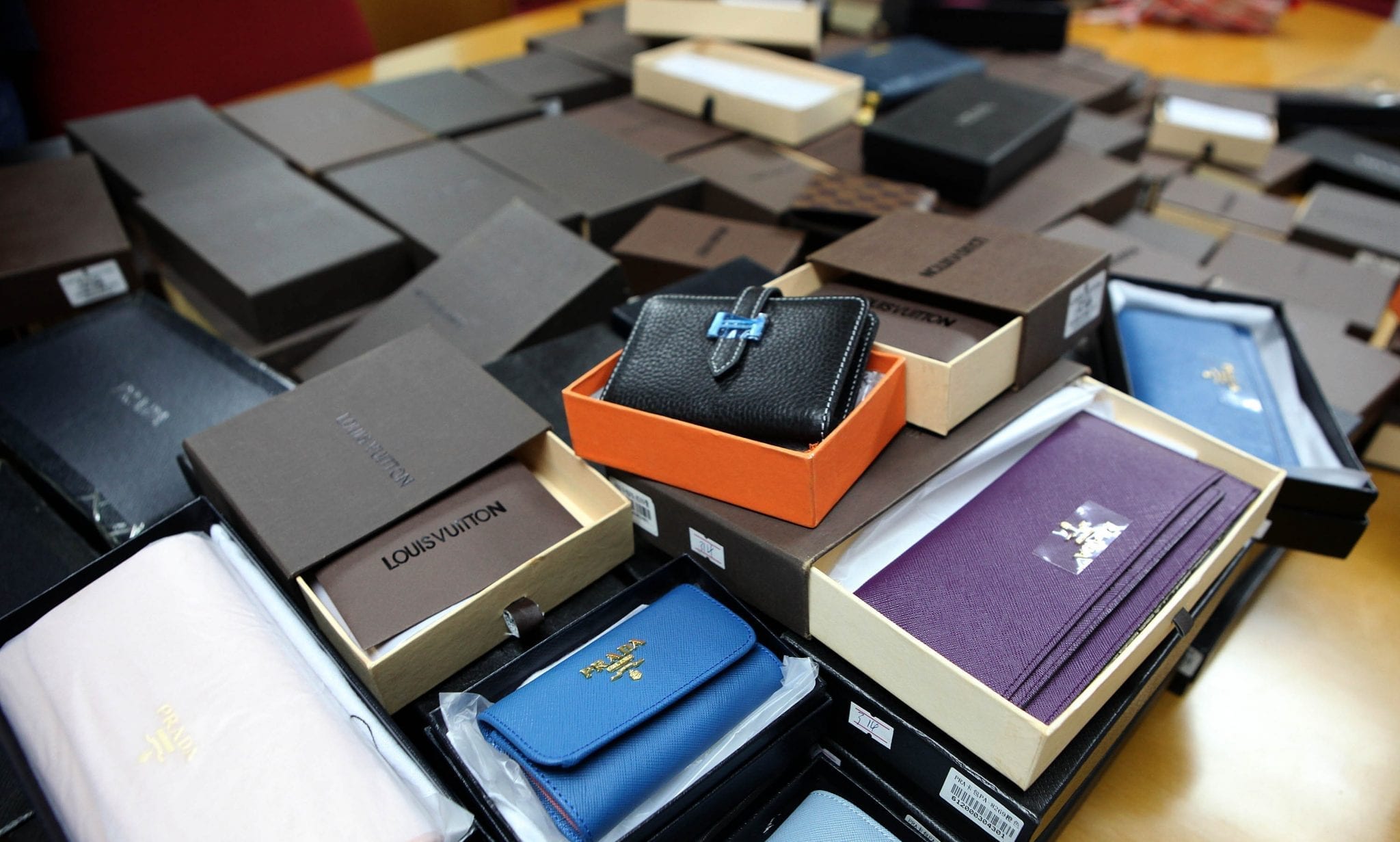
    Gucci and Facebook have filed a joint lawsuit in California against an individual who allegedly used the U.S. group’s social media platforms to sell fake Gucci products, the two companies said on Tuesday.

    The initiative, a first of its kind for both Gucci and Facebook, is the latest example of an Internet giant joining forces with a luxury label to fight the proliferation of counterfeit goods being sold via social media.

    Amazon has filed similar lawsuits over the past year with Valentino and Ferragamo.

    In a statement, Gucci – the profit engine of French group Kering – and Facebook alleged the unidentified defendant used multiple Facebook and Instagram accounts to promote her international online counterfeit business.

    Online sales of luxury handbags, shoes, and garments have boomed over the past year as the coronavirus pandemic forced retailers to temporarily close their stores.

    Groups like Facebook are keen to make a bigger push into the luxury market and “social commerce”, but to do so they need to show that their platforms are not a conduit for counterfeiting and are safe for brands, some of which are reluctant to sell their products through third-party players.

    “More than one million pieces of content were removed from Facebook and Instagram in the first half of 2020, based on thousands of reports of counterfeit content from brand owners, including Gucci,” the statement said.

    It added that in 2020 alone the actions of Gucci’s in-house intellectual property team had resulted in four million online counterfeit product listings being taken down, the seizure of 4.1 million counterfeit products, and 45,000 websites, including social media accounts, being disabled.

  • Facebook’s Opens Lawsuit against an app developer

    Facebook’s Opens Lawsuit against an app developer

    Kettle, meet pot. Or perhaps we should say, man bites dog. Either way, it symbolizes news announced on Friday by Facebook. The company, which faces an FTC fine of $3 billion to $5 billion for allegedly using members’ personal data without consent, filed a lawsuit against a company for doing the same thing. The suit was filed this past Friday in California Superior Court for the County of San Mateo against a South Korean company called Rankware.

    Rankware is an app developer; the company and its apps have been suspended from Facebook. Despite the suspension, it appears that the company still has in its possession some Facebook user data. In the suit, Facebook asks the court to demand that Rankware delete the user data it obtained and hints that the defendant might have sold this information to other firms. The social networking company says that Rankware refuses to say who it turned over the user data to, and would not “[p]rovide a full accounting of Facebook user data in its possession.”  The filing adds that while Rankware had agreed contractually to follow Facebook’s rules, it “failed to comply with Facebook’s requests for proof of Rankwave’s compliance with Facebook policies, including an audit.”

    The filing goes on to note that since 2014, Rankware has been “us[ing] Facebook Pages data associated with its apps for its own business purposes, which include providing consulting services to advertisers and marketing companies.” The filing claims that the defendant has generated $9.8 million by selling Facebook members’ user data to advertisers. The social networking firm sent a cease and desist letter to Rankware earlier this year, and while the developer said it did not violate Facebook’s terms of service and policies, it would not provide any proof of this.

    “By filing the lawsuit, we are sending a message to developers that Facebook is serious about enforcing our policies, including requiring developers to cooperate with us during an investigation.”

    The suit says that Rankware’s actions harmed the reputation, public trust and goodwill of Facebook. It seeks an injunction that would prevent Rankware from accessing Facebook’s platform, force the South Korean developer to show proof of its compliance, and delete any user data that it obtained in violation of Facebook’s rules. Despite asking the court to award it financial damages and any money that Rankware received “unjustly,” Facebook says that money isn’t enough to make up for the harm caused by Rankware’s actions.

  • Vietnamese taxi firm to get support in lawsuit against Grab

    Vietnamese taxi firm to get support in lawsuit against Grab

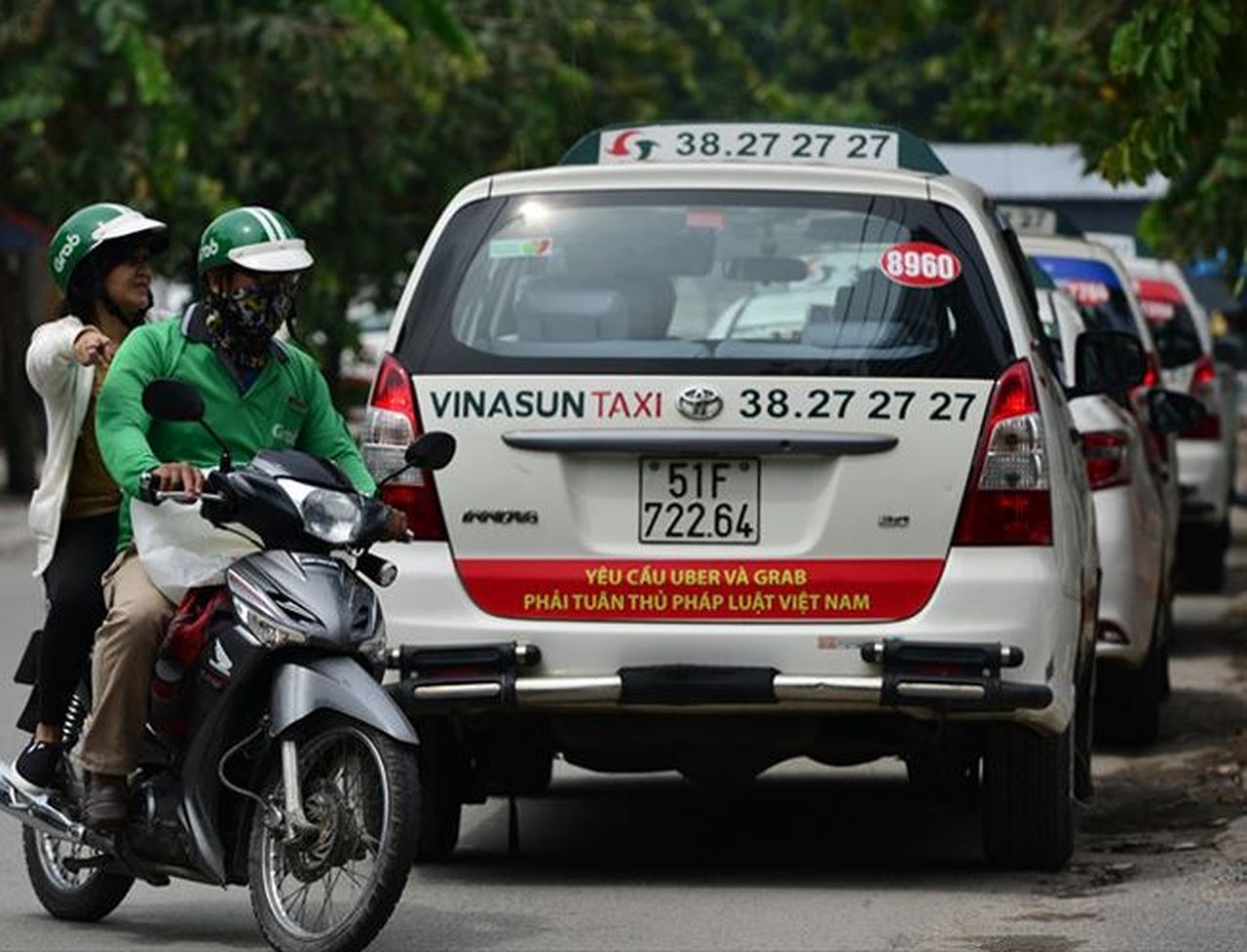
    Prosecutors have argued in a trial in HCMC that Grab must pay Vinasun compensation for losses it caused through “unhealthy competition.” At a hearing Tuesday the city People’s Procuracy rejected ride-hailing firm Grab’s argument that the court had no jurisdiction over the case, saying it does since it is a commercial dispute.

    Prosecutors also asked the judges to deny Grab’s request to summon representatives of Vietnam’s Ministry of Transport, other companies participating in the ministry’s pilot scheme for ride-hailing services and the company responsible for estimating Vinasun’s losses.

    As for Grab’s claim it is a tech firm and not a taxi company, they said since the firm directly assigns drivers, sets fares, sets regulations for drivers, and offers promotions, there is enough reason to dismiss this too.

    “Vinasun’s demand for compensation for reduced profits is well founded since Grab was dishonest in its business declaration and ran promotions in contravention of regulations, causing over 70 percent of Vinasun’s customers to switch to Grab due to lower fares.”

    Vinasun’s after-tax profit was nearly VND320 billion ($13.7 million) in 2015 and VND295 billion ($12.63 million) in 2016, but dropped to VND53 billion ($2.27 million) in the first half of 2017, by which time over 8,000 drivers had quit and hundreds of cars had stopped running due to a lack of drivers.

    Prosecutors asked the court to accept Vinasun’s petition for compensation of VND42 billion (nearly $1.8 million) in one payment.

    Grab continued to insist the case did not come under the court’s jurisdiction and that it is a tech firm.

    Dismissing the claim it had caused losses to Vinasun, Grab cited market research purporting Vinasun has been losing customers due to other reasons such as driver’s attitude, long waiting time and declining car quality.

    Vinasun filed the suit against Grab at the HCMC People’s Court in June last year accusing the Malaysia-based firm of abusing the Ministry of Transport’s pilot scheme and committing violations.

    Claiming Grab’s illegal activities had caused damages to it, Vinasun claimed to have suffered losses of nearly VND76 billion ($3.25 million) in 2016 and the first half of 2017, of which nearly VND42 billion (nearly $1.8 million) was caused by Grab.

    The trial began last February, but was first adjourned a month later due to the need for more evidence and again last month when Grab protested against the evaluation of Vinasun’s losses and refused to attend.

    The court is scheduled to hand down its verdict next Monday.

  • Volkswagen decides not to sue South Korea over sales ban

    Volkswagen decides not to sue South Korea over sales ban

    Volkswagen decided against suing South Korea which last month suspended sales of most of its models and slapped a fine of 17.8 billion won ($15.93 million) on the German carmaker.

    Instead, Volkswagen will try to achieve certification for the affected models and resume sales quickly rather than taking on a lengthy legal process, a spokesman for Volkswagen’s South Korean unit said.

    Last month, the government revoked certification for 80 model variants of VW, Audi and Bentley vehicles on grounds that the German automaker fabricated certificates of vehicle emissions and noise-levels.

    At that time, Volkswagen described the ruling as “most severe” and said it would consider a legal challenge.

    Volkswagen’s sales slumped 40 percent to 12,888 vehicles from January to July in South Korea, after jumping 17 percent last year, in the wake of its emissions-test cheating scandal.

    Nissan Motor’s (7201.T) South Korean unit has filed a lawsuit over claims by the environment ministry that it had cheated on emissions with its Qashqai diesel sport utility vehicle.