
Retail News CRM

Tag: layoff

  • Meta Kickstarts Global Layoff of 8,000 Employees: The Dawn of AI Transformation Begins with 4 AM Emails in Singapore

    Meta Kickstarts Global Layoff of 8,000 Employees: The Dawn of AI Transformation Begins with 4 AM Emails in Singapore

    Meta, the global tech powerhouse, has initiated an extensive downsizing initiative, beginning with an announcement to its Singaporean employees. The company plans a 10% reduction of its workforce across the globe, also affecting team members in the US and the UK. As the process unfolds, employees have been advised to work remotely.

    This current layoff phase is projected to have a significant impact on Meta’s product and engineering teams. Insiders suggest that additional cuts could follow later in 2026. However, this information has not yet been made public.

    New Focus on AI

    As part of its strategic restructuring, Meta has reassigned approximately 7,000 employees to newly-formed teams. These groups are centered around artificial intelligence (AI) initiatives, including the development of AI products and agents.

    Committed to its AI focus, Meta has earmarked over US$100 billion for AI capital expenditures in 2026. As of March’s end, Meta’s employee count stood just shy of 80,000, prior to the announced layoffs and reassignments.

    Janelle Gale, Meta’s Head of People, has explained that these changes allow for a streamlined, efficient organizational structure. Smaller, agile teams or “pods” can work at a quicker pace and with a greater sense of ownership. Gale expressed confidence that this approach would bolster productivity and elevate job satisfaction.

    A History of Layoffs and Backlash

    Over recent years, Meta has repeatedly downsized its workforce as part of continuous efficiency pursuits, championed by CEO Mark Zuckerberg. He has urged engineers to leverage AI agents for coding and other functions, proposed device monitoring strategies to enhance technology, and developed his own AI-assistant for handling CEO-related tasks, such as collating employee feedback. The cumulative impact of these job cuts and reassignments is expected to affect approximately 20% of the company’s workforce.

    However, this drastic change has not been quietly accepted by all. Many Meta employees have expressed their dissent, distributing protest flyers at company offices and posting criticisms on its internal communications platform, Workplace. A petition against the proposed installation of mouse-tracking software — designed to train Meta’s AI models by monitoring human-computer interaction — has already garnered over 1,000 signatures.

    The wider tech industry is also wrestling with the implications of AI advancement. Rising stock prices and the burgeoning valuation of AI startups contrast starkly with the increasing job cuts. In 2026 alone, nearly 110,000 job positions have been eliminated across 137 tech companies, trending towards a repeat of the 2023 peak. That year, over 260,000 workers were laid off in the wake of the Covid-19 pandemic’s hiring surge.

    Questions & Answers

    Why is Meta initiating these layoffs?
    Meta is restructuring to focus on AI initiatives and streamline its structure, aiming for greater efficiency and productivity.

    What roles are affected by these layoffs?
    The layoffs are expected to significantly impact Meta’s engineering and product teams.

    How has the downsizing been received by the company’s employees?
    There has been considerable backlash among Meta employees, with protests and a petition against the proposed use of mouse-tracking software to train AI models.
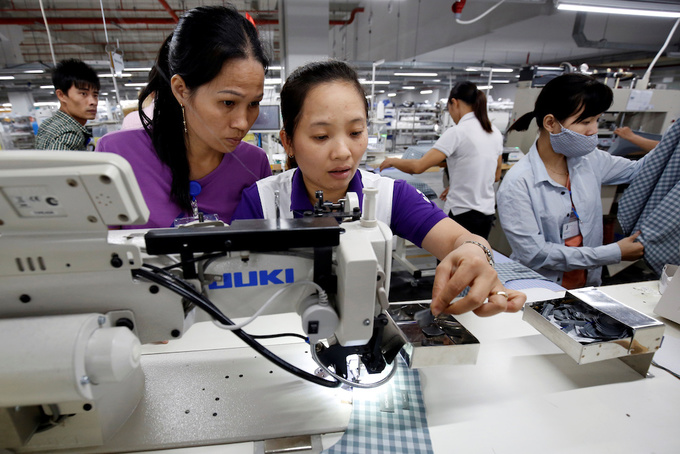

  • 35 pct of businesses lay off workers due to pandemic

    35 pct of businesses lay off workers due to pandemic

    Thirty-five percent of businesses had to let staff go after being hit by the effects of the Covid-19 pandemic, which disrupted supply chains, a survey has found.

    The dwindling number of workers was one of the four major difficulties businesses faced during the pandemic, the others being difficulties in approaching customers and disruptions in cash flows and supply chains, the survey, done by the Vietnam Chamber of Commerce and Industry (VCCI) and the World Bank, said.

    Textile and garment was the sector with the highest number of companies reporting negative impacts (97 percent), followed by information and communications (96 percent) and electrical equipment (94 percent), the survey, which polled nearly 10,200 businesses, said.

    Overall, 87 percent of companies reported negative impacts.

    Small and micro businesses established less than three years ago were most affected by the Covid-19 pandemic, Dau Anh Tuan, head of the VCCI’s legal department, said.

    But the government’s support policies were helpful, 70 percent of respondents said.

    Businesses called for more long-term solutions such as increasing public investment, completing ongoing infrastructure works, and providing stimulus packages.

    The VCCI has called on the government to provide financial support to companies that maintain a high employment rate and subsidize the cost of training to improve workers’ skills.

    Vietnamese businesses should take the opportunities thrown up by the pandemic as major Japanese, U.S., E.U., and Australian companies are looking to shift their supply chains out of China, it added.

    The VCCI also did a survey of 1,564 foreign companies in Vietnam and found 87.9 percent were affected by the pandemic and 22 percent had to lay off workers.

  • LG Claims No Layoff Plan in Indonesia

    LG Claims No Layoff Plan in Indonesia

    President Director of PT LG Electronics Indonesia Jaeyoung Lee has confirmed that there is no plan for layoff (PHK) at its two factories in Indonesia. “The economy is stabilizing and has shown signs of improvements and we will survive,” he said on Tuesday evening during the 2016 LG InnoFest Asia, at Grand Hyatt Hotel, Seoul.

    Lee’s statement was made in response to the decision of two Japanese electronic manufacturers, Panasonic and Toshiba who recently have been restructuring and merging their factories in Indonesia. “We have other strategies, one of them is by strengthening our brand and entering non-conventional markets, such as ultra premium market.”

    Lee is also optimistic that, to date, the company is still dominating the domestic market of electronic sales. “LG Indonesia’s contribution to global market is around 4-5 percent. It’s substantial,” he said.

    In Indonesia, LG produced refrigerators, washing machines, air conditioner, televisions and audio-video devices as well as monitors. “Products from the factory are exported,” Lee noted.

    Toto, one of the sales representatives of LG products in Medan, is optimistic that the phenomena occurred in Panasonic and Toshiba would not happen in LG. “See, we can hold an event [LG InnoFest] of this magnitude,” he said to Tempo.

    Toto added that, LG’s step to make innovation by launching new products which targets ultra premium consumers also shows that the company’s performance is good. “The logic is that layoffs would not happen if the company is still performing.”