Tag: leadership

  • Indian Executive Coaching Faces Price War as New Entrants Cut Hourly Fees

    Indian Executive Coaching Faces Price War as New Entrants Cut Hourly Fees

    Indian executive coaching rates dropped to 8,000 rupees an hour as new entrants flooded corporate rosters and undercut established advisors who command up to 100,000 rupees.

    Corporate clients across Mumbai, Bengaluru, and New Delhi now demand bulk discounts on leadership training contracts while testing artificial intelligence bots for standard employee check-ins. The shift comes as businesses look for cheaper ways to retain senior executives amid moderating salary growth.

    Supply Spikes Across Training Platforms

    Senior corporate directors who left industry roles over the past five years created a sudden supply surge. New practitioners must log fixed coaching hours to earn International Coaching Federation credentials, prompting many to slash initial hourly fees to between 8,000 and 10,000 rupees ($95 to $120) to win corporate mandates.

    Specialized recruitment and training marketplaces expanded quickly to handle the volume. B2B coaching network Meeraq accumulated 3,000 coaches on commission over four years, while affiliated training arm Coach-To-Transformation expanded annual enrollment to 500 executives, up from 25 participants in 2016. Its three-to-four-month qualification course costs 165,000 rupees plus goods and services tax.

    Automated Agents Enter Corporate Retainers

    Enterprise buyers are also weaving automated software into long-term leadership contracts. Human resources departments deploy AI agents to handle early goal-setting, coach matching, and routine follow-ups during multi-month development programs.

    For enterprise employers in India, the coaching shakeout mirrors the rapid commoditization seen across corporate software and technical training. Retailers and consumer tech firms that previously reserved one-on-one executive development for board-level leadership can now distribute structured coaching to mid-level managers at a fraction of historic budgets.

    Enterprise procurement teams across India are now renegotiating annual leadership retainers ahead of the next fiscal budgeting cycle, with platforms competing to bundle human advisory sessions alongside automated tools.

  • Vietnam Sets Stage for Globally Competitive CEO’s: Launches Trailblazing Leadership Program

    Vietnam Sets Stage for Globally Competitive CEO’s: Launches Trailblazing Leadership Program

    The Vietnam Chamber of Commerce and Industry (VCCI) recently rolled out a leadership advancement initiative aimed at fostering a new cohort of globally competitive CEOs within the nation. The undertaking, dubbed “CEO Vietnam The New Era,” aims to imbue top executives with globally recognized management acumen and ready them for digital metamorphosis, ecological transitioning, and further integration into global supply chains.

    Shaping Leadership for Economic Growth

    This move coincides with Vietnam’s accelerated economic growth ambitions, and an intensified focus on cultivating business leadership that is in sync with governmental priorities of expanding the private sector’s role. Ho Sy Hung, the chairman of the chamber, emphasized at the initiative’s unveiling that Vietnamese enterprises require leaders who possess a future-oriented vision, modern managerial abilities, and the flexibility to navigate swift technological and geopolitical shifts.

    The VCCI has plans to draw on the support of its extensive in-country networks, business organizations, training collaborators, industry experts, international bodies, and the wider business sector to execute this program.

    Educational Collaboration and Curriculum Highlights

    Prof. Dr. Nguyen Thi Thanh Mai, president of Vietnam National University–Ho Chi Minh City, highlighted the program’s goal of fortifying collaboration amongst the government, educational institutions, and businesses in the areas of education, research and knowledge-sharing.

    The university, collaborating with partners such as A11 Management Consulting Vietnam and INSEAD Business School, has developed a comprehensive curriculum suitable for a broad spectrum of participants, ranging from top-tier corporate heads to executives of small to medium-sized businesses, family-run ventures, and startups. Key focus areas of the program will encompass strategic leadership, corporate governance, digital transformation, finance, sustainability, ESG, and international business growth.

    In the words of Professor Sameer Hasija, Dean of Executive Education and Dean of the Asia Campus at INSEAD, as Vietnam maintains its impressive economic stride, the cultivation of future-ready business leaders will be pivotal to sustaining growth and pioneering innovation.

    Questions & Answers

    What is the purpose of the “CEO Vietnam The New Era” program?
    The program aims to equip business leaders with globally recognized management skills and prepare them for digital transformation, green transition, and deeper integration into global value chains.

    Who are the key partners in developing the curriculum for this program?
    The Vietnam National University–Ho Chi Minh City has partnered with A11 Management Consulting Vietnam, INSEAD Business School, and other partners to create the curriculum.

    What will be the primary focus areas of the program?
    The program will cover strategic leadership, corporate governance, digital transformation, finance, sustainability, ESG, and international business development.

  • Bank of America Bolsters DACH Presence: New Leadership Roles for Markus Meier and Thore Zimmermann

    Bank of America Bolsters DACH Presence: New Leadership Roles for Markus Meier and Thore Zimmermann

    Bank of America has broadened the remit of Markus Meier, appointing him as the Head of Equity Capital Markets (ECM) for Germany, Austria, and Switzerland. This expanded role builds on his previous responsibilities in Germany and Austria, with the addition of the Swiss market. Meier will continue to operate from Frankfurt and report to James Palmer, the Head of EMEA Equity Capital Markets. Meier has been with Bank of America since 2007 and has been instrumental in growing the ECM business in Germany and Austria.

    Meier’s Expanded Role in the DACH Region

    This new assignment consolidates the bank’s equity capital markets activities across the entire DACH region under Meier’s leadership. Bank of America views the DACH market as one of Europe’s most significant and thoroughly integrated capital markets. The bank has been involved in a series of substantial equity transactions in the region, such as the €9.4 billion IPO of Porsche AG, the CHF 2.3 billion IPO of Galderma, and the €935 million flotation of Schott Pharma. The bank has also been engaged in capital market operations with notable organizations such as Fresenius Medical Care, Deutsche Post DHL, Qiagen, Rheinmetall, and Hensoldt, as well as participating in the spin-off and listing of Siemens Energy.

    Thore Zimmermann has also been assigned a new role as the Head of EMEA Equity Linked, having joined Bank of America in 2021. Zimmerman played an instrumental role in developing the bank’s Equity Linked platform through collaborations across corporate banking, investment banking, global capital markets, and global markets.

    The Growing Relevance of Equity-Linked Instruments

    Equity-linked instruments, encompassing convertible and exchangeable bonds, are gaining heightened importance as they allow companies to mesh capital raising with acquisition financing and capital structure optimization. Bank of America anticipates further growth in this area as its corporate clients increasingly lean towards flexible financing solutions that integrate elements of debt and equity.

    These changes form part of a broader investment in leadership across Bank of America’s international investment banking and global capital markets businesses. Recent changes have included the appointment of Olof Engelbrekts as Country Executive for Switzerland, the appointment of various roles covering Germany and Austria, and Thorsten Pauli taking over as Head of Asia Pacific Global Capital Markets.

    Questions & Answers

    What is Markus Meier’s new role?
    Markus Meier has been appointed as the Head of Equity Capital Markets for Germany, Austria, and Switzerland by Bank of America.

    Who is the new Head of EMEA Equity Linked?
    Thore Zimmermann has been named the Head of EMEA Equity Linked.

    What are equity-linked instruments?
    Equity-linked instruments include convertible and exchangeable bonds. They are becoming increasingly important as they allow the integration of capital raising with acquisition financing and capital structure optimization.

  • New Leadership Horizons: Nigel Parsons Takes Reins as Asahi’s Europe and International Division CEO

    New Leadership Horizons: Nigel Parsons Takes Reins as Asahi’s Europe and International Division CEO

    Nigel Parsons has been announced as the new CEO of Asahi’s Europe and International (AEI) segment, succeeding Dragos Constantinescu who is set to leave his position at the end of June. Parsons is slated to officially take over during the latter part of this year. In the interim period, Andrew Bailey, AEI’s CFO, will fulfill the CEO responsibilities.

    Parsons’ appointment has been attributed to his vast leadership skills spanning human resources, commercial, and multi-category operations within the organization and the wider Fast-Moving Consumer Goods (FMCG) industry. His tenure with Asahi Beverages began in 2021 when he took up the CEO position in the lifestyle beverages division. Most recently, Parsons held the Chief Commercial Officer (CCO) role for Oceania, where he supervised commercial operations in Australia and New Zealand.

    Atsushi Katsuki, the President and Group CEO of Asahi Group Holdings, has lauded Parsons for his proven capability in driving sustainable growth. Katsuki expressed his confidence that under Parsons’ guidance, AEI would progress its strategic objectives in complete harmony with the group’s medium to long-term management policies, thereby enhancing value creation across their business portfolio.

    Questions & Answers

    Who has been appointed as the new CEO of Asahi’s Europe and International division?
    Nigel Parsons has been appointed the new CEO of Asahi’s Europe and International division.

    Who will serve as acting CEO during the transition period?
    Andrew Bailey, the CFO of AEI, will serve as acting CEO during the transition period.

    What roles has Nigel Parsons held within the Asahi Group?
    Nigel Parsons joined Asahi Beverages in 2021 as CEO of its lifestyle beverages division, and most recently served as the Chief Commercial Officer for Oceania, overseeing operations in Australia and New Zealand.

  • Job Cull at Meta: 8,000 Layoffs Loom as Zuckerberg Pioneers AI Leadership Clone

    Job Cull at Meta: 8,000 Layoffs Loom as Zuckerberg Pioneers AI Leadership Clone

    Many employees at Meta are expected to face job losses, with the first wave of layoffs beginning on May 20, potentially affecting as many as 8,000 roles. However, this initial round of job losses only signifies the start of a broader restructuring effort.

    Continued Layoffs Anticipated

    According to recent reports, Meta’s workforce reduction is far from complete. After the initial elimination of 8,000 positions, which represents approximately 10% of Meta’s global workforce, another round of layoffs is expected to occur in the latter half of 2026.

    The specifics regarding the second round of layoffs, including the exact timing and the number of affected employees, remain uncertain. This lack of detailed information may be due to the unpredictability of advancements in artificial intelligence (AI), a field that could substantially influence Meta’s employment requirements. If AI technology continues to become more effective and powerful, more job cuts could consequently ensue at Meta.

    Reports have indicated that Meta is considering a 20% reduction of its global workforce, suggesting that at least another 8,000 jobs could be eliminated in the second wave of layoffs.

    Industry-Wide Job Losses

    While Meta grapples with impending layoffs and the task of enhancing its AI capabilities, other industry giants are facing similar challenges. Amazon, for example, has recently initiated layoffs affecting 30,000 of its corporate employees, equivalent to 10% of its white-collar workforce.

    According to some tracking tools, more than 73,000 employees have been laid off in 2026 across the industry. This figure nearly reaches half of the total layoffs for the entire year of 2024, despite only the first quarter of 2026 having concluded.

    The Advent of AI Leadership

    Despite the turbulence, a bright future could await those who manage to retain their positions at Meta. Reports suggest that the company is developing an AI clone of its CEO, which would be capable of responding to questions in his distinct voice using his past statements.

    The AI clone project aims to strengthen employee connection with leadership, reflecting the company’s shift towards AI-driven tools rather than focusing solely on its earlier metaverse ambitions. The CEO is said to be directly involved in training his digital counterpart, a concept that could inspire the creation of similar AI personas for influencers and creators.

    Questions & Answers

    Why is Meta laying off a significant portion of its workforce?
    Meta’s layoffs are part of a broader restructuring strategy, potentially influenced by advancements in AI technology, which could transform the company’s employment and operational needs.

    What is the expected number of total layoffs at Meta?
    While exact numbers are not confirmed, reports suggest that Meta is considering a 20% reduction of its global workforce, which could result in about 16,000 job losses.

    What is the purpose of the AI clone of Meta’s CEO?
    The AI clone project aims to strengthen the connection between employees and leadership. The AI clone, trained to respond in the CEO’s voice using his past statements, reflects Meta’s strategic shift towards AI-driven tools.

  • Siddhartha Shukla Exits Lanvin: A Shift in Luxury Fashion Leadership Amid Market Volatility

    Siddhartha Shukla Exits Lanvin: A Shift in Luxury Fashion Leadership Amid Market Volatility

    Siddhartha Shukla is set to leave his position as deputy CEO of the high-end fashion label Lanvin after a four-year tenure. Shukla, who has extensive experience in the luxury industry, joined Lanvin towards the end of 2021 with a vision to assist in the brand’s transition.

    Shukla’s Background

    Prior to his role at Lanvin, Shukla held the position of chief brand officer at the prestigious US label, Theory. His expansive career also includes over ten years at notable fashion houses such as Gucci and Saint Laurent.

    Lanvin’s Leadership

    In the wake of Shukla’s departure, Lanvin Group, the parent company of the fashion brand, announced that Andy Lew, the group’s executive president and Lanvin’s chairman and CEO, will continue to maintain control of the brand and its strategic aspirations.

    Leadership Changes Within the Group

    The exit of Shukla is the latest in a series of leadership changes within the group. Recently, Mandy West was designated as CEO of women’s clothing brand St John Knits, and Marco Pozzo took on the role of CEO at Wolford.

    Strategic Decisions

    Additionally, the group has taken significant strategic steps towards focusing on its central brands, primarily due to the ongoing fluctuations in the luxury market. This includes the divestment of the Italian menswear label Caruso, which was sold to MondeVita Italy, a subsidiary of the Mondevo Group.

    Recent Financial Performance

    In terms of fiscal performance, the group experienced a downturn in the first half, noting a 22% decline in revenue. The Lanvin brand, in particular, witnessed the most considerable decrease, with a fall of 42%.

    Questions & Answers

    Why is Siddhartha Shukla leaving Lanvin?
    The specific reasons for Siddhartha Shukla’s departure from Lanvin have not been disclosed.

    Who will take over Shukla’s responsibilities at Lanvin?
    Andy Lew, the group’s executive president and Lanvin’s chairman and CEO, will continue to oversee the brand and its strategic ambitions.

    How has Lanvin’s financial performance been recently?
    In the first half of the fiscal year, Lanvin’s revenue saw a significant decrease of 42%.

  • Dingdong Appoints Song Wang as New CEO: A Fresh Leadership in Chinese E-Grocery Space

    Dingdong Appoints Song Wang as New CEO: A Fresh Leadership in Chinese E-Grocery Space

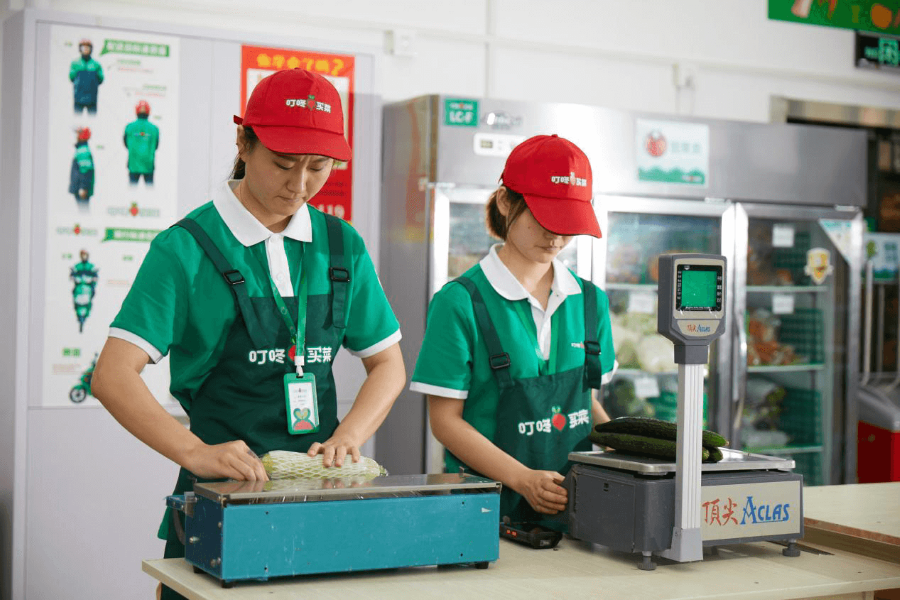
    Dingdong, a fresh grocery e-commerce organization, recently announced the appointment of Song Wang as its new CEO. This change in leadership comes after Changlin Liang, the company’s founder, stepped down from his role as CEO, though he will maintain his position as chairman of the board.

    Experience in Leadership

    Before stepping into his new role, Wang has been a part of Dingdong since 2023 and held several significant leadership positions within the company. He has served as SVP, CFO, and director. Additionally, last year, Wang was named the chairman of the Dingdong Guyu Business Group, a division of the company focusing on private-label products.

    According to Dingdong, Wang’s involvement in crucial sectors of the company such as product development, supply chain construction, and financial strategy has been invaluable. The e-commerce firm lauds his strong leadership skills within finance and operations.

    Future Plans for Dingdong

    Upon his appointment, Wang expressed his intentions to continually prioritize enhancement of the product and supply chain abilities of the business. He emphasized his commitment to work with his team to build on the company’s differentiated product strengths and enhance supply chain capabilities. He also pledged to uphold Dingdong’s user-centric service philosophy.

    Questions & Answers

    Who has been appointed as the new CEO of Dingdong?
    Song Wang has been appointed as the new CEO of Dingdong.

    Who did Song Wang replace as CEO?
    Song Wang replaced Changlin Liang as CEO, who remained as the chairman of the board after his resignation.

    What are Song Wang’s plans for the future of Dingdong?
    Wang plans to focus on enhancing the company’s product strengths and supply chain capabilities. He has pledged to uphold the company’s user-centric service philosophy.

  • Bluebell Group Ushers in New Era: Appoints Philippe Guettat as CEO in Key Leadership Revamp

    Bluebell Group Ushers in New Era: Appoints Philippe Guettat as CEO in Key Leadership Revamp

    The Bluebell Group recently announced the confirmation of Philippe Guettat as its permanent group president and CEO. This decision is part of an extensive leadership overhaul aimed at bolstering harmonization throughout its Asian operations.

    Guettat, who previously served in the role temporarily, received the official nod from the board after demonstrating a period of strategic focus and operational discipline. Chairman of the board, Laurent de Rougemont, expressed admiration for the distinct clarity and strategic discipline Guettat brought to the group during his temporary tenure.

    Rougemont said, “His dedication to operational excellence and delivering value for our stakeholders solidifies him as the ideal choice to guide the group into its next phase of success.”

    Leadership Update

    As part of the leadership transformation, Bluebell has elevated the roles of people and culture to the executive level. The company has appointed Ivan Zenovic as the new Chief People and Communications Officer. Zenovic, who will report directly to Guettat, will be in charge of talent processes and striving to standardize retail excellence across various markets.

    Rougemont added, “We move forward with a reinforced leadership structure and a straightforward goal: to ensure Bluebell remains the top sophisticated, high-performance home to the world’s most iconic brands.”

    Bluebell, a privately-owned company established in 1954, operates in vital markets throughout the Asia-Pacific region. It manages over 170 international brands through approximately 650 sales outlets, in addition to e-commerce and travel retail channels.

    Questions & Answers

    What is Philippe Guettat’s new role at Bluebell?
    Philippe Guettat has been confirmed as the permanent group president and CEO of Bluebell Group.

    What are the responsibilities of Ivan Zenovic, the new Chief People and Communications Officer?
    Ivan Zenovic will oversee talent processes and work to standardize retail excellence across various markets.

    What is the main goal of Bluebell following this leadership reshuffle?
    The main goal is to ensure Bluebell remains the top sophisticated, high-performance home to the world’s most iconic brands.

  • Major Shake-Up at A2 Milk: ANZ MD Steps Down, Sparks Leadership Reshuffle

    Major Shake-Up at A2 Milk: ANZ MD Steps Down, Sparks Leadership Reshuffle

    The A2 Milk Company has recently confirmed a sequence of significant leadership transitions, following the resignation of Eleanor Khor, the Managing Director (MD) for Australia and New Zealand (ANZ). Her tenure is set to conclude at the end of March.

    Leadership Change

    Jaron McVicar, currently serving as the Chief Legal and Sustainability Officer, will assume leadership of the ANZ business. The company expressed its gratitude towards Khor for her significant contributions during her service.

    Eleanor Khor has been an essential member of the company’s executive leadership team. Her significant contributions to the company’s growth and success over the past seven years were acknowledged by David Bortolussi, the MD and CEO of the company. Khor had been at the helm of the ANZ business unit since 2023 and was instrumental in enhancing brand health, fostering employee and customer engagement, and boosting sales and earnings. The company extends its best wishes to Khor for her future endeavors.

    Promotions and New Responsibilities

    Kate Tidbury, currently the head of legal in the group, is set to join the executive leadership team (ELT) in the capacity of Chief Legal Officer and Company Secretary.

    In Khor’s absence, the company’s Chief Financial Officer (CFO), David Muscat, will spearhead the corporate strategy. Furthermore, the Strategy and Analytics team in China will now report directly to Xiao Li, the regional CEO.

    Bortolussi has applauded Kate’s promotion to the ELT, citing her notable leadership and technical skills. He also commended Jaron, David, and Xiao for their new areas of responsibility, stating that these changes align well with the company’s carefully crafted internal succession plans.

    Questions & Answers

    Who is taking over the ANZ business of the A2 Milk Company following Eleanor Khor’s resignation?
    Jaron McVicar, the Chief Legal and Sustainability Officer, will take over the ANZ business following Eleanor Khor’s resignation.

    Who will head the corporate strategy in Eleanor Khor’s absence?
    In Eleanor Khor’s absence, the company’s Chief Financial Officer, David Muscat, will head the corporate strategy.

    Who will the Strategy and Analytics team in China report to in the future?
    The Strategy and Analytics team in China will now report directly to Xiao Li, the regional CEO.

  • Gong Cha Steers Growth With Major Leadership Shake-Up Across Key Global Markets

    Gong Cha Steers Growth With Major Leadership Shake-Up Across Key Global Markets

    Popular bubble tea franchise, Gong Cha, has recently undergone a significant restructuring of its top-tier management. This move is intended to bolster the company’s framework, enabling it to better support continued growth across its principal markets.

    New Leadership Assignments

    Keaton Myburgh, who joined Gong Cha in 2023, has been appointed as the new General Manager for the Asia-Pacific region (APAC). In his time with Gong Cha, Myburgh has shown exceptional leadership in assisting franchise partners and managing regional operations. His new role will extend his responsibility to ensuring operational excellence, regional development, and brand consistency across the APAC region.

    For the Europe, Middle East, and Africa (EMEA) region, Gong Cha has appointed Jemma Smoker as the General Manager. Smoker, who also joined the company in 2023, will assume responsibility for overseeing regional operations and the development of the brand within the region.

    Marketing Team Expansion

    On a similar note, Gong Cha has also broadened its marketing team. Sepanta Bagherpour has taken on the role of Chief Marketing Officer for the Americas and EMEA regions. Bagherpour brings to the table over two decades of experience in marketing and communications, working with global brands.

    Moreover, Gong Cha has announced the promotions of Maya Murasawa and Jina Jeeyoung C. Murasawa will now serve as the Head of Marketing in Japan while Jeeyoung C has been named the Chief Marketing Officer for South Korea and APAC. These appointments underscore Gong Cha’s commitment to customer-focused, locally relevant marketing strategies.

    These reshuffles come on the back of the company’s launch of Gong Cha 2.0, a global revamp of the company’s business model. This new model aims to bolster efficiency across its franchise network.

    Questions & Answers

    What is the goal of Gong Cha’s recent leadership restructuring?
    Gong Cha has reshaped its senior leadership team to strengthen its organizational structure and support its growth across key markets.

    Who are the newly appointed leaders in Gong Cha’s team?
    Keaton Myburgh has been appointed as the General Manager for the APAC region and Jemma Smoker for the EMEA region. Sepanta Bagherpour has joined as the Chief Marketing Officer for the Americas and EMEA. Maya Murasawa and Jina Jeeyoung C have been promoted within the marketing department in Japan and South Korea and APAC respectively.

    What is Gong Cha 2.0?
    Gong Cha 2.0 is a global update to the company’s operating model aimed at improving efficiency across its franchise network.

  • UBS’s Bold Leadership Move to Unlock Post-Integration Value in 2026: Beatriz Martin at the Helm

    UBS is on the verge of a critical phase in its historic integration with Credit Suisse, signified by a strategic leadership change. Since the beginning of 2026, Beatriz Martin has assumed the role of Group Chief Operating Officer, alongside her new responsibility for Group Technology. This move underscores UBS’s focused efforts to enhance execution as the bank nears what is believed by management to be the final stage of the integration process.

    Operational Challenges During Integration

    Credit Suisse’s integration has been more about systems than branding. The greatest hurdles have been complex IT migrations, legacy platform shutdowns, and seamless data transfers. By placing operational control and technological execution under one executive, UBS aims to minimize delays, shorten decision-making time, and speed up problem-solving, particularly in areas where delays could prove costly.

    Industry experts perceive this consolidation of responsibilities as a practical solution to integration risk. Misalignment between operations and IT is a frequent cause of cost overruns and operational incidents during large-scale bank mergers, and UBS seems committed to evading this pitfall.

    The Shift from Consolidation to Performance

    2026 is not just another year for UBS. It signifies the final full year of integration work and, importantly, the point at which the bank expects to fully capitalize on the synergies from the Credit Suisse acquisition. The narrative has shifted from consolidation to performance, a transition eagerly anticipated by investors.

    Thus, Beatriz Martin has a clearly defined mandate: finish the remaining system migrations, decommission obsolete infrastructure, and do so without disrupting routine banking operations. The risk is high but so is the potential reward.

    Cost Discipline and Job Reductions

    Alongside the leadership change, UBS is demonstrating its focus on cost control with another round of job cuts set for mid-January. Although these cuts may be socially and politically sensitive, the markets typically regard them as indications of management’s dedication to efficiency and enhancing margins.

    The timing of these cost reductions is crucial from an investor’s perspective. Implementing these changes before the final integration phase increases the likelihood that synergy benefits will translate into enhanced profitability rather than being consumed by residual restructuring costs.

    Equity Markets’ Reaction

    UBS shares are trading near their 52-week high of 47.27 dollars, signaling growing confidence that the most severe integration costs are behind the bank. The stock rally towards the end of 2025 implies that investors anticipate a noticeable improvement in earnings power from the latter half of 2026.

    The prospect of a structurally lower cost base after years of substantial restructuring costs is becoming a reality. The current market valuation suggests that investors expect the management to deliver and will not easily tolerate execution errors.

    Moving Towards Measurable Results

    By consolidating operational and technological control under Beatriz Martin, UBS is sending a clear message: 2026 is the year of results, not excuses. After a groundbreaking merger and years of internal consolidation, the bank is positioning itself to transform scale and synergies into sustainable returns.

    The message to financially astute investors is clear – the bank’s performance in the next twelve months will shape the post-merger UBS.

    Questions & Answers

    What is the role of Beatriz Martin in UBS’s integration with Credit Suisse?
    Martin, as the Group Chief Operating Officer, is responsible for overseeing operational control and technological execution, critical components of the integration process.

    What do the proposed job cuts at UBS signify?
    Though potentially sensitive socially and politically, these cuts are viewed by markets as evidence of UBS’s commitment to efficiency and margin improvement.

    What is the significance of 2026 for UBS?
    2026 denotes the final full year of the integration process and the point at which UBS aims to fully capitalize on the synergies from the Credit Suisse acquisition. The bank’s narrative has shifted from consolidation to performance during this year.

  • Link Reit Launches Leadership Revamp: John Russell Saunders Appointed Executive Director

    Link Reit Launches Leadership Revamp: John Russell Saunders Appointed Executive Director

    John Russell Saunders has recently been appointed as an executive director of the Link Real Estate Investment Trust (Link Reit), effective immediately. For the time being, Saunders will be leading the group in tandem with Ng Kok Siong, the current executive director and CFO. Both Saunders and Ng will be reporting directly to Duncan Gareth Owen, the independent chair, and the Chairs Committee until a new CEO is hired.

    Saunders’ Role in Link Reit

    Saunders, in his current capacity as group chief investment officer, will keep his focus on investments as well as partnerships with third-party capital. He will also support and manage the assets across Link’s existing portfolio, which is currently being handled by Emmanuel Regis Farcis, the managing director for asset management.

    Ng’s Duties in Link Reit

    On the other hand, Ng will be taking charge of all the corporate functions, which include finance, legal, information technology, human resources, and investor relations.

    Saunders expressed his excitement about joining the Link board as an executive director. He anticipates collaborating with Kok Siong, the Chairs Committee, and the broader board and management team on the forthcoming next stage for Link.

    Owen’s Support during the Transition

    To assist with the transition, Owen has agreed to devote more time under a new contract, running from January of this year until the conclusion of May next year. Despite remaining a non-executive chair, Owen will be responsible for guiding the executive directors and overseeing the process of searching for, hiring, and onboarding the new CEO.

    Owen further stated that the board is concentrating on Link’s robustness and proven record in owning and actively managing shopping malls and parking facilities throughout the Asia Pacific. This focus is especially pertinent in Hong Kong, top-tier cities in Mainland China, as well as Singapore and Australia.

    About Link Reit

    Link Reit is a property owner and manager of a portfolio that includes shopping malls, parking facilities, and other retail assets. The group, which is based in Hong Kong, has properties spread across China, Singapore, and Australia.

    Questions & Answers

    What is John Russell Saunders’ new role in Link Real Estate Investment Trust (Link Reit)?
    John Russell Saunders has been appointed as an executive director of Link Reit.

    What will Saunders’ main responsibilities be in his new position?
    As an executive director, Saunders will focus on investments and partnerships with third-party capital, as well as support and manage the assets across Link’s existing portfolio.

    Who will lead Link Reit alongside Saunders during this interim leadership period?
    Ng Kok Siong, the current executive director and CFO of Link Reit, will lead the group alongside Saunders until a new CEO is hired.

  • Singapore Soars to Global Crypto Leadership: Asia-Pacific Emerges as the Epicenter of Digital Finance Revolution

    Singapore Soars to Global Crypto Leadership: Asia-Pacific Emerges as the Epicenter of Digital Finance Revolution

    The 2025 World Crypto Ranking Report by Bybit has uncovered a significant shift in the worldwide adoption of digital assets. Singapore has superseded the US as the global leader in the crypto sphere, with six economies from the Asia-Pacific region entering the global top twenty. This shift implies that Asia-Pacific is rapidly becoming the epicenter of the forthcoming digital finance era.

    Singapore: The New Crypto Hub

    According to the World Crypto Rankings (WCR) 2025, which encapsulates data from 79 countries, Singapore has risen to the top spot globally. This ascent can be attributed to clear regulatory policies, the maturity of institutions, and extensive public engagement. Over 11 percent of Singapore’s citizens hold digital assets, reflecting a high rate of public engagement. The WCR report, founded on 28 metrics and 92 data points, underscores the structural strengths that reinforce Singapore’s position as a crucial hub for long-term crypto developments.

    Asia-Pacific’s Strong Presence

    Apart from Singapore, other markets in the Asia-Pacific region have shown significant advancements in adoption. Vietnam, ranking 9th globally, has driven this growth with close to 20 percent crypto ownership and top-tier usage for remittances, savings, and DePIN devices. Hong Kong has secured a place in the top 10, driven by a regulatory overhaul and a surge in institutional activity. Other regional players like Australia, the Philippines, and South Korea have strengthened the region’s representation in the top 20, each spurred by unique adoption factors.

    Contrasting Market Trends

    The report points out the coexistence of institutional hubs and grassroots ecosystems across the Asia-Pacific region. Different strategies have been employed. For instance, Hong Kong focuses on merging global finance with China’s capital framework via tokenization and stablecoin infrastructure, while Vietnam’s crypto economy is fueled by innovation driven by necessity.

    The Philippines is progressing financial inclusion via mobile-first adoption, while South Korea’s intense retail interest is set to accelerate once there is regulatory advancement.

    Growth of Tokenized Real-World Assets

    A crucial global trend highlighted in the report is the swift enlargement of tokenized real-world assets. The value of these assets, measured on-chain, has increased by over 63 percent to more than $25.7 billion since January 2025.

    Countries high on the institutional readiness scale, led by the US and trailed by the Philippines and Australia, are in the best position to harness this upcoming wave of digital asset innovation.

    Impacting Global Crypto Landscape

    Co-CEO of Bybit, Helen Liu, has stated that the rise of the Asia-Pacific in the crypto sphere is altering the boundaries of global finance. Liu emphasized that the region is leading the industry through regulatory innovation, grassroots engagement, and institutional growth.

    The findings in the WCR 2025 suggest that local breakthroughs in the region now affect global capital flows, market structure, and policy discussions on digital assets.

    Guiding the Future of Crypto

    The report posits the Asia-Pacific not only as a quick adopter but also as a defining force in the structural evolution of digital finance. The region, with increasing institutional involvement, evolving regulatory frameworks, and broad retail adoption, is surfacing as a pivotal engine for crypto innovation. The WCR 2025 serves as a diagnostic tool and strategic guide for policymakers, investors, and industry leaders to navigate the next phase of global digital asset growth.

    Questions & Answers

    What factors contributed to Singapore’s rise to the top of the global crypto market?
    Singapore’s rise can be attributed to regulatory clarity, institutional maturity, and widespread public engagement, with over 11 percent of citizens holding digital assets.

    Which Asia-Pacific countries have shown significant advancements in crypto adoption?
    Singapore, Vietnam, Hong Kong, Australia, the Philippines, and South Korea have all shown remarkable growth and adoption in the crypto sphere.

    What global trend has been identified in the report in relation to digital assets?
    The report identifies the rapid expansion of tokenized real-world assets as a key global trend, with total on-chain RWA value growing by over 63 percent since January 2025.


  • Manulife Bolsters Leadership with Appointment of Former HSBC Asia CFO Ming Lau

    Manulife Bolsters Leadership with Appointment of Former HSBC Asia CFO Ming Lau

    Manulife, a global insurance provider, has announced the appointment of Ming Lau as its new Chief Financial Officer (CFO) for Asia. This announcement is effective as of May 2026. Ming Lau will directly report to Colin Simpson, Manulife’s Global CFO.

    Ming Lau brings a wealth of experience to this new role. He has an impressive career in financial services spanning nearly three decades. Most recently, he served as the CFO for HSBC in the Asia Pacific and Middle East regions. He also filled various senior positions, such as CFO of HSBC China and CFO of HSBC Global Commercial Banking.

    The experienced finance professional is expected to bring immense value to Manulife. Commenting on the appointment, Colin Simpson stated, “We are delighted to welcome Ming to Manulife. His extensive experience and proven leadership across multiple markets will be instrumental as we continue to advance our strategic priorities and growth ambitions in Asia.”

    Questions & Answers

    Who has been appointed as the new CFO for Asia by Manulife?
    Ming Lau has been appointed as the new Chief Financial Officer (CFO) for Asia at Manulife.

    What is the professional background of the newly appointed CFO?
    Ming Lau has nearly 30 years of experience in financial services. Previously, he served as CFO for HSBC in the Asia Pacific and Middle East regions, as well as CFO of HSBC China and CFO of HSBC Global Commercial Banking.

    Who will Ming Lau report to in his new role?
    In his new role as CFO for Asia at Manulife, Ming Lau will report to Colin Simpson, the Global CFO of Manulife.

  • HSBC Boosts ASEAN Growth Strategy with Key Leadership Appointment in Singapore

    HSBC Boosts ASEAN Growth Strategy with Key Leadership Appointment in Singapore

    HSBC, the renowned British lender, has showcased its strategic intentions in Southeast Asia by naming a seasoned financial professional as its Head of Markets and Securities Services, ASEAN. This move echoes HSBC’s determination to boost its growth strategy in the region, basing its operation in the economically vibrant Singapore. This approach is a direct response to the increasing concentration of global capital flows in the ASEAN region.

    Appointment of Ruby Ho

    The respected industry figure, Ruby Ho, is to take the reins of HSBC’s Markets and Securities Services (MSS) in Singapore and throughout the wider ASEAN region. From her base in Singapore, Ho will guide the bank’s regional markets and securities services strategy. Her leadership comes at a critical time, as institutional demand, cross-border investments, and treasury needs in Southeast Asia are on an upward trend.

    Ho’s professional experience, spanning nearly three decades in financial markets, will be invaluable in her new role. Since becoming part of the HSBC team in 2011, she has held high-ranking roles in multiple asset classes and markets. Her most recent position was as the head of MSS in HSBC Taiwan. Ho’s proven ability to forge trusted institutional relationships will play a crucial role in fostering client engagement across the region.

    Consolidating HSBC’s ASEAN Growth Plan

    HSBC’s leadership highlights Ho’s appointment as a crucial enabler in solidifying the bank’s regional footprint. HSBC’s regional strategy views Singapore as a crucial growth market. The bank has consistently enhanced its regional banking and advisory capabilities to accommodate the capital and investment needs of its ASEAN clients. Wong Kee Joo, the CEO of HSBC Singapore, emphasized Ho’s extensive knowledge across asset classes and her skill in fostering strong relationships within wealth and corporate banking sectors. He is confident that these qualities will help the bank increase its market share in the region.

    Positioning for Growth

    HSBC has identified ASEAN as a primary focus area globally, motivated by demographic growth, expanding capital markets, and a surge in intra-regional investments. The decision to appoint a seasoned markets expert like Ho exemplifies the bank’s aspiration to expand its MSS offering and secure a greater share of the institutional wallet across Southeast Asia.

    Questions & Answers

    Who has HSBC appointed as its new Head of Markets and Securities Services, ASEAN?
    Ruby Ho, a financial markets veteran, has been appointed to this role.

    What role will Ruby Ho play in HSBC’s ASEAN strategy?
    Ho will be guiding the bank’s regional markets and securities services strategy, based in Singapore. Her focus will be on fostering institutional relationships to drive client engagement and increase the bank’s market share in Southeast Asia.

    Why is HSBC focusing on ASEAN for growth?
    HSBC sees ASEAN as a primary global focus area due to demographic growth, expanding capital markets, and rising intra-regional investments.