Tag: leapmotor

  • Leapmotor Launches A10 SUV in Thailand with 30 Outlets Planned

    Leapmotor Launches A10 SUV in Thailand with 30 Outlets Planned

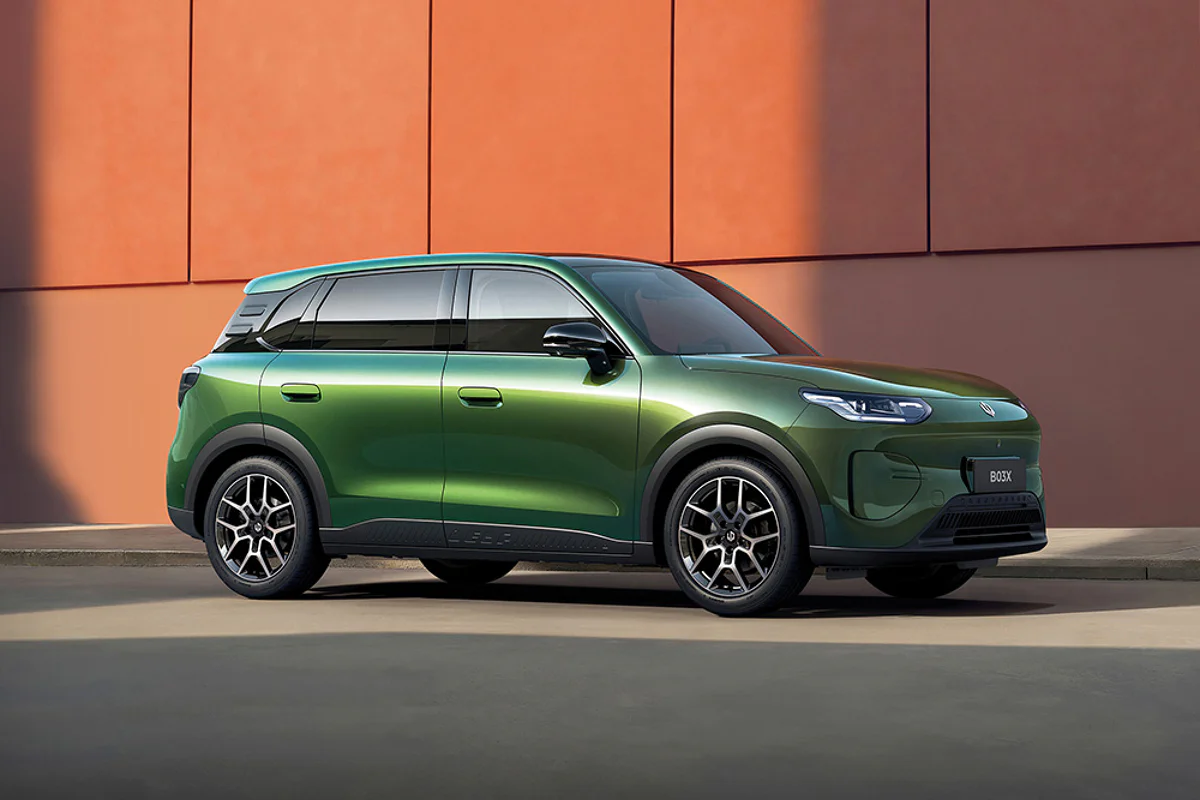
    Leapmotor launched its A10 compact electric sport utility vehicle in Thailand on Friday, sending the model to 19 local showrooms as it chases export volume across Southeast Asia.

    The carmaker plans to expand that sales and service footprint to 30 locations nationwide before the end of the year.

    Showroom rollout and vehicle specs

    Known internationally as the B03X, the small SUV features a long-range battery rated for 450 kilometers under NEDC testing standards. It accepts direct-current fast charging up to 133 kW, filling the battery from 30 percent to 80 percent in 16 minutes under test conditions.

    Cabin hardware includes a 14.6-inch 2.5K central display screen compatible with Apple CarPlay and Android Auto. Practical features focus on urban buyers, adding semi-autonomous driver aids alongside a 106-liter washable cargo bin fitted under the rear floorboards. Leapmotor did not release retail pricing or a delivery schedule during the Bangkok presentation.

    Dealership network and parts supply

    Expanding dealership coverage forms the core of the Thai strategy. Alongside the push to reach 30 retail points, the carmaker is building a dedicated regional parts distribution hub and a technical support depot to speed up repair turnaround.

    Chinese brands entering Southeast Asia regularly encounter resistance around replacement component delays and depreciating resale values. Setting up physical maintenance hubs alongside new showrooms addresses that dealer friction directly. It gives fleet operators and individual motorists a clearer operational backing than independent importers can provide.

    The export joint venture

    International distribution runs through Leapmotor International, an operating venture owned 51 percent by Stellantis NV. The European automotive group holds exclusive manufacturing and distribution rights for all Leapmotor vehicles sold outside Greater China.

    That corporate partnership provides instant scale, allowing the Chinese marque to bypass the slow, expensive process of constructing solo distribution networks across developing markets. It also gives the brand an established logistics apparatus to ship right-hand-drive vehicles across ASEAN ports without building regional factories first.

    Expanding product cadence

    Friday’s launch extends a product rollout that began when Leapmotor brought the larger C10 SUV to Thailand in 2024. The carmaker followed that introduction by rolling out the B10 electric SUV in October 2025.

    Deliveries outside China have become central to Leapmotor’s balance sheet. The automaker exported 27,454 vehicles in September, representing a 298.58 percent rise year-on-year and a 50.39 percent lift from August. Over the first nine months of the year, outbound shipments reached 159,572 units, climbing 322.46 percent year-on-year. Global deliveries across domestic and foreign operations reached 105,656 vehicles in September, pushing nine-month output to 666,539 cars.

    Thai retail pricing remains the immediate figure to watch, followed by the planned commercial debut of the refreshed C10 SUV in 2026.

  • US and China Agree to $30 Billion Tariff Relief as Chinese EVs Eye Entry

    US and China Agree to $30 Billion Tariff Relief as Chinese EVs Eye Entry

    Chinese electric vehicle makers plan to enter the United States market despite bilateral trade talks in Washington on Thursday and Friday concluding without a breakthrough agreement on automotive import access.

    High vehicle prices and sustained inflation in the American domestic market keep Chinese automakers focused on entry routes even after negotiators limited bilateral tariff relief to 30 billion dollars of non-sensitive goods for each country.

    Export Volumes Drive Overseas Push

    Automakers in China are accelerating their export strategies as domestic competition reaches a consolidation point. BYD set a target of 2 million overseas sales in 2026, building on vehicle sales momentum across Brazil and Europe.

    Rising vehicle retail prices and fuel expenses in North America provide commercial incentives for Chinese manufacturers. Smaller players are also gaining global scale, with Zhejiang-based Leapmotor surpassing the global sales volumes of legacy Japanese automakers Subaru and Mitsubishi Motors.

    Competitive Shift Across Asian Automakers

    For Asian automotive supply chains, the push toward Western markets represents a permanent structural realignment. Japanese carmakers are already altering production schedules and supplier networks to counter Chinese pricing and manufacturing speed.

    Suzuki plans to halve vehicle development cycles to match Chinese design timetables, while Honda committed nearly 2.5 billion dollars to construct a dedicated hybrid vehicle assembly plant in the United States. Traditional tier-one components suppliers in Japan face margin pressure as Toyota expands extended-range electric vehicle production using Chinese facilities and local supply bases.

    Bilateral Talks and Tariff Boundaries

    The latest diplomatic meetings in Washington between United States and Chinese leaders established selective tariff relief covering 30 billion dollars of goods on each side. The bilateral framework excluded automotive imports, leaving existing trade barriers and tech scrutiny in place.

    Commercial transport startups are testing alternative international regulatory pathways in parallel. Autonomous delivery developer Neolix launched robovan trials in Belgium to build European commercial logistics operations ahead of broader international rollouts.

    Manufacturing Targets to Watch

    Market attention turns to full-year delivery reports to verify whether BYD can hit its 2 million export vehicle threshold by December 2026.

  • Leapmotor Overtakes Subaru and Mitsubishi Motors in Global Sales

    Leapmotor Overtakes Subaru and Mitsubishi Motors in Global Sales

    Chinese electric vehicle startup Leapmotor surpassed Subaru and Mitsubishi Motors in global quarterly deliveries for the first time between April and June. Strong domestic sales in China drove the shift. An accelerating rollout across European dealerships also lifted volume.

    The Hangzhou-based manufacturer built momentum on budget battery-electric models and extended-range powertrains. Those lower prices unlocked retail demand in mainland tier-three cities. They also found buyers in price-sensitive European export markets.

    Shift in Global Volume

    Overtaking two established Japanese automakers shifts the competitive baseline for entry-level passenger cars. Subaru and Mitsubishi built multi-decade international sales networks through independent franchised dealers. Their slower battery-electric transition left budget segments exposed to cheaper Chinese rivals.

    Leapmotor entered European showrooms by pricing compact electric models against legacy petrol hatchbacks. That approach bypassed the premium segment. European and Japanese marques still hold stronger brand loyalty in that higher tier.

    Pressure on Traditional Dealerships

    Across Europe and Asia, independent auto retailers and multi-brand dealer groups must now adjust inventory allocation. Dealerships facing sluggish demand for internal combustion models are handing floor space to Chinese brands. These vehicles deliver higher unit turnover, though dealer margins are tighter.

    Component vendors and regional distributors tied exclusively to mid-tier Japanese manufacturers face direct exposure. As sales volume drifts toward Chinese electric platforms, legacy suppliers face shrinking factory orders unless they win contracts on dual-fuel and battery architectures.

    Export Trajectory

    Behind the quarterly milestone are two years of factory scaling and targeted export homologation by Leapmotor. The company previously relied almost entirely on mainland China registrations before opening European distribution channels.

    Delivery numbers through the second half of the year will test the expansion as European trade policy and regional import tariffs take effect.

  • Geely Hosts CCC Digital Key Trials in Ningbo as China Penetration Hits 58%

    Geely Hosts CCC Digital Key Trials in Ningbo as China Penetration Hits 58%

    Geely Holding Group opened the Car Connectivity Consortium Plugfest in Ningbo on September 7, 2026, testing cross-device vehicle access specifications across global hardware makers.

    Digital keys reached 13.3 million passenger vehicles in China in 2025, taking factory installation rates to 58.1 per cent, according to ResearchInChina.

    The four-day event runs through September 10, bringing engineers from Apple, Volkswagen Group China, Leapmotor, and the China Academy of Information and Communications Technology together to validate CCC Digital Key Version 3 and Version 4 implementations. Testing focuses on Bluetooth Low Energy, Near Field Communications, remote keyless systems, and relay-server architectures built for Chinese mobile platforms.

    Standardizing Access Across Mobile Ecosystems

    Hardware and vehicle makers face a fragmented user base where device compatibility dictates owner satisfaction. Chinese electric vehicle makers built proprietary smartphone-to-car links early to differentiate their cabins, but scaling across export markets requires uniform global protocols. Aligning with CCC protocols reduces development friction for Chinese auto exporters targeting Europe and Southeast Asia, where multi-brand phone compatibility is mandatory.

    The technical risk sits in the handoff between mobile operating systems and vehicle transceivers. Proprietary app-based keys often suffer from background process throttling and latency on Android devices. Standardized Near Field Communication and Ultra-Wideband protocols shift authentication directly to device secure elements, eliminating reliance on third-party companion apps.

    Regional Expansion and Certification Pipeline

    Earlier in 2026, the consortium certified its first batch of Chinese vehicles across Geely brands including Volvo, Polestar, Zeekr, Lynk & Co, Smart, and Lotus, alongside standalone approvals for Nio and Xpeng. Regional momentum extended into India with Mahindra & Mahindra and South Korea through Hyundai Motor Company.

    Testing in Ningbo directly addresses local technical conditions, including cross-platform key sharing via relay servers. Test equipment suppliers including Comprion, Dekra, and Ellisys are running validation benches for Bluetooth sniffing and updated NFC test suites alongside software provider GosuncnWelink.

    “As digital key adoption grows, a common global standard is essential to ensuring interoperability across vehicles and devices,” said Alysia Johnson, President of the Car Connectivity Consortium.

    Testing China-Specific Architecture

    Participating laboratories are using authorized IDL hardware and Comprion validation software to check device compatibility against published automotive test cases before production rollouts. These trials will establish the technical criteria for the next round of device-to-car certifications across Asian component supply chains.

    Engineering teams conclude the Ningbo trials on September 10, 2026, with the validated test cases feeding into updated consortium validation tools as China’s passenger car digital key penetration passes 60 per cent before year-end.